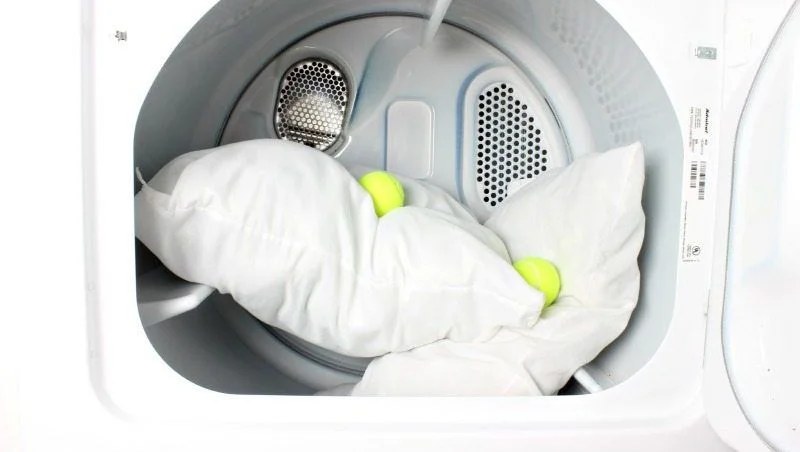
Tennis balls are the classic trick for fluffing pillows in the dryer, but they aren't required and they aren't even the best option. The job of any agitator is simply to bounce around the drum, breaking up clumps of fill and keeping air moving so pillows dry evenly without flattening.
If you're out of tennis balls (or never had them), the short answer is: use wool dryer balls. They're quieter, lighter on the drum, won't shed dye, and they're reusable for years. If you don't have those either, several common household items work in a pinch.
Best agitators (ranked)
- Wool dryer balls - quiet, durable, reduce drying time
- Two clean, lint-free tennis shoes (laces tied) - great for down
- Tightly rolled clean bath towels - always on hand
- Balled clean tube socks or knotted pantyhose
- Stuffed animals (kid-safe, machine-washable)
- Crumpled aluminum foil balls (2-3 inches) - cuts static
Avoid these
- New tennis balls - can off-gas rubber smell when heated
- Plastic toys, flip-flops with foam soles - can melt
- Anything with metal zippers, snaps, or hooks - dents the drum
- Loose rice or beans (without a sock) - jams the lint trap
What to use instead of tennis balls
1. Wool dryer balls (top pick)
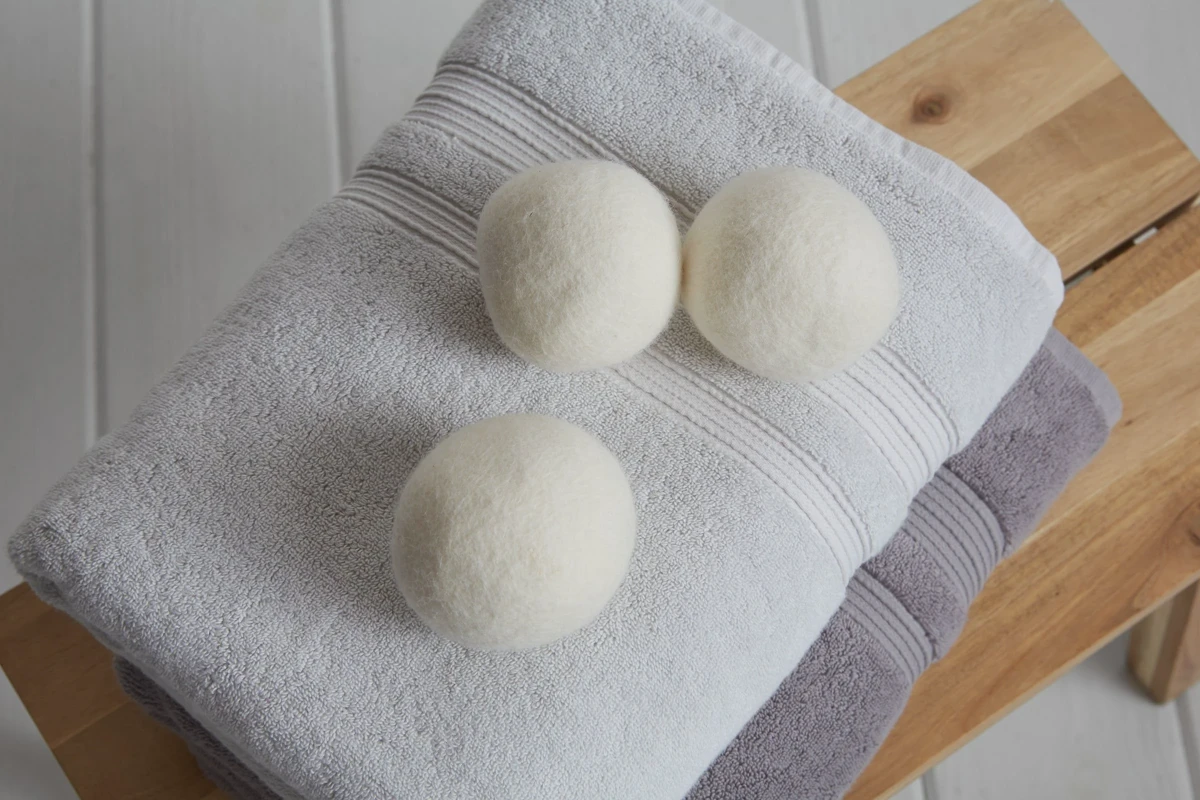
Two to three wool dryer balls produce the same agitation as tennis balls without the noise or smell. Wool also absorbs a small amount of moisture, which can shorten the cycle. They cost roughly $10-20 for a set of three and last for hundreds of loads.
2. Clean tennis shoes
Lightweight sneakers with the laces tied work surprisingly well, especially for down or down-alternative pillows. Tuck each shoe inside a pillowcase or cotton sock to muffle the noise and keep the drum from getting marked. Skip foam-soled flip-flops - the EVA can soften under heat.
3. Rolled bath towels
Roll two clean dry towels tightly and secure each with a hair tie or a sturdy knot. Towels add weight and movement, but they don't bounce as aggressively as balls, so plan on hand-fluffing the pillows once mid-cycle.
4. Sock or pantyhose bundles
Ball up three to four clean tube socks, or knot a leg of pantyhose around itself, and toss them in. Light but lively - best paired with another agitator like a rolled towel for larger pillows.
5. Aluminum foil balls
Crumple aluminum foil into 2-3 inch tight balls. They cut static and add a little weight. They flatten over time - re-crumple every few loads. Don't use them with delicate fabrics that can scuff.
Step-by-step: drying pillows without tennis balls
- Squeeze out excess water by hand and roll the pillow in a dry towel before the dryer.
- Set the dryer to low heat or air-fluff - high heat scorches synthetics and damages down.
- Add 2-3 wool dryer balls (or your chosen alternative) per pillow.
- Run for 30-60 minutes. Pause every 15 minutes to redistribute the fill by hand.
- Confirm the pillow is dry to the core before storing - trapped moisture causes mildew. If the center still feels cool or damp, run another short cycle.
Safe to tumble dry
- Down and down-alternative - air-fluff or low heat
- Polyester / poly-fill pillows - low heat
- Most cotton pillows - low heat
- Microfiber and ball-fiber pillows - low heat
Do NOT put in the dryer
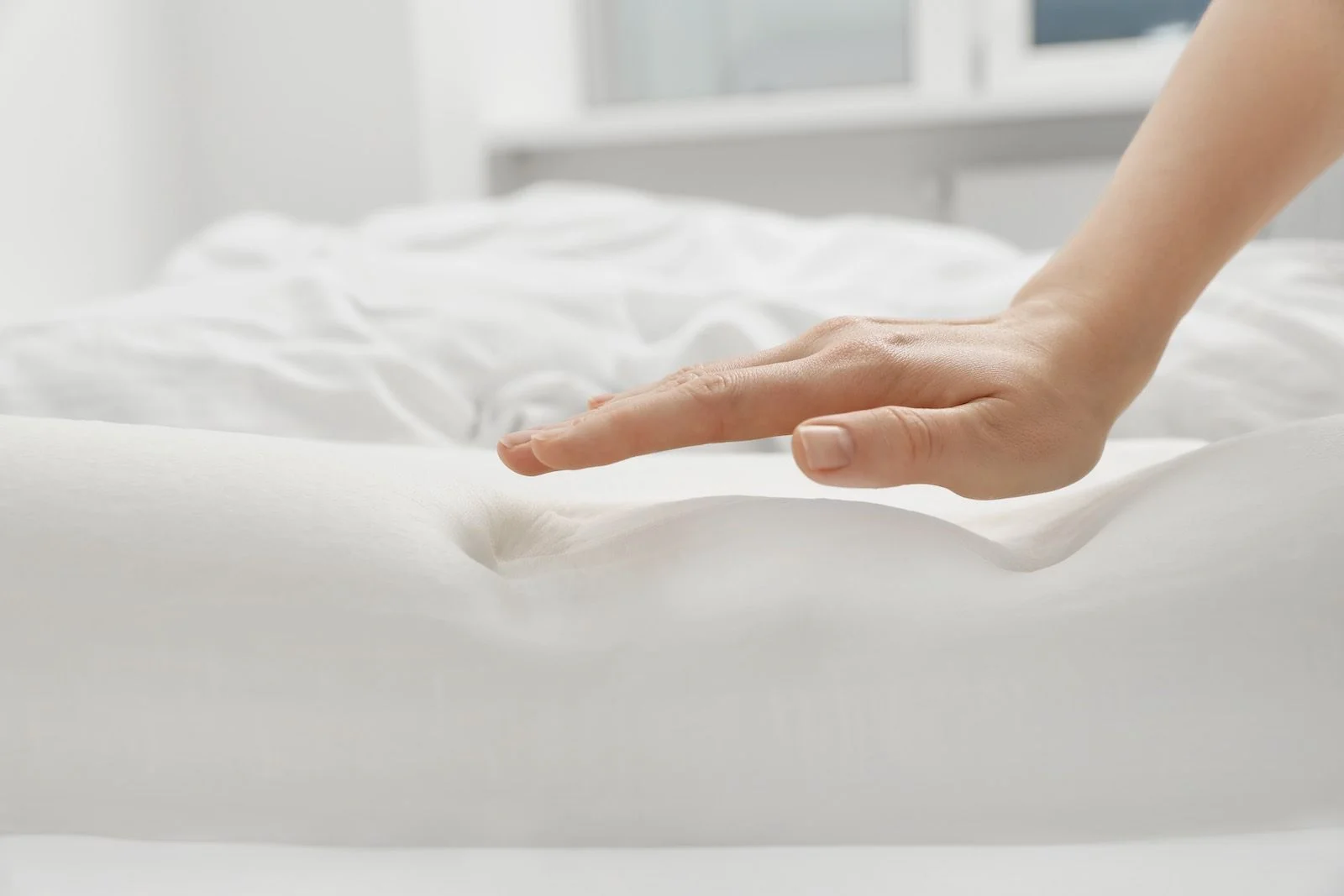
- Memory foam - heat warps and crumbles foam
- Latex - can dry out, crack, or melt
- Buckwheat-hull - hulls scorch and lose loft
- Gel- or water-filled pillows - casing can rupture
- Anything labeled spot clean only
Why pillows go flat in the dryer (and how agitators fix it)
When pillows tumble alone, wet fill clumps and packs against the corners. Without something bouncing through the drum, the clumps dry that way - leaving permanent lumps and a flatter pillow. Any reasonably bouncy object will break up those clumps; that's the whole reason tennis balls work, and why almost anything in the list above works too.
One note from the Sleep Foundation: dryers with automatic moisture sensors can end the cycle early when bouncy objects strike the sensor. If your machine cuts off after a few minutes, switch to a timed cycle.
How often should you wash and dry pillows?
Most major sleep authorities recommend laundering washable pillows every 3-6 months, and replacing pillows every 1-2 years (down can last longer). If your pillow stays lumpy after a full dry cycle plus hand-fluffing, the fill has likely broken down - it's time for a new one.
Frequently asked questions
What can I use instead of tennis balls in the dryer for pillows?
The best replacement is two to three wool dryer balls. If you don't have those, use clean lightweight sneakers (with laces tied), tightly rolled bath towels, balled-up clean socks, or 2-3 inch aluminum foil balls. Avoid foam-soled shoes, plastic toys, or anything with metal hardware.
Can I dry a pillow without anything in the dryer with it?
You can, but expect lumpy results and a longer cycle. Without an agitator the wet fill packs together and dries that way. If you have nothing to add, plan to pause the dryer every 10-15 minutes and hand-fluff the pillow each time.
What's the fastest way to dry a pillow?
Squeeze and towel-roll the pillow first to remove excess water, then dry on low heat with wool dryer balls and pause to redistribute the fill every 15 minutes. Most washable pillows dry fully in 45-60 minutes this way. Avoid high heat - it doesn't speed things up much and damages the fill.
Are tennis balls safe to put in the dryer?
Used, broken-in tennis balls are generally fine. New ones can off-gas a rubber smell when heated and occasionally transfer dye onto light fabrics. Tucking the ball inside a clean cotton sock fixes both problems.
Can I put memory foam or latex pillows in the dryer?
No. Heat warps memory foam and dries out latex, both of which permanently damage the pillow. These materials are spot-clean only - use a damp cloth with mild detergent and air-dry flat, away from direct sunlight.