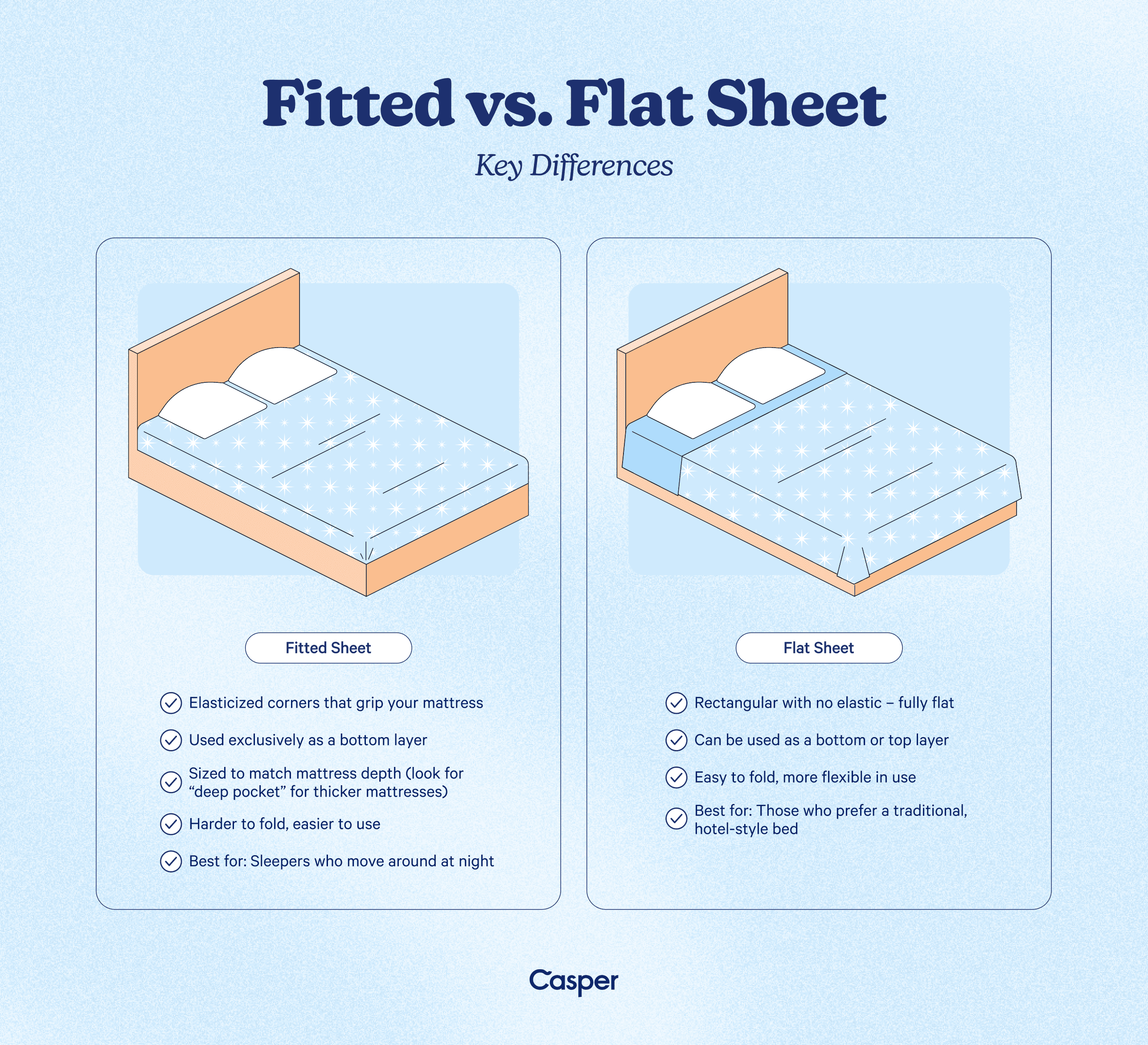
If you have ever stripped the bed and stared at two near-identical white rectangles wondering which one goes where, you are not alone. A flat sheet is a plain rectangle that lies on top of you under the duvet or blanket. A fitted sheet is shaped - its corners (and often the long sides) are sewn with elastic so it grips the mattress and stays put. Both protect bedding, both feel similar to the touch, but they are not interchangeable, and the right answer for most beds is to use both.
Quick answer
- Use a fitted sheet on the mattress - it is the layer that touches you and protects the mattress surface.
- Add a flat sheet on top to keep the duvet or comforter cleaner and to give a breathable summer layer.
- Match both sheets to your mattress size and its depth. Pocket depth is the number that bites people on deep mattresses with toppers.
What a fitted sheet does
The fitted sheet is the workhorse. Elastic at the four corners (and on premium sets, all the way around) pulls the fabric taut against the mattress so it does not pop off in the night. That snug fit is what makes the bed feel made: no wrinkles bunching under your hip, no fabric sliding off the corner at 3 a.m.
It also takes the brunt of nightly wear - sweat, skin oils, the occasional spill - which is why fitted sheets wear out faster than flats and why most bedding sets sell extras of just the fitted.
What a flat sheet does
A flat sheet (sometimes called a top sheet) is a hygiene and climate layer. It keeps your duvet, comforter, or quilt from absorbing the same body oils the fitted sheet does, which means you can wash a heavy comforter monthly instead of weekly. In hot weather it can replace the duvet entirely - just the flat sheet over you is often enough.
It also gives you styling flexibility: a folded flat sheet at the foot of the bed, or a contrasting hem peeking out from under the duvet, is the look hotels rely on.
Why use a flat sheet
- Keeps your duvet or comforter cleaner between washes
- Doubles as a light cover in warm weather
- Easy to fold, store, and iron - no awkward elastic corners
- Lets you mix-and-match colors or hems for styling
Why skip it
- Slides around at night if you are an active sleeper
- Adds a layer to make and remake every day
- Redundant if you already use a duvet cover and wash it often
- Can feel hot if layered under a heavy comforter in summer
Sizing: get this part right or both sheets fight you
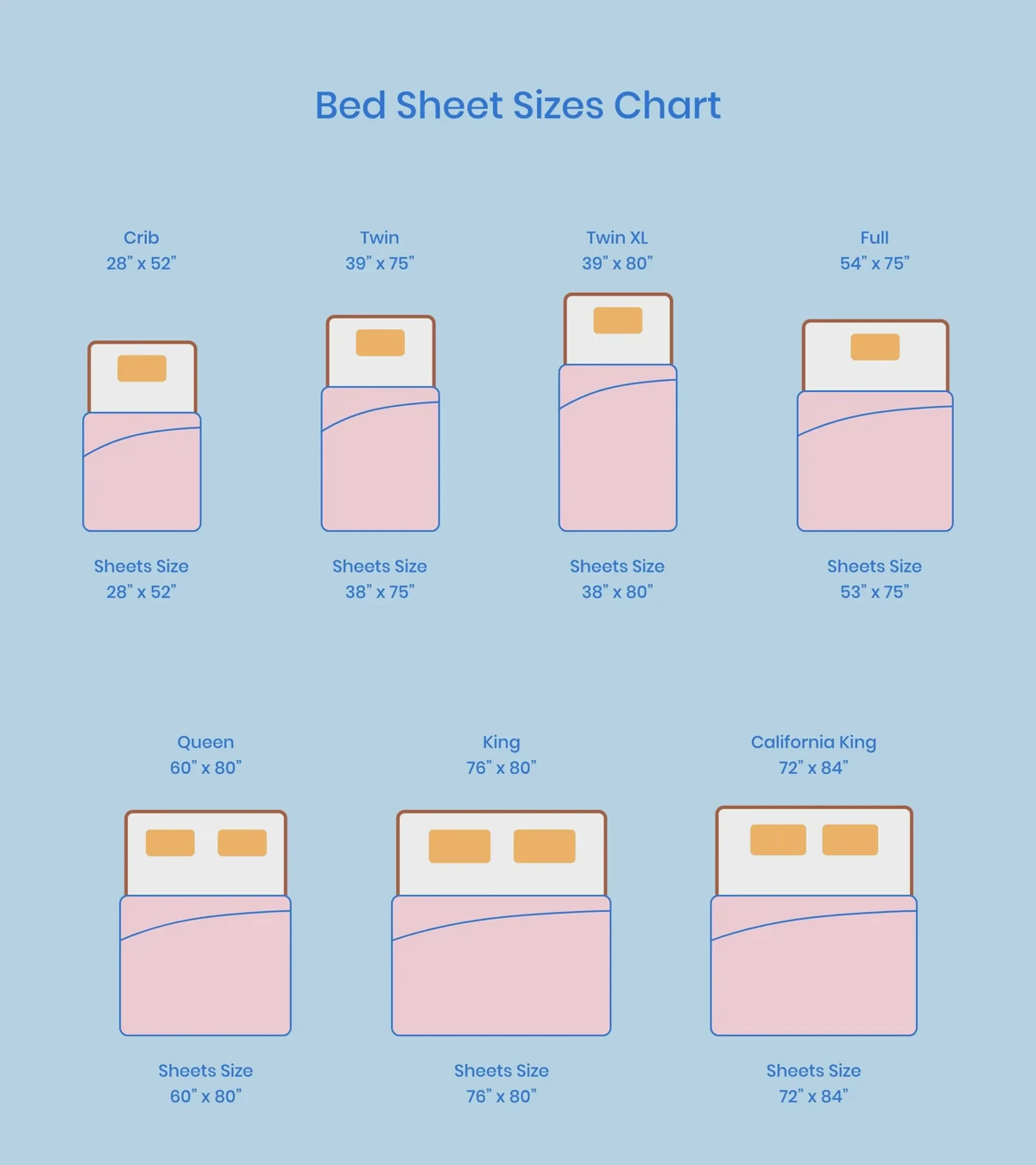
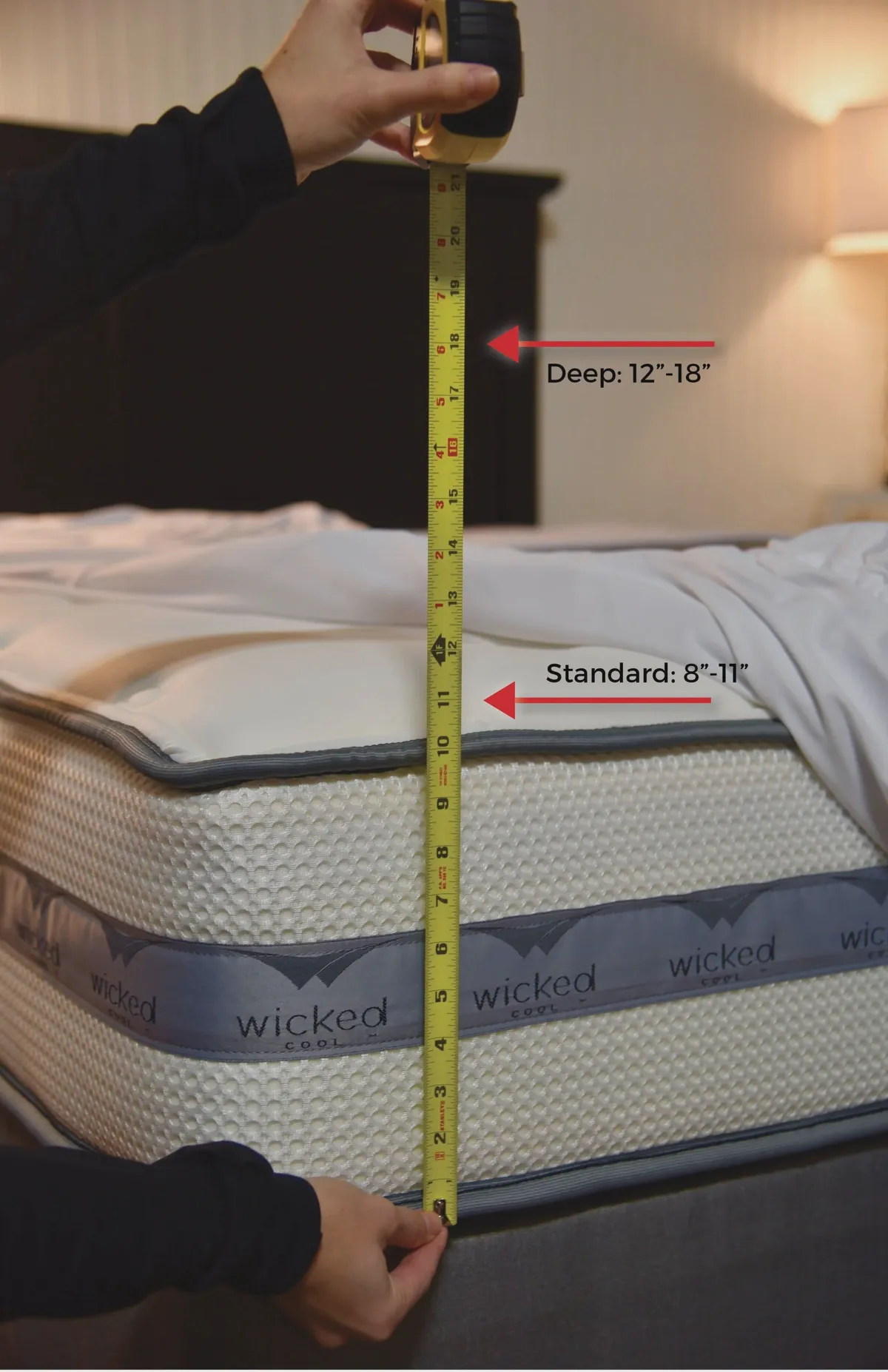
Sheets are sold by mattress size - Twin, Twin XL, Full, Queen, King, California King - but two numbers actually matter for fit: the mattress footprint and the mattress depth (how thick it is). A fitted sheet sized to a Queen will fit any Queen mattress in width and length; the question is whether the pocket is deep enough to grip the corners.
- Standard pocket: fits mattresses 7 to 12 inches deep. Works for most older mattresses.
- Deep pocket: 12 to 17 inches. Default for most modern hybrid and pillow-top mattresses.
- Extra-deep pocket: 17 inches or more. Required if you stack a topper or have a thick pillow-top hybrid.
Flat sheets are more forgiving - they just need to be wide and long enough to drape over you with a tuck of fabric to spare. A Queen flat sheet on a Queen mattress is the safe pick, but sizing up one (King flat on a Queen) is a common move if you want extra fabric to tuck or fold.
Do you need both?
A fitted sheet is mandatory - without it the mattress is exposed, and you will be sleeping directly on whatever the mattress cover is made of. A flat sheet is optional, and the answer depends on your top layer:
- Comforter without a duvet cover: yes, use a flat sheet. Otherwise the comforter absorbs body oils and needs constant washing.
- Duvet with a duvet cover: optional. The duvet cover already plays the hygiene role. Skip the flat if you find it slides too much.
- Hot sleeper in summer: the flat sheet alone is often enough - drop the duvet entirely on the warmest nights.
- Guest room: always include both. Hotel-style is what guests expect.
Care: how often to wash
Both sheets should be washed weekly - they are the layers that touch your skin all night. Wash in warm water (cold for linen and silk), tumble dry low, and pull them out promptly to avoid set-in wrinkles. Rotate two sets per bed so you can strip and remake without waiting on laundry.
Fitted sheets get the most punishment, so plan to replace them on a 2-3 year cycle. Flat sheets, since they spend the night under a duvet, often outlast them by years.
Flat sheet vs fitted sheet FAQ
Can I use a flat sheet as a fitted sheet?
In a pinch, yes - tuck the corners under the mattress hospital-style. It will not stay as tight as a fitted sheet, especially if you toss in your sleep, but it works for a guest bed or while a fitted sheet is in the wash.
Why do hotels always include a flat sheet?
Hygiene and laundry economics. The flat sheet protects the heavy comforter or duvet so the hotel can wash it less often. It also makes the bed look 'made' with crisp folded edges, which is part of the hotel feel guests expect.
Is a flat sheet better than a fitted sheet?
Neither is better - they do different jobs. The fitted sheet is essential because it covers the mattress; the flat sheet is optional but useful as a hygiene and climate layer between you and the duvet.
What size flat sheet should I buy?
Match the mattress size for a clean, modern look (Queen flat for a Queen bed). Size up one if you want extra fabric to tuck under the mattress hotel-style, or if you share the bed with a partner who pulls covers.
How deep should my fitted sheet pocket be?
Measure your mattress from the top to the bottom seam, including any built-in pillow top, then add the height of any topper. Choose a pocket that is at least an inch deeper than that total. For most modern mattresses, deep pocket (12-17 inches) is the right default.
How often should I replace my sheets?
Fitted sheets typically last 2-3 years with weekly washing - the elastic loses tension and the fabric thins at the contact points. Flat sheets often last 4-5 years because they get less direct wear. Replace any sheet sooner if you see thinning fabric or stretched elastic.
Need a sheet set sized to your mattress?
Banner Mattress carries pre-matched sheet sets in standard and deep-pocket fits, so you can pick the bedding the same day you pick the mattress.