DreamCloud vs Nectar: the quick verdict
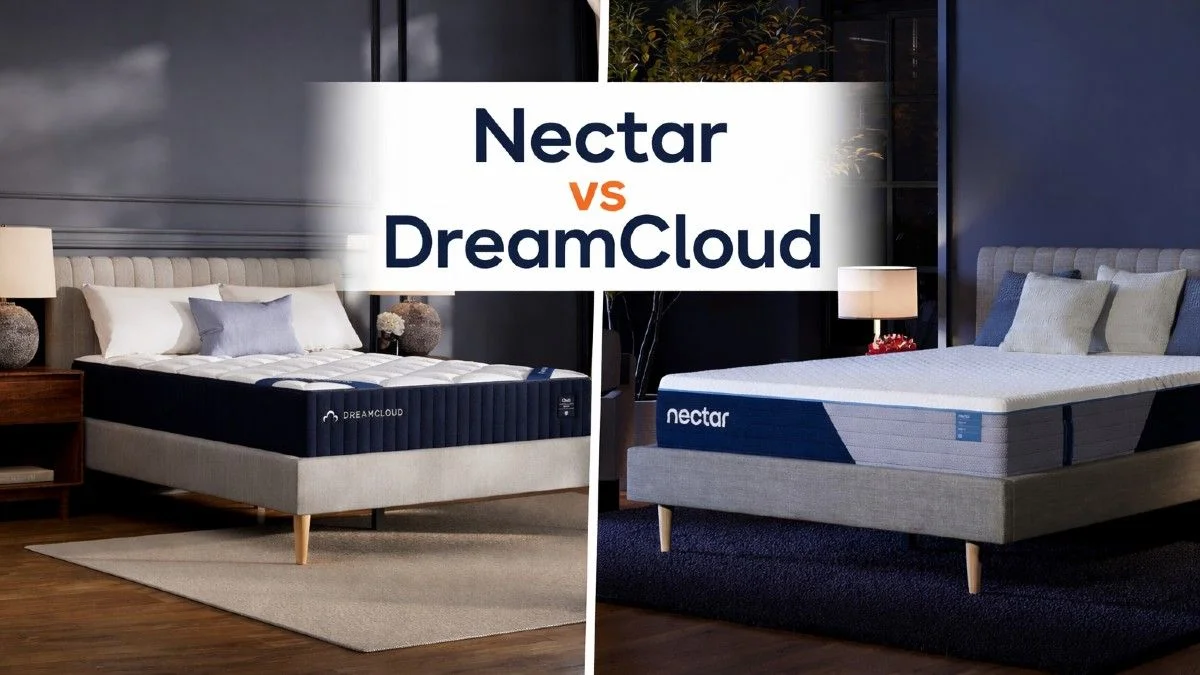
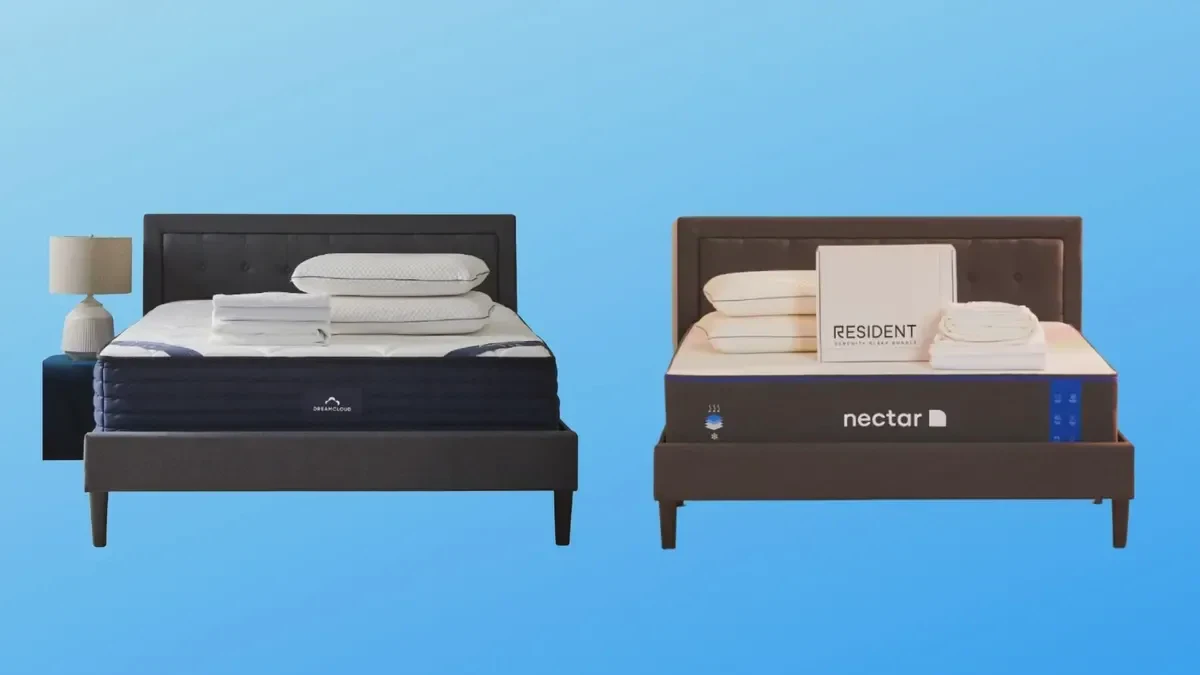
The DreamCloud Classic Hybrid and the Nectar Classic Memory Foam are two of the most popular bed-in-a-box mattresses you can buy, and they share a lot on paper. Both run medium-firm, both ship compressed in a box, and both come from the same parent company. But they feel almost nothing alike. The DreamCloud is a coil hybrid with a firmer, bouncier "on top" feel, while the Nectar is an all-foam bed with the slow, cradling hug you expect from memory foam. After testing both back-to-back, the short answer is that the DreamCloud suits back and stomach sleepers who want support and edge stability, and the Nectar suits side sleepers and couples who want pressure relief and motion isolation on a tighter budget.
| Choose the DreamCloud if you are... | Choose the Nectar if you are... |
|---|---|
| A back or stomach sleeper who wants firm support | A side sleeper who wants deep pressure relief |
| A combination sleeper who switches positions | Someone who loves the classic memory foam hug |
| A heavier sleeper who needs coil support | A couple who needs strong motion isolation |
| A hot sleeper who wants coil airflow | Shopping for the lower price |
Are DreamCloud and Nectar the same company?
Yes. DreamCloud and Nectar are two distinct brands, but they are owned by the same parent company, so they share buyer policies and overlap on materials. That shared ownership is why both beds come with an identical 365-night sleep trial and a lifetime warranty, and why their pricing lands so close together. If you want the full breakdown of who builds these beds and where, our guide to where DreamCloud mattresses are made covers the corporate structure in detail. The practical takeaway is that you are choosing between two construction styles from one company, not between two rival builders, so the decision comes down to feel rather than brand trust.
Firmness and feel
Both beds land in medium-firm territory, but the DreamCloud sits a touch firmer. On the Mattress Clarity firmness scale the DreamCloud rates a 7.5 out of 10 while the Nectar rates a 7 out of 10, where most sleepers are comfortable around 6.5. The coils in the DreamCloud give it a lifted, "on top" feel that makes it easy to move and switch positions. The Nectar has the more traditional body-hug sensation: its soft upper layers contour around you, but you settle quickly onto a firmer support layer underneath. One tester described comparing the two as apples to oranges because they do not feel anything alike. If you tend to feel stuck in memory foam, the DreamCloud is the more responsive of the two. If you want to sink in and feel cradled, the Nectar delivers that classic foam feel.
How they perform: cooling, motion, edge, and pressure
The two beds trade wins across the performance tests, and the gaps line up with their construction. The differences that matter most:
- Cooling: The all-foam Nectar runs cooler in testing thanks to its cooling cover, with a thermal-gun reading of less than a 5-degree increase after about 7 minutes of lying down. The DreamCloud is temperature-neutral and breathable but only average on cooling, so the Nectar edges it here.
- Motion isolation: The Nectar scored a near-perfect 4.7 out of 5 and the DreamCloud scored a 4 out of 5, so both isolate movement well and either works for couples with a restless partner.
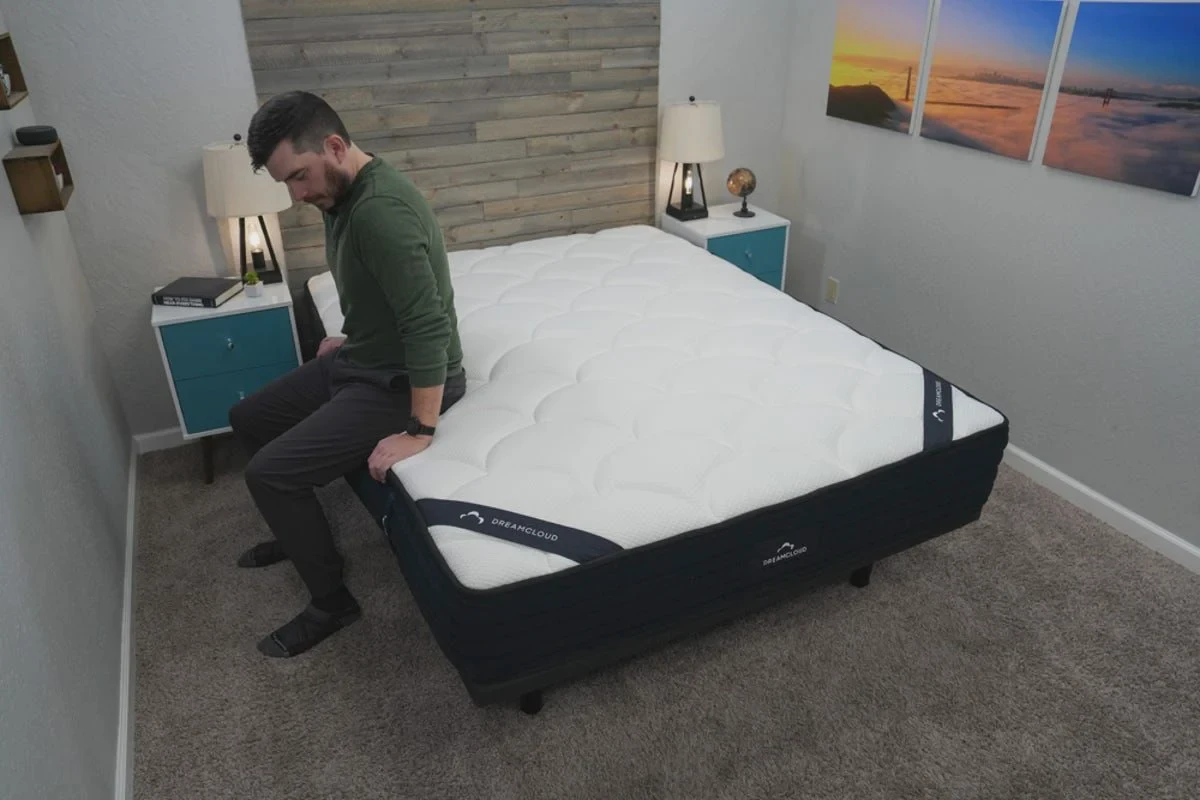
- Edge support: The DreamCloud has the sturdier edge, barely collapsing when you sit on it, while the all-foam Nectar sinks noticeably at the perimeter.
- Pressure relief: The DreamCloud scored slightly higher overall at 4.4 out of 5 versus the Nectar's 3.7 out of 5, with the biggest gap showing up in side sleeping.
- Bounce and responsiveness: The DreamCloud's coils make it far bouncier and easier to move on, which combination and sexually active sleepers tend to prefer.
Construction and materials
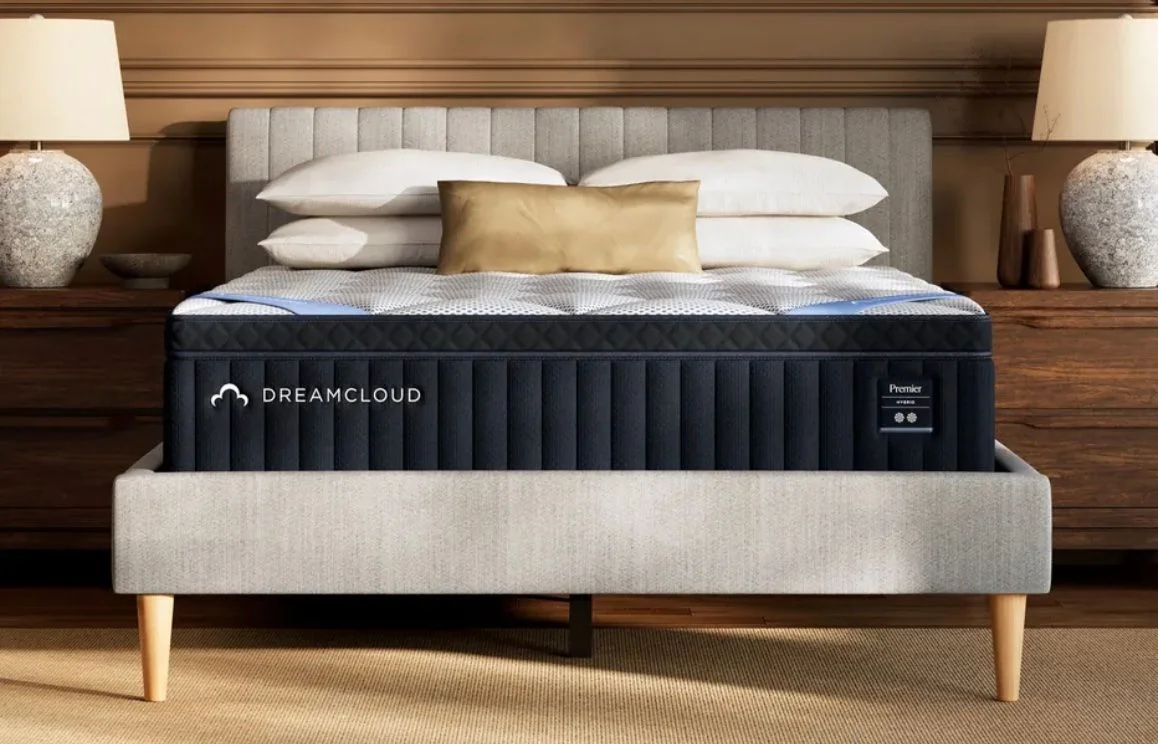
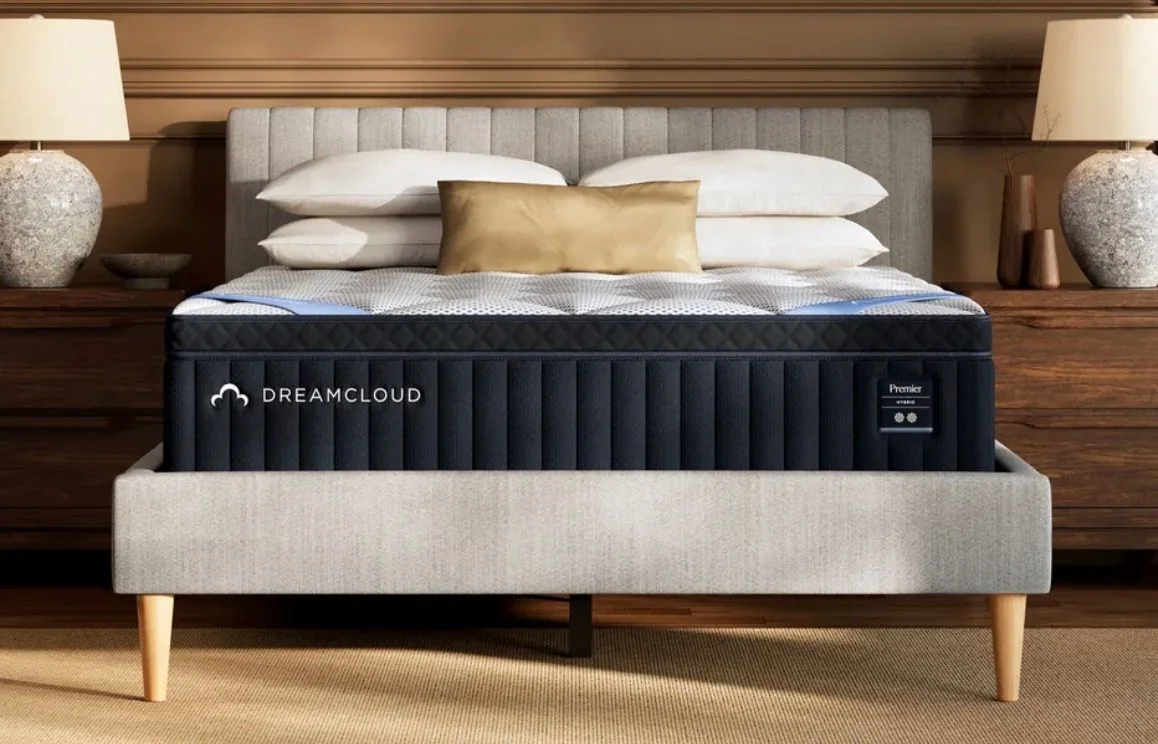
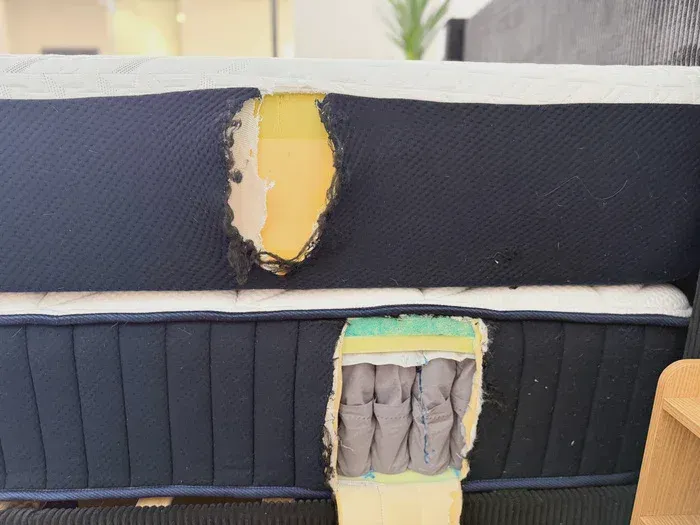
The clearest difference between these two mattresses is what is inside them. The DreamCloud is a hybrid, combining foam comfort layers with a coil support unit and a quilted pillow top, while the Nectar is an all-foam bed with a flat but still cushioning surface. That coil layer is what gives the DreamCloud its bounce, airflow, and stronger edge, and the all-foam stack is what gives the Nectar its deeper hug and slightly better motion isolation.
| DreamCloud | Nectar | |
|---|---|---|
| Type | Hybrid (foam plus coils) | All-foam |
| Comfort layer | Gel-infused memory foam | Gel-infused memory foam |
| Support | Individually wrapped coils | High-density foam base |
| Pillow top | Yes | No |
Both beds use a gel-infused memory foam comfort layer, which cools better than traditional memory foam, so the real divide is the coil-versus-foam support core.
Which is better for your body type and position
Neither bed is universally better; the right pick changes with your weight and sleeping position. Here is how they sorted out in testing.
Lightweight sleepers (up to 130 lbs)
Lightweight stomach sleepers do fine on either bed, since both keep the hips elevated. For side sleeping the DreamCloud is the better of the two if you can handle a firmer feel; the Nectar left a lightweight tester with pressure in her shoulders because her lower half sank too far, throwing off her alignment.
Average-weight sleepers (130 to 230 lbs)
Most average-weight sleepers are comfortable on either bed for back and stomach sleeping. For side sleeping the Nectar tends to win, because the DreamCloud's firmer surface caused a pinch in one tester's lower back, while the Nectar offered a nicer balance of contouring and support.
Heavyweight sleepers (230 lbs and up)
Heavier stomach sleepers should choose the DreamCloud, whose coils keep the hips from sinking into an uncomfortable support layer the way the all-foam Nectar can. For side and back sleeping both beds performed well for heavier testers, so it comes down to whether you prefer a hybrid or memory foam.
Price, trial, and warranty
Pricing is close, and because both brands share a parent company the buyer policies are identical. With sales and coupons a queen Nectar runs about $649 while a queen DreamCloud runs about $799, with the DreamCloud costing a little more for its coils and luxury pillow top. Both ship free in the contiguous United States, with small fees for Alaska and Hawaii, and both back the bed with a full year to try it and a warranty for as long as you own it.
| DreamCloud | Nectar | |
|---|---|---|
| Queen price (with sales) | About $799 | About $649 |
| Trial period | 365 nights | 365 nights |
| Warranty | Lifetime, limited | Lifetime, limited |
| Returns | Free | Free |
Which one should you buy?
Both of these beds are strong budget picks for back sleepers, so the deciding factor is the feel you want and the position you sleep in. Pick the DreamCloud if you want a firmer, bouncier mattress with strong edge support, you sleep on your back or stomach, or you are a heavier sleeper who needs the extra support of coils. Pick the Nectar if you want the slow-sinking memory foam hug, you sleep on your side, you share the bed and want top-tier motion isolation, or you simply want to spend a little less. If you are a very lightweight sleeper, you may want to look for something softer than either of these.
Frequently asked questions
Are Nectar and DreamCloud owned by the same company?
Yes. Both are sold by the same parent company as separate brands, which is why they share buyer perks like the 365-night trial and lifetime warranty and tend to be priced close together.
Is DreamCloud the best mattress?
The DreamCloud is one of the better budget hybrids for back and stomach sleepers and for heavier sleepers who want coil support, scoring 4.6 out of 5 in testing. It is not the best fit for everyone, though; very lightweight side sleepers will likely want a softer bed.
What are the cons of a Nectar mattress?
The Nectar's main drawbacks are weak edge support, which sinks noticeably when you sit on the perimeter, and a softer all-foam feel that can let lightweight side sleepers and heavier stomach sleepers sink too far for proper alignment.
What are the cons of a DreamCloud mattress?
The DreamCloud's firmer feel can be too much for very lightweight side sleepers, and average-weight side sleepers may feel a pinch in the lower back. Its cooling is only average, so dedicated hot sleepers who want an all-foam bed may prefer the cooler-running Nectar.