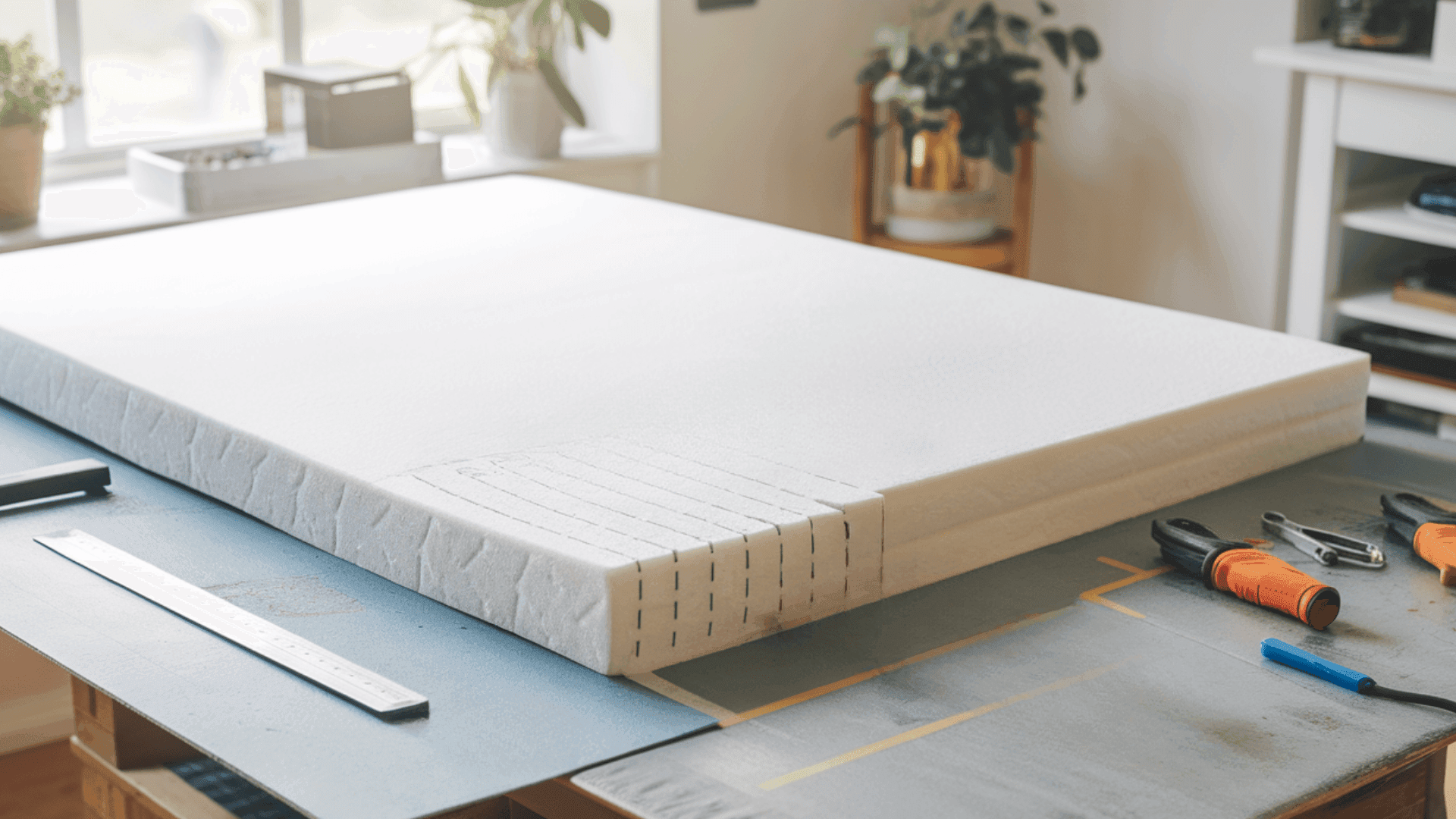
Cutting a mattress is one of those projects that looks simple on paper and gets tricky the moment you hit the second layer. The fabric cover gives way to a utility knife. The foam wants an electric carving knife or a long-bladed serrated knife. The springs - if there are any - laugh at both and demand bolt cutters. Match the tool to the layer and the job goes quickly; mismatch them and you'll either ruin the mattress, dull every blade in the drawer, or end up with a fiberglass cleanup nightmare.
This guide walks through how to cut a mattress safely and cleanly, whether you're shrinking a memory foam bed for an RV, splitting a king to fit through a stairwell, or breaking down a spring mattress for curbside disposal. We'll flag the fiberglass risk you cannot ignore, the tool selection most YouTube tutorials get wrong, and when cutting is the wrong answer entirely.
Before you cut: three questions to answer first
1. What's inside your mattress?
All-foam mattresses (memory foam, polyfoam, latex) cut cleanly with the right blade. Hybrids add a layer of pocketed coils that need wire cutters or bolt cutters. Traditional innersprings are mostly steel and need heavy-duty metal-cutting tools. Check the law tag on the side of the mattress - it lists every layer by name and weight, so you'll know exactly what you're cutting through before you start.
2. Does it contain a fiberglass fire barrier?
Many budget memory foam beds use a fiberglass sock under the cover as a chemical-free flame retardant. Once you cut into that layer, fiberglass shards drift through the air and embed in carpet, HVAC vents, and skin. If your law tag lists "glass fiber" or your mattress is a sub-$500 boxed foam bed, plan to cut it outdoors, wear a respirator, and be ready to throw away the clothes you cut it in. Our fiberglass mattress cleanup guide walks through containment if you discover it mid-cut.
3. Is the warranty still active?
Cutting a mattress voids virtually every manufacturer warranty - and removes any chance of donating, returning, or selling it. If the bed is under 10 years old and supportive, check the warranty terms before reaching for a knife. If it sags, stains, or smells, cutting is fair game.
Tools you'll need (by mattress type)
The single biggest mistake DIY cutters make is reaching for a household utility knife and trying to muscle through every layer. Here's what actually works for each material.
For the cover and quilted top
- Sharp utility knife with fresh blades (you'll burn through 2-3)
- Heavy-duty fabric scissors as a backup for stitched seams
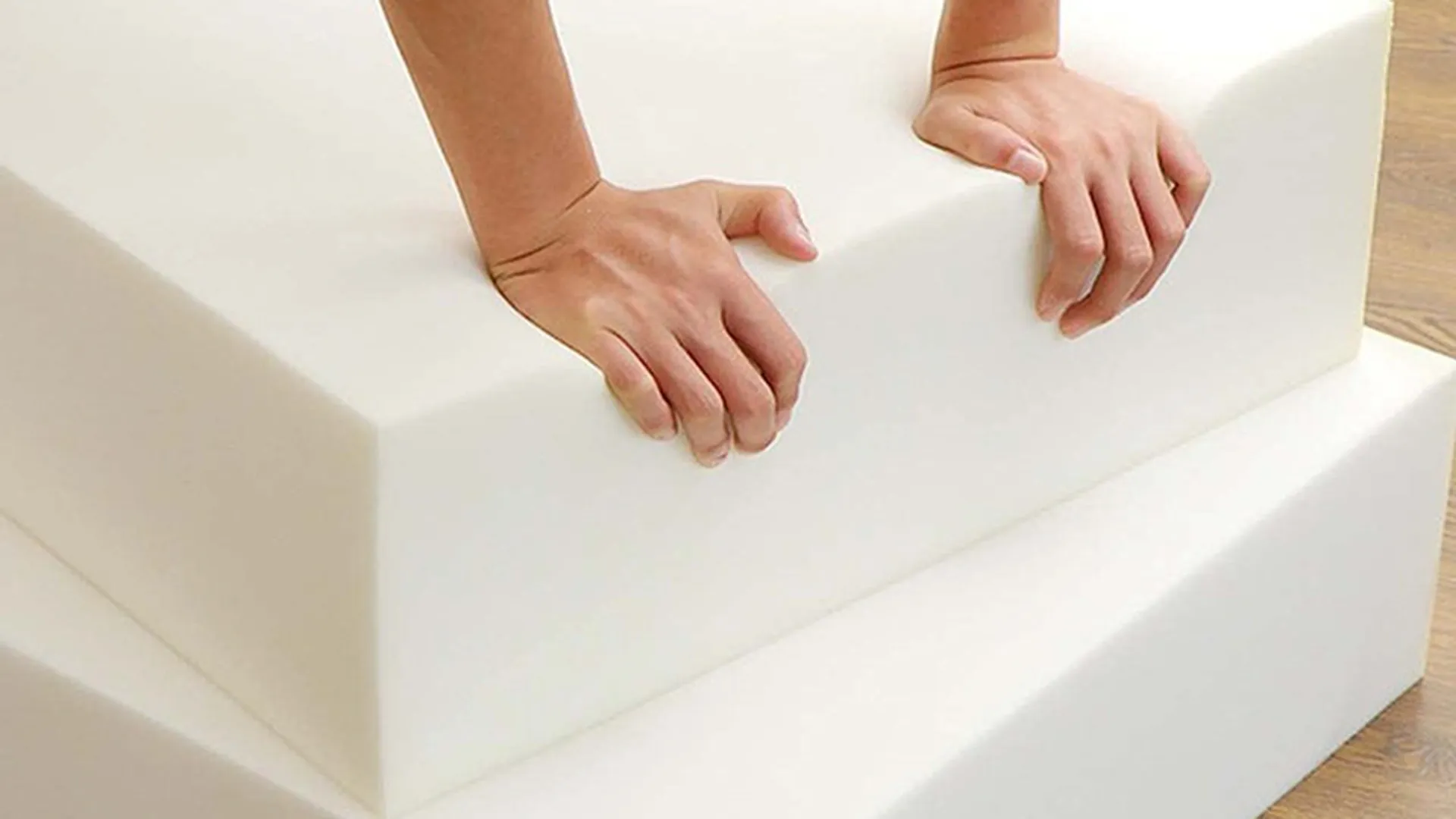
For foam layers (memory foam, polyfoam, latex)
- Electric carving knife - the unsung hero. Cuts foam like warm butter and stays straighter than a manual blade.
- Long serrated bread knife (8"+) as the manual alternative
- Straight edge or rigid board to guide the blade
- Skip the scissors here - they compress and crush foam instead of slicing it, so reserve them for stitched cover seams only
For springs and coils
- Bolt cutters (24" handles, hardened jaws) for tempered steel coils
- Wire cutters or end-cutting pliers for thinner gauge pocketed coils - look for HRC-64 induction-hardened cutting edges so they hold up over a full mattress
- Side-cutter parallel pliers are the all-in-one option: they cut hard wire and then bend the sharp ends down, and a compound-lever action multiplies hand force by roughly 18-25x
- Reciprocating saw with a metal-cutting blade for fastest demolition
Safety gear (non-negotiable)
- Cut-resistant gloves (level A4 or higher)
- Safety goggles - coil ends ricochet
- N95 or P100 respirator (mandatory if fiberglass is present)
- Long sleeves and pants you don't mind discarding
Step-by-step: how to cut a mattress
Step 1: Set up the workspace
Move the mattress to a hard, flat surface - a garage floor, driveway, or patio works. Avoid carpet, which traps fiberglass and foam crumbs. Lay down a tarp or cardboard to make cleanup easier. If there's any chance of fiberglass, do this step outdoors with a breeze at your back.
Step 2: Measure and mark your cut line
Use a tape measure and a permanent marker to draw a clear line across the cover. For a clean halving cut, measure the length, divide by two, and mark both edges before connecting them with a straight edge. Don't lean on the mattress while measuring - foam compresses and your line will end up crooked when the bed expands back.
Step 3: Cut the outer cover
Run a sharp utility knife along the marked line, applying just enough pressure to slice the fabric and the quilted top. If you hit a stiff seam, switch to scissors. Cut both the top and bottom of the cover - pulling the fabric away exposes the foam underneath and lets you see exactly what's in there before you commit.
Step 4: Cut the foam layers
This is where the electric carving knife earns its keep. Run it along the cut line at a steady pace, letting the blade do the work - pushing too hard compresses the foam and produces a wavy edge. For thicker foam (12"+), cut from both sides and meet in the middle. A long serrated bread knife works manually but takes 3-4x longer and produces more crumb. When the cut is done, let the foam sit and relax for a few minutes before you measure or trim again - foam expands slightly once the pressure is released, and the edge only settles into its final shape after that.
Step 5: Deal with springs (hybrid and innerspring only)
Once the foam comfort layers are cut, you'll see the coil unit. Pocketed coils (individual fabric pockets) cut quickly with wire cutters - snip the connecting threads, then clip each coil's anchor wire. Continuous innerspring coils need bolt cutters or a reciprocating saw with a metal-cutting blade. Always cut springs at the base, not mid-coil - a half-cut spring under tension can spring back and cause injury.
Step 6: Fold sharp edges and bag the pieces
Cut spring ends are sharp. Bend each one inward with pliers before bagging. Foam goes in heavy-duty contractor bags; metal parts go to a scrap yard or curbside metal pickup. Don't mix the two - most municipal trash haulers won't take mixed bags.
When cutting makes sense
- You're disposing of a sagging or stained bed and curbside pickup limits piece size
- You need to move a mattress through a stairwell, doorway, or RV opening it physically can't fit through
- You're repurposing memory foam into pet beds, cushions, or floor mats
- Local mattress recycling isn't available and the landfill charges by the cubic yard
When to skip it
- The mattress is under warranty or under 5 years old - selling or returning beats cutting
- You suspect fiberglass and don't have outdoor space plus a respirator
- You only have a utility knife and no electric carving knife or bolt cutters
- Local programs offer free pickup - Bye Bye Mattress (mattressrecyclingcouncil.org) covers CA, CT, RI
Cutting different mattress types
All-foam (memory foam and polyfoam)
Easiest of the bunch. An electric carving knife slices through 10-14 inches of foam in a few minutes. Memory foam sinks under pressure and the blade tends to drift if you push too hard, so let the knife do the work and the edge will stay straighter. Polyfoam is firmer and stays more stable under a blade - it's the most forgiving foam type to cut for first-timers. Watch for the fiberglass sock either way - it's the layer immediately under the outer cover on most budget boxed beds.
Latex
Latex is denser and more rubbery than memory foam, and it behaves differently under a knife: instead of sinking, latex pushes back and tries to close around the blade. Short, choppy strokes don't work - use long, smooth passes with a very sharp serrated or carving knife and expect the cut to take twice as long. Latex is recyclable and compostable in some regions - worth a search before you bag it.
Hybrid (foam over coils)
The most layered cut. Work top down: cover, comfort foam, transition foam, coil unit, base foam, fabric backing. Plan on 30-45 minutes for a queen and a fresh utility blade for each foam layer.
Innerspring
Mostly metal once you peel back the quilted top. Bolt cutters or a recip saw are mandatory. Older innersprings often have wooden support frames inside the perimeter - break those apart with the saw too.
Ready to replace what you're cutting?
If you're cutting up an old bed, you'll want to protect the next one. Our editor-tested mattress protectors keep stains and fiberglass-prone covers intact for years longer.
Frequently asked questions about cutting a mattress
What's the easiest tool to cut a mattress with?
An electric carving knife. It slices through foam cleanly without compressing it, costs around $25-40, and stays straight through thick layers. For springs, swap to bolt cutters or a reciprocating saw with a metal-cutting blade.
Can you cut a mattress in half for disposal?
Yes - most municipal trash and recycling programs accept a mattress cut into 2-4 pieces if it's bagged. Check local rules first; some areas (California, Connecticut, Rhode Island) require you to use Bye Bye Mattress recycling instead.
Will cutting a mattress release fiberglass?
Only if the mattress contains a fiberglass fire barrier - common in boxed memory foam beds under $700. Check the law tag for "glass fiber" before cutting. If it's there, cut outdoors, wear a P100 respirator, and don't bring the cut bed back inside.
Can you cut a memory foam mattress horizontally to make it thinner?
Yes, but it's tricky. Mark a level line on all four sides, use an electric carving knife, and cut from each side toward the middle. Expect a wavy seam - the cut won't be display-quality, but it works for camper or bunk applications.
Does cutting a mattress void the warranty?
Yes, in virtually every case. Warranty terms specifically exclude beds that have been altered, cut, or modified. Check your warranty status before you cut - if it's still active and the bed is defective, you may qualify for a replacement instead.
What's the best way to dispose of the cut pieces?
Foam goes in heavy-duty contractor bags for trash pickup. Metal coils go to a scrap metal recycler - many pay by weight. Wooden frame pieces go with regular yard waste in most cities. Don't mix materials in one bag, or the hauler will reject it.
The bottom line
Cutting a mattress is straightforward if you match the tool to the layer: utility knife for fabric, electric carving knife for foam, bolt cutters or a reciprocating saw for springs. Take an extra minute to check for fiberglass before you start, work outdoors when possible, and don't skip the cut-resistant gloves and respirator. Done right, you can break a king-size bed down to curbside pieces in under an hour.