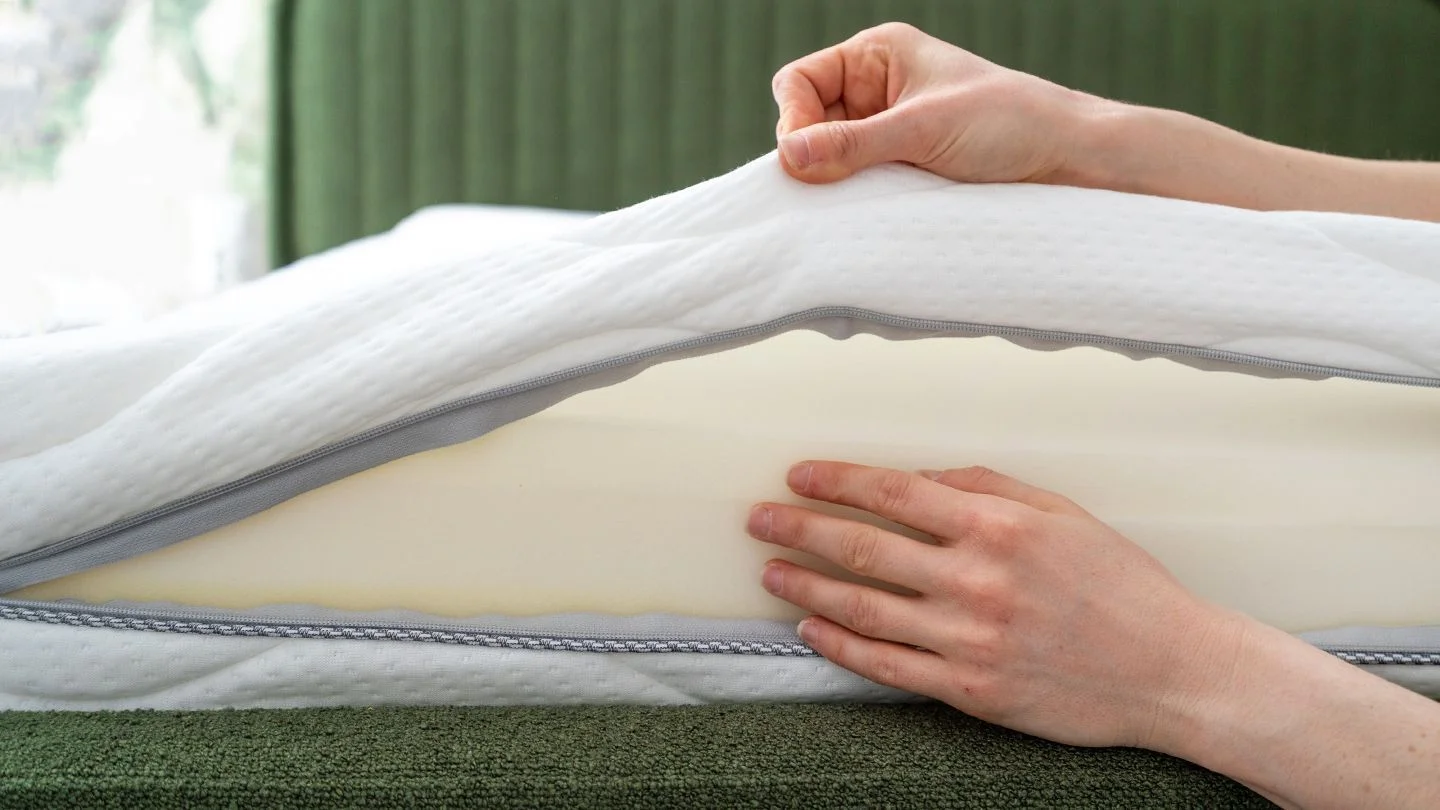
If you unzipped your mattress cover and found loose, glittery white fibers - or you're seeing tiny shards on bedding, floors, or HVAC vents - you're almost certainly dealing with mattress fiberglass. Here's the short version, then the full safe-cleanup playbook.
The 30-second answer
- Stop sleeping on it. Turn off your HVAC system so fibers don't recirculate.
- Put on PPE: N95 respirator, safety goggles, nitrile gloves, long sleeves.
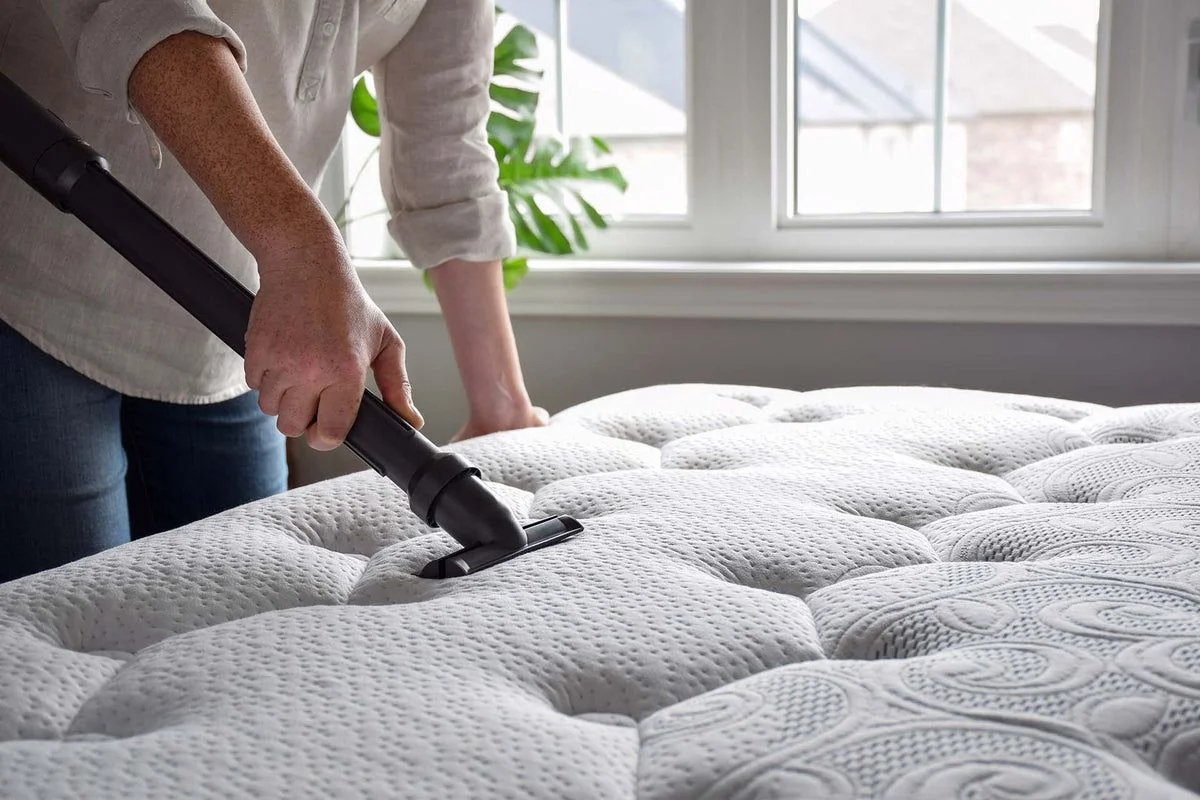
- Do NOT unzip the cover further, do NOT sweep, and do NOT use a standard vacuum. Both spread fibers.
- Seal the mattress in a heavy-duty plastic disposal bag and remove it from the home.
- HEPA-vacuum every surface, then wipe with damp microfiber. Lint-roll soft surfaces. Wash bedding separately in hot water - discard if heavily contaminated.
- For widespread contamination (multiple rooms, HVAC ducts), hire a professional remediation service.
The California Department of Public Health (CDPH) is explicit: do not sweep - sweeping pushes glass fibers back into the air. Always use a HEPA-filter vacuum and wipe with a damp cloth (CDPH fact sheet, 2024).
Why mattress fiberglass is a problem
Many low-cost foam mattresses (often labeled "Made in China" with a "Do Not Remove Cover" tag) use a fiberglass inner sock as a cheap fire barrier to meet U.S. flammability standards (16 CFR 1633). The fiberglass is harmless as long as the outer cover stays zipped. Once the cover is unzipped or torn, microscopic glass fibers escape, embed in fabric and skin, and become airborne - causing skin irritation, eye redness, coughing, and respiratory symptoms.
Decontamination is hard because fibers are tiny (often under 10 microns), they cling electrostatically, and ordinary vacuums simply blow them out the exhaust.
Clean it yourself if…
- The cover is still zipped and intact and you only suspect contamination on the bed itself.
- Visible fibers are limited to the mattress and the immediate floor area around it.
- You have a true HEPA vacuum (not a "HEPA-style" filter) and full PPE on hand.
- Bedding can be sealed and washed separately or discarded.
Replace + call a pro if…
- Fibers have spread to multiple rooms, carpets, or upholstery.
- You ran the HVAC after exposure - fibers may now be in the duct system.
- Anyone in the home has asthma, COPD, or significant respiratory issues.
- You don't have HEPA-filtered equipment - a standard vacuum will make things worse.
Step 1: Contain the source before you do anything else
Before you clean a single surface, stop the fibers from spreading further:
- Turn off central HVAC and any portable fans. Close vents in the affected room. Running air circulation during cleanup is the single fastest way to spread fibers through the entire house.
- Close interior doors between the affected room and the rest of the home.
- Do not zip or unzip the mattress cover. If it's already open, leave it open and skip straight to bagging - pulling the zipper either direction agitates the inner sock.
- Keep pets and children out of the room until cleanup is complete and a flashlight inspection shows no visible fibers.
Step 2: Suit up - PPE is non-negotiable
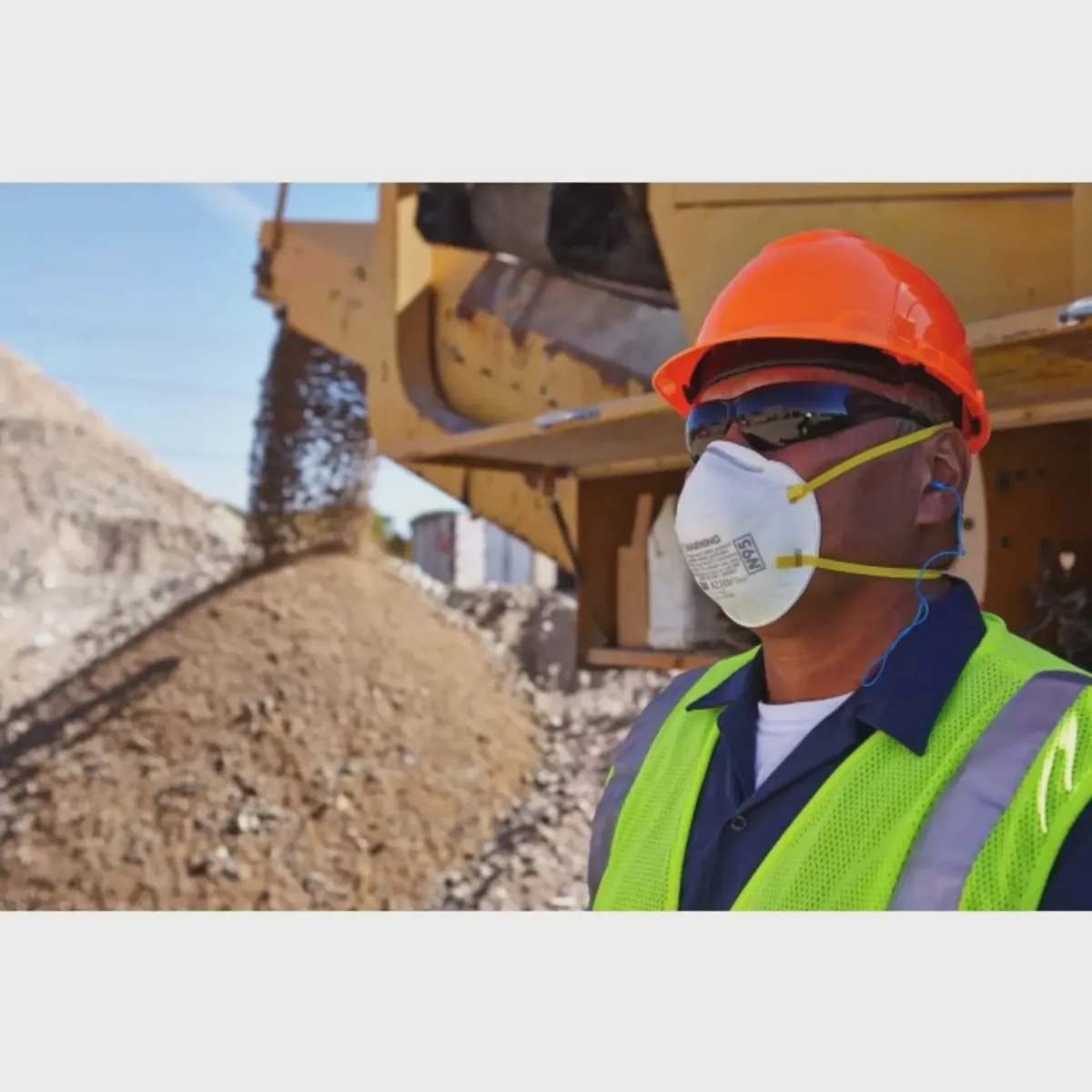
At minimum, wear:
- An N95 (or P100) respirator - surgical masks and cloth masks won't filter glass particles.
- Sealed safety goggles (not glasses) - fibers in the eye cause persistent irritation and abrasions.
- Nitrile or rubber gloves - fibers cling to skin and can be transferred anywhere you touch.
- Long sleeves and pants you plan to throw away or a disposable Tyvek coverall. Tuck sleeves into gloves.
- Shoe covers or shoes you'll wipe down before leaving the room.
Step 3: Bag and remove the mattress
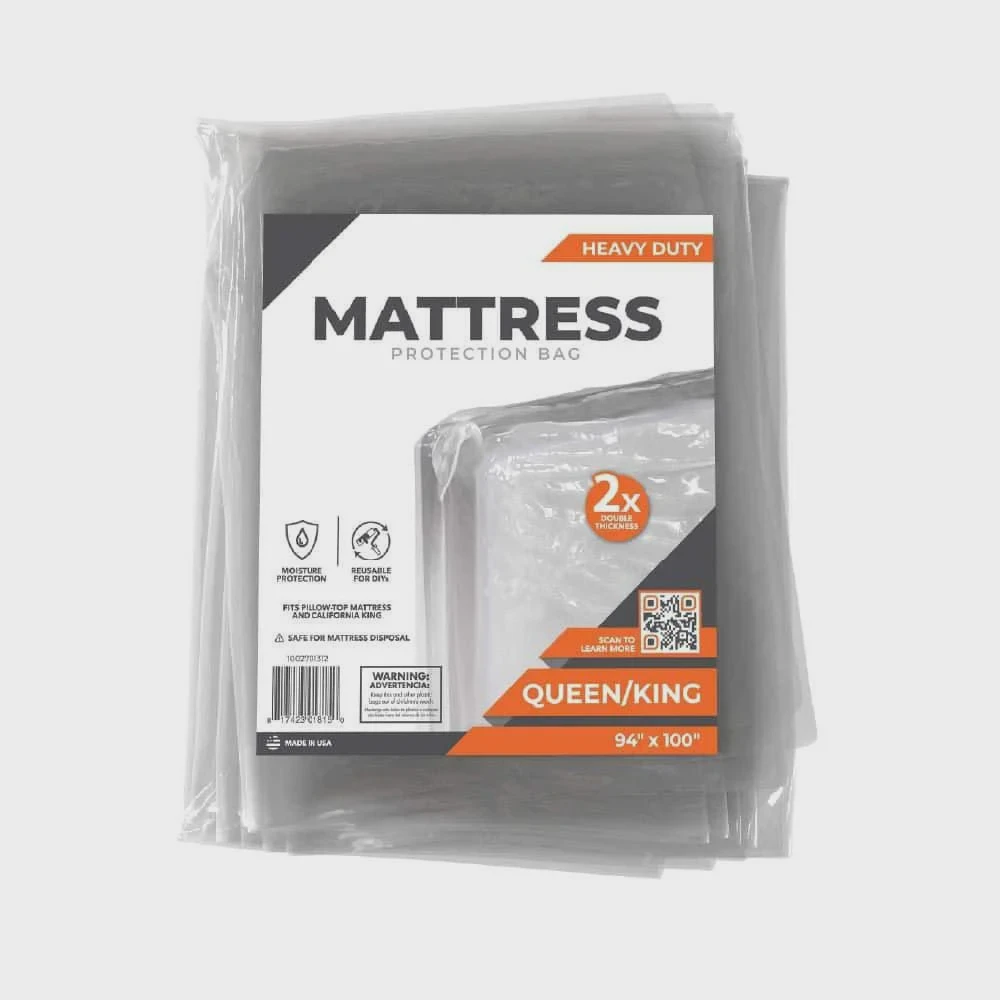
- Buy a heavy-duty (3+ mil) plastic mattress disposal bag in the correct size. Hardware stores, U-Haul, and Home Depot carry them for under $20.
- Slide the bag over the mattress slowly with the cover undisturbed. Tape every seam closed with duct tape.
- Move the sealed mattress straight outside via the most direct route - don't rest it against walls or upholstered furniture along the way.
- Check your municipality's bulky-waste rules. Some require a special pickup for fiberglass-contaminated items; others charge a small disposal fee.
Step 4: HEPA-vacuum every surface
This is where most DIY cleanups fail. A standard vacuum filter passes fibers right through the exhaust and back into the air. Use only a vacuum with a sealed true HEPA filter (rated to capture 99.97% of particles ≥ 0.3 microns). "HEPA-type" or "HEPA-style" labels are not the same thing.
- Vacuum slowly - multiple slow passes pick up far more than one fast pass.
- Cover everything: floors, baseboards, walls, window sills, ceiling fans, lampshades, the bed frame, and every soft surface in the room.
- When done, change the HEPA filter, double-bag the old filter, and seal it with tape before throwing it out.
Step 5: Damp-wipe and lint-roll
After vacuuming, go back over hard surfaces with damp microfiber cloths - one wipe per cloth, then bag the cloth. Microfiber traps the fibers that vacuuming missed. Use disposable lint rollers or wide painter's tape on upholstered furniture, fabric headboards, curtains, and clothing you can't wash separately. Do not toss contaminated clothes in a regular laundry load - fibers transfer to the drum and the next load.
Step 6: HVAC and air quality
If your HVAC ran during or after the exposure, replace the system filter immediately (a MERV-13 or higher filter helps trap residual fibers). For severe cases, a professional duct cleaning is the only reliable fix - DIY duct cleaning typically dislodges more debris than it removes. A portable HEPA air purifier sized for the room can run for several days afterward as a safety net.
When in doubt, call a remediation pro
How to prevent it from happening again
- Never unzip a mattress cover on any foam mattress unless the manufacturer explicitly says it's machine washable. The "Do Not Remove Cover" tag is not advisory.
- Use a full mattress encasement (zippered, all six sides) on top of the original cover. It's a second containment layer if the inner cover ever fails.
- When buying your next mattress, look for fiberglass-free fire barriers - wool, rayon-silica, or Kevlar/aramid blends. Reputable brands like Saatva, Avocado, Birch, Bear, Brentwood Home, and most U.S.-made innersprings disclose this on the spec page.
- Check the law tag. It's required by federal law to list fire-barrier materials. "Glass fiber," "fiberglass," or vague "woven sock" wording on a budget foam mattress is a yellow flag.
Fiberglass mattress cleanup - FAQ
Can I just wash the mattress cover instead of throwing it out?
No. Washing a fiberglass-shedding cover in a household washer transfers fibers to the drum, which then contaminate every future load. Discard the cover (sealed in a bag) - and ideally the whole mattress. Most people who try to salvage one end up replacing it within a month anyway.
How long do fiberglass particles stay in the air?
Larger visible fibers settle within hours. The microscopic ones can stay airborne for days, and they re-aerosolize every time someone walks across a contaminated carpet or runs the HVAC. That's why HEPA filtration plus repeated cleanings over several days is more effective than a single deep clean.
Is a Shop-Vac OK if I add a HEPA filter?
Only if the entire vacuum body is sealed for HEPA - most aren't. An aftermarket HEPA filter on a non-sealed Shop-Vac still lets fibers escape around the seams. If you can't confirm a true sealed-HEPA vacuum, rent one from a hardware store or hire a remediation company.
My skin still itches days after cleanup. What now?
Take a cool (not hot) shower - hot water opens pores and pushes fibers in deeper. Don't scrub. Use sticky tape to lift visible fibers from skin, then rinse. Wash hair separately. If irritation persists more than a few days, see a doctor; embedded fibers occasionally need clinical removal.
Will my homeowners or renters insurance cover the cleanup?
Sometimes. A few policies cover "sudden and accidental" contamination from a defective product, especially if you have receipts. File a claim and contact the mattress manufacturer in parallel - several brands have settled fiberglass class-action suits and may reimburse cleanup costs.
Is fiberglass exposure dangerous long-term?
Most public-health agencies, including the CDPH, classify mattress fiberglass exposure as a short-term irritant rather than a long-term carcinogen at these doses. That said, repeated exposure causes chronic skin and respiratory irritation, and there is no safe reason to keep sleeping on a mattress that has shed fiberglass.