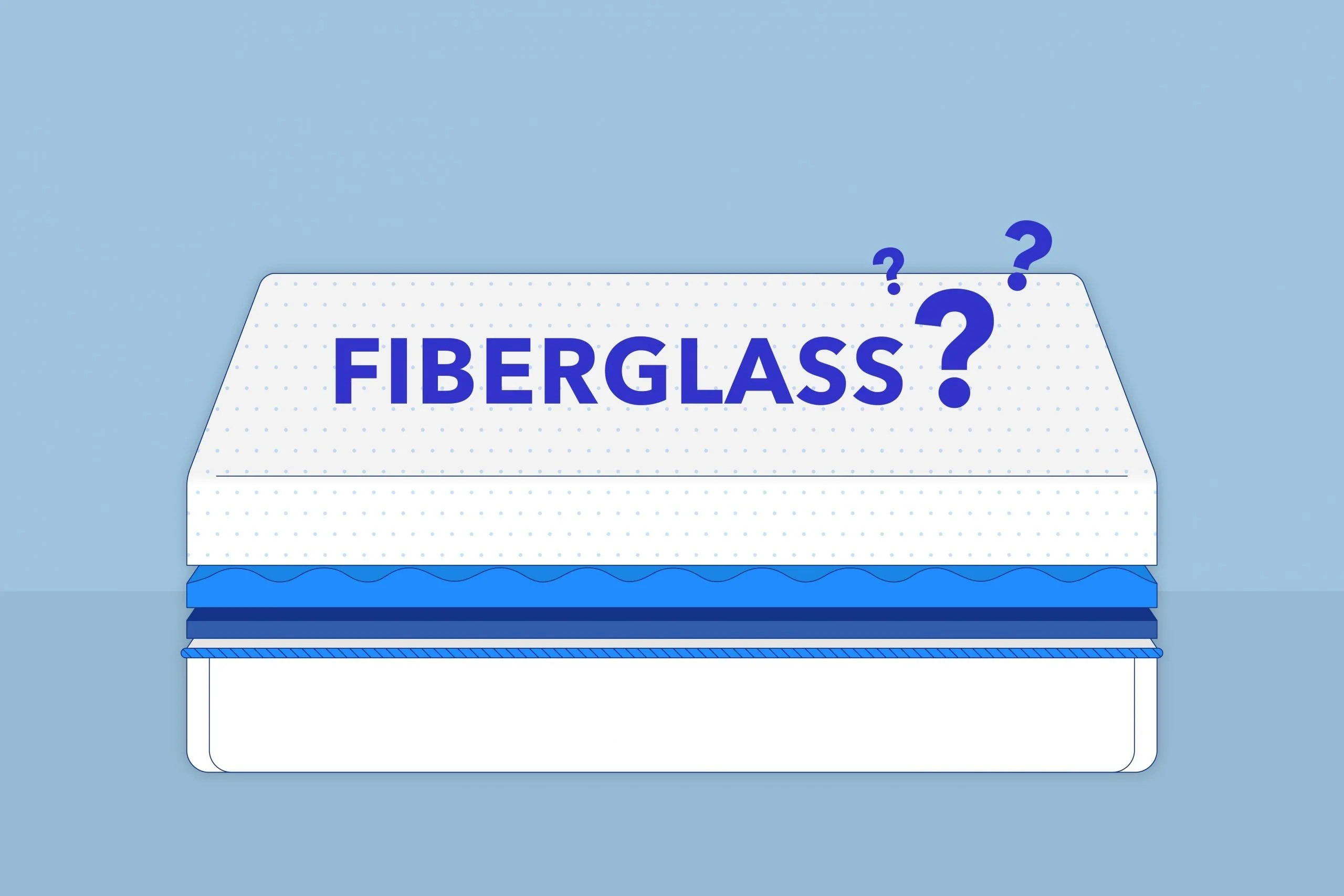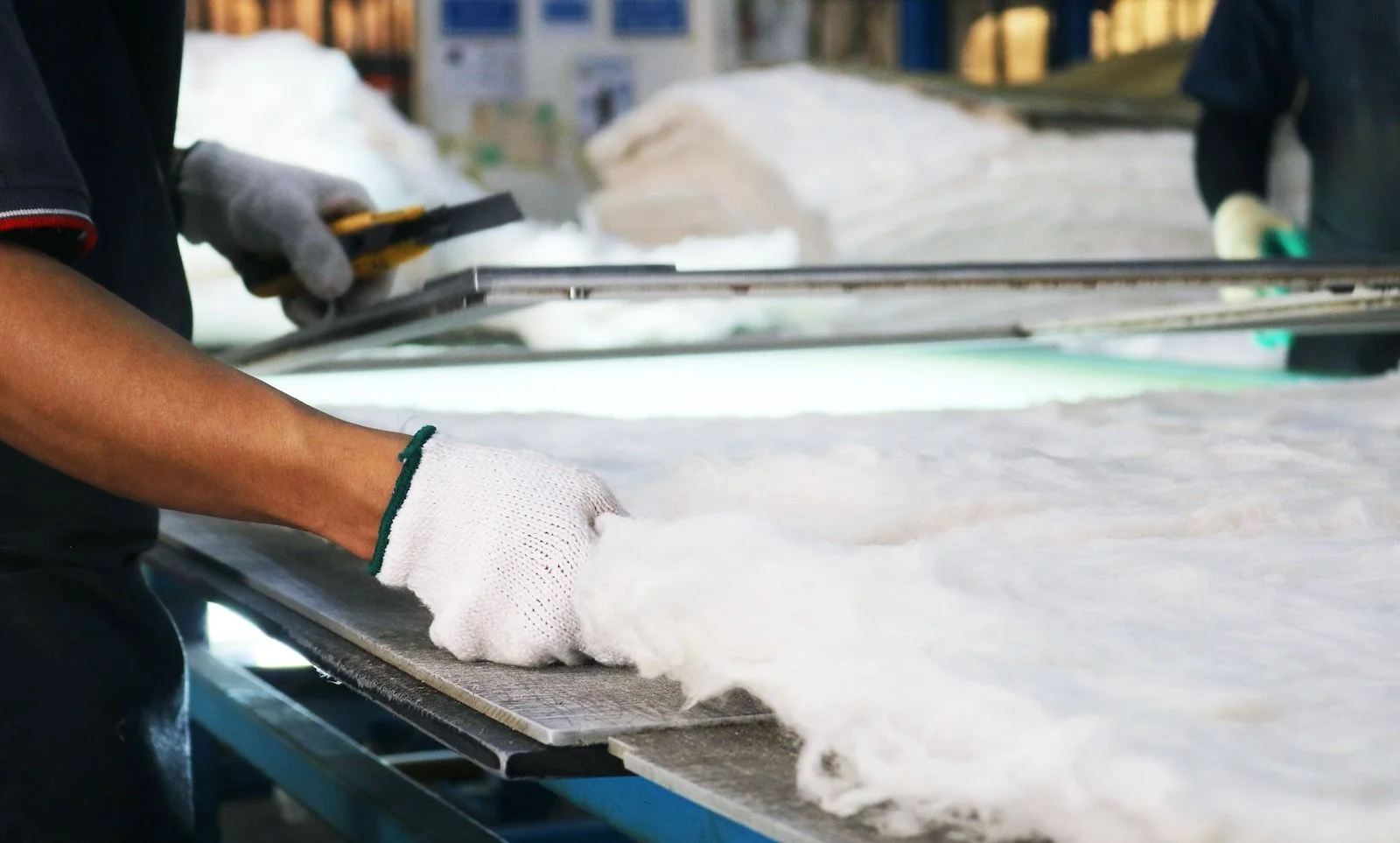
Short answer: not all of them. Memory foam itself is a polyurethane chemistry - it does not contain fiberglass as an ingredient. But many memory foam mattresses wrap a thin glass-fiber sock around the foam core to meet the federal open-flame standard (16 CFR Part 1633). It's most common in budget online brands; it's rare in higher-end and certified-organic models.
According to a 2026 NapLab analysis of 395 mattresses, 89.1% were fiberglass-free and 10.3% (36 mattresses) contained fiberglass - most of them under-$600 imports sold on Amazon and Walmart. The California Department of Public Health has confirmed glass fiber in specific products including the Zinus 6" Green Tea Memory Foam twin and the Graco Crib & Toddler Deluxe (CDPH factsheet, 2024).
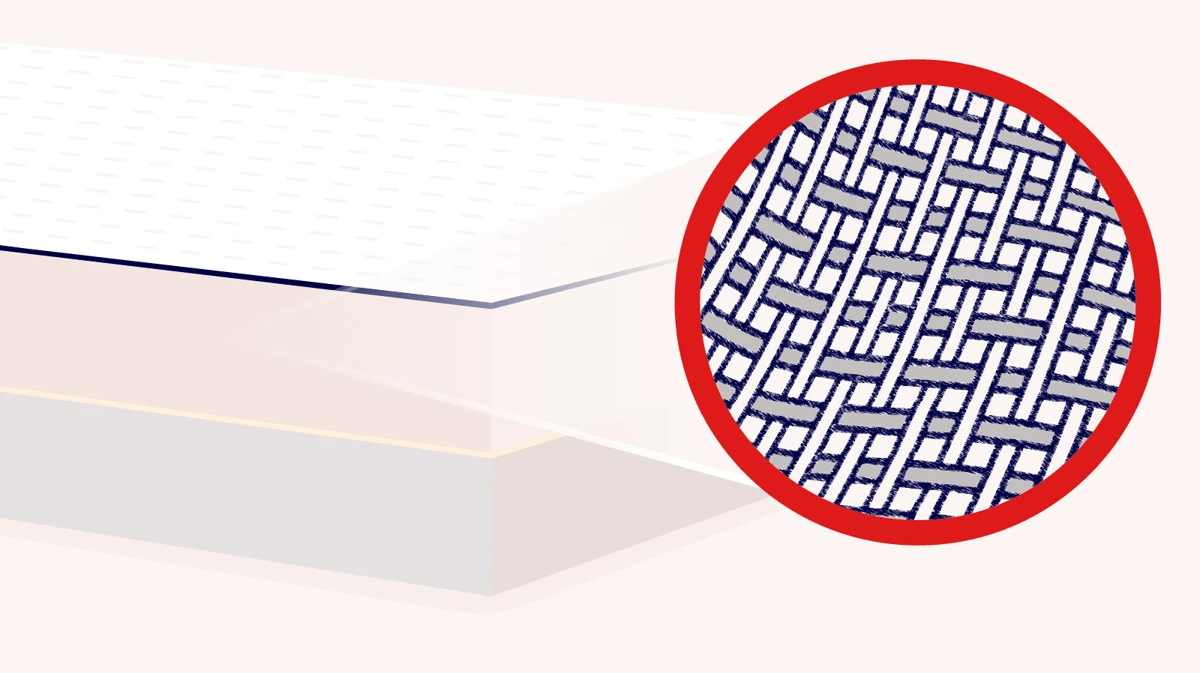
Why memory foam mattresses use fiberglass
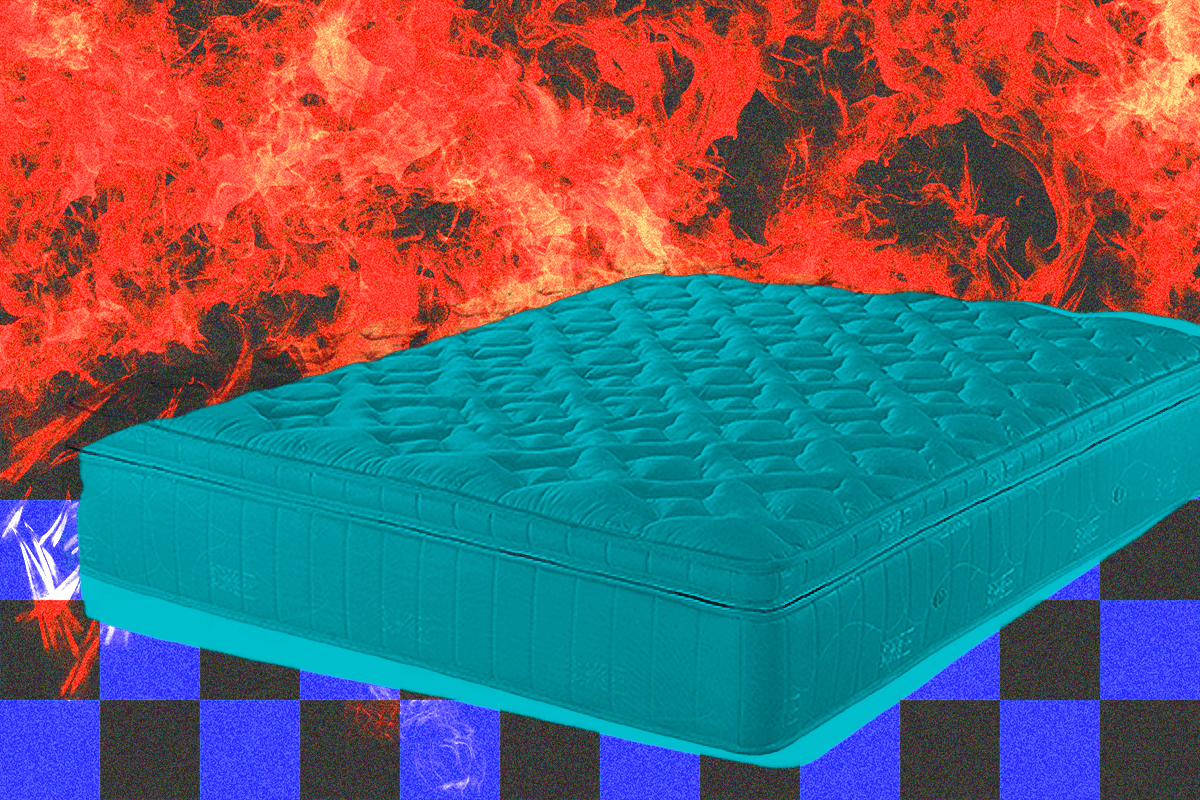
Federal law (16 CFR 1633) requires every mattress sold in the US to resist a 30-minute open flame test. Manufacturers have three practical ways to pass it:
- Glass fiber sock wrapped around the foam core - cheap, effective, but problematic if the cover is removed or torn.
- Rayon-silica or rayon-modacrylic treated knit barriers - used by most mid-tier and premium brands (Bear's "WhisperShield," Tuft & Needle, Saatva foam line, etc.).
- Wool batting - used by certified-organic brands like Avocado, Naturepedic, Birch, and PlushBeds. Wool chars and self-extinguishes naturally.
Fiberglass is the cheapest of the three, which is why it shows up disproportionately in low-price imports. It's not chosen because it's safer - it's chosen because it's the lowest unit cost that still passes the test.
How to tell if your memory foam mattress has fiberglass
1. Read the law tag
The white sewn-in tag (legally required on every US mattress) lists materials by percentage. Look for any of these terms:
- glass fiber
- glass wool
- glass filaments
- fiberglass
- silica (some silica blends are not glass; if the tag also says "rayon" or "modacrylic" alongside silica, it's likely a rayon-silica knit barrier, not glass fiber)
The tag also lists country of manufacture and the CertiPUR-US ID for the foam - which is not a fiberglass certification (it only covers the polyurethane).
2. Check the warning label
A "Do not remove cover" warning printed inside a zippered cover is the strongest secondhand indicator. Manufacturers using rayon-silica or wool typically don't need this warning because removing the cover doesn't release a hazardous material.
3. The flashlight test
In a dark room, shine a phone flashlight at a low angle across the mattress surface. Glass fiber will catch the light as tiny reflective glints. This is a confirmation test, not a primary one - some normal upholstery fibers also reflect.
4. Check the price and origin
Memory foam mattresses under ~$500 in queen size sold by online-first brands are statistically much more likely to use fiberglass. This isn't about country of origin - many fiberglass-free options are imported, and many fiberglass-containing ones are made domestically. It's about price floor: rayon-silica and wool barriers add ~$40-80 in unit cost.

Health risks (and why a sealed cover matters)
Sealed inside an intact cover, fiberglass is not a meaningful health hazard during normal use. The risk is what happens when the cover fails - through:
- Removing a zippered cover for washing (the most common cause).
- Pet claws, kid jumping, or bed-frame screws puncturing the cover.
- A factory defect in the cover seam.
Once airborne, glass fiber particles cause:
- Skin irritation - itching, rash, embedded splinters that need tape removal.
- Respiratory irritation - coughing, sore throat, exacerbation of asthma.
- Eye irritation - particularly when handling bedding nearby.
- Home contamination - fibers travel via HVAC and embed in carpet, drywall, and clothing. Professional remediation costs commonly run $5,000-$30,000.
OSHA classifies glass fibers >1 µm as a respiratory irritant; smaller fibers are still under study for long-term effects. There's no evidence linking mattress fiberglass exposure to cancer at residential levels - but the cleanup cost alone justifies avoiding it on new purchases.
What to do if your current mattress has fiberglass
If your cover is intact and unzipped - leave it alone. Don't pull the zipper. Don't wash the cover. Don't shake or beat the mattress. Add a thick mattress protector and a topper to add a wear layer between you and the cover seams.
If the cover has been opened or torn:
- Stop sleeping on it. Move the mattress to a sealed area (garage, sealed plastic).
- Don't vacuum with a regular vacuum - it spreads fibers. Use a HEPA-filter shop vac.
- Wipe hard surfaces with damp cloths (disposable). Wash exposed bedding separately on hot, then run an empty cycle.
- Check ducts and filters. Replace HVAC filters; consider a duct cleaning if symptoms persist.
- File a complaint with the CPSC at SaferProducts.gov - this builds the public dataset CDPH and class-action attorneys use.
If a class-action settlement is active for your brand (Nectar, DreamCloud, Siena, and Ashley are part of the 2026 Todd v. Ashley $9M settlement), you may be eligible for a voucher.
Memory foam brands that are fiberglass-free in 2026
These memory foam and hybrid lines are confirmed fiberglass-free in 2026, with the substitute barrier they use:
- Amerisleep (AS1-AS6) - plant-based Bio-Pur foam, rayon-silica barrier, CertiPUR-US verified.
- Saatva (Loom & Leaf, Memory Foam Hybrid) - natural thistle pulp + organic cotton.
- Bear - proprietary "WhisperShield" rayon barrier (Bear fiberglass guide).
- Tuft & Needle - graphite-infused foam, rayon-silica knit (more).
- Avocado - GOTS-certified organic wool (Avocado fiberglass details).
- Naturepedic - organic wool + cotton; one of the few mattress brands also certified MADE SAFE.
- Birch by Helix - wool batting, GOTS organic cotton.
- PlushBeds Botanical Bliss - organic wool fire barrier on a natural latex core.
- Helix (Midnight, Dusk, Twilight) - rayon barrier on memory foam hybrids.
- Beautyrest - modern lines use rayon/polyester/silica, not glass fiber (Beautyrest safety review).
Brands with a documented history of fiberglass (verify the specific model and manufacture year before buying):
- Zinus Green Tea family - confirmed by CDPH. See our full Zinus safety review.
- Allswell (Walmart) - fiberglass barrier on most models (Allswell fiberglass detail).
- Ashley Sleep (Chime, Gruve through 2023) - older inventory contains fiberglass (Ashley fiberglass guide).
- Lucid, Linenspa, Vibe, Novilla and most sub-$400 Amazon hybrids - frequently fiberglass; cover is not user-removable.
- Avenco, Sweetnight, Best Price Mattress - fiberglass common; treat the law tag as the source of truth on the unit you actually buy.
If you want a clean list of confirmed fiberglass-free memory foam picks, see our guide to the best mattresses without memory foam and the best 10-inch mattress roundup.
Safer fire-barrier alternatives to fiberglass
If you're shopping for a new memory foam mattress and want to avoid fiberglass entirely, three barrier types are reliably safe:
- Wool batting - naturally flame-resistant, breathable, hypoallergenic. Found in certified-organic brands (Avocado, Naturepedic, Birch, PlushBeds). Adds the most cost.
- Rayon-silica knit - the most common modern alternative. Safe to handle, used by Amerisleep, Bear, Tuft & Needle, Saatva, Helix.
- Modacrylic-rayon blends - engineered fiber barrier; common in Beautyrest, Sealy, Stearns & Foster.
Avoid any mattress whose cover is sewn shut or marked "do not remove" without a clearly listed alternative barrier on the law tag.
Fiberglass barriers - pros
- Cheapest way to pass federal flammability law (16 CFR 1633)
- Inert and contained when the cover is intact and zipper unopened
- Highly heat-resistant; long shelf life inside the cover
Fiberglass barriers - cons
- Catastrophic cleanup if the cover is torn or removed - often thousands of dollars
- Skin, respiratory, and eye irritation if particles escape
- Embeds in HVAC, carpet, clothing; professional remediation often required
- Concentrated in low-price imports; rare in mid-tier and organic brands
Shopping for a fiberglass-free memory foam mattress?
Our 2026 guide highlights certified-clean picks with rayon-silica and wool barriers - Amerisleep, Saatva, Bear, Helix, and more.
Frequently asked questions
Do all memory foam mattresses have fiberglass?
No. In a 2026 NapLab analysis of 395 mattresses, 89.1% were fiberglass-free. Fiberglass is concentrated in budget online brands (typically under ~$500 queen). Amerisleep, Saatva, Bear, Tuft & Needle, Helix, Avocado, Naturepedic, Birch, and PlushBeds all use rayon-silica or wool barriers instead.
How can I tell if my memory foam mattress has fiberglass?
Read the white law tag for the words "glass fiber," "glass wool," "glass filaments," or "fiberglass." A "Do not remove cover" warning on a zippered cover is a strong secondary indicator. In a dark room, a flashlight at a low angle will catch glass-fiber particles as small reflective glints.
Is it safe to sleep on a memory foam mattress with fiberglass?
If the cover is intact and the zipper has never been opened, the fiberglass is contained and not a daily-use hazard. The risk is a torn or unzipped cover - at that point, glass fibers can become airborne and contaminate the home, with cleanup typically costing thousands. Add a mattress protector and never unzip the cover.
Why do mattress companies use fiberglass at all?
Federal flammability law (16 CFR 1633) requires every mattress to resist a 30-minute open flame test. Glass fiber is the cheapest material that passes the test, which is why it dominates the under-$500 segment. Wool, rayon-silica, and modacrylic blends pass the same test but cost $40-80 more per unit.
Does memory foam itself contain fiberglass?
No. Memory foam (viscoelastic polyurethane) is a chemical foam - it has no fiberglass in the polymer. Fiberglass appears as a separate layer or "sock" wrapped around the foam core, between the foam and the outer cover.
Are Tempur-Pedic mattresses fiberglass-free?
Yes. Tempur-Pedic uses a non-fiberglass fire barrier across its entire lineup and was an early holdout against the practice. Tempur-Pedic, Saatva, Amerisleep, and Avocado are the four major US memory-foam-adjacent brands with no documented fiberglass use in any model.
What about memory foam toppers and pillows?
Memory foam toppers and pillows are generally not subject to 16 CFR 1633 (the flammability standard applies to mattresses). As a result, fiberglass is uncommon in them. Always check the law tag, but the higher-risk category is full mattresses, not toppers.