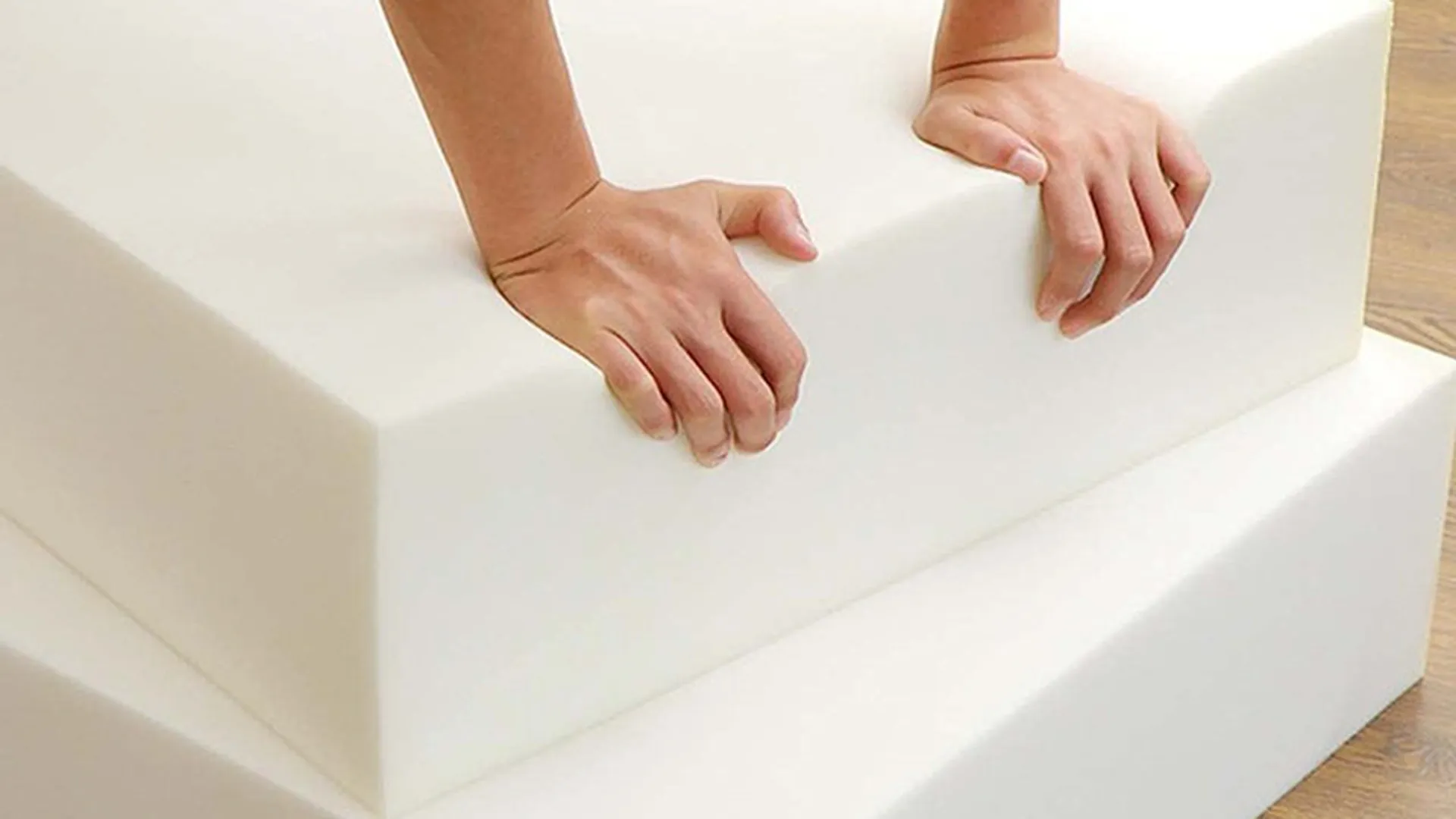
Yes - you can cut a memory foam mattress, and with the right tools you can do it cleanly enough that the foam still sleeps well. The two things that make the difference between a usable resize and a ruined mattress are simple: confirm there is no fiberglass inside the cover, and use an electric carving knife (not a utility blade or a hot wire) for the cut itself.
This guide walks through the safety check, the tools that actually work on dense foam, and a six-step process for marking and cutting straight, vertical edges. It also covers refitting the cover so the mattress still looks finished after the resize.
Before you cut: the fiberglass safety check
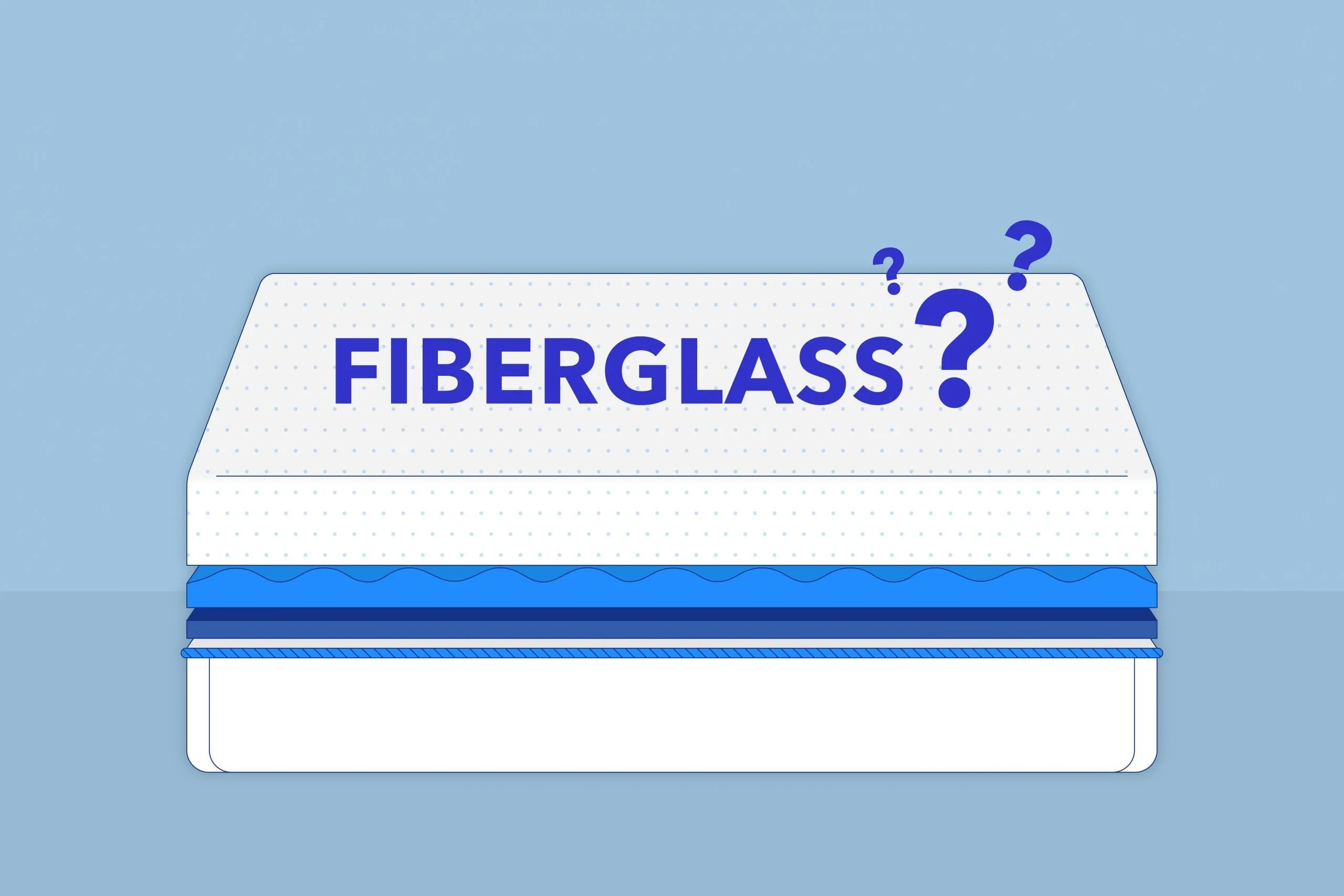
Many budget memory foam mattresses use a fiberglass inner sock as a flame barrier. Cutting through that sock releases millions of glass fibers that contaminate the room and the foam itself. This is the single biggest reason a memory foam cut goes wrong, and it is the step the original version of this article skipped.
How to tell if your mattress contains fiberglass
- Read the law tag. If you see “glass fiber,” “fiberglass,” or “silica” in the fill list, assume it’s present.
- Check the cover label. Most mattresses with fiberglass say “do not remove cover” explicitly - that warning exists for this reason.
- Cross-reference the brand. Zinus, Lucid, Olee, and most sub-$500 boxed mattresses on Amazon historically use fiberglass; Saatva, Helix, Nectar, Purple, and Tempur-Pedic do not.
If the mattress contains fiberglass, do not cut it. Cutting will spread fibers through the foam and air, and there is no safe way to clean it up at home. Donate, dispose of it via a local mattress recycler, or replace it.
The right tools for cutting memory foam
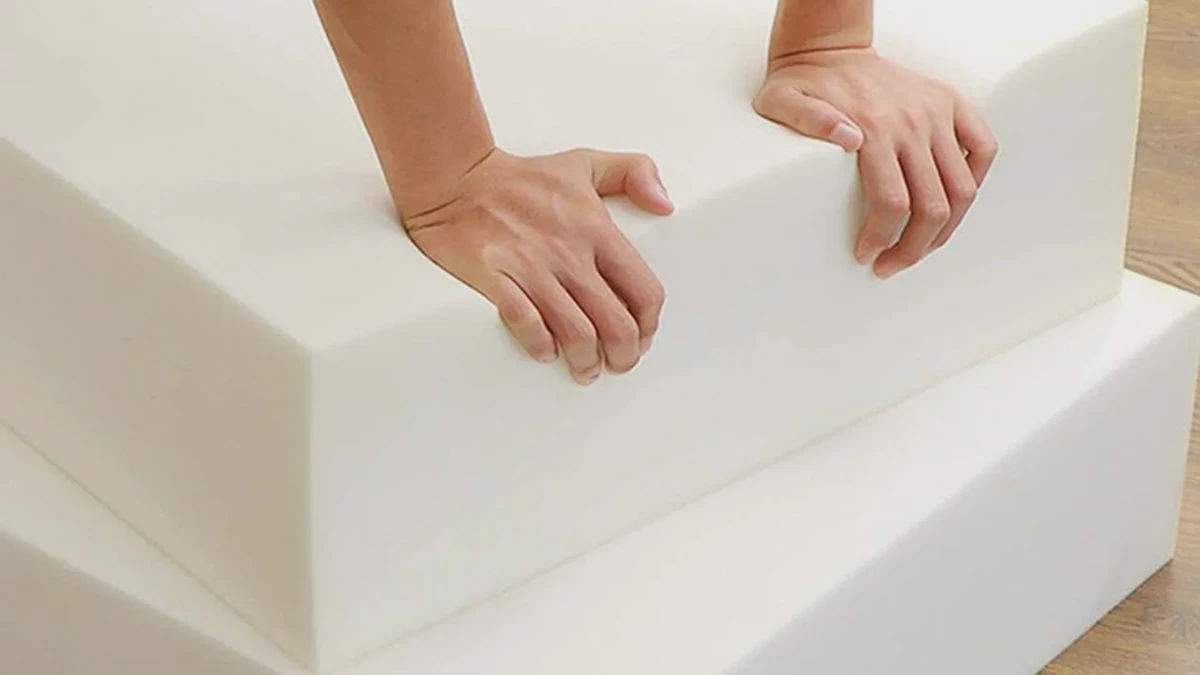
Memory foam compresses under blade pressure, which is why most “sharp knife” advice fails. Anything that requires force will pinch the foam and leave a wavy, beveled edge. The fix is a long blade that does the work in a sawing motion.
Best: electric carving knife
An electric carving knife (the kind sold for slicing roast beef) is the consensus best tool. The two reciprocating blades cut through 8-12" of foam in a single pass with almost no compression. A $25-$40 model from a hardware or kitchen store is enough; you do not need an industrial foam cutter.
Acceptable: long serrated bread knife
A 10"-plus serrated bread or carving knife works if you keep the strokes long and light. Short, hard strokes will tear the foam.
Avoid
- Hot wire / hot knife - releases toxic fumes from polyurethane and can ignite the foam.
- Utility / box cutter - only useful for surface scoring; the blade is too short to keep cuts vertical through 8"+ of foam.
- Circular or jigsaw - the foam grabs the blade and tears.
- Scissors - fine for a thin (under ¾") topper, useless on a full mattress.
When cutting makes sense
- Resizing a too-large mattress to fit a camper, RV, or non-standard frame.
- Repurposing an old foam mattress into pet beds, sofa cushions, or floor pads.
- Salvaging the unused half of a mattress with localized damage.
- Trimming a foam topper to fit a custom mattress size.
When you should not cut
- Mattress contains fiberglass (cutting releases fibers - replace, do not cut).
- Mattress is still under warranty (cutting voids it on every brand).
- You need to cut horizontally to thin the mattress - almost never produces a usable result on layered foam.
- Mattress is a hybrid with pocketed coils - cutting the coil layer is unsafe and impractical.
How to cut a memory foam mattress: 6 steps
1. Measure the target dimensions
Measure the frame or space the mattress needs to fit. Add ⅛" on each cut edge - memory foam compresses slightly under bedding, so an exact-fit cut tends to look loose after a few weeks. Write the final dimensions down before you touch the mattress.
2. Remove the cover
Most memory foam mattresses have a zippered cover. Unzip it fully and slide the foam out. If the cover is not zippered, use a seam ripper along one long edge - never scissors, which fray the fabric and make refitting harder. If the cover is glued or quilted to the foam, you’ll need to cut through it with the foam, then re-edge it with hem tape after.
3. Set the foam on a flat, supported surface
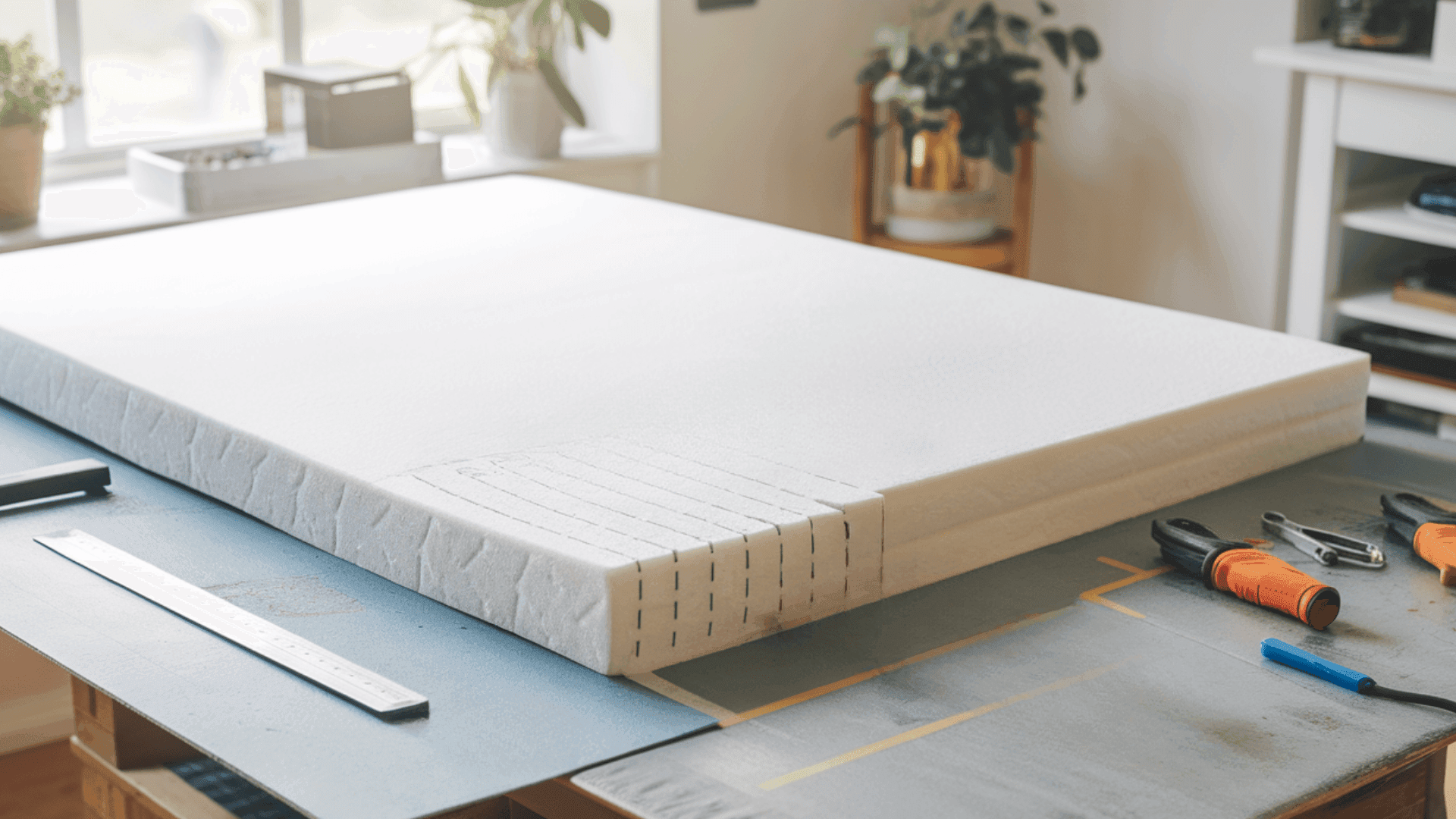
Lay the foam on a piece of plywood across two sawhorses, or on a long table. The cut line should overhang the edge by 1-2" so the blade has clearance under the foam. Cutting on a soft surface (a bed, carpet) lets the foam sag and produces a curved cut.
4. Mark the cutting line
Use a long straightedge (a level or 4-foot ruler) and a marker to draw the cut line on the top surface. Then mirror the line on the bottom surface so you can keep the blade vertical. For thick mattresses, mark a third line on the side to triangulate. A drywall square is the cheapest way to get true 90° corners.
5. Make the cut
Start at one corner. Hold the electric knife perpendicular to the foam, line the blades up with the mark, and let the knife do the work - push only as fast as the blade clears foam. Keep one hand on the foam to prevent it from rocking. For an 8-12" mattress, expect the cut to take 2-4 minutes. If you’re using a serrated knife, plan on 3-4 passes and finish each pass before starting the next.
6. Refit or replace the cover
If the cover is intact, lay the trimmed foam back inside and pin the new edge before sewing or applying iron-on hem tape. If you cut through the cover, trim it ½" longer than the foam, fold the excess under, and use upholstery-grade hem tape (Heat n Bond Ultrahold or equivalent) for a clean edge that holds up to washing.
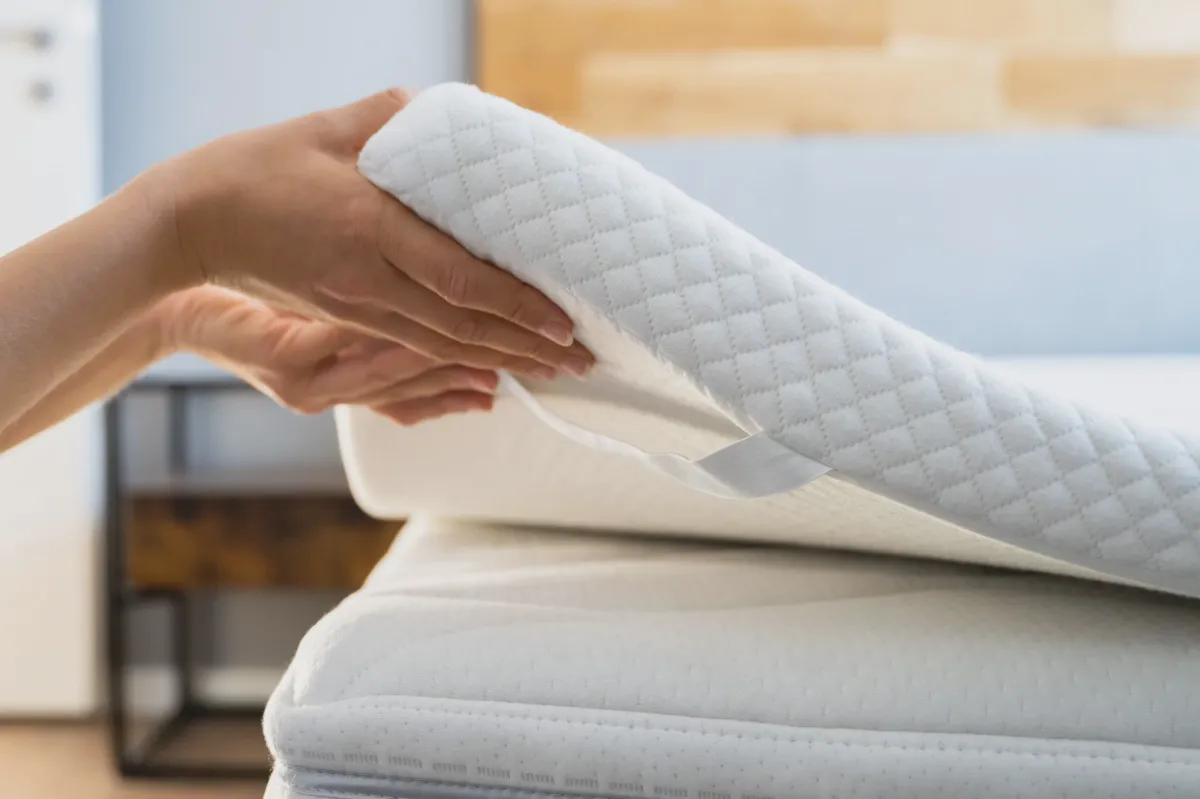
Fixing rough edges after the cut
Even with the right tool, cut foam edges are rougher than the factory edge. Two simple fixes make them disappear once the mattress is back in the cover:
- Trim high spots with sharp scissors. Lay the mattress on its side and snip any obvious bumps along the cut edge - don’t try to “shave” the whole edge flat.
- Let the foam relax for 24 hours. Memory foam re-expands after compression. Rough edges look noticeably smoother once the cells settle back to full size.
Edges that are still uneven after that almost always trace back to the blade not staying vertical during the cut. There is no good fix for a beveled cut other than re-trimming a fresh ¼" off, this time with the blade truly perpendicular.
Frequently asked questions
Does cutting a memory foam mattress void the warranty?
Yes, on every major brand. Saatva, Nectar, Tempur-Pedic, Purple, Helix, and DreamCloud all void the warranty the moment the original cover is opened or the foam is altered. If the mattress is still under warranty and the issue is sagging or a defect, file a claim instead of cutting.
Can you cut a memory foam mattress horizontally to make it thinner?
Technically yes, practically almost never. Most memory foam mattresses are layered (a comfort foam on top, transition foam in the middle, support foam on the bottom). Slicing horizontally usually destroys the comfort layer, which is the part you actually sleep on. If you need a thinner mattress, replacing it is almost always cheaper than the foam you’ll waste.
What’s the best tool for cutting memory foam?
An electric carving knife. It’s widely available for $25-$40, the reciprocating blades cut through 8-12 inches of foam in a single pass, and it produces a near-vertical edge with almost no compression. A long serrated bread knife is the next-best option.
Can you cut a hybrid mattress the same way?
No. Hybrids contain pocketed coils inside the support layer. Cutting the coil layer is unsafe - the springs are under tension and snap unpredictably - and there’s no clean way to seal the cut edge of the coil unit. If you need to resize a hybrid, replace it with an all-foam model.
Will the mattress still feel the same after cutting?
Mostly, yes. The cell structure of memory foam is uniform, so a vertical cut doesn’t change how the rest of the foam responds to weight or temperature. The trimmed edge will feel slightly firmer for the first few weeks because the cut cells haven’t fully relaxed.