A spilled drink, a leaky window, a midnight accident - whatever soaked your mattress, the next 24 hours decide whether it dries clean or grows mold. Speed and airflow are everything. Done right, most spills and pet accidents can be fully recovered. Done wrong, you trap moisture deep in the foam and the mattress is gone.
This is the method our editorial team uses on review-lab beds when something goes wrong. It works on memory foam, hybrid, and innerspring mattresses, with a few material-specific notes called out along the way.
TL;DR: How to dry a mattress fast
- Strip all bedding immediately and toss it in the wash.
- Blot the wet area with thick dry towels - press hard, do not rub.
- Pull out deep moisture with a wet/dry shop vac.
- Sprinkle baking soda generously, leave 8-12 hours, vacuum off.
- Stand the mattress on its side and aim two fans plus a dehumidifier at it.
- If weather allows, finish in direct sunlight on a tarp.
- Confirm fully dry (24-48 hours) before remaking the bed.
The biggest mistake we see: skipping the wet/dry vacuum and going straight to fans. Surface drying looks fine in 6 hours but trapped moisture inside the foam is what breeds mold a week later.
Step 1: Strip the bed and assess the damage
Pull off sheets, mattress protector, and any pillows in the splash zone. Get them into the washing machine on hot - delaying lets stains set and bacteria grow. While you're at it, look at the wet patch:
- Surface only (a small spill, blotted within minutes): you'll be done in a few hours.
- Soaked through one side: plan on 24-48 hours of active drying.
- Saturated all the way through (flooding, an overnight leak): the mattress is probably not salvageable. Skip to the replacement section.
Memory foam holds water far longer than innerspring or hybrid - if more than the top inch is wet, your odds drop sharply.
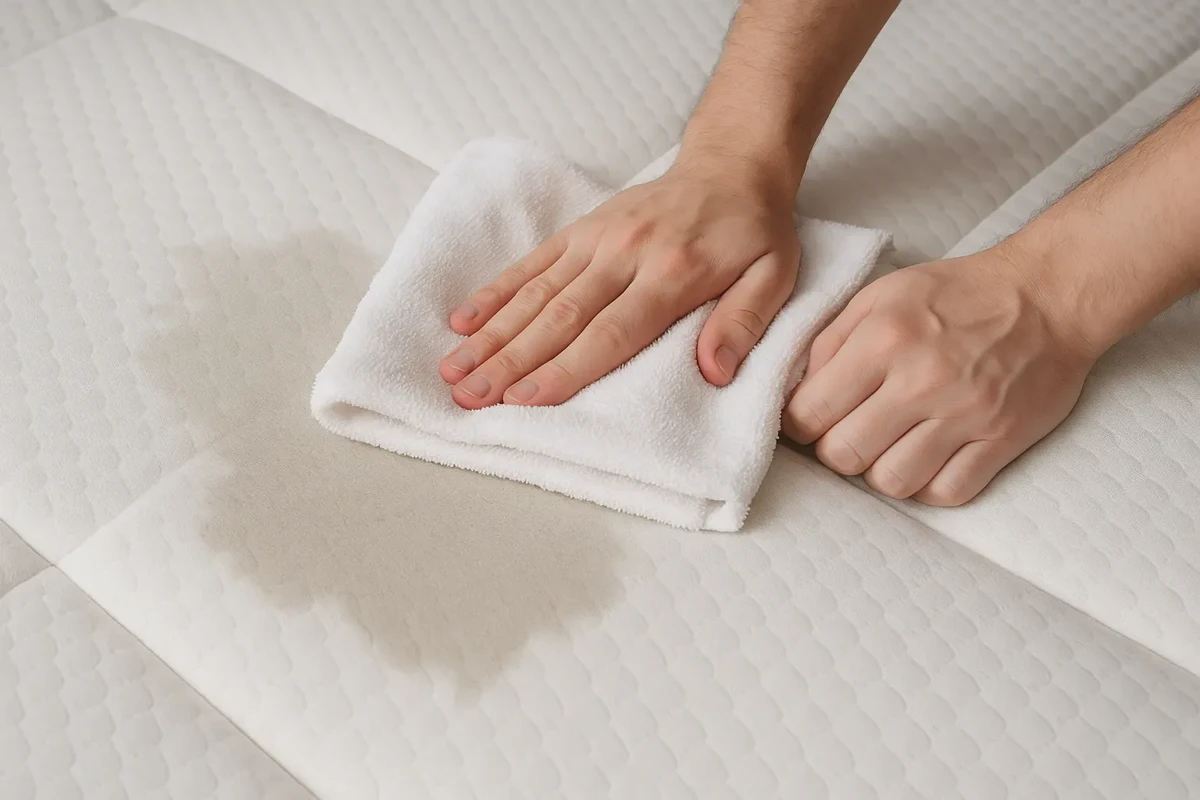
Step 2: Blot - do not rub - to pull out surface moisture
Lay clean dry towels over the wet area and press down firmly. Stand or kneel on them if the patch is large - the goal is to drive towel fibers into the foam to wick water out. Swap towels as soon as they go damp; a saturated towel can't absorb anything.
If there's a stain (urine, blood, wine, coffee), treat it now while the area is still damp - dried stains are 10x harder to remove. A 50/50 mix of cool water and white vinegar works for most spills; for protein stains like blood or urine, an enzyme cleaner is more effective. Hydrogen peroxide can lift stains but may bleach colored ticking, so spot-test first.
Avoid hot water on protein stains - it sets them permanently.
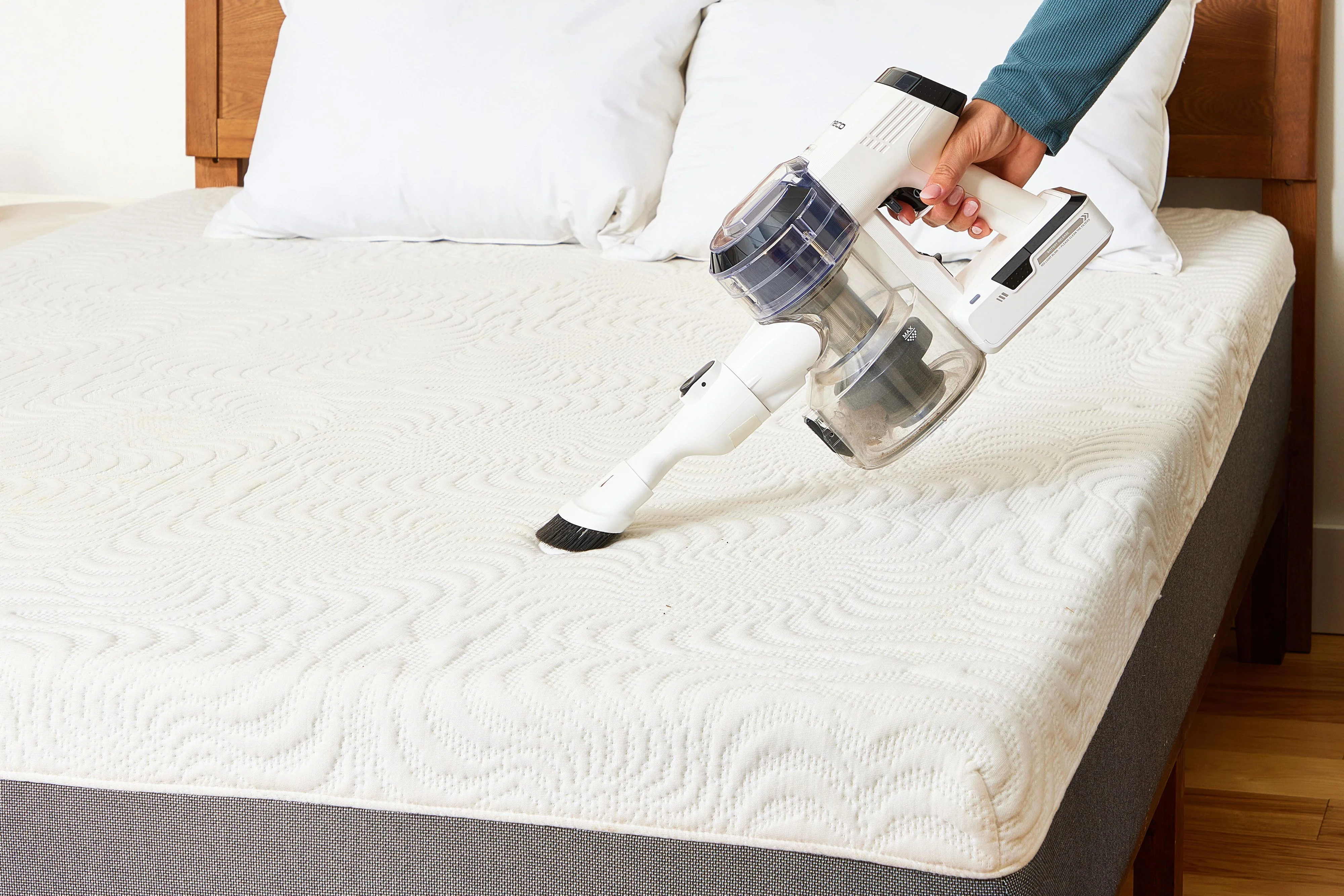
Step 3: Use a wet/dry vacuum for deep moisture
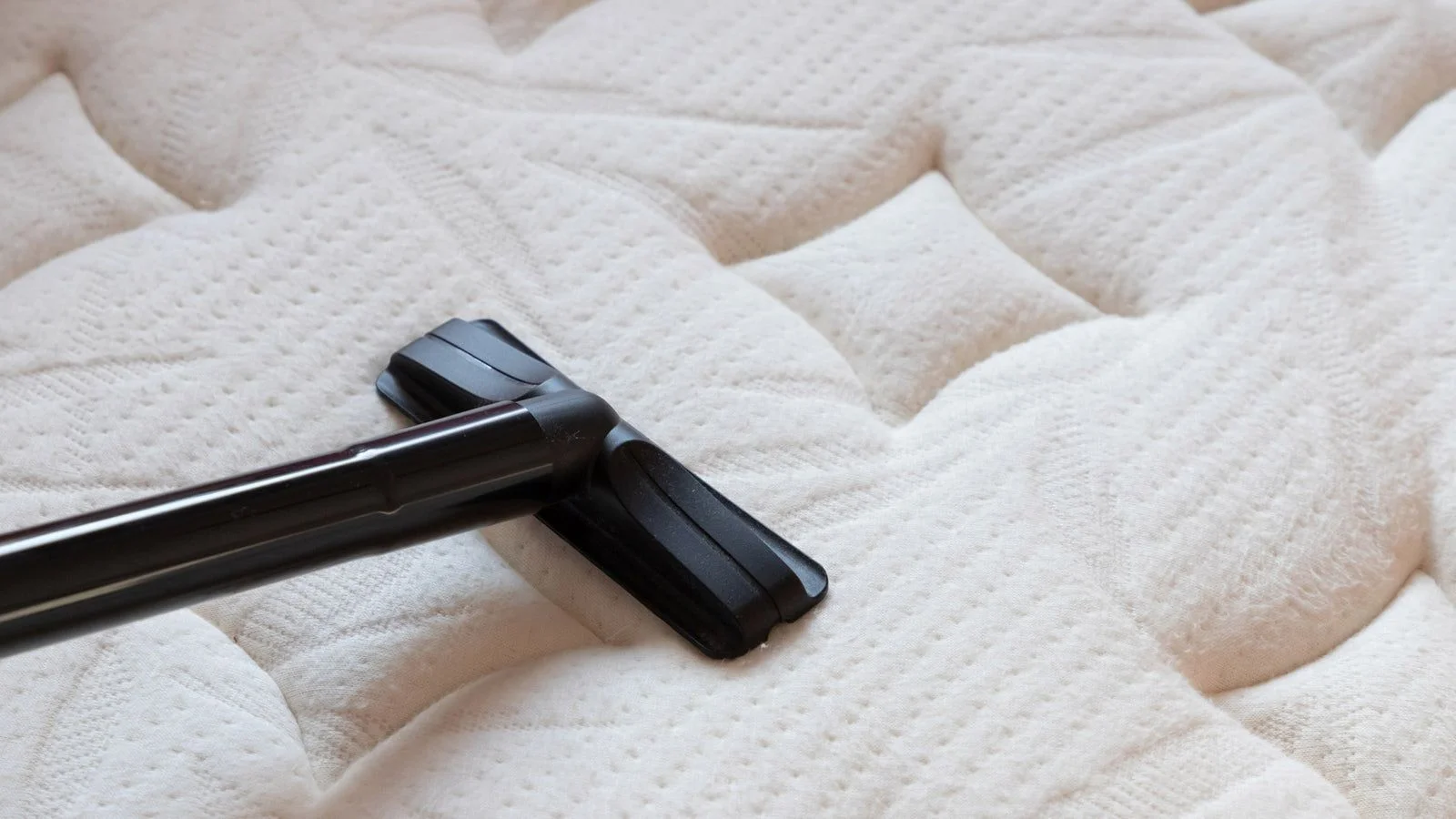
This is the step most online guides skip, and it's the difference between a mattress that smells fine in a week and one that develops mold. A standard household vacuum will not do this - you need a wet/dry shop vacuum (a basic 4-6 gallon one runs around $60-80, or borrow from a hardware store).
Run the nozzle in slow, overlapping strokes across the wet area. Press down moderately - the suction pulls water out of the top inch or two of foam that towels can't reach. Keep going until the canister stops collecting visible water.
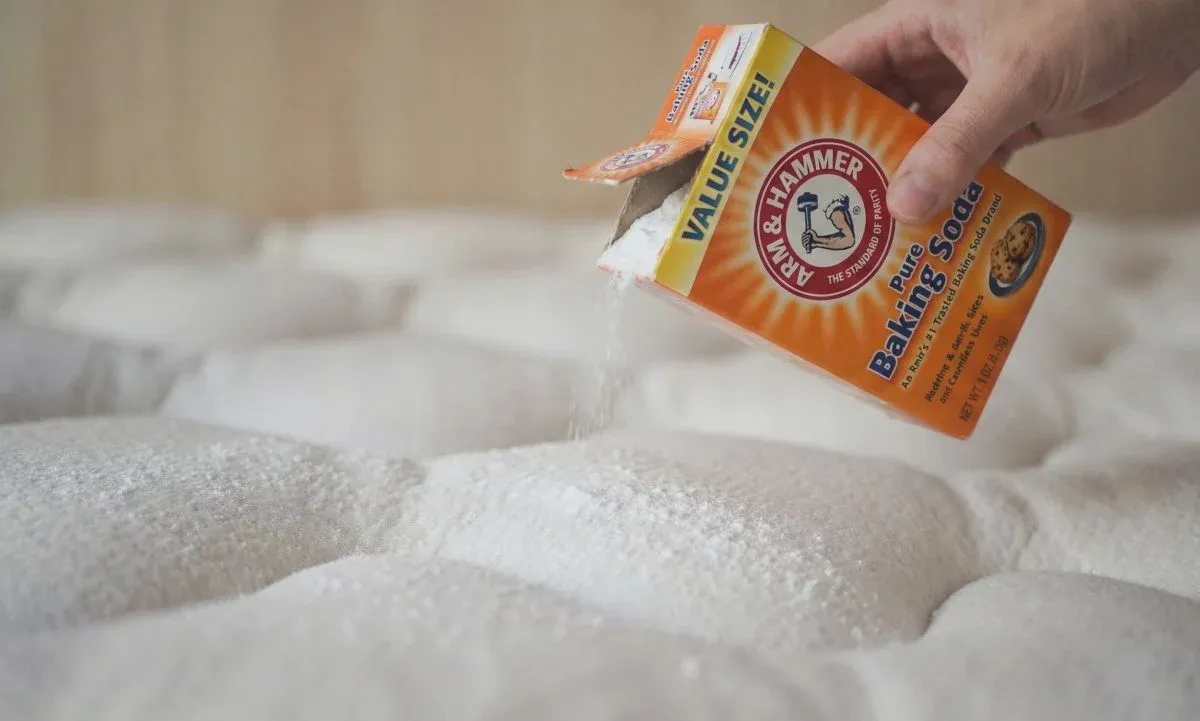
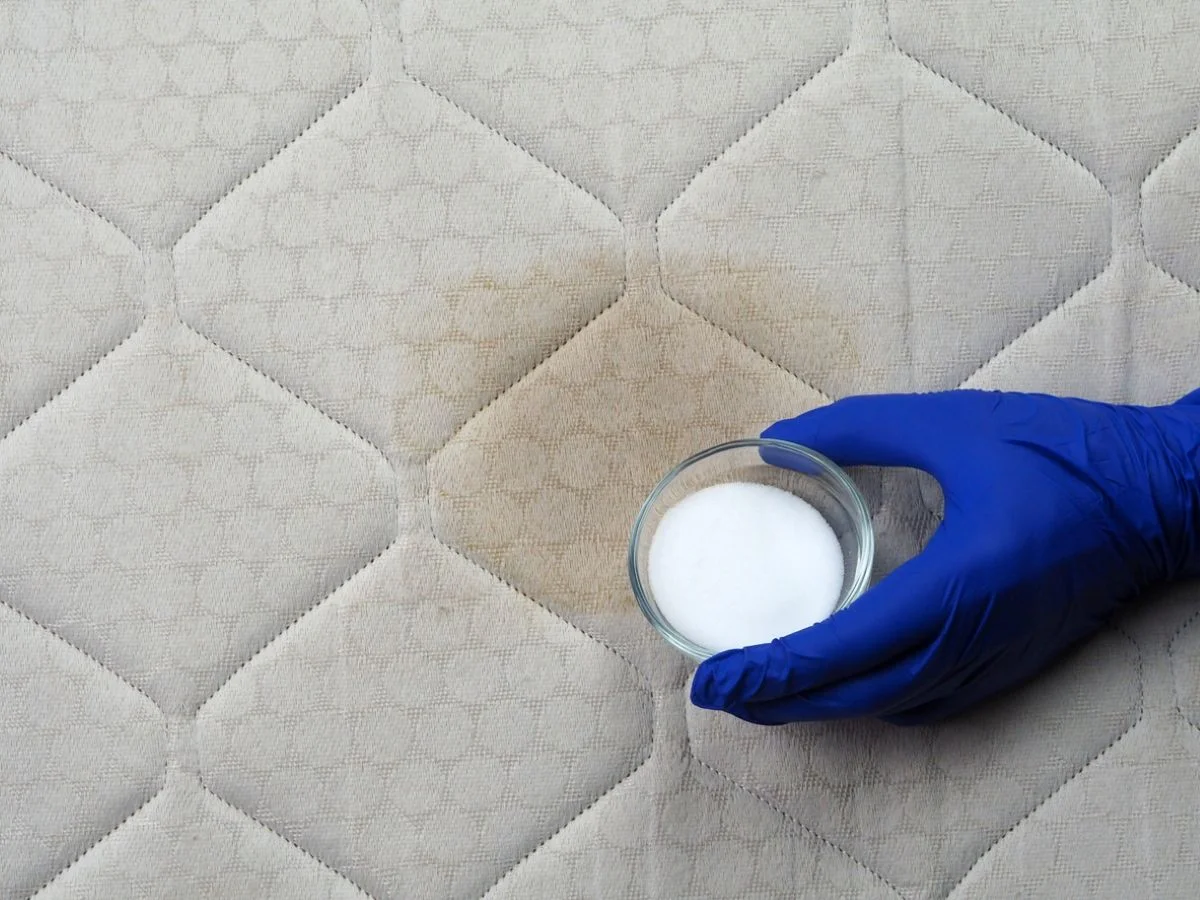
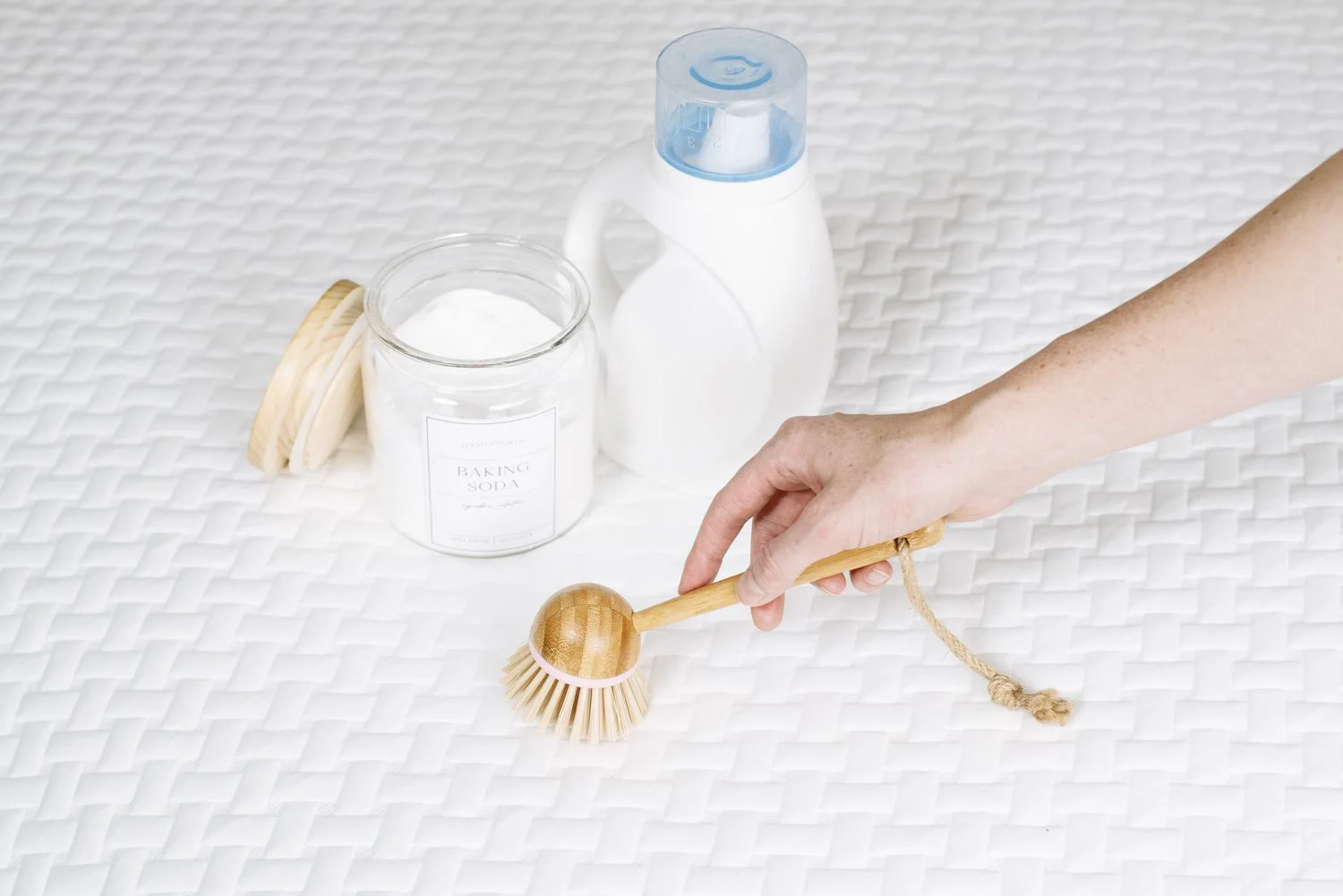
Step 4: Sprinkle baking soda to wick the rest
Cover the entire damp area in a thick layer of baking soda - we mean it, half a box for a queen-size patch. Baking soda is hygroscopic, meaning it pulls residual moisture out of the mattress and into itself, and it kills odor while it works. Clean unscented cat litter (clay-based) does the same job in a pinch.
Leave it in place for at least 8 hours, and ideally overnight. Then vacuum it all off with a regular vacuum's upholstery attachment - if any clumps form, that's moisture the baking soda absorbed.
Step 5: Maximize airflow with fans + dehumidifier
Stand the mattress up on its side, leaning against a wall, so air can hit both faces. This single move cuts drying time roughly in half. Position one box fan blowing across each side, and add a dehumidifier in the room set to 40-50% relative humidity. The dehumidifier matters more than people realize: in a humid bedroom, fans alone just move wet air around.
Run them for at least 12 hours, and don't open windows on a humid day - that defeats the dehumidifier.

Step 6: Sunlight (when weather allows)
Direct sunlight is the most effective natural drying agent there is - UV light evaporates surface moisture and kills bacteria and dust mites at the same time. If it's a warm, low-humidity day, drag the mattress outside, lay a clean tarp or old blanket underneath, and prop it up so both sides catch sun.
Two to four hours of midday sun is plenty. Don't leave it out overnight (dew, bugs, surprise rain) and don't sun memory foam for more than a couple hours - prolonged UV can break down the polyurethane and discolor the cover.
Step 7: Confirm it's actually dry before remaking the bed
This is the step everyone rushes. A mattress can feel surface-dry while the inside is still damp. Three quick tests:
- Press a clean white paper towel hard against the original wet spot for 30 seconds. It should come away completely dry, with zero discoloration.
- Smell it. Any musty or sour note means moisture is still present somewhere.
- Feel temperature. A still-damp area will feel noticeably cooler than the rest of the mattress.
If anything fails, run another 12 hours of fans + dehumidifier. Putting sheets back on a damp mattress is a mold guarantee.
Do
- Act fast - the first 30 minutes matter more than the next 24 hours.
- Use a wet/dry vacuum for deep moisture extraction.
- Stand the mattress upright to dry both sides at once.
- Run a dehumidifier alongside the fans.
- Confirm fully dry with the paper-towel test before remaking the bed.
Don't
- Don't use a hair dryer on high heat or a heat gun - high heat damages memory foam adhesives.
- Don't apply hot water to protein stains (urine, blood) - it sets them.
- Don't sleep on a mattress that's still cool to the touch in any spot.
- Don't rub the wet area - rubbing drives liquid deeper into the foam.
- Don't skip the wet/dry vacuum step on a heavy soak.
How long does a mattress take to dry?
- Small surface spill, blotted right away: 4-8 hours.
- Pet accident or moderate spill: 12-24 hours.
- Heavy soak (one side fully wet): 24-48 hours.
- Soaked through (flooding): 3+ days, and recovery is unlikely.
Memory foam runs at the long end of those ranges; innerspring and hybrid dry faster because air moves through the coil layer.
When to give up and replace it
Some soaks aren't worth fighting. Replace the mattress if any of these are true:
- It was submerged or saturated all the way through.
- The water source was sewage, floodwater, or anything contaminated.
- You see visible mold or smell mildew that won't fade after thorough drying.
- The mattress is more than 7-8 years old and was already due for replacement.
Mold inside a mattress is essentially un-cleanable - it lives in foam pores no spray can reach.
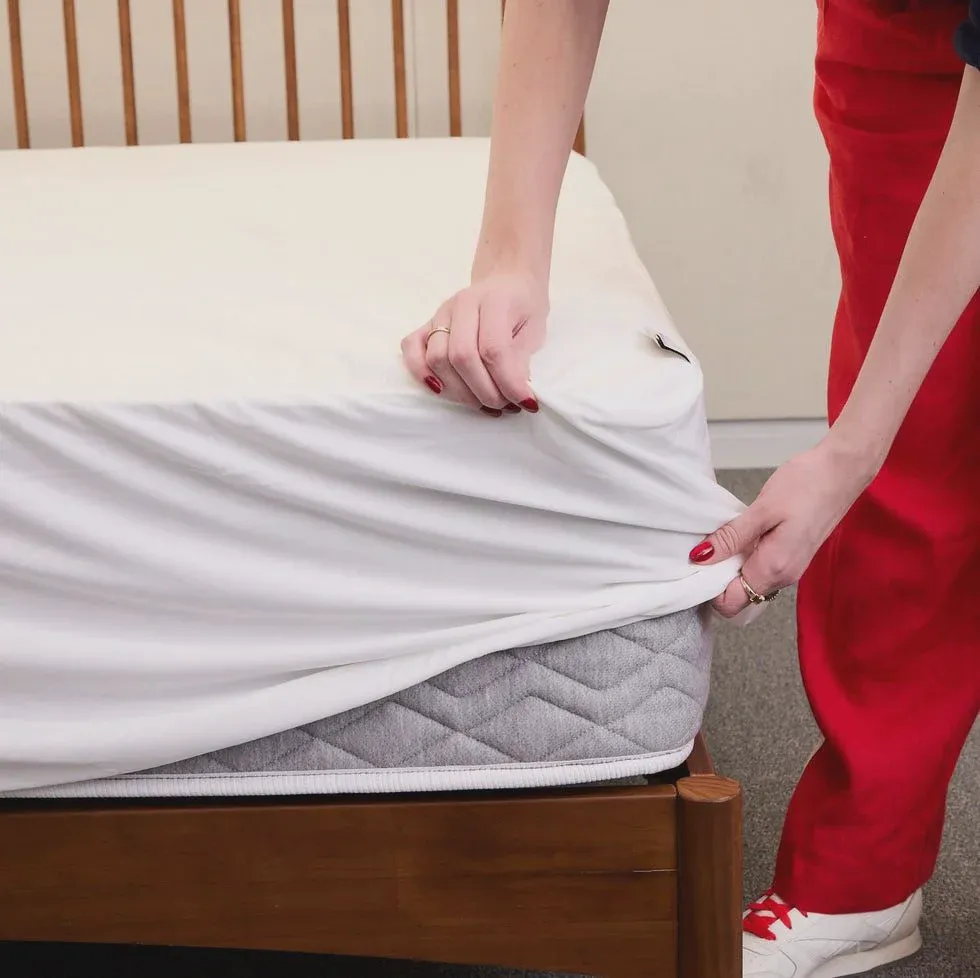
Prevent it from happening again
- Use a waterproof mattress protector. The good ones are quiet, breathable, and run $25-$60 - cheaper than replacing a mattress once.
- Keep drinks on a nightstand with a lip, or in a covered bottle.
- Don't position the bed directly under windows or AC units that condense in summer.
- If you have a small child or older pet, layer a washable mattress pad on top of the protector for double coverage.
FAQ: Drying a wet mattress
How do you dry a mattress quickly?
Blot with thick towels, run a wet/dry vacuum across the wet area, sprinkle baking soda for 8-12 hours, then stand the mattress up with two fans and a dehumidifier aimed at it. In dry weather, finish with 1-2 hours of direct sunlight. Plan on 24-48 hours total for a moderate soak.
Is a mattress ruined if it gets wet?
Not necessarily. Surface spills and pet accidents are usually recoverable if you act within an hour. A mattress is likely beyond saving if it was soaked through both sides, sat wet for more than 48 hours, was hit by sewage or floodwater, or shows visible mold.
Can I dry a mattress with a hair dryer?
Only on the cool or low-heat setting, and only for small spots. High heat damages memory foam, melts adhesives, and can yellow the cover. For anything bigger than a coffee-cup spill, fans plus a dehumidifier are faster and safer.
What draws moisture out of a mattress fastest?
A wet/dry shop vacuum, used immediately after blotting. Nothing else extracts as much trapped water in as little time. Baking soda and airflow finish the job, but the vacuum is what prevents mold.
How do I dry a memory foam mattress?
Same method, with two cautions: never use heat above body temperature (no heat guns, no hot hair dryers), and keep direct sunlight to under 2 hours. Memory foam holds water longer than other types, so plan on the full 48 hours of fans and dehumidifier time.
Protect the bed before the next spill
A waterproof mattress protector is the single most cost-effective sleep upgrade you can make. Browse our editorial picks for protectors that are quiet, breathable, and actually waterproof.