
Latex is naturally resistant to dust mites, mold, and bacteria - which is one reason it tends to outlive memory foam and innerspring beds. But "low-maintenance" is not "no-maintenance." Sweat, body oils, and the occasional spill still need to come off, and the wrong cleaner can permanently degrade natural rubber. This guide walks through the safe, manufacturer-approved way to clean a latex mattress, including stain-by-stain treatment, deodorizing, drying, and the mistakes that void warranties.
Quick answer
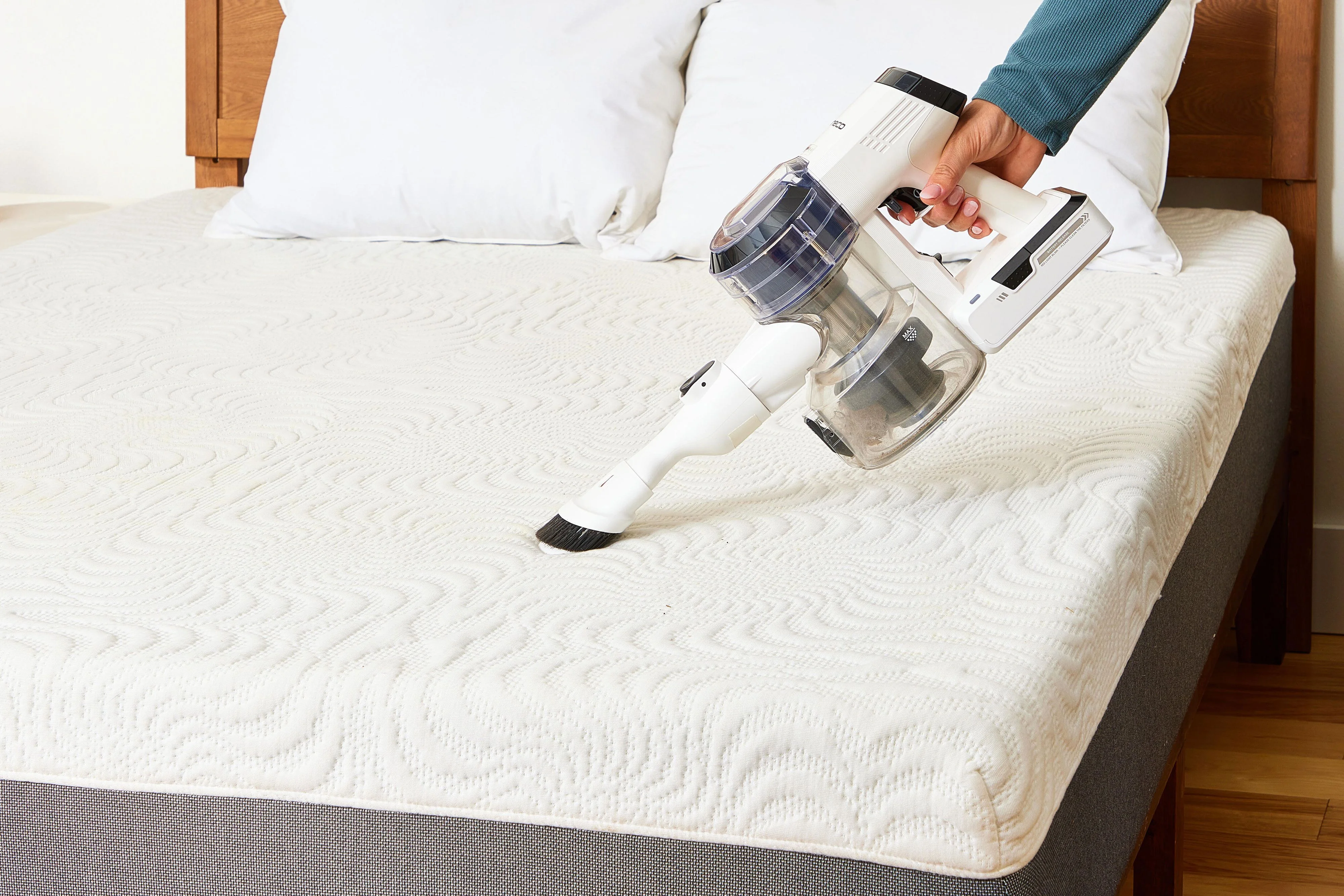
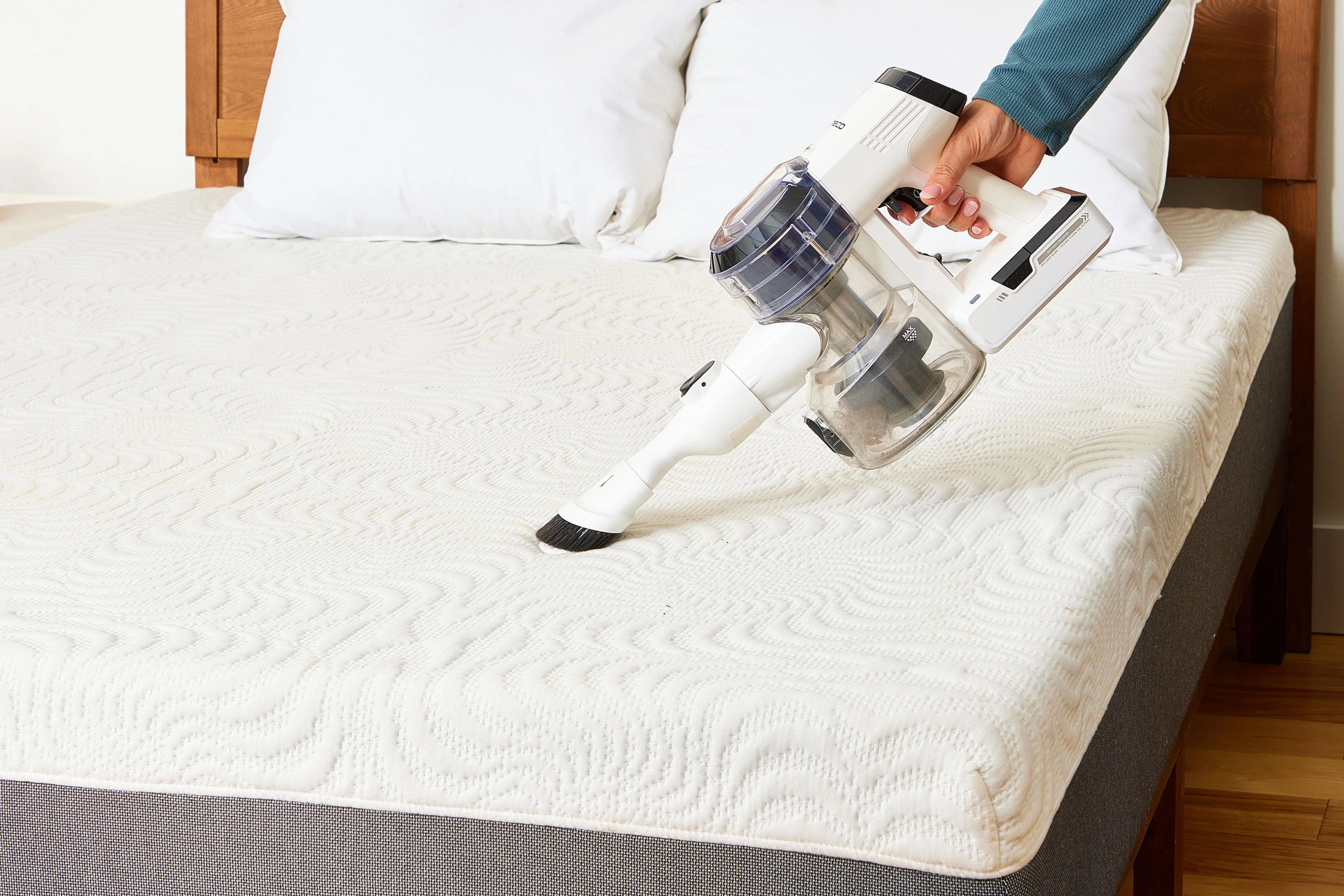
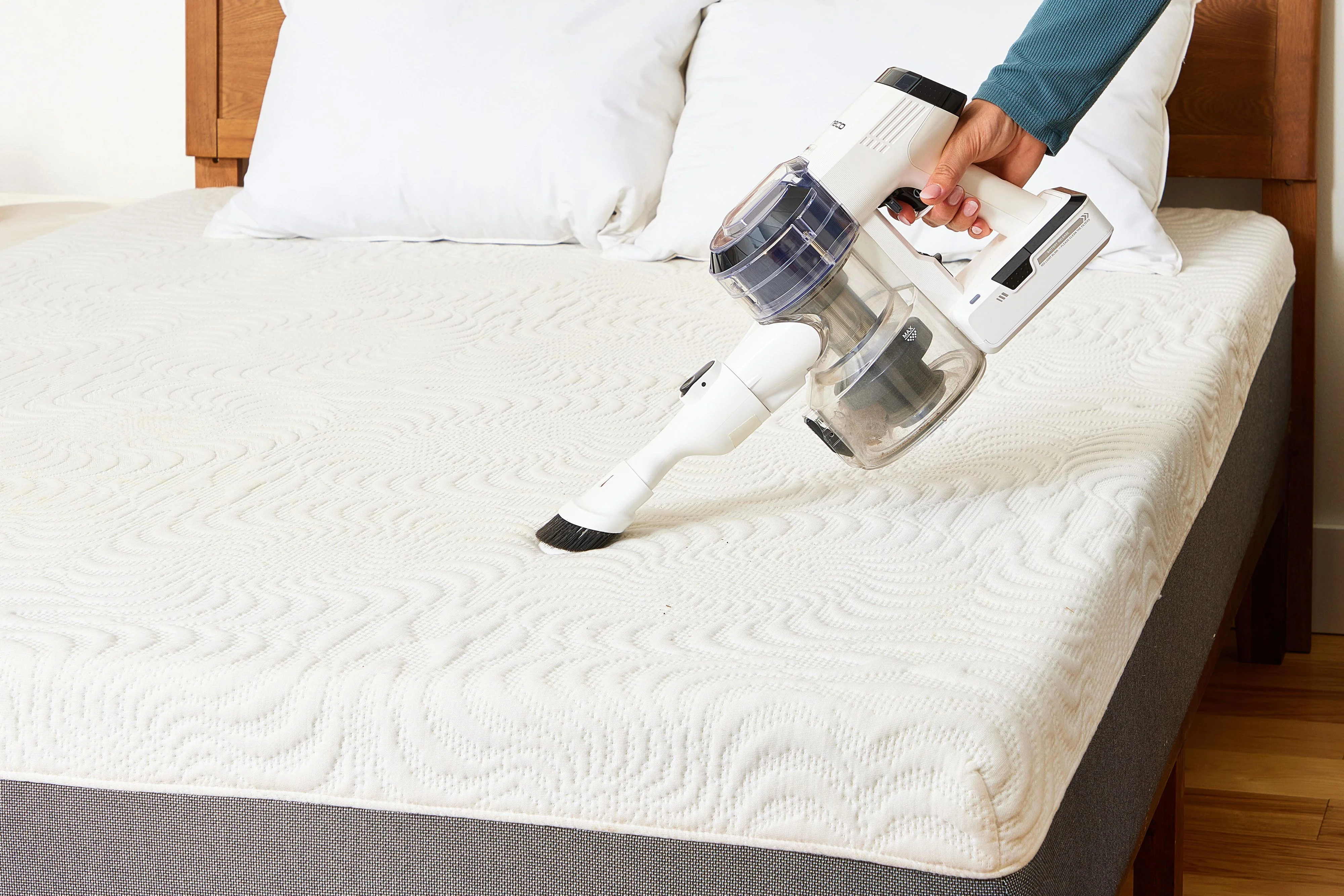
- Vacuum the surface every 1-2 months with an upholstery attachment.
- Spot-clean stains with mild dish soap and cool water on a wrung-out cloth - never soak.
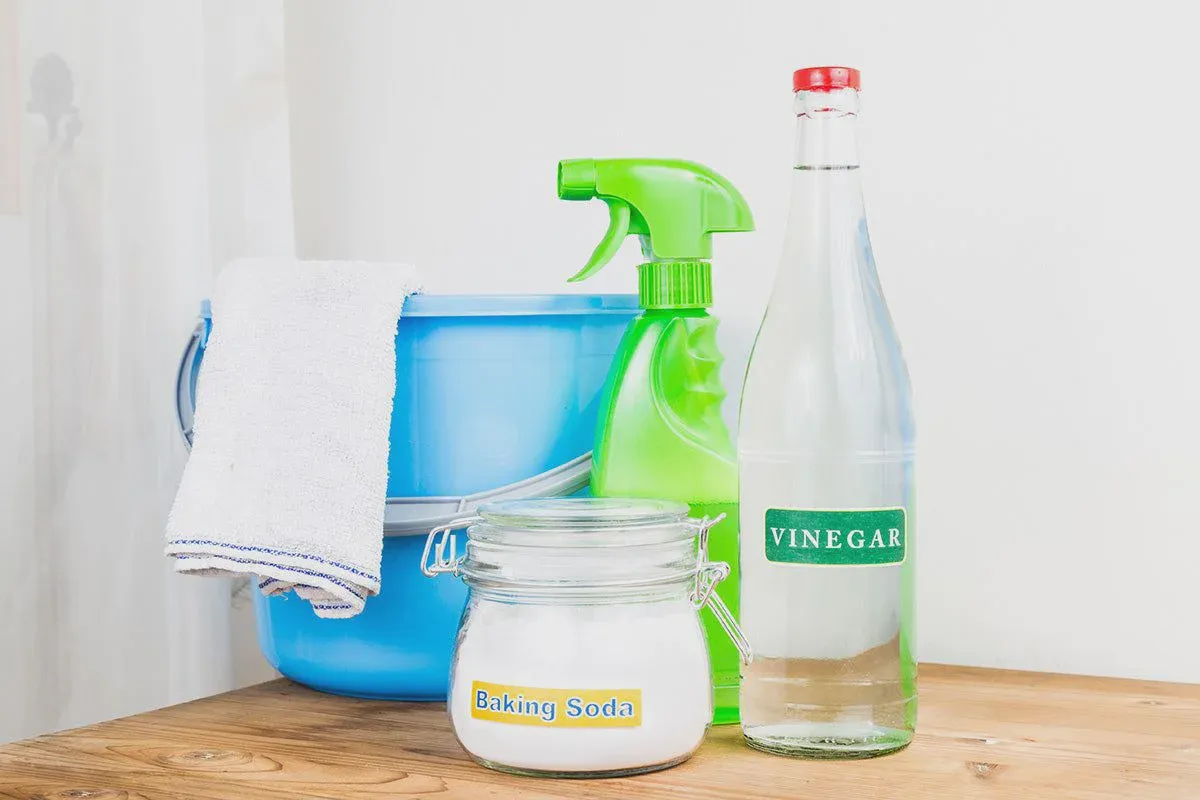
- Deodorize by sprinkling baking soda, leaving 1-2 hours, then vacuuming.
- Air-dry fully (a fan helps) before re-covering.
- Never use bleach, harsh solvents, steam cleaners, or direct sunlight for long periods.
How often should you clean a latex mattress?
Build cleaning into your bedding rhythm rather than waiting for a problem:
- Weekly: wash sheets and pillowcases in hot water (130°F+) to kill dust mites before they can settle on the mattress.
- Every 1-2 months: vacuum the top and sides with an upholstery attachment.
- Every 3-6 months: deodorize with baking soda and rotate the mattress 180°.
- Immediately: blot any spill the moment it happens - latex is porous, and standing liquid wicks down into the core where it cannot dry.
Step-by-step: spot-cleaning a latex mattress
1. Strip and vacuum
Remove the cover (most quality latex beds have a zippered, machine-washable cover - check the care tag and wash on cold, gentle, no fabric softener). Vacuum the bare latex slowly with an upholstery brush, paying attention to the head and foot edges where dust collects.
2. Mix the cleaning solution
In a small bowl, combine 1 cup of cool water with 3-4 drops of mild liquid dish soap (Dawn, Seventh Generation, or any plant-based detergent works). Whisk until foamy. The foam - not the water - is what you'll apply.
3. Blot, don't scrub
Dip a clean microfiber cloth into the foam, wring it out hard so it's barely damp, and dab the affected area in small circular motions. Scrubbing tears the latex skin. Repeat with a fresh cloth dampened in plain cool water to lift the soap residue.
4. Air-dry completely
Stand the mattress on its side or place a box fan 18 inches from the surface. Latex must be bone-dry before a cover or sheets go back on - trapped moisture invites mildew, the one thing latex isn't naturally resistant to. Plan on at least 4-8 hours.
Stain-by-stain treatment
Different stains need different chemistry. Apply only to the stain itself, not the whole mattress, and always blot first.
- Sweat & body oils: mild dish soap and cool water. For yellowing, follow with a paste of equal parts baking soda and water; let sit 15 minutes, then wipe.
- Fresh urine: blot dry, apply baking-soda paste, let sit 15 minutes, wipe with cool water. Finish with a 50/50 white vinegar/water mist to neutralize odor.
- Dried urine: dab with 3% hydrogen peroxide on a cloth (spot-test first), then baking soda. Avoid most enzyme cleaners - many contain solvents that swell latex.
- Blood: cool water only on fresh blood (heat sets it). For dried blood, dab with hydrogen peroxide, then rinse with cool water.
- Vomit, food, or drink: scrape solids, blot liquid, then mild soap solution. Finish with diluted white vinegar to deodorize.
Always spot-test hydrogen peroxide in a hidden corner first - it can lighten dyed mattress covers.
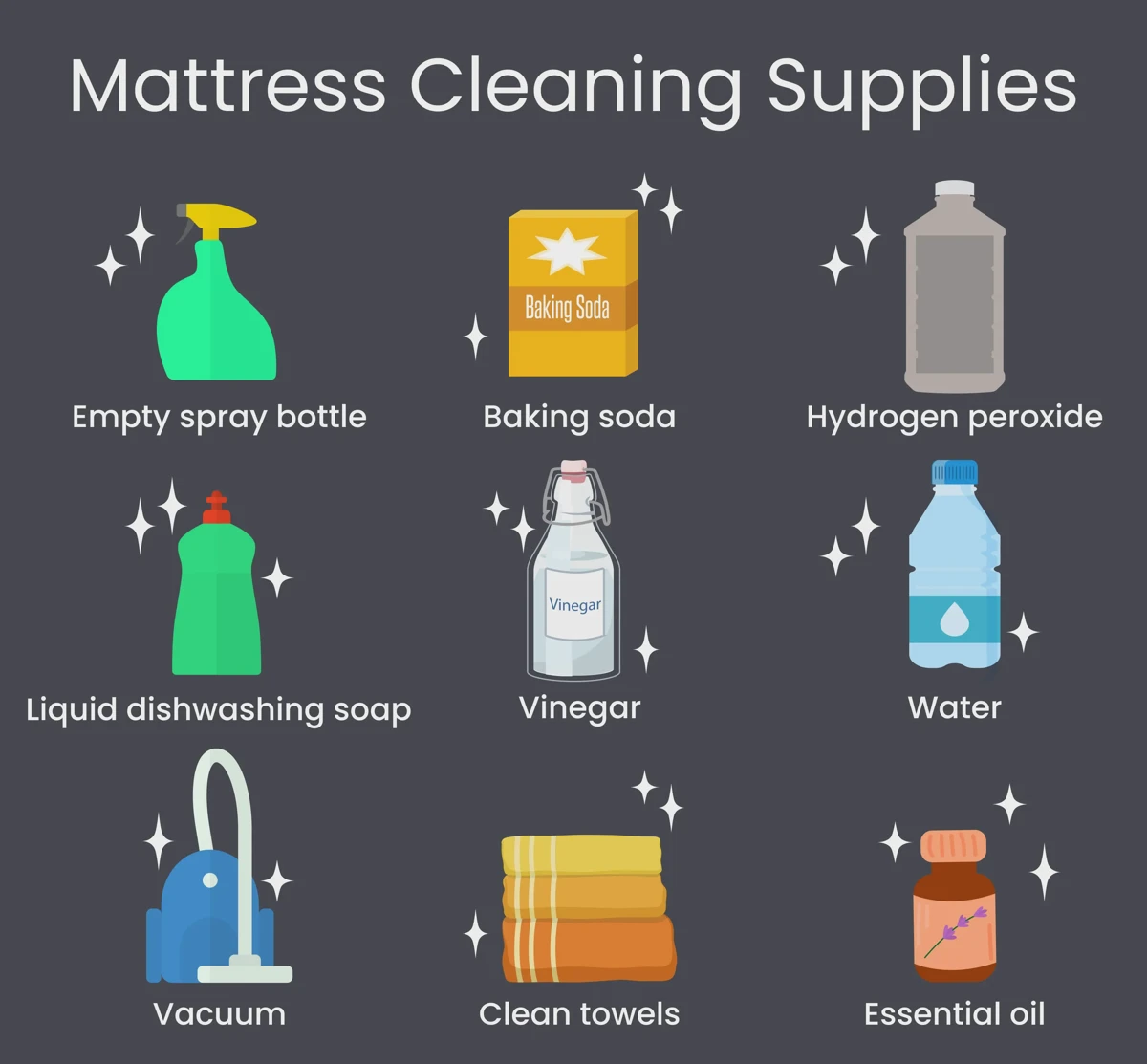
Deodorizing with baking soda
If the mattress smells musty (or you're prepping a guest-room bed), strip the cover and sprinkle a thin, even layer of baking soda across the entire surface. A few drops of essential oil - lavender, eucalyptus, or tea tree - mixed in adds a clean scent without the chemicals in commercial fresheners. Leave 1-2 hours (overnight if it's badly off), then vacuum thoroughly with an upholstery attachment.
Skip this step on the underside - vacuuming compressed baking soda out of the bottom of a 90-pound latex slab is more effort than the smell is worth.
What to never do to a latex mattress
Safe to use
- Mild dish soap (plant-based, fragrance-free)
- Cool or lukewarm water - never hot
- Baking soda for deodorizing
- 3% hydrogen peroxide for tough stains (spot-test first)
- White vinegar diluted 50/50 with water for odors
- Microfiber cloths and an upholstery vacuum attachment
Will damage latex
- Bleach - oxidizes and breaks down natural rubber
- Ammonia, dry-cleaning solvents, or carpet shampoo
- Steam cleaners - heat softens and degrades latex
- Soaking the mattress - water trapped in the core grows mold
- Direct sunlight for hours - UV crumbles natural latex
- Washing machine - even toppers will tear apart in the spin cycle
Protect the mattress so you clean it less
The cheapest way to keep a latex mattress clean is to keep it from getting dirty. A breathable, waterproof mattress protector blocks sweat, oils, and accidents from ever reaching the latex - and most can be tossed in the washing machine weekly. Combine that with a habit of rotating the mattress every 3-6 months and you'll likely never need a deep clean.
Five quick maintenance tips
- Wash sheets weekly in hot water - bedding is where most mattress dirt comes from.
- Vacuum monthly with an upholstery attachment, not a beater bar.
- Spot-clean spills the moment they happen - set stains are far harder to remove.
- Keep the bed out of direct sunlight; UV degrades natural latex over months.
- Rotate the mattress 180° every 3-6 months to prevent body-impression sagging.
Add a waterproof protector and skip the deep clean
Frequently asked questions
Can I put a latex mattress or topper in the washing machine?
No. Even a thin latex topper will tear apart in agitation, and the foam structure won't survive the spin cycle. Wash the cover separately on cold/gentle and spot-clean the latex itself.
Can I use baking soda on a latex mattress?
Yes - baking soda is one of the few cleaners that's both safe and effective on natural rubber. Sprinkle a thin layer, leave 1-2 hours, and vacuum thoroughly. Don't let it sit overnight uncovered if humidity is high; it can clump.
How do I get the smell out of a new latex mattress?
That's normal off-gassing from the rubber, not a defect. Air the mattress in a well-ventilated room (not direct sunlight) for 24-72 hours. A box fan speeds it up. The smell fades on its own and isn't harmful.
Does cleaning void the latex mattress warranty?
Most warranties exclude stains and water damage. Read your specific warranty before any deep clean - and always use a mattress protector from day one to keep coverage intact.
Can I steam-clean a latex mattress?
No. Heat above 110°F begins to soften and degrade natural latex, and steam pushes moisture deep into the core where it can't dry out. Stick to cool water and air-drying.
How long should a clean latex mattress last?
A well-maintained natural latex mattress typically lasts 12-20 years - roughly twice the life of memory foam. Cleaning, rotating, and using a protector are what get you to the upper end of that range.