A new memory foam mattress almost never feels its full size the moment you cut the plastic. Most beds-in-a-box are vacuum-compressed to roughly a third of their final volume, then shipped, and they need time, warmth, and airflow to recover. The good news: you can shave hours off that wait. The better news: if your mattress looks lopsided after a day, almost every issue traces back to one of five fixable causes.
This guide walks through the four-step expansion routine our review team uses on every new memory foam sample, the realistic timeline (and what's normal vs. defective), and a troubleshooting checklist for stubborn corners. No fluff, no "contact the manufacturer" hand-waving until you've ruled out the easy stuff.
How long does a memory foam mattress take to expand?
Most memory foam mattresses reach 90-95% of their final shape within 4-6 hours and finish fully expanding within 24 to 72 hours. Manufacturer guidance varies - Nectar and DreamCloud quote 24-72 hours, Tempur-Pedic sometimes says up to a full week for high-density models - but the variation is driven by three physical factors:
- Density. Higher-density foam (4 lb/ft³ and up) takes longer than budget 2-3 lb/ft³ foam.
- Thickness. A 14-inch hybrid expands slower than an 8-inch all-foam.
- Temperature. Memory foam is viscoelastic. Heat lowers viscosity and speeds expansion; cold stiffens it.
If you only remember one number: wait 24 hours before judging whether the mattress is fully expanded, and 72 hours before you decide it's defective.
The 4-step routine to expand memory foam faster
Step 1: Unbox within 72 hours and lay it flat
Every hour the mattress stays compressed past the manufacturer's window slows recovery. The vacuum compression deforms the foam cells, and the longer they're held in that state, the more set the deformation becomes. If you can't open the box on delivery day, set a hard 72-hour deadline.
When you unbox:
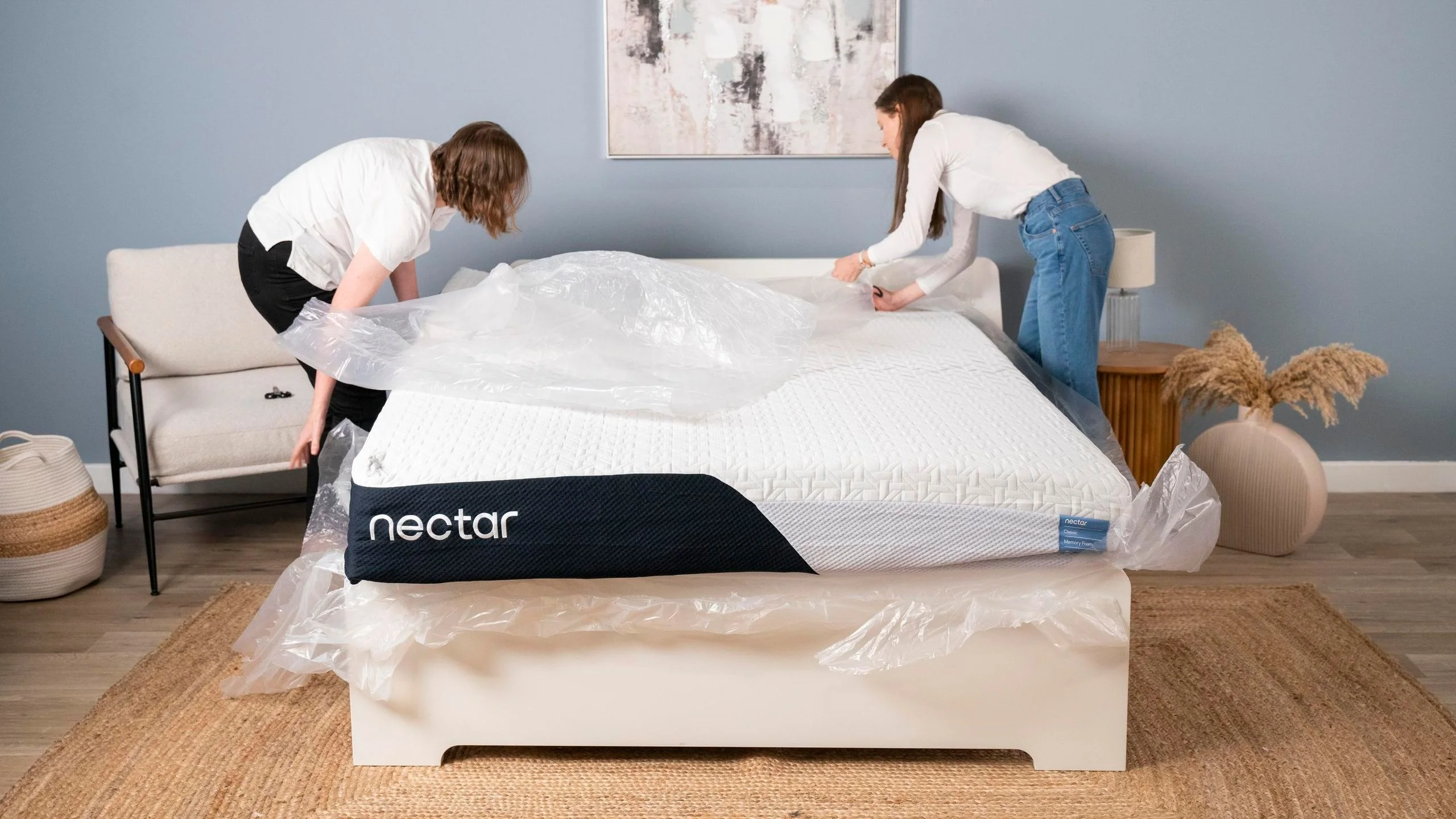
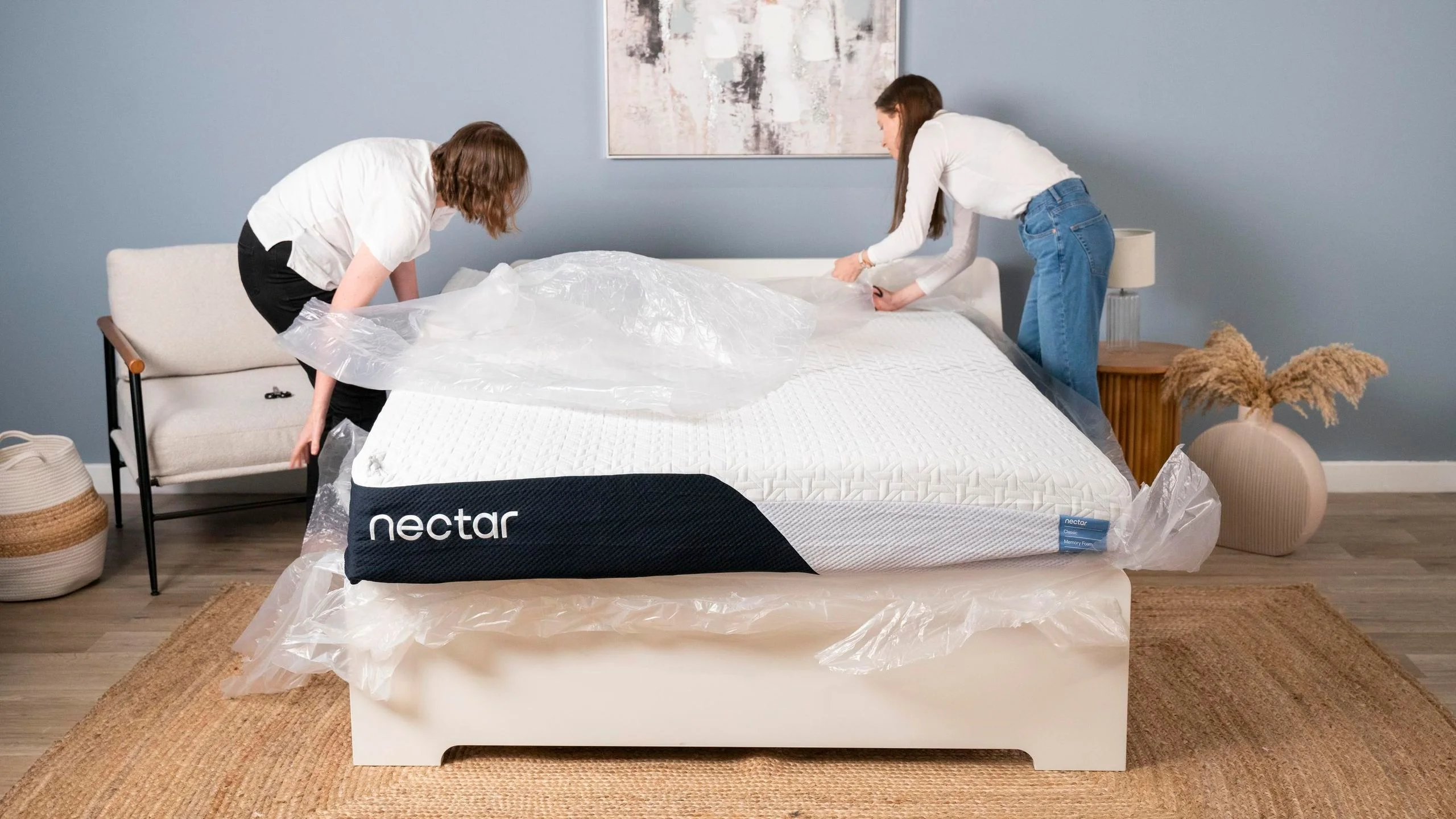
- Use your hands or blunt-tip scissors to cut the outer plastic only - don't slice into the inner cover. A small nick in the foam can grow into a permanent crater once the bed expands.
- Place the rolled mattress on the bed frame or floor before removing the inner plastic. Once you puncture that inner bag, the bed will start unfurling immediately and it's heavy and awkward to move.
- Lay it flat with at least 12 inches of clearance on every side. Walls, headboards, and footboards block airflow and can leave dented corners.
Step 2: Set the room to 68-75°F
Memory foam responds dramatically to ambient temperature. Below about 65°F it stiffens; above 75°F some open-cell foams start to feel mushy. The sweet spot for fast, even expansion is 68-75°F (20-24°C).
- In winter, run central heating or a space heater at least 6 feet from the mattress for 1-2 hours before unboxing.
- Skip direct heat sources (hair dryers held against the foam, heating pads laid on top). Surface heat without airflow can scorch the cover or create soft spots.
- Avoid cold concrete floors. If you're setting up in a basement or garage, lay down a moving blanket first.

Step 3: Add airflow
Fresh air pulls the off-gassing chemicals (benign but smelly) out of the foam and lets new air circulate into the cells. Both speed expansion.
- Open at least one window for the first 4-6 hours.
- Run a ceiling fan, oscillating fan, or box fan on low - aimed across the mattress, not directly at it.
- A fan heater can do double duty, but keep it on low and at least 6 feet away.
- Strip the bed bare for the first day. Sheets, mattress protectors, and especially comforters trap air against the surface and slow expansion of the top layer.
Step 4: Walk on it gently after the first hour
Light, even pressure helps the compressed cell pockets snap back. After the bed has had about an hour to start unrolling on its own:
- Walk slowly across the surface in socks (no shoes - the heel can dent the cover).
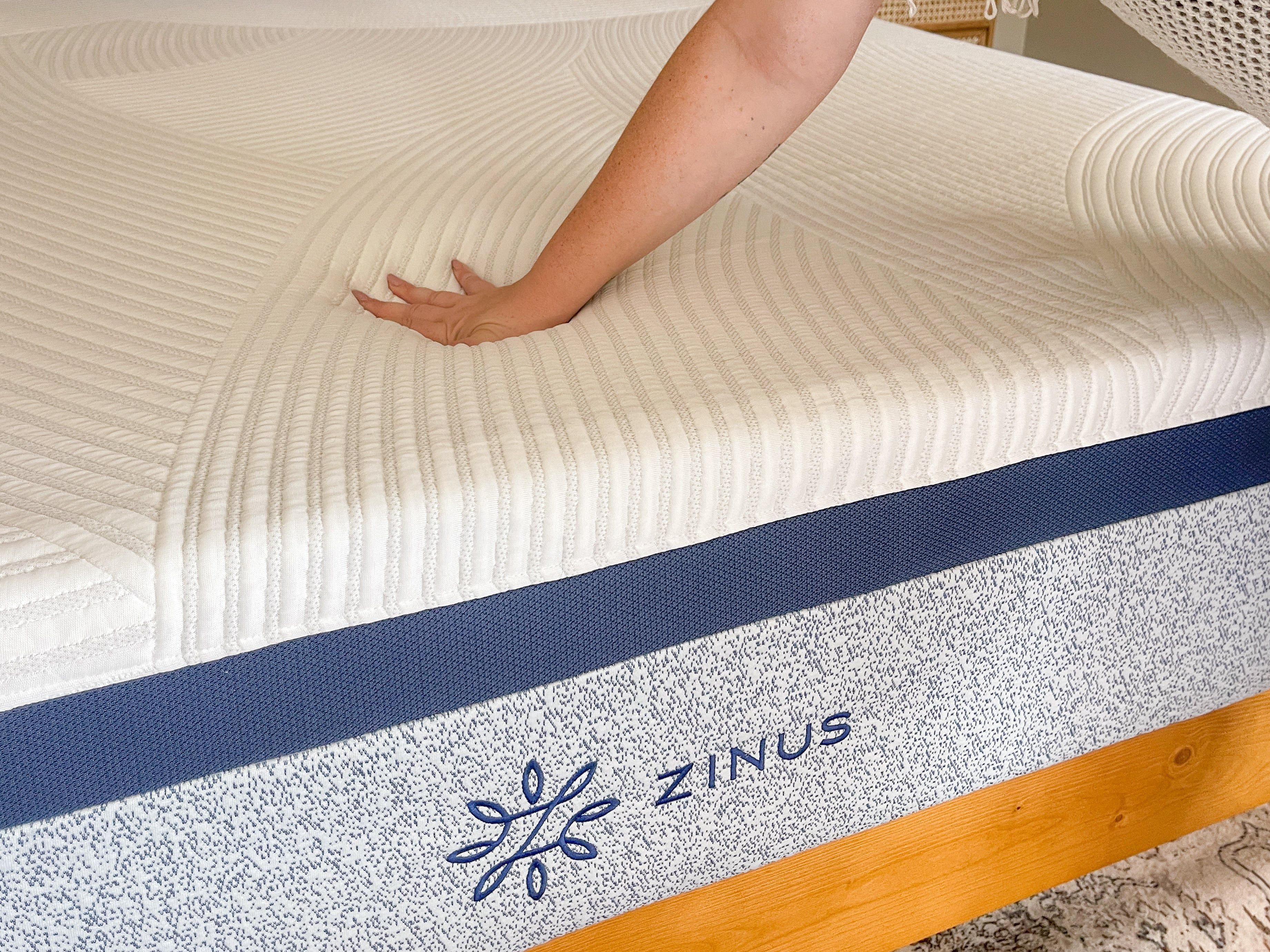
- Cover every section, including the corners and edges, in a slow grid pattern. Two minutes is plenty.
- Do not jump, kneel hard, or stand in one spot. That creates the same kind of compression you're trying to undo.
Body heat and gentle movement are the same forces a manufacturer assumes you'll apply over the first few nights - you're just front-loading them.
Troubleshooting: my mattress isn't expanding
If it's been more than 24 hours and the bed still looks compressed, work this checklist top to bottom. The first four causes account for the overwhelming majority of "stuck" mattresses.
1. It hasn't been long enough
A bed that looks 80% inflated at 12 hours is on track. Don't panic until you've passed the 72-hour mark. High-density and 14+ inch beds genuinely need the full window.
2. The room is too cold
If your bedroom sat below 65°F overnight, expansion may have paused entirely. Warm the room and give it another 12 hours. Check thermostat placement - corners and floors are often colder than the wall sensor reads.
3. The room is too humid
High humidity (above ~60% RH) doesn't stop expansion outright, but it does slow it noticeably and traps off-gassing odors. Run a dehumidifier or set the AC to "dry mode" for a few hours.
4. The cover is sheared to the foam (corners only)
This is the single most common cause of corners that won't pop, and almost no source mentions it. During shipping, the inner cover fabric can stick to the top foam layer. Solution: unzip the cover (most mattresses have a hidden zipper at one corner), gently work your fingers between the fabric and the top foam, and free any sticky spots. Re-zip and the corner should re-inflate within an hour or two.
5. It's actually defective
If you've waited 72+ hours, the room has been warm and dry, and one or more corners is still visibly compressed, contact the manufacturer. Keep the original box, photo evidence of the unboxing date, and the order confirmation - most warranties require all three. Defective compressed mattresses are rare (under 1% in our review lab data) but they do happen.
Can I sleep on it the first night?
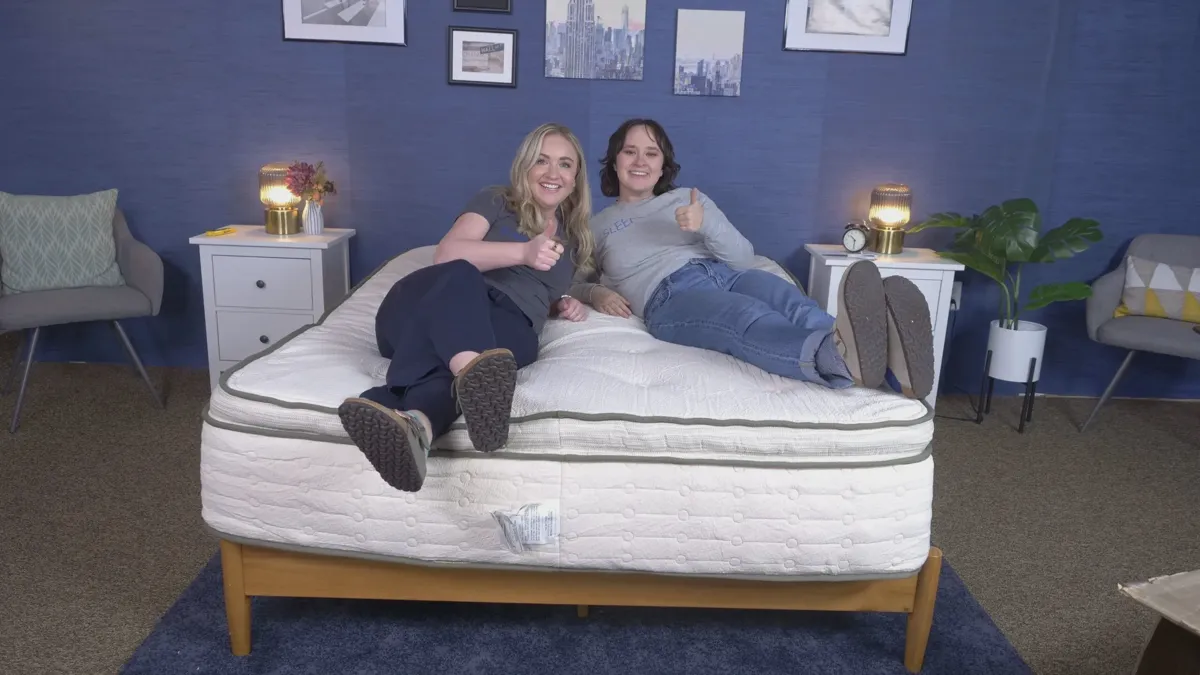
Most manufacturers say yes - body heat actually helps the foam recover and won't void the warranty unless the brand explicitly says so. Check your specific paperwork. A few caveats:
- Off-gassing. New foam releases volatile organic compounds for the first 24-72 hours. The smell is benign for most people but can irritate asthma, allergies, or chemical sensitivity. If you're sensitive, sleep elsewhere for the first night and keep the room ventilated.
- Uneven feel. A partially-expanded bed will feel firmer in spots and softer in others. That evens out as expansion completes.
- Pets and kids. Don't let them jump on the bed during the first day - the cells haven't fully restored their structural integrity.
The short version
Unbox within 72 hours, lay the bed flat with clearance on all sides, warm the room to 68-75°F, add airflow, and walk it gently after the first hour. Wait a full 24 hours before judging the result and 72 hours before assuming a defect. Nine times out of ten, a "defective" memory foam mattress is just one of those four levers - usually temperature - pulled the wrong way.
Frequently asked questions
Why are the corners of my memory foam mattress not expanding?
Almost always one of three things: the room is too cold, the inner cover is shearing to the top foam (unzip and free it), or you haven't waited the full 72 hours. Warm the room, check the cover, and give it time before assuming the bed is defective.
Does jumping on a new memory foam mattress help it expand?
No - it can damage the partially-restored cell structure and create permanent indentations. Walking gently in socks is fine; jumping or kneeling is not.
Can I use a hair dryer to speed up expansion?
Not directly on the foam. Localized heat softens the cover and can create soft spots. Warming the whole room with a space heater 6 or more feet away is the safe equivalent.
How long until the smell goes away?
Most off-gassing dissipates in 24-72 hours with good ventilation. Persistent smells past a week, especially chemical or burnt-plastic odors, are worth reporting to the manufacturer.
Should I put sheets on right away?
Wait at least 4-6 hours, ideally 24. Sheets and mattress protectors slow airflow and can leave the top layer feeling soft long after the rest of the bed is firm.