
Why proper mattress storage matters
A mattress is one of the more expensive things in your home, so putting it away the wrong way is an easy way to ruin it. Whether you are downsizing, repurposing a bedroom, moving, or hanging onto an old mattress you are not ready to part with yet, proper storage keeps it clean and prevents avoidable wear. Stored badly, a mattress can sag, grow mold, pick up musty odors, or have its internal structure damaged to the point that it no longer supports you the way it should. Stored well, the same mattress can sit for months and come out ready to sleep on.
There is a right way and a wrong way to do this, and the wrong way can cost you more than a damaged mattress. When a mattress is stored improperly, its warranty may even be invalidated, which means a defect you could otherwise have claimed is now your problem. The steps below walk through preparing, wrapping, placing, and maintaining a mattress so it survives storage in good condition.
How to prepare a mattress for storage
Preparation comes down to two jobs: measuring the mattress so you pick the right space, and cleaning it so dirt and moisture do not settle in while it sits.
Measure it first
Start by measuring the length, width, and height of the mattress, and decide whether you plan to store it flat or on its side, so you know it will fit comfortably in your storage space. A good rule of thumb is to allow at least one square foot of clearance on each side when you store it flat. Knowing the dimensions up front also helps you choose a storage unit that is large enough to hold the mattress lying flat without forcing you to stack other items on top of it.
Clean the mattress
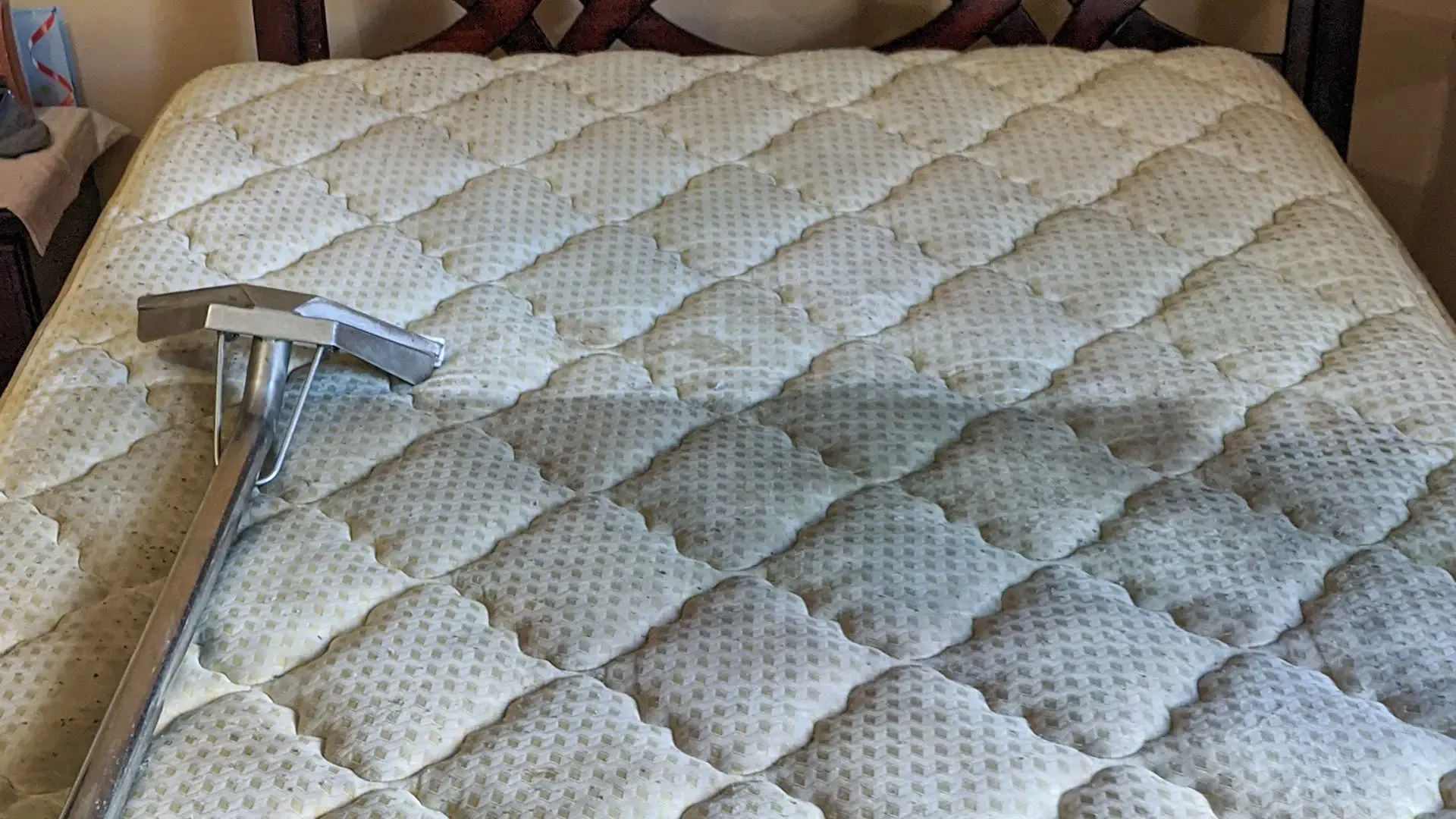
Mattresses absorb a lot of dust, dirt, and sweat, so give yours a thorough clean before it goes into storage. Check the manufacturer's cleaning recommendations first, because the mattress type affects how it should be cleaned and some materials need moisture used sparingly. A general cleaning routine looks like this:
- Strip off all the bedding
- Vacuum the top, bottom, and sides using an upholstery attachment to lift dust mites and allergens
- Spot-clean stains by gently dabbing with a washcloth dampened with water and mild soap, or a stain remover made for mattresses; blot rather than rub or soak
- Let any treated spots air-dry completely
- Sprinkle baking soda over the surface, let it sit for an hour or more, then vacuum it up to deodorize
- Flip the mattress and repeat the process on the other side
Avoid harsh cleansers, including upholstery cleaners, on foam and hybrid mattresses, since the residue is hard to remove from foam. Whatever you use, let the mattress dry fully before you cover it, because trapped moisture is what leads to mold.
What to wrap a mattress in for storage
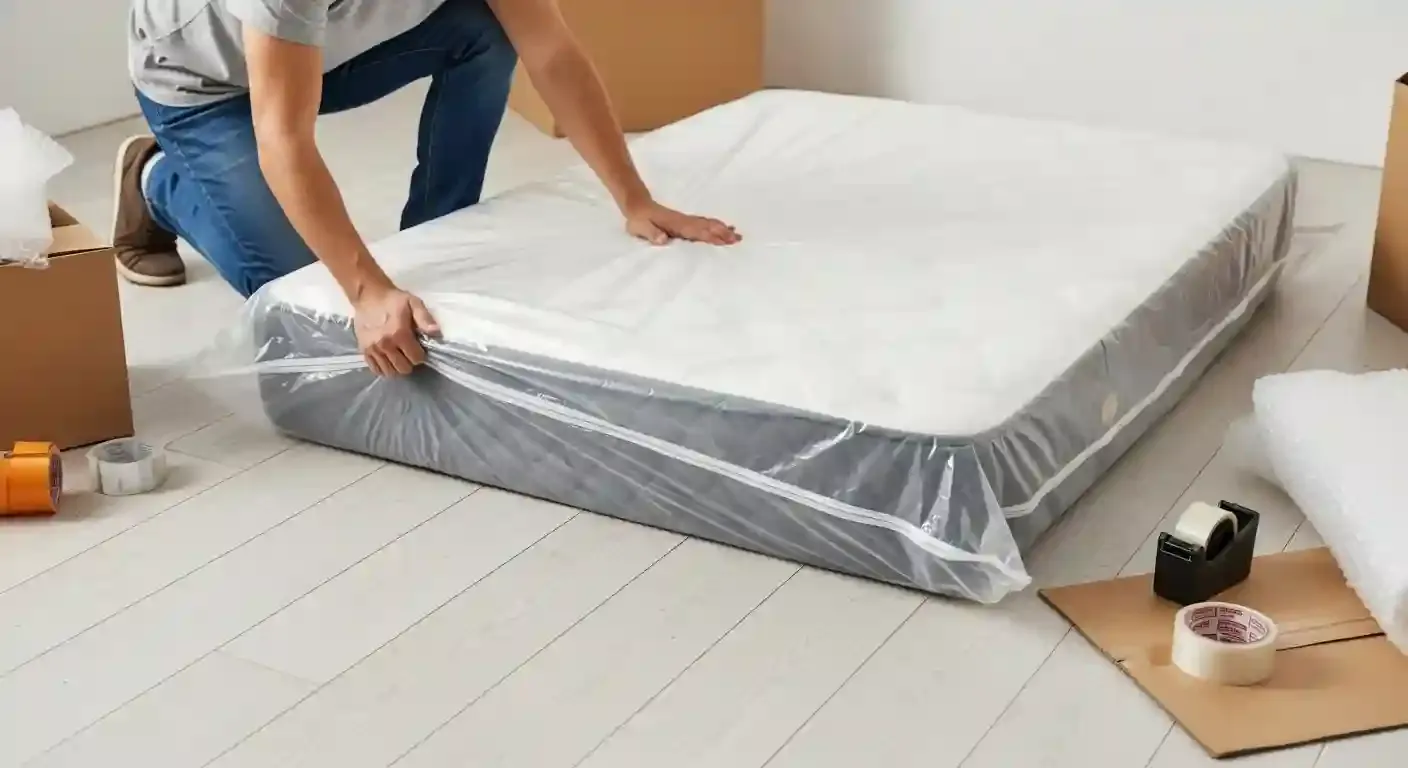
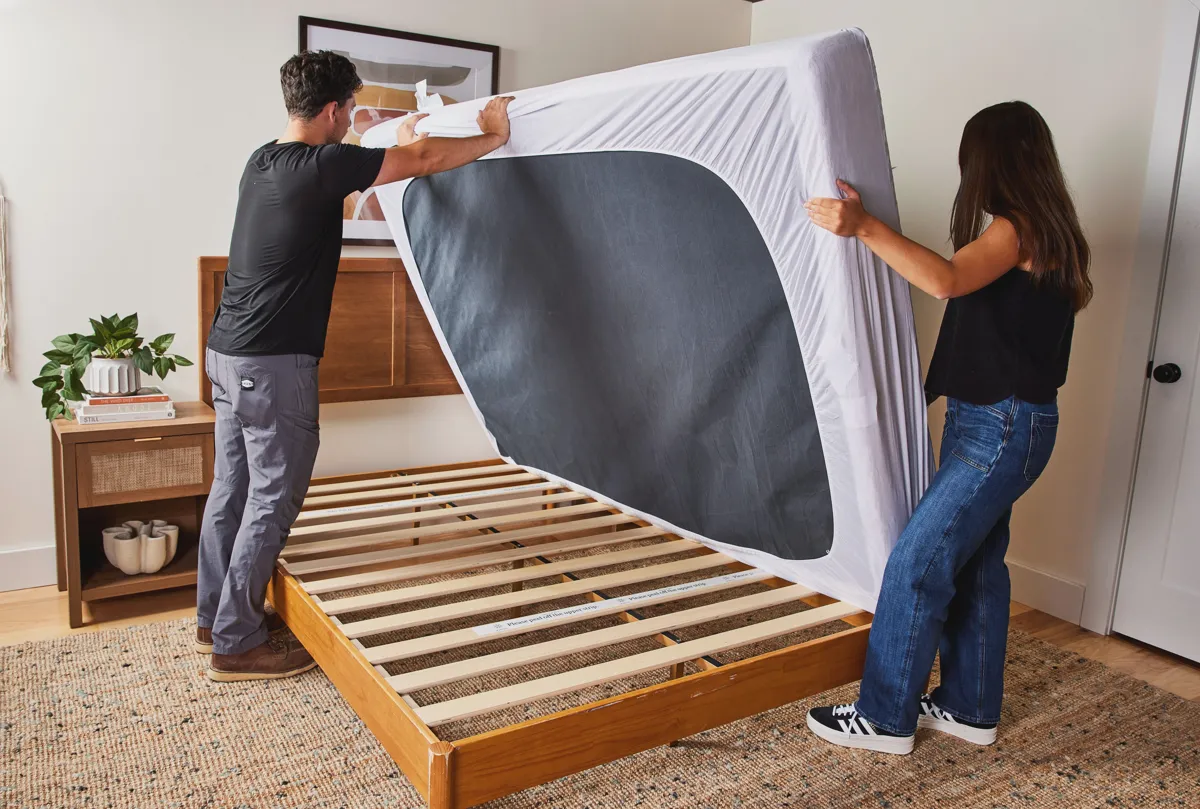
Once the mattress is clean and dry, cover it on all sides to shield it from dust, dirt, moisture, and pests. Your two best options are a purpose-made mattress bag or sheets of breathable plastic, and either one should be sealed and checked for tears before you move it. Mattress bags are low-cost, widely available from moving companies, hardware stores, and online retailers, and they come in every standard mattress size, usually with a built-in sealing system. You will likely need a second person to get a mattress into a bag, with one of you holding an end up while the other slides the bag around it.
If you use sheets of plastic instead, spread the plastic on the floor, set the mattress on top, fold the plastic over so none of the mattress is left exposed, and secure it with duct tape, keeping the tape off the mattress fabric itself. Choose a breathable cover rather than thick, airtight plastic. Airtight wrapping traps moisture against the mattress and encourages mold and bacteria, while a breathable cover keeps dust out and still lets some air move. For long-term storage, plan to open the seal and air the mattress out every few months before resealing it. A few silica packets inside the bag help absorb stray moisture, which matters most for latex.
Choosing the right place to store a mattress
Where you keep the mattress matters as much as how you wrap it. Too much moisture, high humidity, and extreme temperatures can all harm a mattress, so the goal is a clean, dry spot that stays at a stable temperature.
Storage unit
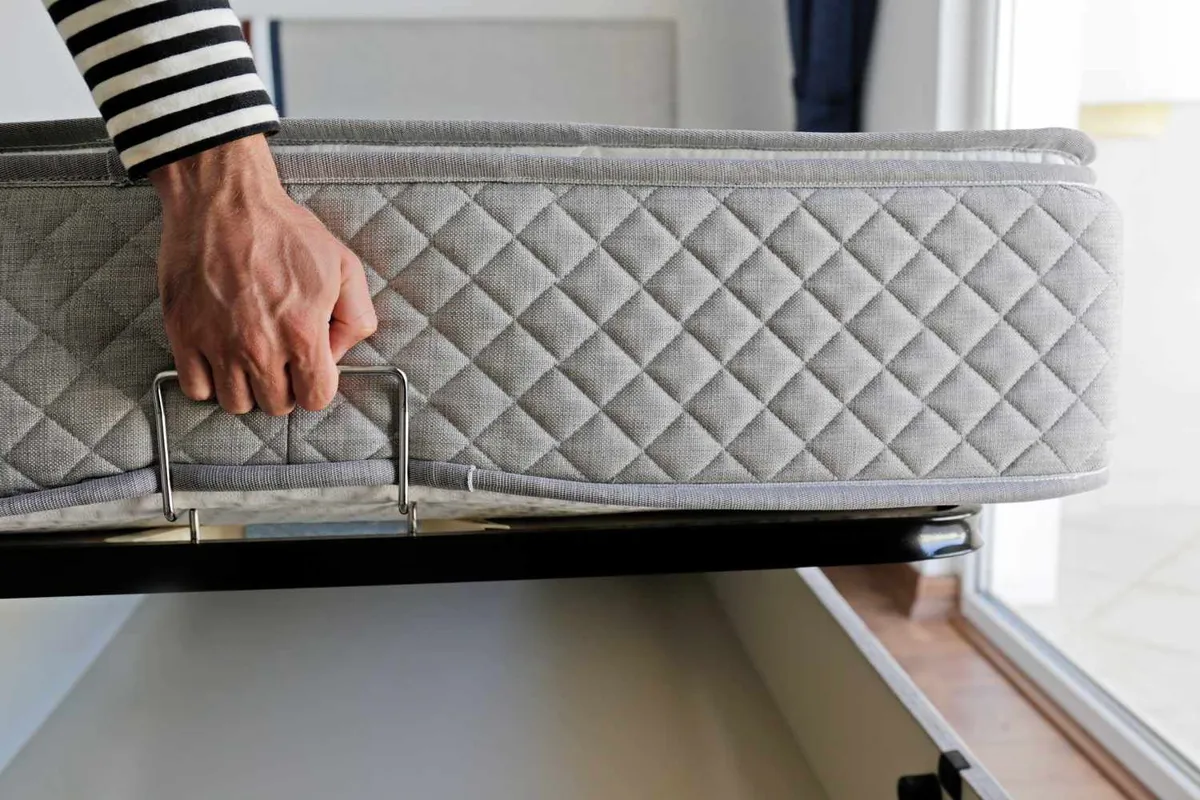
For many people the safest option is a storage unit, ideally a climate-controlled one that protects the mattress from high humidity and temperature swings. A storage unit also keeps the mattress out of sunlight and adds security for long-term storage. When you compare units, weigh location, size, and price: pick somewhere you can conveniently reach when you need the mattress, large enough to lay it flat, and priced sensibly against how long you plan to store it. It rarely makes sense to spend more on storage than the mattress would cost to replace.
At home
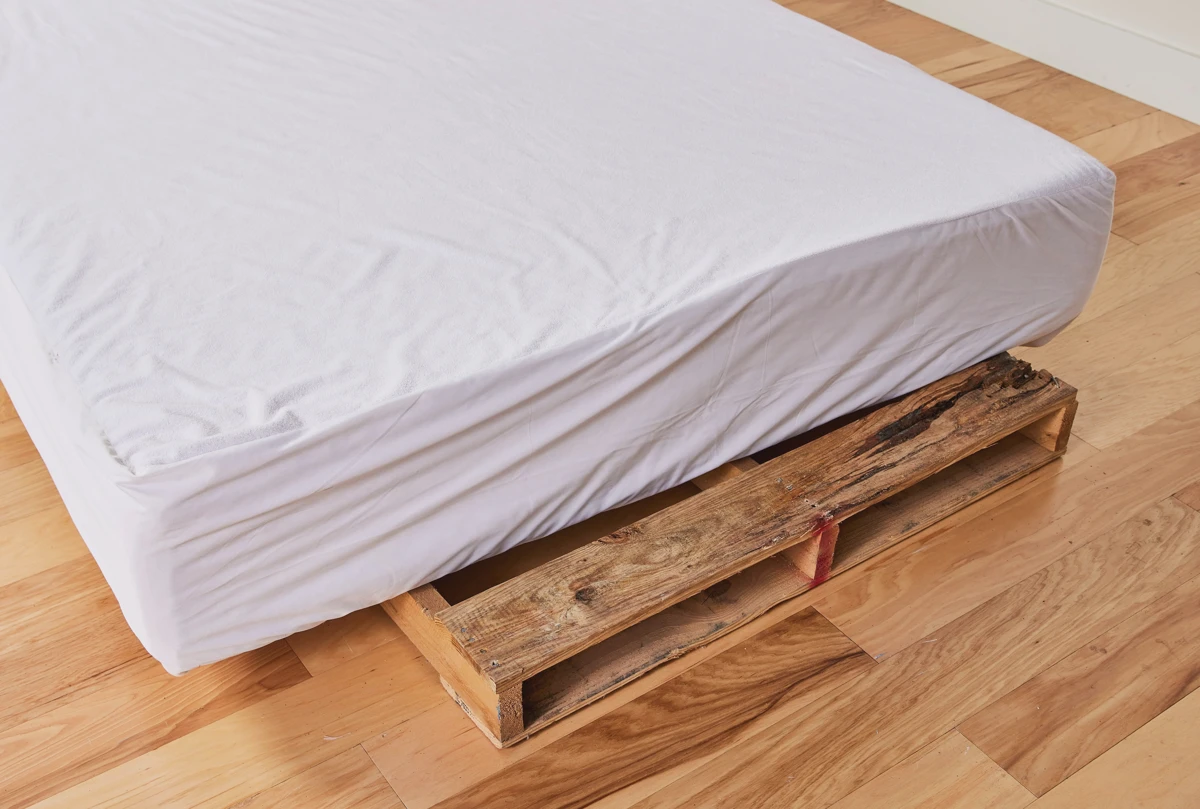
A basement or garage can work as long as the space stays clean, dry, and free of extreme temperatures and rain. If a friend or relative offers a climate-controlled room, that can be an affordable choice, but agree in advance on how long the mattress will stay and how it will be stored. Avoid storing a mattress directly on the floor anywhere, because that exposes it to dirt, dust, and pests and makes it hard for the mattress to breathe. Raise it onto wooden pallets, a platform, or an old bed frame so air can circulate underneath and any moisture inside the bag can dry out faster. Skip stopgap spots like sheds, porches, or truck beds, where temperature, humidity, and pests are out of your control.
You can buy a low-cost, battery-operated thermometer to check the temperature and humidity of a space like a basement before you commit to it. If humidity runs high, a small dehumidifier kept near the mattress helps keep it from getting damp.
Should you store a mattress flat or on its side?
The safest position for almost every mattress is flat and level. Storing a mattress on its side or in a bent position lets the internal fillings shift and can damage the structure over time, which affects the comfort and support it gives you afterward. Lying it flat keeps the fillings in place, and resting it on top of a bed frame or platform on a level surface is better still.
Some mattress types tolerate being stored on their side for a while when space is tight, but pocket-sprung and natural-filling mattresses should always stay flat. If you do store a mattress on its side, do not leave it that way for more than a month, and check whether doing so voids the warranty.
Storing each mattress type flat or on its side
| Mattress type | Store flat | Store on its side |
|---|---|---|
| Pocket sprung | Yes | No |
| Standard sprung | Yes | Briefly |
| Memory foam | Yes | No |
| Latex | Yes | Briefly |
| Natural fillings | Yes | No |
| Hybrid | Yes | No |
One rule holds for every position: never stack boxes, furniture, or other heavy items on top of the mattress. The concentrated weight leads to permanent dents and can warp coils or compress foam. If you need the space above it, raise the pallets the mattress sits on, or keep it on its frame and store other items underneath instead.
How to store different types of mattresses
The basics are the same for every mattress, but each type has a quirk worth knowing.
Spring mattresses
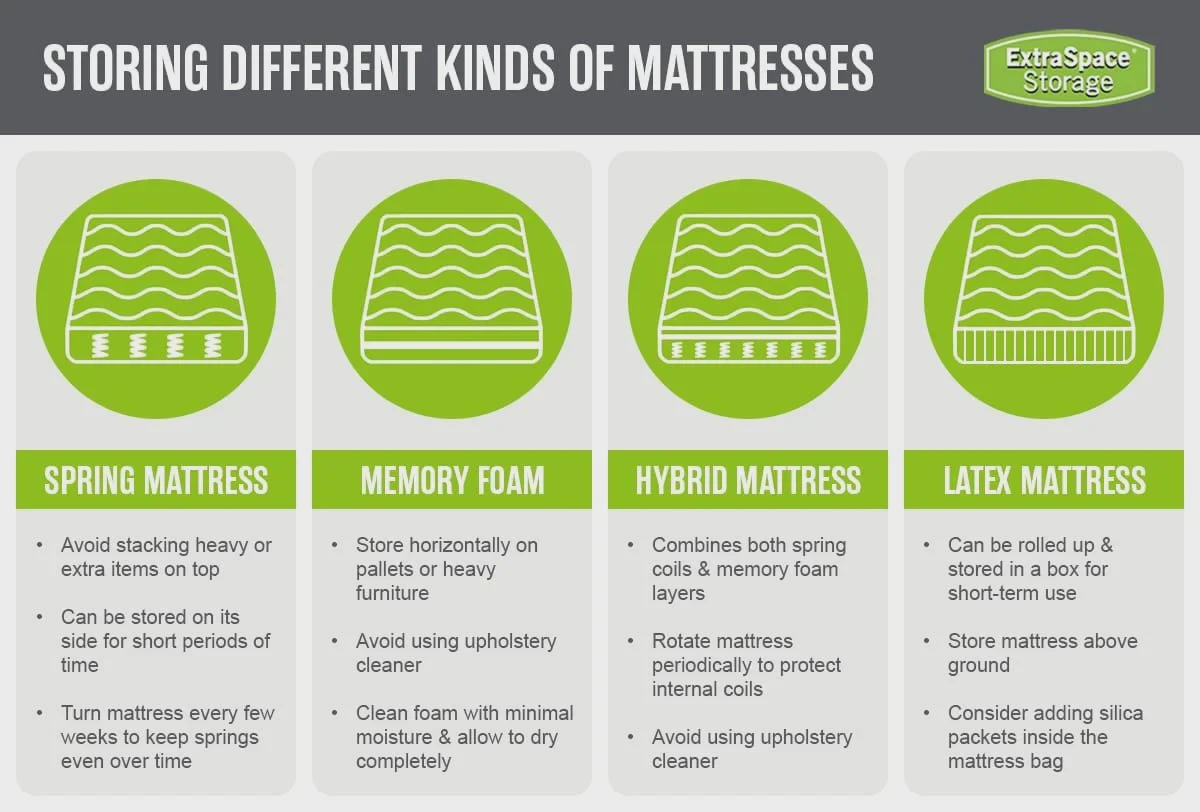
Spring mattresses are more prone to damage than other types, so it is especially important not to set anything on top of them in storage. Their reinforced internal structure does let you store them on their side for brief periods, but if you do, turn the mattress every few weeks so the springs wear evenly.
Memory foam mattresses
Memory foam is extremely flexible and should never be stored on its side, since that can leave it permanently bent. Store it flat on pallets or on top of heavier furniture. Skip upholstery cleaner, which will not lift out of foam, and do not oversaturate the foam when cleaning; let it dry completely before adding any bedding.
Hybrid mattresses
Hybrids combine coils and foam, so they need to be rotated periodically even in storage to keep the coils from wearing unevenly; every few months is enough. As with memory foam, avoid upholstery cleaner on a hybrid.
Latex mattresses
A latex mattress can be stored rolled up in a box, but only for short-term storage of 30 days or less. Kept rolled longer, it risks permanent indentations or may not fully unroll and expand afterward. For anything longer, store it flat and off the ground, and add silica packets to the bag to pull out moisture that can damage the latex. One thing never to do with any mattress, latex included, is re-roll one that arrived in a box; rolling it again disrupts the internal materials, can ruin the feel, and may void the warranty.
Getting your mattress out of storage
Storage is not entirely hands-off. If the mattress will sit for more than a week or so, check on it every few months: open the bag to air it out, look for moisture or damp patches, and confirm nothing has landed on top of it or worked its way underneath. If your mattress instructions call for flipping or rotating on a schedule, keep to that schedule while it is in storage.
When it is time to bring the mattress back, expect it to smell slightly musty even after careful storage. Let it air out in an open, well-ventilated space for at least a few hours, and give it another quick clean to clear any dust or stains picked up during the move before you put bedding back on. If an odor lingers after airing it out, deodorize it once more with baking soda before use. Done right, the mattress should feel much the way it did before you stored it.