Buying a mattress comes down to picking the right type before anything else. Firmness, brand, and price all matter, but they only make sense once you know whether your body wants the deep cradle of memory foam, the bouncy spine support of a hybrid, the natural responsiveness of latex, or something else entirely.
This guide walks through every major mattress type sold in the US in 2026 - how each one is built, what it feels like, who it's best for, and where it falls short. By the end you'll have a shortlist of one or two types worth shopping, plus the buying checklist we use in the Banner Mattress review lab - plus pointers to our best mattress reviews 2026 roundup by brand.
The 7 main mattress types in 2026
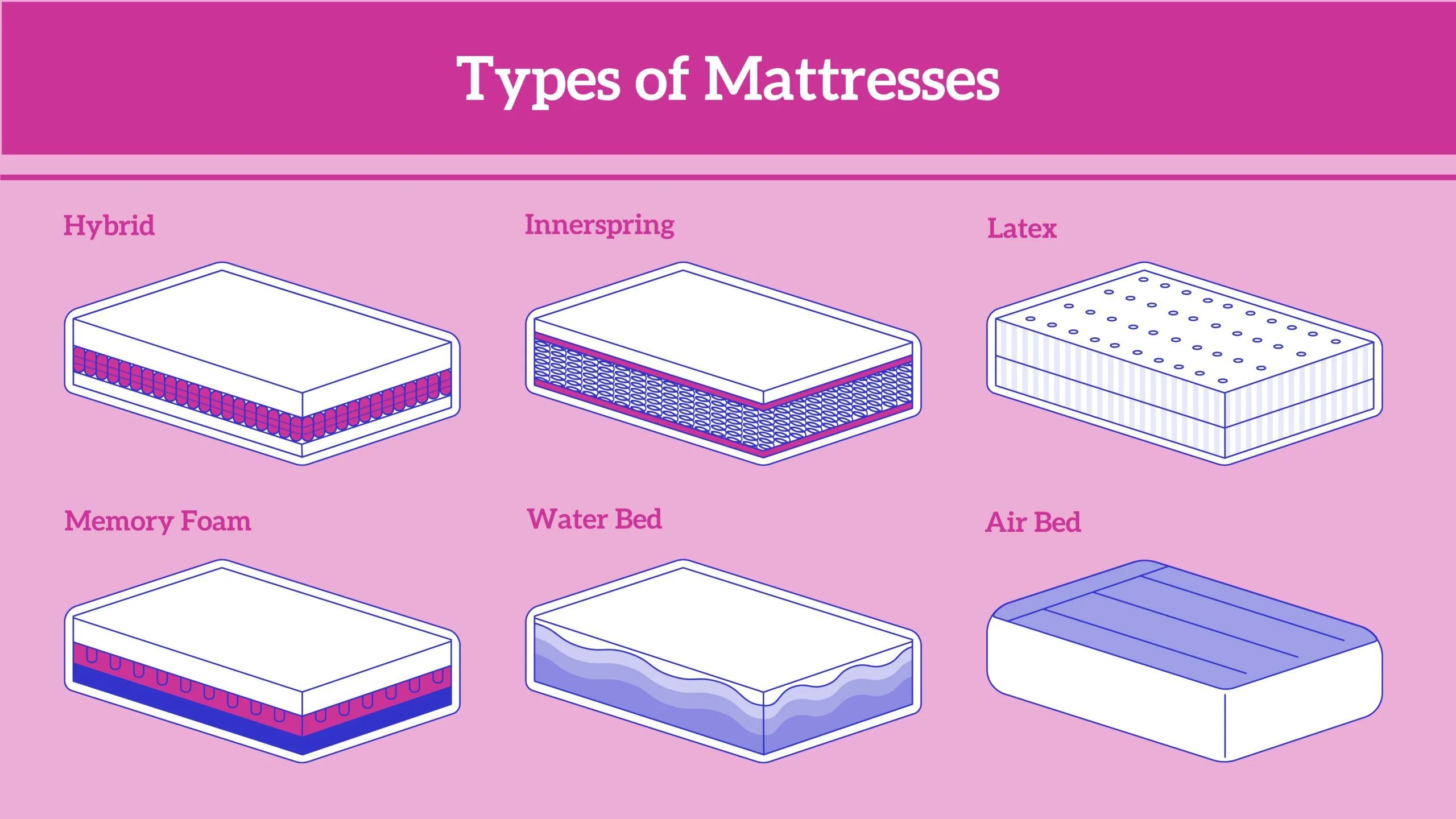
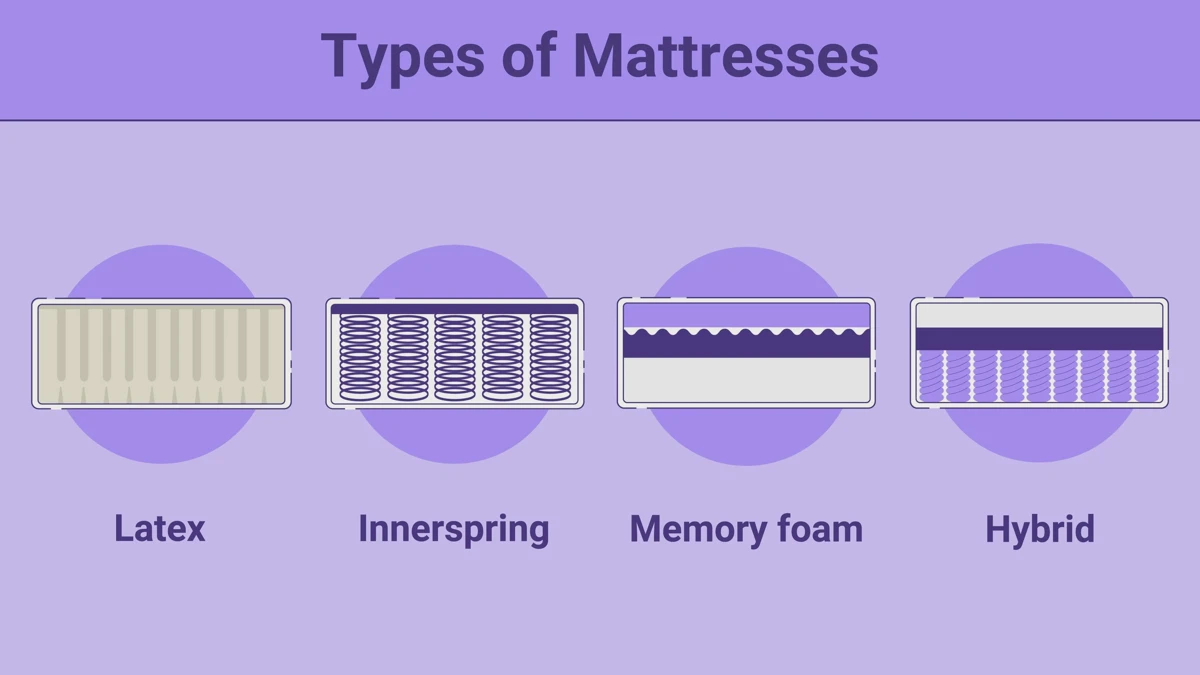
Sleep researchers and major retailers generally agree on six to seven mattress categories. Five dominate sales (memory foam, hybrid, innerspring, latex, and airbed), and two newer formats - gel-grid and adjustable air - are growing fast. Everything else (waterbeds, futons, pillow-tops) is a sub-variant of these.
1. Memory foam
What it is. Layers of viscoelastic polyurethane foam - usually 2-4 inches of memory foam over a denser high-density polyfoam base. Higher-end versions add gel beads, copper, or open-cell structures to fight heat retention.
How it feels. Slow, body-hugging contour. You sink in and the foam molds around your shoulders and hips, then springs back over 5-10 seconds when you move.
Best for. Side sleepers who need pressure relief at the shoulder and hip, couples who hate motion transfer (memory foam is the best motion-isolator on the market), and anyone with joint or pressure-point pain.
Watch out for. Heat retention on cheap models, a "stuck in the bed" feel some sleepers dislike, and slower motion response that can make repositioning feel sluggish. Off-gassing for the first 1-3 days is normal.
Typical price (queen). $400-$2,500.
2. Hybrid
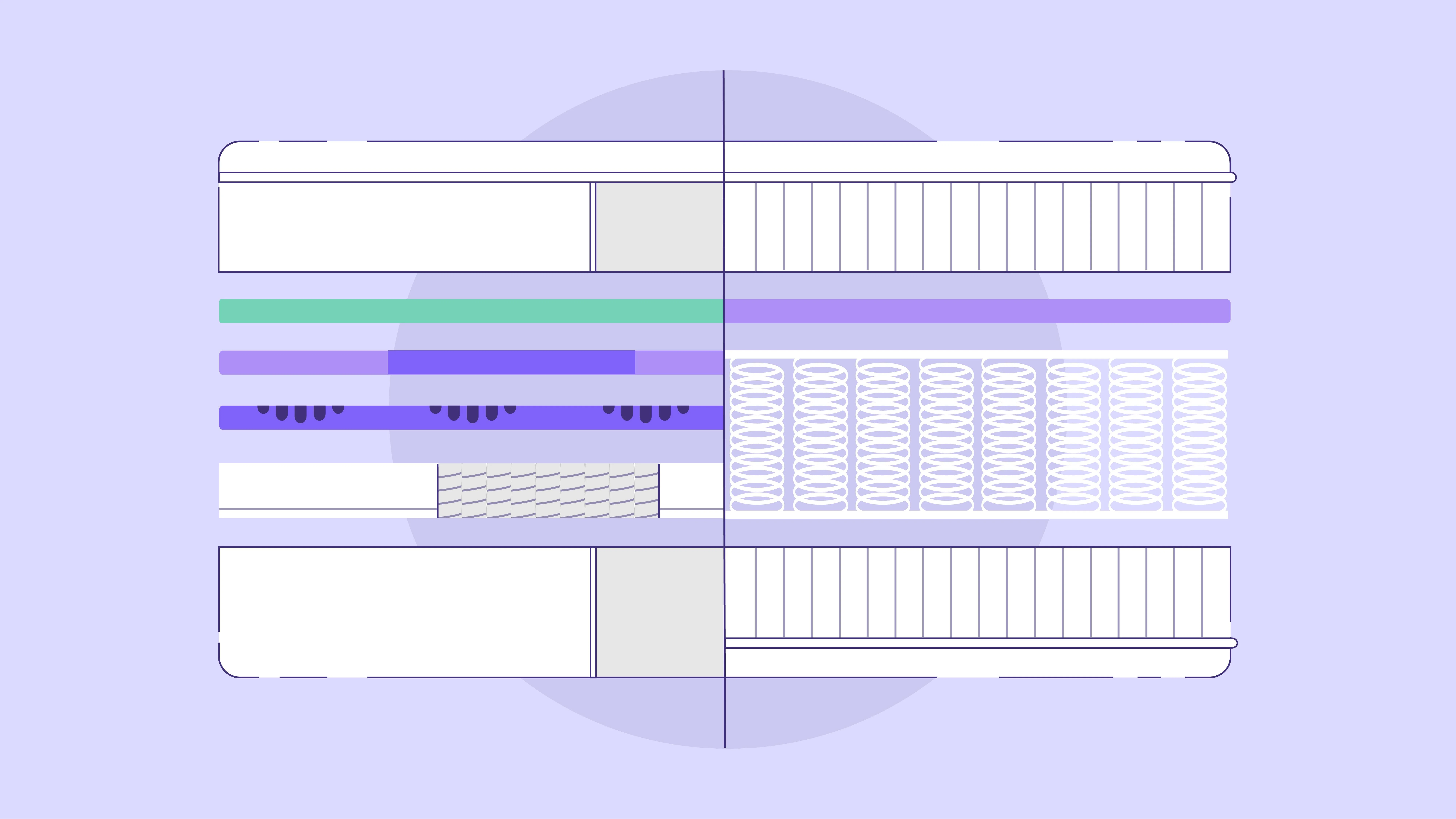
What it is. A pocketed-coil support core (usually 6-8 inches of individually wrapped springs) topped with 2-4 inches of memory foam, latex, or polyfoam comfort layers. The combination is now the best-selling mattress format in the US.
How it feels. Balanced. You get the contour and pressure relief of foam without losing the bounce, edge support, and airflow of coils.
Best for. Couples with mismatched preferences, hot sleepers, heavier bodies (over 230 lb) who need stronger support, and combination sleepers who change positions through the night.
Watch out for. Hybrids are the heaviest mattress type - a queen can weigh 100+ lb, which makes setup a two-person job. Quality varies enormously: a good hybrid uses zoned coils and high-density foams; a cheap one is just a thin foam pad over loose springs.
Typical price (queen). $700-$3,500.
3. Innerspring
What it is. A traditional metal-coil support system (Bonnell, offset, continuous-wire, or pocketed) under a thin quilted top. The classic mattress format your grandparents slept on.
How it feels. Bouncy, firm, and breathable. Minimal contour - the surface stays flat under you, with the coils flexing rather than the materials molding.
Best for. Stomach sleepers and back sleepers who need a flat, supportive surface; hot sleepers who want maximum airflow; budget shoppers; and guest rooms or kids' beds where longevity matters more than premium feel.
Watch out for. Motion transfer is poor (you'll feel a partner roll over), pressure relief is minimal at the shoulder and hip, and budget innersprings sag faster than other types - typically 5-7 years before noticeable dips.
Typical price (queen). $300-$1,500.
4. Latex
What it is. Foam derived from rubber-tree sap, made via either the Talalay process (whipped, lighter, more pressure-relieving) or Dunlop process (denser, firmer, longer-lasting). Most "natural latex" mattresses are 3-6 inches of latex over a coil or polyfoam base; all-latex builds use only Dunlop layers.
How it feels. Responsive and buoyant - somewhere between memory foam and innerspring. You sit on top of latex rather than sinking into it, and it springs back instantly when you move.
Best for. Hot sleepers (latex is the most breathable foam), eco-conscious shoppers (Talalay and Dunlop both have natural and organic certifications), and anyone with allergies - natural latex is dust-mite, mold, and mildew resistant.
Watch out for. Cost. A genuine all-latex queen runs $1,500-$4,000. Many "latex" mattresses are mostly polyfoam with a thin latex topper - read the spec sheet for layer thickness and density. Synthetic latex (often labeled "latex blend") loses most of the durability and breathability benefits.
Typical price (queen). $1,200-$4,000.
5. Airbed
What it is. Adjustable air chambers - usually one per side of the bed - sitting under thin foam comfort layers. Modern airbeds (Sleep Number is the dominant brand) use a remote or app to inflate each side from soft to extra-firm in seconds.
How it feels. Whatever you set it to. The comfort layer feel is similar to a hybrid; the firmness range is wider than any other format.
Best for. Couples who need different firmness levels on each side, people whose firmness preferences change with weight, pregnancy, or injury, and shoppers who want one mattress that adapts over decades.
Watch out for. Mechanical parts can fail - pumps, valves, and remotes are the weak points. Repair networks vary by brand. Also the most expensive mainstream type before you reach high-end latex.
Typical price (queen). $1,500-$5,000.
6. Gel grid (polymer grid)
What it is. A lattice of hyper-elastic polymer columns - Purple's GelFlex Grid is the original, and several copycats now exist - usually as a 2-4 inch top layer over polyfoam or coils.
How it feels. The grid buckles directly under pressure points (shoulder, hip) while staying firm everywhere else. Cooler than any foam because air flows freely between the columns.
Best for. Hot sleepers who tried memory foam and overheated, side sleepers who want pressure relief without the slow sink, and combination sleepers.
Watch out for. Polarizing feel - the grid is unmistakable, and not everyone likes the rubbery, slightly squishy contact. Heavier than equivalent foam mattresses. Premium pricing.
Typical price (queen). $1,400-$3,500.
7. Adjustable / smart bed
Adjustable beds aren't a separate mattress type so much as a base + mattress combination - but in 2026 they're sold as integrated systems often enough to count separately. The base raises the head and feet independently, and many include massage, snore detection, under-bed lighting, and sleep tracking. Pair them with any compatible foam, hybrid, or latex mattress (avoid traditional innersprings, which don't bend without damage).
Best for. Snorers, acid-reflux sufferers, anyone who reads or watches TV in bed, and seniors who need help getting up.
Typical price (queen base + mattress). $1,800-$6,000.
Category choice often comes down to budget and feel, both of which shift the most during the memorial day mattress sales 2026.
Mattress type comparison table
The chart below summarizes how the five most-bought types stack up on the metrics that actually matter when you're shopping:
- Pressure relief - how well it cushions shoulders, hips, and joints.
- Support - how well it keeps your spine aligned.
- Cooling - how breathable the surface stays through the night.
- Motion isolation - how much you feel a partner moving.
- Edge support - how stable the perimeter feels when you sit or sleep near the edge.
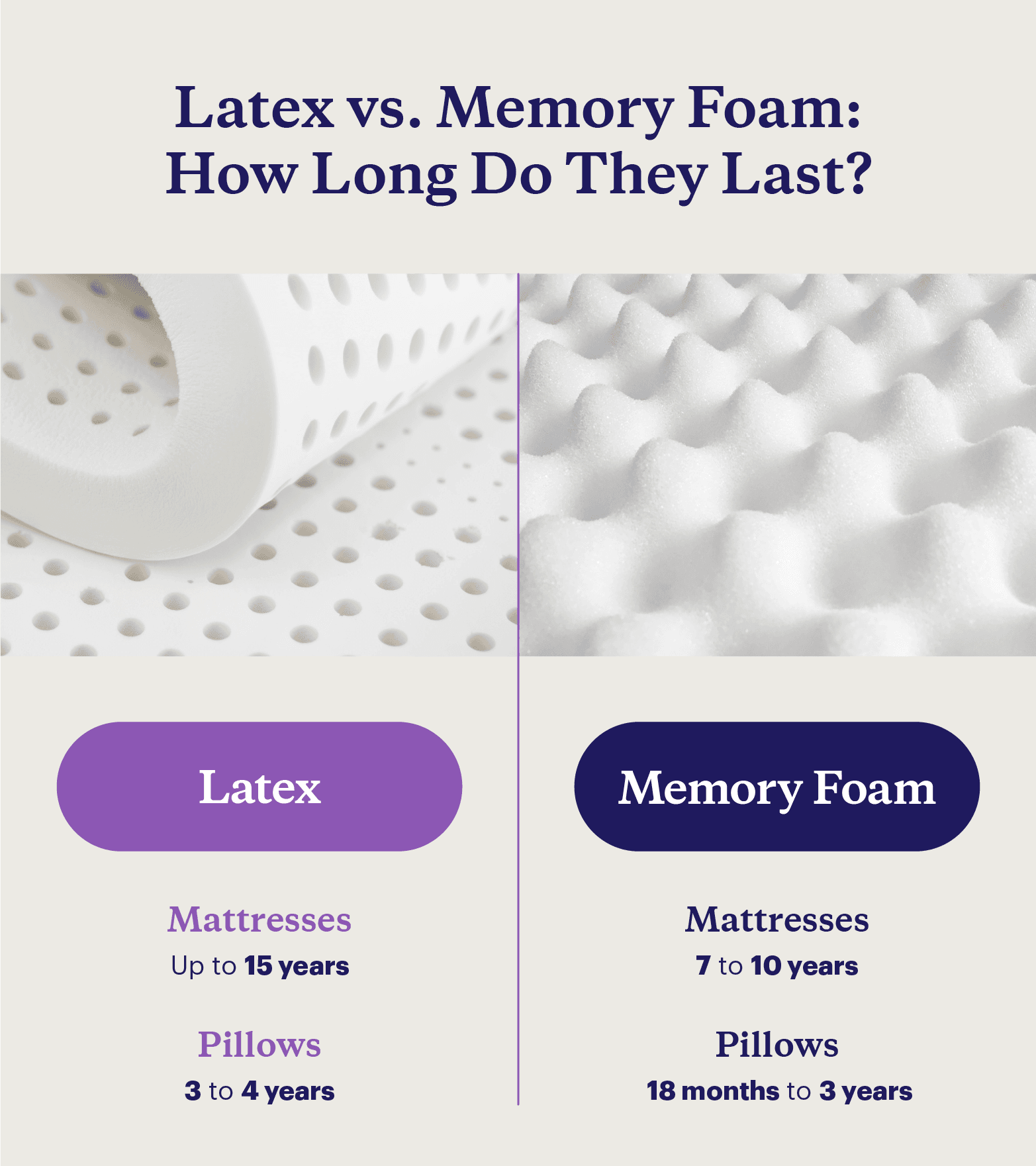
- Durability - average years until noticeable sag or comfort loss.
Memory foam. Pressure relief: excellent. Support: good. Cooling: fair. Motion isolation: excellent. Edge support: fair. Durability: 7-10 years.
Hybrid. Pressure relief: good. Support: excellent. Cooling: good. Motion isolation: good. Edge support: excellent. Durability: 7-10 years.
Innerspring. Pressure relief: fair. Support: good. Cooling: excellent. Motion isolation: poor. Edge support: good. Durability: 5-7 years.
Latex. Pressure relief: good. Support: excellent. Cooling: excellent. Motion isolation: good. Edge support: good. Durability: 10-15 years.
Airbed. Pressure relief: adjustable. Support: adjustable. Cooling: good. Motion isolation: good. Edge support: fair. Durability: 8-10 years.
How to pick the right mattress type for you
Three factors decide more than anything else: your sleep position, your body weight, and any pain points you're trying to solve.
Match your sleep position
- Side sleepers need pressure relief at the shoulder and hip - memory foam, soft hybrids, and gel-grid mattresses are the strongest performers. Aim for a soft to medium-firm comfort rating (3-6 on a 10-point scale).
- Back sleepers need support that keeps the lumbar curve from collapsing. Hybrids, latex, and medium-firm memory foam all work; aim for 5-7 on the firmness scale.
- Stomach sleepers need a firmer surface to keep the hips from sinking and the spine from bowing. Innersprings, firm hybrids, and Dunlop latex are the safest picks. Aim for 6.5-8.
- Combination sleepers who shift between positions need a responsive surface that doesn't trap them - hybrids, latex, and gel-grids all reposition faster than memory foam.
Match your body weight
- Under 130 lb. You won't sink as deeply into firm beds, so you can size down a notch on firmness. Pure foam and softer hybrids work well.
- 130-230 lb. The "average" range mattresses are designed around - most published firmness ratings apply directly.
- Over 230 lb. Look for hybrids with reinforced coil systems or thicker, denser foams (≥4 lb/ft³ memory foam, ≥1.8 lb/ft³ polyfoam). Avoid mattresses under 12 inches thick - they bottom out faster under heavier loads.
Match your problem
- Back pain. Medium-firm hybrids and latex mattresses score highest in clinical studies for chronic low-back pain. Avoid extremes - too-soft beds let the hips sag; too-firm beds push pressure into the lumbar curve.
- Hot sleeping. Latex, hybrids with coil cores, gel grids, and innersprings all sleep cooler than dense memory foam. Look for phase-change covers, gel infusions, or open-cell foam structures.
- Couples with different preferences. Airbeds with split chambers solve this directly. Otherwise, hybrids with strong motion isolation (zoned coils + dense memory foam top) are the next-best compromise.
- Allergies / asthma. Natural latex is the most allergy-resistant mainstream option. Look for CertiPUR-US, GreenGuard Gold, or GOTS certifications to limit VOCs and chemical irritants.
Sanity-check the basics
Before you click buy, confirm:
- Trial length. 100 nights is the floor in 2026; 365 nights is increasingly common.
- Warranty. 10 years minimum, prorated or non-prorated. Read the sag threshold (1.5 inches is industry standard before warranty kicks in).
- Return logistics. Does the company arrange pickup, or do you have to ship/donate it? This matters more than people realize.
- Density specs (foam beds). Memory foam should be ≥3.5 lb/ft³ for daily use; polyfoam ≥1.8 lb/ft³.
- Coil count and gauge (innerspring/hybrid). Look for 800+ pocketed coils in a queen and a 13-15 gauge wire.
What about waterbeds, futons, and pillow-tops?
These are sub-categories or niche formats, not modern primary mattress types:
- Pillow-top. A thick layer of extra padding stitched onto an innerspring or hybrid. Improves softness; doesn't change the underlying type.
- Eurotop. Like a pillow-top but sewn flush with the mattress edge - lasts longer because the padding can't shift.
- Waterbed. Effectively obsolete for primary sleep. Heavy, leak-prone, and incompatible with most modern bed frames.
- Futon. A fold-out mattress designed for occasional use. Fine for guests, not for a primary bed.
Bottom line
Most adults end up choosing between memory foam, hybrid, and latex - and the honest answer is that all three can work for almost anyone if you match firmness to your sleep position and body weight. Hybrids are the safest default for couples and average-weight back sleepers. Memory foam wins for side sleepers and pressure-point relief. Latex wins for durability, cooling, and natural materials.
Innersprings and airbeds remain great picks for specific buyers - budget-conscious shoppers, hot sleepers, and couples who can't agree on firmness - but they're not the right starting point for most people in 2026.
Try before you buy when you can. Trial periods exist precisely because the spec sheet only tells you so much; the only real test is seven uninterrupted nights on the bed.
Mattress types FAQ
What is the most popular mattress type in 2026?
Hybrid mattresses are the best-selling format in the US in 2026, followed by all-foam memory foam mattresses. Hybrids combine pocketed coils with memory-foam or latex comfort layers, which makes them work for the widest range of sleepers.
Which mattress type is best for back pain?
Medium-firm hybrids and latex mattresses score highest in clinical studies for chronic low-back pain. The combination of strong support and moderate contour keeps the lumbar spine aligned without letting the hips sag or pushing pressure into the lower back.
Which mattress type sleeps coolest?
Innerspring mattresses sleep coolest because the open coil core lets air circulate freely. Latex and hybrid mattresses are close behind. Dense memory foam without cooling features (gel, copper, phase-change covers) is the warmest option.
Are memory foam mattresses bad for your back?
No - but the wrong firmness can be. Soft memory foam lets heavier sleepers sink past the supportive base layer, which strains the lower back. Stick to medium-firm or firm memory foam (5-7 on a 10-point scale) if you have back pain, and confirm the base foam is at least 4 lb/ft³ density.
How long does each mattress type last?
Latex lasts the longest at 10-15 years, followed by memory foam and hybrid (7-10 years), airbeds (8-10 years), and innerspring (5-7 years). Quality, body weight, and frame support all affect actual lifespan.
What is the difference between hybrid and memory foam?
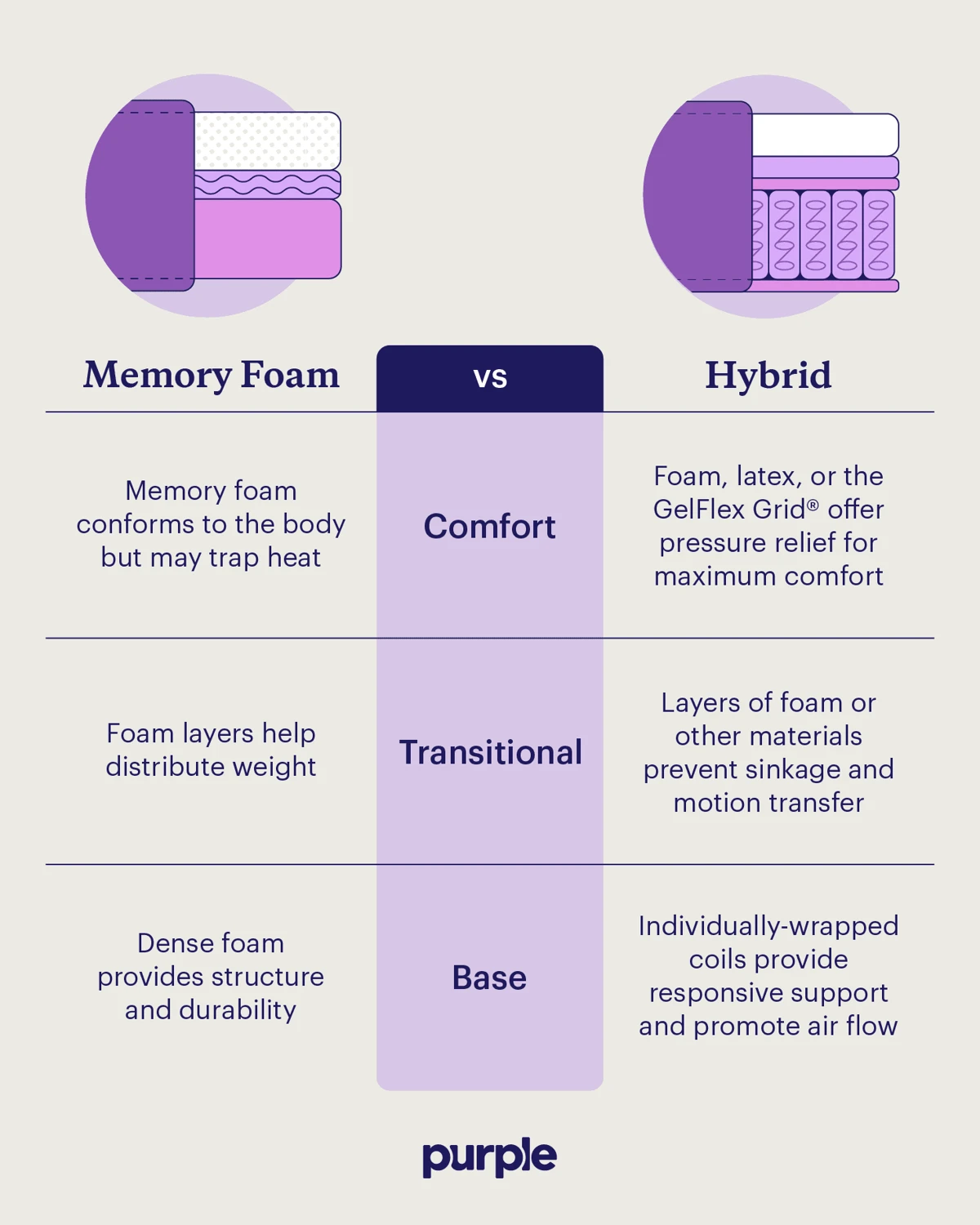
A hybrid uses a coil support core with a foam comfort layer on top, while a memory foam mattress is foam from top to bottom. Hybrids feel bouncier, sleep cooler, and support heavier bodies better. Memory foam offers deeper contour, better motion isolation, and a slower, more cradled feel.