
Understanding the differences between newer hybrid mattresses and traditional innerspring mattresses can leave you asking a lot of questions. What are the price differences? How long do they last? Do they sleep warm? Which one is actually best for the way you sleep?
This guide cuts through the confusion. It walks through the real differences between innerspring and hybrid mattresses, then helps you figure out which type fits your specific sleeping needs.
Innerspring vs hybrid mattress: what actually differs
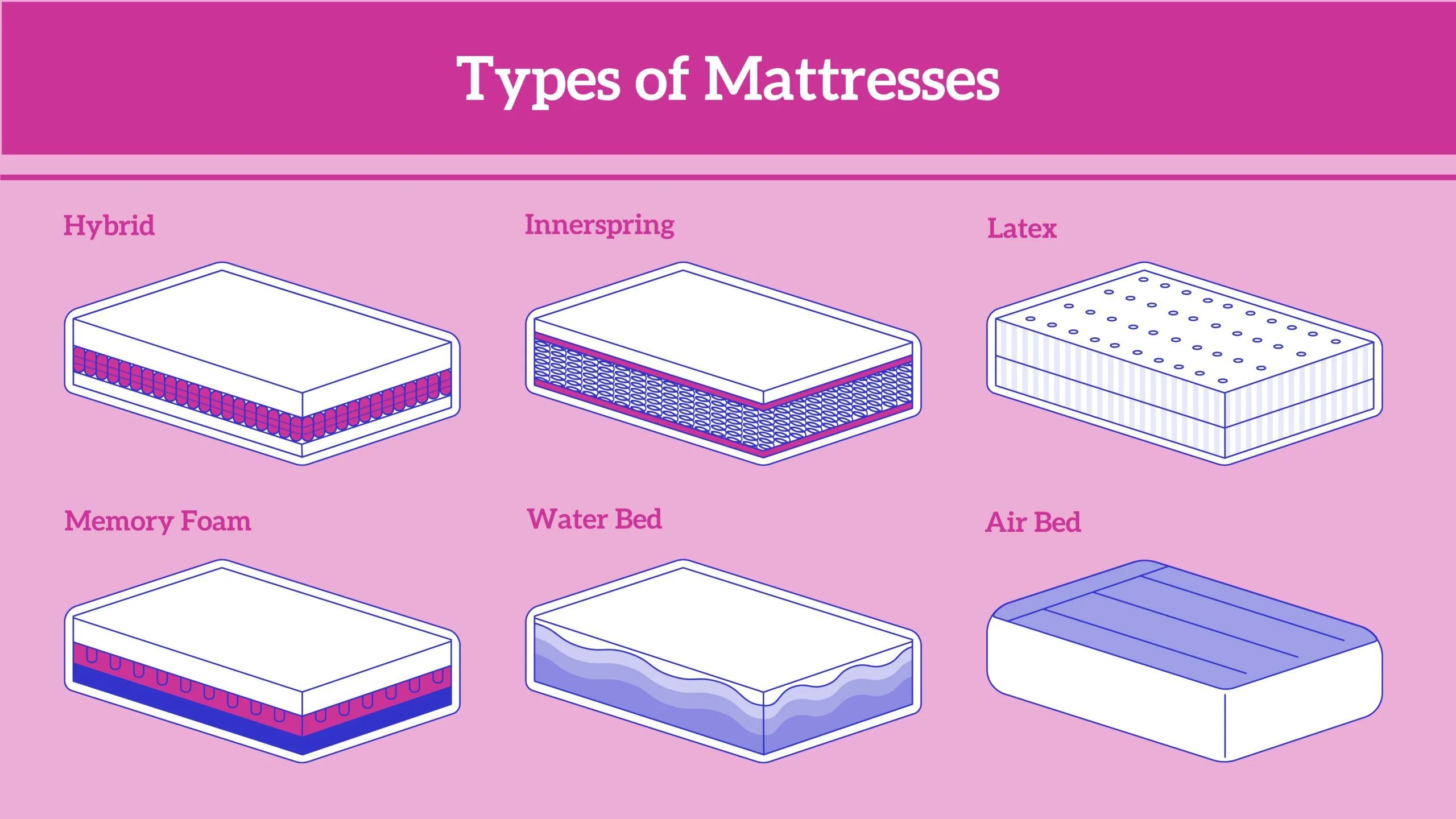
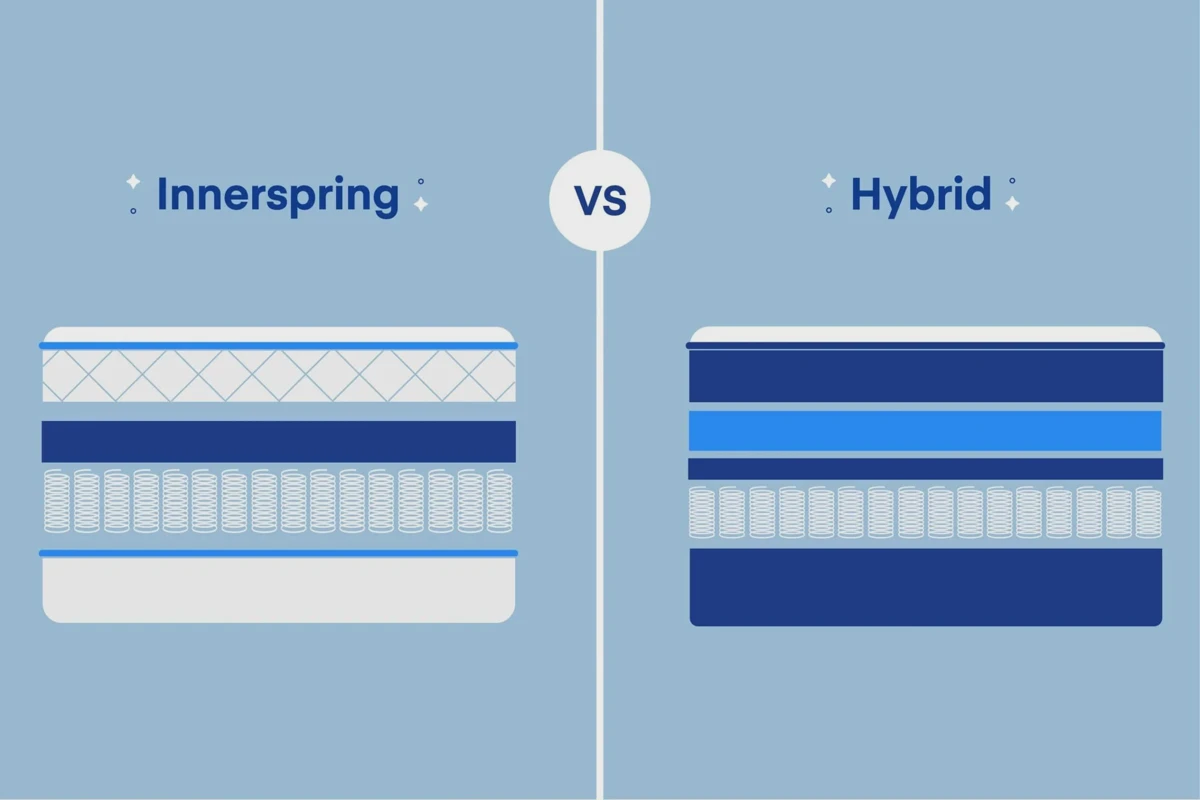
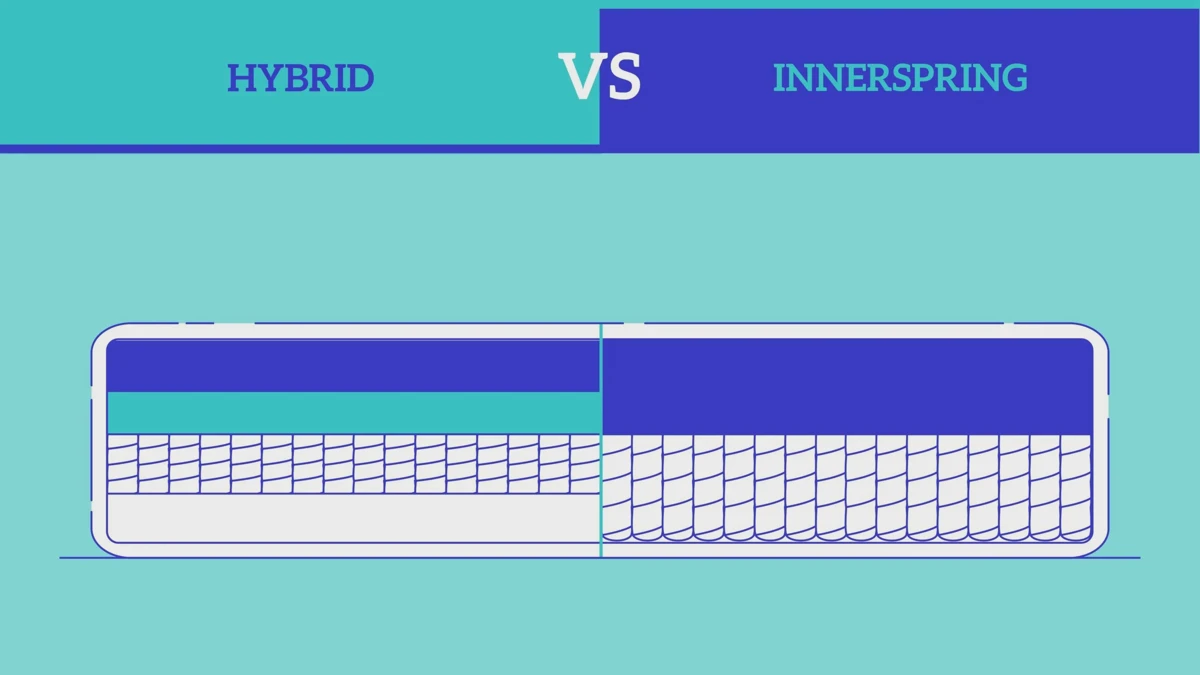
Both mattress types use a steel coil system as the structural base. The real difference is the layers stacked on top of those coils. An innerspring mattress is mostly coils with a thin layer of softer material on top, which is why it feels firmer and bouncier. A hybrid keeps the coil base but adds several thick comfort and transition layers of memory foam, latex, or polyfoam, which is why it contours.
The proportions matter more than the parts list. A modern innerspring may still include some foam padding, but the coil system stays the main event. A hybrid uses the coil base for support and lets the foam handle pressure relief at the surface.
Innerspring mattresses: the classic choice
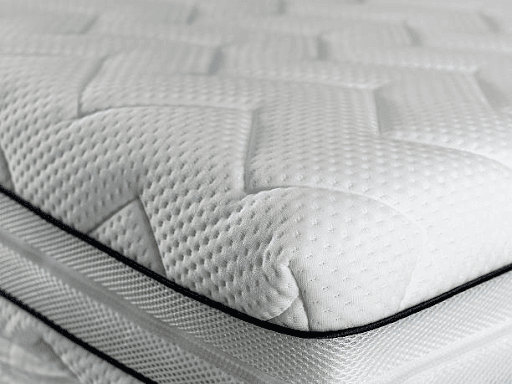
You already know the feel. Firm to medium-firm with a noticeable bounce. Classic hotel bed comfort. Some have pillow tops for extra softness, but innersprings still primarily deliver that traditional springy support. Newer designs use pocket coils, where each spring is wrapped individually, to cut squeaking and reduce motion transfer compared with older Bonnell coil designs.
Pros of innerspring mattresses
- Affordability: budget-friendly choice for a comfortable night's sleep.
- Excellent for hot sleepers: superior airflow between the coils keeps you cool.
- Responsive, bouncy feel: gives a sense of floating on top of the bed.
- Good edge support: reliable support from edge to edge with a high coil count.
- Durable: well-made metal coils offer long-lasting support.
Cons of innerspring mattresses
- Less motion isolation: interconnected coils mean movement on one side can be felt on the other.
- Minimal pressure relief: a thin comfort layer is not great for aches and pains, especially for side sleepers.
- Heavier and harder to move: worth considering if you move frequently.
- Potential for noise: older models or wear and tear can lead to squeaking.
Hybrid mattresses: the best of both worlds
Imagine that familiar innerspring support combined with the plushness of memory foam, latex, or gel. You get serious pressure relief alongside classic bounce. Hybrids are essentially the upgrade, with more customizable comfort options and a sink-in feel that works well for side sleepers and anyone with joint or back pain.
Hybrids and innersprings might start with a similar coil foundation, but they offer distinct sleeping experiences because of the top layers. Hybrids focus on a plush, customized feel, while innersprings stick to a classic responsive bounce.
Pros of hybrid mattresses
- Balanced feel: bouncy support paired with cushioning comfort.
- Good for various sleep styles: adapts whether you are a side, back, or stomach sleeper.
- Improved motion isolation: foam layers and pocketed coils absorb partner movement.
- Better airflow than all-foam: sleeps cooler than memory foam while still feeling cozy.
- Durable: the coil-plus-foam combo is a long-lasting investment.
Cons of hybrid mattresses
- Typically more expensive: queen hybrids commonly run $600 to $2,200 or higher.
- Can still trap some heat: not as breathable as pure innerspring, though modern gel infusions and breathable foams help.
- Heavier and harder to move: a practical consideration if you move often.
- Potential for some noise: newer models minimize this, but coils can develop squeaks over years of use.
Head-to-head comparison: what matters most
Comfort and support
- Innerspring mattresses: deliver a firmer sleep surface, with a feeling of sleeping on top of the mattress. Even pillow-top versions usually keep that classic springy sensation.
- Hybrid mattresses: designed for body-conforming and pressure-point relief. The sink-in feeling is ideal for side sleepers and anyone who needs extra cushioning at the hips and shoulders.
Motion isolation
- Innerspring mattresses: the interconnected coil network leads to more noticeable movement transfer, which can disrupt light sleepers when a partner moves at night.
- Hybrid mattresses: foam layers and individually wrapped coils excel at absorbing motion, which is a clear win for couples.
Temperature control
- Innerspring mattresses: natural airflow within the coil core helps hot sleepers stay cool. Minimal top padding keeps it the most breathable option.
- Hybrid mattresses: dense memory foam used to trap heat, but many modern hybrids include gel infusions and breathable foams. Warm sleepers should not write hybrids off automatically.
Durability
- Innerspring mattresses: a well-made innerspring with a high coil count can last a long time, though edges may sag faster if the coils lack reinforcement.
- Hybrid mattresses: durability depends on material quality. High-density foams and a quality coil base extend lifespan. Edges are typically the first to soften, but coil reinforcement minimizes this versus all-foam beds.
Price
- Innerspring mattresses: generally the most affordable choice while still offering reliable quality, with pricing that varies by size and coil count.
- Hybrid mattresses: typically the most expensive mattress type, though there is overlap. A top-tier innerspring can easily match the cost of a mid-range hybrid.
Finding the perfect match for your sleep style
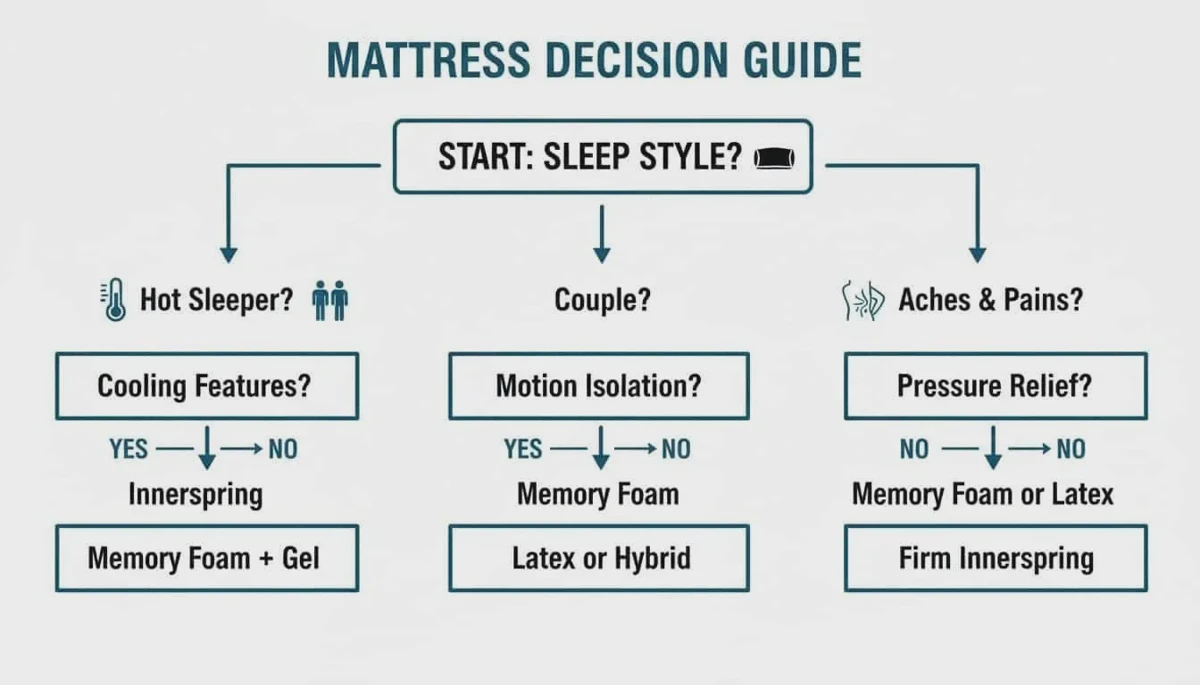
Picking the right mattress comes down to your individual needs. Here are the factors that should influence the call:
- Craving that classic feel: prefer firm support and the familiar bounce of a traditional bed? Innersprings are the way to go, especially for back and stomach sleepers.
- Pressure relief is a priority: hybrids deliver unmatched cushioning for side sleepers and anyone prone to pain in the hips and shoulders.
- Sharing the bed: couples who hate being woken by a tossing partner will appreciate the better motion isolation of a hybrid.
- You run hot at night: innersprings provide excellent breathability. Some hybrids now offer cooling features, so explore both before dismissing one.
- You are on a tight budget: hybrids often cost more, but some offer great value compared with higher-end innersprings. Always compare.
- You want luxurious comfort: hybrids excel with features like zoned support and top-quality materials for an exceptional sleep experience.
For a deeper dive into mattress choice and sleep style, the Sleep Foundation mattress guide walks through how coils, foam, and contouring map to different body types.
FAQs: innerspring vs hybrid mattress
What is better, an innerspring or a hybrid mattress?
There is no one-size-fits-all answer. Innersprings offer classic support, budget-friendliness, and great airflow. Hybrids excel at pressure relief, motion isolation, and customization. Which is best depends on your sleep style, body type, and priorities. Stomach sleepers and combination sleepers who switch positions often tend to do well on innersprings. Side sleepers, couples, and people with joint or back pain are usually better served by a hybrid.
Why do hotels use innerspring mattresses?
Innersprings line up well with what hotels need across many guests. The firm to medium-firm feel is the classic hotel bed comfort most people recognize, the metal coils are durable for heavy nightly use, the airflow keeps the surface cool for guests who run warm, and the lower price point makes large-scale fleet purchasing easier than going with hybrids across hundreds of rooms.
What is the best mattress for ankylosing spondylitis?
References on innerspring vs hybrid do not single out ankylosing spondylitis by name, but the closest fit follows the same logic the references apply to joint pain, arthritis, and back pain: a hybrid with thicker comfort layers tends to be the better pick. The foam contouring cradles the hips and shoulders, the coil base keeps the spine supported instead of sagging, and the balanced cushioning eases pressure on inflamed joints. Anyone managing ankylosing spondylitis should still confirm mattress choice with their own physician or physical therapist.
What are the disadvantages of a hybrid mattress?
The main downsides are price, weight, and heat. Hybrids cost more than comparable innersprings because of the thicker foam and more complex construction. They are heavier and harder to move because of all that material. Some hybrids with dense memory foam can still trap body heat, though modern designs with gel infusions and breathable foams reduce that. Coils inside hybrids can also develop minor squeaks over years of use.