Is the thought of taking apart your bed frame adding to your moving day stress? The process is usually simpler than it looks. With the right preparation and a little guidance, you can take apart a bed frame quickly and without scratching the wood or losing the hardware. This guide walks through the tools, the step order, and the small calls (slats versus center beam, stuck bolts, no-tools rails) that decide how smoothly the job goes.
What you need before you start
Taking apart a bed frame needs only a handful of common tools. Most are already in the house and anything missing can be picked up at a hardware store. Before you start, gather:
- Phillips or flathead screwdriver
- Allen wrench (for bolts with hexagonal holes, common on many bed frames)
- Adjustable wrench or pliers
- Resealable plastic bags for screws, bolts, and washers
- Painter's tape and a marker for labeling
- Moving blankets, bubble wrap, and a mattress bag
- A rubber mallet and a can of WD-40 if the bed is older and the hardware may be stuck
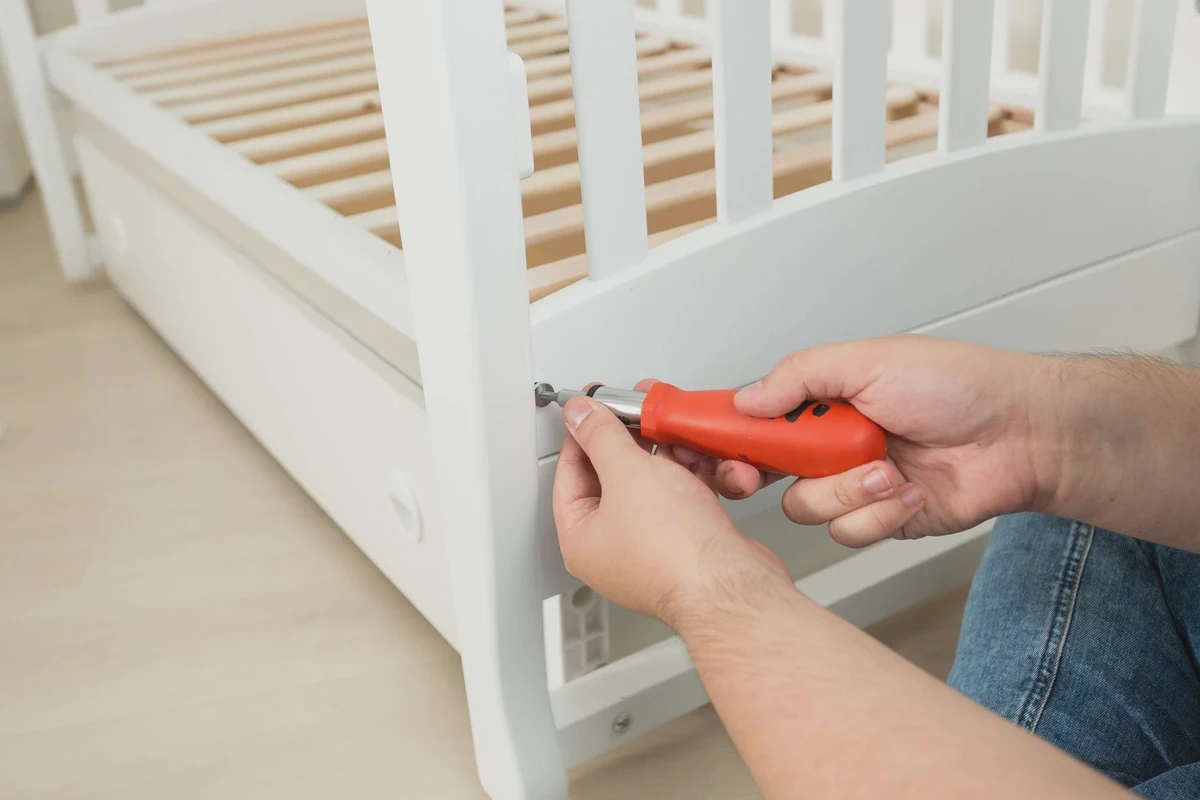
Some bed frames use bolts with hexagon holes that need an Allen wrench, while others use Phillips or flathead screws. Check the heads on your bed frame's hardware before you reach for a tool so you do not strip anything.
Step 1: Remove the bedding and mattress
Strip the bed and lift the mattress off. Pull off the sheets, pillows, comforter, and mattress protector. Store the bedding in a large moving box or a plastic trash bag and set it aside. A mattress can weigh anywhere from 50 to 150 pounds, so grab a friend to help with the lift, and slide it into a mattress bag to keep dust and dirt off it. If the bed has a box spring, lift that off next and lean it against a wall.
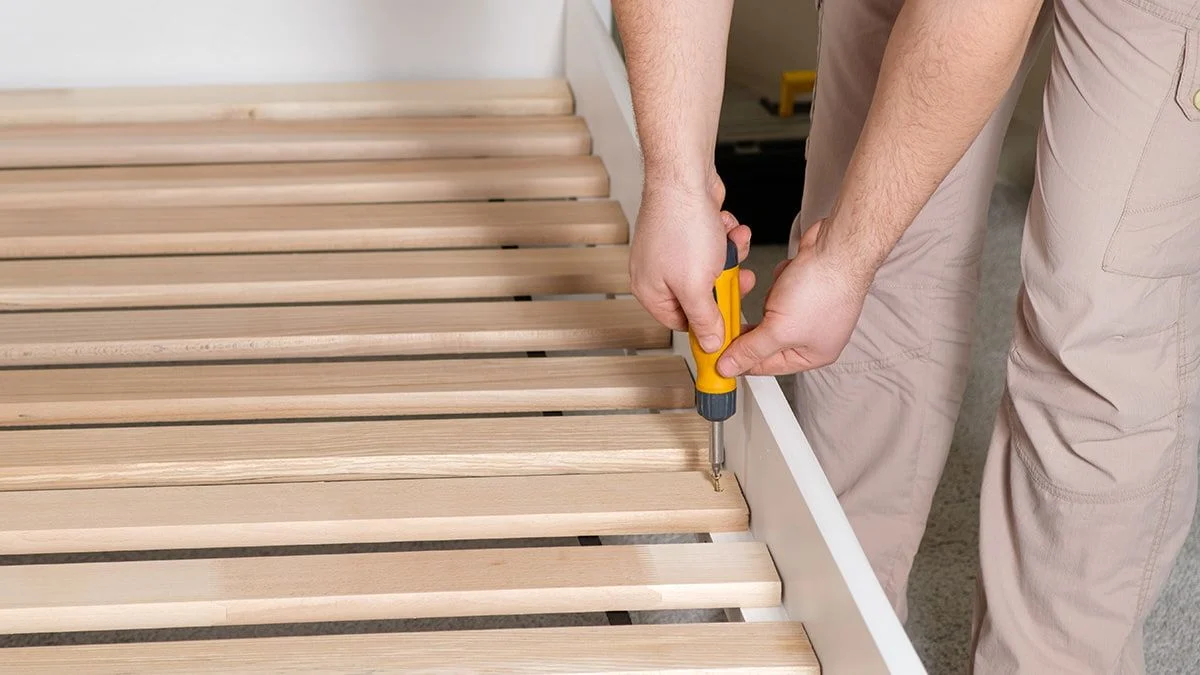
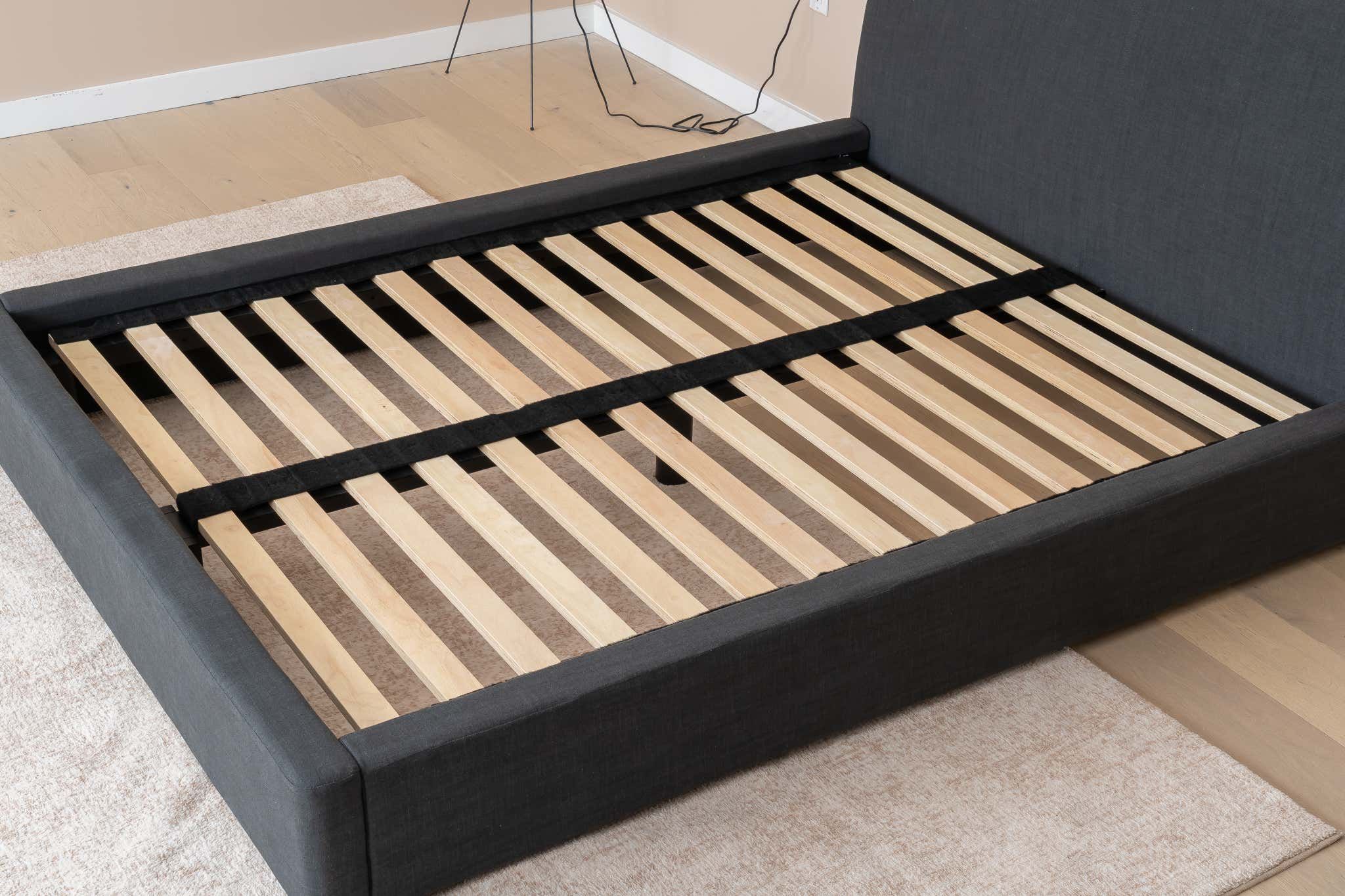
Step 2: Take off the slats or center support
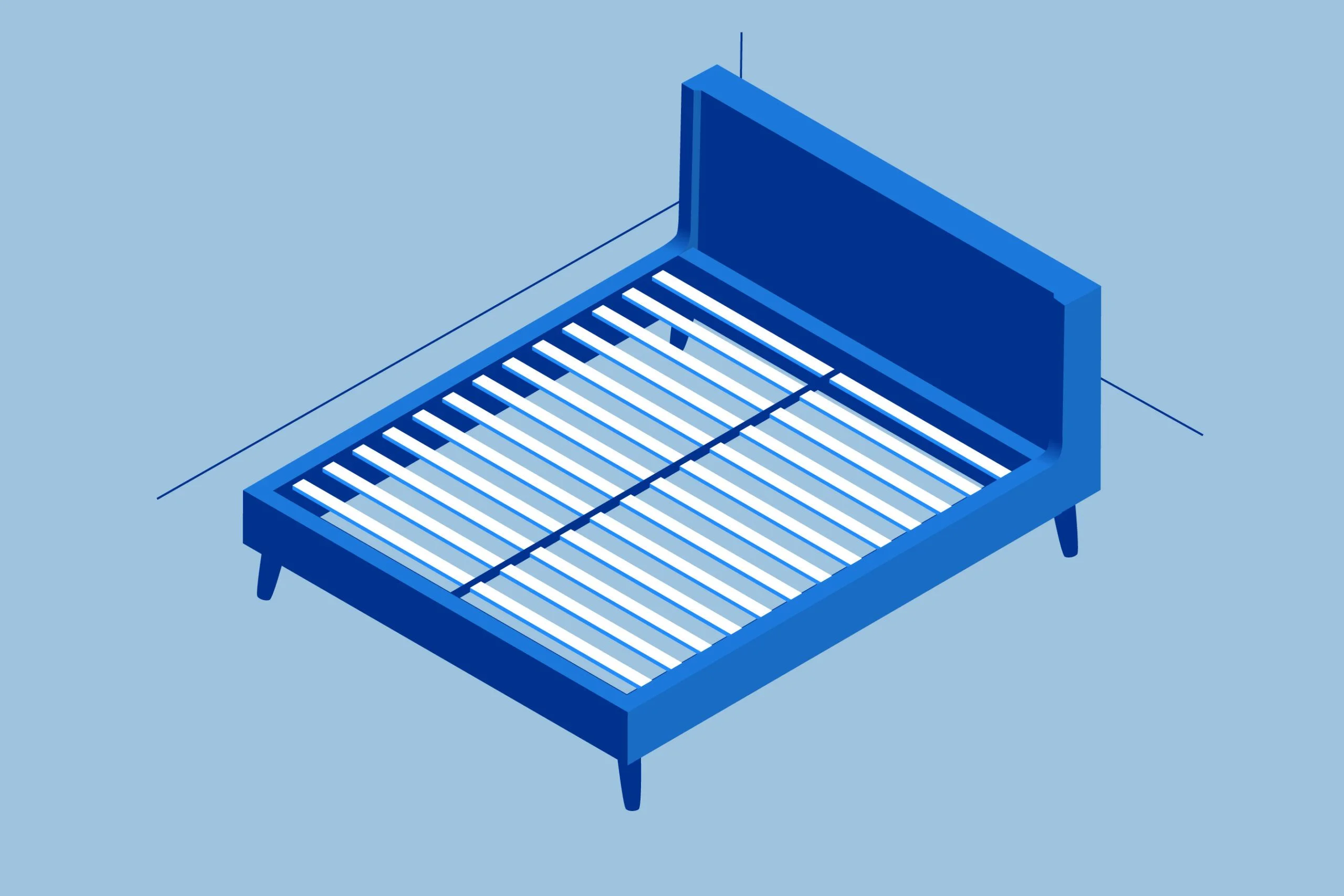
Clear everything that sits on the rails. With the mattress out of the way, the slats or platform deck are exposed. How they come off depends on the design.
If the slats are joined together as a slat roll, gather them up, wrap them in a moving blanket, and secure the roll with a bungee cord or packing tape. If they are screwed to the rails one at a time, unscrew each one and drop the screws into a labeled plastic bag as you go. Putting every screw from every part of the bed into one bag makes reassembly a headache, so keep one bag per component.
Once the slats are free, remove the support legs that sit under the center of the slat row, usually held on by a single screw each. Wrap the legs in bubble wrap and box them up. If your bed has a central metal beam instead of full slats (common on queen and king frames), use an Allen wrench or screwdriver to disconnect it from the rails before pulling off its support legs.
Step 3: Detach the headboard and footboard
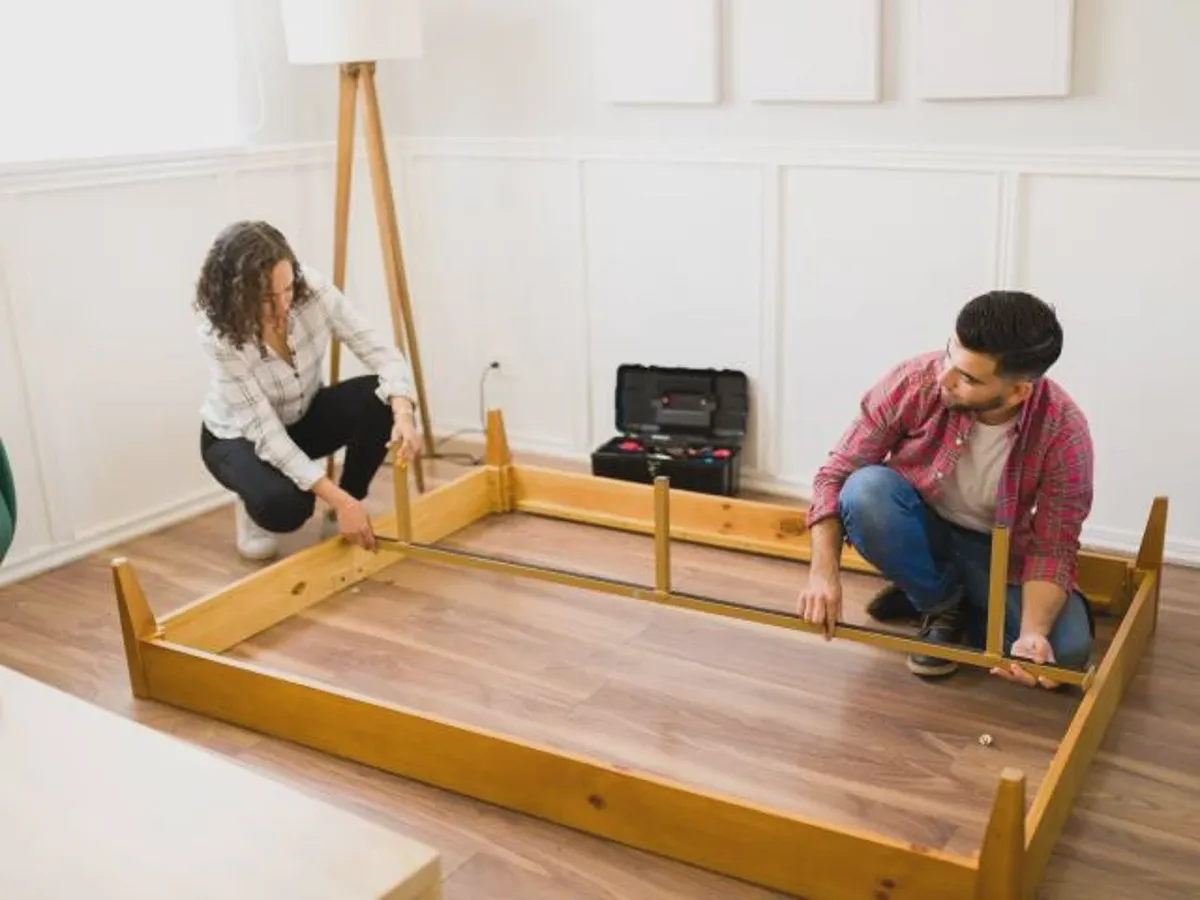
Unbolt the headboard and footboard from the side rails. Most headboards and footboards are connected to the frame with a few bolts or screws that come out with a screwdriver or Allen wrench. Ask a friend to hold the panel steady while you loosen its hardware so it does not tip when the last bolt comes out. Drape a moving blanket over each panel and lay it gently against a wall while you keep working. Walls look harmless, but they can scratch a finished panel surprisingly fast.
If the bed has decorative legs attached to the headboard or footboard, remove those too, and if it is a canopy bed, take the bedposts and the top frame off before the main panels so the whole assembly does not shift on you.
Step 4: Unscrew the side rails and crossbars
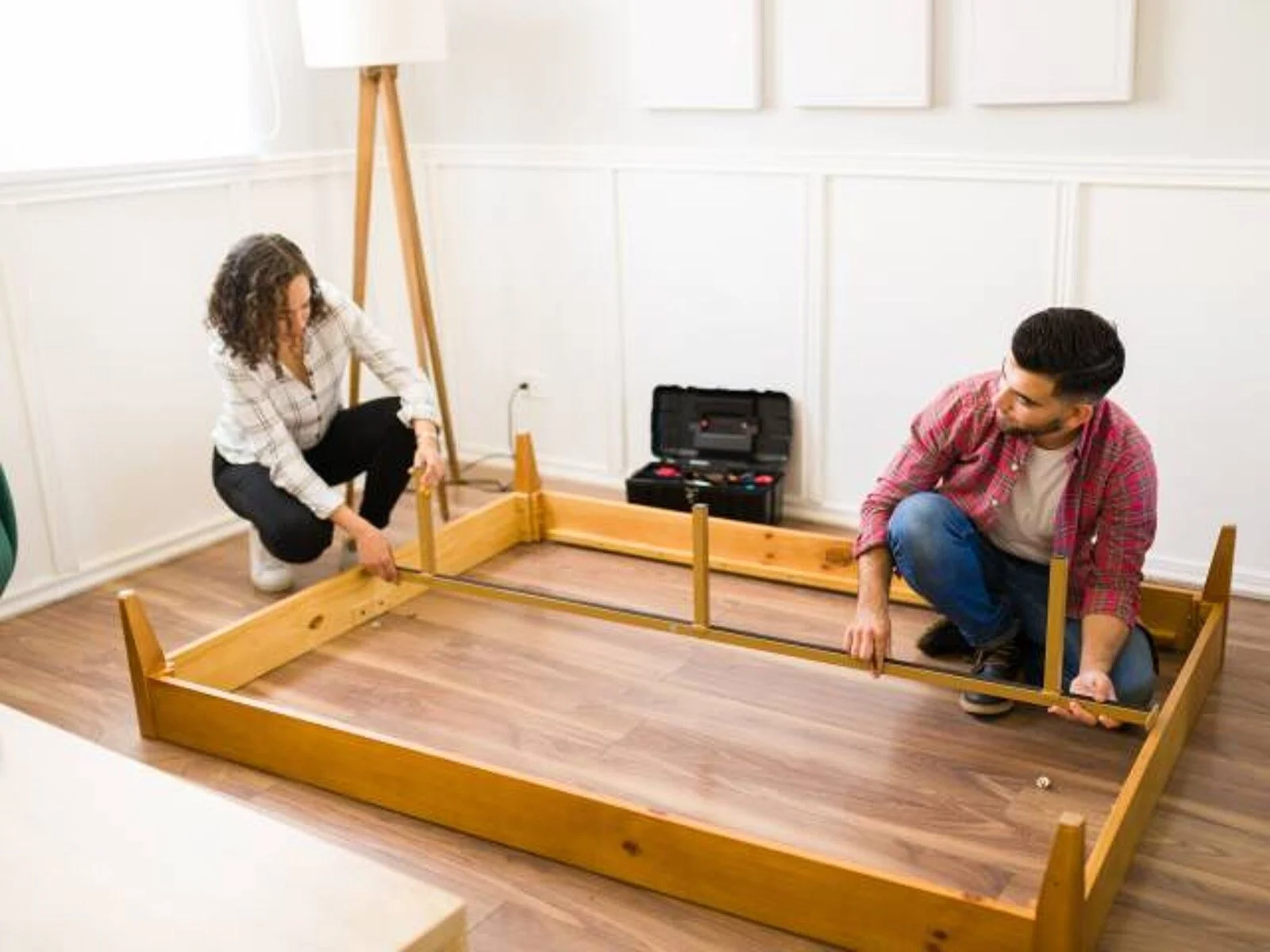
Take the rails off last so the frame stays stable until the end. Some headboards and footboards are one solid piece, while others use side rails and crossbars for extra support and break down further. Hold each rail tight as you remove its connecting hardware, because the rails often shift unexpectedly the moment a bolt clears.
For wood frames, the rails are usually attached with metal brackets or bed bolts inside the corners. Loosen the bolts with an Allen wrench or socket wrench, and if a joint sticks, tap it gently with a rubber mallet to pop it loose. For metal frames, some rails simply push and pull apart, while others lift upward out of slots in the headboard and footboard. For storage or upholstered beds with drawers under the platform, slide out the drawers and unscrew the glides before unbolting the rails.
After each rail and crossbar is free, wrap it in a moving blanket and secure the wrap with packing tape or a bungee cord.
Step 5: Bag and label your hardware
Sort the hardware as you remove it, not after. Put the screws, bolts, nuts, and washers for each component into their own resealable bag. Label each bag with the component name (headboard bolts, rail bolts, slat screws) using painter's tape and a marker, then tape the bag to its matching piece. Painter's tape lifts off without damaging a wood finish, while packing tape can leave marks on the rail.
Lost hardware happens, but most beds use ordinary bolts and screws, so a hardware store can match anything you misplace if you take the lost piece in with you.
Wrap and protect each piece for the move
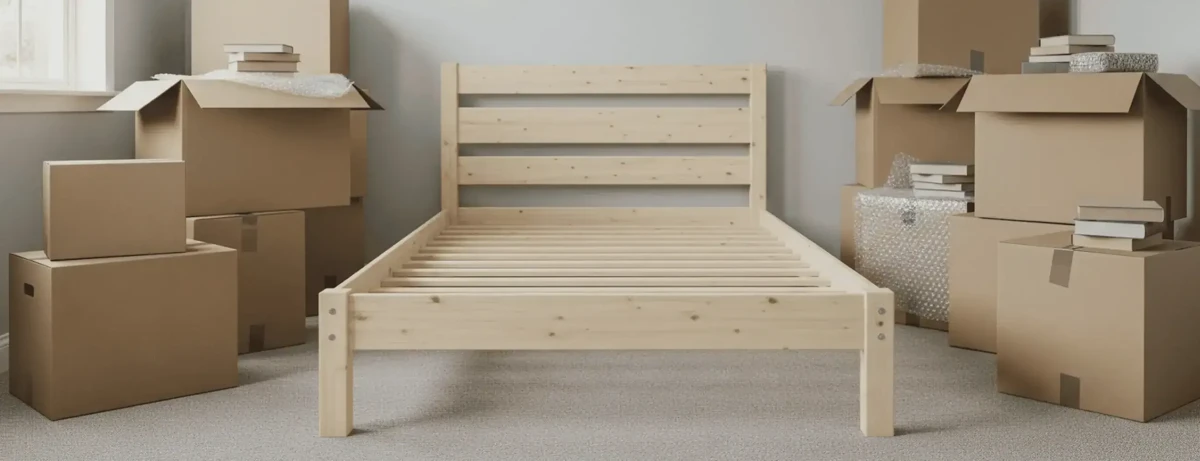
Once the frame is broken down, wrap every wood piece in a moving blanket and every metal piece in bubble wrap. Thick towels, rugs, or extra bedding work as substitutes if you do not have moving blankets. Bag the mattress in a heavy plastic mattress cover. Box up small parts (slat support legs, decorative leg caps, hardware bags that you did not tape to a rail) and fill the empty space with packing paper or peanuts so nothing slides around in transit. Bundle long pieces like rails together with a bungee cord so they travel as one unit.
Other situations to plan for
A standard bed frame is usually straightforward, but a few designs and conditions need extra handling.
- Stuck or rusted hardware, do not force it. Forcing a rusted bolt strips the threads and makes reassembly impossible. Spray the joint with a silicone lubricant like WD-40, let it seep in, and try again. A few gentle taps with a rubber mallet (a towel between the mallet and the frame helps avoid marks) loosen most stubborn fasteners.
- Canopy beds, dismantle the bedposts and top frame before the main frame. Bedposts often look identical but attach in a specific orientation, so label each one as it comes off.
- Beds with drawers or storage bases, pull the drawers first and unscrew the glides before touching the rail bolts so the rails are not under load.
- Adjustable bed bases, unplug the power cord and wrap it before any disassembly. Most adjustable bases use 7/16 inch hex head bolts on the mattress retainer, but the manual is the source of truth. If you do not have the paper copy, search the model number online.
- Single bed frames, the steps are the same as for queen or king sizes, the parts are lighter and you can usually handle the mattress and rails on your own.
- Foldable metal frames without screws, slot-fit rails lift upward out of the headboard and footboard and the frame folds flat after the slats are off, so no tools are needed beyond a mallet to tap a stuck joint loose.
- Oversized beds and welded frames, these are heavier and often have specialty components that are hard to handle without the right tools, and it is worth calling a full-service moving team for those.
Putting the bed back together
Reassembly is the reverse order. Carry the components into the new bedroom, unwrap them, and start with the side rails and crossbars fastened back into the headboard and footboard. Add the slats or platform deck, drop in the support legs, and lift the mattress back on top. The labeled hardware bags taped to each piece make the order obvious, which is the whole point of bagging them as you went.
If a frame fights you on the way down or back up, ask the manufacturer for guidance, or contact a local moving crew for the heavy lift. A bed frame should not be the part of moving day that costs you a finger or a finish.