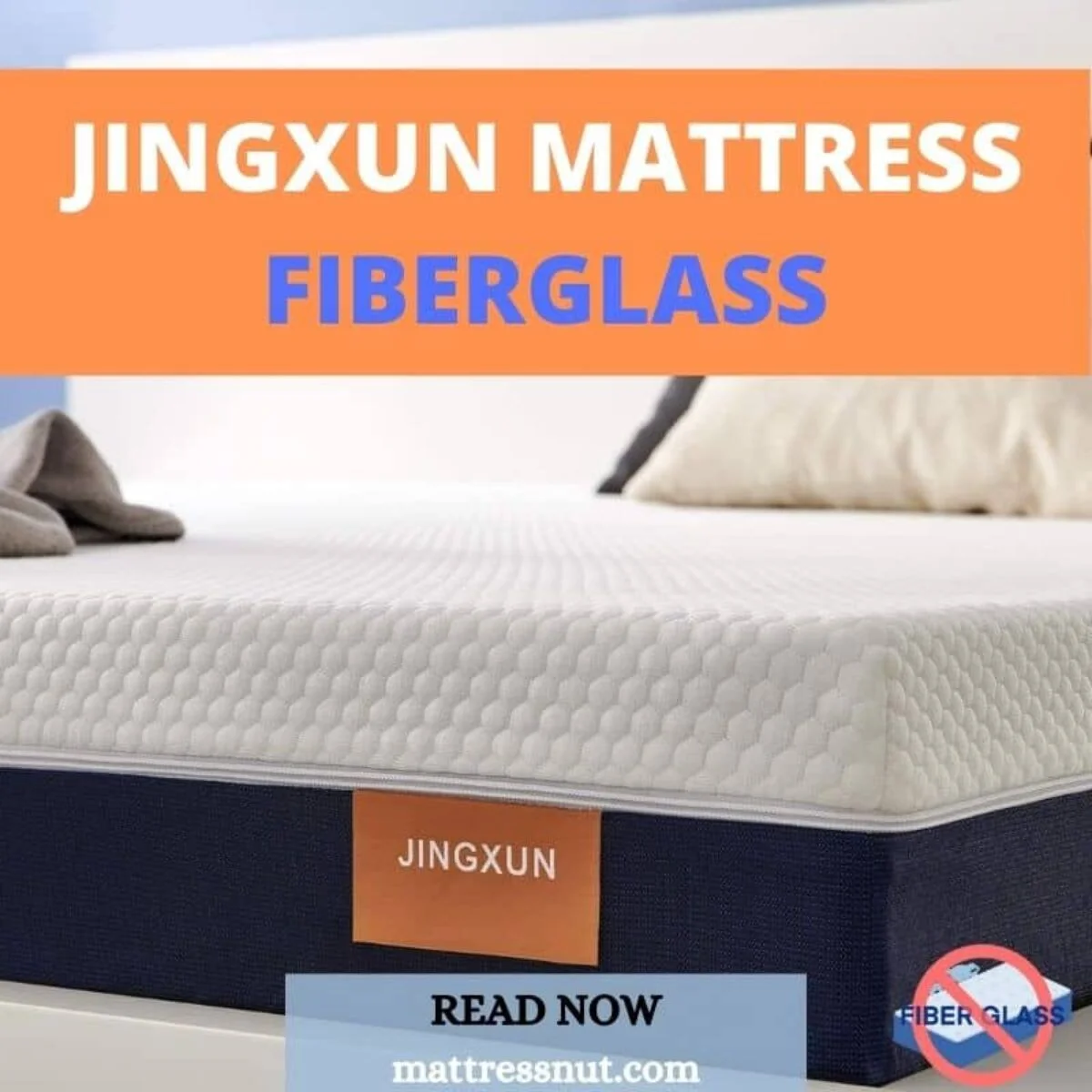
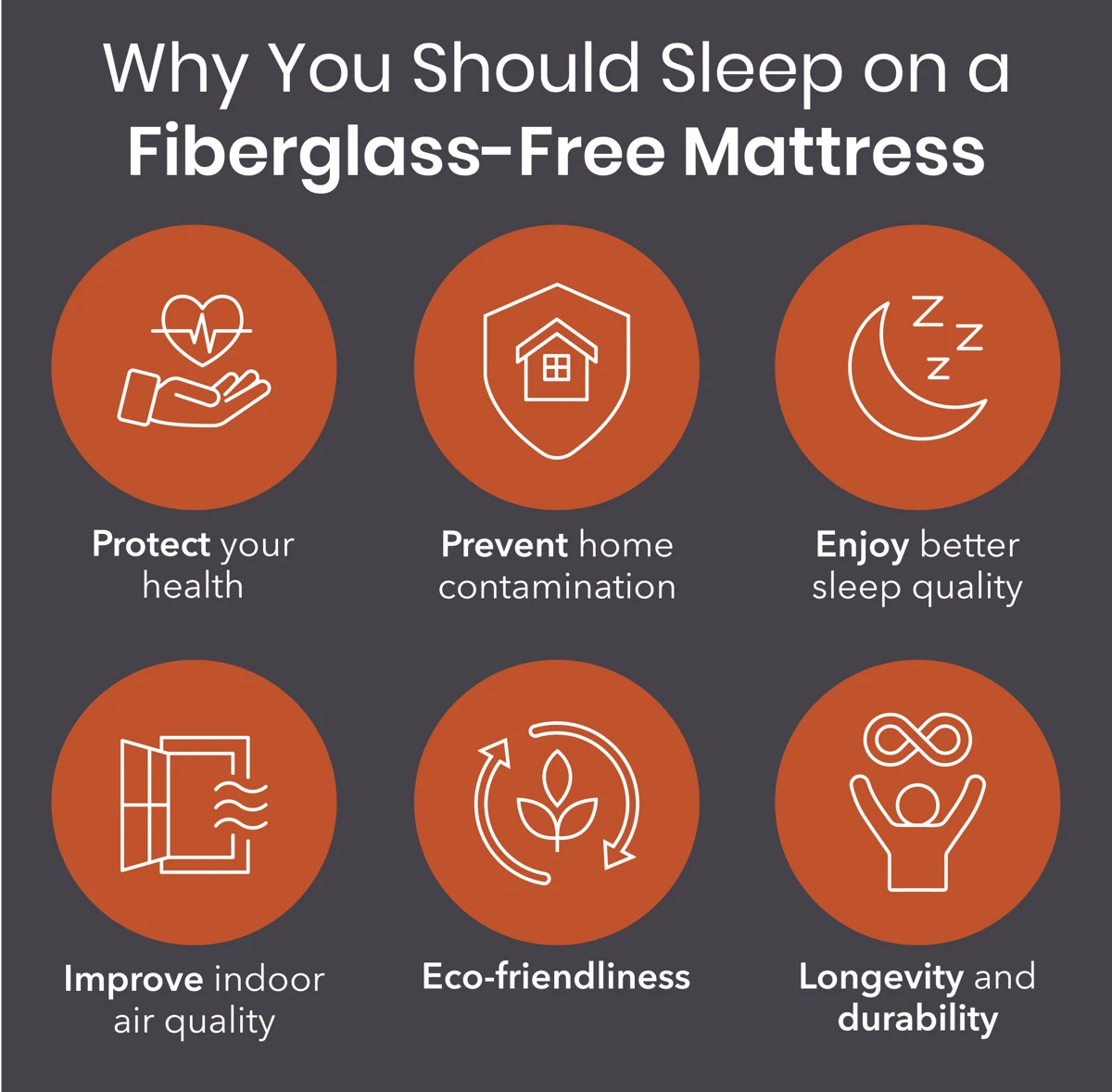
Short answer: Jingxun memory foam mattresses do not contain fiberglass. The brand uses flame-retardant fibers - not glass fiber - to meet U.S. flammability standards, and its foams carry CertiPUR-US and OEKO-TEX Standard 100 certifications confirming the absence of formaldehyde, heavy metals, ozone depleters, and PBDEs.
That said, fiberglass mattress incidents are still common across the budget bed-in-a-box category, and it pays to verify any mattress yourself before unboxing it. Below is what Jingxun actually uses, how to read a mattress law tag, and what to do if you suspect fiberglass has escaped a damaged cover.
Why fiberglass in mattresses is a problem
Fiberglass is a cheap thermoplastic-and-glass-fiber composite that many manufacturers sew into an inner sock to act as a fire barrier. When the inner cover stays sealed, it works. The issue is what happens when the cover tears, gets washed, or the outer zip cover is removed: microscopic glass fibers shed into bedding, carpet, and HVAC systems and can cause skin rashes, allergic reactions, eye irritation, and respiratory symptoms. Professional remediation routinely costs $2,000-$20,000+ depending on how widely the fibers spread.
What Jingxun actually uses instead of fiberglass
Jingxun's product line - including the Twin, Queen, and King memory foam and hybrid models sold on Amazon and Walmart - lists fiberglass-free construction across its listings. Its certification stack is the practical proof:
- CertiPUR-US - verifies the foam is made without ozone depleters, PBDE flame retardants, mercury, lead, formaldehyde, and phthalates regulated by the CPSC.
- OEKO-TEX Standard 100 - textile certification covering the cover and quilting layers for harmful substances.
- Flame-retardant fiber barrier - a non-glass woven sock (typically rayon, modacrylic, or wool blends) used to pass 16 CFR 1633, the federal open-flame mattress standard.
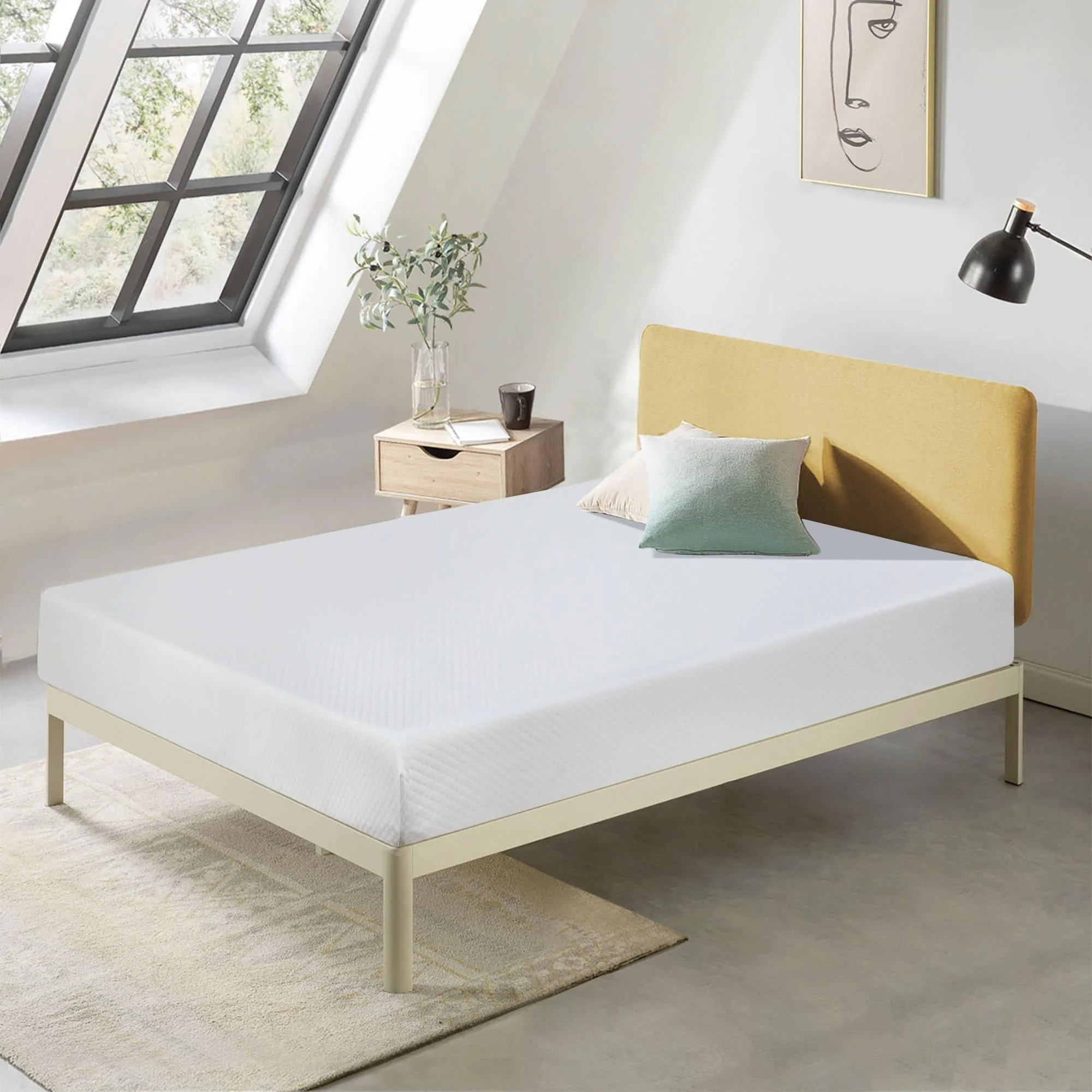
The brand additionally specifies pocketed-coil hybrids with a soft sponge top layer, 3D knitted breathable fabric, and gel-infused memory foam. None of those layers contain glass fiber by design.
How to verify any mattress is fiberglass-free
Federal law (16 CFR 1303 and state textile labeling rules) requires the law tag to disclose every fiber by percentage. That tag is where the answer lives - not the marketing page.
- Find the white law tag sewn to the side or foot of the mattress (do not remove it; you can read it in place).
- Scan the materials list for the words glass fiber, fiberglass, or glass wool. Any percentage is fiberglass.
- Read the care instructions. Wording like “do not remove inner cover” or “spot clean only” on an all-foam mattress is a strong signal of an inner fiberglass sock.
- Cross-check the brand. Ultra-budget Amazon all-foam mattresses ($100-$300 queen) historically carry the highest fiberglass risk. Reputable U.S. brands like Saatva, Avocado, and Amerisleep publish fiberglass-free statements directly.
- Add an encasement. Even on a fiberglass-free mattress, a fully-zippered encasement ($30-$50) protects the law tag, blocks dust mites, and contains any future damage.
What to do if fiberglass has been released
If you suspect a mattress (Jingxun or otherwise) has shed fiberglass into the room - visible glittery fibers on bedding, unexplained itching, a torn inner sock - do not improvise:
- Do not vacuum with a household vacuum. A standard vacuum exhausts fibers right back into the air and through the HVAC.
- Do not use compressed air or fans.
- Seal the room, turn off central HVAC, and limit foot traffic until cleanup.
- Call a remediation company experienced with fiberglass or asbestos-style cleanup. Document everything for an insurance or manufacturer claim.
Is the Jingxun mattress also non-toxic?
Yes - within the limits CertiPUR-US covers. The certification confirms the polyurethane foam is produced without formaldehyde, mercury, lead, PBDE flame retardants, and ozone depleters, and that VOC emissions stay below the 0.5 ppm program threshold. The familiar “new foam” off-gassing smell on a fresh unbox is normal and dissipates in a few days; airing the mattress in a ventilated room speeds it up.
How Jingxun stacks up against safer alternatives
Jingxun sits in the budget Amazon segment ($150-$400 queen). It is fiberglass-free, but the trial window, warranty, and edge support are thinner than what mainstream U.S. brands offer. If your priority is long-term value and risk-free trial:
- Saatva Classic - thistle/wood-pulp fire barrier, 365-night home trial, lifetime warranty, free white-glove delivery.
- Amerisleep AS3 - plant-based Bio-Pur foam, 100-night trial, 20-year warranty, made in the USA.
- Avocado Green - GOLS organic latex with wool fire barrier, 1-year trial, 25-year warranty.
Bottom line
Jingxun is fiberglass-free and CertiPUR-US certified, which puts it in safer territory than the average ultra-budget Amazon mattress. Always confirm with the law tag on the unit you receive, keep the inner cover sealed, and add an encasement - the same hygiene that protects you on any mattress, fiberglass-free or not.