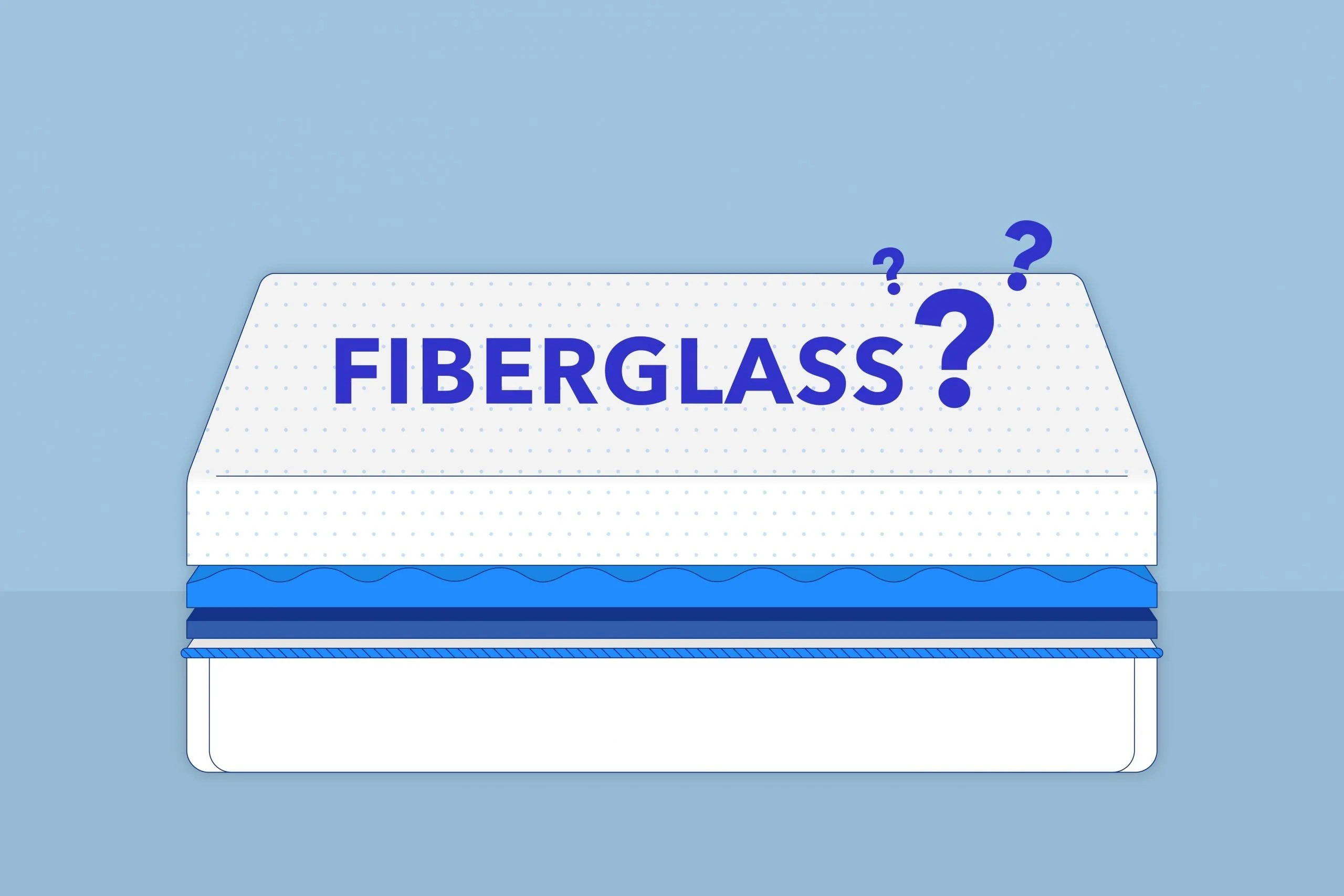
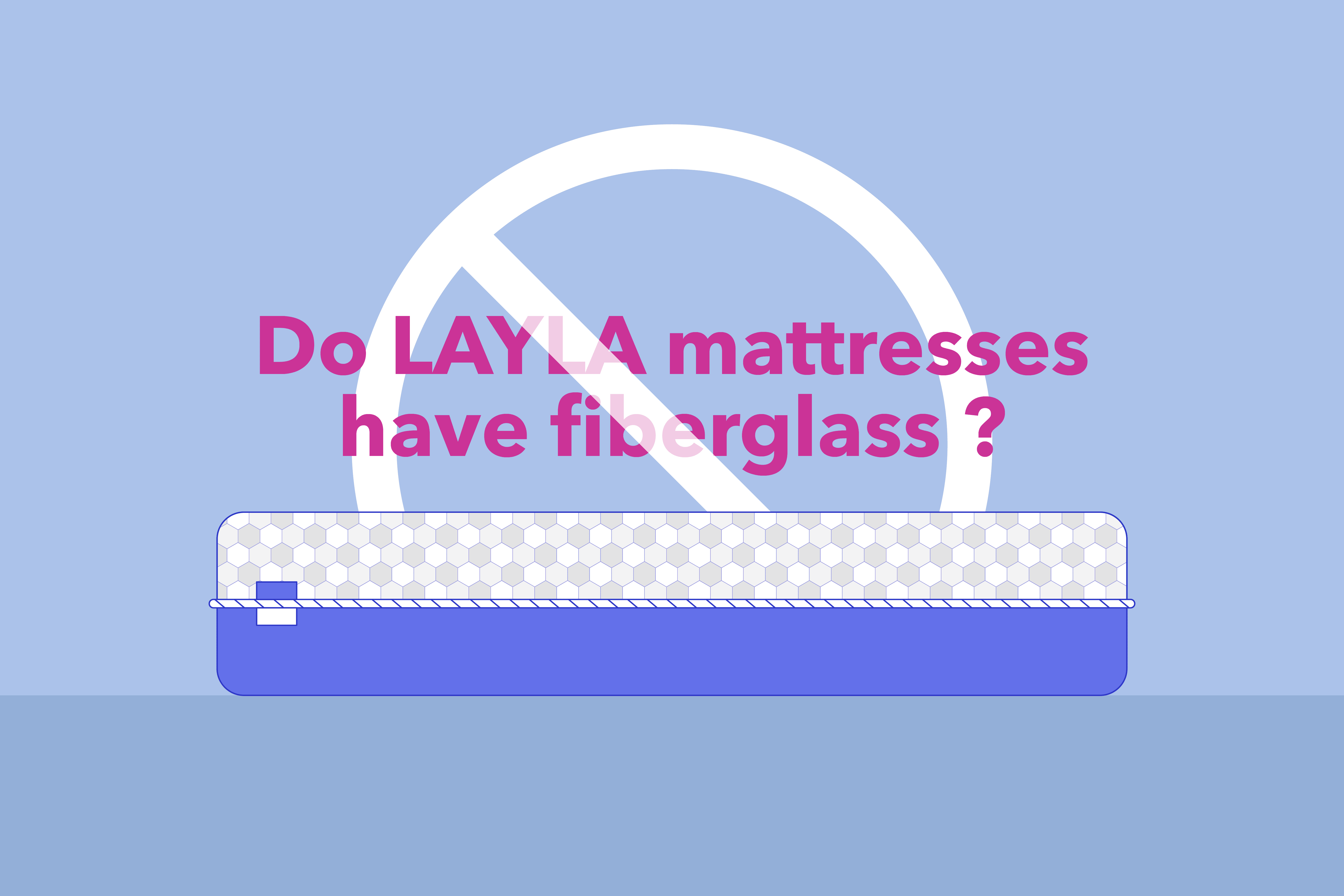
Short answer: it depends on when your Layla was manufactured. As of mid-2025, Layla Sleep transitioned to a fiberglass-free fire barrier across its mattress lineup, replacing the older Ventex sleeve that contained finely woven fiberglass particles. Mattresses built before that switch still contain fiberglass inside the inner cover.
If you're shopping a new Layla today, the brand publicly states it is fiberglass-free. If you bought one in 2024 or earlier, treat it as a fiberglass mattress and never unzip the inner cover. Below we walk through what changed, how to identify your model, the health risks if a leak occurs, and what cleanup looks like.
What Changed in 2025
For most of Layla's history the brand used a Ventex Fire Blocking Sleeve - an inner sock containing fiberglass - to meet the federal flammability standard 16 CFR 1633 without spraying chemical flame retardants on the foam. That approach is common across the bed-in-a-box industry because fiberglass is cheap, effective, and FR-compliant.
In 2025, after years of consumer complaints and class-action filings across the category, Layla updated its construction. The company now states on its product pages and terms of sale that its Memory Foam Mattress and Hybrid Mattress are fiberglass-free, using a proprietary blend of fire-resistant rayon and polyester instead. The cutover landed in May 2025, when a Layla representative confirmed the change directly to NapLab via email, and Layla's own terms page references the transition explicitly.
Two things to keep in mind. First, the change is not retroactive - units already shipped retain the older fiberglass barrier. Second, the public pages list the flagship models; if you own a third-party retailer SKU or a discontinued line, confirm directly with Layla support before assuming.

How to Tell If Your Layla Has Fiberglass
You don't need to unzip anything. The mattress law tag - the white tag sewn into the side, required by U.S. law - lists the fire-barrier materials. Look for these signals:
- If the tag lists "glass fiber," "fiberglass," "glass wool," "glass filaments," or "silica," your mattress contains fiberglass.
- If it explicitly names rayon, modacrylic, or a proprietary fire-resistant blend without listing glass, it is most likely fiberglass-free.
- Cover-removal warnings ("Do not remove cover" or "Cover not removable") are a strong indicator that fiberglass is present underneath.
- Manufacture date on the tag is decisive. Layla units made before approximately mid-2025 should be assumed to contain fiberglass; units after that point should not, but verify against your specific order.
If your tag is missing or unreadable, contact Layla support with your order number. They can confirm what fire barrier shipped with that unit.
Why Fiberglass Was There in the First Place
Memory foam burns fast. To pass the open-flame test in 16 CFR 1633, manufacturers either treat the foam with chemical flame retardants or wrap it in a non-flammable barrier. Fiberglass - woven into a thin sock that sits between the cover and the foam - does that job for pennies per mattress and avoids the chemicals that worry shoppers most.
The fiberglass-free alternatives manufacturers reach for fall into four buckets: natural wool (high nitrogen and water content, naturally flame-resistant); organic cotton treated with boric acid or another natural flame retardant; rayon derived from bamboo or other plants and treated with silica; and Kevlar, a para-aramid synthetic fiber used in premium builds for extreme heat resistance. Layla's 2025 fire sock sits in the rayon-and-polyester family.
The trade-off is that the fibers themselves are sharp, microscopic shards of glass. Sealed inside the inner cover, they're inert. Once that cover is breached - by a tear, a curious child unzipping it, or simply pulling off the outer cover for a wash - the fibers can migrate into bedding, HVAC ducts, carpet, and clothing. That's the failure mode behind most of the viral horror stories.
On the non-toxicity question shoppers ask about Layla specifically: the foam layers themselves carry CertiPUR-US certification, which screens out ozone depleters, formaldehyde, and fire retardants flagged as carcinogens, mutagens, or reproductive toxins. The remaining concern shoppers raise is the fire barrier, which is the fiberglass-versus-rayon question this article walks through. Layla's 2025 builds clear both: certified foam plus a non-fiberglass fire sock.
Health Risks If a Leak Happens
Acute exposure to airborne fiberglass is irritating rather than acutely toxic. Reported effects include:
- Skin: itching, rash, and small embedded fibers that look like fine glitter under bright light.
- Eyes: redness, watering, gritty sensation.
- Respiratory: throat irritation, cough, and worsened symptoms in people with asthma or other airway conditions.
- GI: nausea if fibers are swallowed (e.g., on food prepared in a contaminated kitchen).
The Sleep Foundation and CDC both note that long-term health effects from fiberglass at consumer-product levels are not well established. The bigger problem is property contamination - fibers spread aggressively through HVAC and are difficult to remove from soft surfaces.
What to Do If Your Layla Is Leaking Fiberglass
Stop using the mattress. Don't shake it, don't drag it through the house, and do not vacuum with a standard household vacuum - that aerosolizes fibers further. The basic recovery sequence:
- Turn off central HVAC and close vents in the affected room to stop fibers from circulating through the rest of the house.
- Put on PPE: N95 or P100 respirator, sealed safety goggles, nitrile gloves, long sleeves, and disposable coveralls if you have them.
- Zip the mattress into a heavy-gauge mattress encasement before moving it. This contains the source.
- Bag all bedding (sheets, blankets, pillows, mattress protector) in trash bags. Wash in hot water on a separate cycle, or discard if heavily contaminated.
- Clean hard surfaces with damp microfiber cloths - wet wiping traps fibers instead of kicking them up. Use a HEPA-filter vacuum on carpet and upholstery.
- For severe contamination, call a professional remediation service. HVAC duct cleaning is often necessary.
- Document everything (photos, receipts, medical visits) before contacting Layla. If your mattress is within warranty or part of an active class-action, this evidence matters.
Frequently Asked Questions
Are new Layla mattresses fiberglass-free?
Yes. As of 2025, Layla's Memory Foam Mattress and Hybrid Mattress use a fiberglass-free fire barrier made from a rayon-and-polyester blend. Mattresses manufactured before that transition still contain fiberglass.
Can I just remove the outer cover to wash it?
On older Layla units, no. The outer cover is unzippable, but the fiberglass sits in an inner sleeve directly underneath, and unzipping the outer cover risks pulling on or piercing the inner barrier. Spot-clean instead. Newer fiberglass-free Laylas don't carry this risk.
How do I check the manufacture date on my Layla?
It's printed on the white law tag sewn into the mattress side. The tag also lists the fire-barrier composition - 'glass fiber' on older units, a rayon-blend description on 2025+ units.
Is sleeping on a sealed fiberglass mattress dangerous?
While the inner cover stays intact and there is no visible damage, the fibers stay contained and exposure is minimal. The risk arises if the cover is breached - through wear, removal, or manufacturing defects - at which point fibers can migrate into the room.
What other mattress brands still use fiberglass?
Many budget memory foam brands still rely on fiberglass fire socks. Always check the law tag and the brand's published materials list before buying. Brands that publicly market themselves as fiberglass-free include Saatva, Avocado, and most natural-latex makers; many bed-in-a-box brands have followed Layla's 2025 lead but coverage varies by SKU.
Bottom Line
If you're buying a Layla in 2025 or later, fiberglass is no longer a concern on the flagship Memory Foam and Hybrid models - confirm with Layla support if you want it in writing for your specific order. If you already own a Layla from 2024 or earlier, leave the inner cover alone, never strip the mattress, and treat any visible glittery fibers as a contamination event that warrants PPE and a careful cleanup.
The broader takeaway: "Does this mattress have fiberglass?" is the wrong question to lock in for the long term. The right question is "What's on the law tag, and when was this unit manufactured?" The answer can change - as Layla's 2025 update shows - and the only source of truth is the tag stitched into your bed.