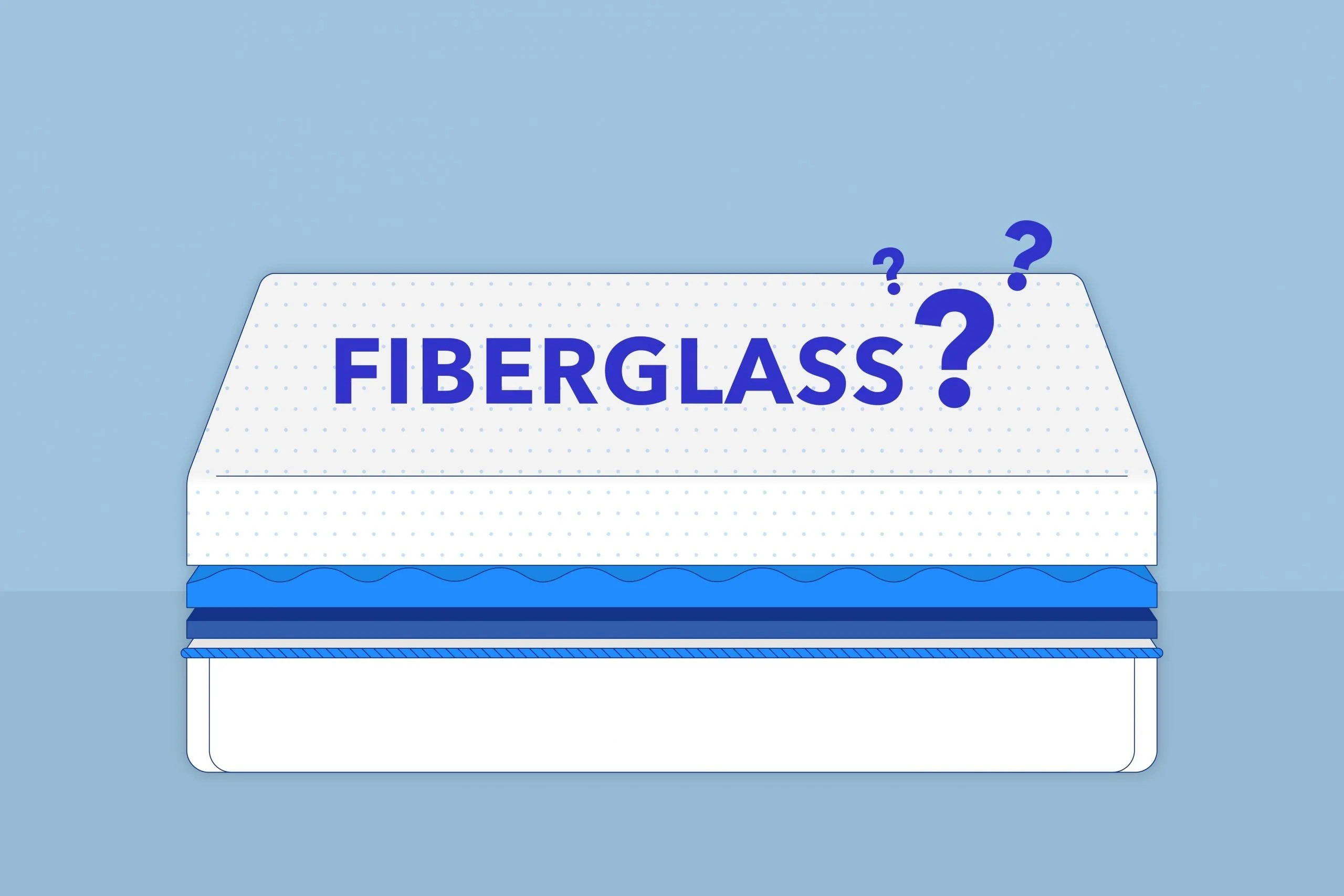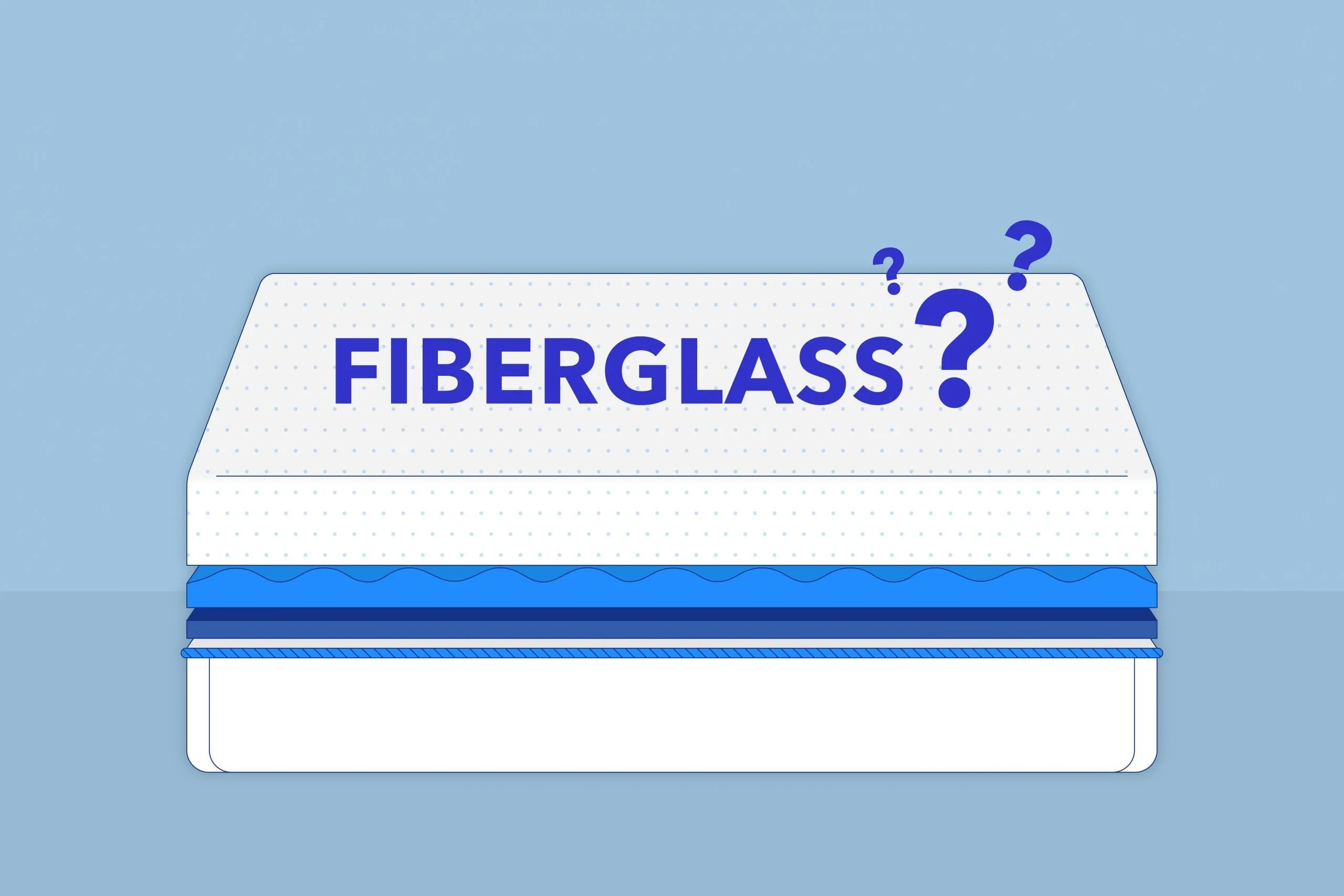
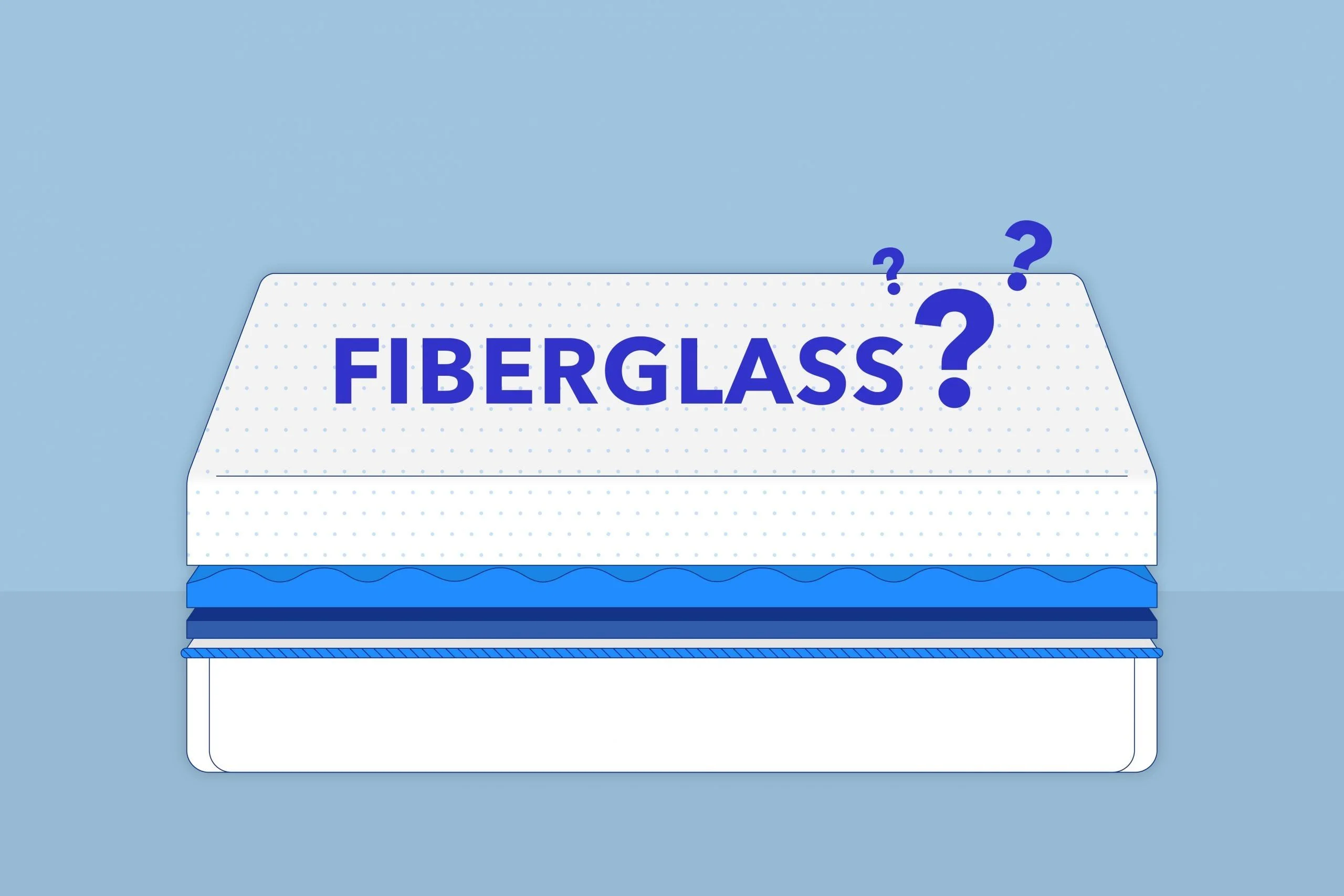
Fiberglass shows up in mattresses for one reason: it is the cheapest way to pass federal open-flame safety tests. As long as the inner sock stays sealed inside the cover, it sits there inertly. The problem starts the moment the cover is unzipped, washed, or torn - the woven sock can shed microscopic glass shards that contaminate bedrooms, HVAC systems, and washing machines. This guide explains where fiberglass sits inside a mattress, why so many memory-foam beds rely on it, the documented health effects, how to identify it on the label, and which safer materials meet the same flammability rule.
Quick answer
Fiberglass in a mattress is generally safe while the cover stays on. It becomes hazardous if the cover is removed, the mattress is damaged, or the fire sock tears. Most affected models are inexpensive memory-foam mattresses sold online - particularly imported beds priced under about $600 for a queen. California has signed a state-wide ban on the sale of mattresses and upholstered furniture containing fiberglass, with the restriction phasing in toward 2027 (CDPH).
What fiberglass is and why mattresses use it
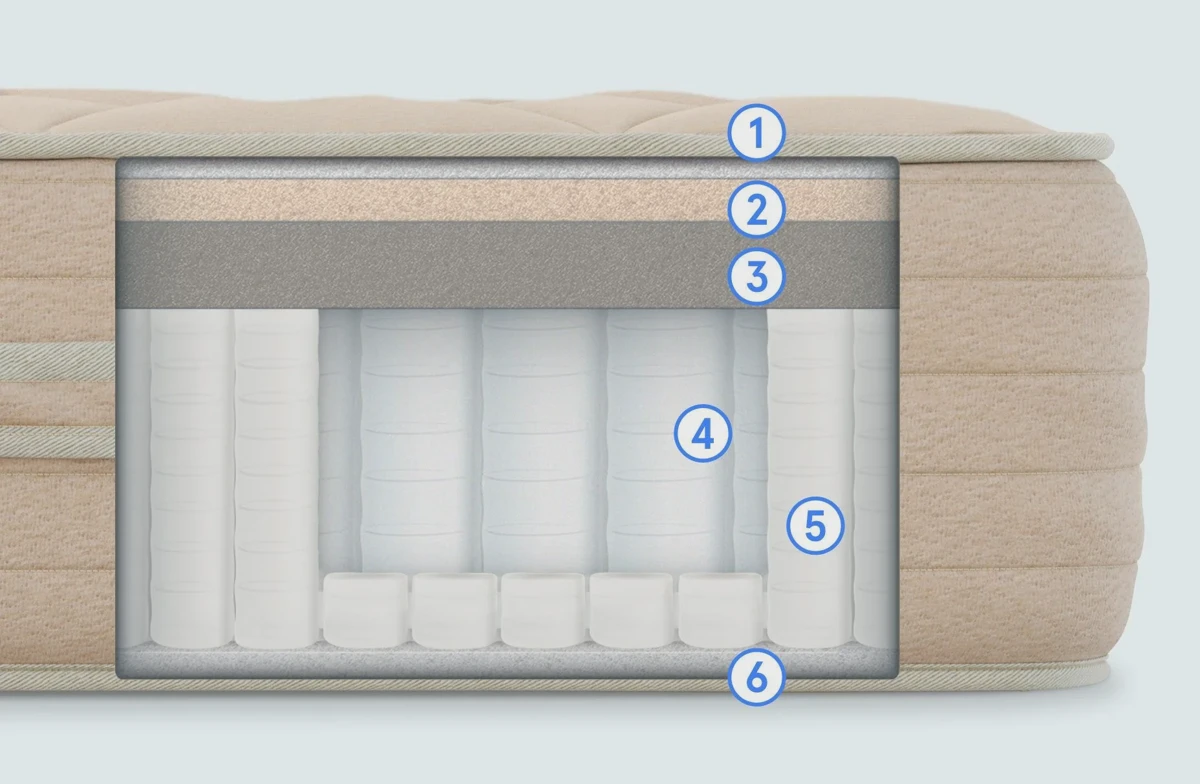
Fiberglass - sometimes labeled "glass fiber" or "glass wool" - is spun glass woven into a thin fabric. In a mattress it usually sits as an inner "fire sock" wrapped around the foam core, just under the removable outer cover. When exposed to flame, the sock melts and chars instead of feeding the fire, slowing flame spread and giving occupants more time to escape.
Federal law has required mattresses to pass an open-flame test (16 CFR Part 1633) since 2007. Fiberglass is not the only material that passes the test - wool, rayon treated with silica, and Kevlar all qualify - but it is the cheapest. That is why fiberglass disproportionately shows up in budget memory-foam beds, where the foam itself is highly flammable and a low-cost flame barrier is needed to hit a sub-$600 price point (Sleep Foundation).
Is fiberglass in a mattress dangerous?
Sealed inside an undamaged cover, fiberglass is considered low-risk. The hazard is what happens when the sock breaks open. Fibers are small enough to embed in skin, become airborne, and travel through HVAC ducts. Reported effects from real consumer cases include:
- Skin: intense itching, rashes, and contact-dermatitis flare-ups.
- Eyes: redness and irritation, with risk of corneal scratches if rubbed.
- Respiratory: sore throat, coughing, and breathing difficulty after inhaling shed fibers.
- Long-term: occupational studies link chronic glass-fiber inhalation to an elevated risk of pulmonary irritation, particularly in poorly ventilated spaces (Poison Control).
The bigger practical problem is contamination. Once fibers escape, they cling to bedding, clothes, carpets, and the inside of washing machines. Remediation has cost owners thousands of dollars in cleaning and replaced furnishings - a documented pattern in class-action complaints filed against several budget memory-foam brands.
How to tell if your mattress contains fiberglass
Manufacturers rarely advertise it on the front page. Run the four checks below:
1. Read the law-tag and label
Look on the white law-tag or product page for "glass fiber," "glass wool," "silica," or simply "fiberglass." California-bound listings increasingly call this out explicitly. If the materials list includes any of those terms, the mattress contains a fiberglass barrier.
2. Check for a "do not remove the cover" warning
If the outer cover is zippered but the tag warns against removing or washing it, treat that as a strong signal of an inner fire sock. Mattresses with no fiberglass typically allow the cover to be unzipped and laundered.
3. Use price and origin as a tell
Fiberglass is most common in imported memory-foam beds priced under roughly $600 for a queen. Premium U.S.-made mattresses (Saatva, Avocado, Naturepedic, Amerisleep) almost universally use wool or rayon-silica blends instead. A queen memory-foam mattress at $200-$400 should be assumed to contain fiberglass unless the listing explicitly states otherwise.
4. Search the exact model
Searching "<brand> <model> fiberglass" usually surfaces the answer in the first few results - owners post photos, and brands often confirm in their support FAQs. Be skeptical of sources that disagree; trust the brand's own materials disclosure or an independent lab cross-reference.
Why brands use it
- Cheapest material that reliably passes the federal open-flame test.
- Inert and odorless while sealed inside the cover.
- Adds almost no weight - keeps shipping and bed-in-a-box logistics affordable.
- Doesn't rely on chemical flame retardants like PBDEs or Tris.
Why owners regret it
- Sheds microscopic shards if the cover is unzipped, torn, or punctured.
- Contaminated rooms can require professional remediation that costs thousands.
- Symptoms include skin rashes, eye irritation, and respiratory complaints.
- Fibers spread to washers, HVAC systems, and other furniture once airborne.
- Banned in mattresses sold in California under SB 1071 (phasing in by 2027).
Brands that have used fiberglass
Disclosure changes constantly - brands rotate suppliers and reformulate covers. The list below reflects models that have, at some point, been reported to contain fiberglass; check the current law-tag before assuming any individual unit:
- Zinus (subject of a 2022 class-action settlement over fiberglass leakage)
- Lucid, Olee Sleep, Vibe, Molblly - budget memory-foam lines commonly sold on Amazon.
- Allswell - see our Allswell fiberglass guide for the model-by-model breakdown.
- Lull, Helix, Milliard - fiberglass appears in some lines but not others; check the specific model.
Brands consistently free of fiberglass include Saatva, Amerisleep, Avocado, Naturepedic, PlushBeds, Brooklyn Bedding, Bear, and Nolah.
Safer alternatives that pass the same flame test
Federal flammability rules don't dictate the material - only the result. Manufacturers can reach the same certification with:
- Wool: naturally flame-resistant, breathable, hypoallergenic. The most common high-end alternative.
- Rayon-silica blends: lightweight knit treated with silica; doesn't shed glass fragments.
- Hemp and cotton-silica blends: used by smaller organic brands; biodegradable and chemical-free.
- Kevlar: extremely flame-resistant; uncommon outside premium models because of cost.
What to do if you suspect fiberglass has leaked
- Stop using the bedroom and seal the mattress. Wrap the entire mattress in plastic sheeting and tape it shut before moving it.
- Do not vacuum with a household vacuum. Use a HEPA-filtered shop vac. Standard vacuums spray fibers back into the room.
- Wash all bedding separately, on a hot cycle, twice. Then run an empty rinse cycle to flush the drum.
- Wipe hard surfaces with damp microfiber cloths. Discard the cloths after use - don't shake them out.
- Run an air purifier with a HEPA filter for several days. Replace the filter after the cleanup is finished.
- Document everything. Keep photos, the law tag, and receipts - they are required for warranty and class-action claims.
Frequently asked questions
Is fiberglass in a mattress safe if I never remove the cover?
Generally yes. The hazard is fibers escaping the inner sock. If the outer cover stays intact, the mattress isn't damaged, and you don't unzip or wash the cover, the fiberglass stays where it belongs. The risk profile changes the moment the sock is breached - by a tear, a punctured cover, or someone removing it to wash.
How can I tell if my mattress is leaking fiberglass?
Look for tiny, almost translucent threads on the sheet, mattress surface, or floor near the bed. Unexplained skin rashes, eye irritation, or itchy throat that ease when you sleep elsewhere are also strong signals. If you suspect leakage, stop using the bed and seal the mattress in plastic before investigating further.
Is fiberglass banned in mattresses?
Not federally, but California signed SB 1071 in 2024, restricting the sale of mattresses and upholstered furniture containing fiberglass, with the ban phasing in toward 2027. Several other states are considering similar legislation. Federal flammability rules (16 CFR Part 1633) do not specify a material - they only require the mattress to pass an open-flame test.
Do all memory-foam mattresses have fiberglass?
No. Premium brands like Saatva, Amerisleep, Avocado, Naturepedic, PlushBeds, Bear, Brooklyn Bedding, and Nolah use wool or rayon-silica blends instead. Fiberglass disproportionately shows up in imported memory-foam beds priced under $600 for a queen, where a low-cost flame barrier is needed to hit the price point.
Can I just replace the cover instead of the whole mattress?
If the inner sock has shed fibers into the foam core, the mattress is contaminated end-to-end and replacing the outer cover won't help. If the cover is still intact and you simply want a buffer, a zippered, allergen-grade encasement is the right tool - but the underlying mattress is what determines the hazard.
Are crib and kids' mattresses also at risk?
Crib mattresses are subject to a separate federal standard (16 CFR Part 1633 doesn't apply the same way), and reputable infant brands typically use food-grade polyethylene or wool barriers, not fiberglass. Kids' twin mattresses sold in the adult-mattress channel can contain fiberglass - check the law tag, not the marketing.