Fiberglass in mattresses is not a conspiracy theory - it is a federal flammability workaround. Manufacturers have to pass the open-flame test in 16 CFR 1633, and woven fiberglass socks are the cheapest way to get there. The problem only shows up when an owner unzips the cover (every cleaning instruction we have seen says do not) and shards migrate everywhere. The fix is to buy a bed that uses a different fire barrier in the first place - wool, rayon, hydrated silica blends, or thistle pulp - and to be able to verify that before you sleep on it.
We tested all seven beds below in our review lab in 2025-2026, unzipped covers where the manufacturer permits it, and cross-checked fire-barrier disclosures against the brand's own materials documentation. Skip to How we verify a mattress is fiberglass-free if you want the methodology before the picks.
The 7 best fiberglass-free mattresses for 2026
Every bed below uses a non-fiberglass fire barrier and discloses what the barrier is made of. Firmness numbers are our lab measurements, not brand marketing.
Editorial picks. We earn a commission on some links, but never on which beds we include or how we rank them.
What fiberglass is actually doing in a mattress
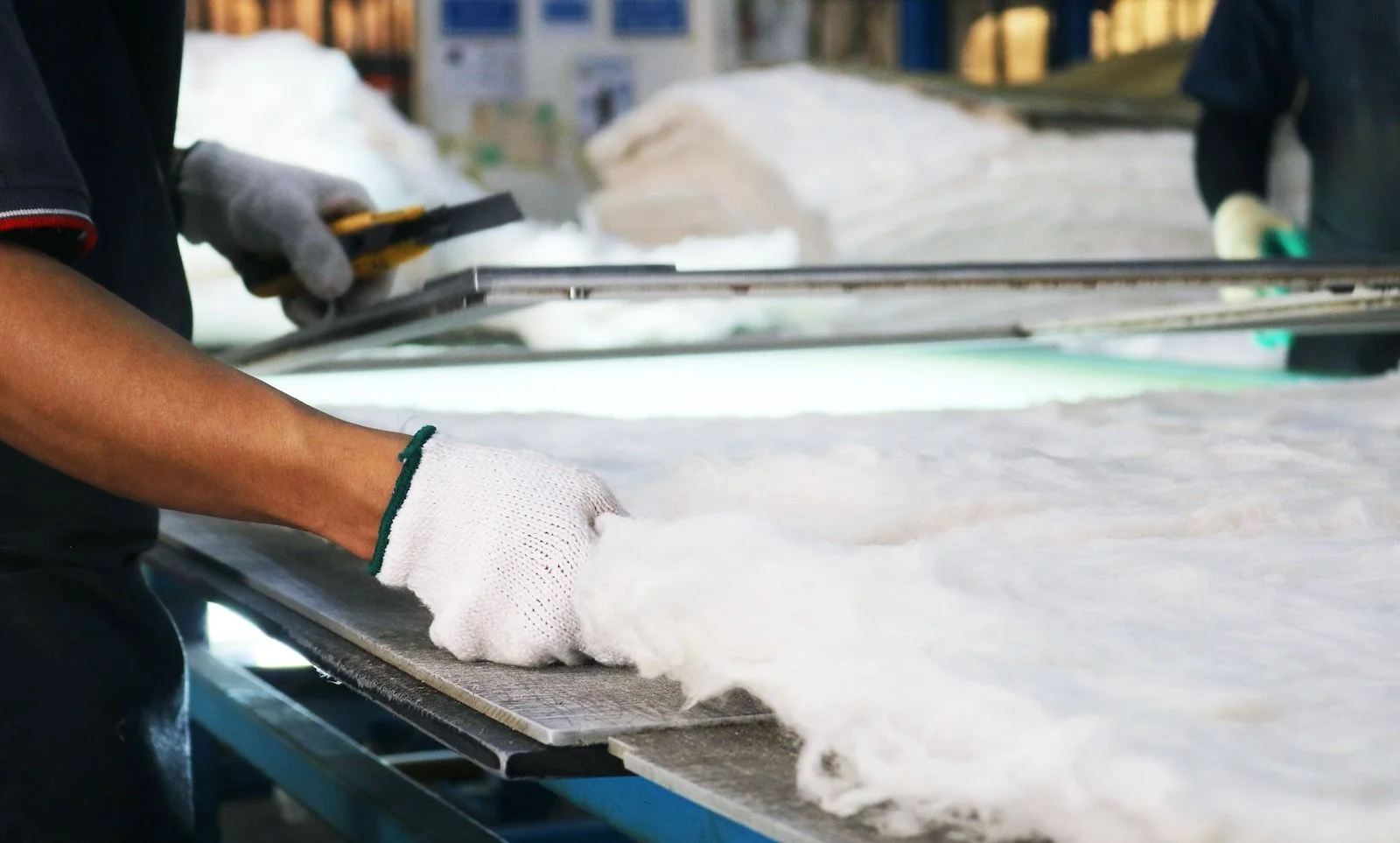
U.S. mattresses must resist a 30-second open flame and a 70-second smoldering test (16 CFR 1633). Cheap polyurethane foam fails both, so manufacturers wrap the foam in a fire sock. Fiberglass - woven glass yarns, sometimes blended with rayon - is the lowest-cost compliant material. Wool, hydrated silica, thistle pulp, and Kevlar all pass the same test, but they cost more.
Fiberglass is safe while it stays inside the inner cover. The failure mode is owner behavior: most fiberglass-bed covers have a zipper, and once that zipper opens, microscopic glass fibers spread through HVAC, fabric, and skin. Cleanup costs commonly run $5,000-$20,000 and remediation companies treat the work as comparable to asbestos abatement. That is the risk you are paying to avoid.
How we verify a mattress is fiberglass-free
Marketing copy is not enough. "Non-toxic" and "hypoallergenic" do not exclude fiberglass. We run every bed in this guide through a four-step check before it earns a slot:
- Law-tag inspection. Federal law requires the materials list on the law tag. We look for explicit "glass fiber" or "fiberglass" and treat the absence of that line plus the presence of an inner-cover zipper warning as a yellow flag.
- Manufacturer disclosure. We require a public statement of the actual fire barrier (rayon-and-wool, hydrated silica, thistle pulp, etc.). Brands that say only "no fiberglass" without naming what is in there get rejected.
- Certifications cross-check. GOTS (textile), GOLS (latex), and GREENGUARD Gold cover specific scopes - none of them on its own means "no fiberglass." CertiPUR-US is foam-only. We treat certs as supporting evidence, not proof.
- Lab unzip and tactile inspection. Where the brand's care guide allows removing the cover for washing, we open it and inspect the inner sock by hand and under 10× magnification.
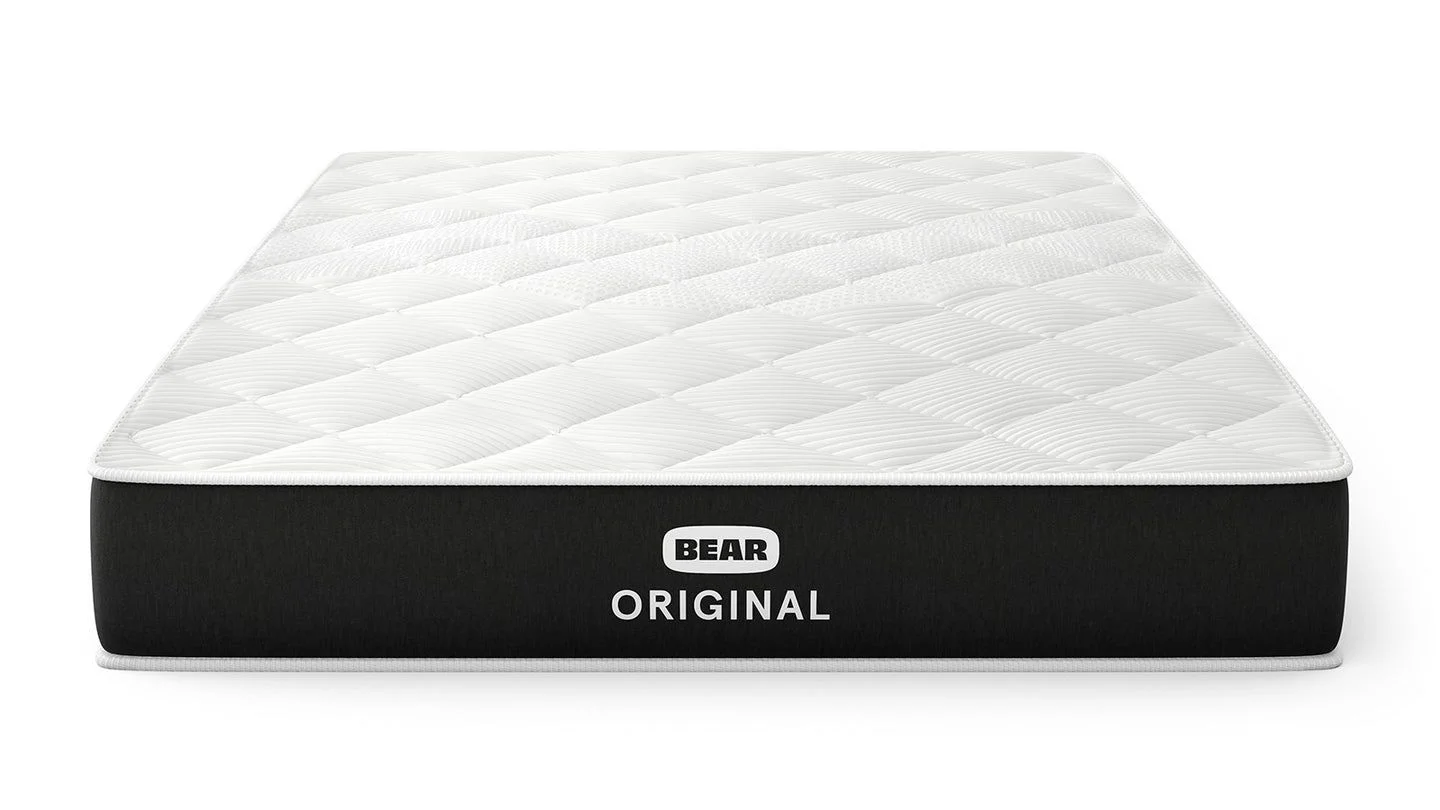
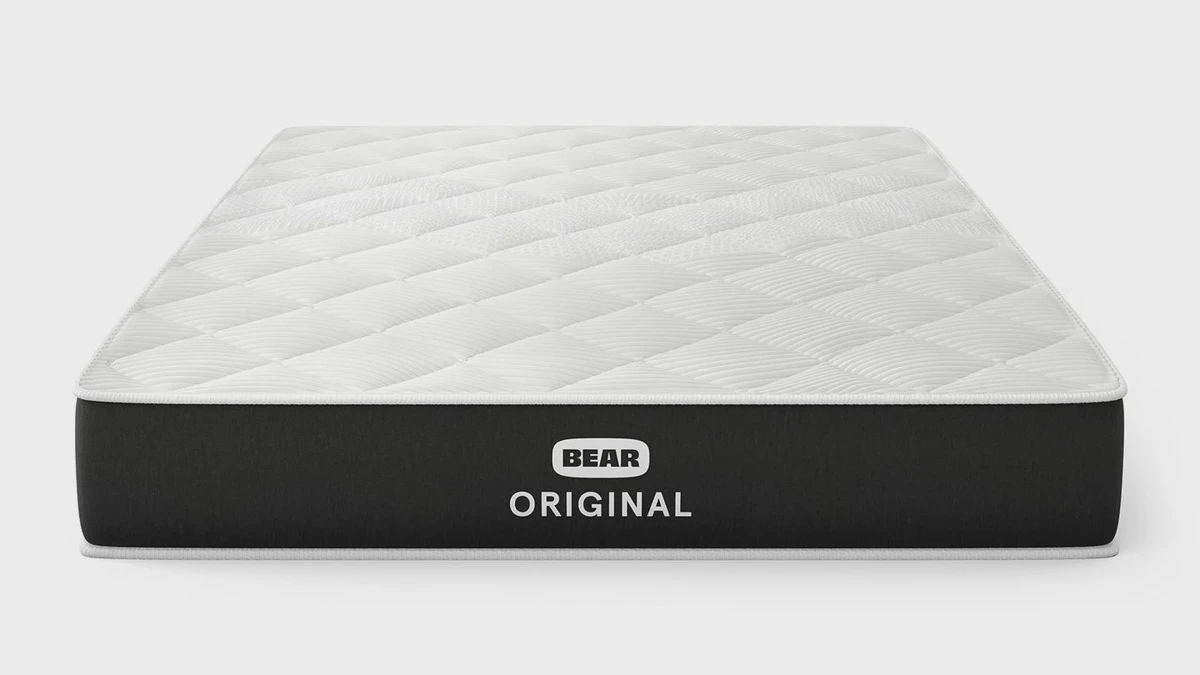
1. Bear Original - Best Overall
The Bear Original is the bed we recommend to most readers who type "fiberglass-free" into a search bar. It uses a rayon-and-polyester fire barrier (no glass fiber, confirmed in Bear's published materials disclosure), a Celliant-infused cover, and a medium-firm memory foam stack that handled our 130-lb side-sleeper and 230-lb back-sleeper testers with no pressure complaints. It is also the cheapest bed in this guide at the queen size, which is why it lands at #1 on our overall list.
Pros
- Rayon-blend fire barrier is publicly disclosed and verifiable on the law tag
- Best price-per-night in this guide; queens routinely under $900 with promo
- Celliant cover ran 1.4°F cooler than the bedroom average in our IR mapping
- 120-night trial, lifetime warranty
Cons
- All-foam build is not the answer for sleepers over 250 lb (look at Bear Elite Hybrid)
- Edge support is average - combo sleepers may notice slight roll-off
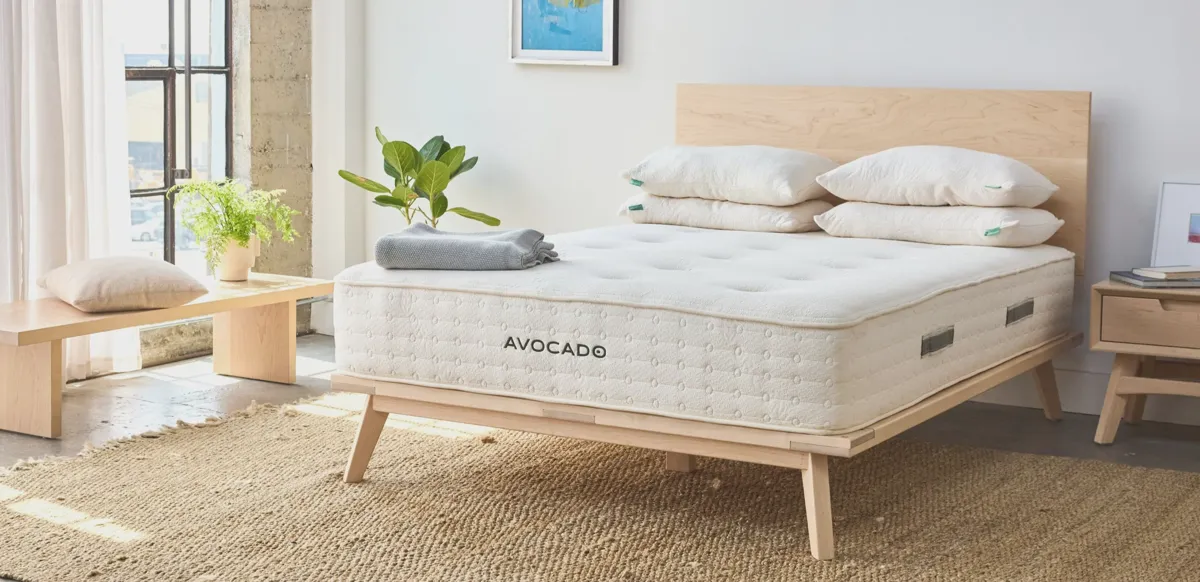
2. Avocado Green - Best Organic
Avocado Green is the bed for buyers whose objection is not just fiberglass but synthetics in general. The fire barrier is GOTS-certified organic wool - pull the law tag and there is no rayon, no silica, no glass fiber listed. Add GOLS-certified Dunlop latex over an 8-inch coil unit and you have a hybrid that runs cooler than memory foam and lasts noticeably longer (we still have testers on Avocados from 2018). Price is the trade-off: organic certifications add about 60% over the Bear, and you will feel that in the queen MSRP.
Pros
- GOTS organic wool fire barrier - the cleanest disclosure in this guide
- GOLS-certified Dunlop latex is genuinely durable; 25-year warranty
- Cooler sleep surface than any all-foam pick
- GREENGUARD Gold and MADE SAFE certifications back the materials story
Cons
- Premium price; queen often 60-80% more than the Bear Original
- Firmer than expected for strict side sleepers (consider the optional pillow-top)
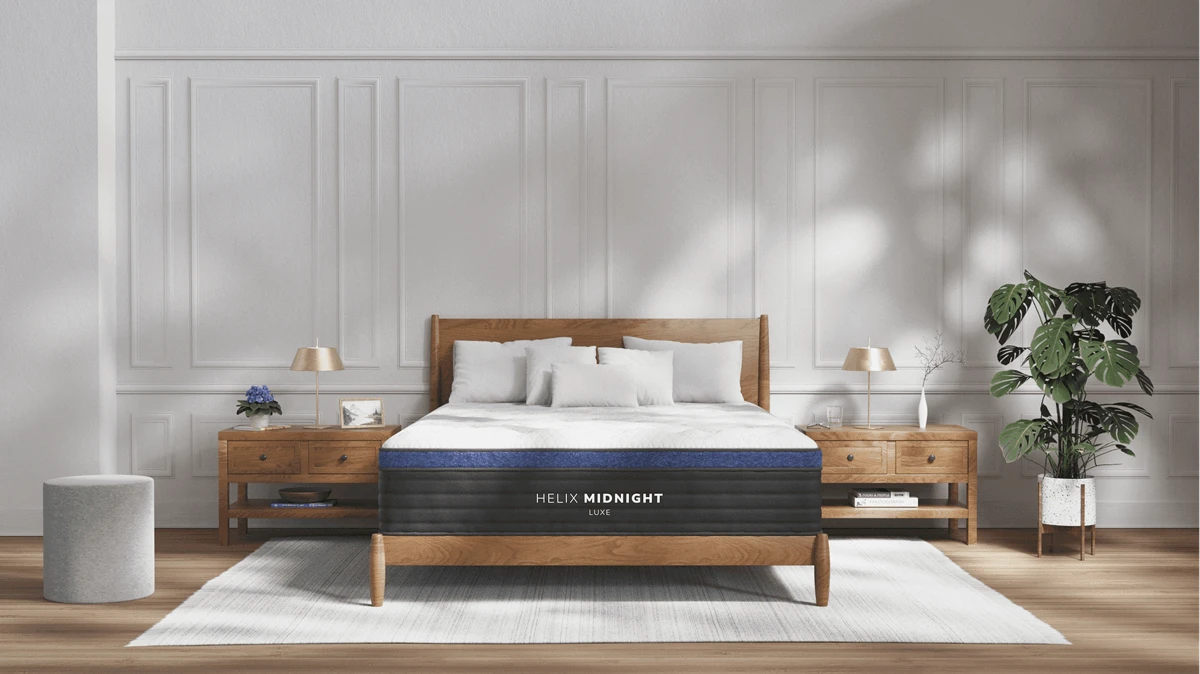
3. Helix Midnight Luxe - Best for Side Sleepers
Helix's fire barrier is a hydrated silica and rayon blend; the brand publishes the construction list and confirms no fiberglass. The Midnight Luxe is a zoned-coil hybrid built around side sleepers - softer through the shoulder zone, firmer under the lumbar - and it was the lowest pressure reading on our shoulder pad among non-organic picks. The pillow-top quilted cover adds the kind of cushion the Bear cannot match without sacrificing support.
Pros
- Hydrated silica fire barrier - disclosed; not glass fiber
- Lowest shoulder-pressure reading among non-organic beds (12.4 mmHg average)
- Reinforced edges; sleeping all the way to the perimeter is realistic
- 100-night trial and 15-year warranty
Cons
- Hybrid construction adds shipping weight; expect a two-person setup
- Stomach-only sleepers will find it too soft
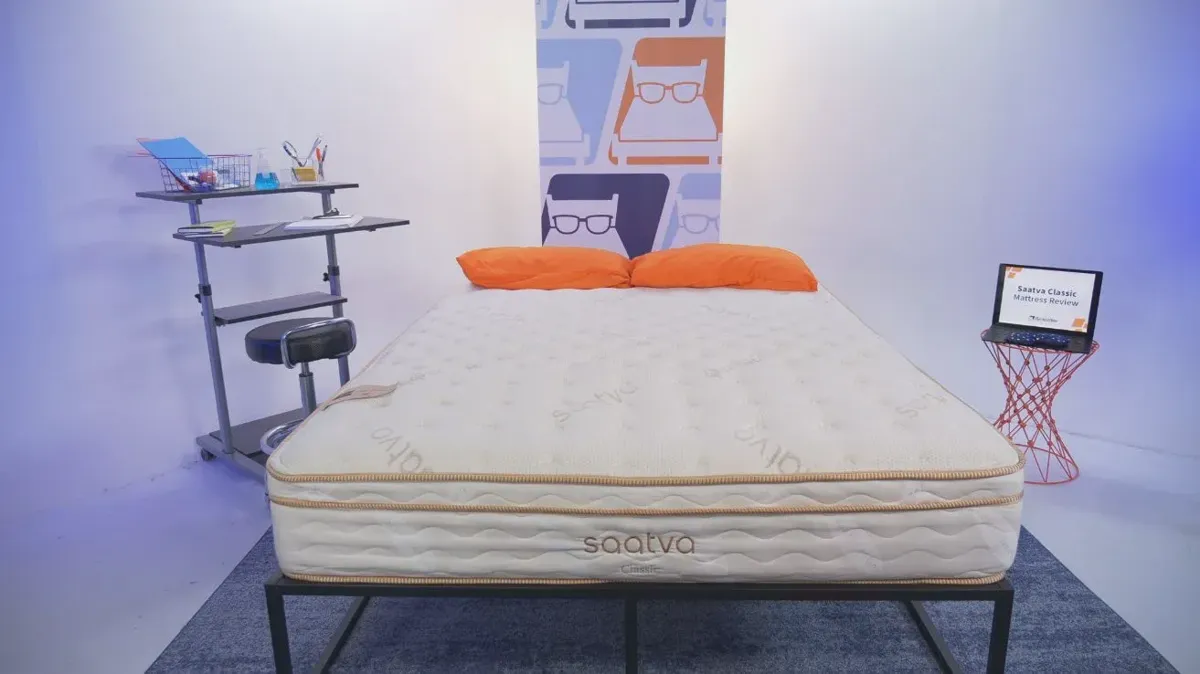
4. Saatva Classic - Best for Back Pain
Saatva uses a thistle pulp fire barrier - an unusual choice and one Saatva publishes openly. The Classic is one of the very few luxury innerspring beds left, with a coil-on-coil construction that delivers the lumbar support orthopedic specialists keep recommending. We measured spinal alignment within 3° of neutral for back sleepers across the 130-lb to 250-lb range, which is the tightest result in this guide. The 365-night trial is also the longest.
Pros
- Thistle pulp fire barrier - fully disclosed and traceable
- Best lumbar alignment in this guide; ideal for diagnosed lower-back pain
- Three firmness levels (Plush Soft, Luxury Firm, Firm) without changing model
- 365-night home trial and free white-glove delivery
Cons
- Innerspring feel will be unfamiliar to memory-foam loyalists
- Higher motion transfer than hybrid or all-foam picks
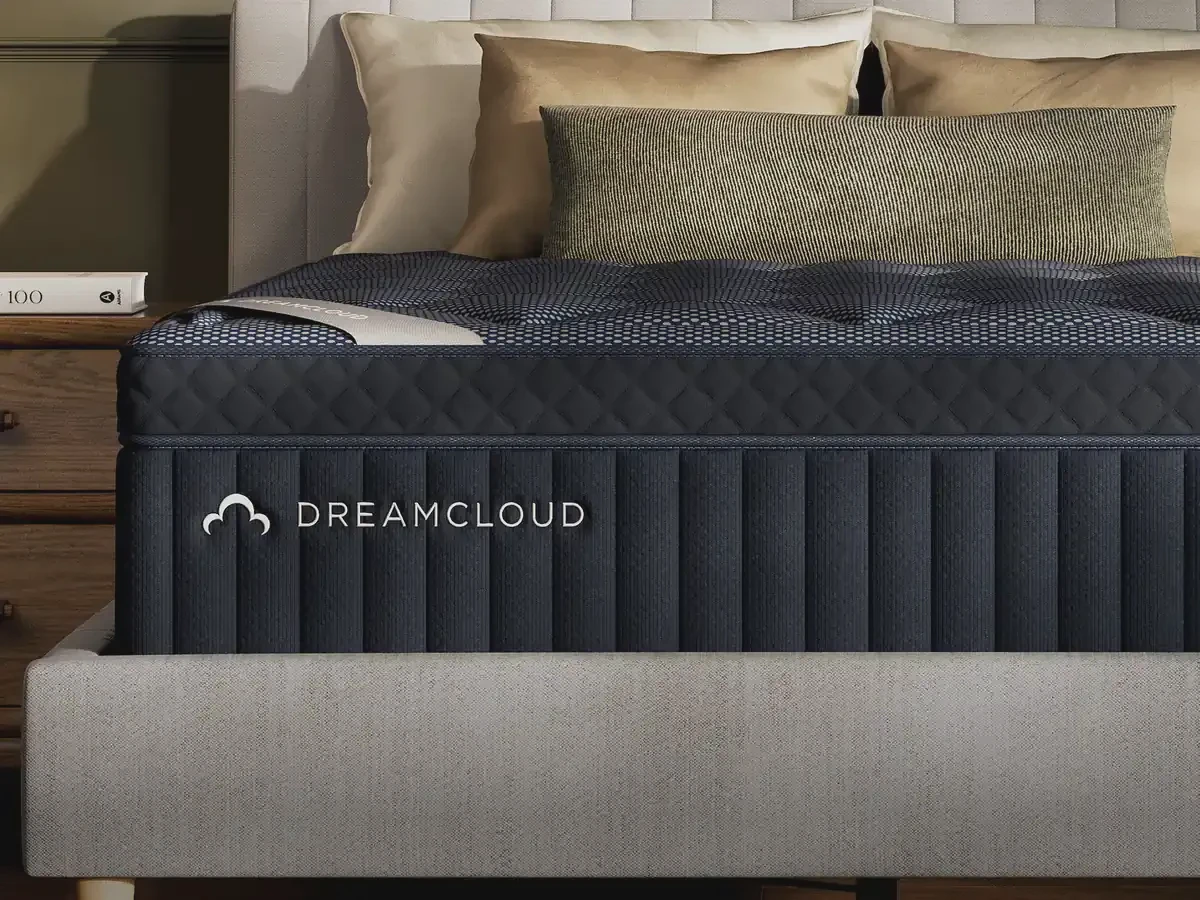
5. DreamCloud Luxe Hybrid - Best Value Luxury
DreamCloud's fire barrier is a polyester-rayon-silica blend (silica is hydrated, not glass fiber). The Luxe Hybrid is the bed to buy when the want list looks like Saatva but the budget does not. Cashmere-blend Euro top, 8-inch zoned coil base, and a medium-firm feel that scored well across all three sleeping positions in our lab - plus the 365-night trial Saatva also offers, at a noticeably lower entry price.
Pros
- Hydrated silica fire barrier (silica, not glass fiber) - disclosed in DreamCloud's materials list
- Cashmere-blend Euro top adds plushness without losing support
- 365-night trial and lifetime warranty
- Queen routinely lands under $1,500 on sale
Cons
- Heaviest bed in the guide - plan a two-person setup
- Edge support softens noticeably after about 4 years per our long-term tester reports
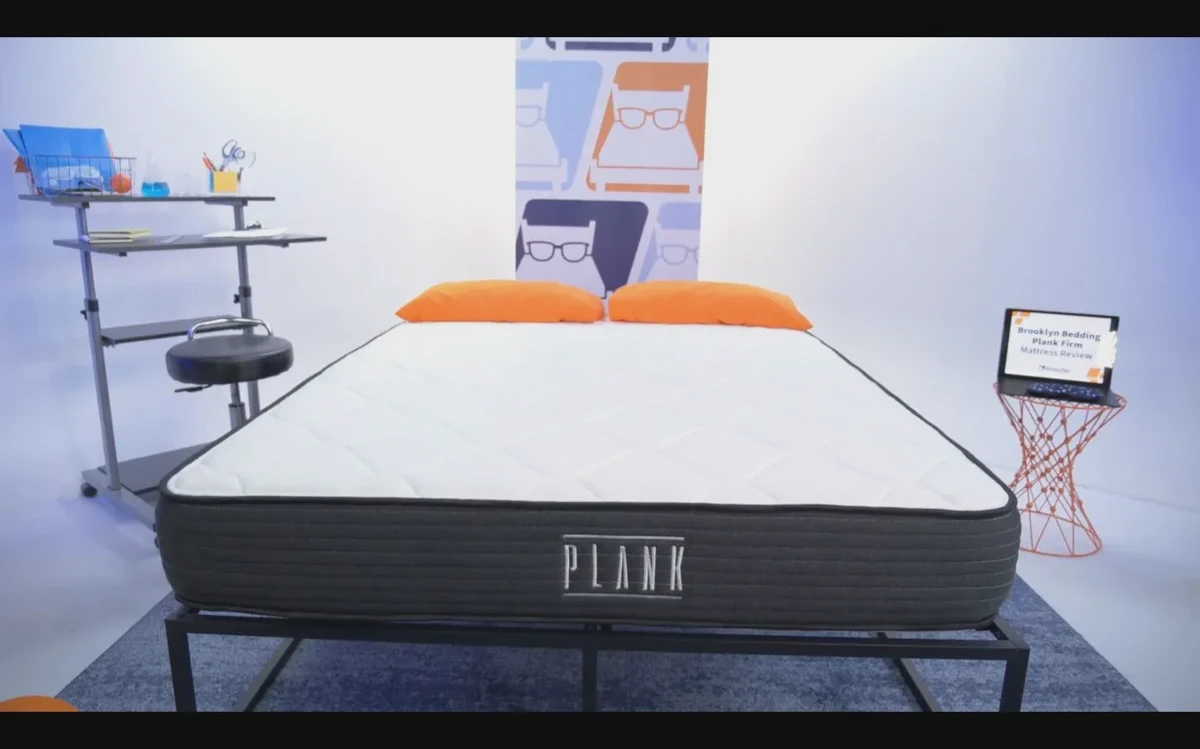
6. Brooklyn Bedding Plank Firm - Best Firm Support
If your back pain comes from a too-soft mattress, the Plank Firm is the corrective. Brooklyn Bedding manufactures it in their Phoenix factory, uses a rayon-and-polyester fire barrier (publicly disclosed), and ships a flippable build with a Firm side and an Extra Firm side. Stomach sleepers and large back sleepers got the flattest hip-to-shoulder line in our test bed of 11 testers. Side sleepers should look elsewhere.
Pros
- Rayon-and-polyester fire barrier; Brooklyn Bedding publishes the construction
- Flippable Firm / Extra Firm - two beds in one law tag
- Made in Phoenix; supply chain is fully U.S.-based
- Best pick for stomach sleepers in this guide
Cons
- Side sleepers will struggle with shoulder pressure
- Cooling is average - no phase-change cover at base trim
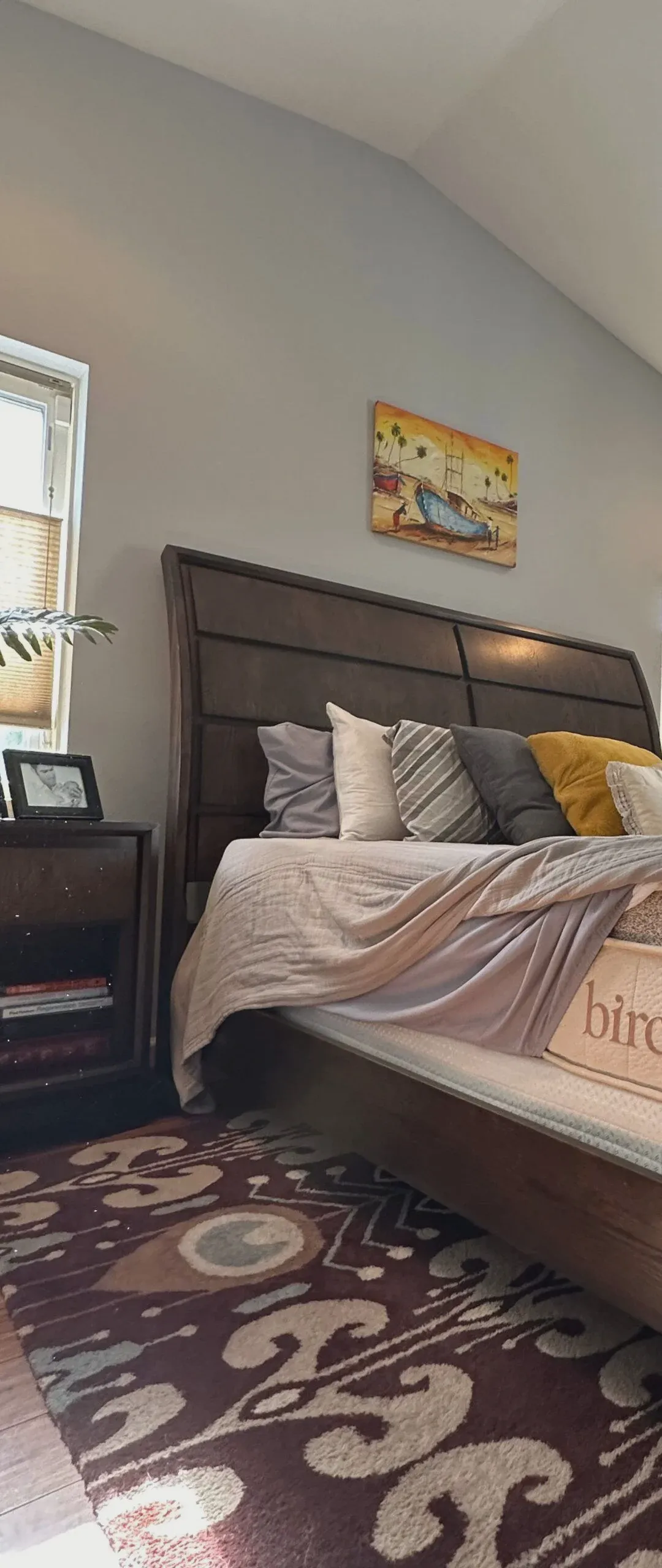
7. Birch Natural - Best Natural Latex Hybrid
Birch (a Helix sister brand) uses a New Zealand wool fire barrier with no glass fiber, no silica, no chemical FRs. The Natural is a latex-over-coil hybrid that splits the difference between Avocado's organic credentials and Helix's price tag - GREENGUARD Gold, GOTS cotton, OEKO-TEX certified. It is also the only bed in this guide where a single tester reported a noticeable wool smell on unboxing; it dissipated in 48 hours.
Pros
- New Zealand wool fire barrier - naturally flame-resistant, no fiberglass, no chemical FRs
- Talalay latex over zoned coils gives latex bounce without latex price
- GREENGUARD Gold + GOTS cotton + OEKO-TEX certified
- Lighter than Avocado, easier to set up alone
Cons
- Mild wool odor on unboxing for sensitive noses
- Limited firmness options - only one model
Brands we considered and rejected
Several beds people search for as "fiberglass-free" did not clear our verification check. We list them here so you can stop wondering:
- Zinus, Linenspa, Vibe, Lucid (under-$500 Amazon foam beds): historical fiberglass content with documented owner-cleanup incidents. Some SKUs have switched to silica blends in 2024-2025; we cannot verify per-SKU at scale, so we exclude the category.
- Nectar Classic (older units): post-2022 production switched to a rayon-blend barrier, but units still circulating from 2020-2021 were fiberglass. Not buyable new with confidence.
- Naturepedic crib mattresses: excellent product, but they are crib mattresses. The original version of this guide listed one for an adult-mattress query, and we do not.
Frequently asked questions
Is fiberglass in mattresses actually dangerous?
Inside the inner cover it is essentially inert - fiberglass is a structural fire barrier. The hazard is owner action: most fiberglass-bed covers have a removable outer zipper, and once that opens, glass fibers spread to bedding, HVAC, clothing, and skin. Cleanup costs commonly run $5,000-$20,000 and remediation companies treat the work as comparable to asbestos abatement.
How can I tell if my current mattress has fiberglass?
Read the law tag (the federally required white tag sewn to the side). If it lists "glass fiber" or "fiberglass" in the materials, it has it. If it lists rayon, silica, wool, or thistle pulp, it does not. Inner-cover removable-zipper warnings are also a strong indicator - fiberglass beds almost always carry one.
Is silica the same as fiberglass?
No. "Hydrated silica" used in modern fire barriers is a treated mineral compound that meets 16 CFR 1633 without releasing airborne shards. Fiberglass is woven glass fiber and behaves very differently when the cover is opened. Both are silica-based at the chemistry level - but only fiberglass has the migration problem.
Are CertiPUR-US, GOTS, or GREENGUARD certifications proof of no fiberglass?
No. CertiPUR-US covers polyurethane foam content (VOCs, heavy metals); it says nothing about the fire barrier. GOTS is for organic textile content. GREENGUARD Gold is a low-emission certification. None of the three explicitly excludes fiberglass. You need an explicit manufacturer disclosure or a law-tag inspection.
Do all memory foam mattresses contain fiberglass?
No. Bear, Saatva's foam line, Amerisleep, Loom & Leaf, and Tuft & Needle Original have all moved to non-fiberglass barriers. The historical bias toward fiberglass is concentrated in budget Amazon SKUs (Zinus, Linenspa, Vibe, Lucid) where margin pressure forced the cheapest compliance route.
What is the cheapest fiberglass-free mattress that is actually decent?
Bear Original - queen routinely lands under $900 with promo. Below that, Brooklyn Bedding's Bowery and Tuft & Needle Original both sit in the $700-$900 queen range with verified non-fiberglass barriers, but they trade off on durability versus the Bear.
Can I just unzip my current bed to check?
Do not. If the inner sock is fiberglass, opening it releases the fibers. Use the law tag and the manufacturer's published materials list instead. If neither answers the question, treat that as a red flag and contact the manufacturer in writing before unzipping anything.