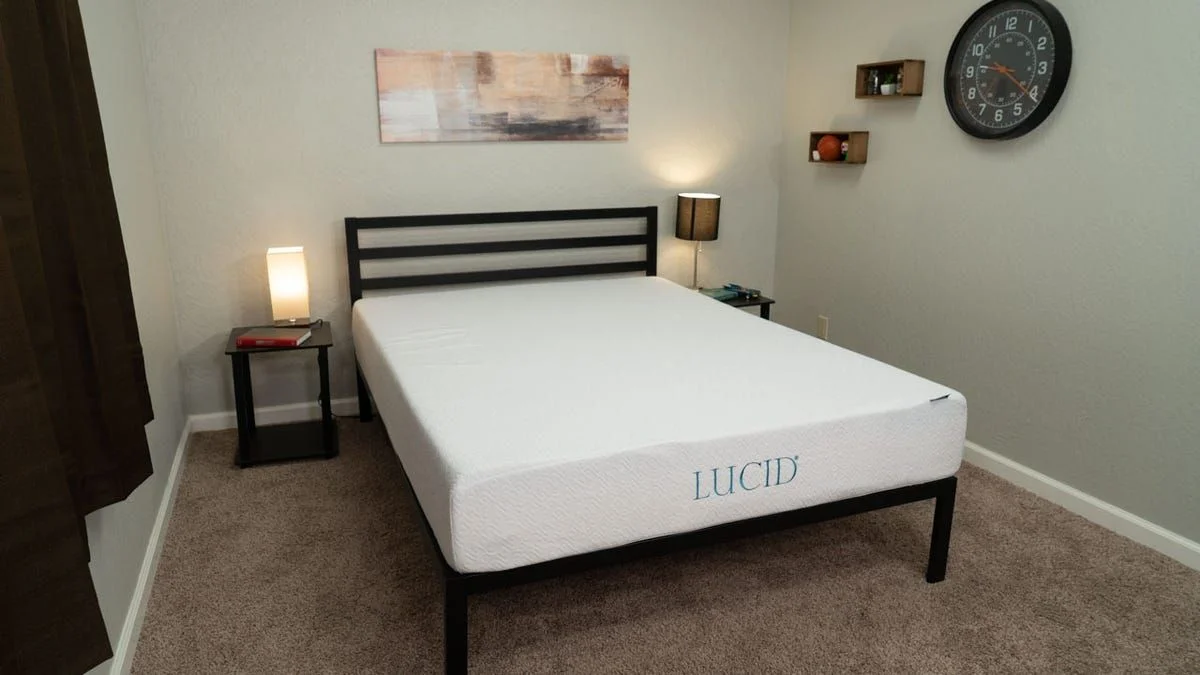
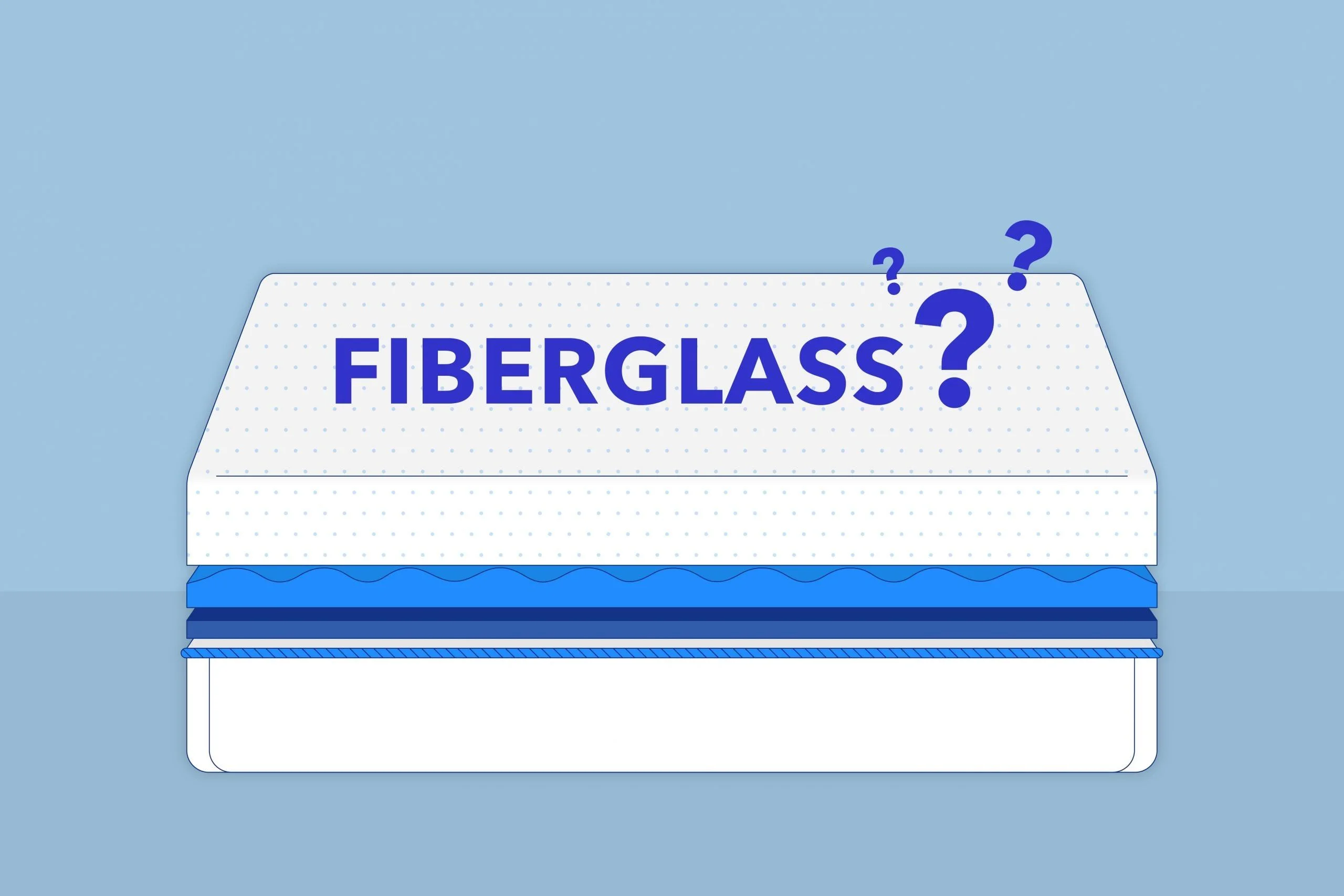
Lucid is one of Amazon's best-selling budget mattress brands - and one of the most-searched names in the ongoing fiberglass-in-mattresses controversy. If you own a Lucid memory foam bed, or you're about to buy one, the question is simple: does it contain fiberglass, is that dangerous, and what should you do?
Short answer: yes, many Lucid memory foam models use fiberglass (sometimes labeled as “glass fibers” or “glass wool”) inside the inner cover as a fire-retardant barrier. It's legal, it meets federal flammability standards, and it's not inherently leaking out of every bed. But the risk is real if the cover is unzipped, washed, or torn - fiberglass shards can contaminate an entire home, and cleanup costs have run into the tens of thousands of dollars in widely reported cases.
We've cross-referenced Lucid's law labels, CPSC incident reports, the active class-action filings, and independent teardowns from NapLab and EachNight. Here's what's actually true in 2026 - and the fiberglass-free alternatives we trust.
Does Lucid Mattress Have Fiberglass? The Direct Answer
Yes. Independent teardowns and law-label inspections - including NapLab's 2026 analysis of 395 mattress models - confirm that most Lucid memory foam mattresses contain fiberglass woven into a thin inner sock that wraps the foam core. It functions as the federally required fire barrier (16 CFR 1633), which every U.S. mattress must pass.
Lucid does not advertise this on its product pages. The fiberglass is disclosed only on the white-and-red law label sewn into the seam - usually listed as “glass fibers” rather than the word “fiberglass.” That phrasing is intentional industry language and is the single most reliable way to verify your specific unit.
Which Lucid models contain fiberglass?
- 10" and 12" Gel Memory Foam (the volume sellers on Amazon) - confirmed fiberglass
- 8" Memory Foam - confirmed fiberglass
- Lucid Comfort Collection 10" and 12" Gel Foam - fiberglass listed as “glass fibers” on the law label
- Lucid Hybrid lines (10" and 12" with bamboo charcoal) - mixed reports; check the label individually
- Lucid Latex Hybrid - generally fiberglass-free per recent labels, but verify
Lucid customer support has, in some 2024-2026 exchanges, told buyers that newer production runs use rayon or modacrylic fire socks instead. We have not been able to independently confirm a model-wide phase-out. Always check your own label.

Why Lucid (and Most Budget Brands) Use Fiberglass
Federal regulation 16 CFR Part 1633 requires every mattress sold in the U.S. to resist an open-flame test for 30 minutes. Manufacturers can pass that test in three ways:
- Fiberglass sock - cheapest, about $1-$3 per unit
- Rayon/silica blend or modacrylic - moderate cost, $5-$15 per unit
- Wool fire barrier - most expensive, $20+ per unit, used by Saatva, Avocado, Birch
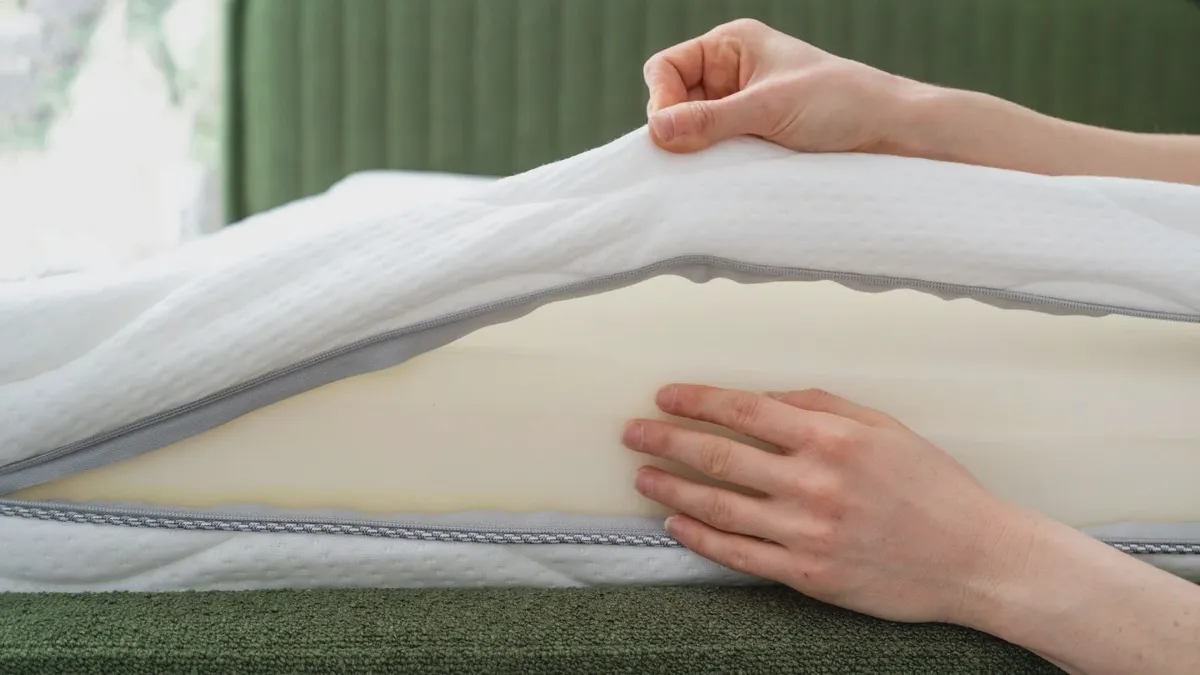
At Lucid's price points ($199-$499 queen), only the fiberglass option keeps margins viable. The material itself is safe when sealed inside the inner cover - the documented contamination cases happen when buyers unzip the outer cover (often to wash it after a spill) and the fiberglass sock tears.
Are the Health Risks Real? What the Evidence Actually Shows
Sealed fiberglass inside a mattress is, per CPSC and OSHA, low-risk. The hazard is mechanical, not chemical: fiberglass is not toxic, but the microscopic shards physically irritate skin, eyes, airways, and lungs.
Documented effects from confirmed Lucid/Zinus/Linenspa contamination cases (CPSC SaferProducts database, 2021-2025):
- Itching, rash, and pin-prick sensations on skin - most common complaint
- Persistent cough, throat irritation, eye irritation
- Asthma flare-ups in pre-existing patients
- Whole-home contamination requiring HVAC cleaning, drywall replacement, and disposal of soft furnishings
Long-term cancer risk from fiberglass exposure is not established. The IARC classifies textile-grade glass fibers as Group 3 (not classifiable as a carcinogen). Older claims that fiberglass mattress fibers cause cancer or death are not supported by current evidence - but the cleanup costs and respiratory harm are very real and very expensive.
How to Check If YOUR Lucid Has Fiberglass (3-Minute Test)
- Find the white law label sewn into the long side seam (never remove the cover to check).
- Read the “Fiber Content” line. If it lists “glass fibers,” “glass wool,” or “fiberglass” - even at 1% - your mattress contains it.
- If the label only says “rayon,” “modacrylic,” “polyester,” “cotton,” or “wool” for fire barrier, your unit is fiberglass-free.
- Photograph the label and email it to [email protected] asking for a written confirmation. Save the reply.
- Check the cover zipper. If there's a “Do not remove cover” warning printed on the inside of the cover or a tag specifically forbidding washing, treat it as fiberglass until the label says otherwise.
If Your Lucid Has Already Leaked Fiberglass
Stop using the room. Do not vacuum with a standard vacuum - it will spread shards through the exhaust. Steps recommended by certified mold/asbestos remediation firms (the same crews handle fiberglass cleanup):
- Seal the mattress in a heavy-duty mattress disposal bag and remove it from the home
- Shut off central HVAC; replace filters with MERV 13+ once cleanup is done
- Bag all bedding, clothing in the room, and curtains separately - wash twice on hot, or discard
- HEPA-vacuum every soft surface (carpet, upholstered furniture). Repeat 3-5 passes.
- Wet-wipe hard surfaces, baseboards, vents, and ceiling fans
- Wear a P100 respirator, nitrile gloves, goggles, and disposable coveralls - fiberglass passes through cloth masks
- Document everything (photos, receipts) and file with Lucid customer service AND the CPSC at SaferProducts.gov - there is an active class action and your evidence may matter
The Lucid Fiberglass Lawsuit: Where It Stands in 2026
Multiple class-action complaints have been filed against Lucid's parent (Malouf Companies) since 2021, alleging failure to warn about fiberglass and damages from contamination. As of early 2026, none have produced a publicly disclosed settlement, but cases are still being aggregated by personal injury firms - Pearce Law Firm, Migliaccio & Rathod, and others actively solicit Lucid claimants. If you have documented contamination and medical or remediation receipts, contacting one is free and may preserve your rights even if you don't ultimately sue.
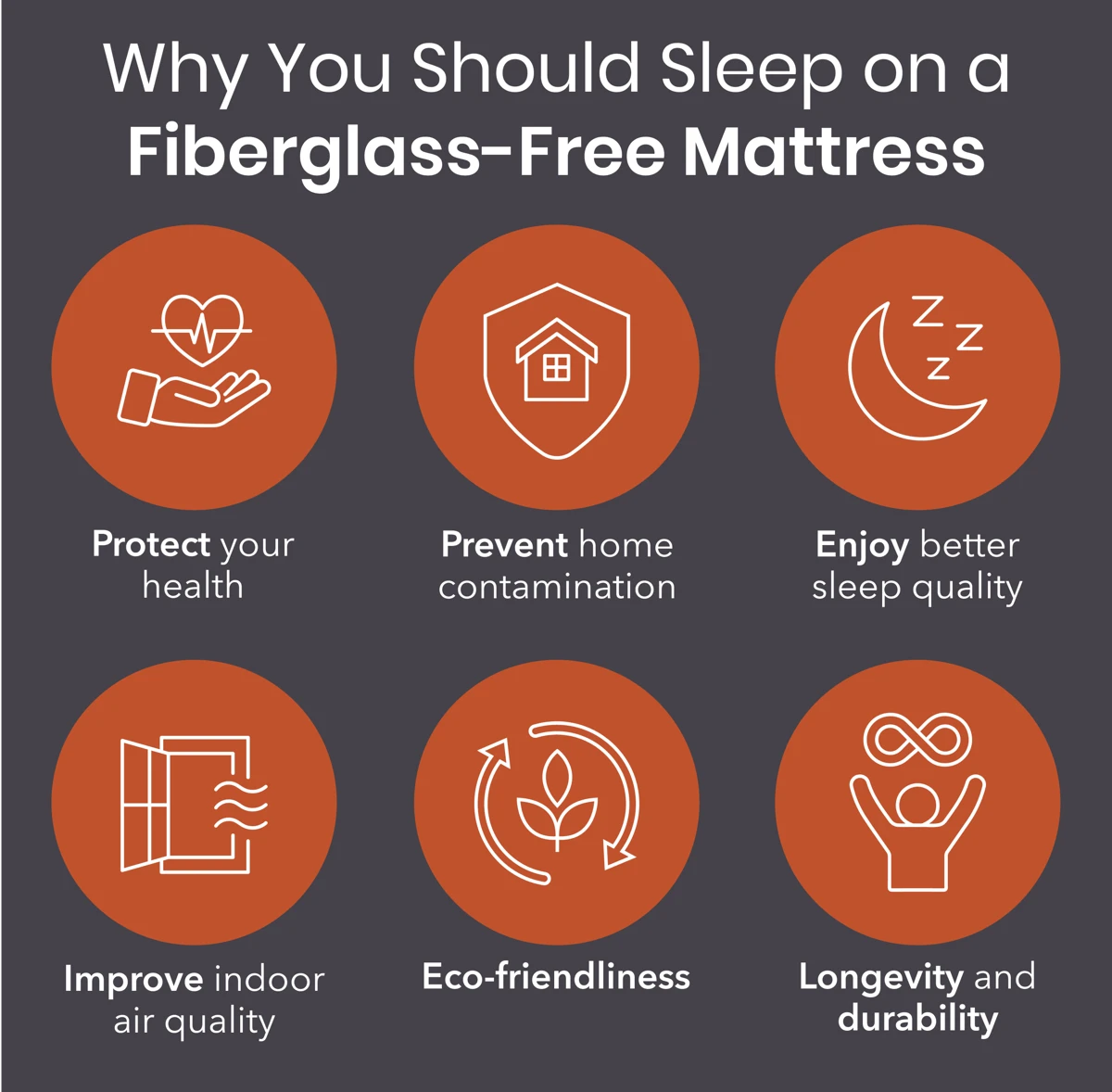
Fiberglass-Free Alternatives We Recommend
If you want Lucid's price-to-comfort ratio without the fiberglass risk, these brands publicly disclose fiberglass-free fire barriers and back the claim on the law label:
- Saatva Classic - wool fire barrier, $1,295 queen (premium)
- Avocado Green - organic wool, GOLS/GOTS certified, $1,899 queen
- Nolah Original 10" - plant-fiber barrier, $999 queen (mid-range)
- DreamCloud Premier - silica-rayon barrier, $899 queen with frequent 40% sales
- Helix Midnight - silica-rayon, $1,099 queen
- Tuft & Needle Original - fiberglass-free, $695 queen, closest budget pick to Lucid
If your budget caps at Lucid's $300-$500 range, Tuft & Needle Original is the cleanest swap - same compression-shipped foam construction, fiberglass-free, U.S.-made, with a 100-night trial.
Frequently Asked Questions
Are new (2025-2026) Lucid mattresses still made with fiberglass?
Some are, some aren't. Lucid customer service has confirmed in writing to individual buyers that certain runs use rayon or modacrylic fire socks, but there is no public, model-wide announcement of a fiberglass phase-out. Always verify by reading your own law label.
Is it safe to sleep on a Lucid mattress that has fiberglass?
If the outer cover is intact and you never unzip or wash it, the fiberglass stays sealed and there is no exposure. Risk begins the moment the cover is removed, torn, or punctured.
Can I just keep the cover on and use a mattress protector?
Yes - that's the standard recommendation. A waterproof, encased mattress protector adds a second physical barrier and lets you wash spills off the protector instead of the mattress cover.
Can I return a Lucid mattress because of fiberglass concerns?
Lucid's standard return policy via Amazon is 100 nights from delivery. Outside that window, returns become discretionary. Fiberglass disclosure is technically present on the law label, so brands generally argue the buyer was informed - which is why the lawsuits exist.
How is Lucid different from Zinus on fiberglass?
They're nearly identical: both are Chinese-manufactured, Amazon-dominant budget brands that historically used fiberglass fire socks. Zinus settled a $9 million class action in 2023 and now markets some lines as fiberglass-free. Lucid has not yet had a comparable public settlement.
Bottom Line
Most Lucid memory foam mattresses contain fiberglass. It's legal and, sealed inside the cover, low-risk. The danger comes from removing or washing the cover - which is exactly what stressed parents and pet owners often do. If you already own one, leave the cover alone, add a mattress protector, and verify the law label. If you're shopping new, the modest premium for a fiberglass-free brand like Tuft & Needle, Nolah, or DreamCloud is worth the peace of mind.