Search “are Lucid mattresses toxic” and you’ll see two stories collide: the brand’s own page citing CertiPUR-US certification, and a wall of Reddit threads, class-action filings, and news reports about fiberglass leaking out of the cover. Both are partially true. This guide pulls them apart so you know exactly what’s inside a Lucid mattress, what the real risks are, and the one thing you must never do with one.
Short answer: are Lucid mattresses toxic?
No - Lucid’s polyurethane and memory-foam layers are CertiPUR-US certified, meaning they’re tested to be free of formaldehyde, mercury, lead, ozone-depleters, and the phthalates regulated by the CPSC. Off-gassing odors are mild and typically dissipate within 1-4 days.
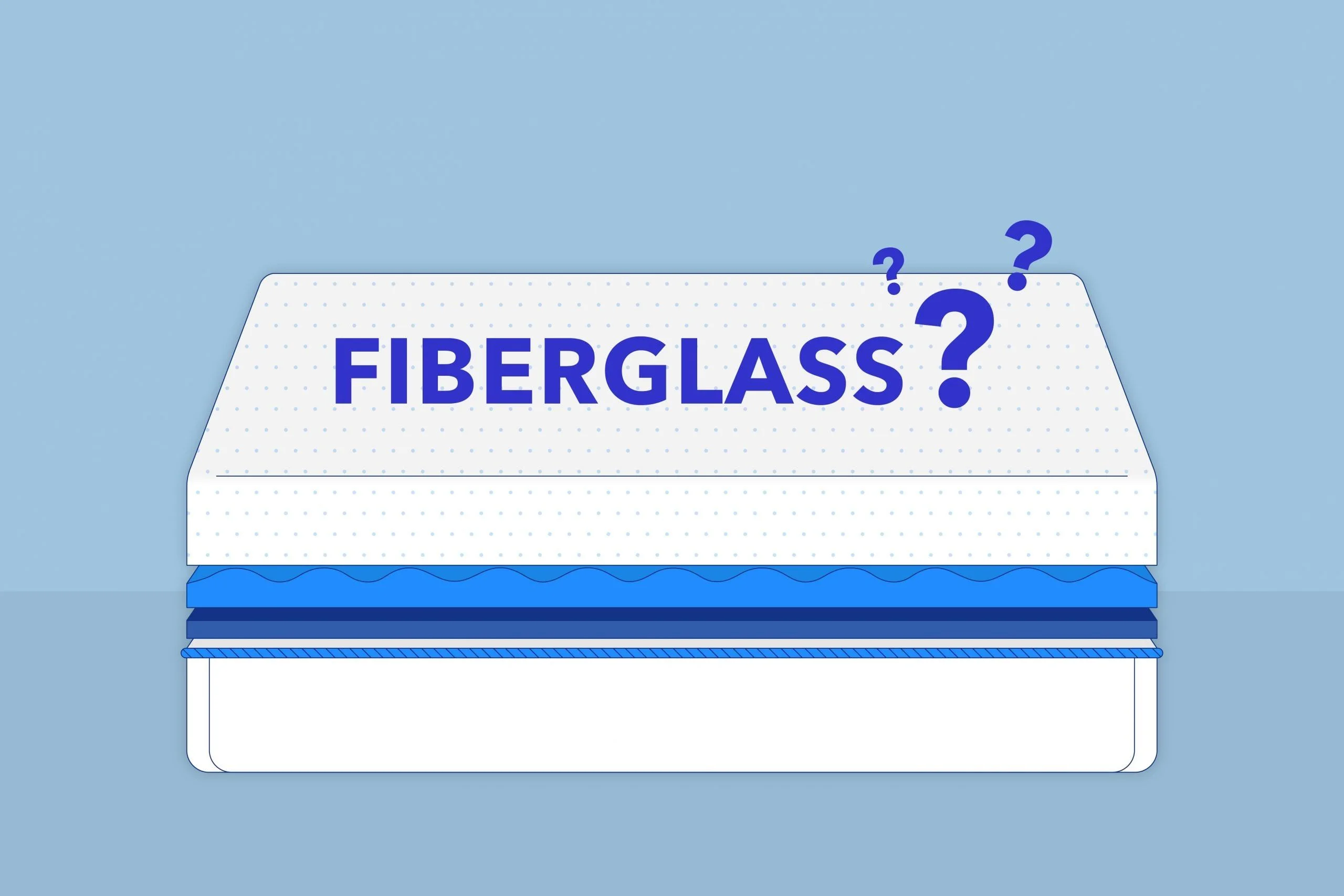
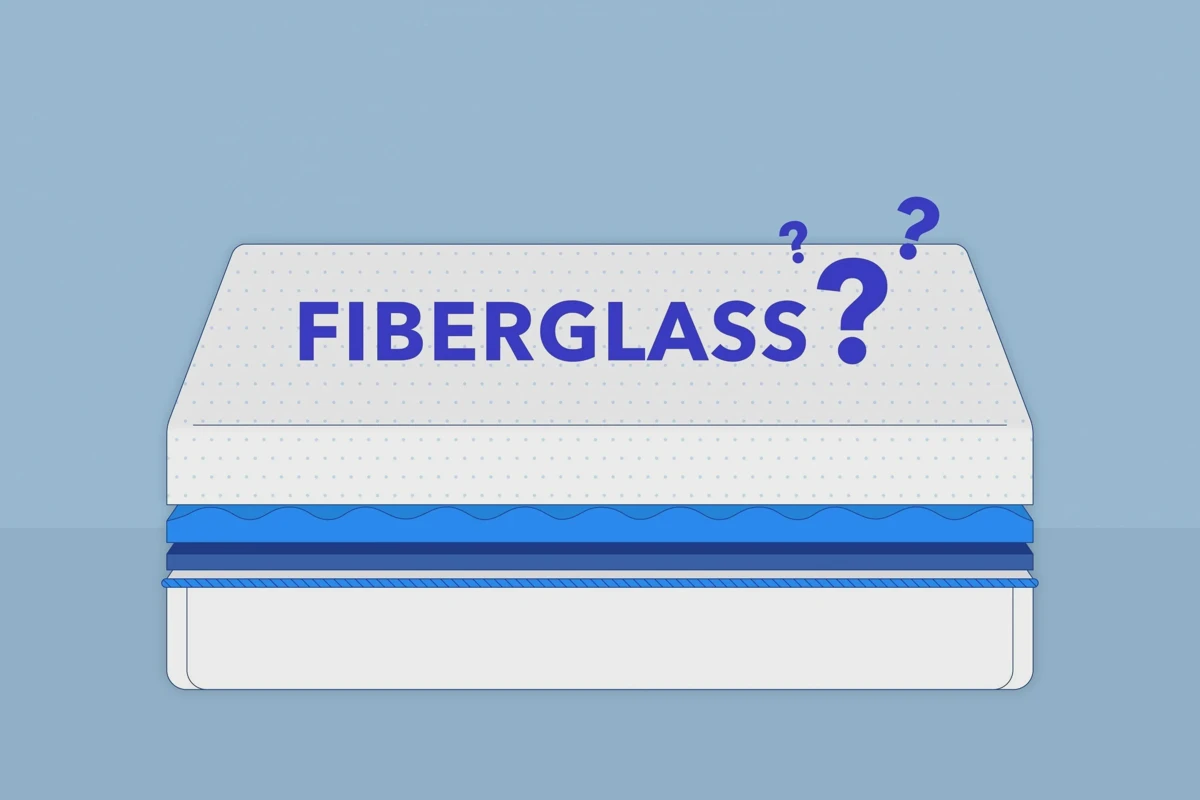
However, every Lucid foam mattress we’ve dissected uses a fiberglass inner sock as its flame barrier. Fiberglass isn’t “toxic” in the chemical sense, but it is a mechanical irritant that can shed microscopic shards if the zippered cover is removed or damaged - and that’s what’s driven the lawsuits and viral horror stories.
What Lucid mattresses are actually made of
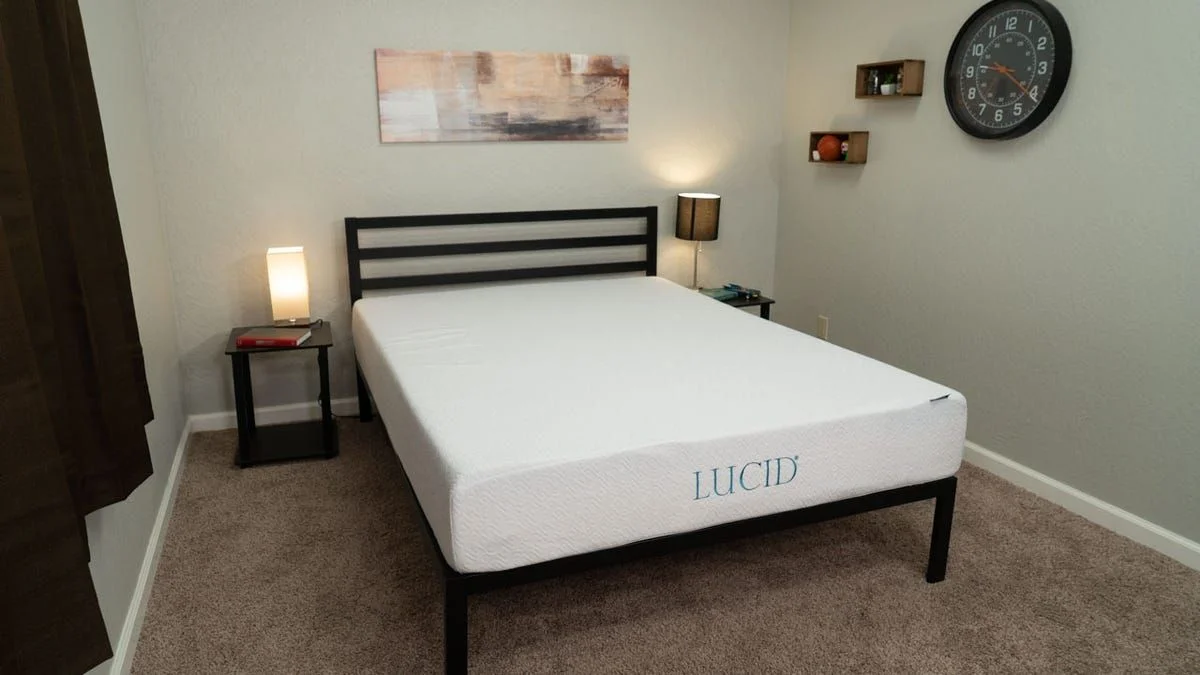
Most Lucid models follow a three-layer foam stack inside a zippered, removable cover:
- Top layer: gel- or bamboo-charcoal-infused memory foam for cooling and contour
- Transition layer: ventilated polyurethane foam for response and airflow
- Support layer: high-density polyfoam (or pocketed coils on hybrids)
- Fire barrier: a separate non-removable inner sock containing fiberglass that wraps the foam core
- Outer cover: a stretch-knit polyester/rayon zippered shell
Lucid manufactures in China and ships in compressed boxes through Amazon, Walmart, and big-box partners. Foam densities run lower than premium U.S. brands like Saatva or Tempur-Pedic, which is why retail pricing sits in the $200-$700 band for a queen.
The fiberglass problem, explained
U.S. federal law (16 CFR Part 1633) requires every mattress sold in the country to pass an open-flame test. Manufacturers can comply with chemical flame retardants (linked to their own toxicity concerns), wool, silica, rayon blends, or - the cheapest option - a thin layer of woven fiberglass.
On a sealed Lucid mattress, the fiberglass stays put. The risk appears when:
- An owner unzips the outer cover to wash it (the cover is removable, the inner fire sock is not)
- A pet, child, or pressure point creates a tear in the inner sock
- The mattress is moved aggressively, jumped on, or stored long-term in a folded position
When fibers escape, they can embed in carpet, HVAC vents, clothing, and skin. Cleanup typically requires professional remediation and frequently means discarding bedding, pillows, and even mattresses in adjacent rooms. This is the scenario behind the active class-action complaints filed against Lucid and similar Chinese-manufactured brands (Zinus, Linenspa, Vibe) since 2021.
Shoppers comparing brands often ask the same question of newer boxed-bed brands - for example, do zoma mattresses have fiberglass.
What CertiPUR-US actually certifies (and what it doesn’t)
Lucid leans heavily on its CertiPUR-US badge. The certification is meaningful but narrow:
- It tests only the polyurethane foam - not the cover, fire sock, adhesives, or coil unit
- It confirms low VOC emissions (under 0.5 ppm) and the absence of regulated heavy metals, formaldehyde, and PBDE flame retardants
- It does not evaluate fiberglass content, organic certification, or post-purchase durability
If your concern is chemical off-gassing, CertiPUR-US is a legitimate signal. If your concern is mechanical irritants like fiberglass, the certification simply doesn’t cover that question.
Off-gassing: how long the smell lasts
Every compressed foam mattress emits some odor when first unboxed. With Lucid models we’ve unboxed in our review lab, the smell timeline runs:
- Day 1: noticeable plasticky odor, strongest at the foam edges
- Days 2-3: odor fades to background; mattress reaches full loft
- Day 4+: residual smell only when pressed; gone for sensitive sleepers within a week
Speed it up by unboxing in a ventilated room, leaving windows open for 24 hours, and pointing a fan across the surface. Skip the mattress for the first night if you’re chemically sensitive, asthmatic, or pregnant.
The one rule that prevents 95% of Lucid problems
Never unzip or remove the outer cover of a Lucid mattress. The cover’s zipper exists for manufacturing, not for laundry. Once it’s open, the inner fire sock is exposed and any disturbance - vacuuming, wiping, even a vigorous sit-down - can release fibers.
If you want a washable surface, layer a zippered, encasement-style mattress protector on top from day one. Encasements seal all six sides and contain any future fiber escape if the underlying cover ever fails.
How to tell if any memory-foam mattress contains fiberglass
Before buying - or to verify a mattress you already own - use this checklist:
- Read the law tag. “Glass fiber,” “glass wool,” “fiberglass,” or “silica” in the fiber content list = fiberglass present.
- Check the cover-care instructions. If the tag warns “do not remove cover” in bold or all caps, that’s usually a fiberglass tell.
- Confirm the price band. Memory-foam queens under $500 from Chinese manufacturers almost always use fiberglass for fire compliance.
- Search the brand + “fiberglass” on Reddit’s r/Mattress. Owner photos surface the truth faster than spec sheets.
Fiberglass-free alternatives in Lucid’s price range
If the fiberglass risk is a dealbreaker, you don’t have to spend $2,000+. These brands publicly market fiberglass-free fire barriers (typically silica, rayon, or wool) and sit in the budget-to-mid tier:
- Tuft & Needle Original (rayon-blend barrier, queen ~$695)
- Nectar Classic (rayon-based barrier, queen ~$799)
- Amerisleep AS3 (plant-based barrier, queen ~$1,199)
- Avocado Eco Organic (wool barrier, GOLS/GOTS certified, queen ~$1,099)
Bottom line
A Lucid mattress isn’t toxic in the everyday sense - the foams are tested clean, off-gassing fades within days, and a sealed unit poses no contamination risk. The sealed part is the catch: keep the cover zipped, keep an encasement protector on it, and the mattress behaves exactly like its CertiPUR-US badge advertises. Open the cover even once and you’re managing a fiberglass cleanup, not a sleep upgrade. For sleepers who can’t guarantee they’ll never strip the cover - households with kids, pets, or chronic skin conditions - a fiberglass-free alternative is the safer call.