The short answer: Zinus mattresses manufactured in early 2025 and later are fiberglass-free. Zinus replaced its fiberglass fire barrier with a carbon-rayon sleeve. Older Zinus mattresses (2024 and earlier) overwhelmingly did contain fiberglass - typically inside a non-removable inner cover - and were the subject of multiple class-action lawsuits over fiber shedding and home contamination.
So whether your specific Zinus has fiberglass depends almost entirely on when it was built. This guide walks you through how to tell the difference, what changed, the legal history, and what to do if you already own an older unit.
Why Zinus used fiberglass in the first place
U.S. federal law (16 CFR 1633) requires every mattress sold in the country to resist an open flame for a defined window without igniting. To pass without using chemical flame retardants like brominated compounds, manufacturers wrap the foam core in a fire barrier. The two cheapest barriers that pass 1633 are:
Carbon-rayon costs more, so budget brands like Zinus, Lucid, Linenspa, and older Vibe defaulted to fiberglass for years. The trade-off: if the inner cover is ever opened, washed, or torn, microscopic glass fibers escape and contaminate everything they touch - bedding, carpets, HVAC, clothing.
When Zinus stopped using fiberglass
Zinus transitioned to a carbon-rayon fire barrier in early 2025. The change was confirmed on Zinus's own Fiberglass FAQ page and corroborated by NapLab's 395-mattress audit, which re-flagged the 2025 and later production runs of every Zinus model as fiberglass-free.
The transition was not retroactive. Existing inventory at retailers (Amazon, Walmart, Costco) continued to ship through late 2024 and into 2025 carrying the old fiberglass-bearing covers. Two identical-looking Zinus Green Tea 10-inch mattresses on Amazon today can have different fire barriers depending on which warehouse fulfilled the order.
2024 and earlier: Fiberglass sock - typically 62% glass fiber by weight, per court filings. Not safe to open or unzip.
Early 2025 and later: Carbon-rayon sleeve. Fiberglass-free.
How to tell if your Zinus has fiberglass
You do not need to cut the mattress open. Three checks, in order.
1. Read the law tag
Every U.S. mattress carries a permanent white tag stitched to the side or foot. The tag lists fill content by percentage. On a fiberglass-era Zinus you will see a line like "Glass Fiber 62% (approx.)".
If the tag explicitly says "Fiberglass-Free" or lists the inner barrier as "Rayon" / "Modacrylic", you have a 2025 or later unit. If the tag is missing, treat the mattress as fiberglass-bearing until proven otherwise.
2. Check the inner cover for warning text
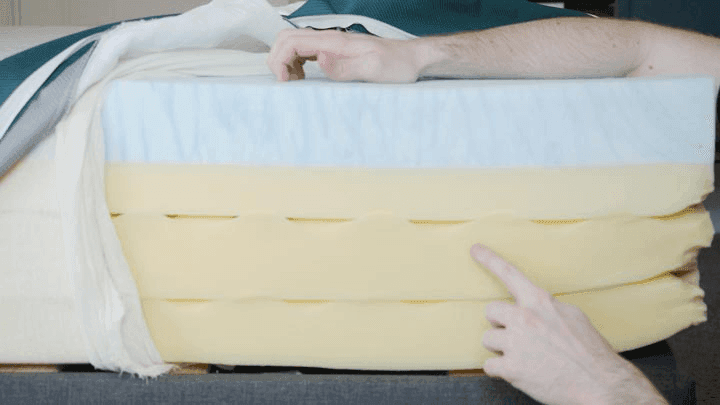
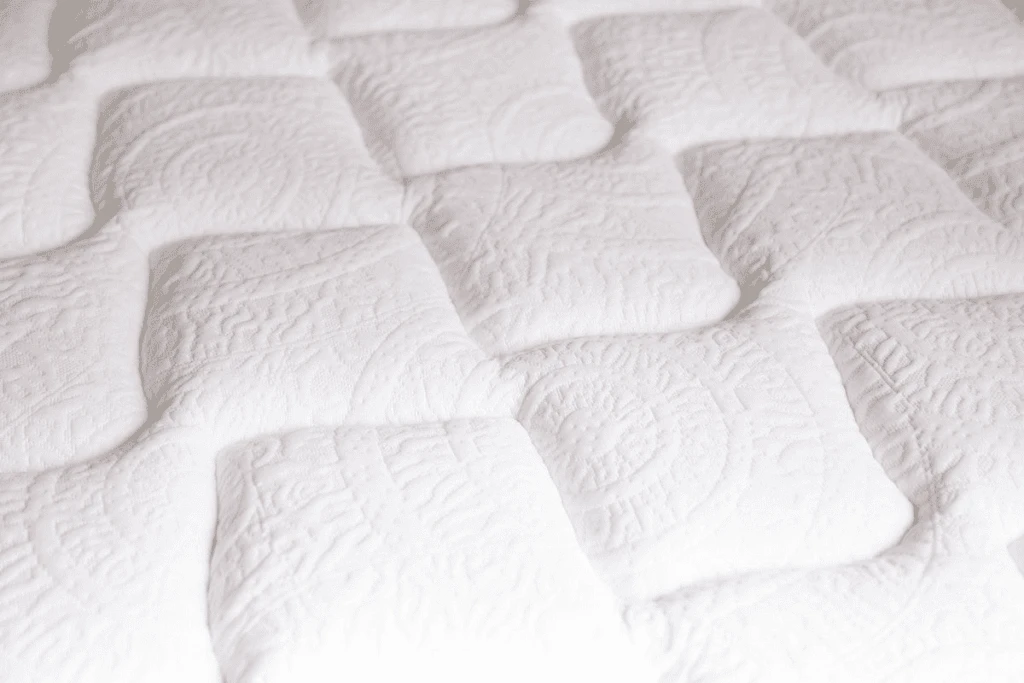
Unzip the outer stretch-knit cover (the washable one). Underneath you will find a thinner inner cover - the actual fire sock. Fiberglass-era Zinus inner covers are stamped "DO NOT REMOVE THIS COVER" with a triangle warning icon. The 2025 carbon-rayon inner cover lacks the warning icon and is usually a slightly different color (closer to off-white than the fiberglass version's bright white).
3. Cross-reference the model and date
Zinus publishes a model-by-model fiberglass status on its FAQ page. Look up your specific model (Green Tea 10", Cooling Green Tea Memory Foam, Ultra Cooling Hybrid, etc.) and compare to the "Date of Manufacture" line on the law tag. Anything stamped before January 2025 should be assumed fiberglass-bearing.
The lawsuits and what they alleged
Zinus has been named in several class-action suits since 2021.
Chandler v. Zinus / Amazon (2022). California plaintiffs alleged that fiberglass escaped through worn covers and contaminated their homes, clothing, and respiratory systems. Settled confidentially.
Sacramento class action (2022). Reuters reported the suit centered on the "62% glass fibers" disclosure being buried inside a "Do Not Remove" inner cover that consumers could not inspect before purchase.
Multistate AG inquiries (2023). Several state attorneys general asked Zinus to update labeling and warranty disclosures.
None of the suits forced a recall, but the combined pressure and the rise of cheap silica and carbon-rayon barriers drove Zinus's 2025 design change.
What to do if you already own a fiberglass-era Zinus
Three rules. Follow all three.
If your fiberglass-era Zinus has already shed fibers
Don't vacuum with a standard vacuum - it spreads the fibers through the exhaust. Steps in order (this is the emergency protocol - for routine care of a non-shedding Zinus, see our Zinus mattress cleaning guide):
In severe contamination, professional remediation (the same firms that handle asbestos abatement) runs $1,500-$5,000.
Fiberglass-free alternatives in Zinus's price range
If you're shopping new today and want to stay under $400 queen without a fiberglass barrier:
Confirm the production date on the law tag before you accept delivery - that is the single most important check, regardless of brand.
Zinus fiberglass FAQ
Does Zinus still use fiberglass in 2026?
No. Zinus transitioned to a carbon-rayon fire barrier in early 2025. All Zinus mattresses manufactured from that point forward are fiberglass-free. Confirm by checking the law tag on your specific unit for the production date.
How do I tell if my Zinus has fiberglass?
Read the law tag stitched to the side or foot of the mattress. A fiberglass-era Zinus will list 'Glass Fiber 62% (approx.)' in the fill content. A 2025+ unit will list rayon or modacrylic, or will be explicitly labeled 'Fiberglass-Free'.
Is it safe to sleep on an older Zinus mattress with fiberglass?
Yes, as long as you never unzip or remove the outer cover. The fiberglass is contained inside the inner fire sock; problems only arise when the cover is opened, washed, torn, or damaged. Add a sealed mattress encasement for an extra barrier.
What should I do if my Zinus has shed fiberglass?
Seal the mattress in plastic and remove it from the home. HEPA-vacuum all soft surfaces twice, wash bedding hot in separate loads, wipe hard surfaces with damp microfiber, and replace HVAC filters. Severe contamination may need professional remediation (the firms that handle asbestos).
Did Zinus recall its fiberglass mattresses?
No. Zinus has been the target of class-action lawsuits (Chandler v. Zinus / Amazon, the 2022 Sacramento class action) but never a recall. Older units continue to be sold through resellers and as legacy retail inventory.
Which Zinus models are fiberglass-free?
All Zinus models manufactured from early 2025 onward are fiberglass-free, including the Original Green Tea Memory Foam, Cooling Green Tea Memory Foam, Ultra Cooling Hybrid, and Green Tea Hybrid lines. The model name has not changed - only the production date matters.