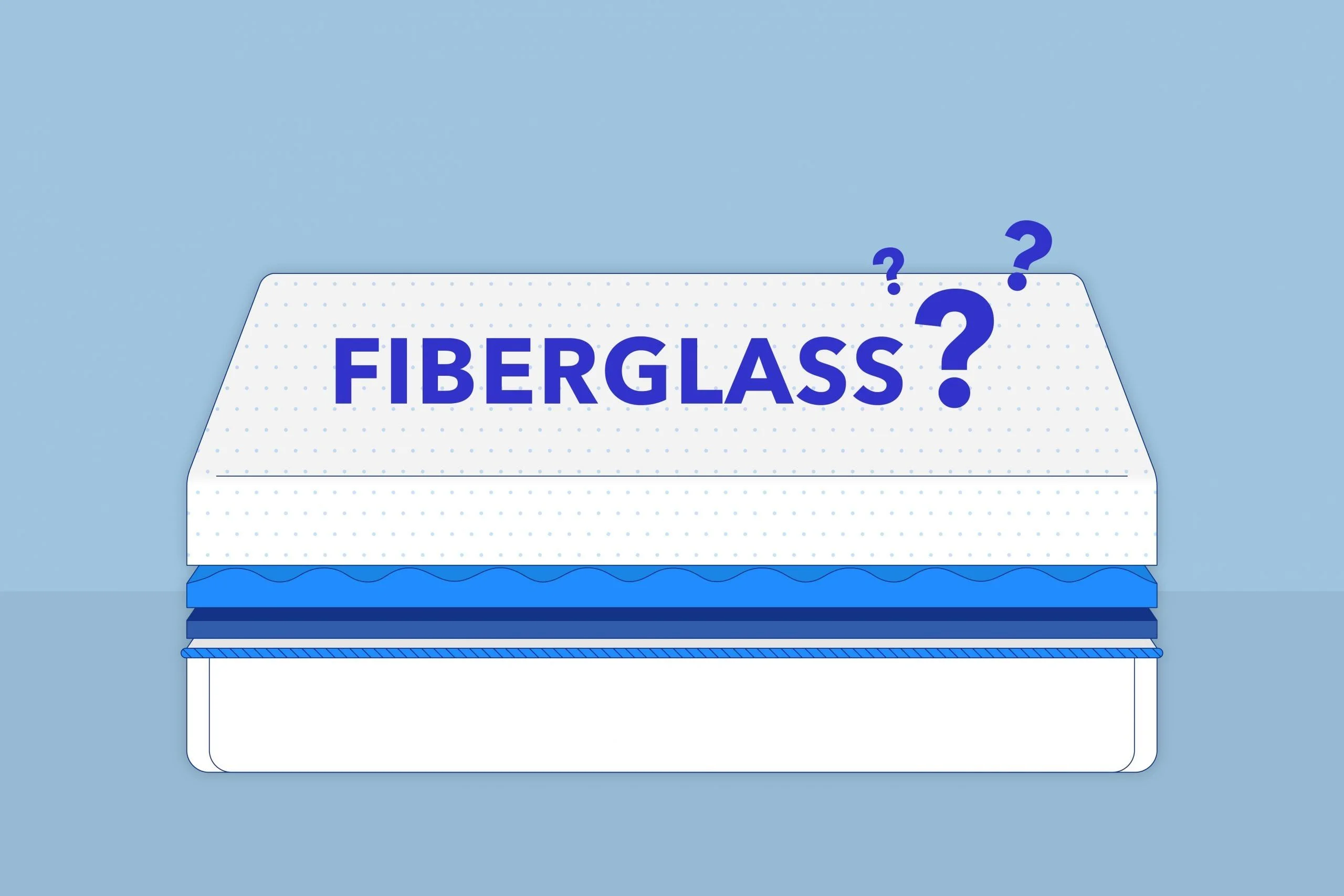
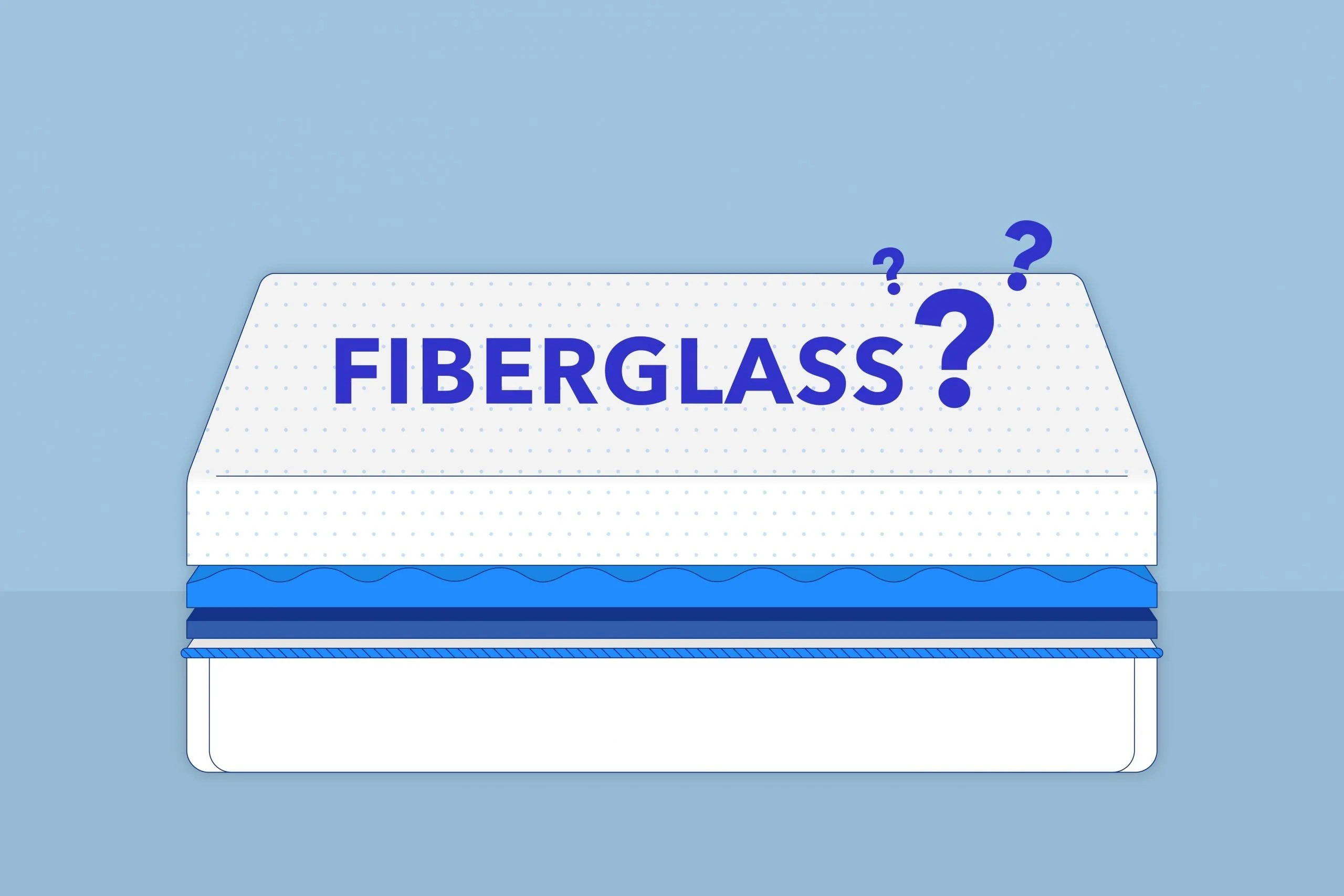
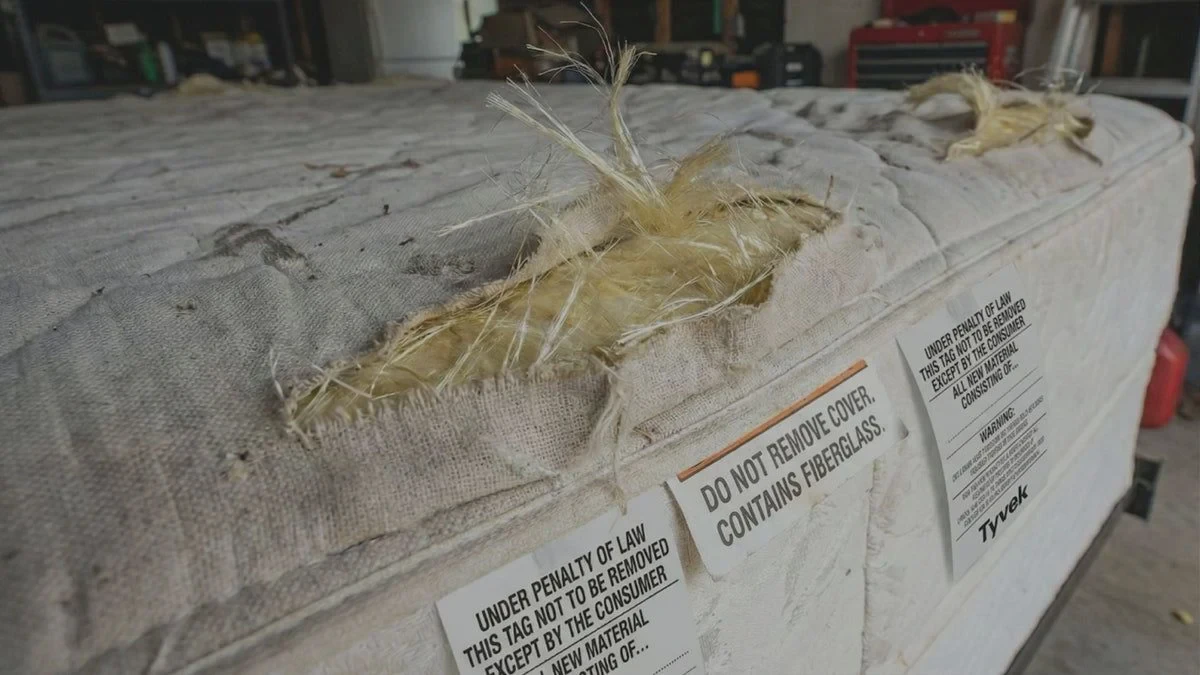
Fiberglass has been hiding inside affordable memory-foam and hybrid mattresses for nearly two decades - used as a cheap, federally compliant fire barrier under the outer cover. It works as long as the cover stays intact. The problem is what happens when it doesn't: torn or removed covers can release millions of microscopic glass strands into the air, embedding in carpet, HVAC systems, clothing, and skin.
Below is the most current 2026 picture of which mattress brands have used fiberglass, what changed legally in California, how to check your own mattress label, and which fiberglass-free brands are safer to buy today.
Why is fiberglass in mattresses at all?
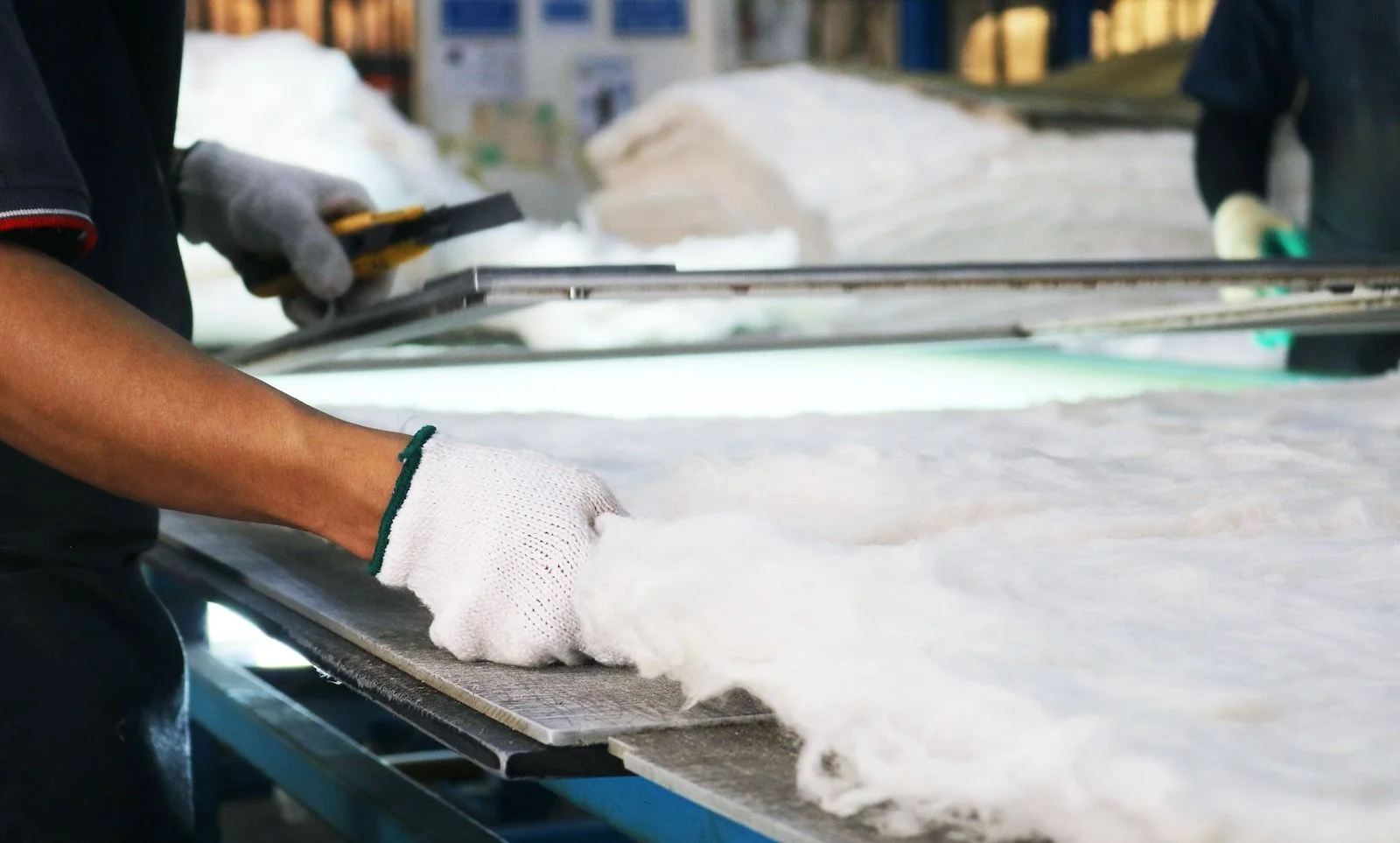
Since 2007, federal flammability standard 16 CFR Part 1633 (administered by the Consumer Product Safety Commission) has required every mattress sold in the U.S. to resist an open-flame ignition test for 30 minutes. Manufacturers can meet that bar in several ways - wool, rayon, silica, kevlar - but woven fiberglass is by far the cheapest. The fiberglass is sewn into an inner sock that sits directly under the outer cover; when exposed to flame, it melts into a glass shell that smothers the fire.
That tradeoff - pennies per mattress in safety cost, but a real consumer hazard if the cover is breached - is what's now driving regulatory and consumer pushback.
California's 2025 fiberglass ban (and what it means nationally)
In 2024, California Governor Gavin Newsom signed AB 1108, banning the manufacture, sale, or delivery of mattresses and upholstered furniture containing fiberglass. The law takes effect January 1, 2027, and California is the first U.S. state to enact such a ban. Because California is the largest single mattress market in the country, most national brands are reformulating across the entire U.S. line rather than maintaining two SKUs - which is the main reason the brand list below is shrinking year over year.
The California Department of Public Health has also published a consumer factsheet warning that fiberglass particles released from a damaged cover can cause respiratory irritation, persistent skin itching, and contamination that's expensive to remediate.
Mattress brands that have used fiberglass
This list reflects models confirmed to contain fiberglass through manufacturer disclosures, law-tag teardowns, CPSC complaints, and third-party teardown databases (notably NapLab's analysis of 395 mattresses). Brand membership on this list does not mean every product the brand sells contains fiberglass - most of these brands now sell at least one fiberglass-free SKU. Always confirm with the specific model's law tag.
- Zinus - pre-2025 Green Tea Memory Foam, Spa Select, and several hybrid models. Zinus has reformulated the 2025 line as fiberglass-free; older units still in retail channels remain affected.
- Casper - Casper Original, Casper Select, Casper Nova Hybrid, and Casper Wave Hybrid have used fiberglass. Most current Casper models are fiberglass-free; older units may not be.
- Tempur-Pedic - multiple models include glass-fiber fire socks. Tempur-Pedic discloses this in its materials list; cover removal voids the warranty.
- Puffy - Puffy Cloud, Lux, Royal, and Diamond Hybrid (especially Canadian SKUs) use a fire sock that contains glass fiber.
- Lull - The Original Lull and the Lull Luxe Hybrid have used fiberglass under non-removable covers.
- Allswell (Walmart) - Allswell Luxe, Supreme, and Cool Hybrid models use fiberglass.
- Linenspa, Lucid, and Best Price Mattress - budget Amazon-first brands; the majority of memory-foam SKUs use fiberglass fire barriers.
- Olee Sleep - Aquarius and Galaxy Hybrid lines.
- Milliard - folding and value memory-foam mattresses.
- Molblly - Amazon-channel cooling-gel memory foam SKUs.
- IKEA Åmsosen - confirmed in NapLab teardown.
- Ashley Sleep (Gruve M71431) - appears in CPSC complaints; Ashley does not publish a comprehensive fiberglass disclosure.
- Layla - older hybrid models. Layla's all-foam flippable is fiberglass-free; the hybrid line was the historical concern.
- Nectar - older units; current Nectar production is reportedly fiberglass-free, but consumer complaints persist for older inventory.
- Leesa - pre-2023 models. Current Leesa production is fiberglass-free.
Tip: if you bought a memory-foam or hybrid mattress under $800 between 2018 and 2024, assume fiberglass is present until you confirm otherwise. Keep the cover on, do not unzip it, and do not machine-wash it.
Why brands used fiberglass
- Cheapest material that meets the federal 16 CFR 1633 open-flame test
- Lightweight; doesn't add bulk or compress over time
- Effective: melts into a glass shell that smothers flame for the required 30 minutes
- Allowed under federal law as long as the cover is non-removable
Why it's a consumer problem
- Sheds millions of microscopic glass fibers if the cover is removed, torn, or punctured
- Causes skin irritation, eye redness, and respiratory symptoms on contact
- Contaminates carpet, HVAC, clothing - professional remediation can run thousands of dollars
- Often disclosed only as 'glass fiber' or 'glass wool' in fine print on the law tag
- Banned in California starting January 1, 2027 (AB 1108)
How to tell if your mattress contains fiberglass
Manufacturers are required to disclose materials on the law tag - the white tag sewn into the side of the mattress that says "DO NOT REMOVE UNDER PENALTY OF LAW." You can read it without removing it. Here's what to look for:
- Find the law tag. It's a permanent tag, usually on the foot or side panel.
- Scan the materials list for these terms: glass fiber, fiberglass, glass wool, or silica fiber. Any of these = fiberglass is present.
- Check for the warning label. A specific instruction like "Do not remove cover" or "Cover not washable" is a strong signal of an internal fiberglass barrier - even if the term itself isn't on the tag.
- Look at the cover construction. A non-removable, fully sewn cover with no zipper around all four sides usually means there's a fiberglass sock inside. Removable, washable covers (Avocado, Saatva, Bear) almost never contain fiberglass - the fire barrier is bonded to the foam itself.
- Email the manufacturer with the model number. Reputable brands will tell you in writing whether the model contains fiberglass and what year the SKU was reformulated.
Fiberglass-free mattress brands worth buying
Per NapLab's 2026 analysis, roughly 89% of mattresses sold in the U.S. are now fiberglass-free. The brands below have publicly committed to fiberglass-free fire barriers across their entire current production line:
- Saatva - uses an organic cotton + thistle pulp fire barrier; certified by the Global Organic Textile Standard.
- Avocado Green Mattress - wool fire barrier; GOLS- and GOTS-certified.
- Birch by Helix - natural wool barrier; GREENGUARD Gold.
- Bear - rayon-based fire barrier; CertiPUR-US.
- Brooklyn Bedding (Aurora, Signature) - fiberglass-free across the lineup.
- Helix - current Helix Sunset, Midnight, and Moonlight models are fiberglass-free.
- Purple - uses a non-fiberglass fire sock across all current SKUs.
- Tuft & Needle - fiberglass-free since launch.
- Amerisleep - plant-based fire barrier; CertiPUR-US.
- Nolah - knit cotton + plant-fiber fire barrier.
- WinkBeds - fiberglass-free across all current models.
- Sleep Number - uses a non-fiberglass barrier in current production.
- GhostBed - fiberglass-free across the line.
- DreamCloud - current production is fiberglass-free; older Resident-era SKUs may differ.
What to do if your mattress already has fiberglass
If the cover is intact, the mattress is in good shape, and you're not seeing white fluff or unexplained skin irritation, you don't need to panic - keep the cover on, don't unzip or wash it, and use a high-quality zippered mattress encasement (not just a topper) for an additional barrier.
If you've already removed the cover, or you suspect contamination:
- Stop sleeping on the mattress and seal it inside heavy plastic before moving it.
- Do not vacuum with a regular household vacuum - it will redistribute fibers through the air. Use a HEPA-filtered shop vac, or hire a remediation service.
- Bag and discard contaminated bedding and clothing rather than washing them with other laundry.
- File a report with the CPSC at SaferProducts.gov - your complaint becomes part of the public record manufacturers and regulators see.
- Contact the brand for a refund or replacement; many have settled fiberglass class actions in the last three years.
Fiberglass mattress FAQs
Is fiberglass in mattresses illegal?
Not yet, federally. Fiberglass is allowed as a fire barrier under U.S. federal flammability standard 16 CFR 1633, as long as the cover is non-removable. California passed AB 1108 in 2024, banning the sale of fiberglass mattresses statewide effective January 1, 2027 - the first U.S. state to do so. Other states are considering similar legislation.
How can I tell if my mattress has fiberglass without removing the cover?
Read the law tag (the white tag sewn into the side). If you see 'glass fiber,' 'fiberglass,' 'glass wool,' or 'silica fiber' in the materials list, fiberglass is present. A 'do not remove cover' warning is also a strong signal. You don't need to remove anything to check - and you shouldn't.
Do Tempur-Pedic mattresses contain fiberglass?
Yes, several Tempur-Pedic models use a glass-fiber fire sock under the cover. Tempur-Pedic discloses this in its materials documentation. The fiberglass is contained as long as you do not unzip or remove the cover; doing so voids the warranty.
Are all memory-foam mattresses fiberglass mattresses?
No. Roughly 89% of mattresses sold in the U.S. - including most premium memory-foam and hybrid lines from Saatva, Avocado, Bear, Amerisleep, Nolah, Purple, and Tuft & Needle - are fiberglass-free. Fiberglass is concentrated in the budget tier (typically under $800) and on Amazon-first brands.
Is it safe to keep using a mattress with fiberglass if the cover is intact?
Generally yes. The fiberglass is sealed inside an inner sock beneath the outer cover; with the cover undisturbed, exposure risk is minimal. The hazard appears when the cover is unzipped, torn, washed, or damaged. If you're concerned, add a tightly zippered mattress encasement as a second barrier.
Can I sue if a fiberglass mattress contaminated my home?
Several brands - including Zinus and Nectar - have faced class-action lawsuits over undisclosed fiberglass shedding. If you've had a documented contamination event, photograph the damage, keep the mattress, file a CPSC complaint at SaferProducts.gov, and contact a consumer-products attorney. Outcomes vary, but settlements have been awarded.