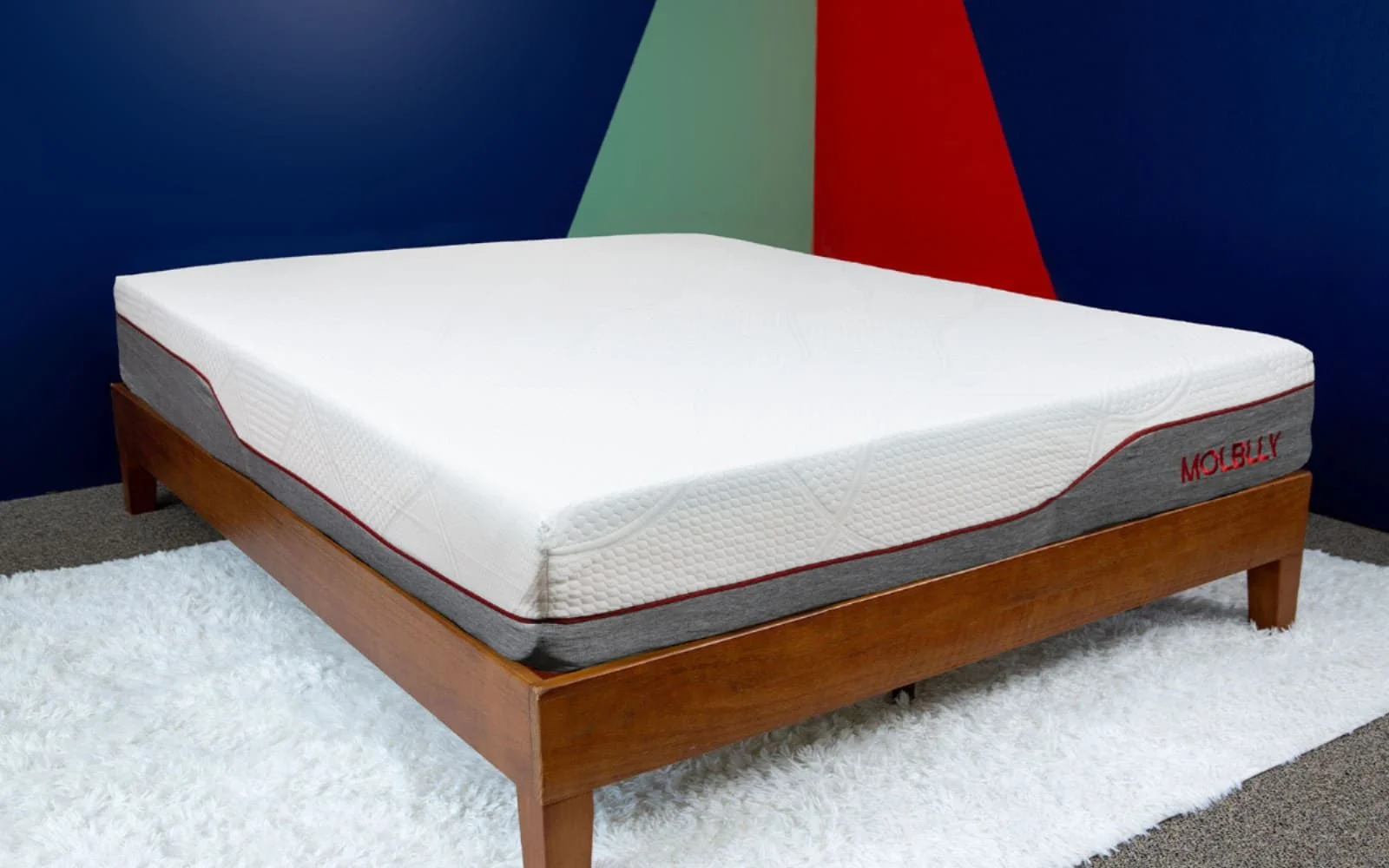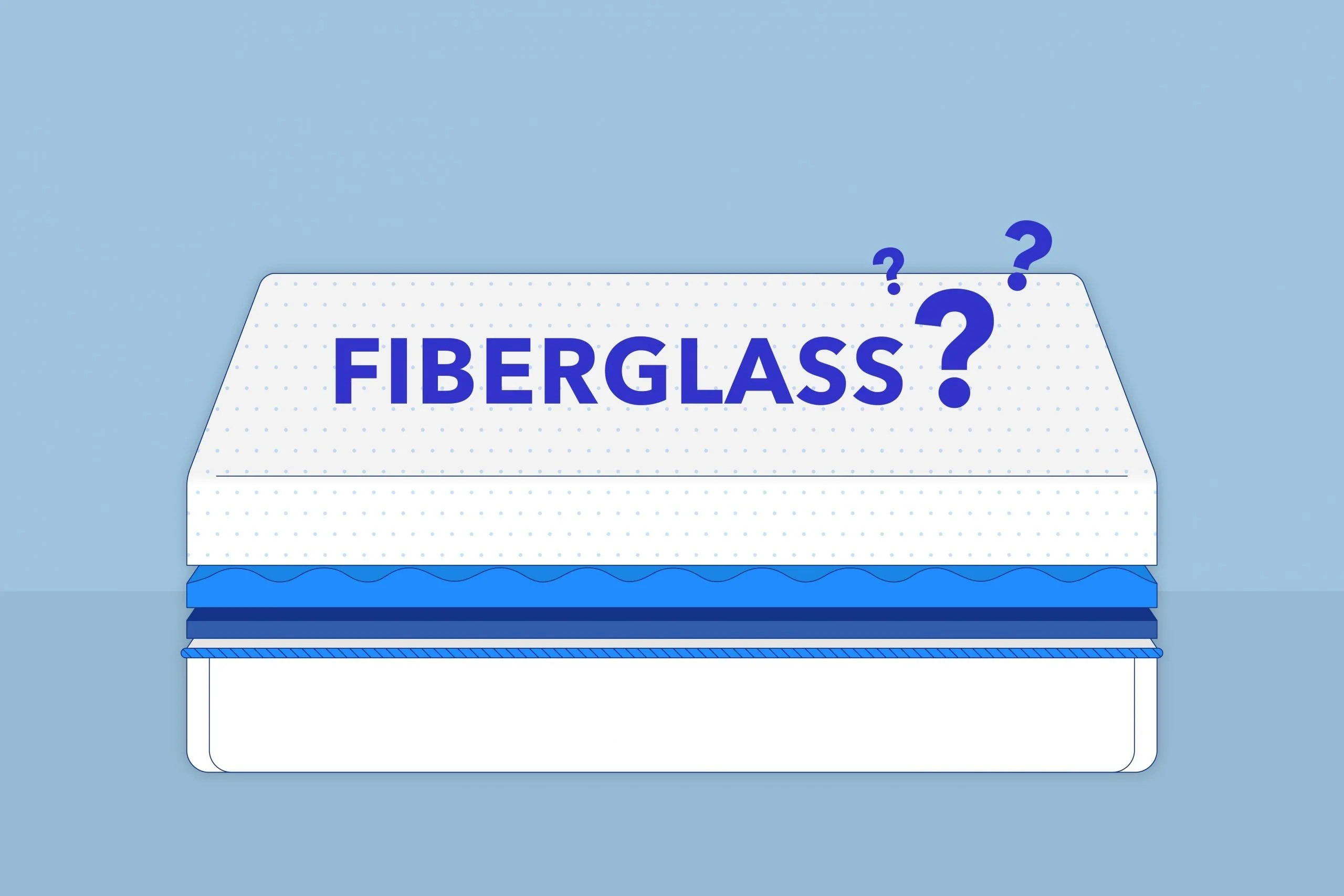
Molblly is a budget memory-foam brand sold mostly through Amazon. The fiberglass question keeps coming up because Molblly's product listings have shifted over the years - older mattresses used a fiberglass-blend inner cover as a fire barrier, while newer SKUs are now marketed as fiberglass-free. The honest answer depends on which mattress you bought and when.
Short answer: Older Molblly memory-foam mattresses (roughly pre-2023 production) used fiberglass in the inner cover to meet U.S. flammability standard 16 CFR 1633. Most current Molblly listings on Amazon now state "fiberglass-free" in the bullets, using a fire sock made from rayon, silica, or modacrylic instead. If you bought yours recently, it is probably fiberglass-free - but you should still verify by reading the law tag and never removing the inner cover.
Do Molblly mattresses have fiberglass right now?
As of 2026, Molblly's main Amazon listings (10", 12", and 14" memory-foam and hybrid models) explicitly call out "FIBERGLASS FREE" in the title or first bullet. Molblly's seller responses on Amazon Q&A confirm the change happened in stages - early units shipped with a fiberglass-blend inner cover, then the brand transitioned to a fiberglass-free fire barrier on most SKUs.
That means three things in practice:
- If you bought a Molblly in 2024 or later from a current Amazon listing that says "fiberglass free," your mattress almost certainly does not contain fiberglass.
- If you bought a Molblly before ~2023, or from a third-party reseller using older stock, the inner cover likely contains a fiberglass blend.
- If the listing is silent on fiberglass and the mattress is unusually cheap, assume fiberglass is present until you can read the law tag.
Why fiberglass is in budget mattresses at all
U.S. federal flammability rule 16 CFR 1633 requires every mattress sold to resist an open flame for 30 minutes. Fiberglass is the cheapest material that meets that test: it does not burn, it melts and forms a char layer that smothers the flame. That's why almost every sub-$300 memory-foam mattress on Amazon used fiberglass for years - Molblly, Zinus, Vibe, Linenspa, and dozens of private-label brands.
Higher-priced brands (Saatva, Avocado, Tempur-Pedic) avoid fiberglass and pay more for wool, rayon, silica, or modacrylic fire socks. Molblly's recent move to a fiberglass-free fire barrier follows a wave of consumer lawsuits and Amazon listing crackdowns that pushed the budget tier to upgrade.
How to tell if your Molblly mattress has fiberglass
You don't need to cut anything open. Five signals, in order of reliability:
- Read the white law tag. Federal law requires it. Look for "glass fiber," "glass wool," or a percentage next to fiberglass. If it lists rayon, silica, modacrylic, or just "polyester" with no glass, you're fiberglass-free.
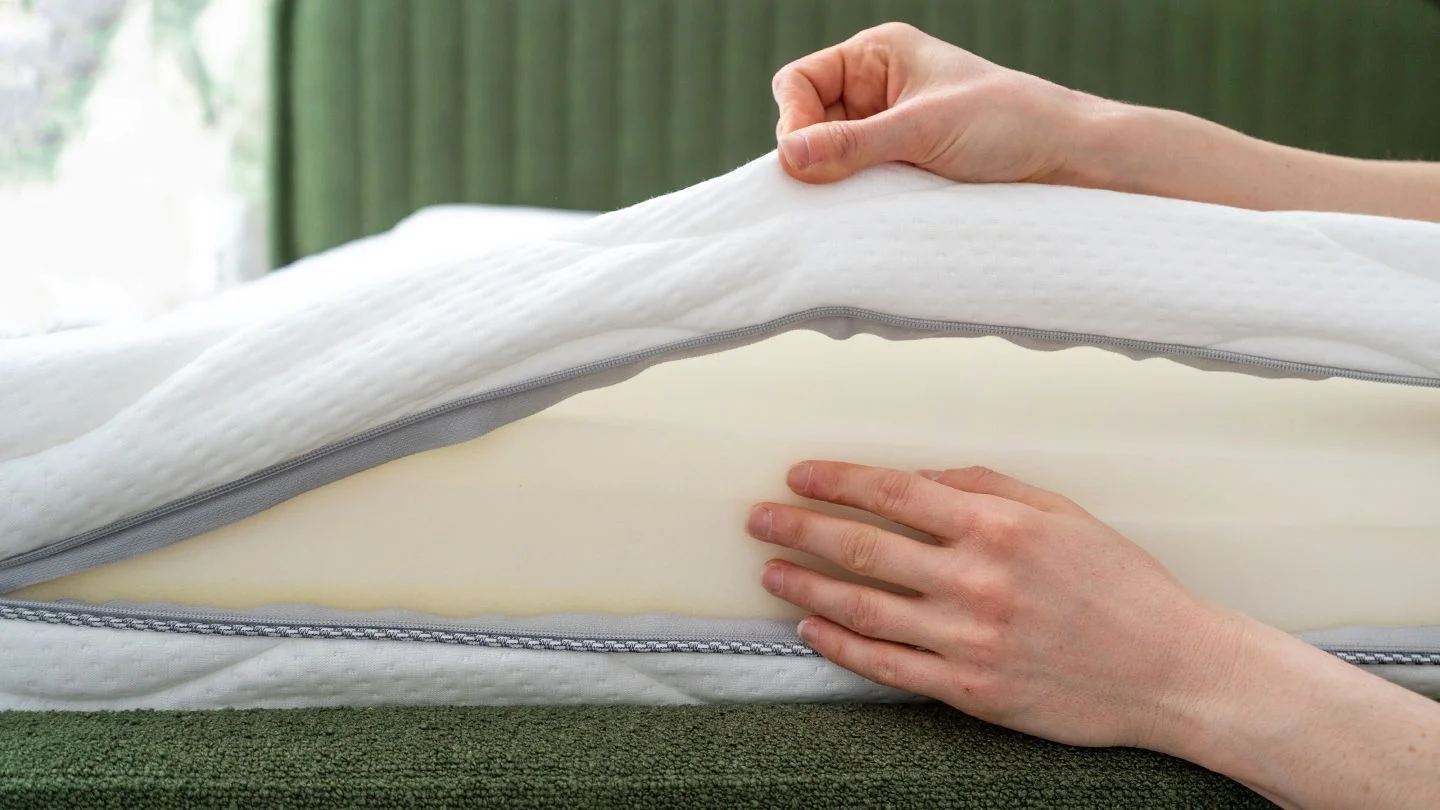
- Check the inner cover zipper. Mattresses with fiberglass have a warning printed near the zipper: "Do not remove cover." Fiberglass-free Molblly units typically have no such warning, or the cover is fully sewn shut.
- Re-check your Amazon order. Open the original product page from your order history. If the title or bullet 1 says "FIBERGLASS FREE," you bought a fiberglass-free unit. If it doesn't mention fiberglass either way and the listing is older than 2023, assume it contains fiberglass.
- Look for CertiPUR-US plus a fire-barrier certification. CertiPUR-US covers the foam, not the cover. The fiberglass-free Molblly listings now also reference a rayon/silica fire sock - that's the giveaway.
- Trust the price floor. A queen mattress under $180 that doesn't disclose its fire barrier is almost certainly using fiberglass, regardless of brand.
Health risks of mattress fiberglass
Intact fiberglass inside a sealed inner cover is not a meaningful exposure risk. The hazard begins when the inner cover is unzipped, torn, or worn through. According to the U.S. Agency for Toxic Substances and Disease Registry, airborne glass fibers can cause:
- Skin irritation and itching where fibers contact bare skin
- Eye redness and watering
- Sore throat, coughing, and nosebleeds from inhalation
- Worsening of asthma and other airway conditions
Fiberglass fibers are not classified as a carcinogen by the IARC at the levels found in consumer products, and they don't off-gas. The damage from a torn inner cover is mechanical: thousands of microscopic glass needles spread through HVAC, embed in clothing and carpet, and are very expensive to remove.
How to safely use a Molblly mattress with fiberglass
If you confirm your Molblly does contain fiberglass and you don't want to replace it, two rules cover almost every safe-use scenario:
- Never unzip or remove the inner white cover. The outer cover that came zipped on the mattress is fine to use as-is. The fiberglass is in a separate inner sock - usually visible through a thin white layer beneath the quilted top. As long as that layer stays intact, fibers cannot escape.
- Add a tightly woven mattress encasement. A bedbug-rated, fully zippered encasement (look for ones tested to dust-mite-proof or sub-50-micron pore size) acts as a second barrier. SafeRest, LinenSpa Premium, and Utopia Bedding all sell encasements under $50 that fit budget mattresses.
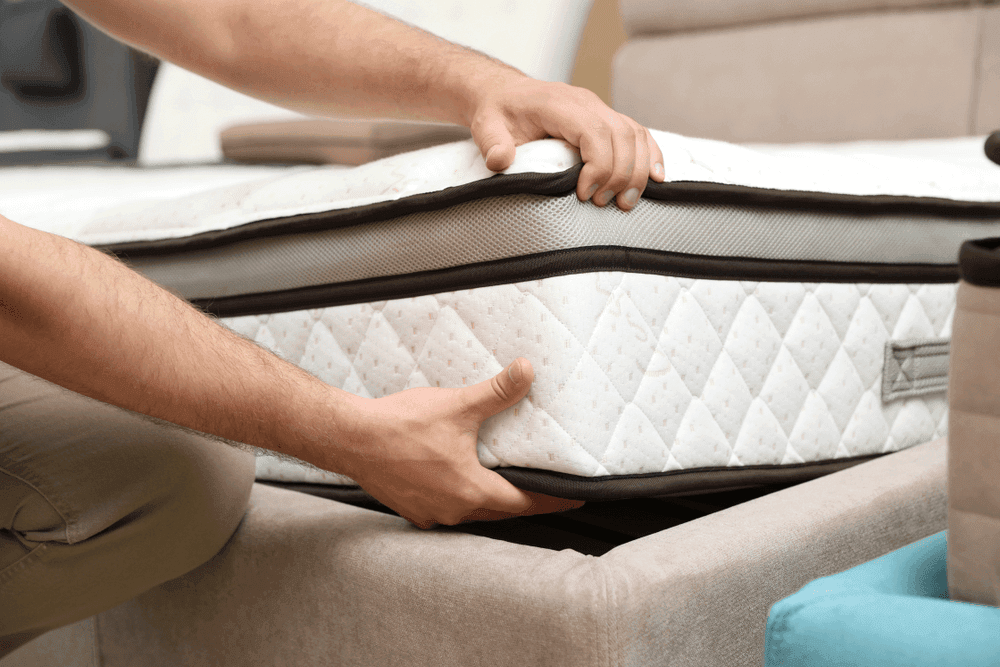
Avoid the failure modes: don't let kids or pets puncture the cover, don't drag the mattress across rough floors by the corners (that's where covers tear), and don't try to wash the inner cover. If the inner cover ever tears, stop using the mattress immediately, bag it in plastic, and contact the seller - do not vacuum without a HEPA filter.
Fiberglass-free alternatives if you want to upgrade
If you'd rather replace the mattress than manage the risk, you have three tiers worth considering:
- Same budget ($150-$300): current Molblly fiberglass-free SKUs, Linenspa Memory Foam Hybrid (rayon barrier), and Novilla Bliss are the safer picks at this price. Verify the listing language before buying.
- Mid-tier ($400-$800): Nectar, DreamCloud, and Leesa all use fiberglass-free fire socks and disclose the materials publicly.
- Premium ($1,000+): Saatva, Avocado, and Tempur-Pedic use wool or rayon fire barriers with full materials transparency.
Frequently asked questions
Are all current Molblly mattresses fiberglass-free?
Most are, but not all. Molblly sells through Amazon, Walmart, and third-party resellers, and older inventory still circulates. Always verify by reading the listing and the white law tag on the unit you receive.
Is it safe to sleep on a Molblly mattress with fiberglass if the cover is intact?
Yes. Fiberglass becomes a problem only if the inner cover is opened, torn, or worn through. With the cover intact and an additional encasement, exposure risk is negligible.
Can I return a Molblly mattress because of fiberglass?
Molblly's Amazon listings include a 100-night trial on most SKUs. If your mattress contains fiberglass and you weren't expecting it, contact Amazon customer service and request a return under "item not as described" - most claims succeed when the listing didn't disclose fiberglass.
What's a fiberglass mattress lawsuit?
Several class actions have targeted budget memory-foam brands (Zinus, Linenspa, and others) for inadequate fiberglass disclosure after consumers' homes were contaminated by torn inner covers. Molblly hasn't faced a high-profile class action to date - see our Molblly mattress lawsuit explainer, but the brand's switch to fiberglass-free SKUs aligns with industry-wide pressure from those cases.
Bottom line
Molblly's older mattresses contain fiberglass; the brand's current Amazon SKUs are mostly labeled fiberglass-free. Read the law tag, never unzip the inner cover, and add a zippered encasement if you're keeping a unit you suspect uses fiberglass. If you'd rather not manage the risk, current fiberglass-free Molblly listings, Nectar, and DreamCloud are the cleanest replacements at each price tier.