The short answer
No, Lull mattresses are not toxic. Every mattress Lull currently sells uses CertiPUR-US certified foams, is fiberglass-free (Lull removed fiberglass from production in 2024), and is rated ultra-low VOC. None of that makes Lull the cleanest mattress on the market - for that you want GREENGUARD Gold or organic-certified beds - but it does put Lull comfortably above the safety floor that matters for indoor air quality and chronic exposure.
This guide explains exactly what each certification proves, what it does not cover, and how Lull compares to the few mattress brands that go further.
What "toxic" actually means in a mattress
When shoppers ask if a mattress is toxic, they are usually worried about three different things and lumping them together:
- VOCs (volatile organic compounds) released as the mattress off-gasses. High concentrations cause headaches, eye irritation, and respiratory symptoms.
- Banned chemicals in the foam itself - formaldehyde, mercury, lead, PBDE flame retardants, ozone depleters.
- Fiberglass fire socks used as a flame barrier. Fiberglass is not released during normal use, but if the cover is unzipped and the inner sock is damaged, microscopic fibers can spread through a home and contaminate it for months.
Lull's safety story has to be evaluated against all three, not just one.
What CertiPUR-US actually certifies
Every foam layer Lull ships is CertiPUR-US certified. The program is run by an independent body and tests finished foam samples - not raw chemicals or full mattresses - for:
- No PBDEs, TDCPP, or TCEP flame retardants
- No mercury, lead, or other heavy metals
- No formaldehyde
- No phthalates regulated by the CPSC
- No ozone depleters
- VOC emissions under 0.5 parts per million
That last bullet is the one that matters for off-gassing. 0.5 ppm is the cap; many CertiPUR-US foams test well below it, and Lull markets its current lineup as ultra-low VOC, which is the brand's way of saying it tests below the 0.5 ppm threshold.
What CertiPUR-US does not cover: covers, fire socks, adhesives, or the rest of the mattress assembly. So a CertiPUR-US badge tells you the foam is clean. It tells you nothing about the fire barrier - which is why fiberglass became such a flashpoint in the bed-in-a-box category to begin with.
The fiberglass question - and what changed in 2024
For years, Lull (and most low-cost foam mattresses sold online) used a fiberglass fire sock under the cover to pass the federal flammability standard 16 CFR 1633 without expensive chemical flame retardants. The fiberglass itself is sealed inside the inner cover and is harmless during normal use. The risk is consumer behavior: people who unzipped the outer cover to wash it ruptured the sock, and the resulting fibers are notoriously difficult to remove from a home.
In 2024, Lull updated its construction and removed fiberglass from its mattresses entirely. Lull's current sustainability page confirms its mattresses are made without flame retardant chemicals and without fiberglass. Newer reviews (Reader's Digest, Feb 2026; CNET, 2024) also confirm the fiberglass-free build.
Two important caveats:
- This applies to mattresses manufactured after the 2024 changeover. If you bought a Lull before 2024, it almost certainly contains a fiberglass fire sock. It is still safe to sleep on - the sock is sealed - but do not unzip the cover.
- Fiberglass was replaced with a non-fiberglass fire barrier (typically a rayon/silica blend in this category). It does not change the CertiPUR-US status of the foam.
VOCs and off-gassing - what to expect the first week
Every foam mattress arrives compressed and sealed in plastic. When you open it, trapped air escapes and you'll smell a faint chemical odor for 24 to 72 hours. That smell is not the same as toxicity - it is a mix of styrene-butadiene residues and packaging plasticizers, and Consumer Reports' November 2025 testing on bed-in-a-box mattresses found that even at peak off-gas, levels in a typical bedroom drop well below health thresholds within days.
To speed it up:
- Unbox in a well-ventilated room and run a fan or open a window for the first 48 hours
- Wait at least 24 hours before sleeping on it (Lull's official guidance)
- If you have asthma or chemical sensitivities, ventilate for a full week before regular use
How Lull compares to other non-toxic certifications
CertiPUR-US is the industry's most common safety standard, but it is not the strictest. Here is how the major certifications stack up for shoppers who want extra peace of mind:
CertiPUR-US - covers foam content + VOC emissions ≤0.5 ppm. Lull holds it on all models.
GREENGUARD Gold - covers whole-product VOC emissions, designed for sensitive populations including children. Stricter than CertiPUR-US. Only the Lull Original sold via Pottery Barn Kids carries this certification; standard Lull.com mattresses do not.
OEKO-TEX Standard 100 - covers textile chemical safety (cover, fabrics). Different scope. Lull does not hold it.
GOLS / GOTS - material-level organic certification for latex / cotton. Lull is not an organic brand and does not hold these.
If your priority is lowest-possible VOC exposure for a child's room, the GREENGUARD Gold version of the Lull Original (Pottery Barn Kids exclusive) or a brand like Avocado or Naturepedic is a stronger fit. For adult bedrooms, CertiPUR-US plus ultra-low VOC is the level most sleep-health experts treat as sufficient.
What Lull mattresses are actually made of (2026 lineup)
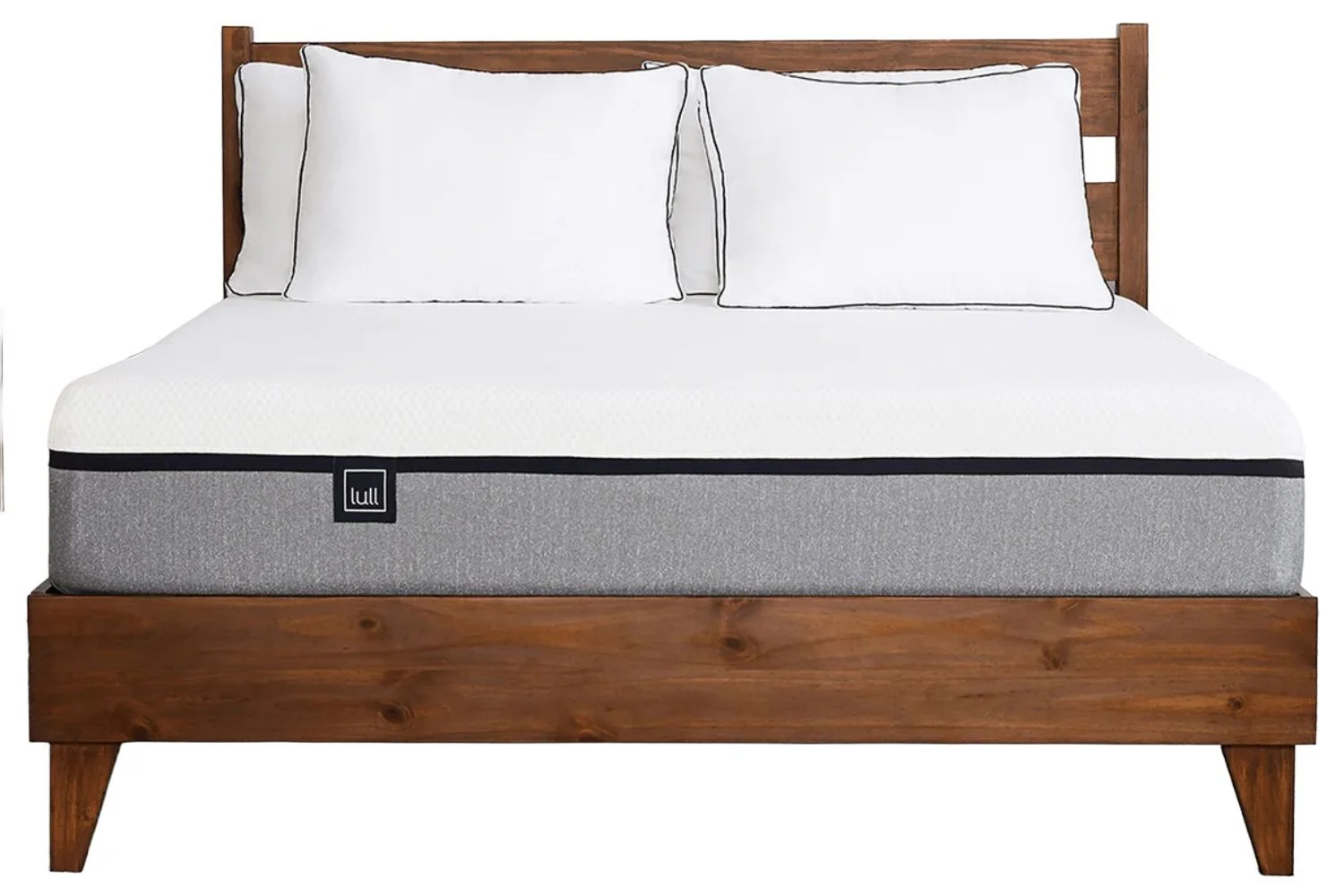
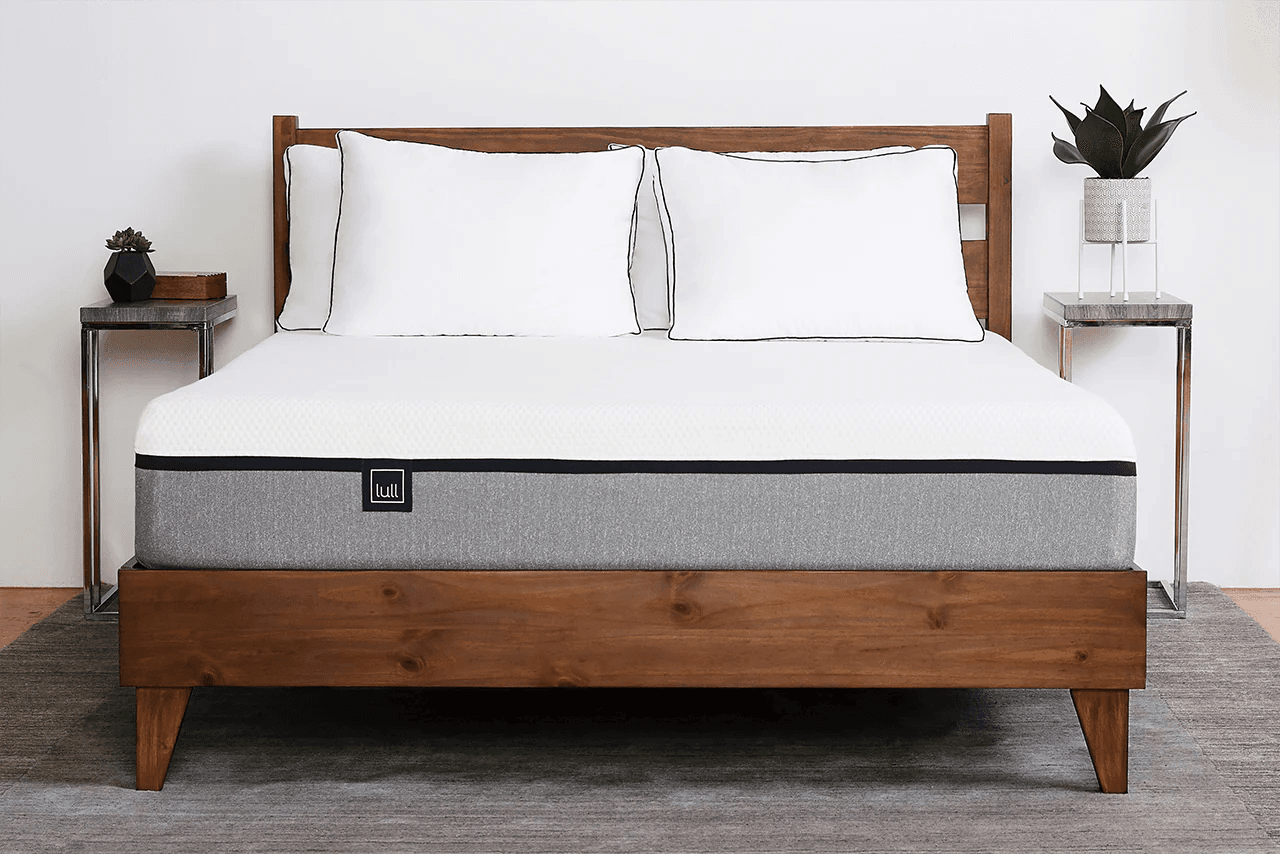
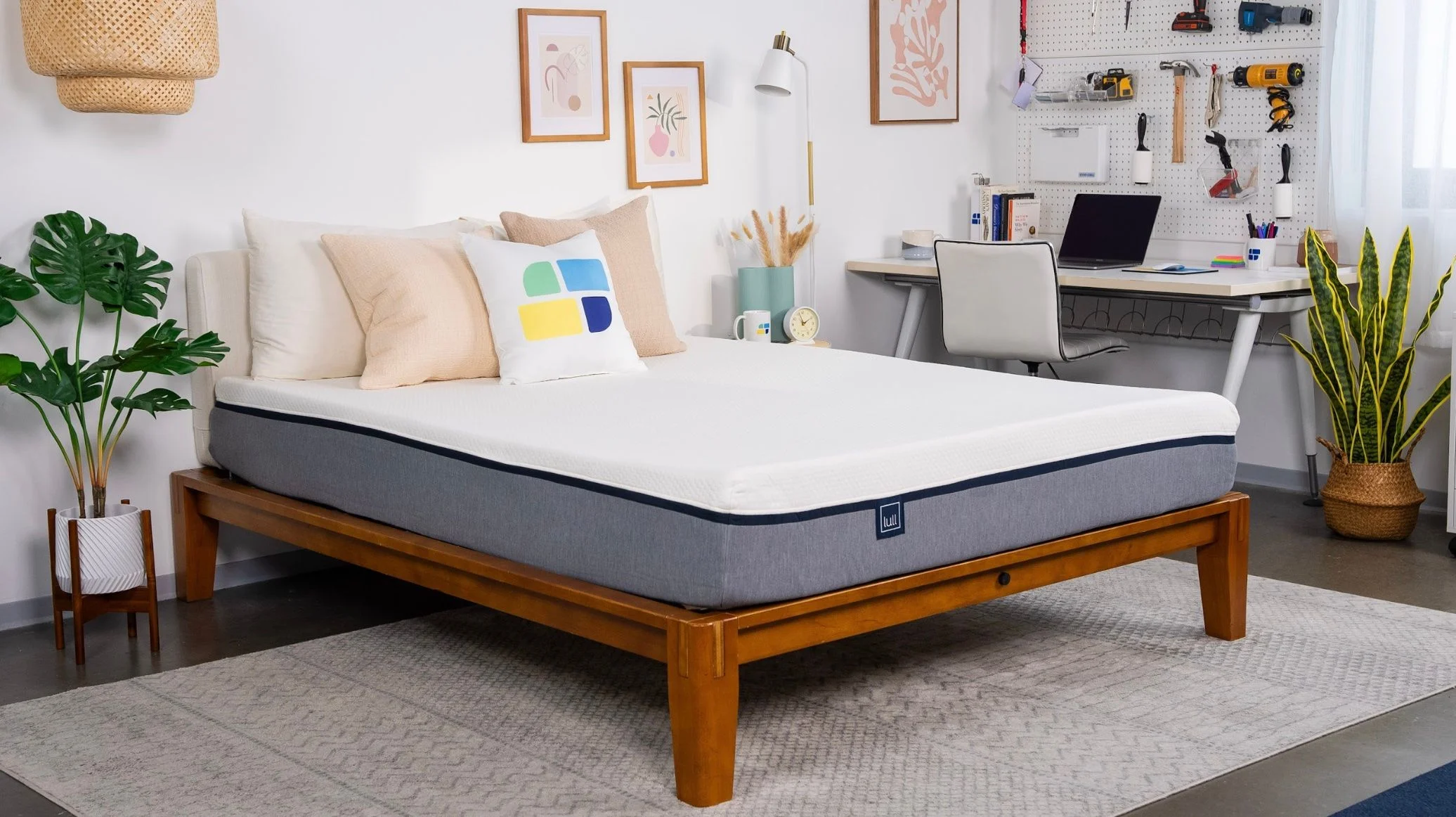
Lull Original - 10" all-foam, three layers:
- 1.5" gel-infused memory foam (top, pressure relief)
- 1.5" transition foam (contour)
- 7" high-density support foam (base)
Lull Original Premium - 12" all-foam with a thicker comfort layer and added cooling cover.
Lull Luxe Hybrid - 12" hybrid:
- Quilted cooling cover
- 2 foam comfort layers (gel memory foam + transition)
- Pocketed coil core for responsive support
- High-density base foam
All layers are CertiPUR-US certified, all current builds are fiberglass-free.
Should you buy a Lull mattress?
For most adult shoppers, yes - Lull clears the meaningful safety bars: certified-clean foams, no fiberglass, low measurable VOCs. The trade-offs are about feel and durability (medium-firm, ~7-year useful life for the all-foam models), not toxicity.
Skip Lull if any of these apply:
- You want GREENGUARD Gold on the actual mattress you sleep on (not the Pottery Barn Kids variant) - go Avocado, Saatva Latex Hybrid, or Naturepedic
- You want certified-organic materials - go GOTS/GOLS
- You're chemically sensitive enough that ultra-low VOC isn't low enough - talk to your doctor and consider a 100% natural latex bed with no synthetic foam
For everyone else, Lull's safety profile in 2026 is solid, and the 2024 fiberglass removal closed the one legitimate complaint that used to dog the brand.
Sources
Lull Sustainability page - current materials and certifications
CertiPUR-US Directory - Lull foam supplier listings
Consumer Reports - VOCs and Toxic Chemicals in Mattresses (Nov 2025)
Lull mattress safety FAQ
Are Lull mattresses CertiPUR-US certified?
Yes - all foam layers in every current Lull model are CertiPUR-US certified, meaning they are made without PBDE flame retardants, heavy metals, formaldehyde, ozone depleters, or regulated phthalates, and emit under 0.5 ppm of VOCs.
Do Lull mattresses contain fiberglass?
No. Lull removed fiberglass from its mattresses in 2024. Mattresses manufactured before that changeover do contain a fiberglass fire sock - it is sealed and safe during normal use, but you should not unzip the cover.
Do Lull mattresses contain formaldehyde?
No. CertiPUR-US explicitly prohibits formaldehyde in the foams, and Lull only ships CertiPUR-US certified foam.
Is Lull GREENGUARD Gold certified?
Only the Lull Original sold through Pottery Barn Kids. The mattresses sold on Lull.com are CertiPUR-US and ultra-low VOC, but not GREENGUARD Gold.
How long should I air out a new Lull mattress?
Ventilate the bedroom for at least 24 hours before sleeping on it. People with asthma or chemical sensitivities should ventilate for up to a week before regular use.
Are there mattresses safer than Lull?
Yes - GREENGUARD Gold and certified-organic mattresses (Avocado, Naturepedic, Saatva Latex Hybrid) hold tighter chemical-emission certifications, at higher prices.