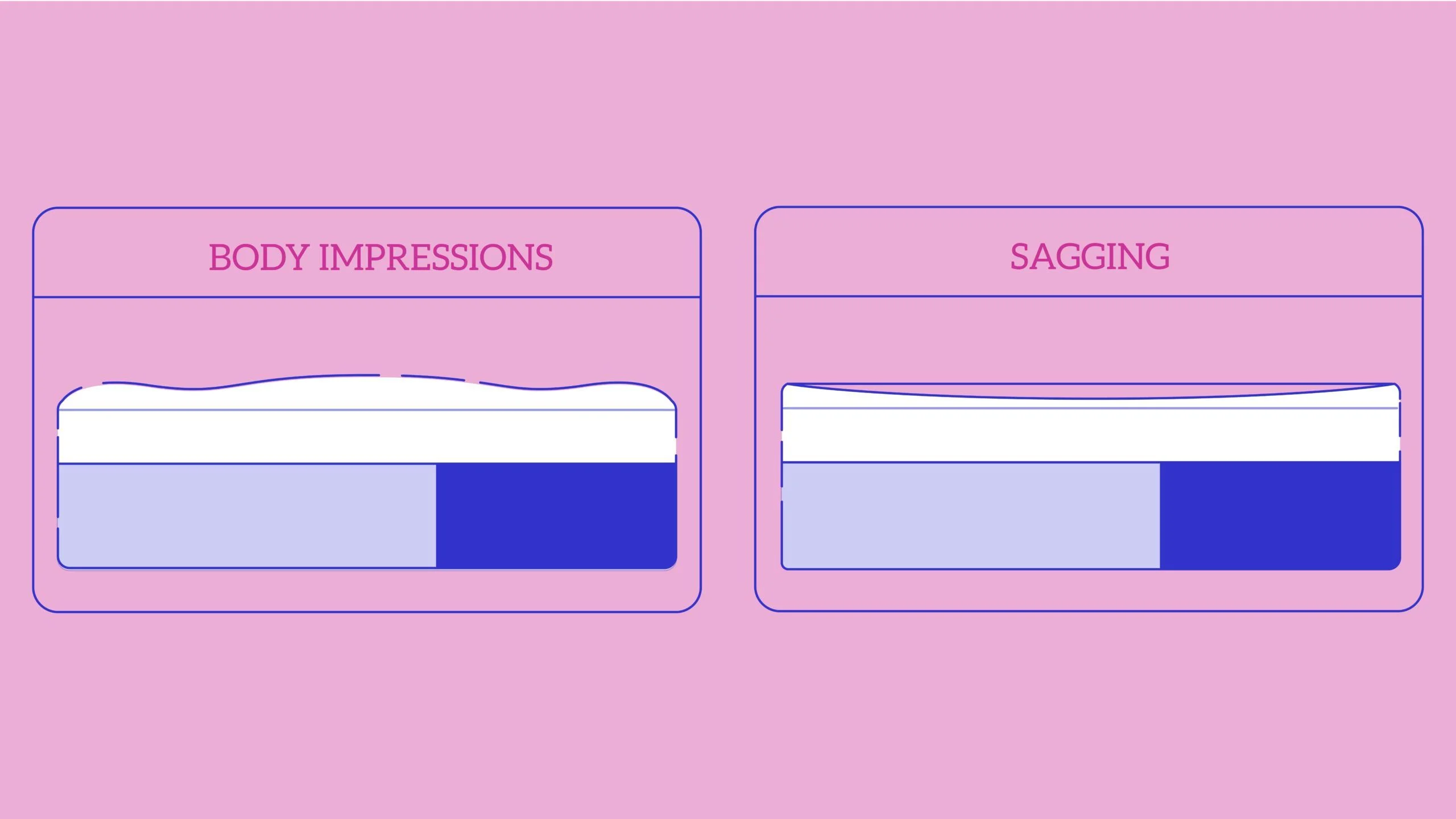
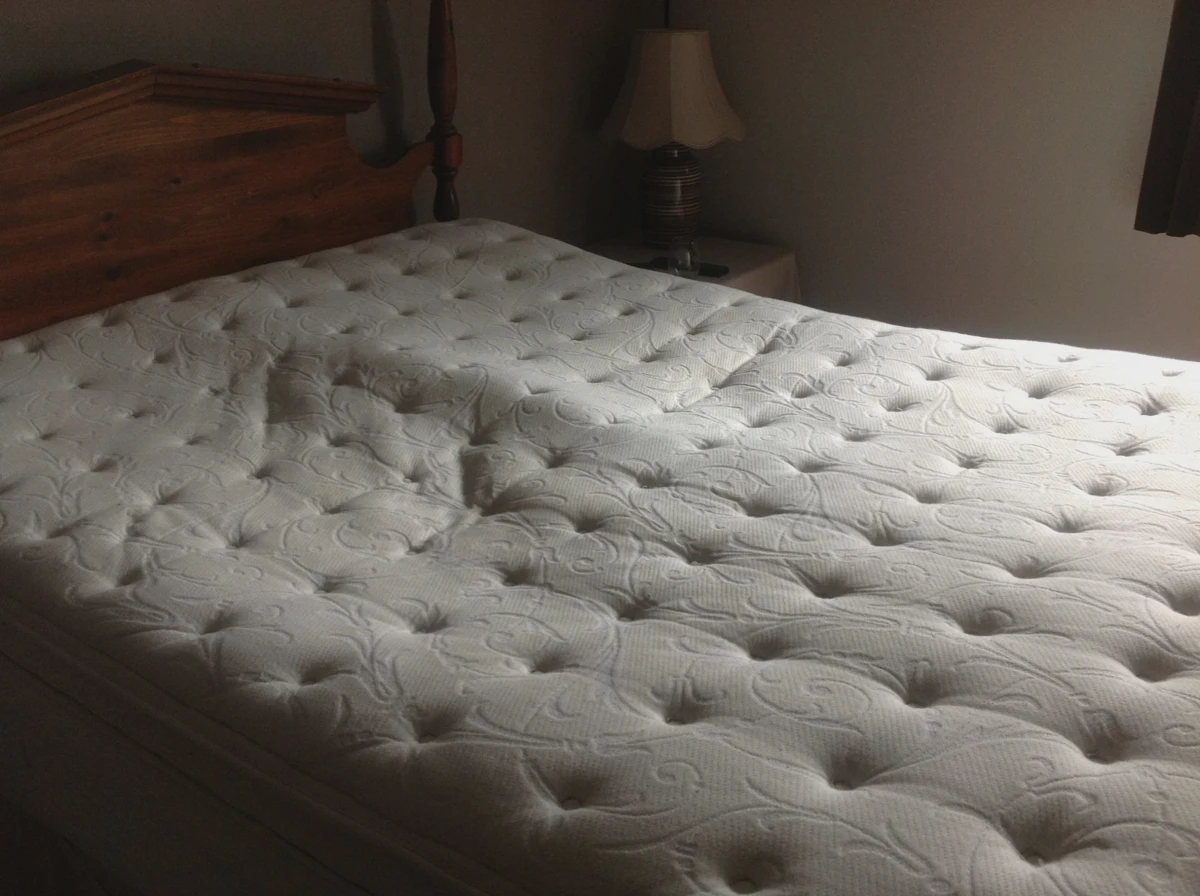
A mattress that sinks in the middle isn't just an annoyance - it's a structural problem that pulls your spine out of alignment every night you sleep on it. The result is the dreaded "hammock effect": your hips drop into the dip, your shoulders and feet stay higher, and your back muscles spend the night fighting gravity instead of recovering. Most people notice the consequences (morning stiffness, low-back pain, restless sleep) before they notice the dip itself.
The good news: the cause is usually identifiable, and several of the fixes cost less than $100. The bad news: once a mattress has sagged more than about 1.5 inches, no fix is permanent. This guide walks through why mattresses sink in the middle, six ways to fix or compensate for the dip, how to prevent it on your next mattress, and the warranty truth that most retailers won't volunteer.
Why a Mattress Sinks in the Middle
The middle of the mattress takes the brunt of your body weight - torso, hips, and pelvis sit there for six to nine hours a night. Over time, the materials directly under that load lose their ability to spring back. Several factors accelerate the process:
- Foam fatigue. Memory foam and polyfoam soften with repeated compression. Lower-density foams (under 4 lb/cu ft for memory foam) break down faster.
- Coil failure. Innerspring and hybrid mattresses lose tension when individual coils stretch or snap. You'll often hear squeaking before you see the dip.
- Inadequate foundation. A bed frame without a center support leg lets the box spring sag, which lets the mattress sag with it. Slatted platforms with gaps wider than 3 inches create the same problem.
- Concentrated sleep position. If you sleep in the same spot night after night without rotating the mattress, body impressions form in that zone.
- Age and moisture. Most mattresses are designed for a 7-10 year service life. Trapped sweat and humidity break down adhesives and fibers from the inside out.
If your mattress is under two years old and already sinking, the cause is almost always the foundation, not the mattress itself. Pull the mattress off and inspect what's underneath before assuming the worst.
Is a Sagging Mattress Bad for Your Back?
Yes - and the link is well documented. When the middle of the mattress dips, your spine curves to follow the surface instead of staying in its natural neutral alignment. Your back muscles compensate by tensing all night, which is why people with sagging mattresses often wake up stiffer than they went to bed. Sleep Foundation and most orthopedic resources flag a dip greater than 1.5 inches as the threshold where back pain becomes likely. For side sleepers, the cutoff is even tighter: shoulder and hip pain show up at smaller dips because side sleeping concentrates load on two narrow contact points.
If you've already developed morning back pain that fades within an hour of getting up, your mattress is the suspect until proven otherwise. That pattern - pain at wake, gone by mid-morning - is the classic signature of a worn-out sleep surface.
6 Ways to Fix a Mattress Sinking in the Middle
Fixes fall into two categories: rebuilding the support underneath, and adding a new layer on top. Start with the cheapest diagnostic step (checking your foundation) before spending money on toppers or replacements.
1. Add Plywood Between the Mattress and Box Spring
A 3/4-inch sheet of plywood, cut to mattress size, gives the underside a perfectly flat foundation. This is the cheapest and fastest test for whether your support system is the real culprit. If the dip improves dramatically within a few nights, the box spring or frame was the problem, not the mattress. Plywood works as a permanent fix only on innerspring mattresses; on memory foam or hybrids it can trap heat and reduce breathability, so treat it as a 3-6 month bridge.
2. Use a Mattress Helper or Sag Support Board
A mattress helper is a triangular foam or plastic insert designed to slide under the sagging zone, between mattress and foundation. Brands like Mattress Helper and Bed Lift run $40-$80 and lift the dip by 1-2 inches. They're more breathable than full plywood and target the sag without changing the rest of the mattress feel. Best for hybrids and innersprings; less effective on dense memory foam where the dip is in the foam itself, not the support layer.
3. Add a Mattress Topper
A 2-4 inch topper (latex, memory foam, or wool) levels out a mild dip by adding a fresh layer of support on top. Latex toppers hold up best for sag compensation because they don't compress permanently the way budget memory foam can. Look for at least 3 inches of thickness and density of 4 lb/cu ft or higher. A topper will not fix a severe dip - if you can see daylight under a yardstick laid across the mattress, the topper will eventually conform to the same sag.
4. Replace or Reinforce the Foundation
Most queen and king mattresses require a frame with at least six legs and a center support beam touching the floor. If yours has only four legs or a center beam that sits above the floor on a missing foot, the middle of the mattress has nothing real holding it up. Buy or build the missing center support before buying anything else. For slatted platform beds, the rule of thumb is no more than 2.75 inches of gap between slats - wider gaps let the mattress sag between them.
5. Rotate the Mattress 180 Degrees
Most mattresses sold in the last 15 years are one-sided and cannot be flipped, but they can and should be rotated head-to-foot every 3-6 months. Rotation moves the heavy-load zone from your usual hip position to a less compressed area. It won't reverse existing damage, but it slows progression and can buy a year or two on a mid-life mattress. Older two-sided mattresses can be flipped as well as rotated - check the manufacturer's care label.
6. Replace the Mattress
If the dip is deeper than 1.5 inches, the mattress is older than 8 years, or you're waking with pain that the fixes above don't resolve within a month, replacement is the only real solution. Toppers and helpers buy time; they don't restore a broken core. Budget for a new mattress when you start needing more than one workaround at once - that's the signal the underlying support is gone.
How to Prevent a Mattress From Sinking in the Future
- Rotate every 3 months. Set a calendar reminder; this single habit roughly doubles useful mattress life.
- Use a proper foundation. Match the mattress brand's foundation spec. Most mattress warranties are voided by improper support.
- Vary your sleep position. Even shifting where on the bed you sleep by 6 inches spreads the load.
- Use a mattress protector. Blocks sweat and moisture, which break down foam and adhesives from inside.
- Buy density, not just thickness. Higher-density foam (4+ lb/cu ft for memory foam, 4.5+ for polyfoam base) resists body impressions far better than budget alternatives.
Mattress Sinking in the Middle: FAQ
Does mattress warranty cover sagging?
Usually only past a specific depth - most warranties cover sagging only when the dip exceeds 1 to 1.5 inches with the mattress unweighted. Normal body impressions, sagging caused by an inadequate foundation, or sagging on a mattress past its warranty period are not covered. Always document the dip with a yardstick photo before filing a claim.
Can plywood fix a sagging mattress permanently?
Not really. Plywood corrects support problems caused by a failing box spring or frame, but it can't restore foam or coils that have already broken down. It also reduces airflow, which can cause heat retention and moisture buildup over time. Treat plywood as a 3-6 month bridge while you decide whether to repair the foundation or replace the mattress.
How long should a mattress last before it sinks?
Most quality mattresses last 7 to 10 years before noticeable sagging. Memory foam averages 6-8 years, innerspring 7-10, latex 10-12, and hybrids fall somewhere in between. Lower-density foam mattresses can show body impressions in as little as 2-3 years.
Is it OK to sleep on a mattress that sinks in the middle?
Short term, yes - but if the dip is causing morning pain or stiffness, the long-term cost is real. Sleeping on a sagging mattress night after night reinforces poor spinal alignment and can contribute to chronic low-back issues. Use a topper or helper as a stopgap and plan to replace within 6-12 months.
Should I flip my sagging mattress?
Only if it's a two-sided mattress designed to be flipped. Most modern mattresses are one-sided, with a comfort layer on top and a support core underneath - flipping puts the support core against your body and can damage the comfort layer. Rotate head-to-foot instead.
Need a Replacement Mattress?
Banner Mattress carries the major brands (Saatva, Tempurpedic, Helix, Nectar, Purple) plus our own factory-direct lines. Browse current models or talk to our team about what fits your sleep position, weight range, and budget.