Short answer: yes, some mattress toppers do contain fiberglass - most often the ultra-cheap memory-foam toppers sold under generic Amazon brands. Reputable brands and natural-fiber toppers (latex, wool, cotton) almost never use it. The catch is that fiberglass is rarely listed in plain English on the marketing page; it is buried on the law tag as "glass fiber," "glass wool," or sometimes "silica."
This guide walks through why fiberglass shows up in bedding at all, how to verify whether your topper has it before you ever cut into the cover, what to do if fibers have already escaped, and which safer materials to look for next time.
Why fiberglass ends up in mattress toppers in the first place
U.S. federal regulation 16 CFR 1633 requires every mattress (and many toppers thicker than ~2 inches) to resist an open flame for 30 minutes. Manufacturers have two practical ways to pass that test: a chemical flame retardant treatment, or a physical fire barrier woven from a non-flammable fiber. Fiberglass is the cheapest physical barrier on the market - pennies per yard - which is why budget brands lean on it.
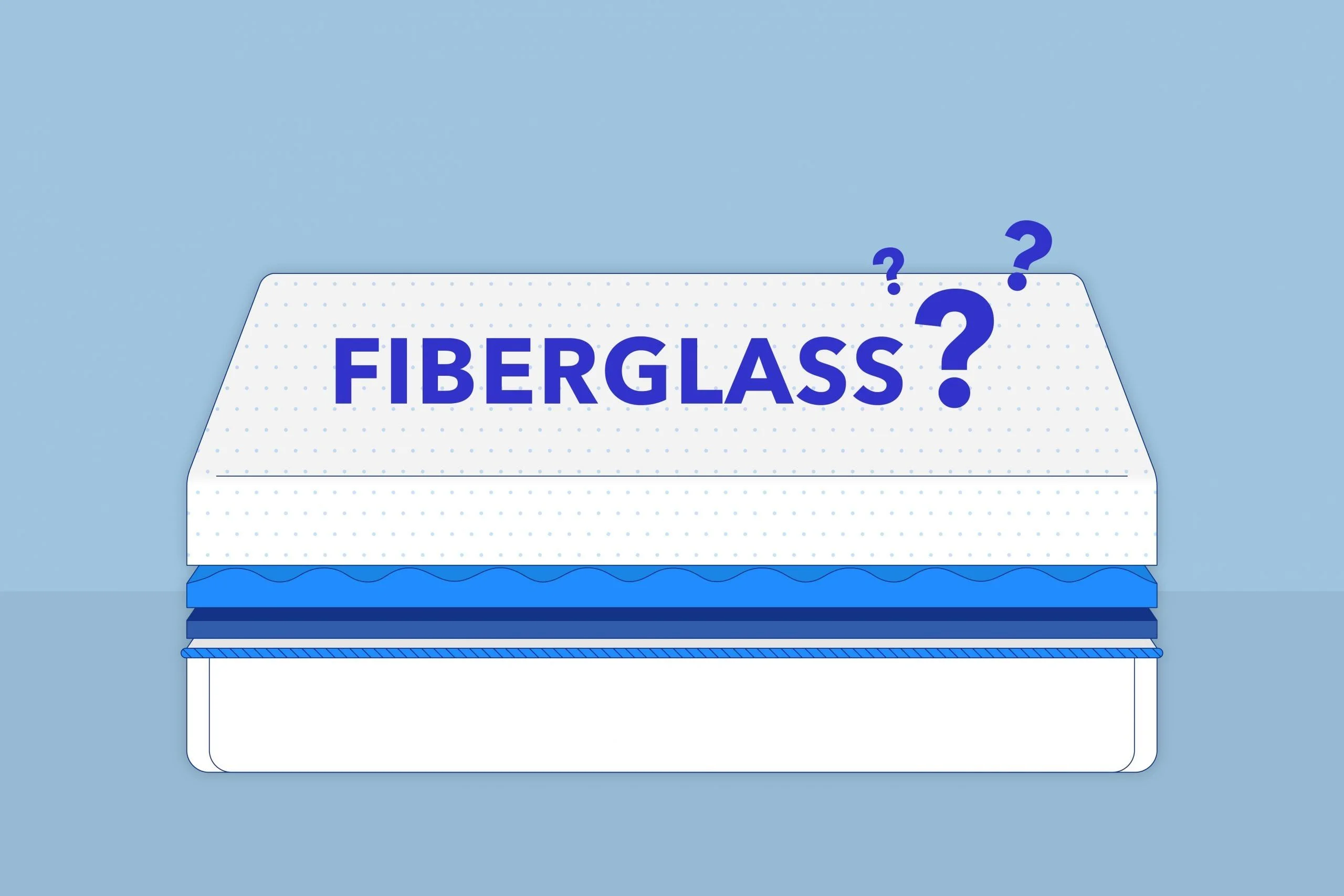
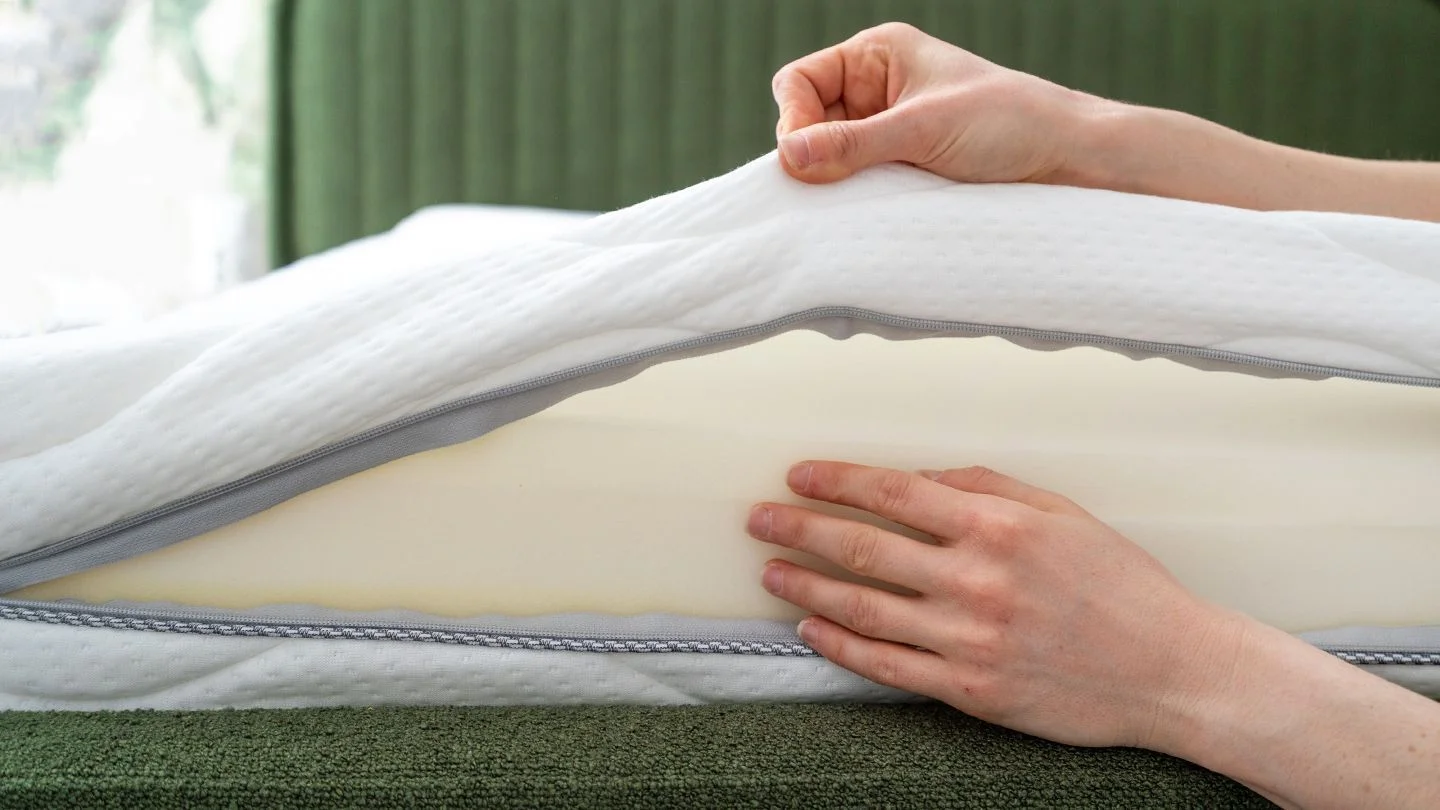
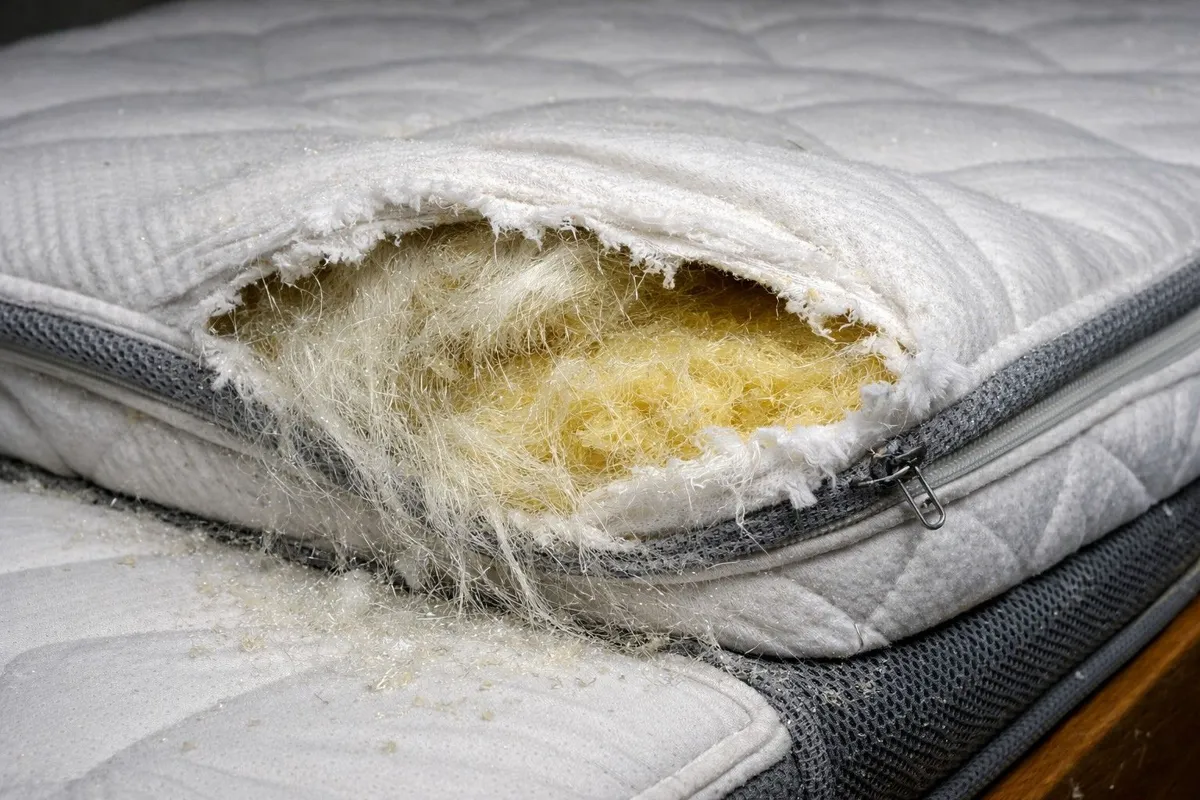
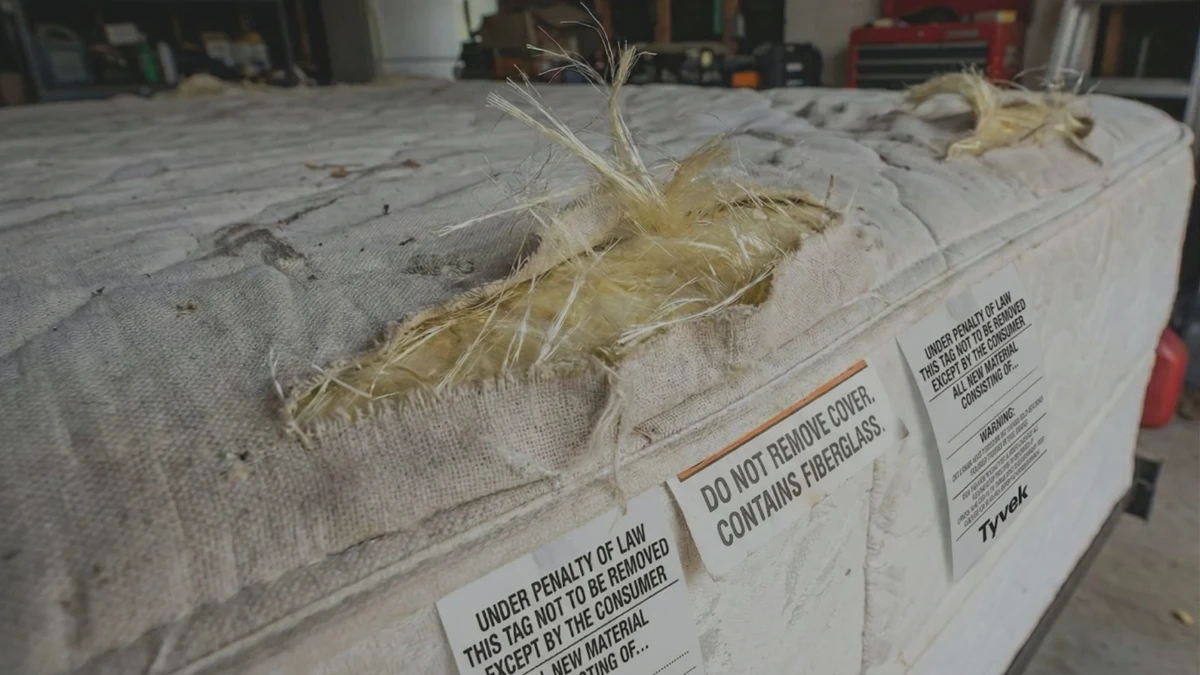
An important nuance most shoppers miss: the memory foam itself does not contain fiberglass. The fibers are woven into a separate inner cover or fire sock that sits under the soft outer fabric. When the cover stays intact, that barrier is sealed inside that inner "sock" beneath the outer fabric and you will never touch a fiber. The trouble starts when an owner unzips and machine-washes the cover, the seams blow out from heavy use, or a pet chews through. Once the inner sock is breached, microscopic shards aerosolize and settle across the bedroom - a remediation nightmare that can cost thousands.
Toppers vs. mattresses: is the risk the same?
Toppers are slightly lower-risk than full mattresses on average - many thin toppers (under 2 inches) are exempt from 1633 and skip the barrier entirely. But the cheapest 3- to 4-inch memory-foam toppers absolutely do use fiberglass, and unlike a mattress, a topper sits closer to the sleeping surface with thinner fabric between you and the barrier. A small tear is harder to ignore.
How to tell if your mattress topper has fiberglass - without cutting it open
Run these checks in order. Stop as soon as you confirm a yes or no - there is no need to escalate to invasive tests if the law tag is honest.
1. Read the law tag
Every U.S.-sold topper has a white tag sewn into a side seam listing the fill materials by percentage. Look for any of these words:
- glass fiber
- filament glass fiber
- fiberglass
- glass wool
- silica
- non-woven silica
- GFR (also written as "glass-filled resin")
If you see any of these terms - even at 1% - there is fiberglass inside. If the tag lists only cotton, wool, latex, rayon, or polyester, you are very likely safe.
2. Check the cover instructions
If the care label says "Do not remove cover" or "Spot clean only - cover not removable," treat that as a strong signal. Manufacturers know fiberglass barriers are inside and write the label to keep owners out. A topper whose cover is sold as "machine washable" is much more likely to be fiberglass-free, because the brand expects the cover to come off routinely.
3. The flashlight test
In a darkened room, sweep a bright LED flashlight across the surface of the topper at a low angle. Fiberglass fibers reflect light back like tiny shards of glitter - far more sparkly than ordinary lint or dust. The giveaway pattern is shimmering, shiny strands that look like spider webs or tiny glitter threads, not the dull soft texture of household dust. If you see that sparkly sheen across the fabric, especially around stitched seams, fibers have already migrated through the cover.
4. Look up the model online
Search the exact model number plus "fiberglass" on Reddit (r/Mattress, r/Bedding) and the CPSC SaferProducts database. Owners post photos within months of any major leak, and the CPSC publishes incident reports for products that have gone wrong.
Health risks of fiberglass exposure
Fiberglass shards are mechanically irritating, not chemically toxic. The risk is the physical damage tiny glass fibers do when they lodge in skin, eyes, or airways.
- Skin: itching, rash, and pinpoint redness - especially on areas that touched the bed (legs, back, shoulders).
- Eyes: burning, watering, and a feeling that something is stuck under the lid.
- Airway: sore throat, dry cough, wheezing, and worsening asthma symptoms.
- Long-term: the U.S. National Toxicology Program does not classify standard "continuous filament" glass fiber as a known human carcinogen, but prolonged inhalation of any respirable particle is associated with chronic lung irritation. There is no benefit to staying exposed.
Children, pets, and people with asthma or eczema are most affected. If symptoms appear out of nowhere a few weeks after a new topper enters the bedroom, the topper is the first place to look.
What to do if fiberglass has already escaped
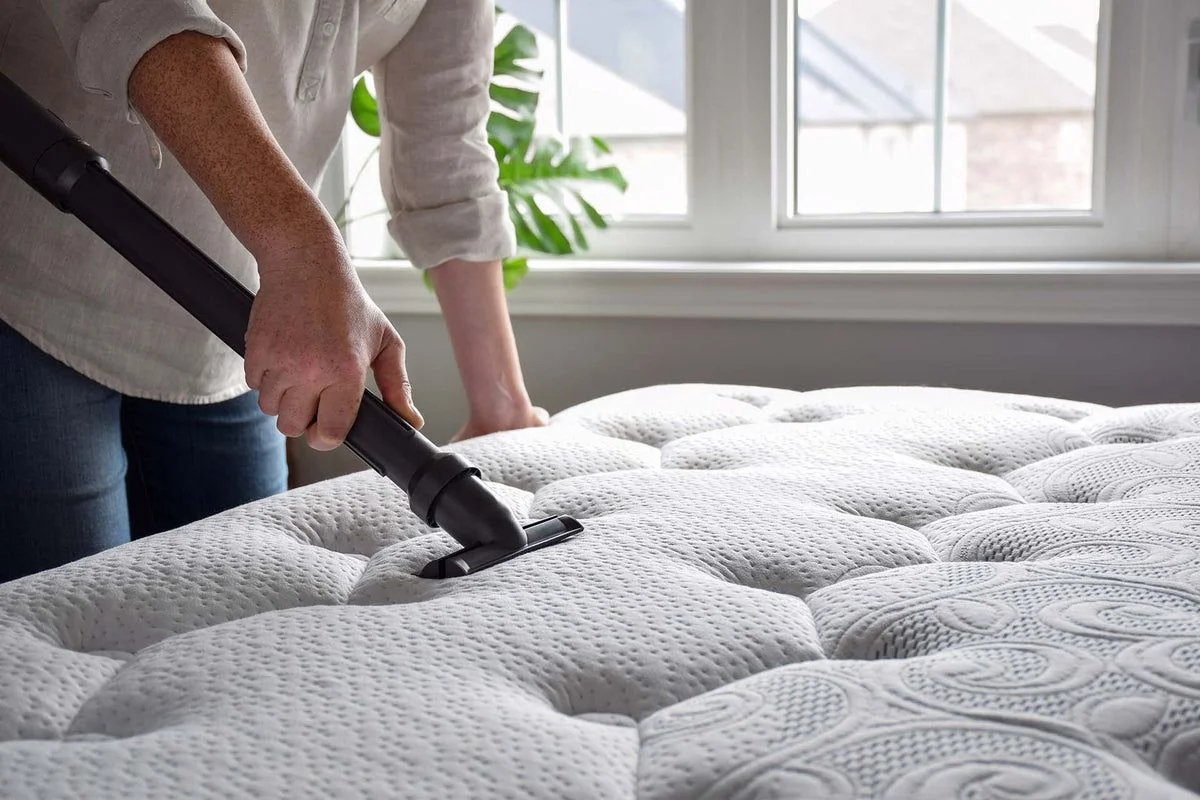
If your flashlight test came up sparkly, do not panic - but do not vacuum normally and do not strip the bed without precautions. A standard upright vacuum spreads fibers through the exhaust and contaminates the rest of the house.
- Seal the room. Close doors, turn off HVAC and ceiling fans, and tape over vents to keep fibers from circulating.
- Suit up. Wear an N95 (or better) respirator, safety goggles, nitrile gloves, and disposable coveralls or clothing you will throw away.
- Bag the topper twice. Slide the entire topper into a contractor-grade trash bag, expel as much air as possible, then double-bag and tape shut. Carry it straight outside - do not drag it across other rooms.
- HEPA-vacuum every soft surface. Use a vacuum with a true HEPA filter (not just "HEPA-style") on the box spring, bed frame, carpet, curtains, and upholstered furniture. Standard bagged or bagless vacuums make the problem worse.
- Wet-wipe hard surfaces. Damp microfiber cloths trap fibers; dry dusting throws them airborne. Discard cloths after one pass.
- Wash bedding alone, twice. Run sheets, pillowcases, and clothing on the longest hot-water cycle, by themselves, twice. Then run an empty hot cycle to flush the washer drum.
- Replace the HVAC filter. Fibers love air handlers. Swap to a fresh MERV-11 or higher filter once cleanup is finished.
If you cannot replace the topper immediately - backordered shipment, tight budget, guest staying over - a tightly-zipped mattress encasement or heavy-duty mattress protector pulled over the entire topper buys you a few days. It is not a long-term fix because fibers keep migrating through any zipper gap, but it seals the bulk of the loose material inside until the replacement arrives.
For severe contamination - visible glitter throughout multiple rooms, or symptoms in multiple household members - bring in a professional remediation company. Document everything (photos, receipts, medical visits) and file a complaint with the CPSC at SaferProducts.gov so the model is on record.
Safer alternatives: fiberglass-free mattress toppers
Two reliable signals separate safe toppers from risky ones:
- Material: natural latex, organic wool, organic cotton, and Tencel-blend toppers do not need fiberglass - wool itself is naturally fire-resistant and meets 1633 on its own.
- Certifications: look for CertiPUR-US (foam), GOLS (latex), GOTS (cotton/wool), or OEKO-TEX Standard 100. These programs prohibit fiberglass and audit the supply chain.
Specific models that are publicly fiberglass-free and widely available:
- Tempur-Pedic TEMPUR-Topper Supreme: premium memory foam, no fiberglass, removable washable cover.
- Saatva Latex Mattress Topper: GOLS-certified Talalay latex with an organic cotton cover.
- Birch Plush Organic Topper: GOTS wool and cotton over Talalay latex; wool is the fire barrier.
- Naturepedic Organic Cotton Topper: GOTS organic cotton fill, fully fiberglass- and chemical-flame-retardant-free.
- Brooklyn Bedding Talalay Latex Topper: 100% Talalay latex, OEKO-TEX certified.
If you prefer memory foam specifically, stick with brands that publish their fire-barrier construction (Tempur-Pedic, Brooklyn Bedding, Nest Bedding, Plushbeds). Avoid no-name memory-foam toppers from generic marketplaces - that is where almost every documented fiberglass case has originated.
How to keep any topper safe long-term
- Never unzip the inner cover unless the manufacturer explicitly permits it in writing.
- Always use a separate, washable mattress protector on top - that is the layer you launder.
- Rotate the topper end-to-end every three months to even out wear and prevent seam stress.
- Keep pets and children off the bare topper - claws and zipper-pulls are how covers fail.
- Spot-clean only with mild detergent and a damp cloth; skip bleach, harsh solvents, and steam cleaners.
- Replace the topper at the first sign of split seams. A $150 replacement is cheaper than a $5,000 remediation.
Frequently asked questions
Do all memory-foam mattress toppers have fiberglass?
No. Reputable brands like Tempur-Pedic, Brooklyn Bedding, and Nest Bedding use alternative fire barriers (rayon-silica blends, viscose, or wool) and explicitly disclose it. The fiberglass-using toppers are mostly generic, no-name memory-foam toppers sold under rotating Amazon brand names - anything under about $80 for a queen-size 3-inch topper is the highest-risk category.
Can I just take the cover off and wash it?
Only if the manufacturer's care label explicitly says you can. If the label warns 'Do not remove cover' or 'Spot clean only,' there is almost certainly a fiberglass barrier directly under that cover, and unzipping releases fibers throughout your bedroom. Use a separate, washable mattress protector instead.
Is fiberglass in a mattress topper a cancer risk?
Standard glass fiber used in bedding is not classified as a known human carcinogen by the U.S. National Toxicology Program. The documented harms are mechanical: skin irritation, eye irritation, and respiratory inflammation from the fibers themselves. Long-term inhalation of any respirable particle is undesirable, so the goal is zero exposure, not 'low' exposure.
How do I dispose of a topper that has leaked fiberglass?
Double-bag the entire topper in contractor-grade trash bags, tape shut, and either schedule a bulky-waste pickup with your municipality or take it to a landfill that accepts construction debris. Do not donate it, do not put it on the curb unbagged, and do not cut it open to fit in a smaller bag - every cut releases more fibers.
Are crib and toddler-size mattress toppers safer?
Crib mattresses are regulated under stricter federal flammability rules (16 CFR 1632 plus additional voluntary standards) and the major U.S. crib brands publish fiberglass-free construction. Generic toddler toppers sold online are not held to the same standard, so the same vetting checklist applies - read the law tag, prefer GOTS or OEKO-TEX certified models, and avoid removable inner covers.