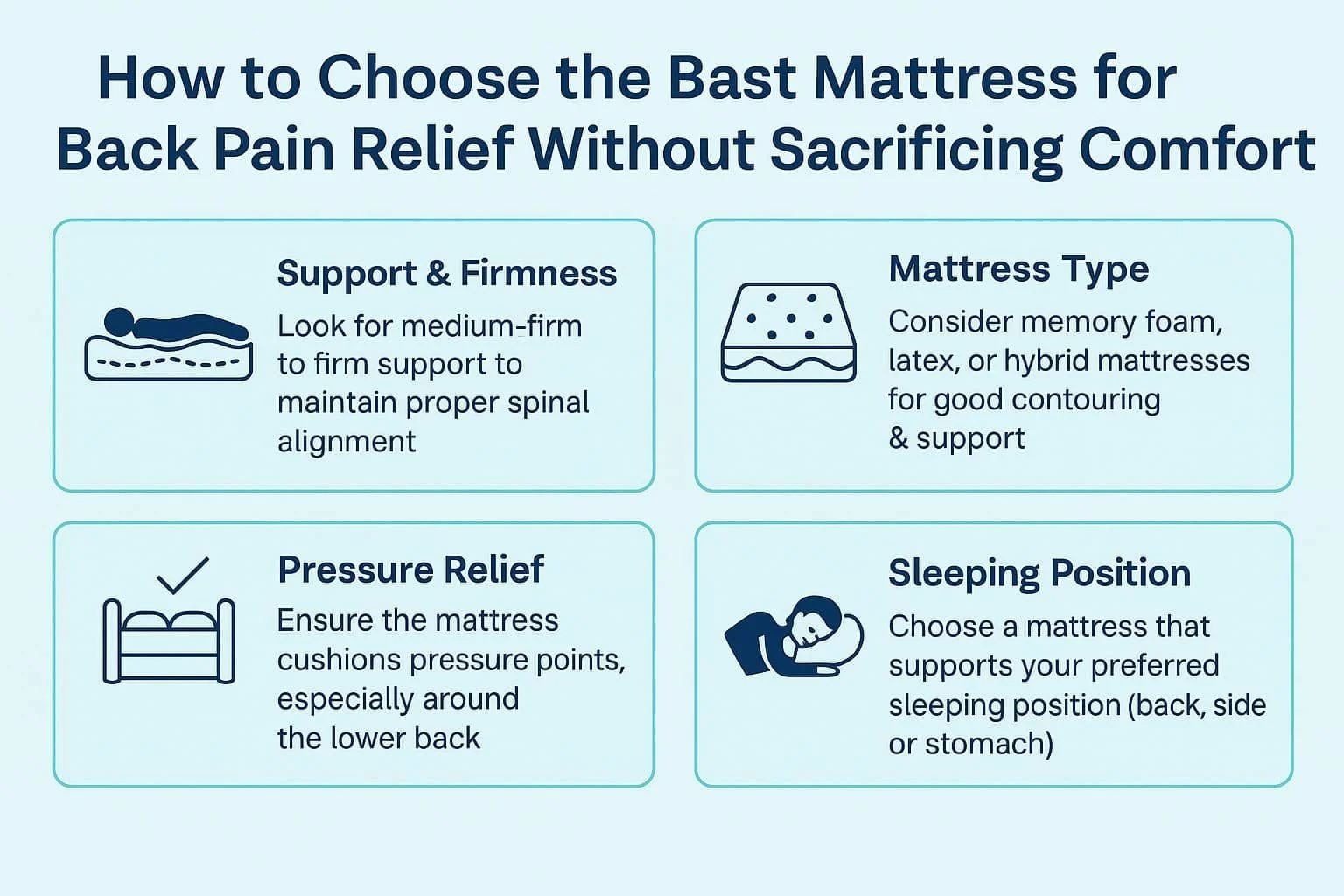
Short answer: yes, a quality memory foam mattress can relieve back pain - but only when firmness, foam density, and your sleep position line up. The 2024 version of this guide gave a flat "yes." The reality is more nuanced, and the difference between relief and a year of new pain often comes down to two specs most shoppers never check.
Across 1,000+ mattresses tested in our review lab, the memory foam beds that consistently helped back-pain sleepers shared three traits: medium-firm feel (6-7 on a 10-point scale), high-density foam (4 lb/ft³ or higher in the support layer), and a transition layer thick enough to prevent the hips from bottoming out. This guide walks through what the research shows, who memory foam works for, who should look elsewhere, and how to shop for the right one.
What the research actually shows
A frequently cited 2015 systematic review in Sleep Health concluded that medium-firm mattresses produced the best outcomes for chronic low-back pain - better than firm, and substantially better than soft. Memory foam fits inside that medium-firm window when properly specced, which is the core of why it helps.
Three mechanisms drive the relief:
- Pressure redistribution: Viscoelastic foam spreads load across the surface so the lumbar curve is supported instead of bridged.
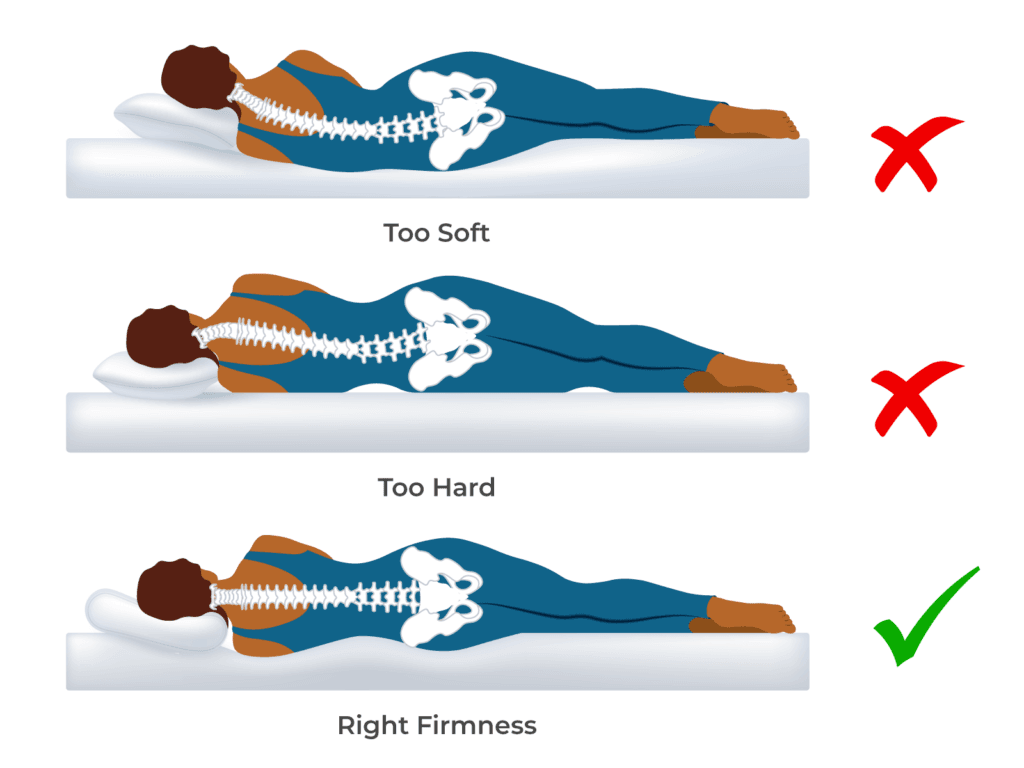
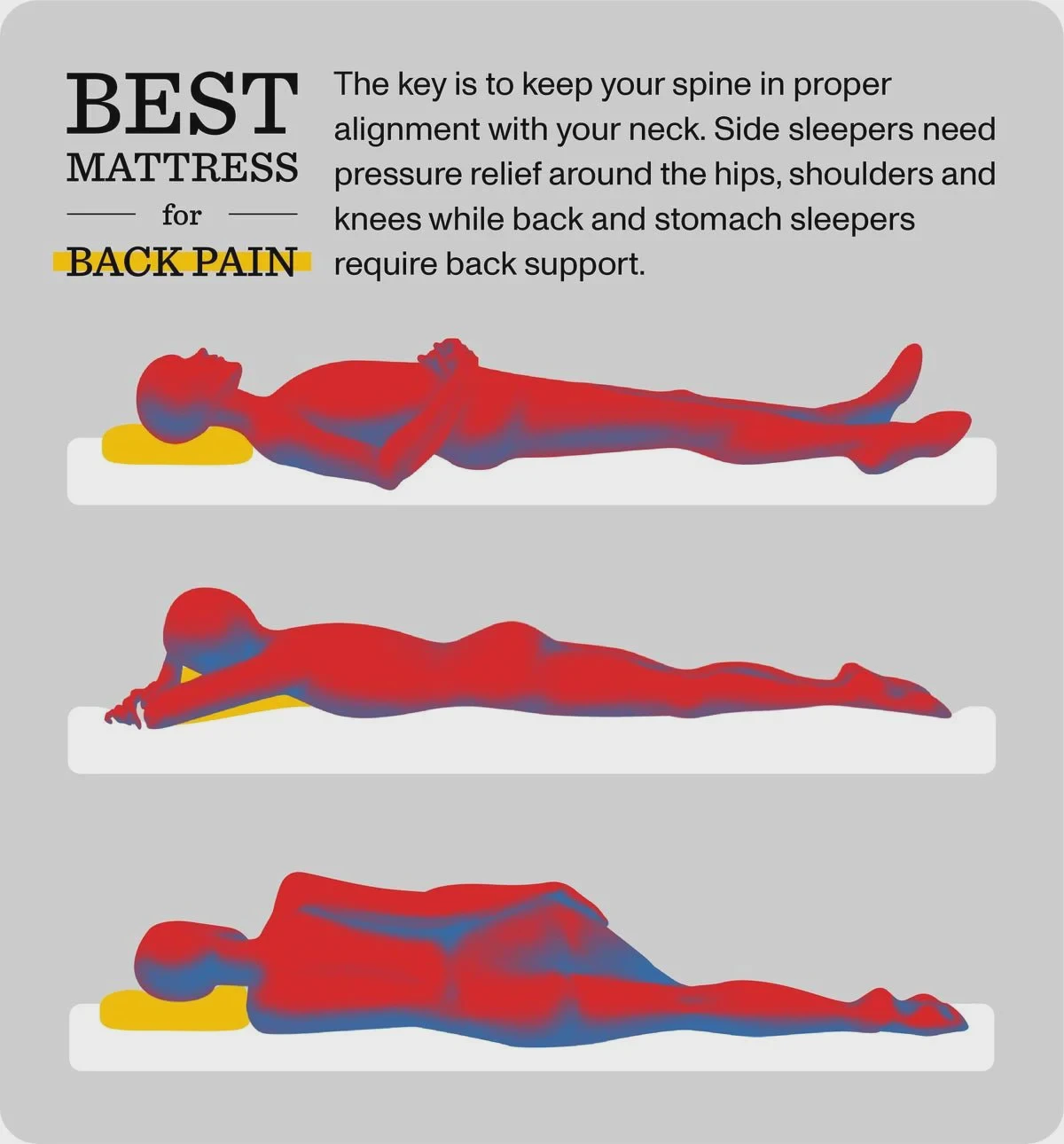
- Spinal alignment: By contouring around the shoulders and hips, foam keeps the spine roughly parallel to the mattress on side sleepers and neutral on back sleepers.
- Motion isolation: Less micro-movement during the night means fewer wake events that aggravate inflamed tissue.
What the research does not support: the claim that any memory foam is automatically good for the back. Soft, low-density foam allows the pelvis to sink, which rotates the lumbar spine and makes morning stiffness worse - a common complaint behind "new mattress hurts my back" threads on Reddit.
Who memory foam works for
Side sleepers with shoulder or hip pressure
This is the strongest match. Side sleeping concentrates body weight on a narrow strip of shoulder and hip, and memory foam yields just enough at those points to keep the spine straight. Look for medium (5-6/10) firmness and at least a 3-inch comfort layer.
Back sleepers with chronic low-back pain
Medium-firm (6-7/10) is the sweet spot. The foam fills the lumbar gap that a too-firm innerspring leaves empty. If you wake with a stiff lower back on your current bed, this is usually the issue.
Couples and light sleepers
Memory foam absorbs partner motion better than any other material. For someone whose back pain flares from disturbed sleep, this matters as much as the firmness.
People recovering from injury or disc issues
Adaptive contouring reduces shear forces on healing tissue. Patients with herniated discs or sciatica often report fastest relief on medium-firm memory foam or memory-foam hybrids - but always confirm with a physical therapist or physician for active injuries.
Who should look elsewhere
Stomach sleepers
Stomach sleeping already extends the lumbar spine. Memory foam lets the pelvis sink further, which deepens that arch and aggravates lower-back pain. A firm latex or hybrid (7-8/10) keeps the hips lifted. If you must sleep on memory foam as a stomach sleeper, choose the firmest option you can find and place a thin pillow under your pelvis.
Sleepers over 230 lb
Heavier sleepers compress foam beyond its design point, causing the support layer to bottom out and the spine to misalign. The fix is either a memory-foam hybrid with a coil support core or an all-foam bed built specifically for higher weight loads - typically 12-14 inches thick with high-density (5+ lb/ft³) foam.
Hot sleepers
Traditional memory foam traps heat, and pain often worsens with restless, sweat-broken sleep. Gel-infused foam, open-cell foam, and hybrid constructions help but rarely sleep as cool as latex or innerspring. If you wake up overheated more than twice a week, pick a hybrid.
Sleepers with limited mobility
Deep contouring makes turning over harder. For elderly sleepers or anyone recovering from joint surgery, a responsive foam (latex or fast-response "AirCell" memory foam) reduces the trapped feeling.
How to shop: the four specs that actually matter
Most marketing pages bury or skip these. Ask before you buy - a quality retailer will answer them all.
- Foam density: 4.0 lb/ft³ minimum in the support layer, 5.0+ for sleepers over 230 lb. Lower density sags within 2-3 years.
- Firmness rating: 6-7 of 10 for back pain. Most online brands publish this; if they do not, that is a red flag.
- Total mattress thickness: 10 inches for under 230 lb, 12+ inches above. Thinner foam beds run out of support layer fast.
- Certifications: CertiPUR-US (off-gassing and content), and ideally GREENGUARD Gold or OEKO-TEX for VOC sensitivity.
Warranty and trial period matter too. Look for at least a 100-night sleep trial and a 10-year non-prorated warranty - back-pain relief from a new mattress sometimes takes 30 nights of adjustment, and you need the runway to return it if it does not work.
Memory foam vs. the alternatives for back pain
Memory foam is not the only answer. Here is how it compares against the other materials we test most often.
vs. Latex: Latex is more responsive and sleeps cooler, with similar pressure relief. A 2011 trial in the Journal of Chiropractic Medicine found latex performed slightly better than polyurethane foam for spinal alignment. Pick latex if you sleep hot or want to turn over easily.
vs. Hybrid (foam + coils): Best of both worlds for most back-pain sleepers - pressure relief on top, supportive bounce underneath. We recommend hybrids for heavier sleepers, hot sleepers, and couples with mismatched preferences.
vs. Innerspring: Older innersprings without a substantial pillow top tend to leave a gap at the lumbar curve. Modern pocketed-coil hybrids fix this; bare innersprings rarely do.
Frequently asked questions
Why does my new memory foam mattress hurt my back?
Most often it is too soft, the foam is too low density, or you need a 30-night break-in. If pain continues past four weeks at the same intensity, the firmness is wrong - use the trial period.
What firmness do doctors recommend for back pain?
Medium-firm (6-7/10). The 2015 Sleep Health review and most physical therapists converge on the same answer.
Is memory foam good for sciatica?
Yes, in most cases - the contouring takes pressure off the affected nerve root. Combine with a knee pillow (side sleepers) or a small pillow under the knees (back sleepers) for fastest relief.
How long should a memory foam mattress last?
Quality (4+ lb density) memory foam: 8-10 years. Budget low-density foam: 4-6 years before sag begins to cause the back pain it was supposed to prevent.
Can a topper fix a too-firm mattress without buying new?
Sometimes. A 2-3 inch memory foam topper (4 lb density or higher) can soften a too-firm bed and relieve pressure points, but it cannot rescue a sagging mattress - that needs replacement.
Bottom line
Memory foam is good for your back when it is medium-firm, high-density, and matched to your sleep position and weight. It is a poor choice for stomach sleepers, sleepers above 230 lb without a hybrid construction, and people who run hot. Buy from a brand that publishes density and firmness specs, insist on a 100-night trial, and give the bed a full 30 nights to break in before you decide.
Pair the right mattress with a supportive pillow that keeps your neck level, and most sleepers see meaningful back-pain reduction within the first month.