Nolah at a glance
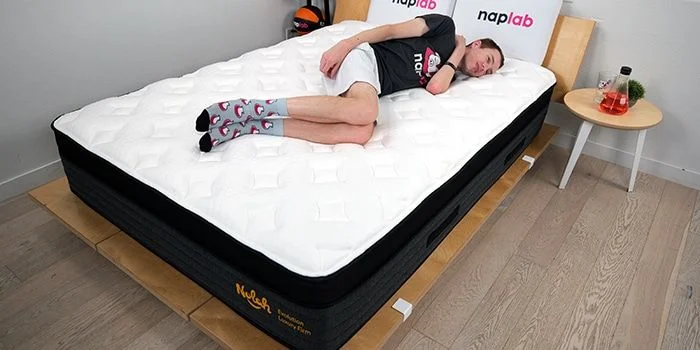
The Nolah Evolution is a 15-inch memory foam hybrid that pairs a thick quilted Euro pillow top with a pocketed coil base. NapLab's scoring system rated the mattress 9.01 overall, putting it in the top 22% of all mattresses they have tested to date.
Type: memory foam hybrid
Thickness: 15 inches (with optional cooling pillow top)
Firmness options: Plush (about 4/10), Luxury Firm (5.5/10), Firm (around 7.5/10)
Trial: 120 nights, with a $99 return fee
Warranty: lifetime
Best fit: side sleepers, hot sleepers, couples with one restless partner
Sleep Advisor's Sosha Lewis put the Luxury Firm version through a six-month live-in test with her husband Tony and concluded the mattress "has changed my life." That kind of language is unusual in mattress reviews, and it sets the bar this review measures Nolah against: not whether the bed is good in a showroom, but whether it still earns its price tag after half a year of nightly use.
What Nolah Evolution is made of
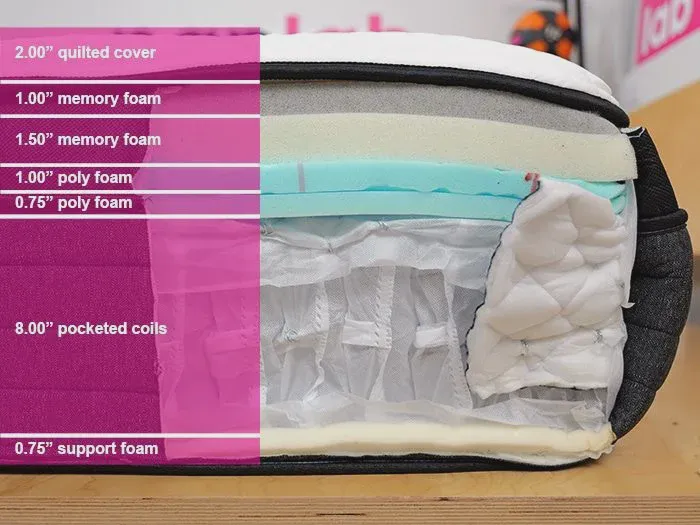
NapLab dissected the mattress and confirmed the layer stack on the law tag. The construction is unusually comfort-heavy for a hybrid: 6.25 inches of foam sit on top of an 8-inch coil unit and a thin support foam base.
| Layer | Thickness | Notes |
|---|---|---|
| Pillow top (quilted Euro) | 2.00 in | Phase change cover, optional GlacioTex cooling upgrade |
| Memory foam | 1.00 in | Slower response, classic memory foam feel |
| Memory foam | 1.50 in | Body-contour layer |
| Poly foam (transitional) | 1.00 in | Faster recovery |
| Poly foam (transitional) | 0.75 in | Zoned support layer added in 2023 |
| Pocketed coils | 8.00 in | 13.5 / 15.5 gauge, with 13.75-gauge reinforced perimeter coils |
| Support foam base | 0.75 in |
A few specifics worth knowing before you click "add to cart":
- The comfort layer is 6.25 inches thick, which is roughly 2 inches more than the average mattress NapLab has tested.
- The pillow top adds an inch to the height, so the base model is technically 14 inches and only the cooling-cover version hits 15.
- Nolah now pours its own foams (since the 2023 acquisition by 3Z Brands), and NapLab describes the result as a distinct memory foam hybrid rather than the older latex-leaning hybrid feel.
- The mattress is fiberglass-free and ships in a box, and a queen weighs 110 lbs. Setting it up solo is possible but not recommended; Sosha Lewis "broke a pretty good sweat and a lamp" doing it alone.
Cooling performance
Cooling is the category where the Nolah Evolution genuinely stands out. NapLab scored cooling a perfect 10 with the GlacioTex pillow top installed, the same cover used on the Helix Luxe and Elite lines (3Z Brands owns both brands). Their thermal test measured a max surface temperature of 89.7 F against a 78.1 F baseline, slightly below the 89.9 F average across their database, and a 3.8-degree drop within one minute of getting off the bed.
Sosha Lewis's six-month write-up matches that lab result in plain language: her husband Tony, whose only mattress priority was cooling, "gives the Evolution's cooling two big thumbs up." She adds that they have both noticed they sleep much cooler than they did on their previous all-foam bed.
The cooling is doing real work on multiple fronts. The phase-change cover stays cool to the touch on contact. The hybrid coil layer keeps airflow moving underneath the foams. And the optional GlacioTex upgrade adds another step of heat-wicking on top. If you run hot, the cooling cover is worth the upcharge.
Pressure relief and sleeping positions
If you are cross-shopping a softer all-foam option, our Nolah versus Puffy comparison weighs how each handles deep pressure relief.

Pressure relief is the other category where the Evolution scored a perfect 10 in NapLab's tests. Their pressure mapping never recorded a reading above 0.77 PSI in any sleep position, well under the 1.0 PSI threshold they flag as a hot spot and far below the 2.0 PSI level they consider a real pressure problem.
| Position | Average PSI | Max PSI |
|---|---|---|
| Side | 0.14 | 0.70 |
| Back | 0.08 | 0.73 |
| Stomach | 0.08 | 0.77 |
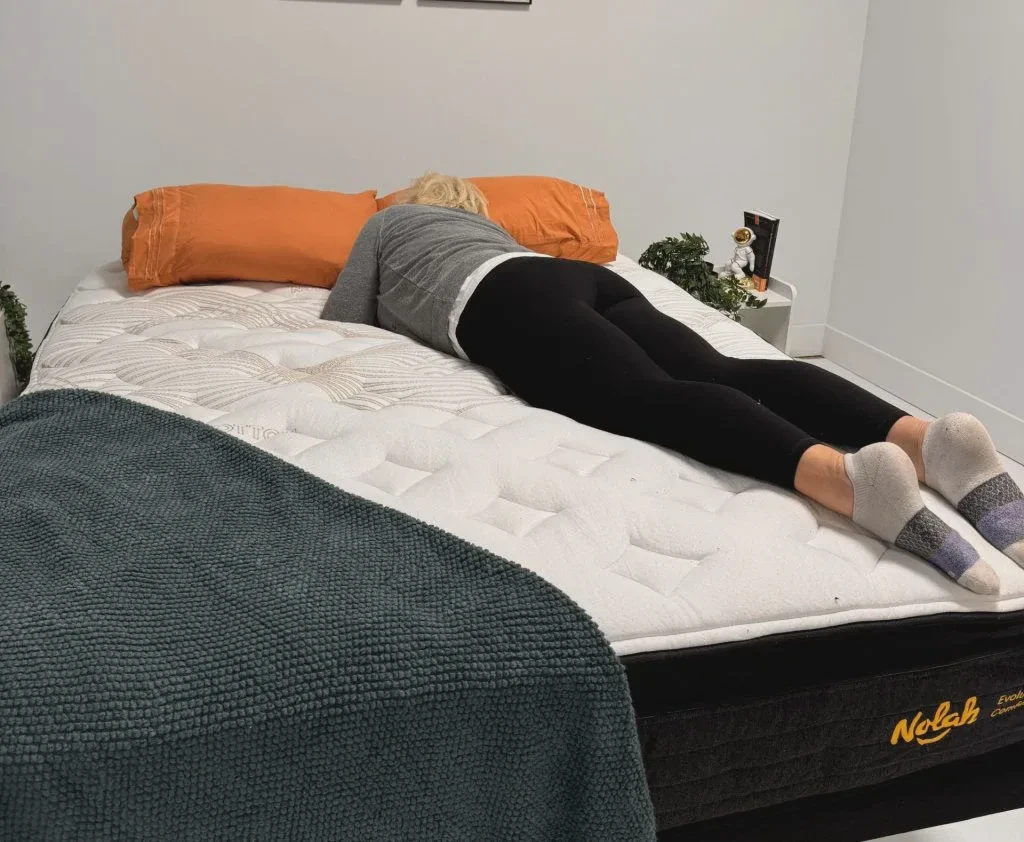
NapLab's sleeper-fit chart marks the Evolution as suitable for stomach, side, and back sleepers across all three weight bands they track (under 150, 150 to 250, and 250 to 300 lbs.), thanks to the zoned coil layer and the thicker-than-average support layer.
That said, the firmness you pick matters. Sosha Lewis bought the Luxury Firm and described the only downside as "too soft for stomach sleeping," and she feels a slight pinch in her lower back when she rolls onto her stomach. Stomach sleepers and heavier back sleepers will probably be happier with the Firm version. Strict side sleepers can lean toward Plush, which sits around a 4/10 on NapLab's firmness scale.
Motion isolation and edge support
Motion transfer is the one area where the lab scores and the lived-in review disagree slightly, and it is worth digging into.
NapLab measured a motion-transfer score of 8.3, which is essentially average. Their accelerometer reading came in at 8.88 m/s², about 2% worse than their database average of 8.69 m/s². Their reviewer notes that the thick comfort layer and the pocketed coils should have produced lower motion transfer, and speculates that the responsive poly foam layers are adding back some movement.
Sosha Lewis, after six months of sharing the bed with a partner she compares to "snoozing on a county fair Tilt-a-Whirl," reports the opposite: she calls the motion isolation "incredible" and says she sleeps mostly undisturbed even through aggressive tossing. The likely reconciliation is that the absolute amount of motion is average, but the way the mattress absorbs that motion (slowly, via the memory foam top layers rather than via fast bounce) feels well-isolated in practice.
Edge support tells a cleaner story. NapLab rates the lying-edge support as "excellent" thanks to reinforced 13.75-gauge perimeter coils, and the sitting-edge test produced 4.50 inches of sinkage, which is about half an inch worse than average. Translation: you can sleep right up against the edge without rolling off, but sitting on the edge to tie your shoes will feel a little compressed.
Who should buy a Nolah and who should skip it
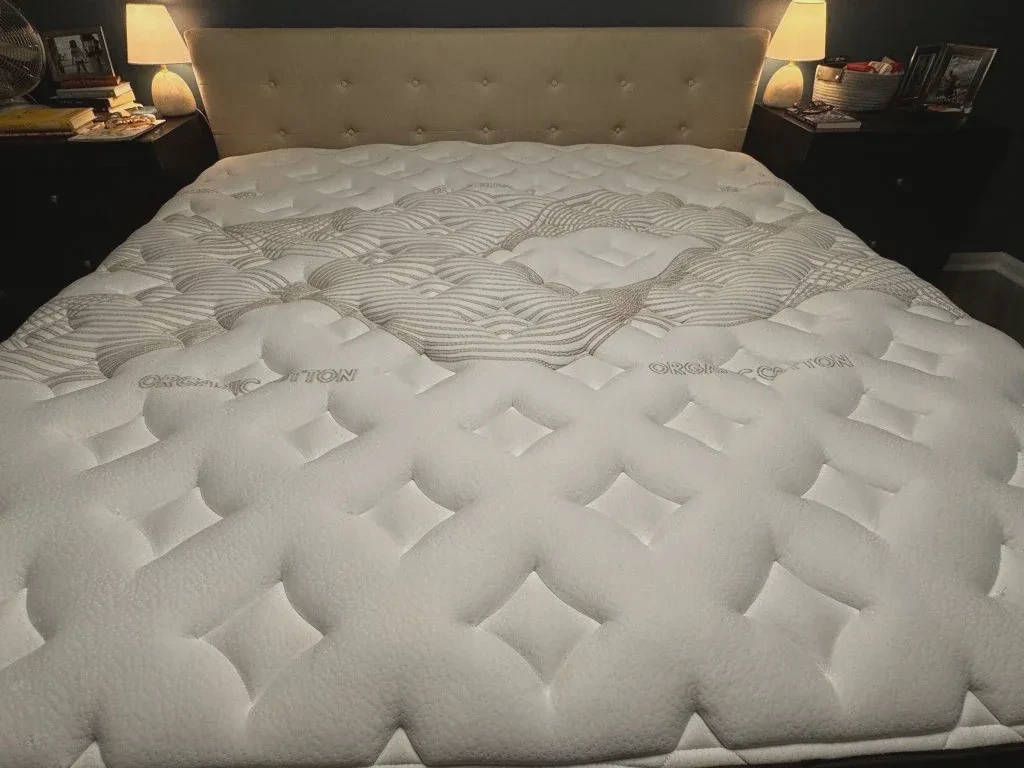
Sleep Advisor and NapLab converge on roughly the same shortlist of buyer profiles.
Buy it if you are a hot sleeper
This is the easiest call. The GlacioTex cooling cover plus the breathable hybrid construction earned a perfect cooling score in lab testing, and the lived-in review backs it up. If overheating is your top complaint about your current bed, this is one of the strongest cooling mattresses in its class.
Buy it if you have a restless partner
Sosha Lewis's headline finding after six months is that her husband's tossing and turning no longer wakes her. The combination of low bounce, deep sinkage, and a thick foam top layer absorbs motion in a way that lab numbers do not fully capture.
Buy it if you are a side sleeper or have hip or shoulder pain
A 6.25-inch comfort layer with two layers of memory foam plus a zoned coil base is built for pressure relief, and the pressure-map numbers (max 0.77 PSI, well inside the safe zone) confirm it. Sleep Advisor specifically calls out reduced hip and lower back pain after six months on the bed.
Skip it if you want a fast, bouncy memory foam alternative
The Evolution has notably low bounce (7.77 inches versus an 8.90-inch average) and deep sinkage. If you like to reposition quickly or you want a springy "lift off the bed" feel, this is the wrong direction. NapLab's sex score reflects this: a 7.9 there is below their average, largely due to the low bounce.
Skip it if you are a dedicated stomach sleeper who wants Luxury Firm
The Luxury Firm at 5.5/10 is medium territory. Both Sosha Lewis and NapLab note that stomach sleepers will probably do better on the Firm version, which lands closer to 7.5/10.
Skip it if you want a long trial period
Nolah's 120-night trial is 52 nights shorter than the 172-night average across NapLab's tested brands, and returns cost $99. The trade-off is one of the few lifetime warranties in the category.
Trial, warranty, and return policy
The fine print is where Nolah has both wins and frustrations. NapLab's "Company" score for Nolah is 8.2, the lowest of the eight categories in their scoring system.
| Policy | Nolah Evolution | Category average |
|---|---|---|
| Sleep trial | 120 nights | 172 nights |
| Mandatory break-in | 30 nights | varies |
| Warranty | Lifetime | Lifetime offered by 39%, 13-year average for the rest |
| Return fee | $99 | varies |
| Shipping | Free | varies |
| White-glove setup | $125 (optional) | varies |
| Delivery window | 3 to 10 days | varies |
A few notes from the bundled reviews:
- The 30-night break-in is mandatory before you can start a return, which is standard but worth knowing if you hate a mattress on night two.
- Nolah offers a $100 discount if you opt out of the sleep trial entirely; Sleep Advisor's reviewer took this option and put the savings toward the GlacioTex cooling protector.
- Setup solo is hard. The mattress weighs 110 lbs in a queen and inflates to full height within a couple of hours.
- Initial off-gassing is on the stronger side (rated "strong" by NapLab) but cleared in six days, which is shorter than the seven-day average.
Frequently asked questions about Nolah mattresses
What is the #1 top-rated mattress?
If you mean the highest-performing memory foam hybrid in NapLab's database, that title goes to the Glacier Apex, not the Nolah Evolution. NapLab explicitly recommends the Glacier Apex as an alternative for shoppers "looking for better performance overall." The Nolah Evolution still sits in the top 22% of all mattresses they have tested, so it is a strong performer, just not the #1 in its sub-category.
How long do Nolah mattresses last?
Nolah backs the Evolution with a lifetime warranty, which is one of the more generous policies in the industry. Only about 39% of mattresses NapLab has tested carry lifetime warranties; the rest average around 13 years. Real-world durability data is thinner: Sleep Advisor's six-month checkpoint reports no sagging or breakdown so far, but six months is a short window for a mattress that is built to last a decade or more. The lifetime warranty is the best signal of how long Nolah expects the bed to last.
Is Nolah a good mattress brand?
By the numbers, yes. NapLab's overall score of 9.01 places the Evolution in the top 22% of all mattresses they have tested, with perfect 10s in both cooling and pressure relief. Sleep Advisor's reviewer chose to keep the bed permanently after the six-month test. The main soft spots are average motion transfer, below-average sex score, a shorter-than-average trial period, and a $99 return fee. If those are not deal-breakers, Nolah's performance and material quality are competitive at this price point.