Purple Innovation has built one of the most recognizable mattress brands in the country, but its legal history is more crowded than most shoppers realize. The case most often referenced online - the 2017 "white powder" lawsuit against a competing CEO and a reviewer - was actually filed by Purple, not against it. Since then, the company has faced a separate federal class action over alleged fake discount pricing, an active law-firm investigation into GelFlex Grid durability, and a 2025 trademark dispute over the color purple itself.
This guide walks through each case, what it actually claimed, where it stands, and what it means for buyers in 2026. Affiliate links may earn Banner Mattress a commission, but never influence which products or brands we cover.
Quick reference: Purple's major legal disputes
- 2017 powder defamation suit - Purple sued GhostBed CEO Marc Werner and reviewer Ryan Monahan; court ordered takedowns and granted Purple sanctions.
- Feb 2024 deceptive pricing class action - Julian v. Purple Innovation alleges fake "original" prices to manufacture fake discounts.
- Feb 2024 GelFlex Grid investigation - Shub & Johns LLP soliciting consumers reporting sagging and deterioration.
- 2025 trademark dispute - A federal trademark fight over Purple's exclusive use of the color purple on mattresses and cushions.
- Ongoing patent litigation - Purple has separately sued competitors including Layla Sleep and Diamond Mattress over trade-dress and gel-grid patents.
The 2017 "white powder" lawsuit (Purple v. GhostBed/Monahan)
The case most people mean when they Google "Purple mattress lawsuit" started in 2016 with a site called Honest Mattress Review, run by Ryan Monahan. The site published a series of articles and videos claiming the loose white powder visible on Purple mattresses - used as a release agent during manufacturing - was hazardous and could cause skin or respiratory damage.
Purple Innovation filed suit in 2017 against Monahan and GhostBed CEO Marc Werner, alleging false advertising and unfair competition. During discovery, Purple produced toxicology testing identifying the powder as a non-toxic, food-grade plastic copolymer, consistent with the public position the company has maintained since.
Court records and reporting from outlets covering the dispute show the court ordered the defendants to remove Purple-related content from their platforms, found that the defendants had "purposefully" published misleading claims, and granted Purple sanctions in 2018 covering its legal fees. Purple's filings also alleged that Monahan was simultaneously consulting for GhostBed via a marketing entity called Social Media Sharks while presenting Honest Mattress Review as independent.
Important nuance for shoppers: this case was a defamation/false-advertising suit Purple won, not a consumer safety verdict against Purple. The court did not find that Purple's powder was harmful - the opposite.

2024 deceptive pricing class action (Julian v. Purple Innovation)
On February 22, 2024, a proposed class action was filed in the Northern District of California (case 3:24-cv-01078) accusing Purple Innovation of advertising fictitious "original" prices alongside discounted prices to manufacture the appearance of a sale. The complaint alleges the company's mattresses are "never sold at their purported original prices" and points to web-archive captures as evidence.
The named plaintiff, a San Francisco consumer, says he bought a queen mattress in June 2023 for $1,299 - purportedly marked down from $1,399 - and would not have completed the purchase without that perceived discount. The suit invokes California's Business and Professions Code, the Unfair Competition Law, and the Consumers Legal Remedies Act, and seeks to represent a class of California buyers.
Status: this is an active class action at the time of writing, not a finding of wrongdoing. "Reference price" cases like this have become common against direct-to-consumer mattress and bedding sellers, and they typically resolve through settlement or modified pricing-disclosure practices rather than at trial.
GelFlex Grid durability investigation (2024-present)
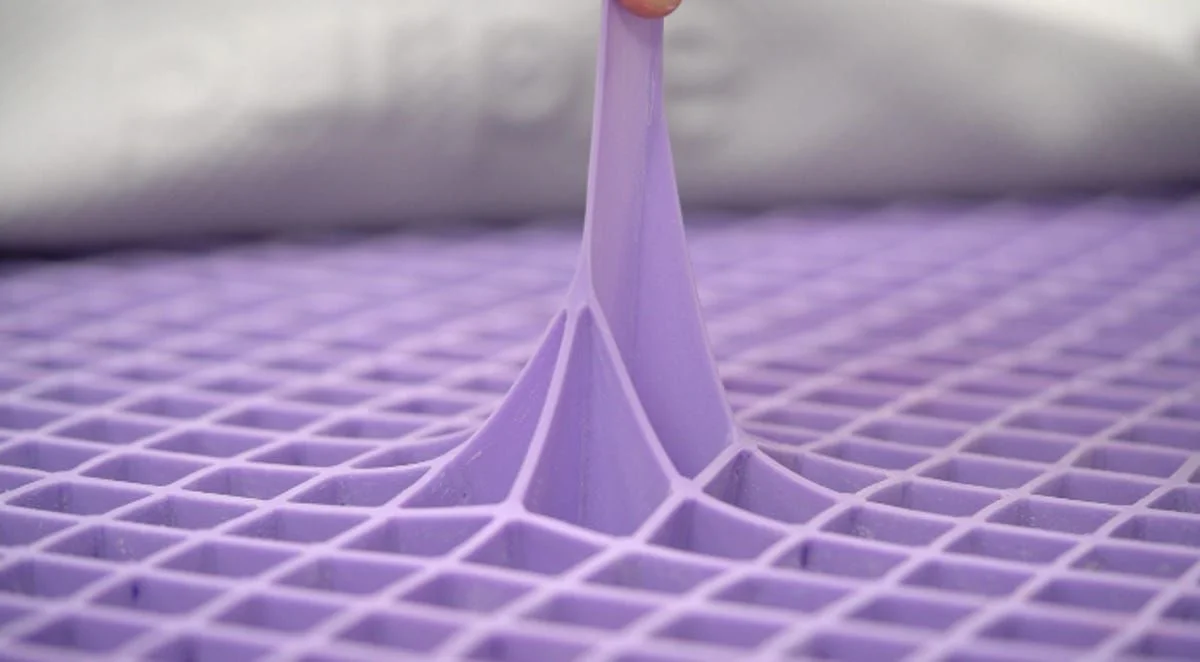
Separate from the pricing litigation, the Pennsylvania class-action firm Shub & Johns LLP launched a public investigation on February 1, 2024, soliciting Purple owners who report premature sagging or deterioration of the GelFlex Grid layer. Consumer complaints aggregated by the firm describe two patterns: visible sagging in the grid over time, and degradation of the hyper-elastic polymer to the point that sleepers can feel the support coils underneath.
An investigation is not a filed lawsuit. Firms typically run intake periods to evaluate whether they have enough common claims to certify a class. As of publication this matter is still in evidence-gathering, and Purple has not been adjudicated liable for any GelFlex defect.
2025 trademark dispute over the color purple
In January 2025, a trademark dispute between Lehi-based Purple Mattress and a competitor over use of the color purple on mattresses and cushions reached federal court. Purple holds registered trademarks tying the color to its mattress and seat-cushion product lines, and the suit centers on whether a competing brand's purple branding creates consumer confusion. This is a B2B IP fight, not a consumer-safety matter, and does not affect the products customers have already purchased.
Other Purple-initiated litigation worth knowing about
Purple has also been the plaintiff in several IP cases. The company has previously sued Layla Sleep over trade dress and Diamond Mattress over alleged infringement of its gel-grid technology patents. In 2023, activist investor Coliseum Capital Partners sued over a board-control "poison pill"; that dispute was later resolved through a cooperation agreement. None of these affect the in-home product experience for retail buyers.
Does Purple contain fiberglass?
This is one of the most-searched questions linked to the lawsuit topic, often because shoppers conflate Purple's litigation history with the unrelated fiberglass scandals that hit budget memory-foam brands like Zinus. Purple has publicly stated its mattresses are CertiPUR-US certified and do not use fiberglass as a fire barrier. None of the lawsuits or investigations described above allege fiberglass content in Purple mattresses. If fiberglass is your specific concern, that is a separate buying-guide topic and Purple is generally regarded as a safer pick on that axis than several lower-priced foam competitors.
What this all means for someone shopping a Purple in 2026
- The 2017 powder case vindicated Purple. It is not evidence of an unsafe product.
- The 2024 pricing class action is about marketing claims, not bed safety. If you care about getting a real discount, watch list price stability over time and compare against major retail-channel listings rather than relying on the strikethrough on Purple's own site.
- GelFlex Grid durability is the open question. If you sleep above 230 lb, plan to keep a mattress more than 7 years, or already had a Purple wear out, the Shub & Johns investigation is worth following - and it strengthens the case for using Purple's home trial and warranty windows aggressively rather than "hoping" the bed lasts.
- The trademark and patent fights are background noise for shoppers. They do not change the product.
Bottom line
"Purple mattress lawsuit" is not one event - it is a roughly decade-long stack of cases with very different stakes. Purple has won the case that gets quoted the most, is currently defending an ordinary reference-pricing class action, is being investigated for long-term grid durability, and is asserting IP rights against competitors. Read past the headline to the case before assuming any of these reflect on the bed itself.
Purple mattress lawsuit FAQ
Did Purple lose a lawsuit over the white powder on its mattresses?
No. Purple was the plaintiff, not the defendant. In 2017, Purple sued GhostBed CEO Marc Werner and reviewer Ryan Monahan for false advertising over claims about the powder. The court ordered the defendants to remove the content, found their statements purposefully misleading, and in 2018 granted Purple sanctions covering its legal fees. Purple submitted toxicology testing showing the powder was a non-toxic, food-grade plastic copolymer.
Is there a Purple mattress class action settlement I can join?
As of publication, the most prominent active class action is Julian v. Purple Innovation (3:24-cv-01078), filed February 22, 2024 in California, alleging fake reference pricing rather than product defects. It is not yet settled. There is also a separate law-firm investigation into GelFlex Grid durability that has not yet become a filed class action.
Does the Purple mattress contain fiberglass?
Purple states its mattresses do not contain fiberglass and are CertiPUR-US certified. None of the active lawsuits or investigations against Purple involve fiberglass. Fiberglass concerns are typically associated with budget memory-foam brands sold on Amazon, not Purple.
What is the GelFlex Grid investigation about?
Shub & Johns LLP, a Pennsylvania class-action firm, opened an investigation on February 1, 2024 into reports that Purple's hyper-elastic polymer grid layer can sag or deteriorate over time, allowing sleepers to feel the support coils underneath. It is currently an evidence-gathering investigation, not a filed lawsuit, and Purple has not been adjudicated liable.
Should the lawsuits stop me from buying a Purple mattress?
Not automatically. The defamation case favored Purple, the pricing case is about marketing not safety, and the durability investigation is open. The most practical takeaway is to buy through channels with a clear home trial and warranty, document any premature sagging in writing, and use Purple's stated return windows if the bed underperforms - independent of any lawsuit outcome.