Short answer: no, Sealy mattresses are not generally considered toxic. Every Sealy foam is CertiPUR-US certified, and Sealy products comply with the U.S. Consumer Product Safety Commission's flammability rule (16 CFR 1633) and the California Air Resources Board's airborne-toxics measure for formaldehyde.
That doesn't mean a new Sealy is odorless or that every model is the same. The real questions worth answering are what CertiPUR-US actually rules out, what the "new mattress smell" is, whether any Sealy models contain fiberglass, and who should still consider an organic alternative. This guide walks through each one with sourced answers.
Disclosure: Banner Mattress may earn a commission from retailer links in this article. Our coverage of materials and certifications is based on manufacturer disclosures and third-party testing - not paid placements.
What "toxic" usually means in mattress reviews
When shoppers ask whether a mattress is toxic, they're usually worried about four things:
- Volatile organic compounds (VOCs) released from polyurethane foams as they cure (the "new mattress smell").
- Flame-retardant chemicals such as PBDEs or chlorinated tris compounds historically used to meet flammability rules.
- Formaldehyde and heavy metals (lead, mercury) used in older adhesives and dyes.
- Fiberglass used as an inexpensive fire-barrier inside some all-foam mattresses, which can escape through a torn or removed cover.
Sealy addresses the first three through certification and federal compliance. Fiberglass is more nuanced and worth its own section below.
What CertiPUR-US certification actually rules out
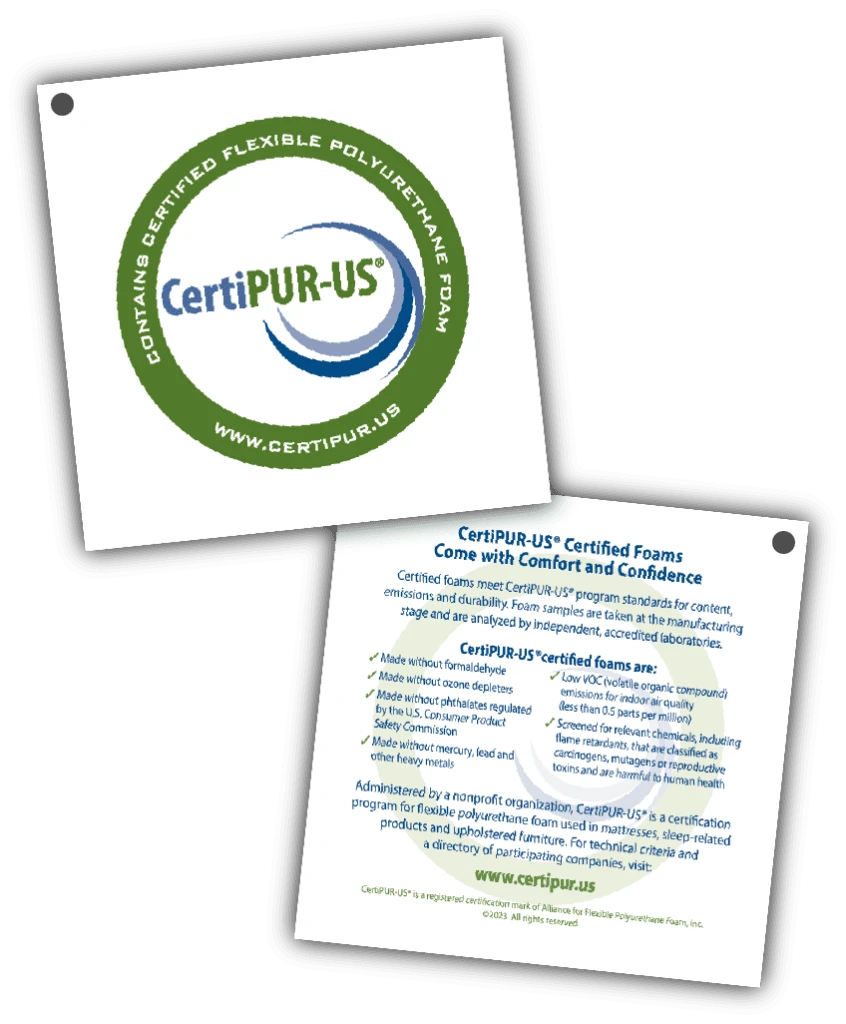
Sealy confirms in its own help center that all Sealy mattresses are CertiPUR-US certified. The CertiPUR-US program tests polyurethane foam batches for the following:
- Made without ozone-depleting CFCs.
- Made without PBDE, TDCPP, or TCEP ("Tris") flame retardants.
- Made without mercury, lead, or other heavy metals.
- Made without formaldehyde.
- Made without regulated phthalates.
- Low VOC emissions (less than 0.5 parts per million).
That program covers the foam layers - the comfort foam, transition foam, and any memory foam Sealy uses. It is the same certification that brands like Tempur-Pedic, Nectar, and most major bed-in-a-box players carry, and it's the one Consumer Reports points to when discussing low-VOC mattresses.
Federal safety rules every Sealy meets
Beyond CertiPUR-US, Sealy says its products comply with three federal/state regulations:
- 16 CFR 1633: the U.S. Consumer Product Safety Commission's open-flame mattress flammability standard.
- CARB ATCM Phase 2: the California Air Resources Board's Airborne Toxic Control Measure that caps formaldehyde emissions from composite wood and certain foam products.
- CertiPUR-US: the program detailed above.
Translation: Sealy mattresses are not just "not banned" - they meet the affirmative safety thresholds U.S. regulators actually test for.
Off-gassing and the "new mattress smell"
The most common chemical-smell complaint shoppers raise about Sealy is real, but it's a different category from toxicity. New foam mattresses outgas residual VOCs as their cells finish curing. Sealy acknowledges this directly, noting that most products no longer experience meaningful off-gassing and that any residual smell typically dissipates within days.
Independent testing tells a slightly bumpier story. NapLab reports that every Sealy model they unboxed had a "strong" off-gassing odor at first, with some lasting longer than the seven-day industry average. That doesn't reflect a toxicity problem - VOC emissions still test under CertiPUR-US thresholds - but it is something to plan for if you're chemically sensitive or can't air the bed out for a few days.
Practical mitigations:
- Unbox in a ventilated room, ideally not the bedroom, for the first 24-72 hours.
- Run a fan across the surface; sunlight helps speed VOC release.
- Wash the cover (if removable) and use a fresh mattress protector before sleeping on it.
Does Sealy use fiberglass?
This is the question that drives most modern "toxic mattress" searches, and the answer depends on the model line:
- Sealy hybrids and innersprings (Posturepedic, Posturepedic Plus, Posturepedic Hybrid) typically use the steel coil unit and a non-glass fire barrier - the coil layer itself helps satisfy the 16 CFR 1633 burn test.
- Some all-foam Sealy models have historically used "core-spun glass fibers" inside the inner fire sock as the flame barrier. This is industry-wide for budget all-foam beds, not a Sealy-specific shortcut, and the fibers are sealed inside an inner cover that is not designed to be removed.
- Sealy's Cocoon by Sealy line and the Sealy Naturals collection are designed without fiberglass.
The risk with any fiberglass fire-sock mattress is what happens if you unzip and remove the outer cover, which can release fibers into the bedroom. Don't remove the cover. If avoiding fiberglass entirely is non-negotiable, choose a Sealy hybrid (where the coil unit is part of the fire barrier system) or one of Sealy's stated fiberglass-free lines, and confirm with the retailer before buying.
Sealy safety strengths
- Every Sealy foam is CertiPUR-US certified for low VOCs and no PBDEs, formaldehyde, heavy metals, or regulated phthalates.
- Compliant with 16 CFR 1633 flammability and California's CARB Phase 2 formaldehyde rule.
- Hybrids and innersprings use the coil layer in the fire barrier - fiberglass is rare in those lines.
- Cocoon by Sealy and Sealy Naturals are designed fiberglass-free.
- Manufactured in the U.S., with documented certifications available from Sealy support.
Caveats to plan for
- Independent testing finds new Sealy models often have a strong initial off-gassing odor that can last longer than the 7-day industry average.
- Some all-foam (non-hybrid) Sealy models contain fiberglass in the inner fire sock - keep the cover on at all times.
- CertiPUR-US covers foams only; covers, adhesives, and fire socks are governed by separate regulations.
- Not the right choice for shoppers who want a fully organic or GOTS/GOLS-certified mattress - Sealy Naturals is the closest option but isn't whole-bed organic.
Who should consider an alternative anyway
Sealy is a safe, certification-backed choice for most adults. It's not the right pick if you fall into one of these groups:
- Highly chemically sensitive sleepers who can't tolerate a few days of new-foam smell - look at organic latex or natural-fiber beds (Saatva Zenhaven, Avocado Green, Naturepedic) instead.
- Fiberglass-averse shoppers who specifically want an all-foam mattress with no glass fibers - pick a fiberglass-free brand (Cocoon by Sealy, Avocado, or a wool/silica fire-barrier mattress).
- Shoppers who want full organic certification (GOTS, GOLS, MADE SAFE) - Sealy Naturals uses some natural materials but doesn't hold whole-bed organic certification.
Sealy mattress safety FAQ
Are Sealy mattresses toxic?
No. All Sealy foams are CertiPUR-US certified, meaning they're made without PBDEs, TDCPP/TCEP flame retardants, heavy metals, formaldehyde, or regulated phthalates, and they meet the program's low-VOC threshold. Sealy mattresses also comply with 16 CFR 1633 flammability and California's CARB Phase 2 formaldehyde rule.
Do Sealy mattresses contain formaldehyde?
Sealy states formaldehyde is not a raw ingredient in its proprietary foam, and CertiPUR-US testing requires its absence in any certified foam batch. Trace formaldehyde occurs naturally in many household environments, but Sealy's products meet CARB's airborne-toxics limit.
Do Sealy mattresses have fiberglass?
Some all-foam Sealy models historically use a 'core-spun glass fiber' inner fire sock as the flame barrier; this is sealed inside an inner cover and should not be removed. Sealy hybrids and innersprings typically use the coil layer in the fire barrier. The Cocoon by Sealy and Sealy Naturals lines are designed fiberglass-free.
How long does Sealy mattress off-gassing last?
Sealy says any new-product odor usually dissipates within days. Independent reviewers (NapLab) report that some Sealy models have a strong initial smell that can last longer than the 7-day industry average. Air the bed out in a ventilated room before sleeping on it.
Is Sealy CertiPUR-US certified?
Yes. Sealy confirms in its help center that all Sealy mattresses use CertiPUR-US-certified foam. The certification covers foam layers - covers and fire socks are governed by separate federal and state rules that Sealy also complies with.
Bottom line
Sealy mattresses are not toxic in any meaningful regulatory sense. They carry CertiPUR-US foam certification, comply with U.S. flammability and California's airborne-toxics rules, and most lines avoid fiberglass entirely. The two real caveats - initial off-gassing odor on some models, and the fiberglass fire sock inside certain budget all-foam beds - are manageable with the right model choice and a few days of airing. If you need fully organic certification or zero foam exposure, Sealy isn't the right fit; for the typical shopper, it's a safe, well-documented buy.