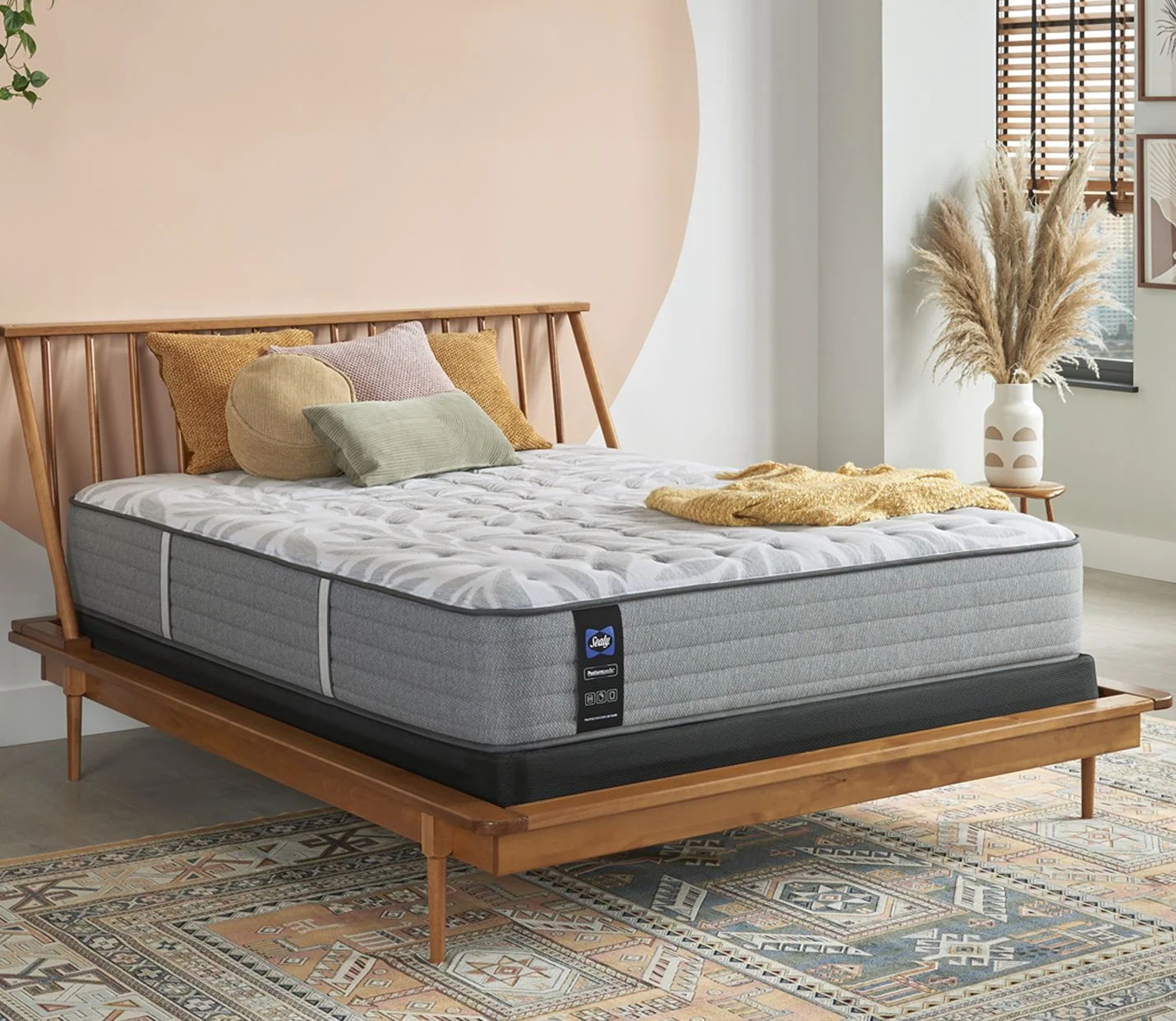
Short answer: it depends on the model. Sealy mattresses and every Sealy hybrid are fiberglass-free - Sealy confirms the flame barrier on those lines is a rayon-and-polyester blend. Several Sealy all-foam mattress-in-a-box models, however, still use what naplab.com describes as "core-spun glass fibers" in an inner fire sock. If you own (or are shopping for) a Sealy bed and want a definitive answer for your specific model, the law tag attached to the mattress is the source of truth.
This guide pulls together what Sealy publishes on its own help center, what independent testers like NapLab have observed, and what the Consumer Product Safety Commission's flammability standard (16 CFR 1633) actually requires of every mattress sold in the U.S.
Which Sealy lines are fiberglass-free?
Two Sealy product families are confirmed fiberglass-free in the brand's official help-center FAQs:
If your Sealy is one of those two categories, the inner fire sock contains no glass fiber. You can wash and rotate the cover (where supported) without the risk of releasing fiberglass particles into your bedroom.
Which Sealy mattresses still contain fiberglass?
Independent reviewer NapLab - which has cataloged 395+ mattresses for fiberglass content - reports that all-foam Sealy mattress-in-a-box models outside the Cocoon family contain core-spun glass fibers in the fire sock. Sealy's own communication on this has been inconsistent over the years, and customer-service reps have at times told shoppers "no Sealy mattresses contain fiberglass" - a claim contradicted by the law tags on certain all-foam units.
The fiberglass in those models is woven into a thin sock-like layer that sits between the foam core and the outer cover. As long as that sock stays intact and the cover stays on the mattress, the fibers do not migrate into your bedroom. Problems arise when owners unzip and remove the outer cover for washing - a step Sealy explicitly warns against on fiberglass-containing models.
Why mattresses use fiberglass in the first place
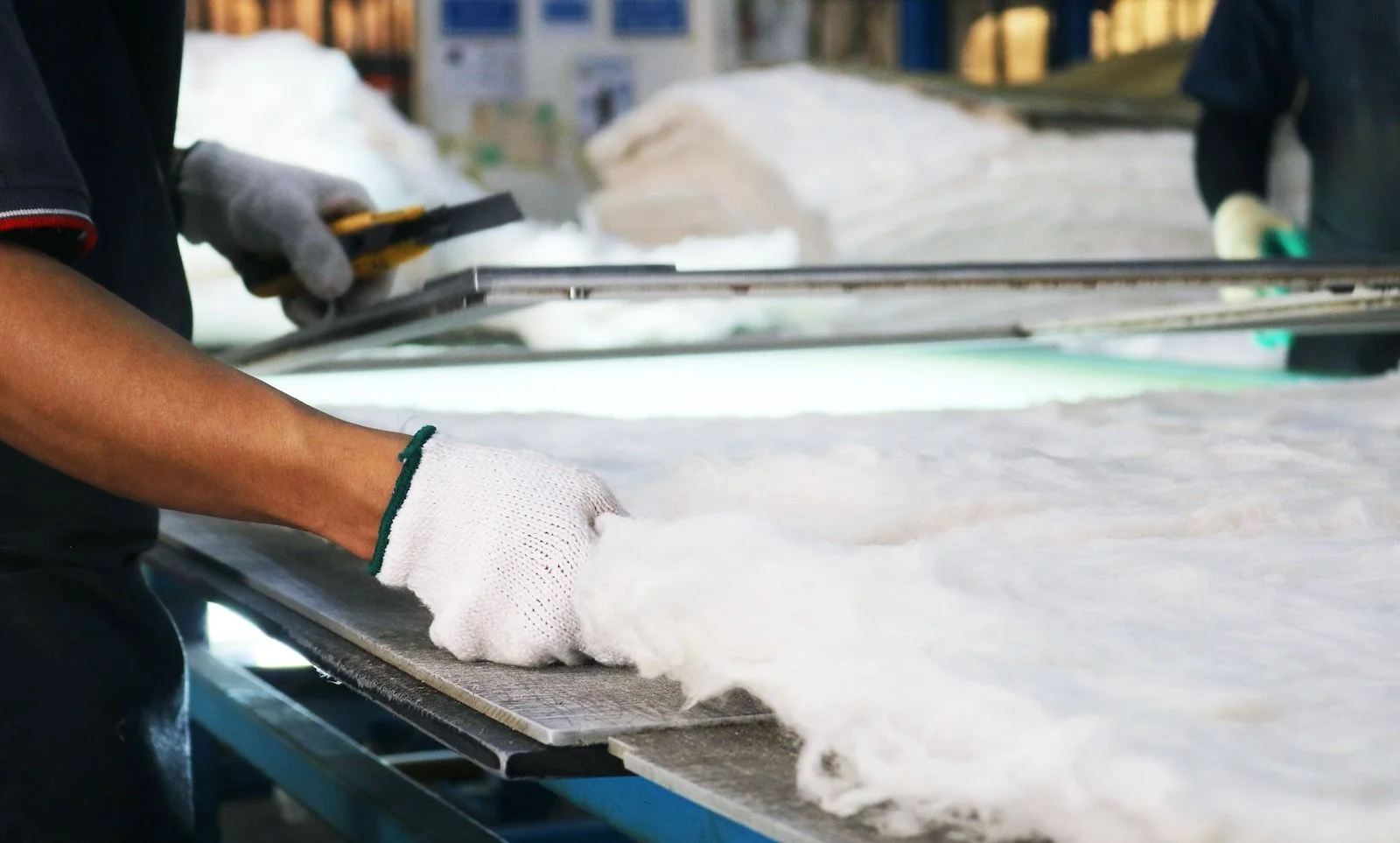
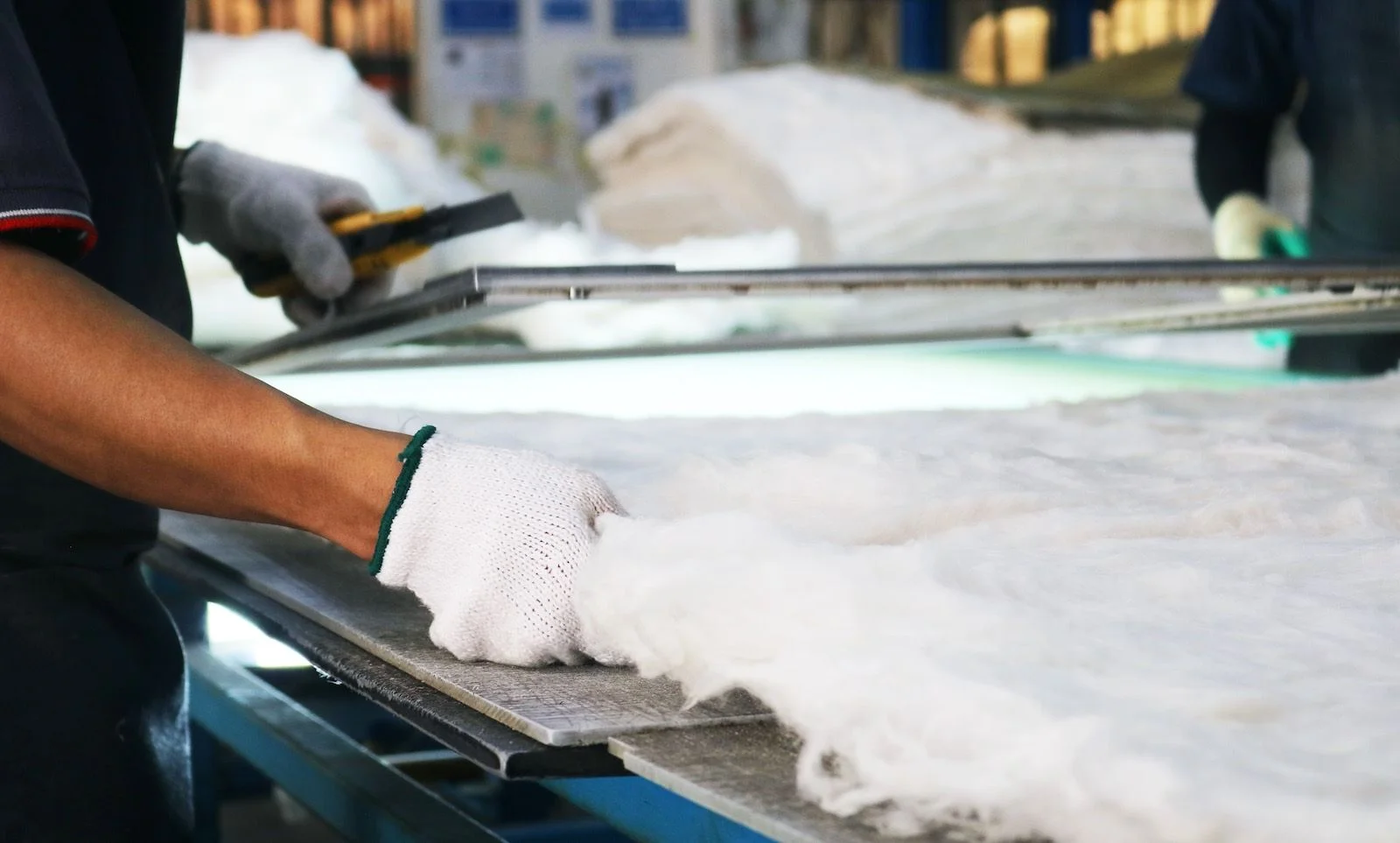
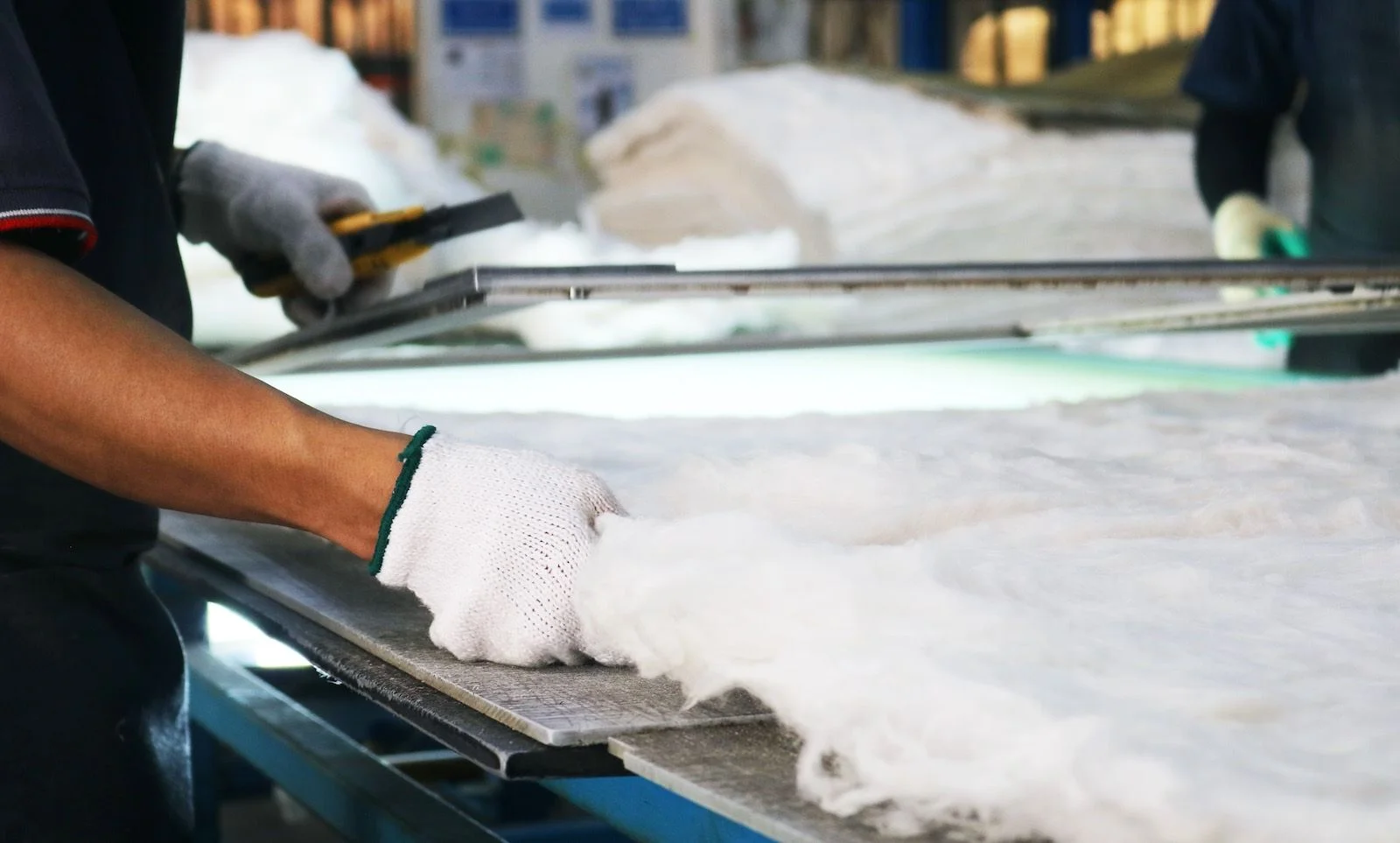
Every mattress sold in the United States must pass the open-flame test in 16 CFR 1633. Manufacturers meet that requirement one of two ways: a chemical flame-retardant treatment, or an inert physical fire barrier. Glass fiber is the cheapest physical option that passes the test without adding chemicals to the foam, which is why budget memory-foam beds - Sealy's all-foam mattress-in-a-box models included - adopted it. Hybrids use a rayon/polyester blend instead because the steel coil layer changes the burn profile and a softer barrier passes the test.
How to tell if your Sealy has fiberglass
Pros and cons of fiberglass as a fire barrier
Fiberglass is not a uniformly bad choice - it has a reason to exist. The trade-off is what matters.
What it does well
- Passes 16 CFR 1633 without chemical flame retardants in the foam
- Inert when contained inside the fire sock - does not off-gas
- Cheaper than rayon-blend barriers, keeps mattress prices low
- Effective at slowing combustion in an open-flame test
What goes wrong
- Migrates into the bedroom if the outer cover is unzipped or torn
- Causes skin, eye, and airway irritation on contact
- Cleanup of a contaminated room can run into the thousands
- Manufacturers rarely flag the risk on the marketing page - only the law tag
Should you avoid fiberglass-containing Sealy models?
Owning a fiberglass-in-the-fire-sock mattress is not inherently dangerous. The problems documented in news reports - irritated skin, fibers in the HVAC system, expensive remediation - happen almost exclusively after someone removed the outer cover, which the manufacturer's care label warns against. If you keep the cover on, never cut into the mattress, and dispose of it intact at the end of life, the fire sock does its job invisibly.
That said, if you have small children who jump on the bed, pets that scratch, or you simply want one less risk in the room, there is no reason to settle. A Sealy hybrid or a Cocoon by Sealy gives you the brand and the same warranty without fiberglass anywhere in the construction.
Is Sealy a safe mattress overall?
Sealy states that its products meet all U.S. Consumer Product Safety Commission requirements, comply with 16 CFR 1633, and are CertiPUR-US certified for the foams they use. CertiPUR-US specifically tests for low VOCs, restricted heavy metals, and the absence of certain flame retardants. The certification is about chemical safety in the foam, not about whether a fire sock contains glass fiber - those are separate questions - our broader review of Sealy mattress safety covers VOCs, certifications, and recalls beyond fiberglass.
Frequently asked questions
Does the Sealy Posturepedic Plus have fiberglass?
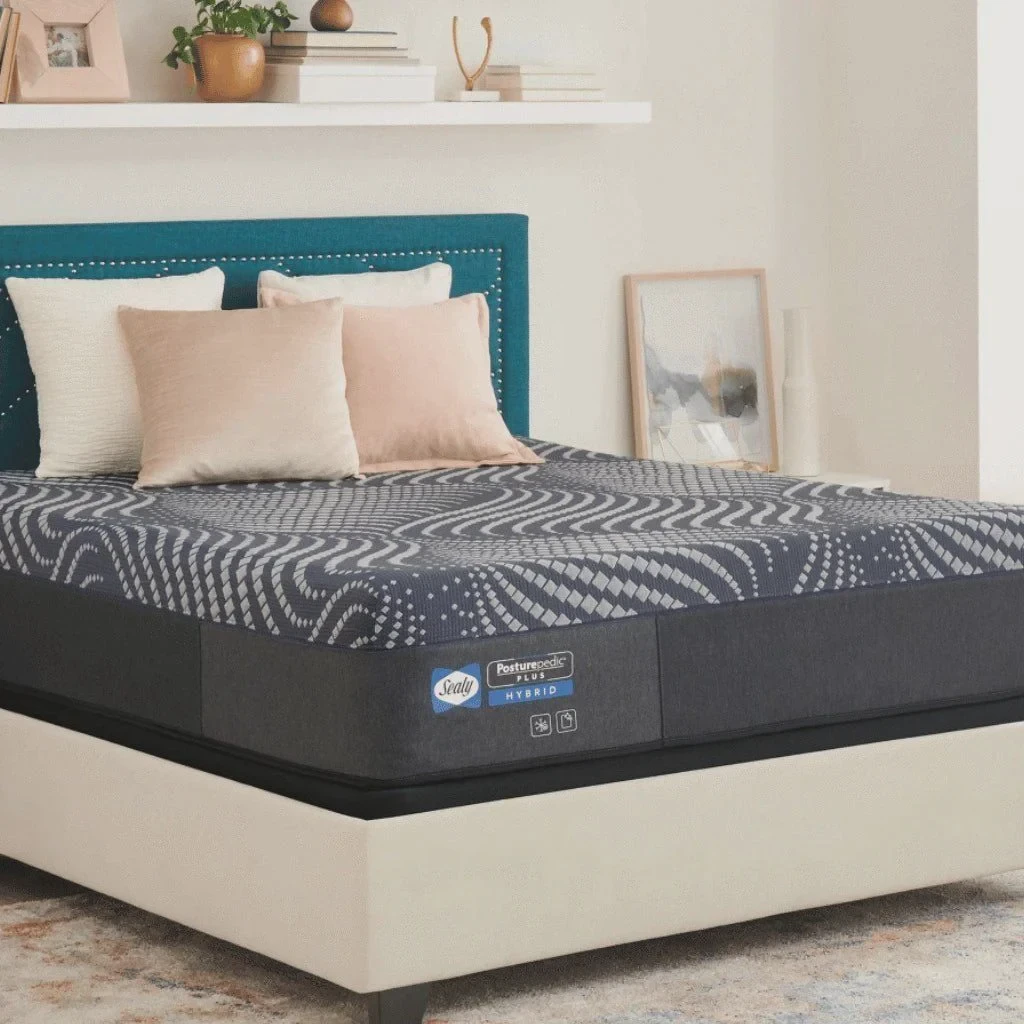
No. Every Sealy Posturepedic Plus is part of the hybrid line, and Sealy's help center confirms hybrids use a rayon and polyester blend as the flame barrier rather than fiberglass.
Does Cocoon by Sealy have fiberglass?
No. Sealy confirms on the Cocoon help center that no Cocoon by Sealy mattress contains fiberglass in any form. The flame barrier is a rayon and polyester blend across every Cocoon model.
How can I tell if my specific Sealy mattress has fiberglass?
Read the law tag sewn into the side seam. Look at the flame-resistant fiber line: glass fiber, silica, or core-spun glass means yes; rayon, polyester, modacrylic, or viscose means no. The law tag overrides anything a salesperson tells you.
Can I remove the cover on my Sealy mattress to wash it?
Only if Sealy's care label explicitly says the cover is removable on your model. On any all-foam Sealy outside the Cocoon line, treat the cover as non-removable - unzipping it can release fiberglass from the inner sock into your bedroom.
When did Sealy stop using fiberglass?
Sealy never used fiberglass in its hybrid or Cocoon lines, but several all-foam Sealy mattress-in-a-box models still contain core-spun glass fibers in the fire sock as of recent NapLab testing. There is no public industry-wide cutover date for Sealy.
What about Stearns and Foster or Tempur-Pedic - same parent company?
Same parent (Tempur Sealy International), different constructions. Tempur-Pedic and Stearns and Foster have their own help-center FAQs. Tempur-Pedic publicly states it does not use fiberglass; verify the line you are buying via the law tag and the brand's own page rather than assuming the parent-company answer applies.