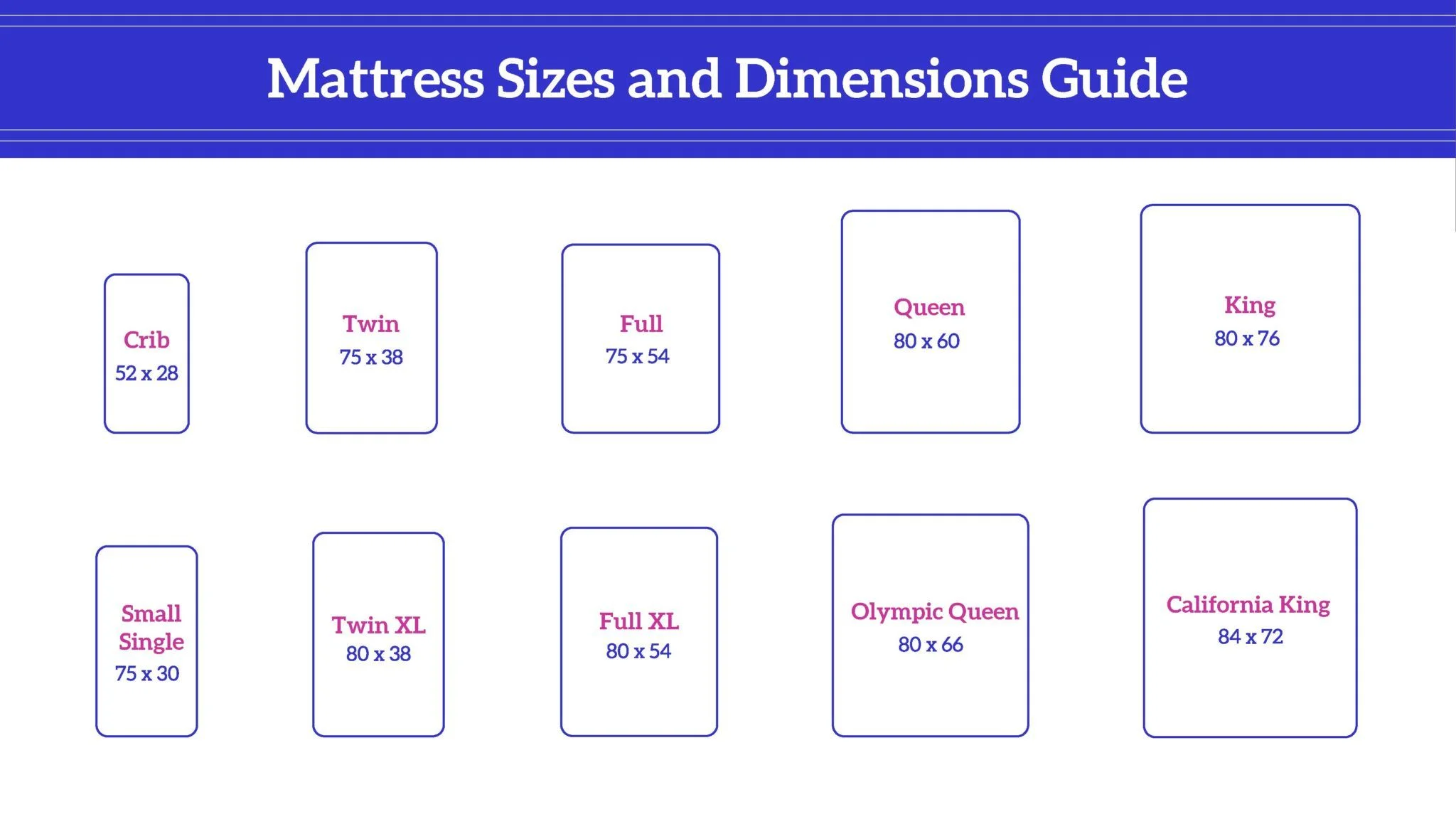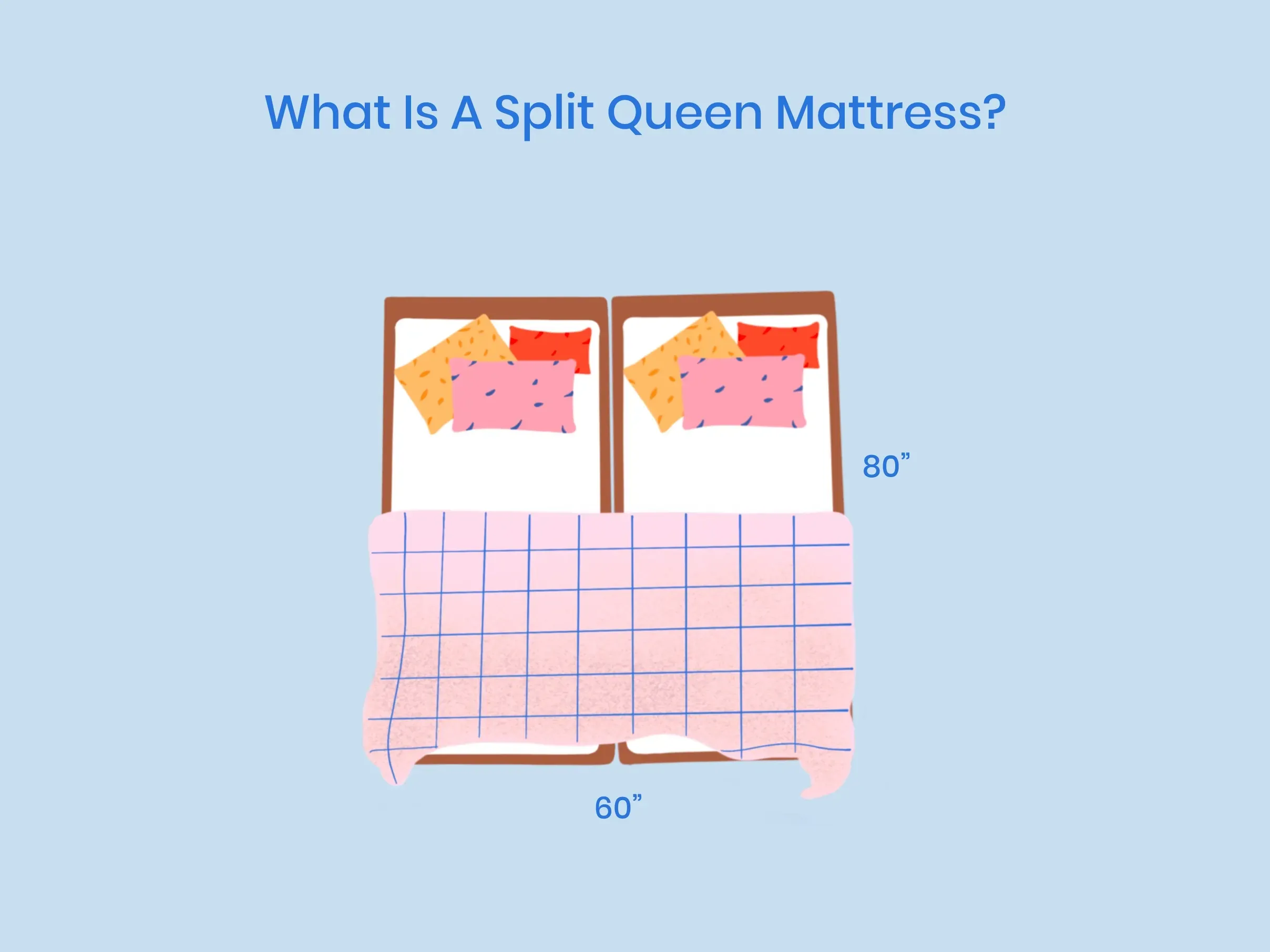
A short queen mattress measures 60 × 75 inches, while a standard queen measures 60 × 80 inches. Both are 60 inches wide - the only dimensional difference is 5 inches of length. That gap is small on paper but decisive in practice: short queens are sized for RV bedrooms, campers, and tight rooms where a full-length queen will not fit, and they almost never appear in standard residential bedrooms.
If you are shopping for a residential bedroom, you almost certainly want a standard queen - sheet sets, frames, and topper inventory are all built around 60 × 80. Short queen makes sense in one specific situation: your sleeping platform is already cut to 60 × 75 (most commonly a Class C motorhome, fifth-wheel, or travel trailer).
Quick answer: which should you buy?
- Pick a standard queen for any home bedroom, guest room, or master suite. Better sheet selection, better resale, full legroom for sleepers up to about 6 feet.
- Pick a short queen (also sold as “RV queen” or “camper queen”) only when your RV bed platform is built for 60 × 75, or you have a small room where 5 extra inches will block a doorway, dresser, or closet.
- If you are taller than 6 feet, avoid short queen - your feet will hang off. Step up to a standard queen, an RV king (72 × 75/80), or a California king if you have the space.
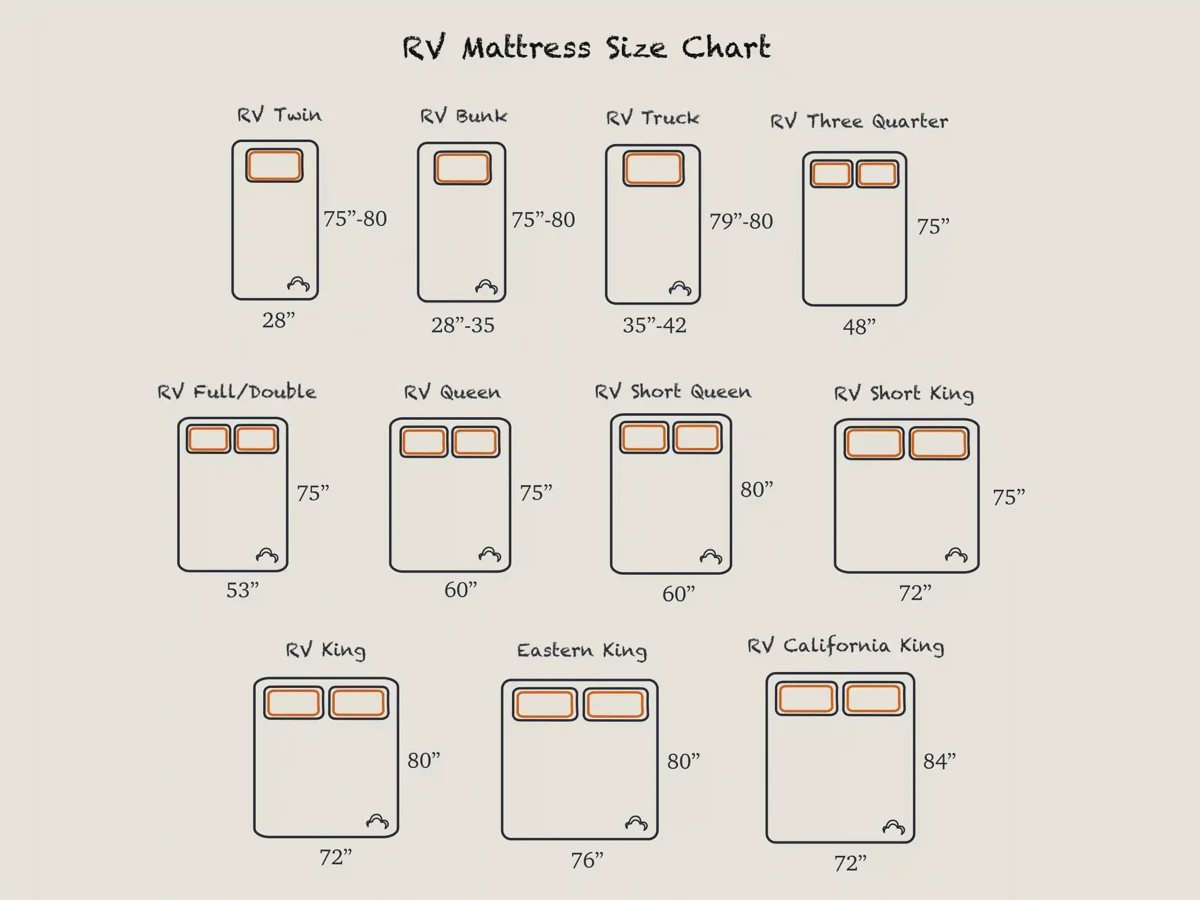
Side-by-side comparison
Dimensions: short queen 60 × 75 in (4,500 sq in surface). Standard queen 60 × 80 in (4,800 sq in).
Typical weight: short queen 50-80 lb depending on profile (most RV-spec foam mattresses run thinner). Standard queen 70-150 lb - hybrids with coils and dense foams sit at the top of that range.
Minimum room size: allow walking space on at least one long side and the foot. A short queen fits comfortably in a 9 × 9 ft room; a standard queen wants at least 10 × 10 ft for both side and foot clearance.
Price: short queens often cost slightly less in foam, but quality short-queen hybrids and latex models are scarce, which can push specialty pricing higher than a standard queen of the same brand. Expect $400-$1,500 short queen vs. $600-$2,500+ standard queen.
Sheet and bedding availability: standard queen wins decisively. Short queen sheets exist (search “RV short queen” or “camper queen”) but selection is narrow and prices are higher per set. A standard queen flat sheet will work on a short queen in a pinch - there is just extra fabric to tuck.
Frames and foundations: a short queen will sit on a standard queen frame with 5 inches of platform exposed at the foot. Most owners build or buy a custom RV bed platform sized to 60 × 75 instead.
Why short queen exists: the RV story
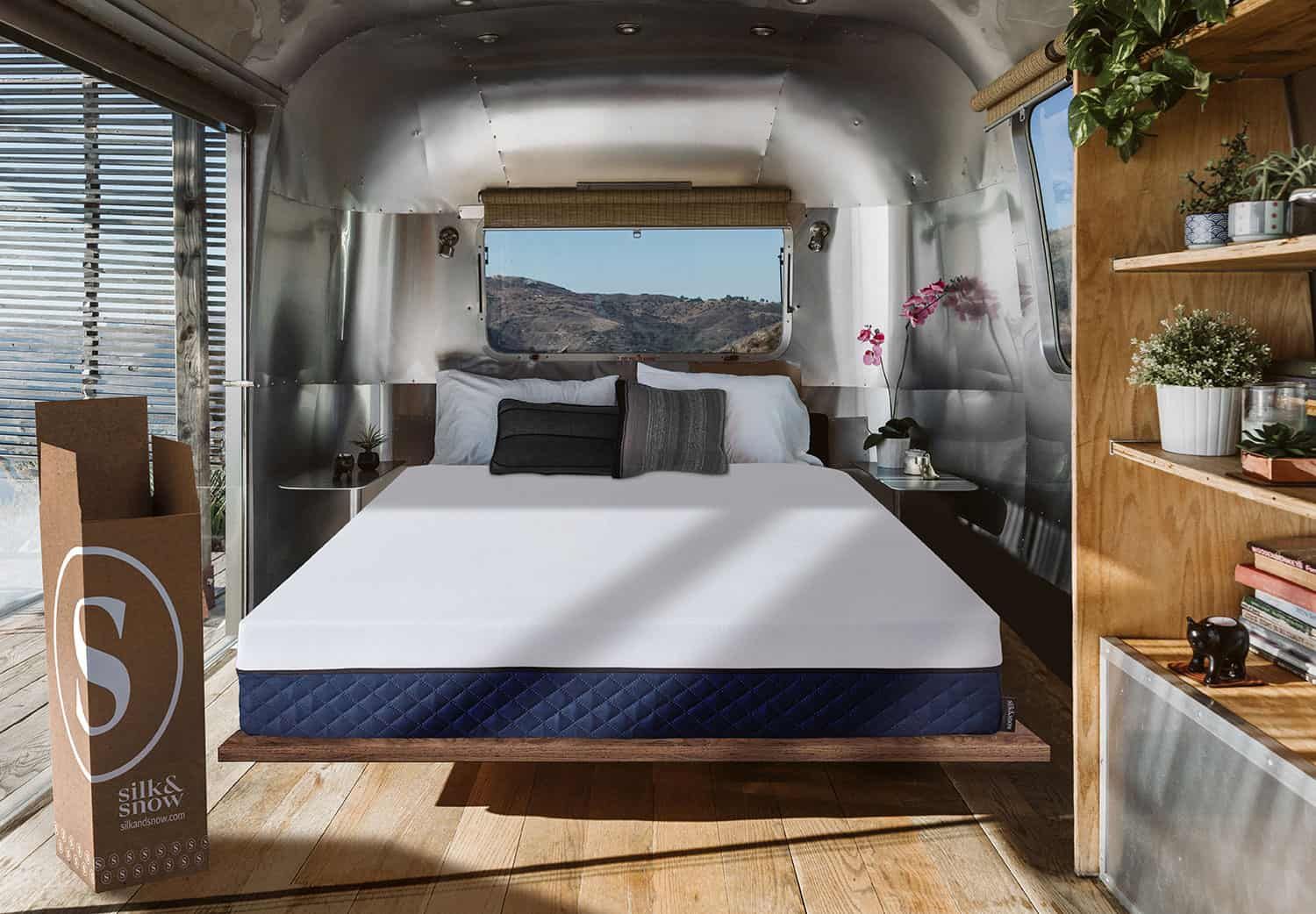
RV manufacturers needed to fit a couple-friendly 60-inch-wide bed into a bedroom that also has to clear walkways, slide-outs, and overhead cabinets. Cutting 5 inches of length kept the surface area workable for two adults while freeing up floor space for a wardrobe or a passable hallway. That is why short queen is sometimes called RV queen or camper queen - it was designed for that footprint, not for residential bedrooms.
If you do not own an RV and the platform is not already built for 60 × 75, there is no good reason to choose short queen over a standard queen. You will fight sheet availability for the life of the mattress and lose 5 inches of legroom for nothing.
Comfort and fit
For sleepers up to about 5'10", short queen is comfortable. From 5'11" to 6'0", legroom is tight but workable. Above 6 feet your feet will hang or you will sleep diagonally - at that point look at RV king (72 × 80) or a custom-cut mattress. Couples sleep fine on short queen at average heights, but the trim length means less room to shift around without ending up on the edge.
Short queen pros
- Fits RV and camper bed platforms designed for 60 × 75 in.
- Lighter and easier to maneuver up RV stairs and through narrow doors.
- Frees 5 inches of floor space at the foot for storage or walkways.
- Foam models are usually a little cheaper than the equivalent standard queen.
Short queen cons
- Sheet, topper, and protector selection is narrow and pricier per set.
- Too short for sleepers over 6 feet - feet hang off the end.
- Hybrid and latex options are scarce; most short queens are foam-only.
- Lower resale value vs. a standard queen if you sell secondhand.
Standard queen pros
- Sheets, toppers, and frames are everywhere - best inventory in the market.
- 80 inches of length comfortably fits sleepers up to 6 feet.
- Widest selection of foam, hybrid, latex, and innerspring builds.
- Strong resale market and trade-in programs.
Standard queen cons
- Will not fit most RV bedrooms - the extra 5 inches blocks slides or doors.
- Hybrid models can hit 130-150 lb, harder to move solo.
- Wants a 10 × 10 ft room for proper clearance on both sides and the foot.
Short queen vs queen FAQ
What is the difference between a queen and a short queen mattress?
A short queen is 60 inches wide by 75 inches long. A standard queen is 60 inches wide by 80 inches long. They share the same 60-inch width, so the only difference is 5 inches of length. Short queens are designed for RV bed platforms; standard queens are the default residential size.
Is a short queen the same as an RV queen?
Yes. Short queen, RV queen, and camper queen are three names for the same 60 × 75 inch mattress. Manufacturers use the names interchangeably, though some RV-specific models are built thinner (6-10 in) so they clear cabinet overhangs and bend around tight corners during install.
What size sheets fit a short queen?
You need short queen or RV queen sheets, sized for a 60 × 75 in mattress. Standard queen fitted sheets will be loose and bunch at the foot. Standard queen flat sheets work fine - there is just extra fabric to tuck under. Look for fitted sheets with deep pockets if your short queen is taller than 8 inches.
Will a short queen fit on a standard queen frame?
Yes, with 5 inches of platform exposed at the foot. Mechanically it is fine, but the gap looks awkward and the mattress can shift. Most short queen owners build or buy a 60 × 75 platform designed for the smaller mattress.
Is a short queen good for couples?
For two average-height adults, yes - you still get the full 60-inch width. The trim length means less room to spread out diagonally, so sleepers who toss and turn may notice the difference. For tall couples (one partner over 6 feet), step up to an RV king or a standard queen.
Is a short queen cheaper than a standard queen?
Usually, but not always. Mainstream foam short queens often cost slightly less because they use less material. Premium hybrid and latex short queens can cost the same or more than the equivalent standard queen because demand is lower and they are produced in shorter runs. Always compare specific models, not size alone.
The bottom line
Short queen is a niche size built for RVs and campers - pick it only when your bed platform is already 60 × 75 or you genuinely need the 5 extra inches of floor space. For every other situation, a standard queen gives you better sheet availability, better resale, more model variety, and full 80-inch legroom at a comparable price. The size-name similarity is the only reason these two get confused; in practice they solve completely different problems.