Short answer: Yes, you can put most modern mattresses on an adjustable base - but not all of them. Memory foam, latex, and flexible hybrid mattresses bend safely. Traditional innerspring mattresses with continuous or interconnected coils will warp, snap wires, or void the adjustable base's weight rating. The right pairing comes down to four things: mattress construction, thickness, weight capacity, and warranty.
This guide walks through which mattress types are adjustable-base safe, the thickness ceilings most bases enforce, what major brands (Tempur-Pedic, Sealy, Saatva, Casper) say about warranty coverage, and the retainer-bar and weight-limit details people miss.
Quick compatibility snapshot
Use this as a first filter before you start matching specific models. Detail on each row is in the sections below.
Memory foam: the gold-standard pairing
All-foam memory foam mattresses are the safest, most common pick for adjustable bases. Layers of viscoelastic foam flex along the base's hinge points without losing structural integrity, and there are no rigid components to fight the bend.
What to verify before pairing:
- Thickness: 8 to 13 inches. Above 14 inches, even foam can crease at the lumbar hinge over time.
- Density: Mid-to-high density foam (3 lb/ft³ and up in the support core) holds up better to repeated bending than ultra-soft, low-density foam.
- Cover: A stretch knit or two-way stretch cover prevents the top fabric from puckering when the base articulates.
Most boxed memory foam beds - Nectar, Layla, Tuft & Needle, Casper Original - explicitly support adjustable bases out of the box.
Latex: flexible, durable, adjustable-friendly
Both natural Talalay and Dunlop latex bend smoothly on an adjustable base. Latex is denser than memory foam, so heavier sleepers often prefer it, and it has a longer typical lifespan (often 12 to 15 years versus 7 to 10 for memory foam).
Watch-outs:
- Some all-latex mattresses are very heavy (split queen / king splits help with handling).
- Confirm the cover and any wool fire layer are quilted, not glued, so they flex with the core.
- Stay at or below 14 inches total thickness.
Hybrid: usually yes, with one big caveat
Hybrid mattresses combine foam comfort layers over a coil support core. The key question is what kind of coils.
- Pocketed (individually wrapped) coils - yes. Each coil moves independently, so the spring unit flexes with the base.
- Continuous-wire, Bonnell, or offset (interconnected) coils - no. The entire grid is one rigid frame; bending damages it.
- Micro-coils inside a foam-encased perimeter - usually yes, provided the perimeter foam encasement is segmented rather than one continuous block.
Modern bed-in-a-box hybrids - Helix, Saatva HD, DreamCloud, Bear Elite Hybrid, Brooklyn Bedding Aurora - use pocketed coils and ship adjustable-base ready. Older spring mattresses from traditional retailers often do not.
Pillow-top: yes, but mind the height
Pillow-top construction (a separately sewn or attached topper layer over the comfort layers) is fine on adjustable bases as long as:
- The base mattress underneath is adjustable-friendly (foam, latex, or pocketed-coil hybrid).
- Total profile stays under 12 to 13 inches. Many pillow-top mattresses run 14 to 16 inches; once you cross that line, the bend radius at the base's lumbar hinge starts to compress and crease the pillow-top permanently.
- The pillow-top is sewn or attached to the base, not a free-floating Euro-top.
Innerspring with continuous coils: do not use
Traditional innerspring mattresses built on a single continuous wire grid (or the older Bonnell coil systems) will not bend without permanent damage. Symptoms include broken wires that protrude through the cover, lasting body impressions at the hinge points, and a noticeable hump that never goes away. Most innerspring warranties explicitly exclude damage from use on an adjustable base.
If you have a continuous-coil innerspring and want adjustable functionality, replace the mattress before buying the base - not the other way around.
Waterbeds and air mattresses
- Waterbeds are not safe on adjustable bases. The water shifts unpredictably during articulation, the weight load can exceed the base's rating, and seams can fail.
- Camping-style air mattresses are also a no - they are not designed for the bend cycles or the weight distribution of an articulating frame. (Adjustable air-chamber beds like Sleep Number are a different category and usually have first-party adjustable bases.)
Thickness, weight, and retainer bars
Three specs decide whether a compatible mattress will actually live well on your base:
Mattress thickness. The widely accepted ceiling is 12 inches for most adjustable bases, with up to 14 inches acceptable on heavy-duty models. Anything thicker risks the bend radius compressing comfort layers permanently and can interfere with wall-hugger movement.
Weight capacity. Standard adjustable bases support 600 to 700 lb total (mattress plus sleepers plus bedding). Heavy-duty bases go to 850 lb or higher. A 14-inch hybrid mattress alone can weigh 100 to 150 lb in queen - factor that in before two adults climb on.
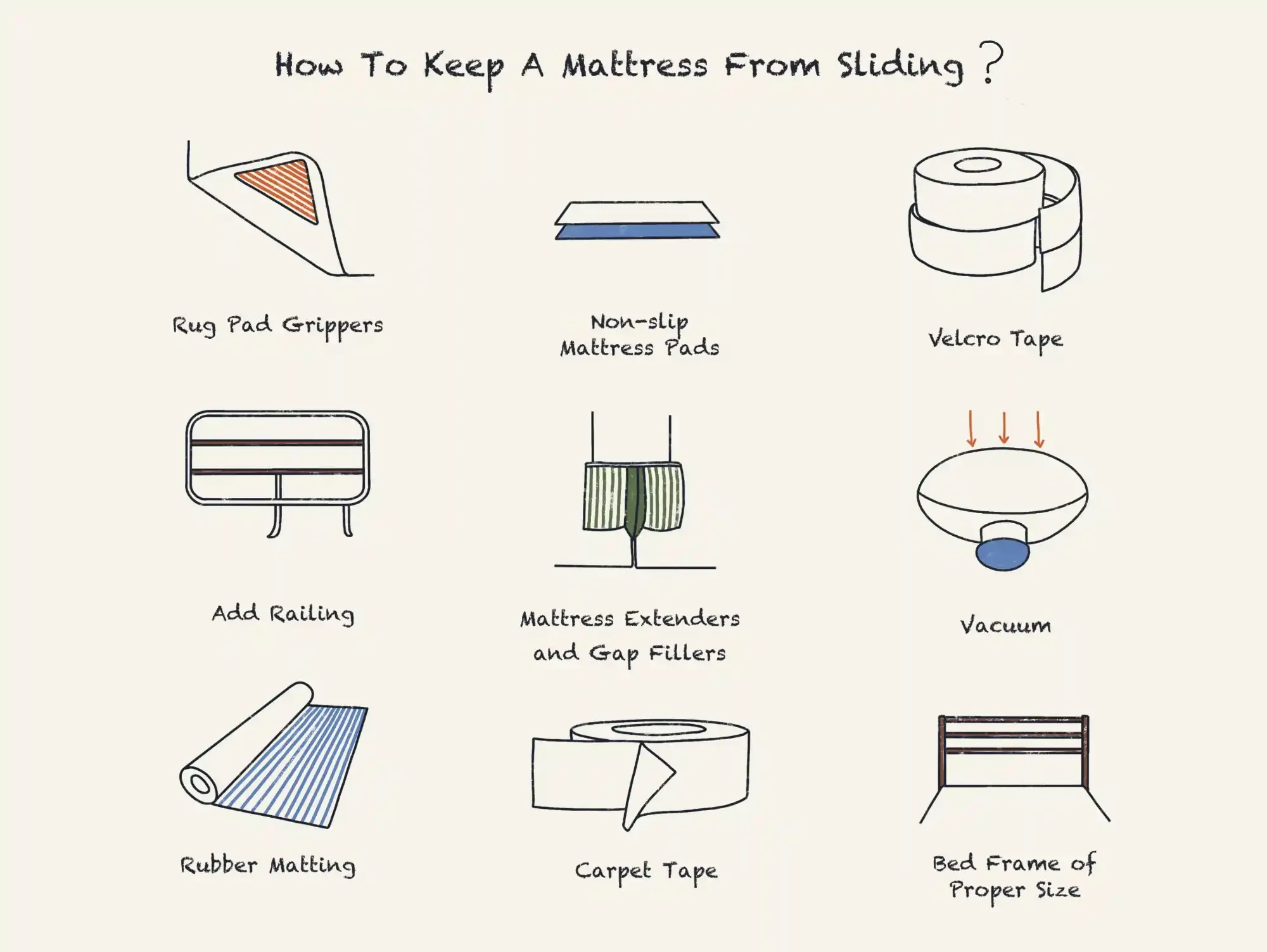
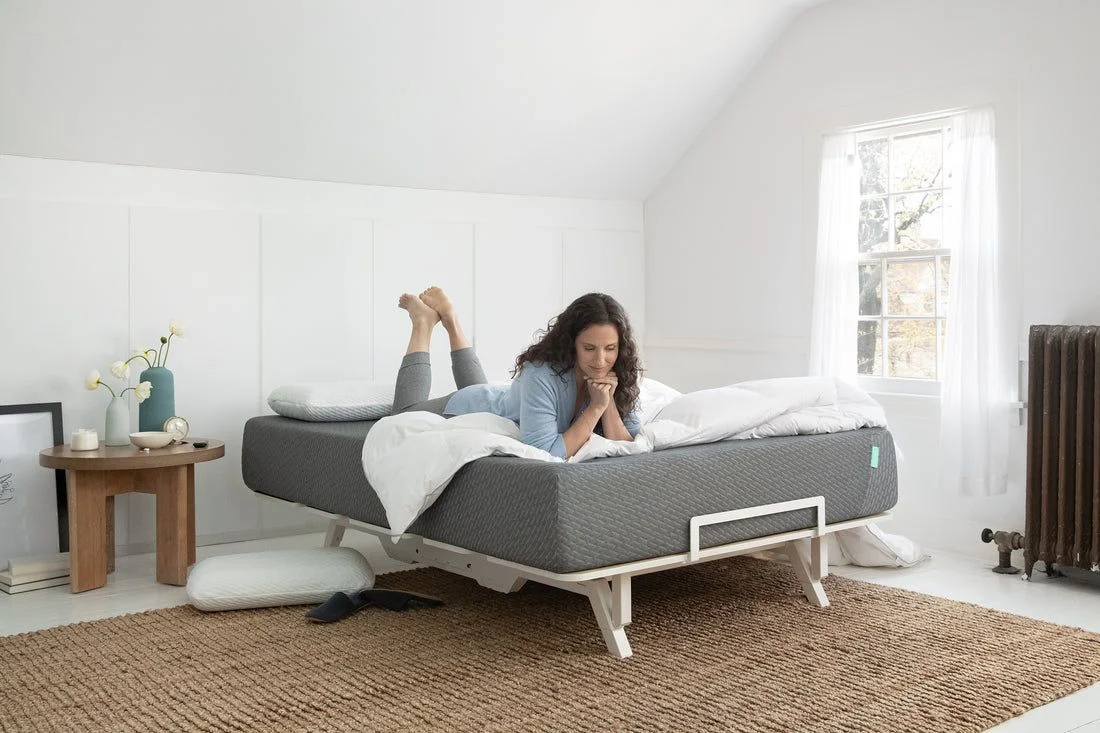
Retainer bars. Almost every adjustable base ships with a retainer bar (or set of bar mounts) at the foot of the deck. Its job is to keep the mattress from sliding off when the head is raised. Use it. Skipping the retainer bar is the most common reason people end up dragging a mattress back into place every morning. Most bases also include the hardware free in the box.
Warranty implications by major brand
Adjustable-base use can void a mattress warranty if the base is incompatible or the manufacturer doesn't recognize it. Always check the brand's foundation requirements before buying.
Tempur-Pedic. All Tempur-Pedic mattresses are explicitly approved for use on adjustable bases, and many models are sold paired with the brand's own Ergo or Ease bases. Using a third-party adjustable base does not automatically void warranty, but the base must provide adequate, even support.
Sealy. Most Sealy mattresses (Posturepedic, Cocoon by Sealy, Sealy Hybrid) are warranty-safe on adjustable bases. The exception is the legacy continuous-coil Sealy innerspring lines - Sealy's own warranty language typically excludes damage from adjustable-base use on those.
Saatva. Saatva's all-foam (Loom & Leaf, Saatva Memory Foam Hybrid) and most hybrids (Classic, Latex Hybrid, Saatva HD) are adjustable-base compatible and remain under warranty. Saatva sells its own Lineal and Adjustable Base Plus and recommends them.
Casper. All current Casper models - Original, Snow, Nova, Wave, and the Casper Foam - are warranty-safe on third-party adjustable bases as long as the base provides flat, solid support when laid flat and bends from the head and foot only.
When in doubt, the safest path is:
- Read your mattress warranty's "approved foundation" clause.
- Photograph the model number / law tag of any new adjustable base before assembly, in case you need to register it later.
- If a brand requires its own base, call before buying third-party - some honor competing bases, some don't.
Will an adjustable base wear out my mattress faster?
A compatible mattress on an adjustable base wears at roughly the same rate as on a flat foundation - sometimes slightly faster at the foot and lumbar hinge points if you sleep in zero-gravity every night. The main wear factors are foam density, coil quality, and total weight load, not the articulation itself.
To extend lifespan:
- Rotate the mattress head-to-foot every 3 to 6 months (do not flip if it's a one-sided design).
- Return the base to flat any time you're not actively using the inclined position for sleep, reading, or watching TV.
- Use a stretchy mattress protector that won't bunch at the hinge.
What about box springs and platform foundations?
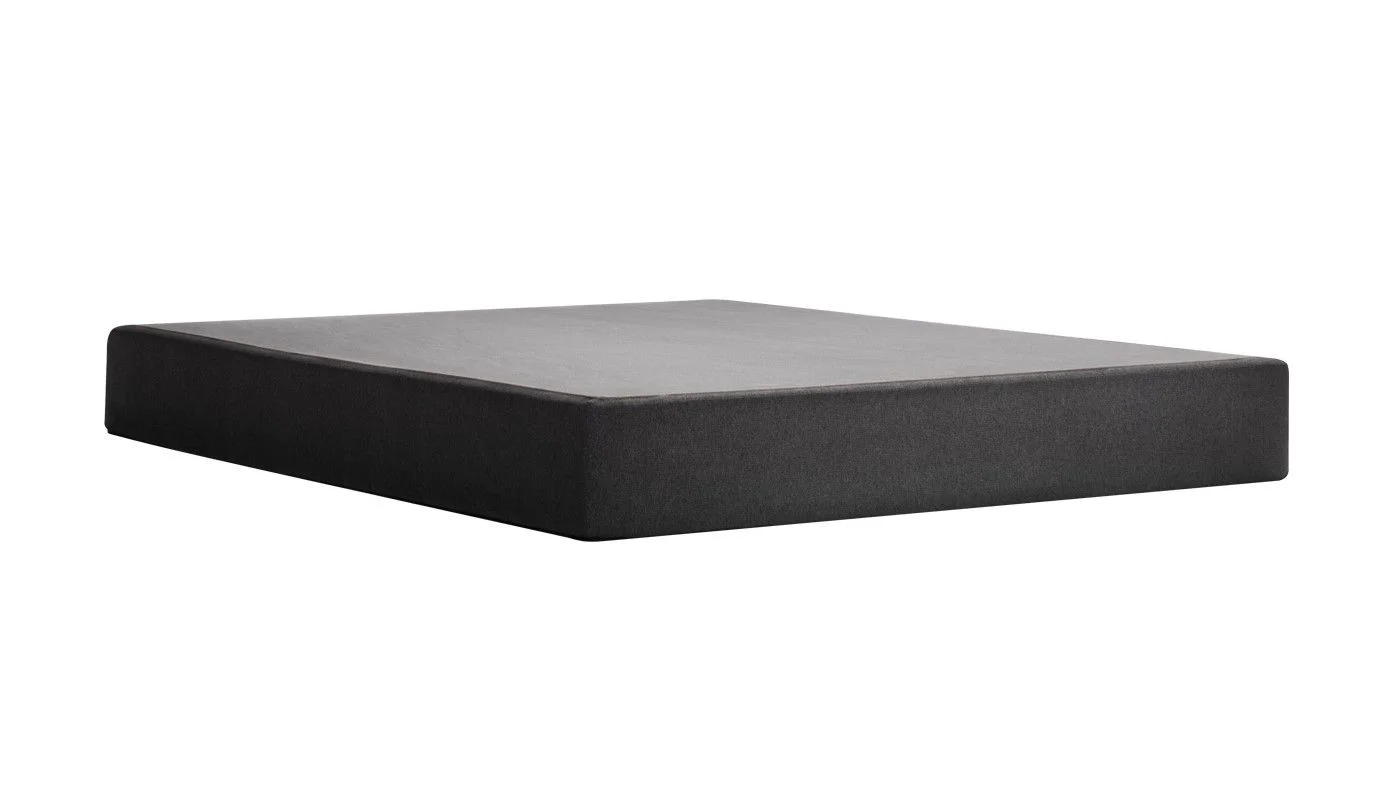
You don't use a box spring with an adjustable base - the base is the foundation. If you're cross-shopping foundations entirely, our companion guide on whether a Tempur-Pedic mattress needs a box spring covers the box-spring-versus-adjustable-base decision and which Tempur-Pedic models work with which foundation types.
Frequently asked questions
Adjustable bed mattress FAQ
Can you put a regular mattress on an adjustable bed?
Yes, if the mattress is memory foam, latex, or a hybrid built with pocketed coils. Mattresses with continuous-wire or Bonnell innerspring construction will not bend safely on an adjustable base and may be permanently damaged.
What thickness of mattress works on an adjustable base?
Most adjustable bases handle 8 to 12 inches comfortably, with up to 14 inches on heavy-duty models. Above 14 inches, the bend radius at the lumbar hinge can compress comfort layers and leave permanent creases.
Do pillow-top mattresses work on adjustable beds?
Usually yes, as long as the pillow-top is sewn or attached to the base mattress (not free-floating), the base mattress is foam, latex, or a pocketed-coil hybrid, and the total profile is under about 12 to 13 inches.
Will using an adjustable base void my mattress warranty?
Most modern foam, latex, and pocketed-coil hybrid warranties explicitly cover adjustable-base use. Tempur-Pedic, Saatva, Casper, and current Sealy lines are all warranty-safe. Legacy continuous-coil innerspring warranties typically exclude damage from adjustable-base use, so always check your specific model warranty.
Do I need a box spring with an adjustable base?
No. The adjustable base replaces the foundation entirely - placing a box spring on top of (or under) the base defeats the articulation and is not supported by any major manufacturer.
Why does my mattress slide off when I raise the head?
You are missing the retainer bar. Almost every adjustable base ships with a retainer bar (or set of mounts) at the foot of the deck specifically to keep the mattress in place during head-up articulation. Install it before assuming the mattress is incompatible.
Shopping for an adjustable-base-friendly mattress?
Browse our reviews of memory foam, latex, and hybrid mattresses verified to flex safely with major adjustable bases.