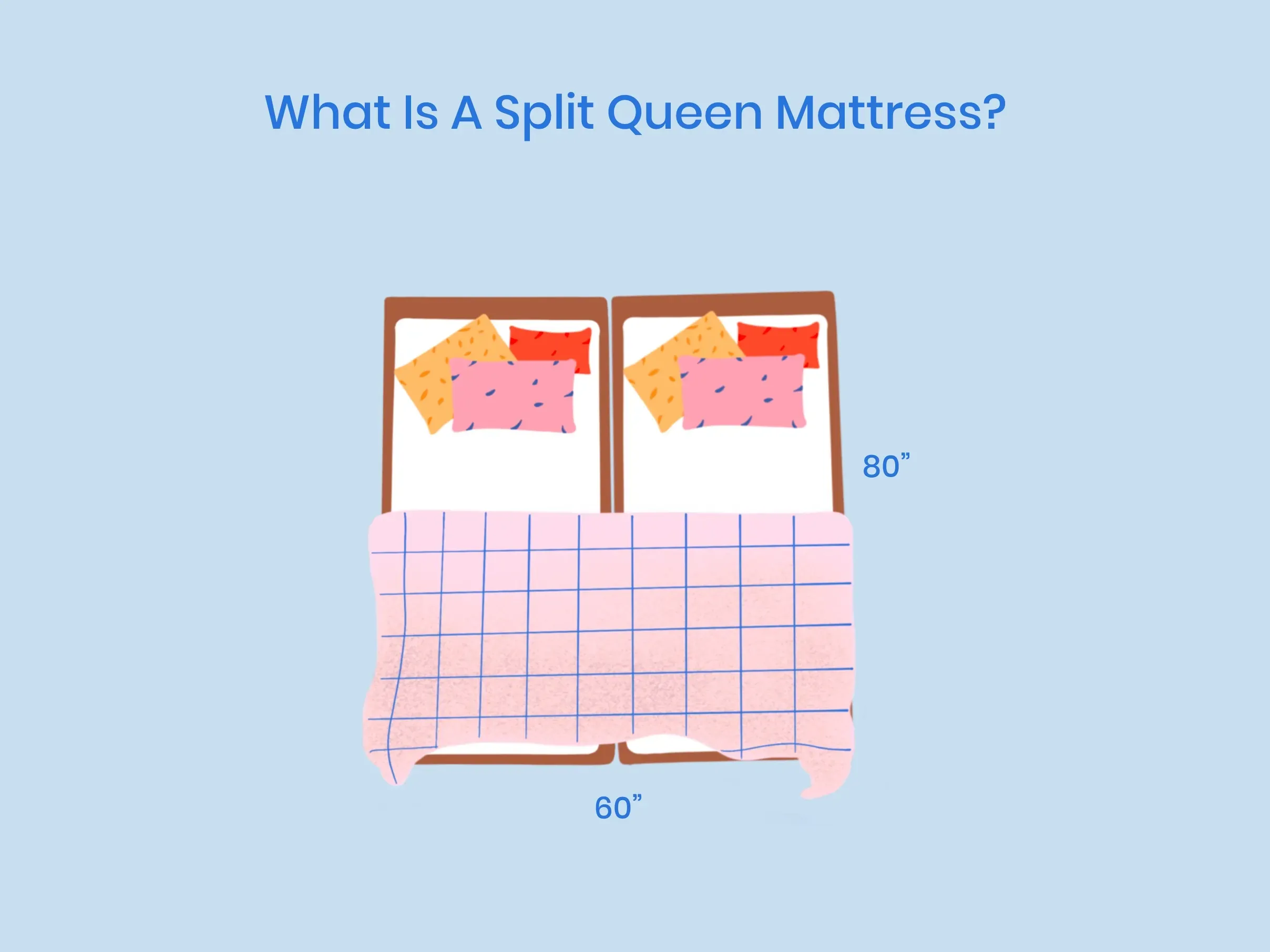

A split queen mattress is a queen-size sleeping surface made up of two separate mattresses - each measuring 30 by 80 inches - placed side-by-side to total the standard queen footprint of 60 by 80 inches. Couples reach for it when they want different firmness levels, independent adjustable-bed control, or an easier mattress to maneuver through tight stairs and doorways.
This guide breaks down the exact dimensions, real-world pros and cons, who actually benefits from the split design, and what to consider before you buy.
Split queen mattress dimensions at a glance
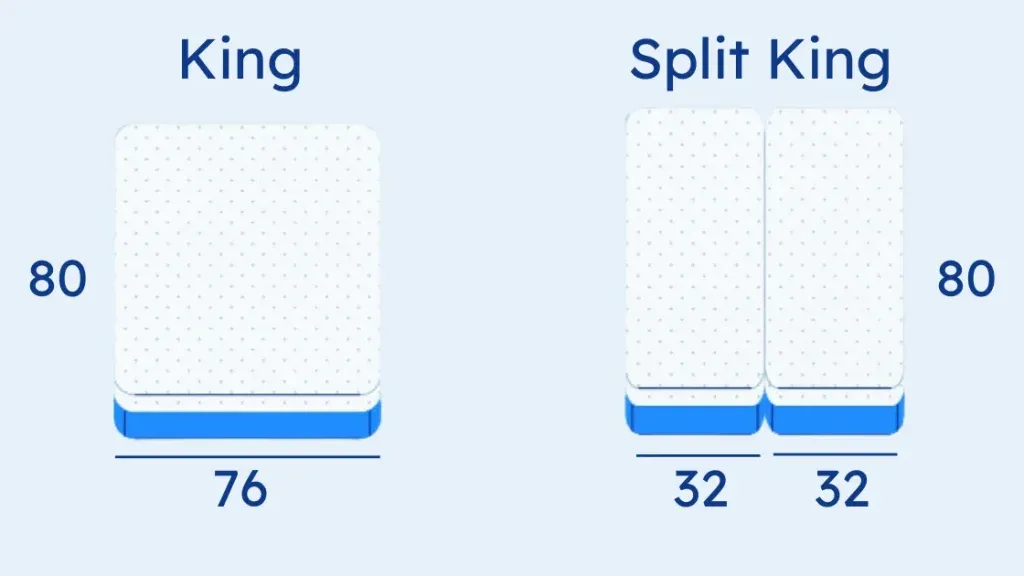
Each half: 30 inches wide by 80 inches long. Combined footprint: 60 inches by 80 inches - identical to a standard queen. Compared to a twin: A standard twin is 38 inches wide, so each half of a split queen is 8 inches narrower than a twin. Compared to a split king: A split king is two twin XL mattresses (38 x 80 each) for a 76 x 80 total - 16 inches wider overall and 8 inches wider per side.
Who should consider a split queen mattress
Couples with different firmness preferences
The single most common reason to buy a split queen is firmness mismatch. One partner wants a plush memory-foam feel, the other wants firm support - a split queen lets each side ship with its own construction and feel.
Households using an adjustable base
A split queen pairs naturally with a split queen adjustable bed frame. Each sleeper can raise the head section for reading or recline the feet without disturbing the other side.
Light sleepers who get woken by partner movement
Because the two halves are physically independent, motion on one side transfers very little to the other. That makes it an upgrade for couples where one partner tosses, turns, or gets up overnight.
People in homes with tight access
Two 30-inch-wide pieces are far easier to carry up a staircase, around a banister, or through a narrow doorway than one bulky 60-inch queen.
Pros and cons summary
The split queen solves real problems but introduces tradeoffs. Weigh both before committing.
Mattress types available in a split queen
Not every brand sells the split queen size, but the major mattress constructions are all represented.
Innerspring
Innerspring split queens are the most affordable and most breathable option. Coil systems push heat away and give the bouncy, traditional feel many sleepers grew up on. The downside: minimal contouring, which can leave side sleepers with pressure on hips and shoulders.
Memory foam
Memory foam contours closely to the body, isolates motion exceptionally well, and is the most common construction sold in the split queen size - particularly for adjustable bases, since foam bends without internal damage. Watch for heat retention; look for gel-infused or open-cell foam if you sleep hot.
Hybrid
Hybrid split queens layer foam or latex over individually wrapped coils. The coils restore the breathability and edge feel of an innerspring while the comfort layer adds pressure relief. The tradeoff is weight and price - hybrids are typically the heaviest construction.
Latex
Latex (especially natural and organic Dunlop or Talalay) is responsive, durable, and a strong fit for allergy-sensitive sleepers. Expect the longest lifespan of any construction and the highest entry price.
What to consider before buying
Center gap
The two mattresses meet at a seam down the middle. Cuddlers and stomach sleepers who like to drift to the center often notice it. A split queen mattress topper placed across both halves smooths the gap and creates a single sleep surface on top.
Bed frame compatibility
A split queen needs a foundation that supports both halves evenly. Most modern queen platforms work, but older slat frames sized for a single mattress can leave a gap or uneven support. Adjustable bases for the split queen are sold specifically - don't try to use two twin-XL bases.
Sheets and bedding
Standard queen fitted sheets fit the combined 60 x 80 footprint when the halves are flat. If you use an adjustable base and raise one side, you'll want split queen sheet sets (two fitted sheets) so each side can flex independently.
Edge support
Because each half has an inside edge that wasn't designed to be the perimeter of the bed, edge support along the center seam is weaker than a standard queen. If you tend to sleep near the middle, factor that in.
Availability
Split queens are a specialty size. Many mainstream direct-to-consumer brands skip it in favor of the more common split king. Plan to shop a brick-and-mortar mattress store - like Banner Mattress - or a specialty online retailer to find the size in your preferred construction.
Split queen vs. standard queen vs. split king
Standard queen: One piece, 60 x 80. Best when both sleepers agree on firmness and you want a continuous sleep surface with no center seam. Split queen: Two 30 x 80 pieces. Best when partners want different firmness on the same queen footprint, or need to fit a bed through tight access. Split king: Two 38 x 80 (twin XL) pieces. Best when you want full split-customization plus more personal width per sleeper - the most common split format because twin XL mattresses are widely stocked.
Is a split queen worth it?
A split queen is worth it if you and your partner have meaningfully different firmness or adjustable-base preferences and a queen-size footprint is the right fit for your bedroom. If you have the floor space for a king, the split king delivers the same dual-firmness benefits with more personal width and far better availability.
If you're already happy with the same firmness and don't need independent adjustment, a standard queen is simpler, slightly cheaper to outfit, and avoids the center seam entirely.
Pros
- Each side can have its own firmness, feel, and even mattress type.
- Pairs perfectly with split queen adjustable bases for independent head and foot control.
- Excellent motion isolation - partner movement rarely transfers across the seam.
- Two smaller pieces are far easier to move up stairs and through tight doorways.
Cons
- A noticeable center seam can bother cuddlers or sleepers who drift to the middle.
- Each half is narrower than a standard twin (30 in. vs. 38 in.).
- Specialty size with limited availability - fewer brands offer it than split king.
- Specialty sheets and toppers cost more than standard queen bedding.
Split queen mattress FAQs
What are the dimensions of a split queen mattress?
Each half measures 30 inches wide by 80 inches long. Placed side-by-side, they total 60 by 80 inches - identical to a standard queen mattress.
Is a split queen the same as two twin mattresses?
No. A standard twin is 38 by 75 inches. Two twins placed together would be 76 inches wide and 75 inches long - 16 inches wider and 5 inches shorter than a split queen.
Will standard queen sheets fit a split queen?
Yes, when the two halves lie flat together a standard 60 x 80 queen fitted sheet works. If you use an adjustable base and want each side to flex independently, buy a split queen sheet set with two separate fitted sheets.
Do I need a special bed frame for a split queen?
Most modern queen platform frames support a split queen. Older slat frames designed for a single mattress can leave uneven gaps. If you want independent recline, buy a split queen adjustable base - not two twin XL bases.
Is a split queen worth it compared to a split king?
A split queen is worth it if a queen footprint fits your room and you want dual firmness on that size. If you have space for a king, the split king gives each sleeper 8 more inches of personal width and is far easier to shop because twin XL halves are widely stocked.
Shop split queen mattresses at Banner Mattress
Compare innerspring, memory foam, hybrid, and latex split queen options in store. Our sleep specialists can match each side of the bed to its sleepers feel preferences.