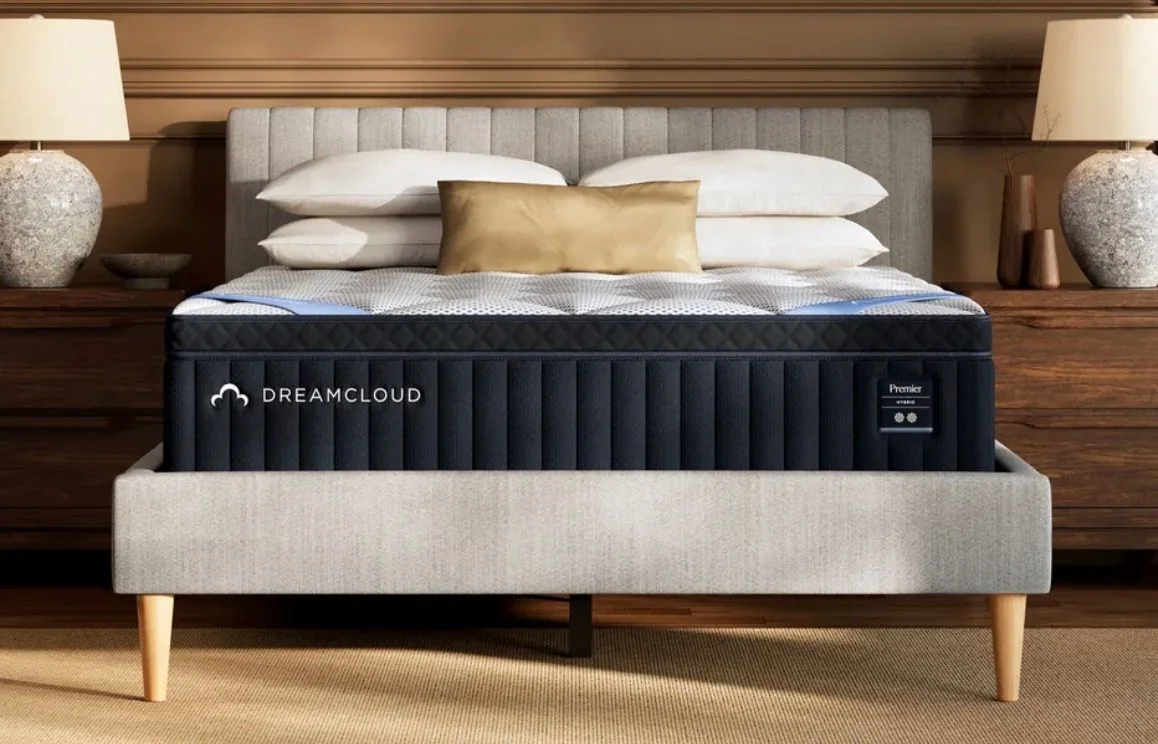
Short answer: no, DreamCloud mattresses are not considered toxic. Every foam layer in the lineup is CertiPUR-US certified, the cover is fiberglass-free, and independent reviewers (Tom's Guide, Sleep Foundation, NapLab) have not flagged any banned chemicals in the build. That said, "non-toxic" is doing a lot of work in mattress marketing, so it's worth understanding what the certifications actually cover - and what they don't.
Below is a layer-by-layer look at what's inside a DreamCloud, the certifications it carries, what off-gassing to expect in the first 72 hours, and how it compares to fully organic options like Avocado or Saatva if chemical exposure is a top concern.
Where DreamCloud is genuinely safe
- All polyfoam and memory foam layers are CertiPUR-US certified (no PBDEs, formaldehyde, mercury, lead, or banned phthalates).
- No fiberglass anywhere in the cover or fire sock - uses a rayon/silica blend barrier instead.
- Low-VOC foam: the brief opening odor dissipates within 24 to 72 hours of unboxing.
- Cashmere-blend cover is OEKO-TEX Standard 100 tested for harmful substances.
Where it falls short of "organic"
- The foam core is still petroleum-based polyurethane - CertiPUR-US is a low-emissions standard, not an organic one.
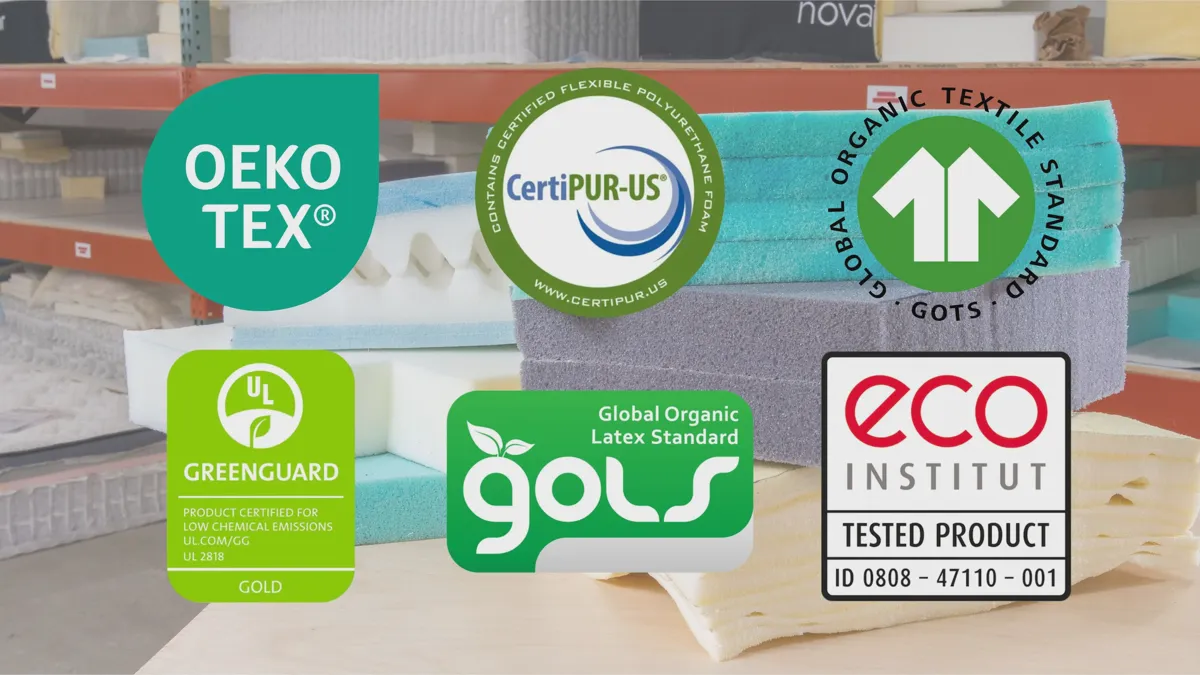
- No GOLS or GOTS certification (those apply to organic latex and organic cotton, which DreamCloud does not use).
- No third-party Greenguard Gold certification on the finished mattress.
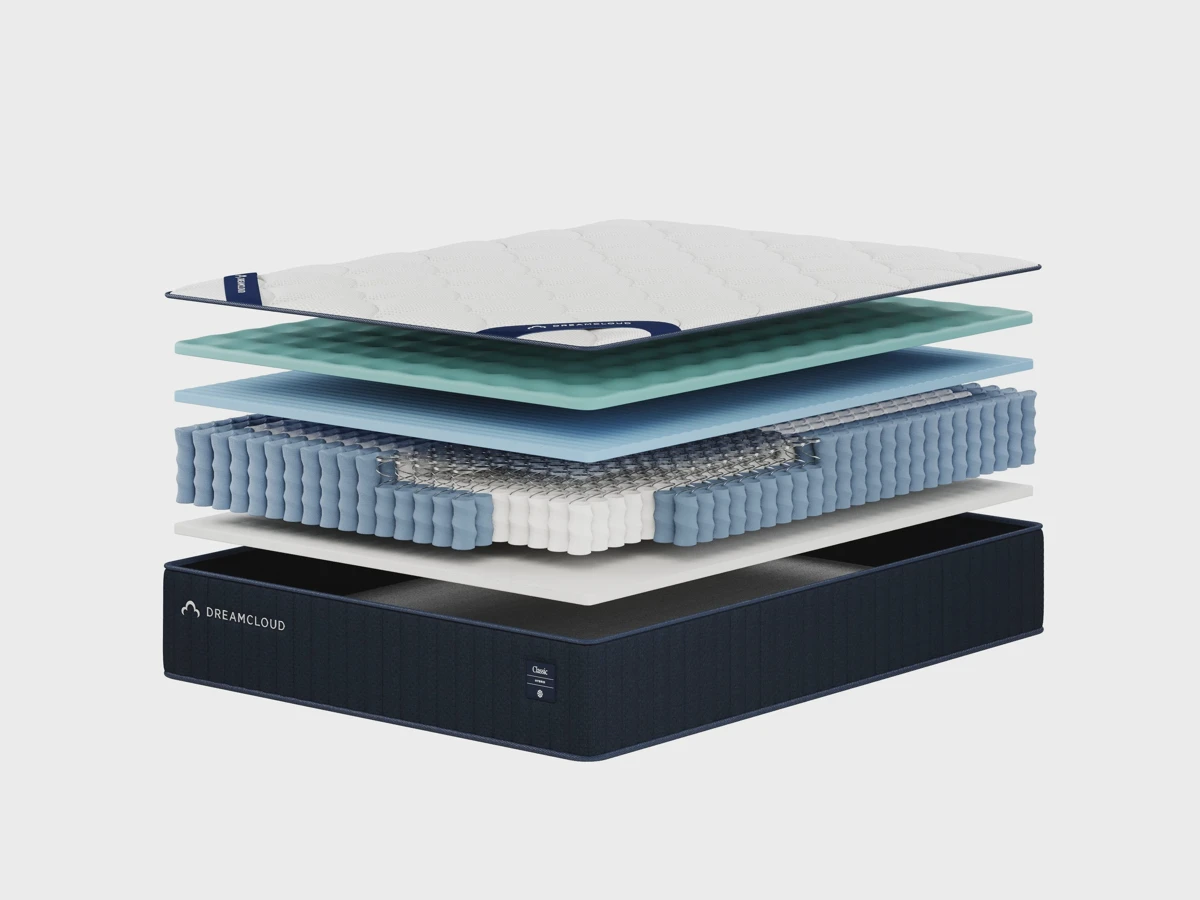
What's actually inside a DreamCloud mattress
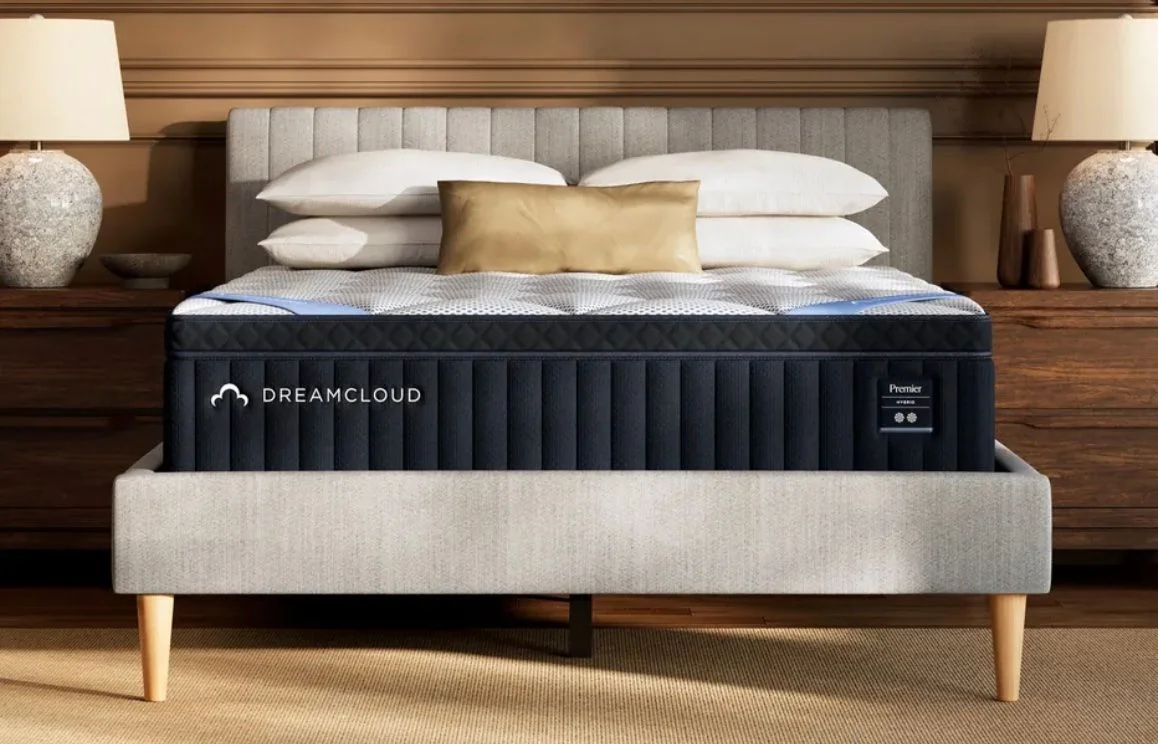
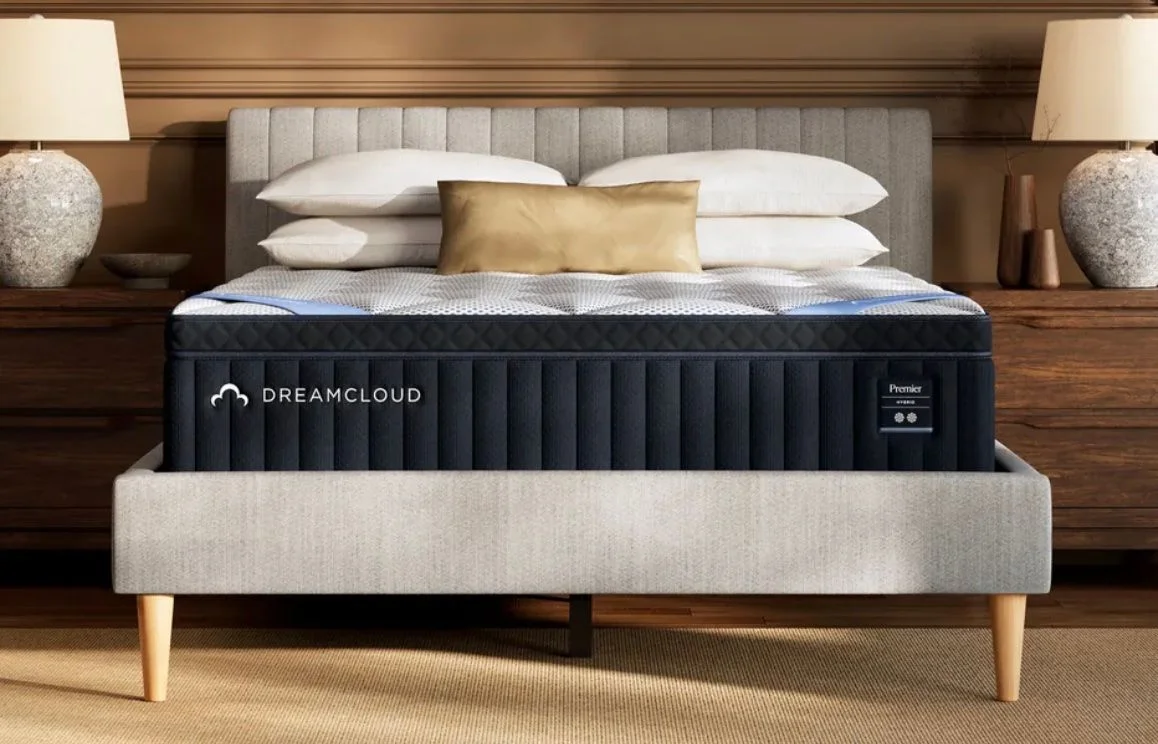
DreamCloud's lineup (Classic Hybrid, Premier, Premier Rest) shares the same five-layer architecture. Each layer matters for the toxicity question because the certifications apply per material, not to the mattress as a whole.
1. Cashmere-blend quilted cover
A cashmere and polyester blend, lightly quilted with foam. The cover is OEKO-TEX Standard 100 tested, which means the finished textile has been screened for over 350 harmful substances including azo dyes, formaldehyde, and heavy metals. It is removable on the Premier Rest only.
2. Gel-infused memory foam
A pressure-relief layer infused with cooling gel beads. CertiPUR-US certified - produced without ozone depleters, PBDE flame retardants, mercury, lead, formaldehyde, or phthalates regulated by the Consumer Product Safety Commission.
3. Transition polyfoam
A firmer polyurethane foam that bridges the soft top to the coils below. Same CertiPUR-US certification as the memory foam.
4. Individually wrapped coils
Steel pocketed coils in five firmness zones. Steel is inert and not part of the toxicity conversation - but it's worth noting that switching from all-foam to a hybrid like DreamCloud actually reduces the volume of foam in the bed, which lowers total VOC load.
5. Base polyfoam
A thin support polyfoam underneath the coils. CertiPUR-US certified.
What CertiPUR-US actually means
CertiPUR-US is the most-cited certification in the boxed-bed market, and it is meaningful - but it is narrower than buyers often assume. It is a foam-emissions program, not an organic certification.
To carry the CertiPUR-US seal, a foam must be tested by an independent lab and confirmed to be made without:
- Ozone depleters
- PBDEs, TDCPP, or TCEP ("Tris") flame retardants
- Mercury, lead, or other heavy metals
- Formaldehyde
- Phthalates regulated by the U.S. CPSC
- Low VOC emissions (under 0.5 parts per million)
What it does not certify: that the foam is plant-based, biodegradable, or organic. DreamCloud's foams pass the emissions test; they are still petroleum-derived polyurethane.
Does DreamCloud have fiberglass?
No. This is the single biggest concern shoppers raise about boxed mattresses, and DreamCloud has confirmed publicly that none of their mattresses contain fiberglass. The fire barrier is a non-fiberglass blend (typically rayon and silica) sewn into the cover. This matters because the fiberglass scare cases - Zinus, Nectar's older builds, and others - happened when buyers removed the cover and released loose glass fibers. Even on DreamCloud, leaving the cover on is the right call: covers are part of the certified system.
Off-gassing: what to expect in the first 72 hours
Every foam mattress shipped compressed in a box will release a faint chemical odor when first unrolled. This is not toxicity - it's residual gases trapped during compression escaping into open air. Independent reviewers including NapLab and Sleep Foundation describe DreamCloud's off-gassing as mild and short-lived.
Practical playbook for the first three days:
- Unbox in a well-ventilated room and open a window for the first 24 hours.
- Let the mattress decompress for at least 4 to 6 hours before sleeping on it.
- If the smell is strong on day one, run a fan across the surface - that drops it noticeably by night two.
- Wash the cashmere-blend cover slip or your sheets before putting them on; new fabric sometimes amplifies the perception of "new mattress smell."
If a foam mattress still smells noticeably after 7 days, that's outside the norm - contact the manufacturer.
Who should still consider an organic alternative
DreamCloud is a safe, low-emissions choice for the vast majority of sleepers. But CertiPUR-US is not the same as organic, and a few groups will be better served looking at GOLS/GOTS-certified options like Avocado Green or Saatva Latex Hybrid:
- Sleepers with multiple chemical sensitivity (MCS) or severe asthma triggered by trace VOCs.
- Buyers prioritizing biodegradability or a fully petroleum-free build for environmental reasons.
- Anyone wanting a removable, machine-washable organic cotton cover.
For everyone else - shoppers who want a hybrid that sleeps cool, supports the spine, and is free of the chemicals U.S. consumer-protection law actually regulates - DreamCloud clears the bar.
DreamCloud safety: frequently asked questions
Is DreamCloud chemical-free?
No mattress is fully chemical-free - the term is a marketing fiction. DreamCloud is free of the specific chemicals CertiPUR-US screens for: PBDEs, formaldehyde, heavy metals, ozone depleters, and regulated phthalates. The polyurethane foam itself is a chemical product, but its emissions are below the certification threshold.
Does DreamCloud contain fiberglass?
No. DreamCloud has publicly confirmed that no model in their lineup uses fiberglass as a fire barrier. The fire sock uses a rayon and silica blend instead.
How long does DreamCloud off-gassing last?
For most owners the noticeable smell fades within 24 to 72 hours of unboxing in a ventilated room. Faint residual odor can linger up to a week. Beyond seven days is unusual and worth a call to support.
Is DreamCloud safe for people with allergies?
Generally yes. The foam is hypoallergenic, the cover is OEKO-TEX tested, and there's no fiberglass to release fibers. Sleepers with severe latex allergies are also safe - DreamCloud does not use natural or synthetic latex.
Is DreamCloud Greenguard Gold certified?
Not as a finished mattress. The component foams hold CertiPUR-US, which has lower VOC limits than the basic Greenguard standard but is not interchangeable with Greenguard Gold.
Can I sleep on a DreamCloud the night I unbox it?
Yes, after letting it expand for 4 to 6 hours. The first night may have a faint odor; sleeping with the bedroom door open helps.