
Short answer: most reputable hotels change the fitted sheet, flat sheet, and pillowcases between every guest, and again every 2 to 3 days during a multi-night stay. The murkier truth lives one layer up - in the comforter, duvet cover, decorative throws, and the bed runner that almost certainly didn't get washed when you walked in. This guide pulls together what major chains actually do, what the AHLA cleaning standards require, and the small visual checks that tell you in 30 seconds whether your room was properly turned.
Quick answers travelers ask most
Do hotels change sheets between every guest?
Yes - at any branded chain or AAA-rated property, the fitted sheet, flat sheet, and pillowcases are stripped and replaced between every check-out. This is a non-negotiable industry standard backed by the American Hotel & Lodging Association cleaning protocols. Independent budget motels are the only category where compliance varies.
How often do hotels change sheets during a multi-night stay?
The default is every 2 to 3 days, or any time you ask. Many hotels now run an opt-in linen reuse program (the small card on the bed) where sheets are only refreshed every 3 days or on request to save water and energy. Luxury and 5-star properties typically still offer daily changes.
Do hotels actually wash the comforter or duvet between guests?
Honestly, no - not the bulky comforter itself. The industry workaround is triple-sheeting: a top sheet covers the comforter so guest skin never touches it, and that top sheet is laundered every turn. Where a duvet cover is used, the cover is changed; the inner duvet is washed on a longer rotation (usually weekly to monthly).
How can I tell if my hotel sheets were actually changed?
Three quick checks: (1) sharp hospital-corner folds at the foot of the bed, (2) crisp, faintly starched feel on the top sheet, and (3) no stray hair or wrinkle creases under the pillows. If anything looks off, call the front desk - reputable properties will re-make the bed within 15 minutes.
What the industry standard actually is
The American Hotel & Lodging Association's Safe Stay guidelines, adopted by every major chain after 2020, require complete bed-linen replacement between guests. Linen in this context means the fitted sheet, flat sheet, pillowcases, and any duvet cover. Mattress protectors are inspected and replaced on visible soiling or every 30 to 90 days, depending on the property. The comforter or duvet itself is on a much longer rotation - and that's where guest expectations and reality diverge.
Sheet change frequency by room type
- Standard rooms (mid-range): between every guest, plus every 3 days during a stay
- Premium rooms (4-star): between every guest, plus every 2 days during a stay
- Suites and 5-star properties: between every guest, plus daily during a stay (turn-down service often re-folds the top sheet)
- Extended-stay (Residence Inn, Homewood): weekly by default, on-request between
- Vacation rentals and condos: between every booking only - no in-stay changes unless paid for

The dirty secret: comforters, duvets, and decorative pieces
If a survey asked travelers what gets washed between guests, almost everyone says "the whole bed." In reality, three layers usually do not: the comforter, the bed runner (that decorative strip across the foot), and any throw pillows that aren't sleeping pillows. These are washed on a rotation measured in weeks or months. The reason hotels still get away with this - and why most guests are fine in practice - is triple-sheeting: a flat sheet on the mattress, the comforter, then a second flat sheet over the comforter that tucks under at the head. Your skin only ever touches the laundered layers.
How to spot triple-sheeting
Lift the top of the bedspread and look for two distinct sheet edges before you hit the comforter. If you only see the comforter directly under one folded edge, it's not triple-sheeted, and the throw goes back in your closet - not on you.
Why frequent changes matter
- Removes dust mites, dander, and skin-cell buildup that triggers allergies
- Eliminates body oils, sweat, and any residual product transfer between guests
- Resets the visual and sensory "newness" guests pay a premium for
- Reduces bed-bug establishment risk by interrupting hiding cycles
- Required by chain-wide hygiene certifications (Safe Stay, Marriott Commitment to Clean)
Why hotels resist daily changes
- A single 200-room hotel washes ~6 tons of linen per week - water and energy cost is significant
- Industrial detergents and high-temperature wash cycles shorten linen lifespan
- Housekeeping labor is the largest variable cost in hotel operations
- Chemical runoff and microfiber shedding raise environmental compliance concerns
- Many guests prefer the eco-card option (and request the discount where offered)
How to verify your room in 30 seconds
- Pull back the bedspread. Look for crisp, parallel fold lines across the top sheet - a sign the sheet was just unfolded fresh from the linen cart, not re-tucked.
- Lift a pillow. The pillowcase should feel cool, faintly starched, and have no foreign hairs in the seams.
- Run your hand along the fitted sheet near the headboard. Wrinkles, body-heat warmth, or oil residue is a red flag - fresh sheets feel uniformly cool and smooth.
- Inspect the mattress seam for bed bugs. Pull the corner of the fitted sheet up and look at the piping for small dark spots (fecal traces) or live insects, especially behind the headboard.
- If anything is off, call the front desk and request a full re-make. Reputable properties will dispatch housekeeping within 15 minutes and almost always offer a small comp.
What this means for your bed at home
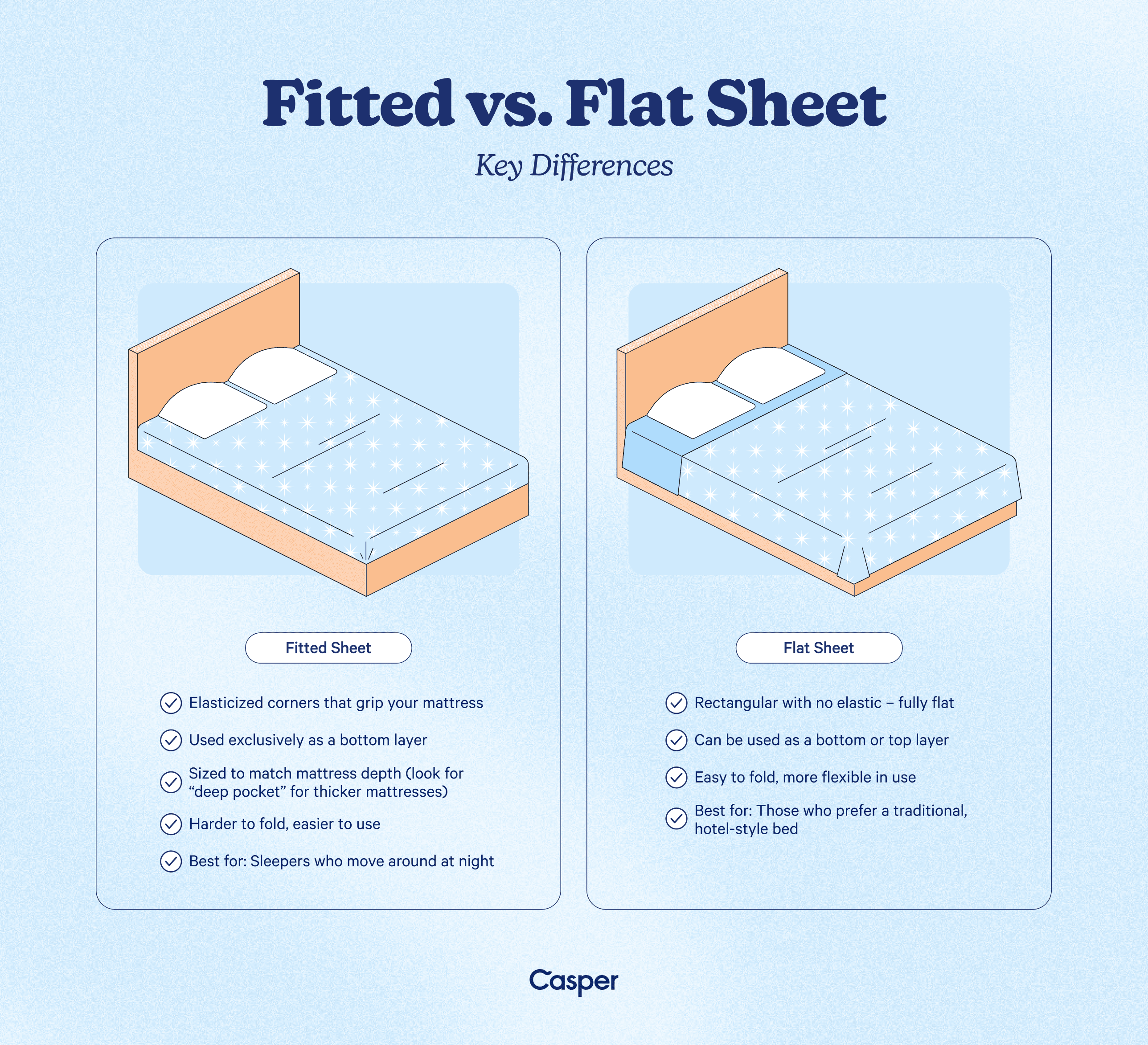
Hotel hygiene benchmarks set a useful floor for home routines. Sleep researchers and the National Sleep Foundation recommend washing fitted sheets, flat sheets, and pillowcases every 7 days in normal conditions, dropping to every 3 to 4 days if you sleep with pets, sweat heavily, or have allergies. If you've ever wondered whether to keep both a flat sheet and fitted sheet on your bed, our guide explains the trade-offs. Comforters and duvet covers should be washed monthly; the inner duvet quarterly. A waterproof mattress protector - washed every 60 days - does the same job as the hotel's mattress encasement: it keeps the mattress itself clean across years of nightly use.