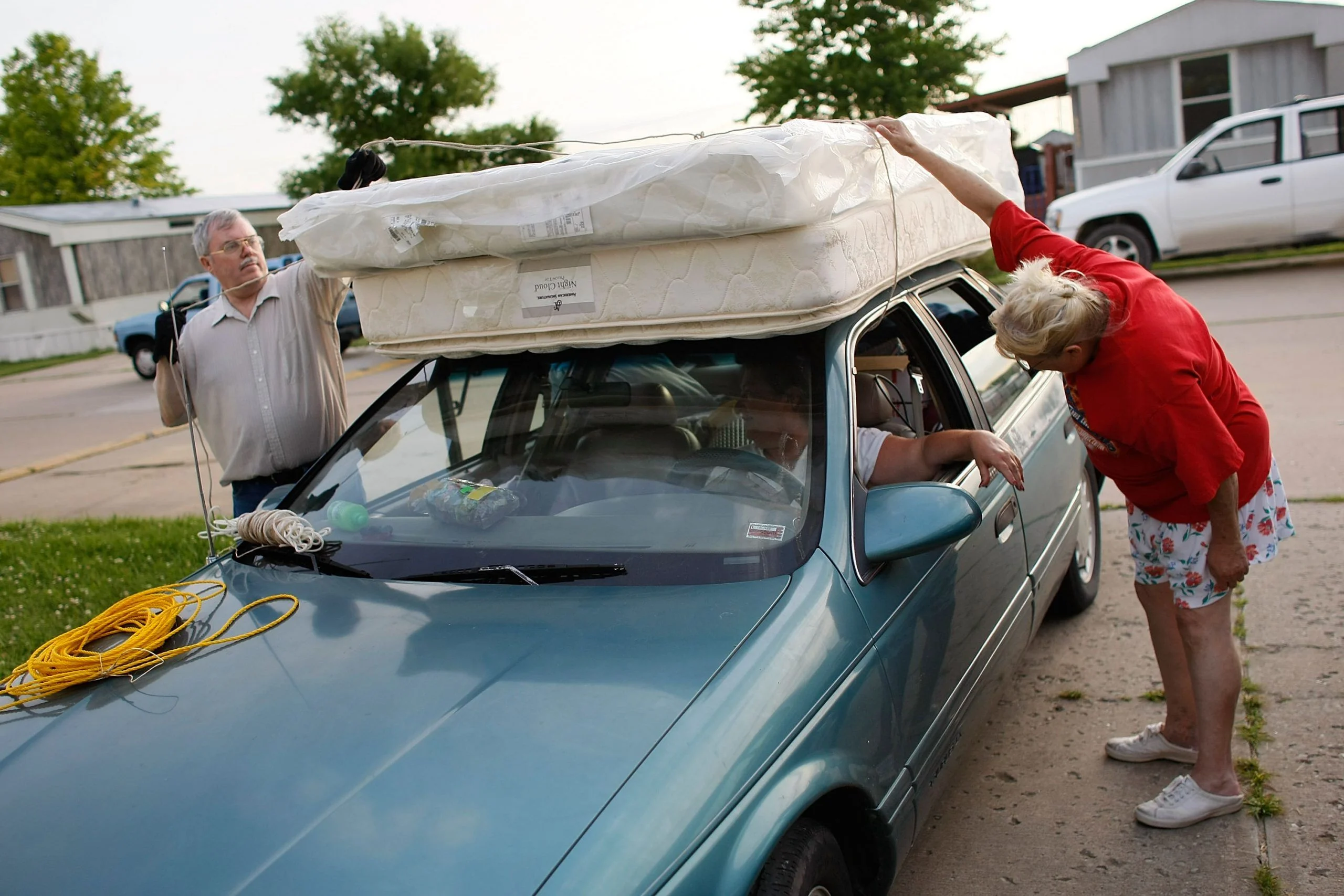
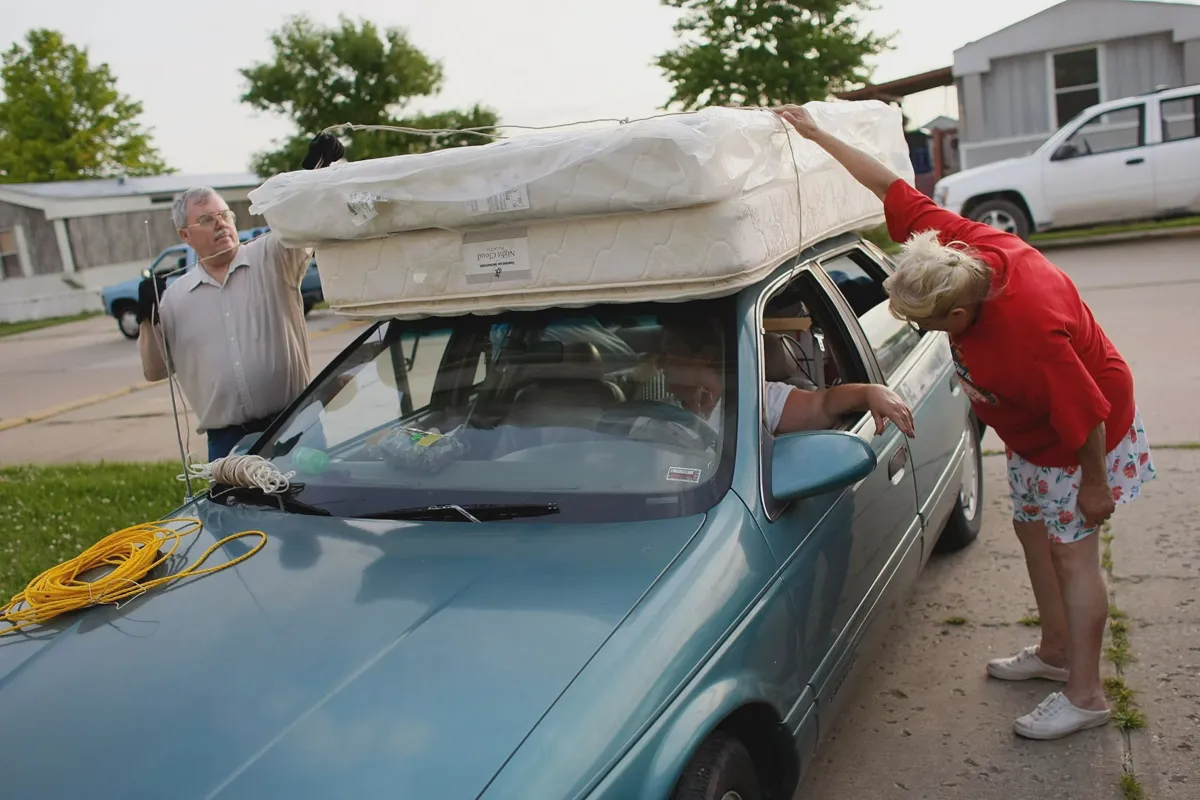
Moving day is hard enough without paying a delivery fee for the one item that won't fit inside your car. The good news: a queen or full box spring can be transported safely on a standard roof rack in under 15 minutes - if you use the right straps and tie them in the right pattern.
This guide walks through the exact procedure for both crossbar and crossbar-less roof racks, the gear you need, the legal rules most drivers don't know about, and the four mistakes that cause most roof-rack disasters. It applies to a box spring (the rigid foundation), and the same steps work for a mattress with one extra strap added across the middle.
Quick answers
Can you legally tie a box spring to a car roof?
Yes, in most U.S. states - but the load must be securely fastened, must not block the driver's view, and must not project unsafely beyond the vehicle. California Vehicle Code 24002 and similar statutes in other states fine drivers for unsecured loads, and falling cargo can trigger separate negligence charges. Always check your state's specific rules before driving.
How many straps do I need for a box spring?
Four ratchet straps minimum: two running front-to-back through any open windows or roof rack rails, and two running side-to-side over the box spring. A fifth strap diagonally across the top adds extra resistance against wind lift on highways.
Is rope or ratchet strap better?
Ratchet straps. Rope stretches under wind load, slackens within the first few miles, and most drivers don't know a load-bearing knot like the trucker's hitch. Ratchet straps with a 1,500+ lb working load limit lock in tension mechanically and stay tight.
How fast can I drive with a box spring on the roof?
Stay under 55 mph. Wind force on a flat surface increases with the square of speed - a box spring at 70 mph experiences over 1.6× the lift of one at 55 mph. Avoid highways in high wind or rain entirely.
What you'll need
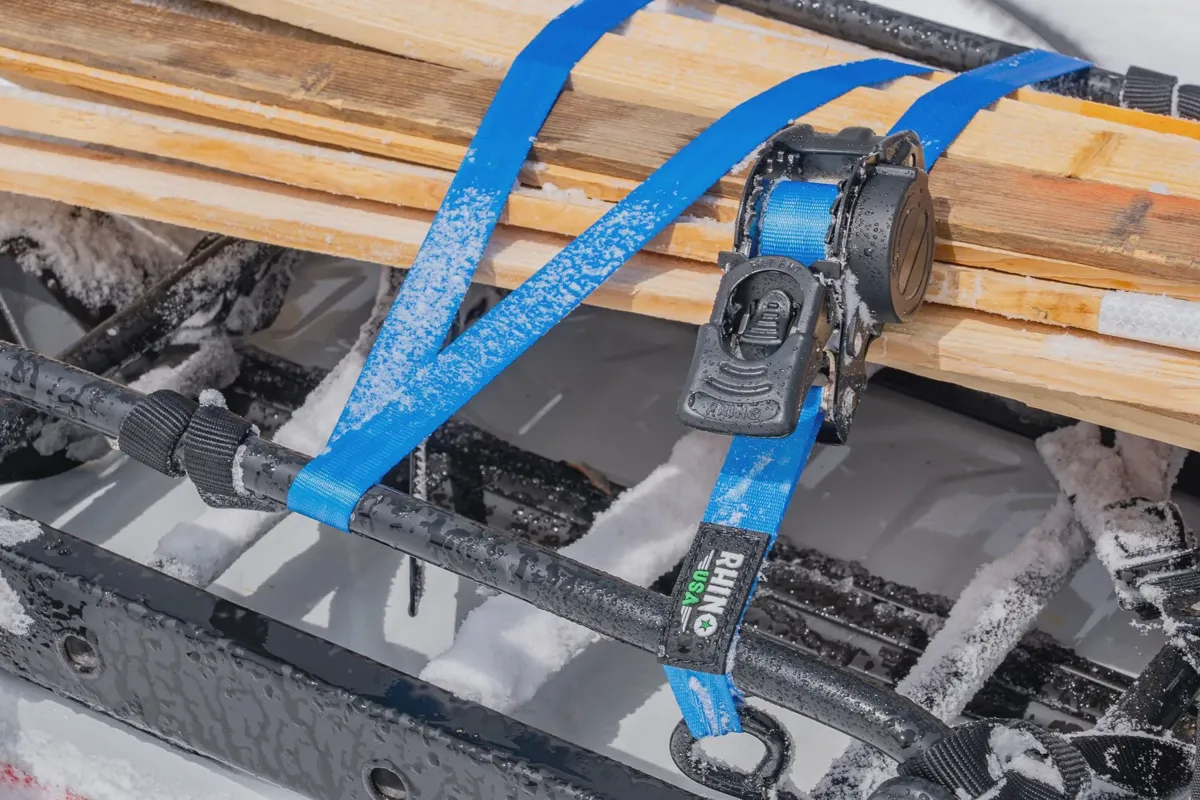
- Bold 4-5 ratchet straps rated 1,500 lb working load (avoid cam buckles for this job - they slip on smooth fabric).
- Foam padding or moving blankets - wrap any contact point where the strap crosses a corner.
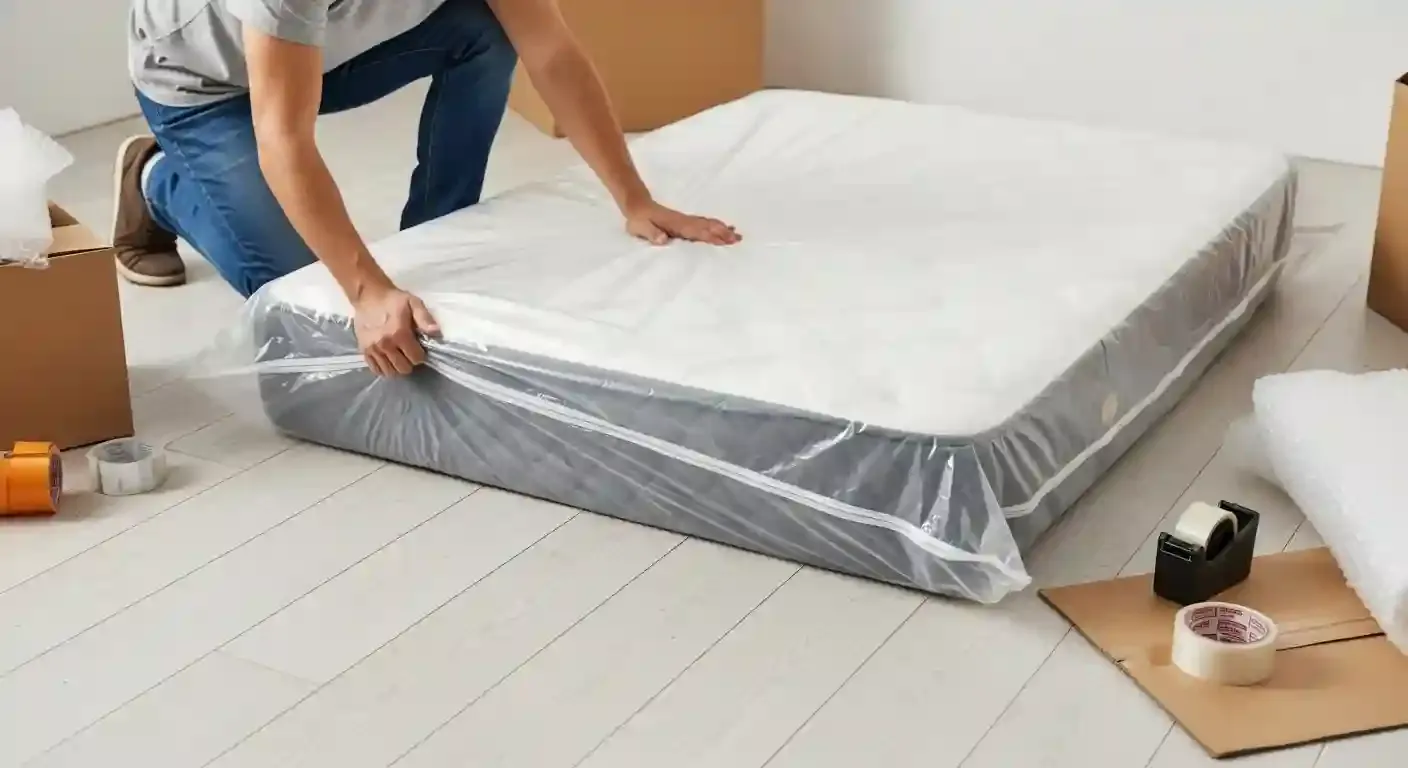
- A waterproof tarp or mattress bag sealed with packing tape (rain doubles the weight of a box spring fast).
- A helper - lifting and aligning a queen box spring solo on a sedan roof is how scratches and dropped corners happen.
How to tie a box spring to a roof rack with crossbars
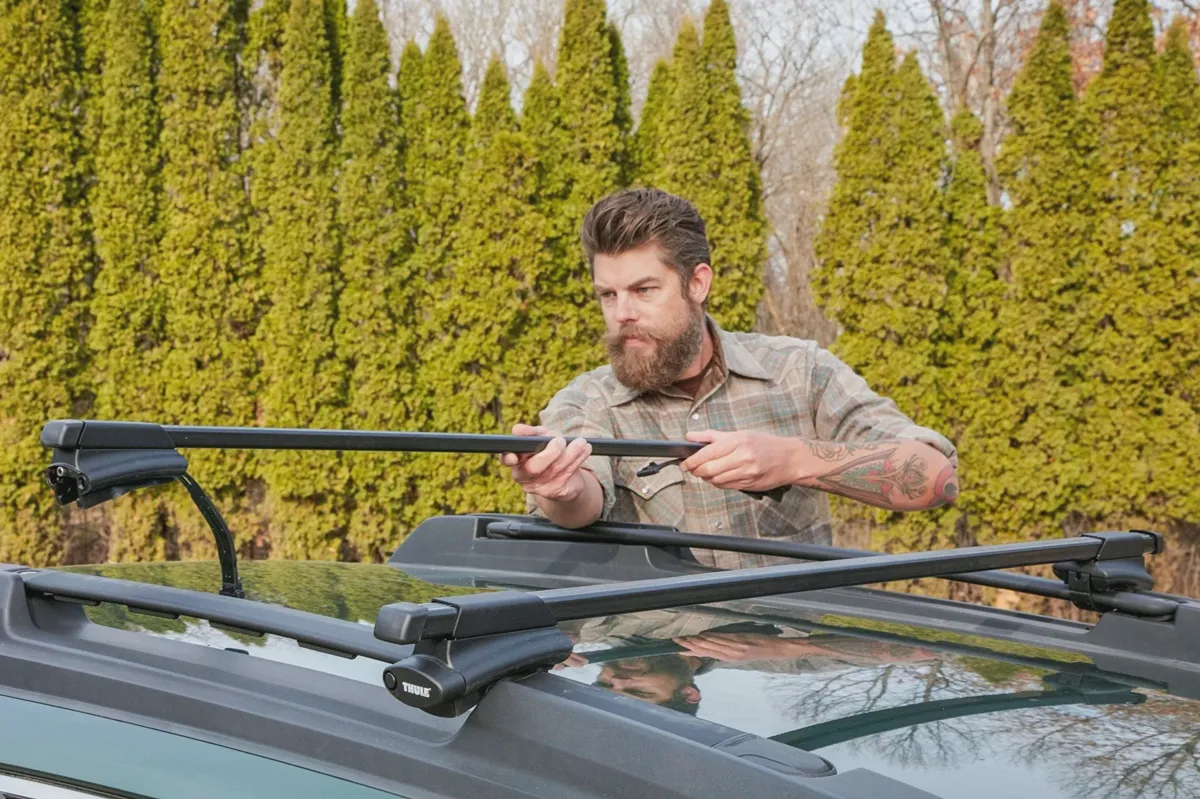
Crossbars (the metal bars running side-to-side across your roof) are the strongest tie points on most factory racks. Use them.
- Retract or remove the antenna and any roof-mounted accessories that could puncture fabric.
- Place the box spring fabric-side-down on the roof, centered so each crossbar sits roughly one-third of the way in from the front and rear edges.
- Run two ratchet straps lengthwise (front-to-back), threading each strap under both crossbars on its side and over the top of the box spring. This is the load-bearing pair.
- Run two more ratchet straps side-to-side over the box spring and through the open windows of the car (not the door frame - the strap will dent it). Roll the windows down, pass the strap, then roll up partway to pinch the strap.
- Hand-tighten all four straps evenly, then ratchet each one in alternating order (like tightening lug nuts on a wheel) until the box spring will not shift when you push it firmly side-to-side.
- Tuck and tie off all loose strap ends - a flapping strap at 55 mph chips paint and can whip around to break a window.
- Drive a slow 100-yard test loop in a parking lot. If straps feel loose afterward, re-tighten before joining traffic.
How to tie a box spring to roof rails (no crossbars)
Many SUVs ship with roof rails but no crossbars. Rails alone are not rated for the same load, so you compensate by adding straps and using the door frame for backup.
- Retract the antenna and lay the box spring on top of the rails, centered.
- Loop one ratchet strap under each rail at the front, up and over the box spring, then under the rail on the opposite side. Repeat at the rear. You now have two diagonal loops that cradle the box spring.
- Add a third strap through the open windows around the middle of the box spring for redundancy. This is the strap that saves you if a rail bracket fails.
- Tighten in alternating order until firm, then tie off any tail ends.
Skip this method entirely if you only have plastic decorative roof rails - they're styling, not structural. Rent a U-Haul cargo van or pickup instead.
Pre-drive checklist before you pull out
- Push the box spring hard from each corner - zero shift in any direction.
- Confirm both side mirrors and the rear window are unobstructed.
- Forecast: no high winds (over 25 mph) or heavy rain on your route.
- Plan a route that avoids highways above 55 mph if possible.
- Stop and re-check straps every 20 minutes for the first hour, then every 45 minutes after that.
Roof rack vs. truck rental
- No rental fee or fuel for a separate vehicle
- Works for short cross-town moves under 30 minutes
- Avoids cramming the box spring through tight doorways
- You already own most of the gear
When to skip the roof
- Compact cars and sedans without crossbars
- Highway-only routes over 55 mph
- Forecast shows wind gusts above 25 mph
- Box spring is wider than your roof
- Moving multiple items - rental is faster overall
Four mistakes that cause roof-rack disasters
1. Using rope instead of ratchet straps
Polypropylene rope can stretch 3-5% under load. After 10 minutes of highway driving, that stretch translates to a visibly loose box spring. Unless you can tie a textbook trucker's hitch and inspect every 15 minutes, ratchet straps are non-negotiable.
2. Threading straps through the door frame
Closing a door on a strap creates a stress riser at the seal - the strap will eventually cut through weatherstripping and dent the door frame. Always thread through fully open windows.
3. Skipping the protective wrap
A box spring's fabric will absorb road grit, rain, and pollen at speed. Worse, a strap dragged tight over an unprotected corner will tear the casing. Wrap with a tarp or mattress bag, then add foam pads at every strap contact point.
4. Trusting the first 10 minutes
Straps settle. Fabric compresses. The first 20 minutes of driving will reveal any slack you missed in the parking lot. Pull over the first chance you get, re-tension every strap, and your load will stay locked for the rest of the trip.
Know your state's law
Every U.S. state requires "securely fastened" cargo, but the specifics vary. California, Washington, and New York can fine drivers $200-$1,000 for unsecured loads. In 16 states, falling cargo that causes injury can be charged as misdemeanor negligence. The Federal Motor Carrier Safety Administration's tie-down standards (which most states reference) require the working load limit of all securement devices to total at least half the cargo's weight - for a 60 lb box spring that's trivially met by any single ratchet strap, but the four-strap pattern is what passes a state trooper's eyeball test.
When to skip the roof entirely
Some moves aren't worth the risk. If your route includes a 70 mph interstate stretch over 30 minutes, if your only rack is plastic rails, or if the forecast shows gusts above 25 mph, the safer (and often cheaper, once you factor a damaged car) option is a U-Haul pickup at $20-$35 for a local move. Mattress delivery from the retailer is sometimes free with a new purchase - ask before driving home with one on the roof.
Shopping for a new mattress instead?
Browse our latest mattress reviews and buying guides - we've tested over 1,000 mattresses across every major brand.