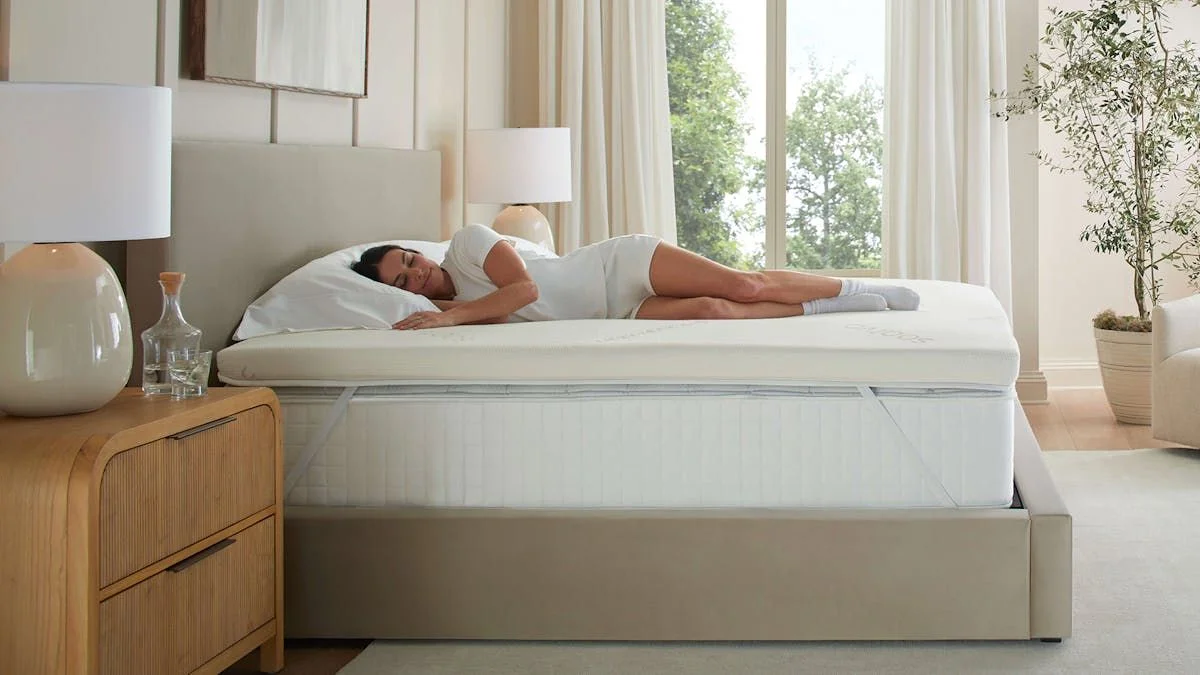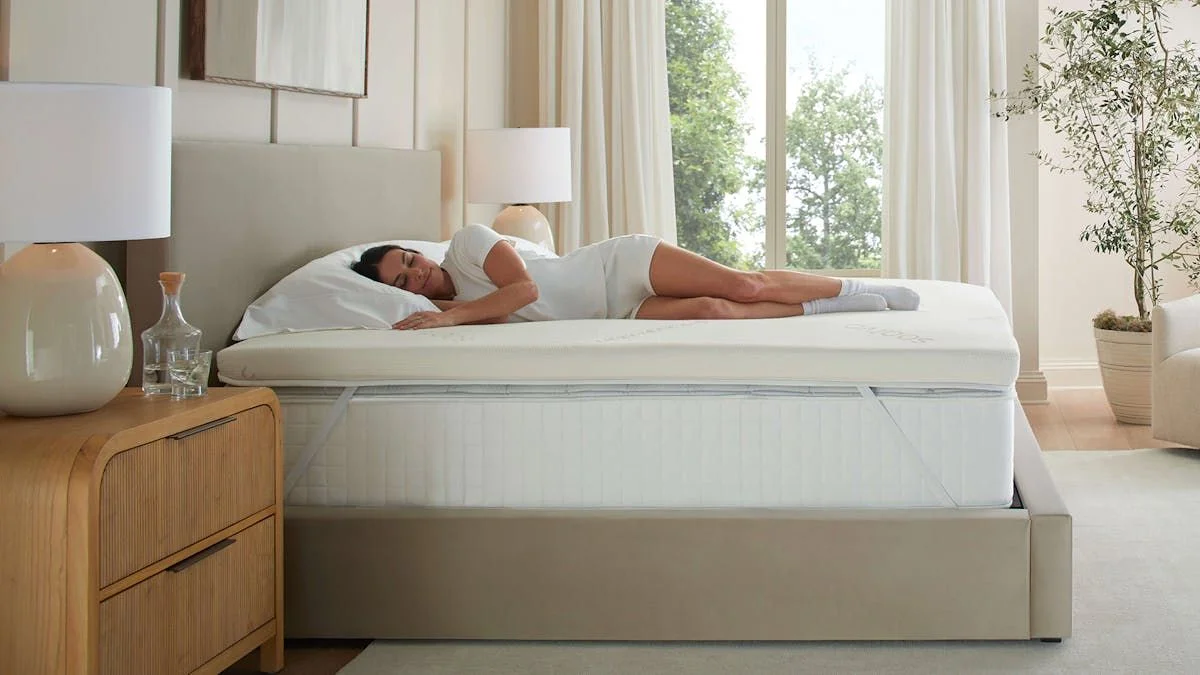
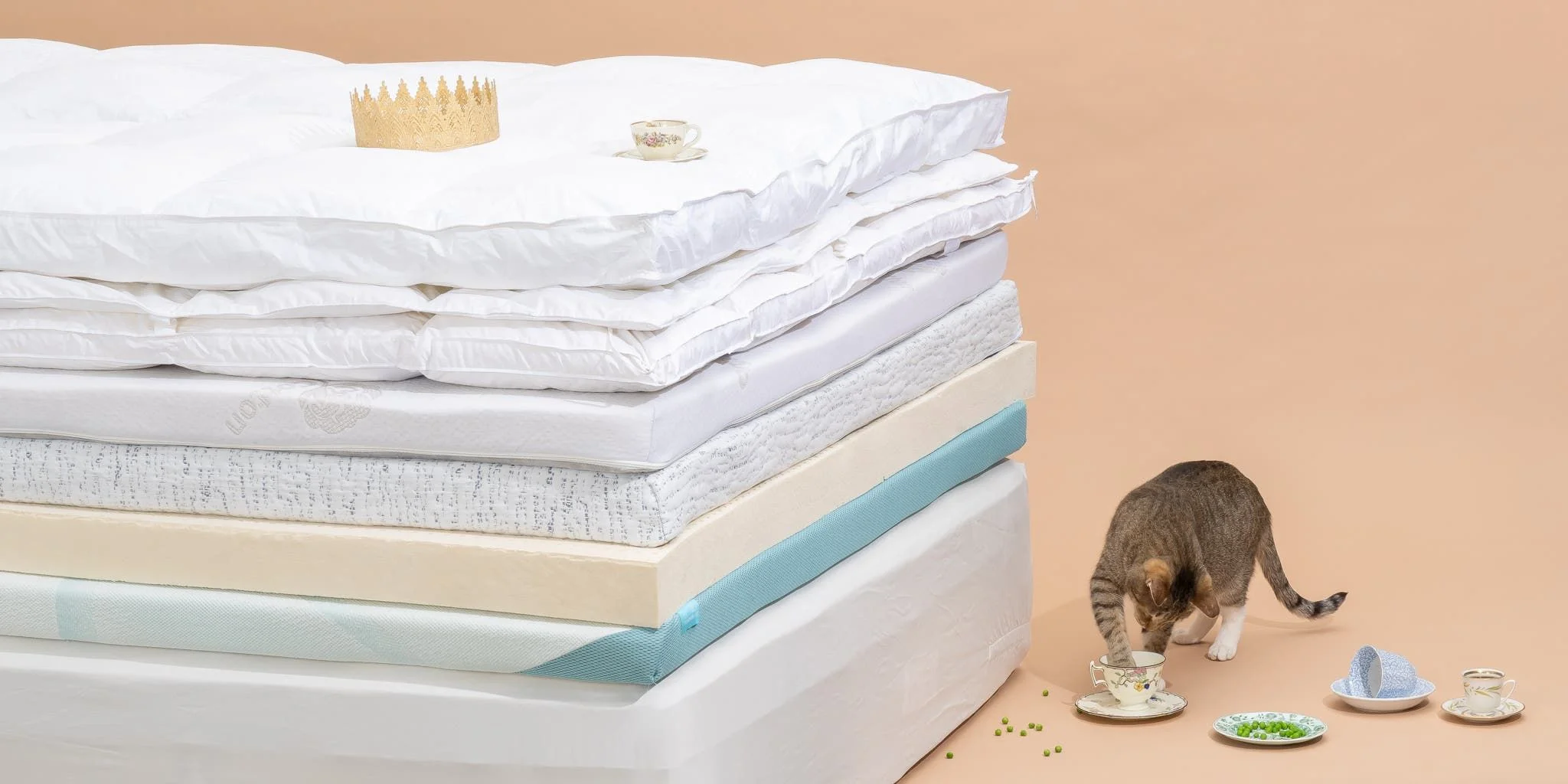
A mattress topper is the cheapest meaningful upgrade you can make to your bed. The right one softens a too-firm mattress, props up a sagging one, adds a cooling layer for hot sleepers, or buys you another year or two before you have to replace the whole thing. The catch: most people install them wrong. They put the topper on top of the fitted sheet, skip the 24-hour expansion window for foam, or wonder why it slides off the bed every night.
This guide walks through the actual sequence - unboxing, layering, securing, and cleaning - so your topper does what it's supposed to do.
Where a mattress topper goes in the bedding stack
From the bed up, the correct order is:
- Mattress
- Mattress topper (directly on the bare mattress)
- Mattress protector (optional, but recommended for foam toppers)
- Fitted sheet (deep-pocket, 15 inches or more)
- Flat sheet, blanket, comforter
The topper sits below the fitted sheet, not above it. A topper laid on top of a fitted sheet has nothing to grip and shifts with every roll. A protector goes over the topper because the topper is the expensive layer you're trying to keep clean - sweat and skin oils otherwise soak into the foam and break it down faster than the mattress underneath.
Step 1: Unbox and let it expand
Memory foam and gel-foam toppers ship vacuum-rolled. When you cut the plastic, give it 24 to 48 hours to fully expand on a flat surface in a well-ventilated room. Two reasons:
- Foam needs time to reach full loft. Sleeping on a half-expanded topper produces uneven support and can permanently dent the foam.
- Off-gassing. New foam releases a chemical smell (volatile organic compounds) that fades over a day or two of airing.
Latex, wool, and feather toppers don't need an expansion window - fluff feather toppers by hand, and shake out folds in latex or wool before placement.
Step 2: Strip the bed and clean the mattress surface
Pull off all sheets and any existing protector. Vacuum the mattress with an upholstery attachment to clear dust and skin flakes - anything left under the topper gets pressed into the foam over the next year. If there are stains, spot-clean with a 50/50 mix of cold water and white vinegar, then let the mattress dry completely before layering.
For deeper stains or older mattresses, see whether you Can you use a BISSELL carpet cleaner on a mattress.
Step 3: Position the topper, textured side up
Lay the topper on the bare mattress and center it corner-to-corner. Two orientation rules:
- Egg-crate or convoluted foam: the bumpy side faces up. The peaks distribute weight and improve airflow; the flat side anchors against the mattress.
- Pillow-top or quilted toppers: the soft side faces up, the firmer base or grip layer faces down.
- Toppers with a non-slip grid or rubber backing: that side goes down on the mattress.
Match the size to your mattress (a queen topper on a queen bed). A topper that's a little smaller will leave bare strips at the edges; one that's bigger will bunch and shift.
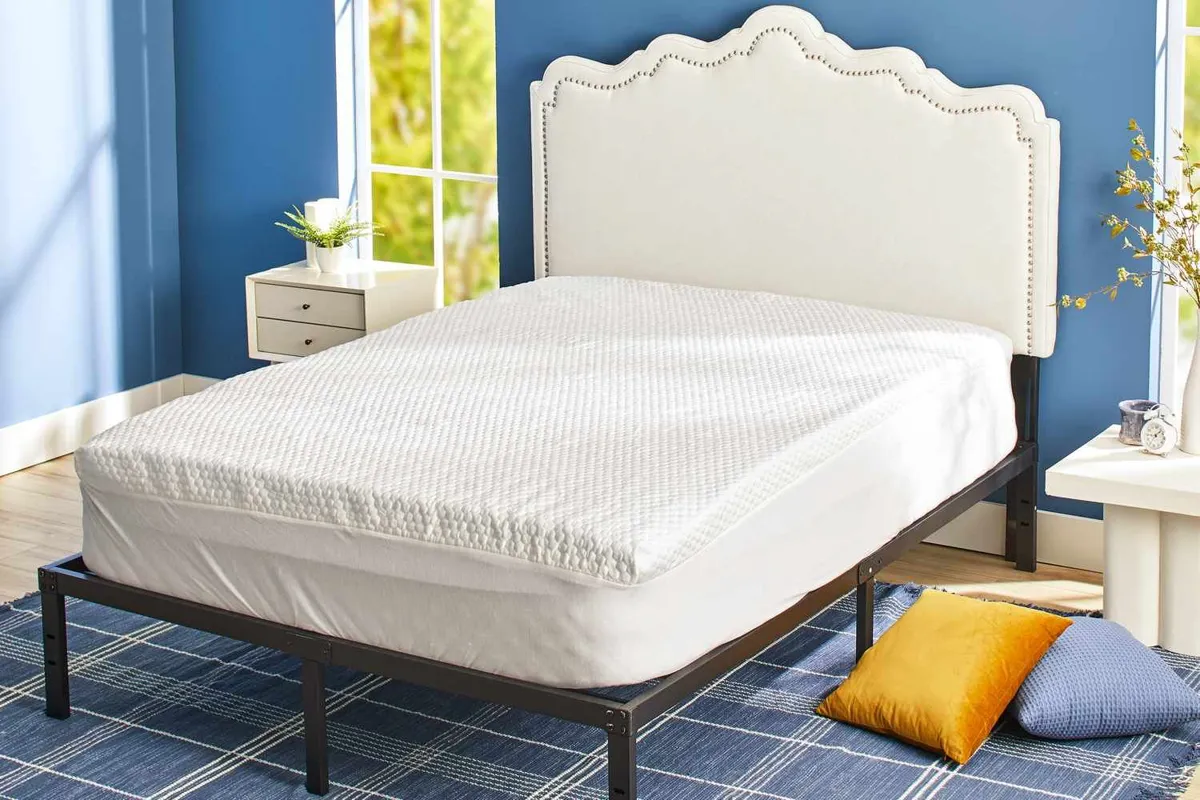
Step 4: Secure it so it doesn't slide
A topper that shifts every night ruins its support and is annoying to remake. Three things hold it in place, in order of effectiveness:
- Built-in elastic corner straps. Hook them under the mattress corners. Most foam and feather toppers ship with these.
- A deep-pocket fitted sheet. Standard fitted sheets fit mattresses up to 12 inches; with a topper added, you usually need a 15- to 18-inch deep-pocket sheet to clamp the topper and mattress together.
- Sheet suspenders or a non-slip grip pad between the mattress and topper, if your topper has no straps and still slides.
If you sleep on a memory-foam mattress, the topper grips the foam better than it would a smooth innerspring cover, and you may not need straps at all.
Step 5: Add a protector, then sheets
A waterproof mattress protector laid over the topper extends its life significantly - foam absorbs sweat and oils that you can't easily wash out. Choose a protector with a deep skirt that fits over both the topper and mattress so it doesn't ride up. Then a deep-pocket fitted sheet goes over everything, followed by your usual top sheet, blanket, and comforter.
Choosing the right topper for your sleep style
How you use a topper depends partly on what you bought. Quick guidance by sleeper type:
- Side sleepers: 2- to 3-inch memory foam or soft latex. The softer surface lets shoulders and hips sink in for spinal alignment. Avoid firm toppers - they push back against pressure points.
- Back sleepers: medium-firm memory foam or latex. You want lumbar support without the topper sagging at the hips.
- Stomach sleepers: a thin (1- to 2-inch) firm latex or high-density foam topper. A thick soft topper lets the hips drop and arches the lower back.
- Hot sleepers: gel-infused memory foam, latex, or wool. Skip standard memory foam - it traps heat. Look for ventilation channels or open-cell foam.
- Heavier sleepers (230+ lb): high-density foam (4 lb/cu ft or higher) or latex, 3 inches minimum. Lower-density foam compresses through to the mattress and feels like nothing's there.
Cleaning and maintenance
A topper lasts 3 to 5 years with basic care, longer with a protector. Routine:
- Vacuum both sides every time you change sheets - every two to three weeks is reasonable.
- Spot-clean stains with a cloth, mild detergent, and cold water. White vinegar diluted 1:1 with water handles most stains and odors. Don't soak foam - it doesn't dry well and can grow mold inside.
- Deodorize by sprinkling baking soda across the surface, leaving it 30 to 60 minutes, then vacuuming.
- Air-dry only. Foam toppers can't go in a dryer; the heat melts the cells. Lay flat or hang outdoors in shade - direct sun yellows foam and degrades latex.
- Rotate head-to-foot every 3 to 6 months so body impressions don't form in the same spot.
Most memory foam and latex toppers are not machine-washable. Feather, fiber-fill, and some cotton or bamboo-cover toppers are - check the care tag.
When a topper isn't the answer
A topper is a comfort layer, not a structural fix. If your mattress sags more than an inch, has broken springs, or is older than 8 to 10 years, a topper will mask the problem briefly and then conform to the dip. At that point, replace the mattress.
Likewise, a topper won't fix a mattress that's too soft for you - adding cushioning to a bed that already lets you sink doesn't help. In that case you need a firmer base mattress, not a softer top layer.
Mattress topper FAQ
Does a mattress topper go under or over the fitted sheet?
Under. The topper sits directly on the mattress, then the fitted sheet stretches over both. A topper placed on top of the sheet has nothing to grip and slides off.
How long should I let a memory foam topper expand?
24 to 48 hours on a flat surface in a ventilated room. Sleeping on it sooner can permanently dent the foam and traps off-gassing odors.
Which side of an egg-crate topper goes up?
Bumps up. The peaks improve airflow and distribute weight; the flat side anchors against the mattress.
Do I need a deep-pocket fitted sheet?
Usually yes. A 2- to 4-inch topper plus a standard mattress often exceeds the 12-inch depth of a regular fitted sheet. Look for sheets labeled deep-pocket or 15+ inch depth.
How do I keep my mattress topper from sliding?
Use the built-in corner straps if it has them, layer a deep-pocket fitted sheet over the topper and mattress together, and add a non-slip grip pad between the mattress and topper if it still moves.
Can I wash a mattress topper?
Memory foam and latex toppers are spot-clean only - water soaks in and they don't dry properly. Feather, fiber-fill, and some cotton-cover toppers are machine-washable; always check the care tag.
How long does a mattress topper last?
Three to five years for foam, longer for latex and wool. Using a mattress protector over the topper roughly doubles its lifespan by keeping sweat and oils out of the material.
Will a topper fix a sagging mattress?
Only briefly. A topper adds comfort but conforms to the dip below it. If the mattress sags more than an inch or is over 8 years old, replace the mattress instead.