Short answer: yes, but only as a spot or upholstery extractor - never run a full carpet wand across a mattress, and never on memory foam or latex. A consumer carpet cleaner pushes water and detergent into fabric, then suctions it back out. That works on innerspring or hybrid mattresses if you keep the moisture light and the drying aggressive. On dense foam, the same machine traps water deep inside the foam where it can stay damp for days, and damp foam grows mold.
This guide breaks down what is actually safe by mattress type, the exact step-by-step for spot treatment, what voids your warranty, and which cheaper alternatives clean almost as well without the mold risk. If you are leaning toward a different DIY method, see our companion guide on whether you can spray rubbing alcohol on a mattress before you grab any liquid.
Can You Use a Carpet Cleaner on a Mattress?
Yes - with three big caveats:
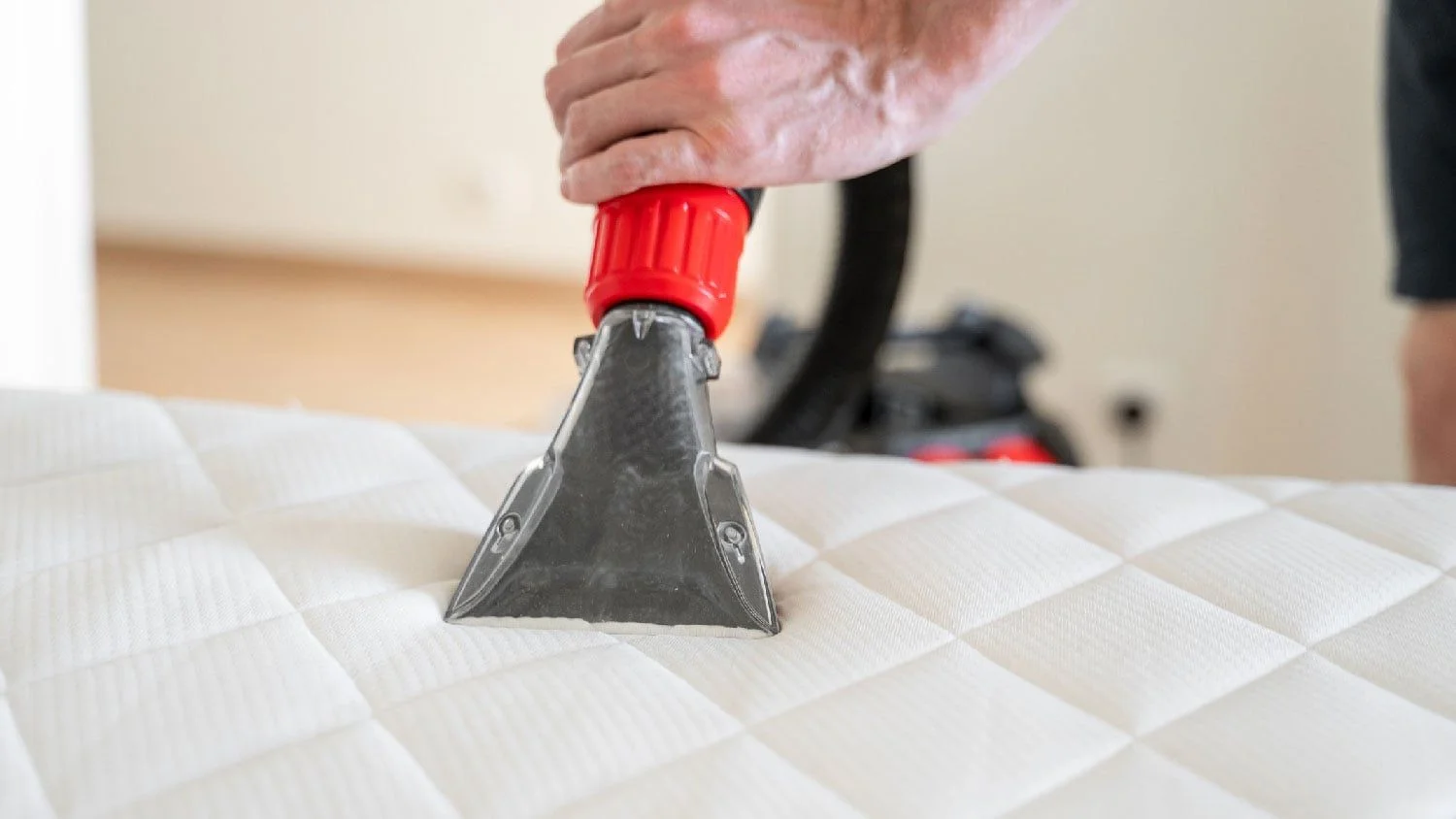
- Use the upholstery or hand tool, not the floor head. The floor head is built to push solution deep into thick carpet pile; on a mattress it oversaturates.
- Use the lowest possible moisture setting. Most modern spot cleaners (Bissell Little Green, Hoover CleanSlate, Rug Doctor Portable) have an upholstery mode that meters the spray. Use it.
- Match the method to the mattress. Innerspring and hybrid mattresses tolerate light water-based cleaning. Memory foam and latex generally do not.
Both Purple's care guide and the Google AI Overview for this query agree on the same rule: keep the mattress damp, not wet, and dry it 100% before sheets go back on.
Mattress Type Matters More Than the Machine
The real question is not "which carpet cleaner" - it is "what is your mattress made of."
Innerspring and hybrid: These have an open coil layer that lets air circulate. A light pass with a portable extractor, followed by a few hours of fan drying, is generally safe. Most professional upholstery cleaners will clean an innerspring mattress this way.
Memory foam: Foam acts like a sponge. Water that gets past the cover saturates the cells and dries from the outside in, which can take 2-5 days. Trapped moisture leads to musty odor at best and mildew at worst. Spot-treat only - never run an extractor across the whole surface.
Latex: Similar to memory foam. Natural latex does not handle prolonged moisture well, and the rubber compound can degrade if you hit it with hot water and detergent repeatedly.
Pillow-top, Euro-top, or quilted covers: The top quilt layer holds water longer than a flat ticking. Even on an innerspring base, treat these like foam - spot only.
Bed-in-a-box brands (Purple, Casper, Tempur-Pedic, Saatva, Helix, Nectar): Check the warranty card before any liquid cleaning. Several explicitly void coverage if the mattress is "wet cleaned" or shows water staining inside the cover.
How to Use a Carpet Cleaner on a Mattress (Spot Treatment)
This is the safe pattern that works across mattress types. Total time: 30-45 minutes of active work plus 6-24 hours of drying.
1. Strip the Bed and Vacuum First
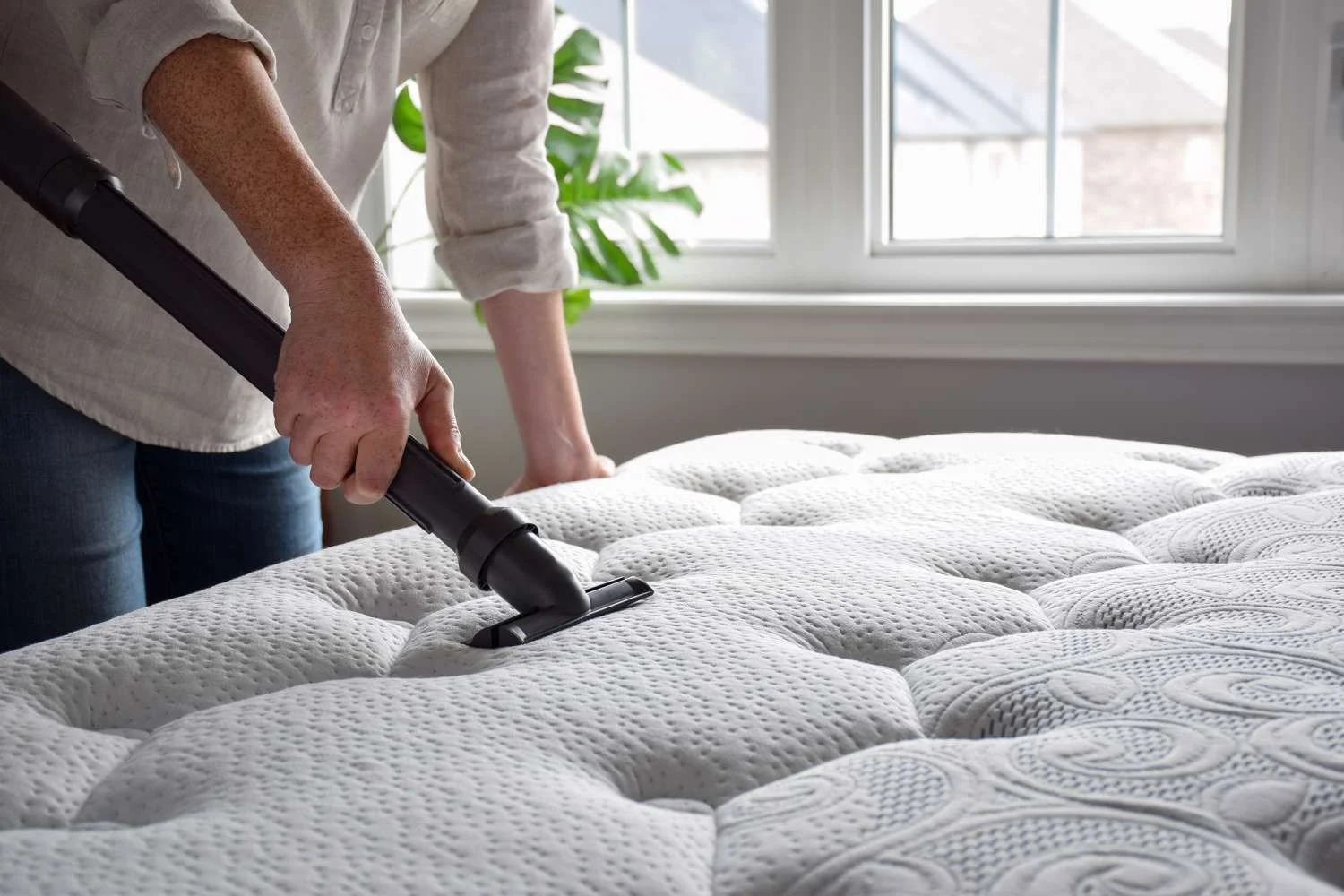
Remove all sheets, the protector, and any topper. Wash the sheets while you work. Run a vacuum with an upholstery brush attachment over the entire mattress - both sides if you can flip it. This step matters: pushing water through dust creates a slurry that drives stains in deeper.
2. Patch Test the Cleaning Solution
Spray a small amount of your chosen solution on a hidden corner - under where the pillows go, or near the base by the bed frame. Wait five minutes and blot with a white cloth. If you see color transfer or the fabric reacts, switch products. Test even if you have used the cleaner before; mattress tickings vary by model.
3. Pre-Treat the Stain
For organic stains (urine, sweat, blood, vomit) use an enzyme cleaner - these break the proteins down rather than just diluting them. For coffee, wine, or food, an upholstery-rated detergent works. Avoid anything labeled "carpet shampoo" only; the surfactant load is too high and rinses poorly out of mattress fabric.
4. Apply the Cleaner Lightly
Switch the machine to upholstery or hand-tool mode. Spray a light mist directly on the stain, not the surrounding fabric. The goal is to dampen the surface - if you see liquid pooling or the fabric darkens past the stain edge, you are using too much.
5. Extract Immediately
Pull the trigger for suction without spraying, and run it back and forth across the wet area. Repeat until no more liquid comes up. Two or three light spray-and-extract passes pull more dirt than one heavy soaking, with a fraction of the moisture left behind.
6. Blot, Then Dry Aggressively
Press a dry white towel into the area and stand on it for ten seconds. This wicks out water the machine missed. Then strip the room down: open windows, run a box fan or ceiling fan directly on the mattress, and ideally point a dehumidifier at the bed. Stand the mattress on its side against a wall if the manufacturer allows it; airflow on both faces cuts drying time in half.
Do not use a hair dryer on a hot setting. Heat can melt foam adhesives and warp cover stitching. Ambient air movement is what dries a mattress safely.
7. Wait Until It Is Bone Dry Before Remaking the Bed
Press your bare palm into the cleaned area and hold for ten seconds. If you feel any cool dampness, it is not dry. On an innerspring, expect 6-12 hours. On any foam or pillow-top, expect 18-24 hours minimum. Resist the urge to put sheets back early - sheets trap moisture against the fabric and that is exactly how mildew starts.
What NOT to Do
These are the mistakes that turn a 45-minute clean into a ruined mattress:
- Running the floor wand. Built for carpet pile, not bedding. Soaks the foam every time.
- Soaking memory foam. Even a "light" pass with a full extractor pushes more water than memory foam can shed.
- Using high-foam carpet shampoo. Residue stays in the fabric and re-attracts dirt within weeks.
- Skipping the drying time. Every "my mattress smells musty after I cleaned it" complaint comes from this.
- Using a residential steam cleaner on memory foam. High heat plus moisture is worse than cold water.
- Cleaning a mattress that is already old or sagging. Liquid cleaning can accelerate failure of compromised foam.
- Trusting a cleaner to kill bed bugs. It will not. Bed bugs require heat treatment or a professional.
Carpet Cleaner vs. Steam Cleaner vs. Spot Cleaner
These get confused constantly. Here is the practical difference for mattress use:
Portable spot cleaner (Bissell Little Green, Hoover CleanSlate, Rug Doctor Portable): Best mattress option. Designed for upholstery, low moisture, fits in your hand. The Little Green in particular has no aggressive brushes that can pill mattress fabric.
Full-size carpet cleaner (Bissell ProHeat, Hoover SmartWash, rented Rug Doctor): Only safe with the hand tool attachment, never the floor wand. Even then, the water tank and pump are calibrated for carpet, so the spray volume runs heavy.
Residential steam cleaner: A handheld steamer briefly held above the fabric (2-3 inches) can sanitize without much moisture, but the heat is the risk on foam. Use it for innerspring only, and keep it moving.
Professional upholstery cleaner (truck-mount or large extractor): What hotels and Airbnbs use. The extractor pulls a stronger vacuum than any consumer machine, so even foam can usually be cleaned without saturation. If your mattress is expensive and badly soiled, hire this out.
Will It Void My Warranty?
Possibly. Most major mattress brands include language that voids the warranty for stains, water damage, or "improper cleaning." A handful of brands are explicit:
- Tempur-Pedic: Stains void coverage. Cover removal for washing is not allowed on most models.
- Purple: The cover is removable and machine-washable on cold; the foam itself should not be wet-cleaned.
- Saatva: Spot cleaning only; submersion or saturation voids coverage.
- Casper, Nectar, Helix, DreamCloud: All have stain-voids-warranty clauses in their fine print.
Bottom line: if your mattress is under warranty and you have an active stain claim, photograph it and contact the manufacturer before you clean. A mild spot treatment is usually fine; a full extractor pass is usually not.
Better-than-a-Carpet-Cleaner Alternatives
For most household mattress messes, a carpet cleaner is overkill. Cheaper, lower-risk options:
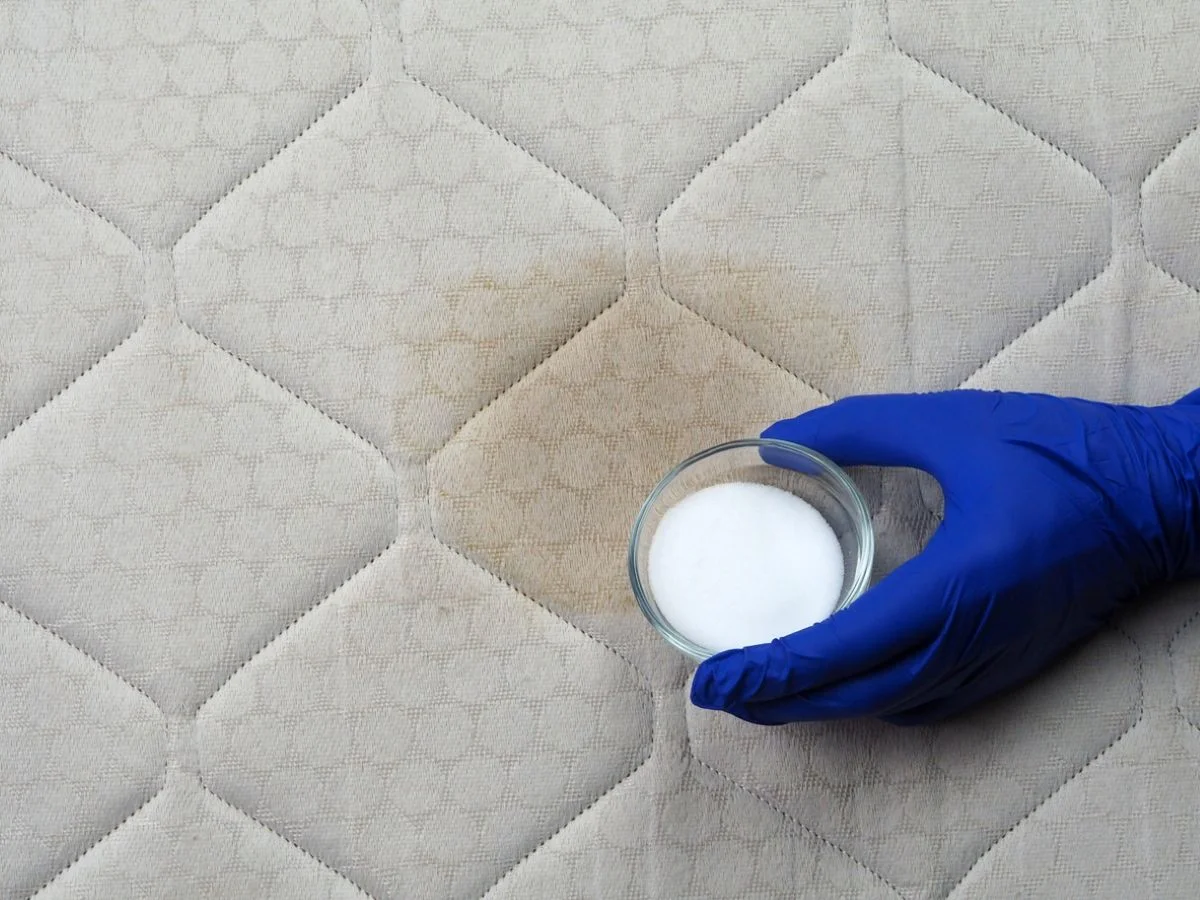
- Baking soda dry-cleaning. Sprinkle a thick layer over the whole mattress, leave it 4-8 hours (longer for odors), then vacuum thoroughly with the upholstery tool. Pulls moisture, neutralizes odors, no liquid involved.
- Enzyme spray for organic stains. Rocco & Roxie, Nature's Miracle, and similar enzyme cleaners break down urine and protein stains. Spray, blot, let air-dry. The biology does the work - no extraction needed.
- Hydrogen peroxide and dish soap (1:4, with a teaspoon of soap) for fresh stains. Spray, blot, repeat. Test for color-fastness first.
- Microfiber cloth and lukewarm soapy water for general dinginess. Wring almost dry, wipe in sections, then run a fan.
- Professional mattress cleaning. If the mattress is under 5 years old, expensive, and badly soiled, a pro will do better work for $80-$150 than any DIY method.
Method Quick Reference
Innerspring with a small fresh stain: Enzyme spray, blot, fan dry. Skip the machine.
Innerspring with widespread odor: Baking soda dry-clean, then a portable spot cleaner on any remaining stains.
Hybrid mattress: Same as innerspring, but watch drying carefully - the foam comfort layer holds moisture.
Memory foam, fresh small stain: Enzyme spray, blot only. No machine, ever.
Memory foam, deep or old stain: Skip DIY - call a pro or consider a mattress protector and live with it.
Latex: Same as memory foam.
Pillow-top: Spot treat the quilted layer carefully; it holds water longer than the base.
Carpet Cleaner on a Mattress: Quick Answers
Can I use a Bissell Little Green on a mattress?
Yes - the Little Green is one of the safest options because it has no aggressive brushes and the upholstery nozzle meters a light spray. Pre-treat the stain, mist lightly, extract immediately, and dry the mattress fully with a fan before remaking the bed.
Can I use a Rug Doctor on a mattress?
Only with the hand tool attachment, and only on innerspring or hybrid mattresses. Do not use the floor wand on any mattress - it pushes far more water than mattress fabric can release. Rug Doctor itself recommends the hand tool for upholstery and beds.
Can you use a carpet cleaner on a memory foam mattress?
Not with a full extractor. Memory foam absorbs water deep into the cell structure and can take 2 to 5 days to dry, which often leads to mildew. Spot-treat memory foam with an enzyme cleaner and a blot-only technique, and use a fan to speed drying.
Will using a carpet cleaner void my mattress warranty?
It can. Most major brands (Tempur-Pedic, Saatva, Purple, Casper, Nectar, Helix, DreamCloud) include language that voids coverage for stains, water damage, or improper cleaning. If a mattress is under warranty and badly stained, photograph it and contact the manufacturer before any liquid cleaning.
How long does a mattress take to dry after carpet cleaning?
Innerspring mattresses typically dry in 6 to 12 hours with a fan. Hybrid, pillow-top, memory foam, and latex mattresses need 18 to 24 hours minimum. Press your bare palm into the cleaned area for 10 seconds - if it feels cool or damp, it is not dry yet.
What is the best alternative to a carpet cleaner for a mattress?
For odors, a thick layer of baking soda left for 4 to 8 hours then vacuumed up. For organic stains (urine, sweat, blood), an enzyme cleaner like Rocco & Roxie or Nature's Miracle. For dinginess, a microfiber cloth and lukewarm soapy water wrung almost dry. For valuable mattresses with deep stains, a professional upholstery cleaning.
Can I use a steam cleaner instead?
On innerspring only, and only briefly held a few inches above the fabric while moving constantly. Steam plus heat is a risk on memory foam adhesives and latex, so skip steam on those mattress types entirely.
Need a Mattress That Survives Real-Life Cleaning?
Banner Mattress carries innerspring and hybrid models with removable washable covers - easier to keep fresh and far more forgiving of spot cleaning than dense foam beds.