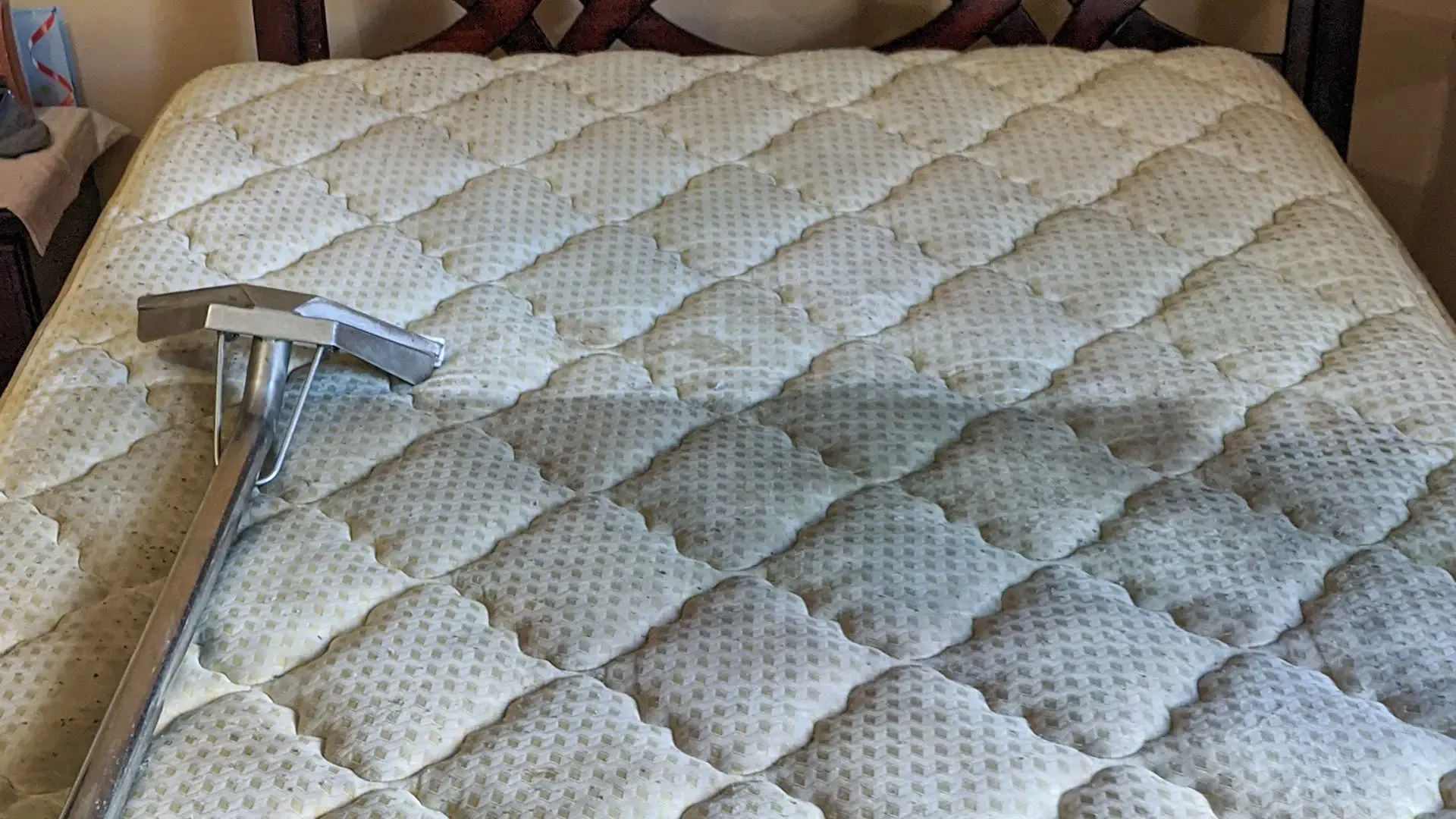
Yes - you can spray rubbing alcohol on a mattress, but only as a light mist for spot disinfection on a non-foam fabric surface. Soaking it, spraying it on memory foam or latex, or using it as a bed-bug treatment is the wrong call. Here is what actually works, what damages your mattress, and what to use instead.
The short answer
- Safe: A 1:1 mix of 70% isopropyl alcohol and water, lightly misted onto a fabric mattress cover, then air-dried with windows open. Good for surface bacteria, light odors, and small fresh stains.
- Not safe: Soaking the mattress, using it on memory foam or latex, applying near heat or open flame, or treating an active bed-bug infestation.
The CDC's disinfection guidance lists 60-90% alcohol as effective against most viruses and bacteria on hard, non-porous surfaces. A mattress is neither hard nor non-porous, so the rules tighten - light mist only, never a soak.
70% vs 91% - which to use
This trips up most DIY guides. Higher is not better.
- 70% isopropyl alcohol is the right pick for cleaning fabric. The 30% water content slows evaporation just enough for the alcohol to actually stay in contact with bacterial cell walls long enough to kill them. It also reduces the immediate fire-vapor cloud at the moment of spraying.
- 91% or 99% isopropyl alcohol evaporates so fast it can leave organisms intact, and the higher vapor concentration is more flammable. Save it for electronics or fast-drying spot work - not bedding.
If the bottle says "ethyl alcohol" (ethanol), 60-80% works the same way. Avoid denatured alcohol (it has additives that can stain or leave residue) and never use vodka or other beverage alcohol - too low concentration to disinfect.
What rubbing alcohol actually does on a mattress
When you mist 70% IPA onto a cotton, polyester, or rayon mattress cover, three things happen in roughly this order:
- Surface disinfection. Alcohol denatures proteins in bacteria, enveloped viruses (flu, coronaviruses), and fungal spores within 30 seconds to 2 minutes of wet contact. Dust mites and bed bugs that touch the wet spot directly are also killed by dehydration.
- Odor neutralization. Alcohol dissolves the volatile fatty-acid compounds responsible for sweat and body-oil smells, then evaporates with them.
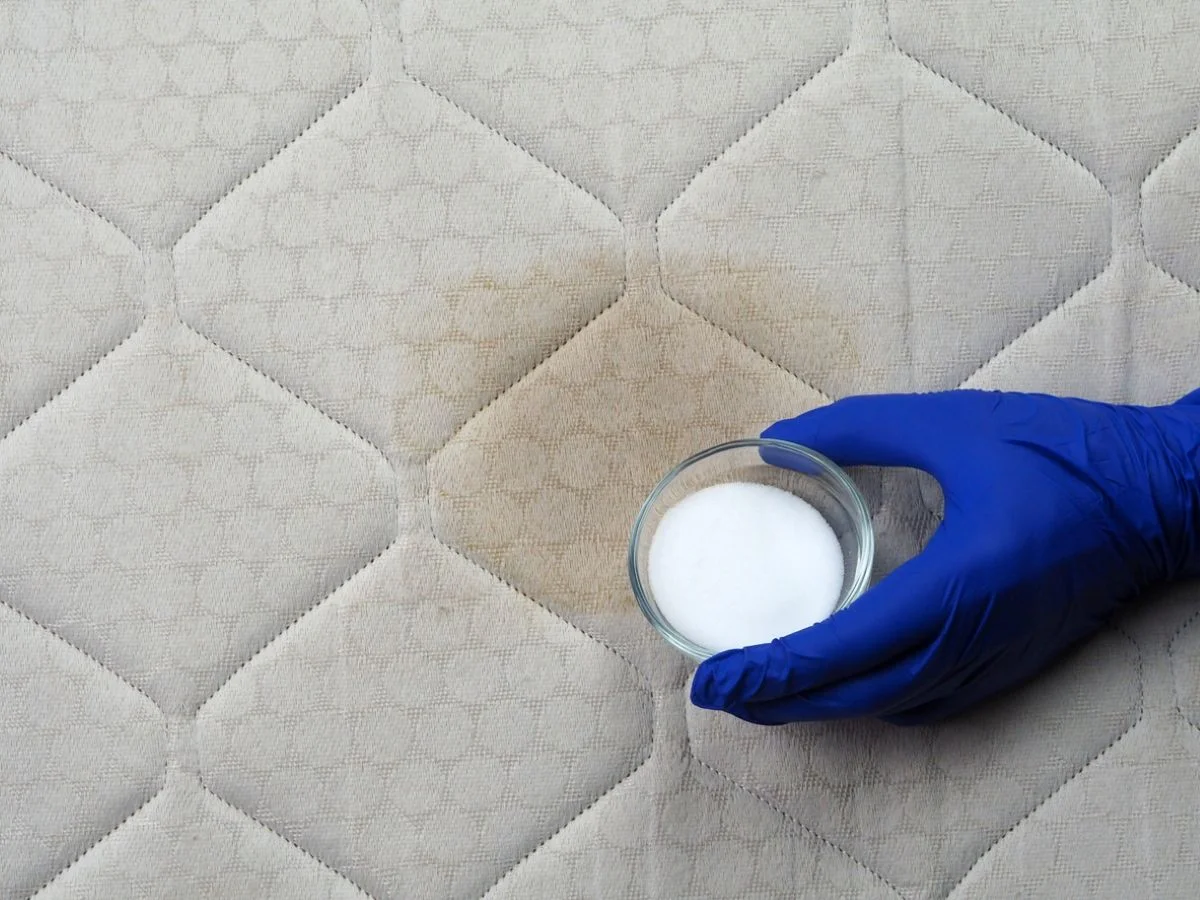
- Light stain lift. It dissolves oily and water-soluble stains (light sweat rings, dropped makeup, ink) but is too weak for set-in urine, blood, or coffee.
The whole reason it works on a mattress at all is that the 70% mix evaporates in 5-10 minutes from a light mist, so almost no moisture penetrates the foam underneath the cover.
What it does NOT do
- Will not solve a bed-bug infestation. Lab studies (Rutgers Cooperative Extension, 2014) found 70% and 91% alcohol killed only ~50% of bed bugs on direct contact, and zero hidden bugs or eggs. Surviving females lay 200-500 eggs each. Use a heat treatment, diatomaceous earth, or a licensed pest controller instead.
- Will not kill mold spores at the root. Alcohol kills surface mold but does not penetrate porous foam where the mold is actually growing. Once foam is moldy, the mattress should be replaced.
- Will not remove deep stains. Set-in urine, blood, and old coffee need an enzyme cleaner.
Memory foam and latex: do not spray
This is the rule the original viral TikTok hacks ignore.
- Memory foam is a polyurethane foam (CertiPUR-US-certified or otherwise) whose cell walls are weakened by isopropyl and ethyl alcohol over repeated exposure. The foam goes brittle, develops permanent body impressions faster, and the polyol chains can shed VOCs as they break down. Multiple manufacturer warranties (Tempur-Pedic, Nectar, Purple grid) explicitly void coverage if the foam shows chemical-cleaner damage.
- Latex (both Talalay and Dunlop) reacts the same way - alcohol degrades the natural rubber and the bonds between layers. Tiny pinholes appear, then surface crumbling.
- Foam-encased hybrids with a foam comfort layer above the coils have the same vulnerability in the top 2-4 inches.
If the mattress label includes "memory foam," "polyurethane foam," "viscoelastic," "latex," or "foam comfort layer," skip alcohol entirely. Vacuum, baking soda, and a removable washable cover are the safe routine.
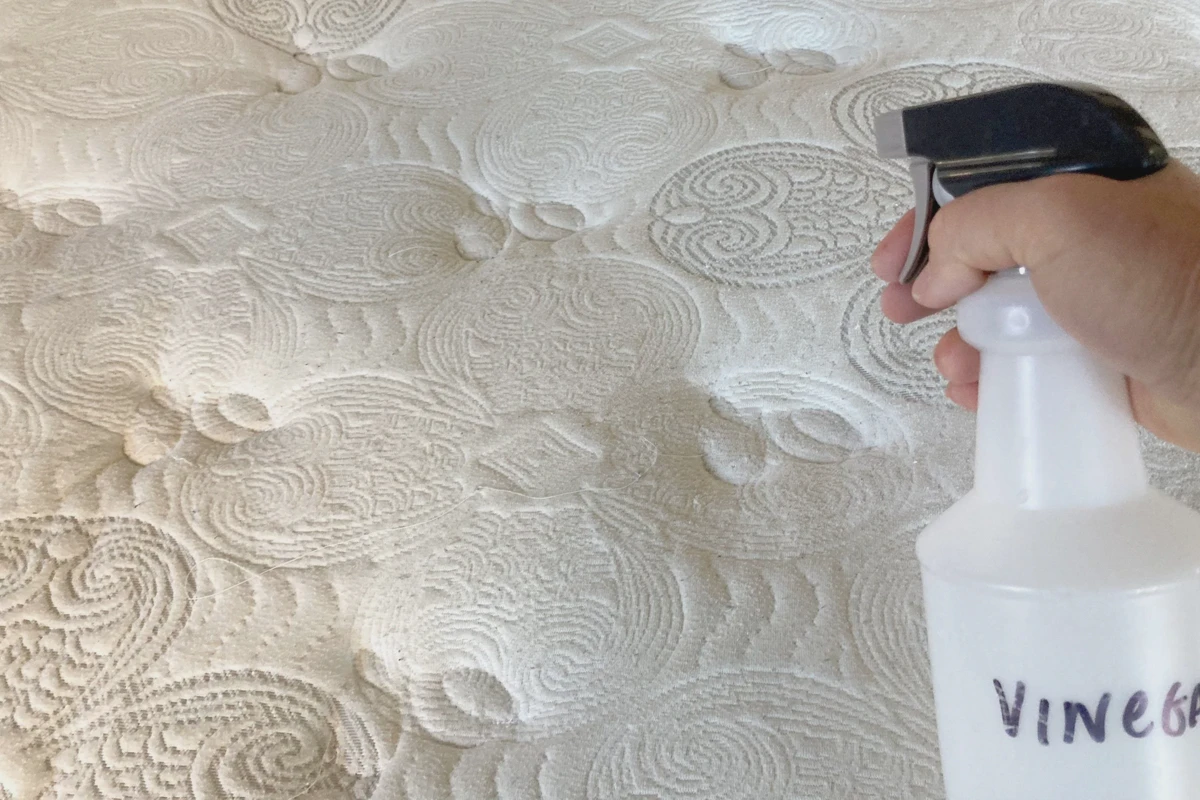
Step-by-step: how to spot-disinfect with alcohol (innerspring or fabric topper only)
This is the only application I recommend without reservation. Total time about 90 minutes including drying.
You'll need:
- 70% isopropyl alcohol (drugstore bottle is fine)
- A clean spray bottle
- Distilled or filtered water (tap leaves mineral spots)
- Two clean white microfiber cloths (white so dye doesn't transfer)
- Vacuum with upholstery attachment
- Baking soda
- Disposable nitrile gloves
Steps:
- Strip the bed. Sheets, mattress protector, pillow cases - wash hot.
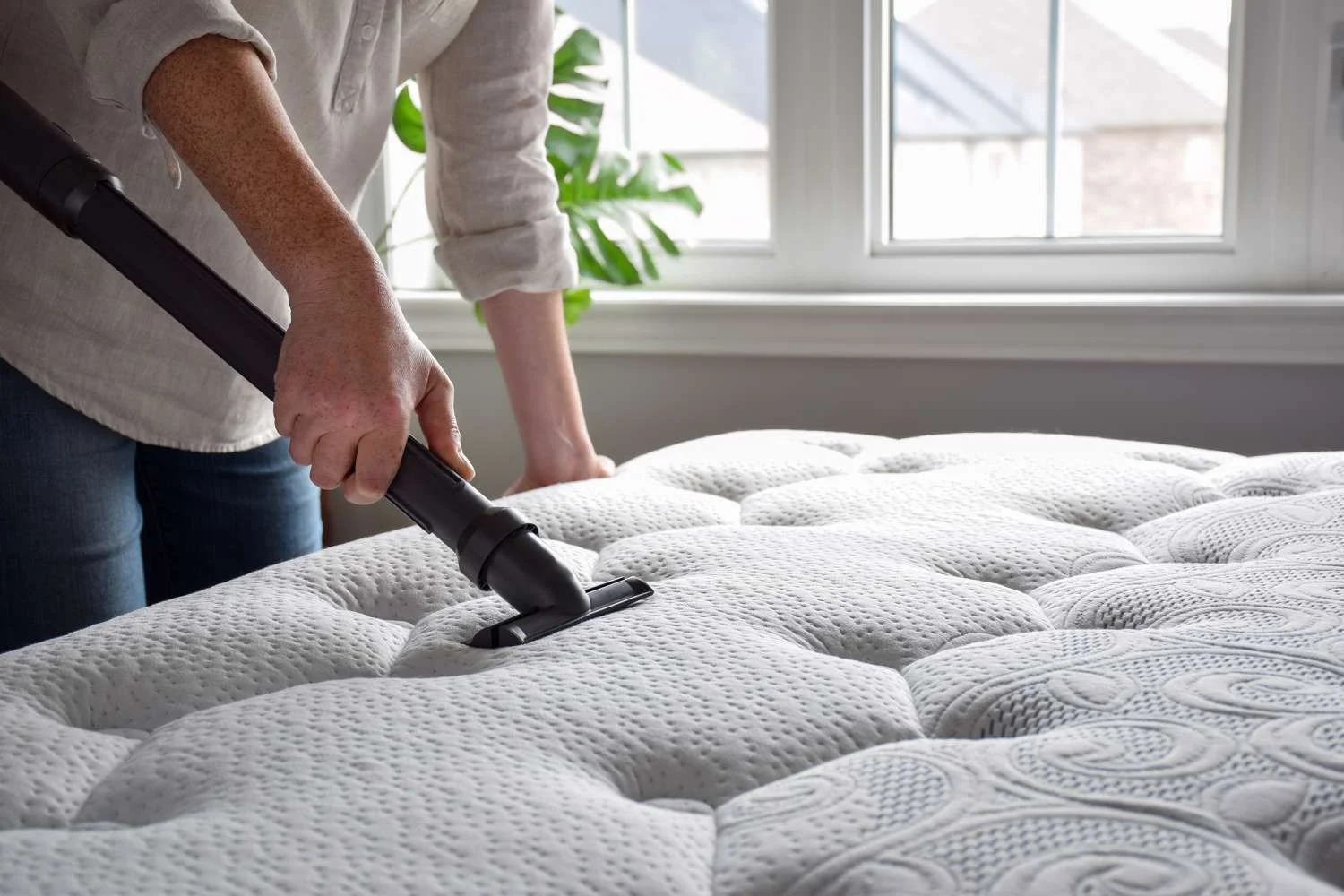
- Vacuum the mattress. Slowly, including seams, tufts, and the underside. This step alone removes most allergens and dust mites.
- Open windows. All of them. Turn off any pilot lights or space heaters in the room.
- Mix the solution. 1:1 70% IPA to distilled water in the spray bottle. Label it.
- Patch test. Spray a hidden corner (under the bottom edge), wait for it to fully dry - about 10 minutes - and check for discoloration. Skip if you have any.
- Mist, do not soak. Spray about 8 inches above the surface, just enough to dampen, never to saturate. Hit any specific spots first.
- Blot. With a dry microfiber, blot - do not rub. Rubbing pushes residues deeper.
- Air-dry 30-60 minutes. Windows open. The whole point is alcohol evaporating from the cover, not soaking in.
- Sprinkle baking soda. Dust a thin layer over the surface and let sit 30+ minutes for residual odor.
- Vacuum again. Pick up the baking soda completely.
- Remake the bed only when fully dry. Putting sheets on damp fabric is how mildew starts.
What NOT to do (the expensive mistakes)
- Do not soak. A wet mattress takes days to dry inside; mold grows in 24-48 hours.
- Do not use a heat source to dry it. Hair dryers, heaters, or steam - alcohol vapors ignite below 100°F.
- Do not mix alcohol with bleach, ammonia, or hydrogen peroxide. The reactions release toxic gases or peracetic acid.
- Do not use it as a regular cleaning routine. Even on safe fabrics, repeated alcohol exposure dries out the cover and degrades elastane in stretch covers. Once a quarter for spot work; not weekly.
- Do not use it for bed bugs. It is the most-tried, least-effective DIY treatment in pest-control literature.
Better alternatives for specific problems
Each problem below has a more effective option than alcohol.
- Surface bacteria or odor on memory foam: Vacuum thoroughly, then dust a thin layer of baking soda over the surface for 1 hour and re-vacuum. No moisture, no foam degradation.
- Sweat or body-oil stains: Mix 1 tablespoon mild dish soap with 1 cup cold water; dab with a microfiber and blot dry.
- Fresh urine: Blot up as much liquid as possible, then apply an enzyme cleaner (Nature's Miracle, Rocco & Roxie) following the label dwell time.
- Set-in urine or vomit: Enzyme cleaner with multiple applications and a 6+ hour dwell time. Cover with plastic wrap to keep it from drying out.
- Fresh blood: Cold water and a small amount of 3% hydrogen peroxide on a cloth. Never hot water - it sets the protein.
- Mildew smell: Sun and airflow for 4+ hours, both sides. If the smell returns within a day, the foam is compromised and the mattress should be replaced.
- Bed bugs: Wash bedding at 130°F+, fully encase the mattress in a zippered bed-bug cover for 12 months, or call a licensed pest pro. Heat is the only home treatment that works at scale.
- Dust mites: Wash bedding weekly at 130°F+ and use an allergen-proof zippered cover.
- Post-illness disinfection: Strip and hot-wash a removable cover. If the cover is not removable and the mattress is foam, replace it after a serious illness in immunocompromised households.
When to skip alcohol entirely and just replace the mattress
If you see any of the following, cleaning is not the answer:
- Visible black or green mold spots on the foam itself (not just the cover)
- A persistent musty smell that returns within a day of cleaning
- Sagging deeper than 1.5 inches
- Active bed-bug infestation that has gone past the seams into the foam
- Mattress is older than 8-10 years
The replacement cost is lower than the long-term cost of sleeping on a contaminated or sagging surface.
Bottom line
Rubbing alcohol is a useful, narrow tool - a light 70% mist on a fabric cover for surface disinfection and small fresh stains. It is not a deep cleaner, not a bed-bug treatment, and not safe on memory foam or latex. Used the right way, it freshens a mattress in an afternoon. Used the wrong way, it voids your warranty.
Frequently asked questions
Can I spray rubbing alcohol on my mattress to disinfect it?
Yes, but only as a light 1:1 mist of 70% isopropyl alcohol and water on a fabric mattress cover, with windows open and time to fully air-dry. Skip it entirely on memory foam or latex - alcohol breaks down those materials and can void your warranty.
Is 70% or 91% rubbing alcohol better for cleaning a mattress?
70% is better. The 30% water content keeps the alcohol in contact with bacteria long enough to actually kill them, where 91% and 99% evaporate too fast and have a more flammable vapor cloud. 70% diluted 1:1 with water is the standard mix.
Will rubbing alcohol kill bed bugs in a mattress?
No, not reliably. Lab studies have shown 70% and 91% alcohol kill only about half of bed bugs on direct contact and have no effect on hidden bugs or eggs. Heat treatment, a zippered bed-bug encasement for 12 months, or a licensed pest controller are the treatments that actually work.
Can I use rubbing alcohol on a memory foam mattress?
No. Isopropyl and ethyl alcohol weaken the polyurethane cell walls in memory foam and degrade the bonds in latex, causing premature softening, body impressions, and surface crumbling. Most foam mattress warranties (Tempur-Pedic, Nectar, Purple, and others) void coverage if chemical-cleaner damage is visible.
How long does rubbing alcohol take to dry on a mattress?
A light 1:1 mist of 70% IPA on a fabric cover dries in 5-10 minutes with windows open, and the mattress should be fully ready for sheets within 30-60 minutes. Never put sheets on while it's still damp - that's how mildew starts.
What can I use instead of rubbing alcohol on a mattress?
Vacuuming followed by a thin baking-soda layer (1 hour, then re-vacuum) is the safest routine for any mattress, including memory foam. For stains, use a mild dish-soap-and-water mix for sweat and oil, an enzyme cleaner for urine, and 3% hydrogen peroxide for fresh blood. Steam cleaners and bleach should not be used on mattresses.
Is it safe to sleep on the mattress after spraying alcohol?
Once it has fully air-dried - at least 30-60 minutes with the windows open - yes. The alcohol evaporates with no residue. Sleeping on a damp mattress can trap moisture in the foam below the cover and lead to mildew.
Need a fresh start instead?
If your mattress is past 8 years, sagging, or has stains and odors that keep coming back, cleaning won't fix it. Browse mattress reviews to find a replacement that fits your sleep style and budget.