Short answer: no, a hybrid mattress does not need a box spring - and with most modern hybrids, putting one under the bed is the wrong call. A traditional bouncy box spring works against the coil-and-foam construction that makes a hybrid feel like a hybrid, and several major brands (Saatva, DreamCloud, Helix, Tempur-Pedic, Purple) explicitly state that a sagging or wide-slatted base can void the warranty.
What a hybrid actually wants underneath it is a firm, flat surface with even support every 3 inches or less. Below is what that means in practice, when an old-school box spring is still acceptable, and how to retrofit a frame that was built for one.
Why hybrids and box springs don't get along
A hybrid mattress already has its own spring system - pocketed coils sealed inside the build, tuned to flex against a stable base. A traditional box spring adds a second, uncalibrated spring layer below that. Three things go wrong:
- Doubled bounce. The mattress feels softer and less responsive than the showroom because the box spring is absorbing motion the coils were designed to handle.
- Uneven support. Older box springs sag in the middle. Foam comfort layers conform to that dip, which over a year or two leads to body impressions and edge collapse.
- Voided warranty. Most hybrid warranties require slats spaced ≤ 3-4 inches apart on a non-sagging base. A standard box spring with cloth-covered coils does not satisfy that clause.
Tom's Guide, Leesa, and the Saatva owners' manual all reach the same conclusion: pair a hybrid with something rigid, not springy.
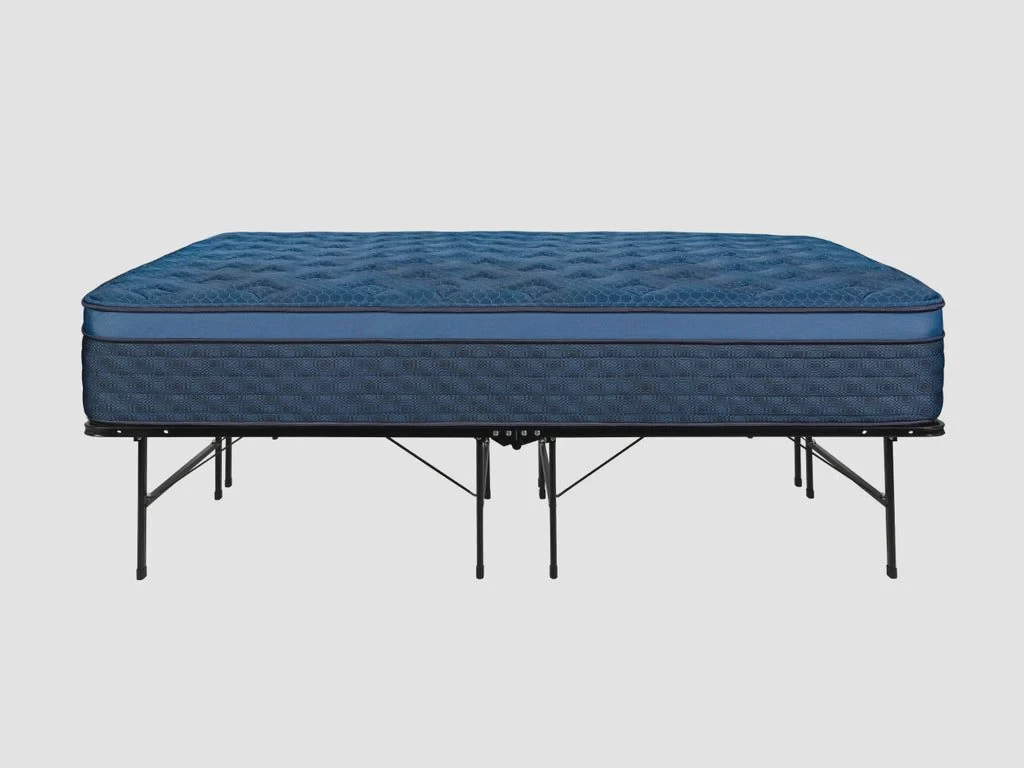
The four bases that work with a hybrid
1. Platform bed (best all-rounder)
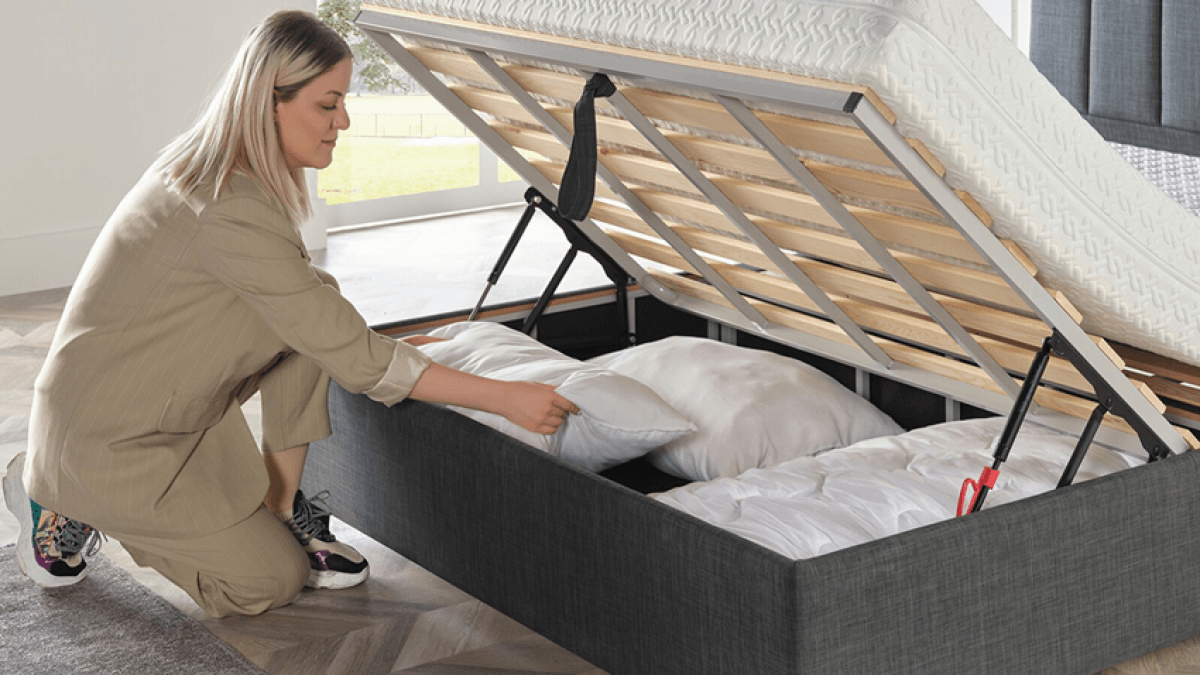
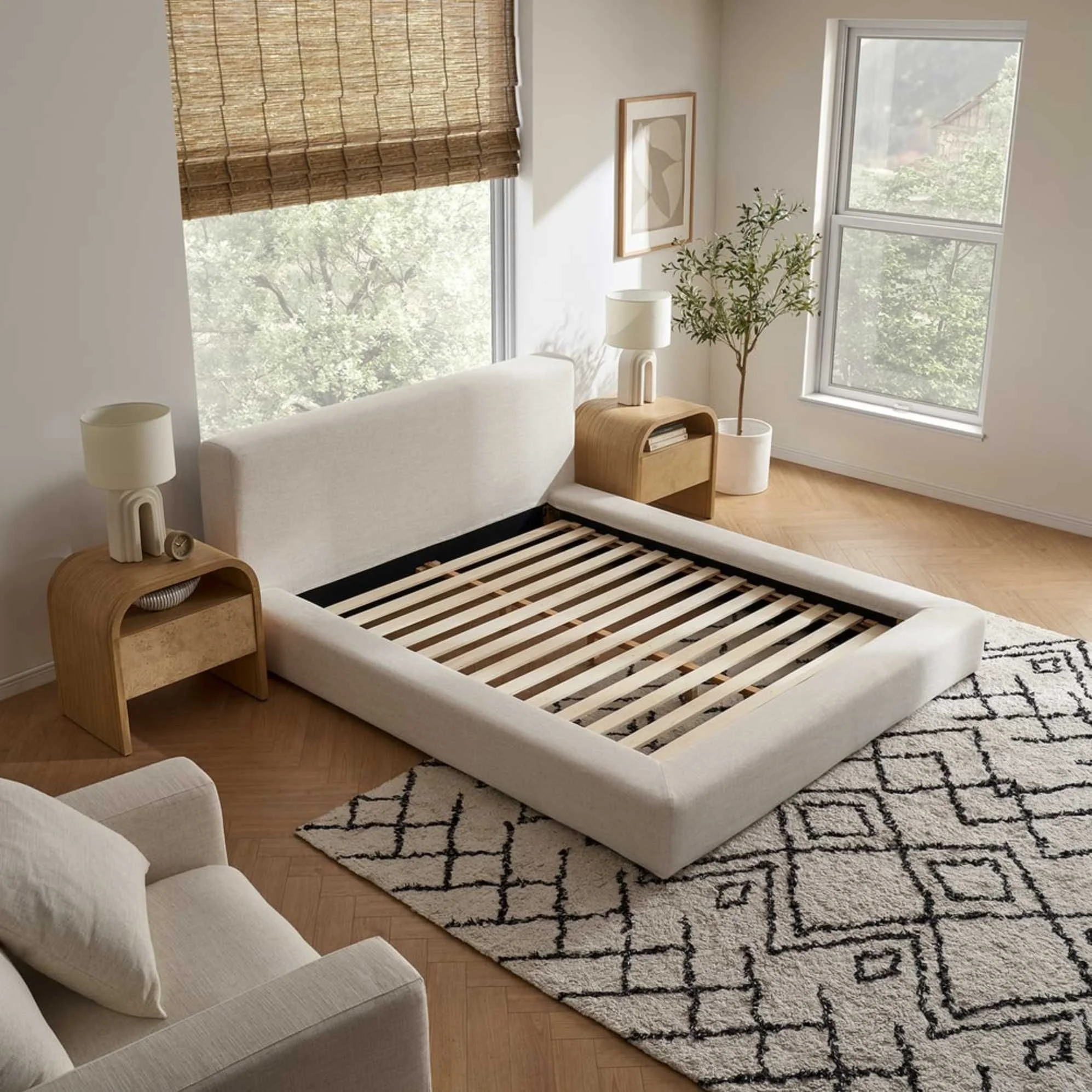
A platform bed has a built-in slatted or solid deck. Look for slats spaced 3 inches or less and rated for at least 600 lb total. Wood slats with center support beat metal mesh on edge feel. This is the option Banner Mattress recommends for most customers buying a queen or king hybrid.
2. Foundation on a metal frame
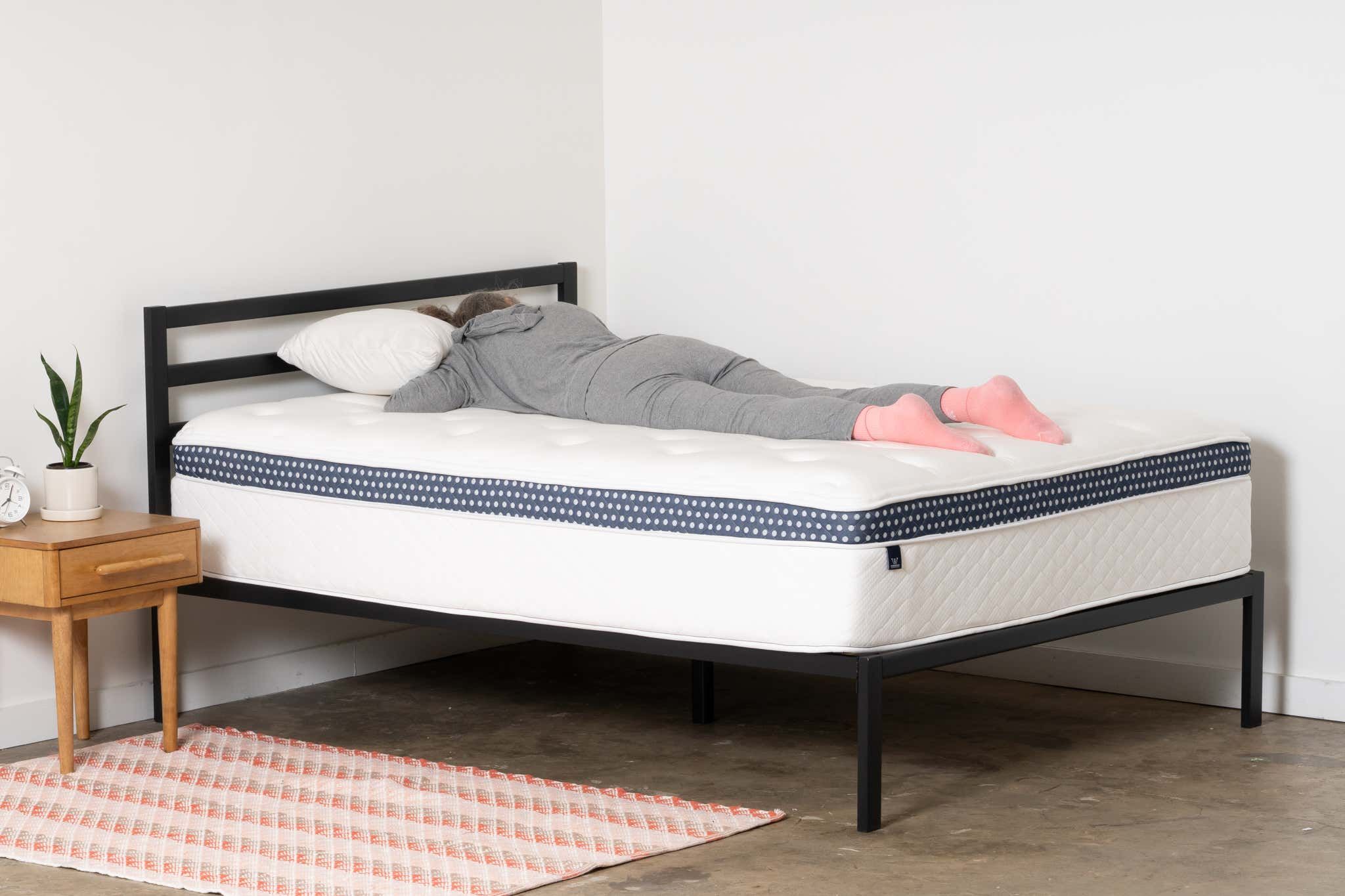
If you already own a steel bed frame designed for a box spring, swap the box spring for a low-profile foundation (sometimes called a “wood foundation” or “solid foundation”). It has the same outside dimensions but a rigid wood top - same height, none of the bounce. Saatva, Avocado, and Helix all sell their own.
3. Adjustable base
Most modern hybrids are adjustable-base compatible - check the spec sheet for the words “flexible” or “adjustable-friendly.” Skip adjustable bases for very thick (14 inch+) hybrids with stiff border rods, which can crack at the bend points.
4. Bunkie board (rescue option)
A bunkie board is a 1.5-3 inch slab of plywood or particleboard with a fabric cover. Drop it on top of an existing box spring or wide-slatted frame and you have a flat, code-compliant base in five minutes. It is the cheapest fix and the one we recommend for renters who don't want to replace the whole frame.
When a box spring is still acceptable
There is one narrow case: a modern, low-profile box spring (5-5.5 inches) with rigid wood slats inside, no springs. Brands market these as “semi-flex” or “hybrid foundation.” Functionally it is a foundation in a box-spring shell. If yours is less than 5 years old, has no give when you press the surface, and the corners do not creak, you are probably fine.
What to avoid: any traditional coil-spring box older than 7 years, any unit that bounces when you sit on it, and pillow-top hybrid mattresses on any box spring at all (the combined height becomes hard to get into and out of).
Use a box spring if
- It is a modern semi-flex / no-spring foundation
- Your bed frame requires one structurally
- You need extra height for getting in and out of bed
- You are using a thin (8-10 inch) hybrid that benefits from elevation
Skip the box spring if
- It is a traditional coil unit older than 5-7 years
- Your hybrid is 12 inches or thicker
- You have a pillow-top - combined height becomes awkward
- Warranty terms specifically require a foundation or platform
How to retrofit a frame built for a box spring
- Measure the inside rail-to-rail dimension and the height the original box spring was sitting at.
- Order a low-profile foundation in the same height (most are 4, 5, or 8.75 inch) so the mattress sits at the same level.
- Add a center support if the frame's longest unsupported span is greater than 30 inches - queen and king especially.
- If a foundation isn't in the budget, lay a 3/4 inch plywood sheet across the rails, then a bunkie board on top of that. Cheap, ugly, completely warranty-compliant.
Quick FAQ
Will using a box spring void my hybrid mattress warranty?
Possibly - it depends on the brand. Saatva, DreamCloud, Helix, and Tempur-Pedic all require a non-sagging base with slats no more than 3-4 inches apart. A traditional coil box spring usually fails that test. Always read the warranty page before deciding.
Can I put a hybrid mattress directly on the floor?
Mechanically yes, practically no. Without airflow underneath, the underside traps moisture, encourages mildew, and shortens mattress life - most warranties also require a base off the ground. If you want the low-bed look, use a 4-inch platform or bunkie board on short feet.
What slat spacing should a hybrid have?
Most hybrid manufacturers specify slats no more than 3 to 4 inches apart. Wider gaps let the foam bow downward between slats, which feels lumpy and accelerates wear.
Is a bunkie board enough by itself?
Only if it is sitting on top of something rigid. A bunkie board is meant to convert a box spring or wide-slatted frame into a flat surface - it is not structural support on its own.
Do box springs help with cooling?
Marginally. The bigger airflow factor is the bottom-cover fabric and the slat or grid pattern of the base. A platform bed with open slats and an inch of clearance underneath is at least as breathable as a vintage coil box spring.
Bottom line
Hybrid mattresses do not need - and usually do not want - a traditional box spring. Use a platform bed, a foundation on top of your existing metal frame, an adjustable base, or a bunkie board. The only “box spring” that is still a safe choice is a modern, no-coil semi-flex foundation. Anything older than 5-7 years should be retired before your new hybrid arrives.