Mattress firmness is the single specification most shoppers ask about - and the one most often misunderstood. It describes how a mattress feels on the surface, not how supportive it is underneath. Get firmness right and you wake up rested; get it wrong and you wake up with sore shoulders, an aching lower back, or a numb hip.
This guide walks through the industry-standard 1-to-10 firmness scale, explains why firmness is different from support, and shows how your sleep position, body weight, and pain points should all narrow the range. We pulled the consensus answers from current editorial reviews (Sleepopolis, NapLab, Naturepedic, Purple) and Google's AI Overview so the recommendations match what the rest of the web is currently telling shoppers.
The mattress firmness scale (1 to 10)
Most mattress brands and reviewers use a 10-point scale where 1 is the softest, plushest feel and 10 is the firmest. It is not an officially regulated standard, but it is consistent enough across editorial sites that you can shop with it. In practice, almost every mattress sold today falls between 3 and 9 - anything outside that range is a niche product.
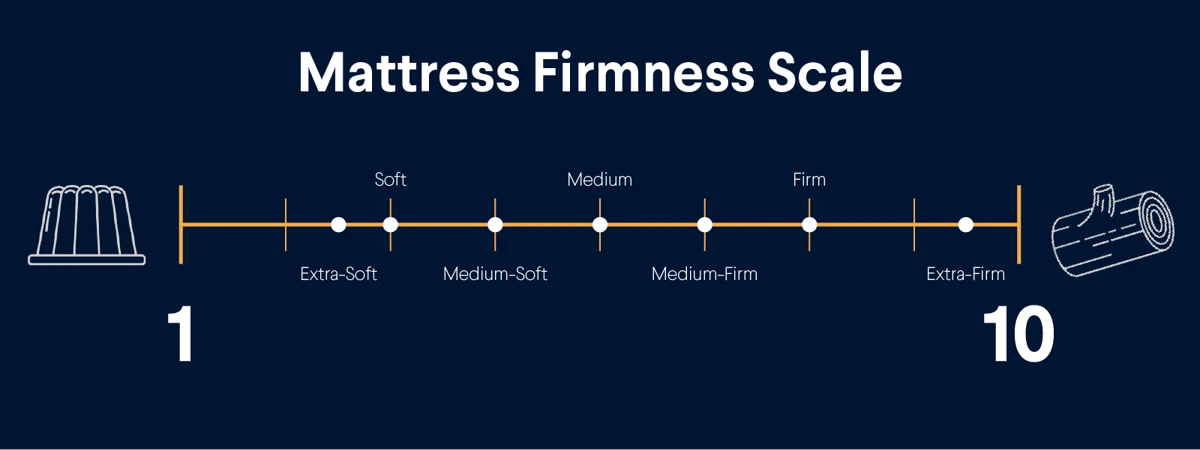
Soft (1-3): Deep contouring and noticeable sinkage. Best for lightweight sleepers under about 130 lb who sleep on their side and want pressure relief at the shoulder and hip.
Medium (4-6): A balance of cushion and push-back. Combo sleepers, average-weight side sleepers, and couples with mixed preferences usually land here. Medium-firm (around 6-6.5) is the most popular firmness sold.
Firm (7-8): Minimal sinkage. Back and stomach sleepers, heavier sleepers, and people who run hot tend to prefer this range because the surface keeps the hips lifted and improves airflow.
Extra firm (9-10): A flat, supportive surface with almost no give. Useful for very heavy sleepers, strict stomach sleepers, or anyone who has been told by a clinician to sleep on a firm mattress for a specific reason.
Firmness vs. support: not the same thing
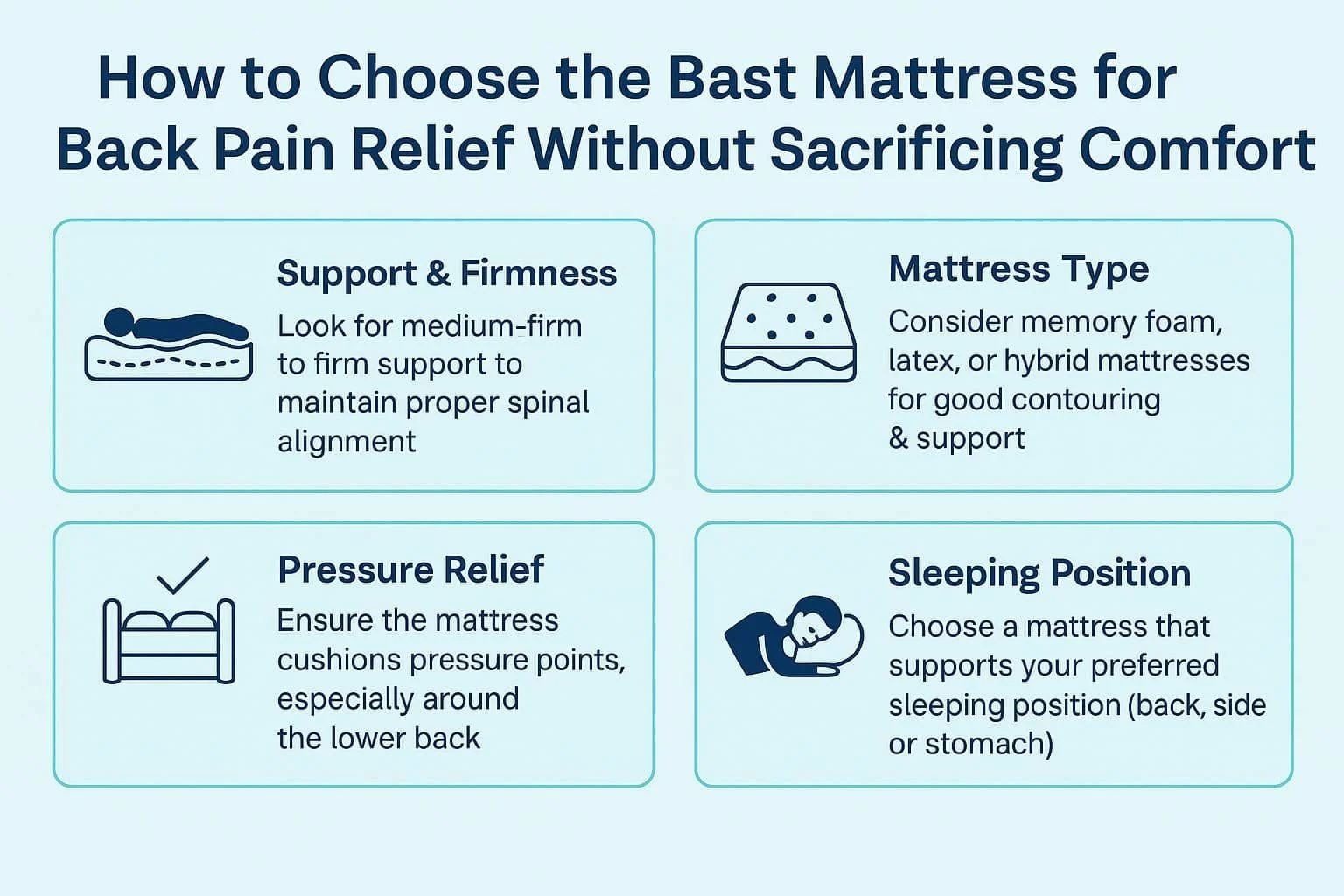
Firmness is what you feel in the first inch or two of the mattress. Support is what the base layers do to keep your spine in line. A mattress can feel soft on top and still be highly supportive if its core (coils, high-density foam, or latex) holds your hips up and prevents sag. This is why a 4/10 plush bed can work for back pain, while a cheap 7/10 firm bed with a weak core can still leave you sore.
When a review or product page lists a firmness number, treat it as a comfort spec, not a quality spec. Always check separately how the bed performs on edge support and motion isolation if those matter to you.
Pick a firmness by sleep position
Sleep position is the single biggest factor. Pressure points and spinal alignment change dramatically depending on whether you are on your side, your back, or your stomach.
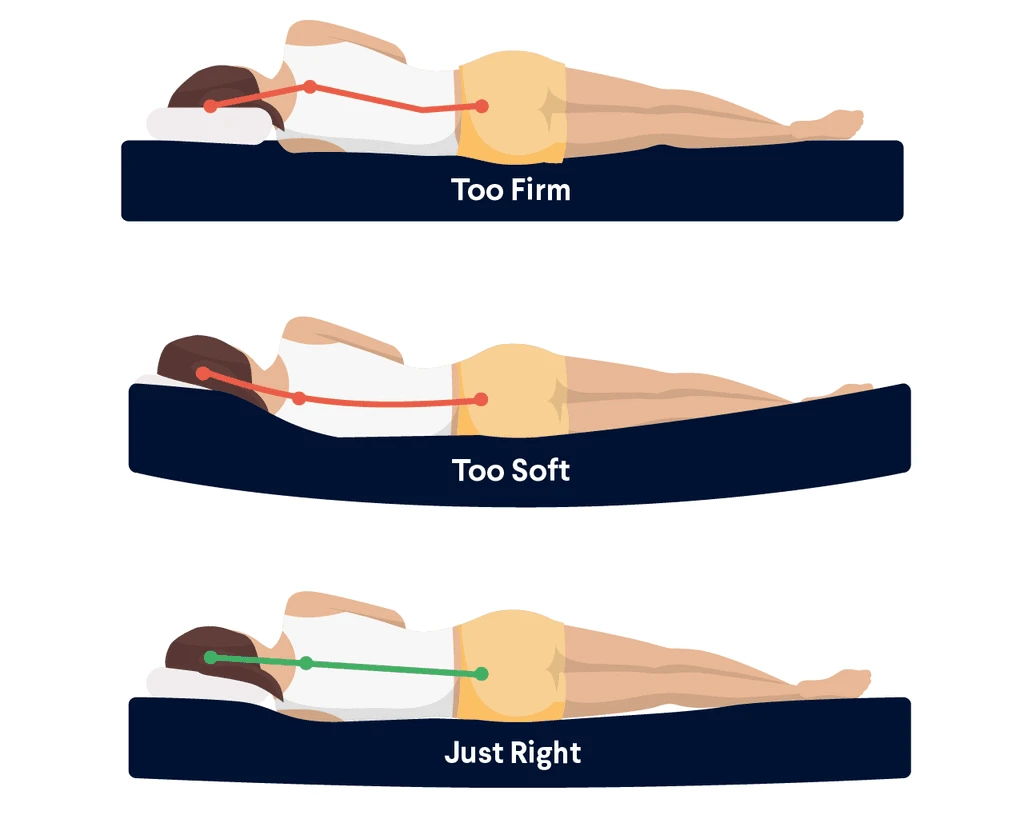
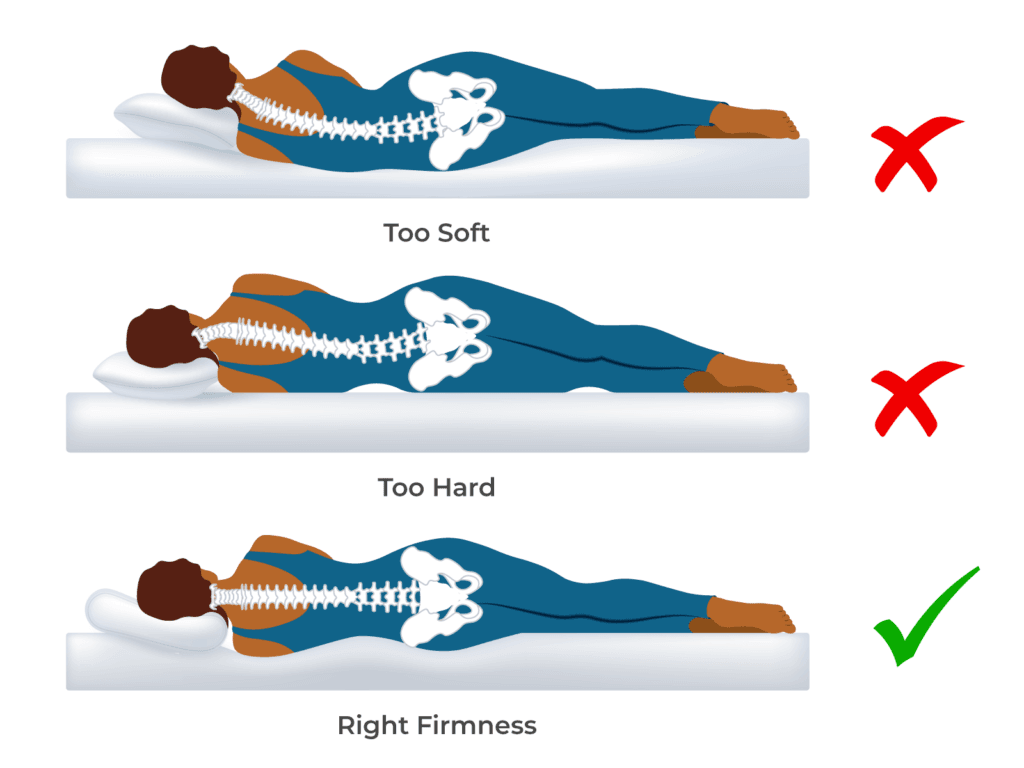
Side sleepers - 4 to 6. The shoulder and hip need to sink in enough to keep the spine straight. Too firm and you get a kink at the shoulder; too soft and your hips drop. Lighter side sleepers can go down to 3-4; heavier side sleepers may need 6-7.
Back sleepers - 5 to 7. The lumbar curve needs to be filled but not collapsed. Medium-firm is the standard recommendation; very heavy back sleepers may prefer the firm end of the range.
Stomach sleepers - 6.5 to 8. The hips must not sink, or the lower back will hyperextend. Stay on the firmer side, and consider a thinner pillow to keep the neck neutral.
Combination sleepers - 5 to 7. If you change positions through the night, a true medium-firm gives every position a fair shake without specialising for one.
Adjust for body weight
Under ~130 lb: You will feel a mattress firmer than its label because you do not compress the comfort layers as much. Drop one step softer than the position-based recommendation.
130 to 230 lb: Most published firmness ratings are calibrated for this range, so the position-based recommendation usually fits.
Over ~230 lb: You will compress the surface more, so a labelled medium can feel like a soft. Step one level firmer, and prioritise hybrids or models marketed for plus-size sleepers - they have stronger cores and better edge support.
Firmness for back pain
Editorial consensus and the AI Overview agree on this one: medium-firm (6 to 7) is the most commonly recommended range for chronic lower-back pain in average-weight adults - and a mattress topper for back pain can soften an over-firm bed without buying new. The reasoning is simple - the surface is firm enough to keep the pelvis from sinking and rotating, but soft enough that the lumbar curve is supported rather than bridged. If you have a specific spinal diagnosis, defer to your clinician's advice; this is general guidance, not medical advice.
How to tell your current mattress is the wrong firmness
Too soft: you sink in deeply, feel like you are climbing out of bed, wake up with lower-back ache, or feel partner-motion through the mattress.
Too firm: you wake with shoulder, hip, or neck pain, feel pressure points after 30 minutes of lying down, or notice numbness or tingling at the contact points.
Most modern mattresses ship with a 100-night-plus sleep trial. Use it. Bodies need 2-4 weeks to adapt to a new sleep surface, but persistent pain past that window is a sign the firmness is wrong, not that you need more time.
Mattress firmness FAQ
What is the most popular mattress firmness?
Medium-firm - usually rated 6 to 6.5 on the 10-point scale - is the firmness most brands sell the most of. It works for back sleepers, average-weight side sleepers, and most combination sleepers, which makes it the safest single-firmness pick for couples.
Is a firmer mattress always better for back pain?
No. Editorial reviews and clinical guidance both point to medium-firm (6 to 7) as the best general range for chronic lower-back pain. Extra-firm mattresses can actually worsen pain by failing to support the lumbar curve, especially for side sleepers and lighter adults.
How is firmness different from support?
Firmness is the surface feel - what you notice when you lie down. Support is what the core layers do to keep your spine aligned through the night. A mattress can feel soft and still be highly supportive if its base resists sagging. When shopping, evaluate firmness for comfort and support separately.
Will my new mattress soften over time?
Slightly. Most foam and hybrid mattresses break in for 2 to 4 weeks and may feel about half a point softer once they do. Plan for that when choosing - if you are between two firmnesses, the firmer of the pair usually settles closest to the softer label after break-in.
Can two people with different firmness preferences share a bed?
Yes. The simplest fix is medium-firm - it works for most combinations of body type and sleep position. If preferences are far apart, look at split-firmness models (different feel on each side) or mattress toppers, which can soften one side by roughly a full firmness step.