
Short answer: Older Tempur-Pedic mattresses absolutely sleep hot - classic dense memory foam traps body heat and bounces it back at you. The newer TEMPUR-Breeze line (ProBreeze and LuxeBreeze) is a different conversation: phase-change cooling fibers, ventilated foam, and gel-infused comfort layers cut surface temperature by a measurable 5-10 °F per the brand and back it up in independent lab tests. If you run hot, the answer isn't "skip Tempur-Pedic," it's "skip the standard Adapt line and buy the Breeze tier."
Why standard Tempur foam sleeps warm
Original TEMPUR material is a high-density viscoelastic polyurethane foam. The same closed-cell structure that gives Tempur-Pedic its signature slow-sinking pressure relief also blocks airflow. Heat from your body has nowhere to dissipate - it gets stored in the foam, which then warms further as you sleep.
Three structural reasons standard foam sleeps hot:
- Closed-cell foam blocks airflow, where Tempur-Pedic later added Ventilated Advanced Relief material in the Breeze line so air can disperse through the comfort layer.
- The standard cover has no heat-absorbing fibers, while the Breeze SmartClimate cover draws heat away from the body on contact.
- No heat-diffusing layer sits below the cover, where Breeze adds an exclusive layer that absorbs excess heat across the night.
NapLab's thermal testing on a standard Tempurpedic Cloud showed the surface climbing from an 80.8 °F baseline to 96.5 °F after 15 minutes of body contact, a 15.7 °F rise. That is at the warm end of the foam category.
Shop cooling mattresses at Banner Mattress
Compare TEMPUR-Breeze, Saatva, Helix, and other top cooling mattresses with hands-on guidance from our sleep experts.
Why pick TEMPUR-Breeze
- PCM phase-change cover is genuinely cool-to-the-touch for the first 1-2 hours of sleep
- Up to 10 °F surface-temperature drop on LuxeBreeze (5 °F on ProBreeze) per brand testing
- Keeps the signature Tempur slow-sinking pressure relief, just without the heat trap
- ProBreeze hybrid version adds coil airflow for the best cooling in the line
- Independent labs (NapLab, Sleep Foundation) confirm the cooling is real, not marketing
Why skip Breeze
- Premium price - LuxeBreeze starts around $4,000 for a queen
- Still sleeps warmer than a coil hybrid like Saatva Classic or Helix Midnight Luxe
- PCM effect is strongest for the first hour, then mostly passive cooling
- Standard TEMPUR-Adapt and older Cloud models still sleep hot - Breeze is its own tier
- If you do not love memory-foam hug, the cooling does not justify the price
What the TEMPUR-Breeze line actually changes
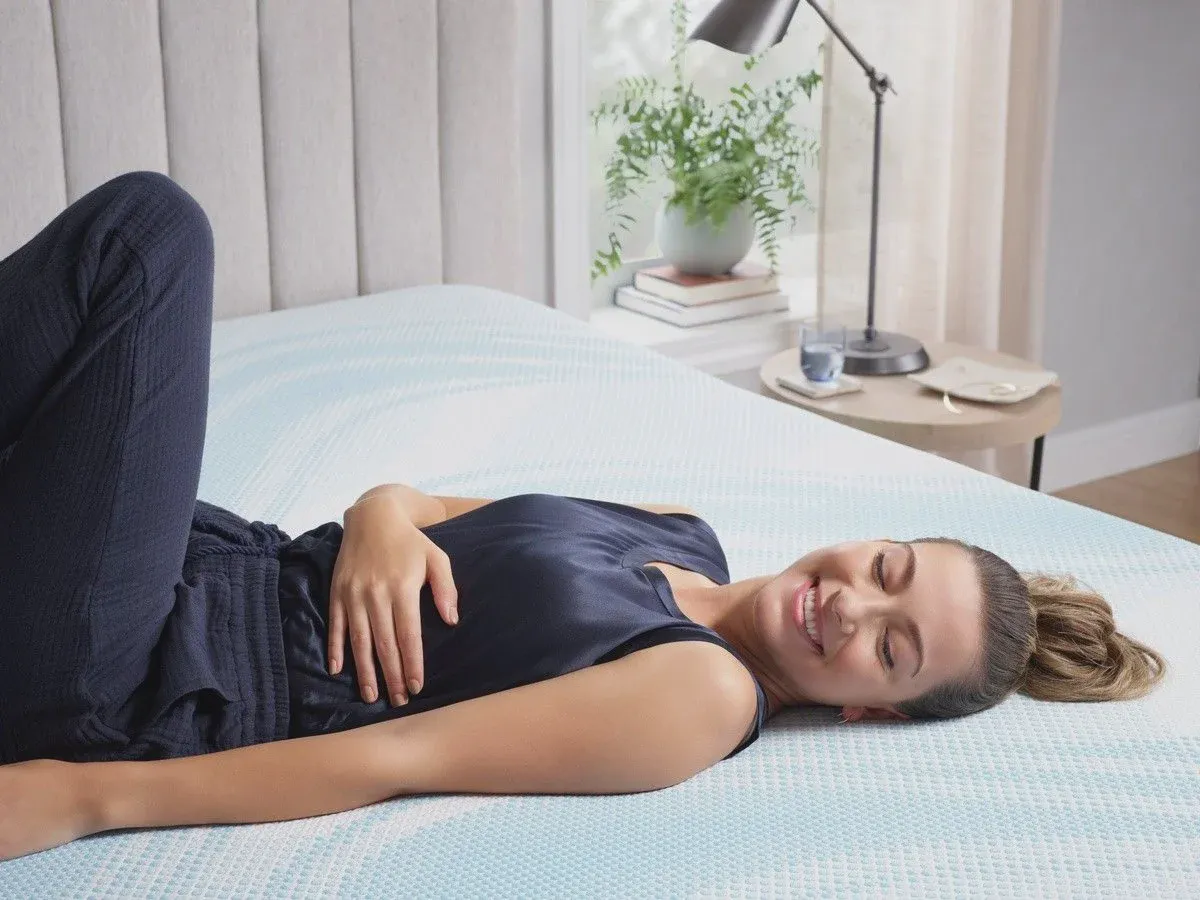
Tempur-Pedic launched the Breeze collection specifically to fix the heat problem. Three engineering changes matter:
- A SmartClimate cover with cool-to-the-touch cooling fibers, built to draw heat away from your body on contact.
- An exclusive heat-diffusing layer immediately under the cover, which absorbs excess heat throughout the night for an enhanced cooling effect.
- Pure Cool or Pure Cool Plus material over Ventilated Advanced Relief foam, where the cooling material pulls heat from the body and the ventilated foam keeps airflow moving through the support core.
Tempur-Pedic's own claim: ProBreeze sleeps up to 5 °F cooler than standard TEMPUR-Adapt and LuxeBreeze sleeps up to 10 °F cooler. Independent lab reviews from Sleep Foundation, NapLab, and Mattress Clarity broadly support this. The Breeze line consistently rates "very good" on temperature neutrality, and the ProBreeze hybrid version (with a coil base) cools best of all because the springs add real airflow.
Tempur-Breeze tier comparison
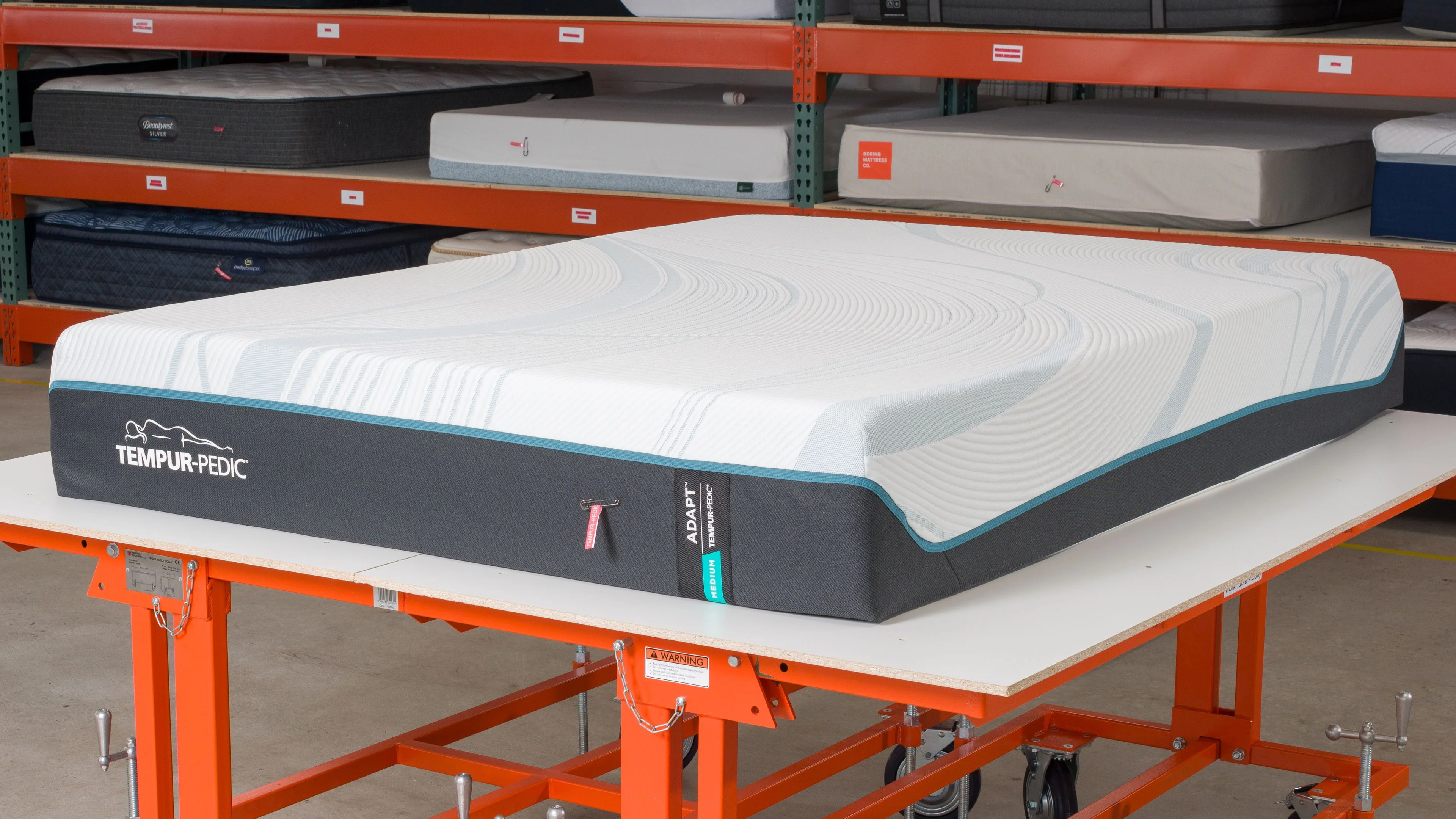
TEMPUR-Adapt (no Breeze cover). The baseline. Sleeps warm. Skip if heat is your top concern.
TEMPUR-ProAdapt. Slightly more pressure relief, same heat profile as Adapt. Still warm.
TEMPUR-ProBreeze. First true cooling tier. 12-inch medium hybrid, Pure Cool cover over 1,000+ premium innersprings. Up to 5 °F cooler. Best value-for-cooling pick.
TEMPUR-LuxeBreeze. Top-tier passive cooling. 13-inch hybrid with Pure Cool Plus material and 1,300 double-stacked innersprings, in Soft, Medium Hybrid, or Firm. Up to 10 °F cooler. Premium price.
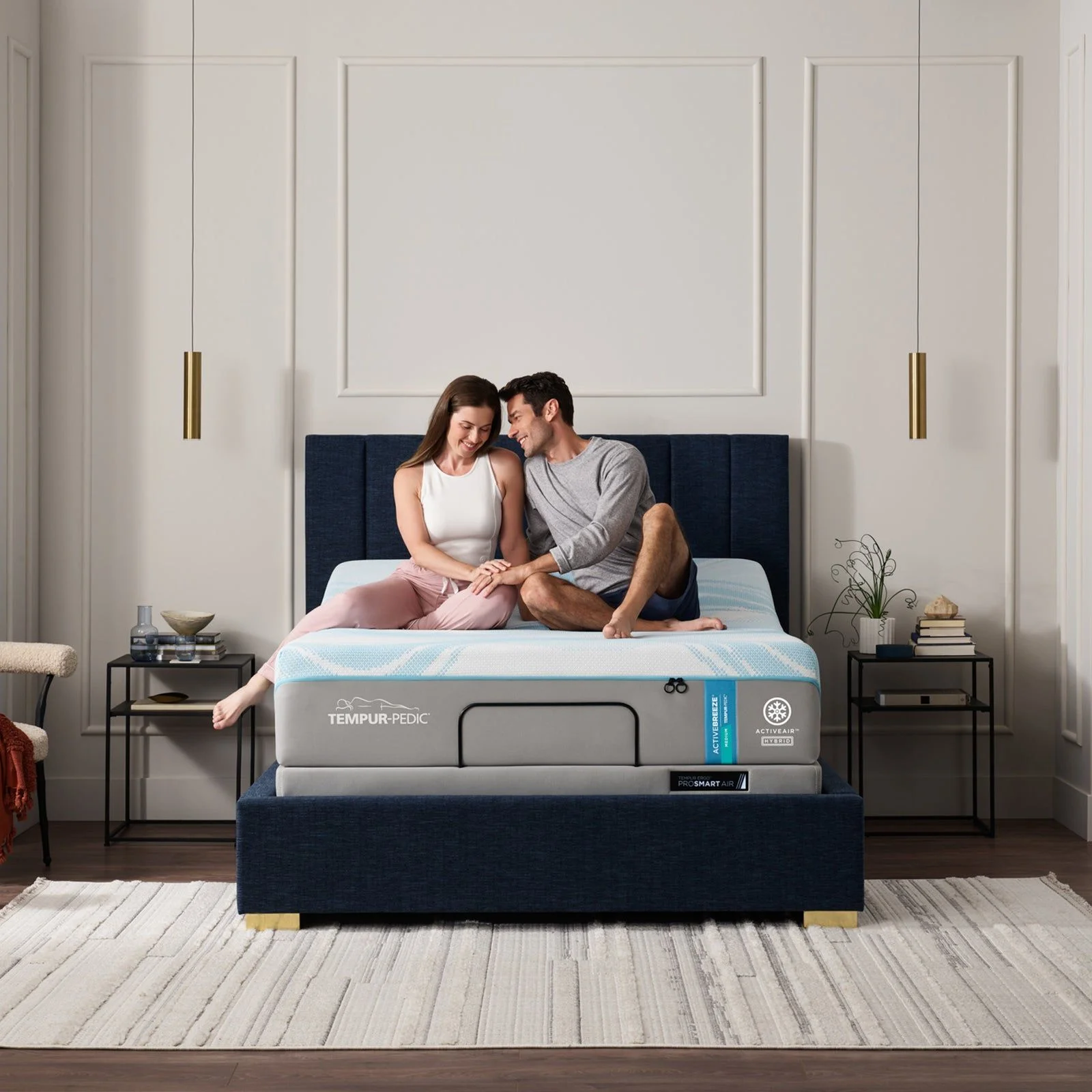
TEMPUR-ActiveBreeze (smart bed). 13-inch hybrid with dual-zone ActiveAir climate control and a ProSmart Air Base whose fans circulate cool or warm air through the mattress, with three cooling levels and a 30 °F warmer/cooler range.
How Tempur-Breeze stacks up against hybrid alternatives
Tempur-Breeze is genuinely cool - but it is still a foam-dominant mattress. Pure airflow champions remain the coil-and-latex hybrids:
If you want the signature Tempur "melt into the bed" feel and cooling, ProBreeze or LuxeBreeze are correct. If you don't care about that hug and just want to stop sweating, a hybrid or latex bed will outcool any all-foam mattress including LuxeBreeze.
Who should pick the Breeze tier
Buy ProBreeze or LuxeBreeze if you fit any of these profiles:
- You want the Tempur memory-foam feel but run hot, where SmartClimate cover and Pure Cool material draw heat away while preserving the slow-sinking pressure relief.
- You sleep with a partner or in a warm climate, since the ventilated comfort layer and coil base move heat through the mattress rather than banking it between two bodies.
Skip Breeze and go hybrid if:
- You care more about raw airflow than the memory-foam hug, since any coil-and-latex hybrid out-cools a foam-dominant mattress including LuxeBreeze.
- You want active cooling but ActiveBreeze is out of budget, where a third-party cooling overlay pairs better with a hybrid base than with all-foam.
What to do if you already own a standard Tempur-Pedic
If you bought a TEMPUR-Adapt or older Cloud and you're cooking at night, three fixes that actually help - ranked by effectiveness:
Mattress pads and cooling sheets help mildly. Room temperature control (a fan, AC at 65-68 °F) helps regardless of mattress.
FAQ recap
The Tempur-Breeze cooling story holds up under independent testing. Standard TEMPUR-Adapt sleeps hot - that hasn't changed and it isn't going to. But ProBreeze and LuxeBreeze are real cooling mattresses with measurable temperature drops, and for buyers who want the Tempur feel without the heat trap, they're the right tier to buy.
For the broader safety picture on Tempur-Pedic foams (CertiPUR-US, off-gassing, the fiberglass question), see our companion guides on whether Tempur-Pedic mattresses are toxic and whether Tempur-Pedic uses fiberglass.
Tempur-Pedic cooling FAQ
Do all Tempur-Pedic mattresses sleep hot?
No. Standard TEMPUR-Adapt, ProAdapt, and original Cloud models sleep warm because the dense closed-cell foam traps body heat. The TEMPUR-Breeze line - ProBreeze, LuxeBreeze, and ActiveBreeze - was specifically engineered with phase-change cooling fibers, ventilated comfort foam, and gel-infused support to address heat retention.
How much cooler is TEMPUR-LuxeBreeze versus standard Tempur?
Tempur-Pedic claims up to 10 °F cooler for LuxeBreeze and up to 5 °F cooler for ProBreeze versus standard TEMPUR-Adapt. Independent thermal testing from NapLab and Sleep Foundation broadly supports these figures, with the Breeze line consistently rating very good on temperature neutrality.
Is TEMPUR-Breeze cooler than a hybrid mattress?
No. Coil hybrids like Saatva Classic, Helix Midnight Luxe, and Avocado Green sleep cooler than any all-foam mattress, including LuxeBreeze, because springs allow far more airflow. Choose Breeze if you want the Tempur memory-foam feel; choose a hybrid if maximum cooling is the priority.
What can I do if my old Tempur-Pedic sleeps hot?
Three effective fixes: (1) add a PCM or gel cooling topper for the biggest improvement, (2) install an active cooling system like a BedJet or 8Sleep Pod overlay, or (3) switch to bamboo, Tencel, or eucalyptus lyocell sheets. A topper plus active cooling can rescue a warm Tempur without buying a new bed.
Which Tempur-Breeze model is best for hot sleepers in warm climates?
TEMPUR-LuxeBreeze for the deepest passive cooling (up to 10 °F drop), or TEMPUR-ActiveBreeze if your budget allows - its built-in fan-driven climate control adapts to body heat in real time and is the only Tempur with active rather than passive cooling.