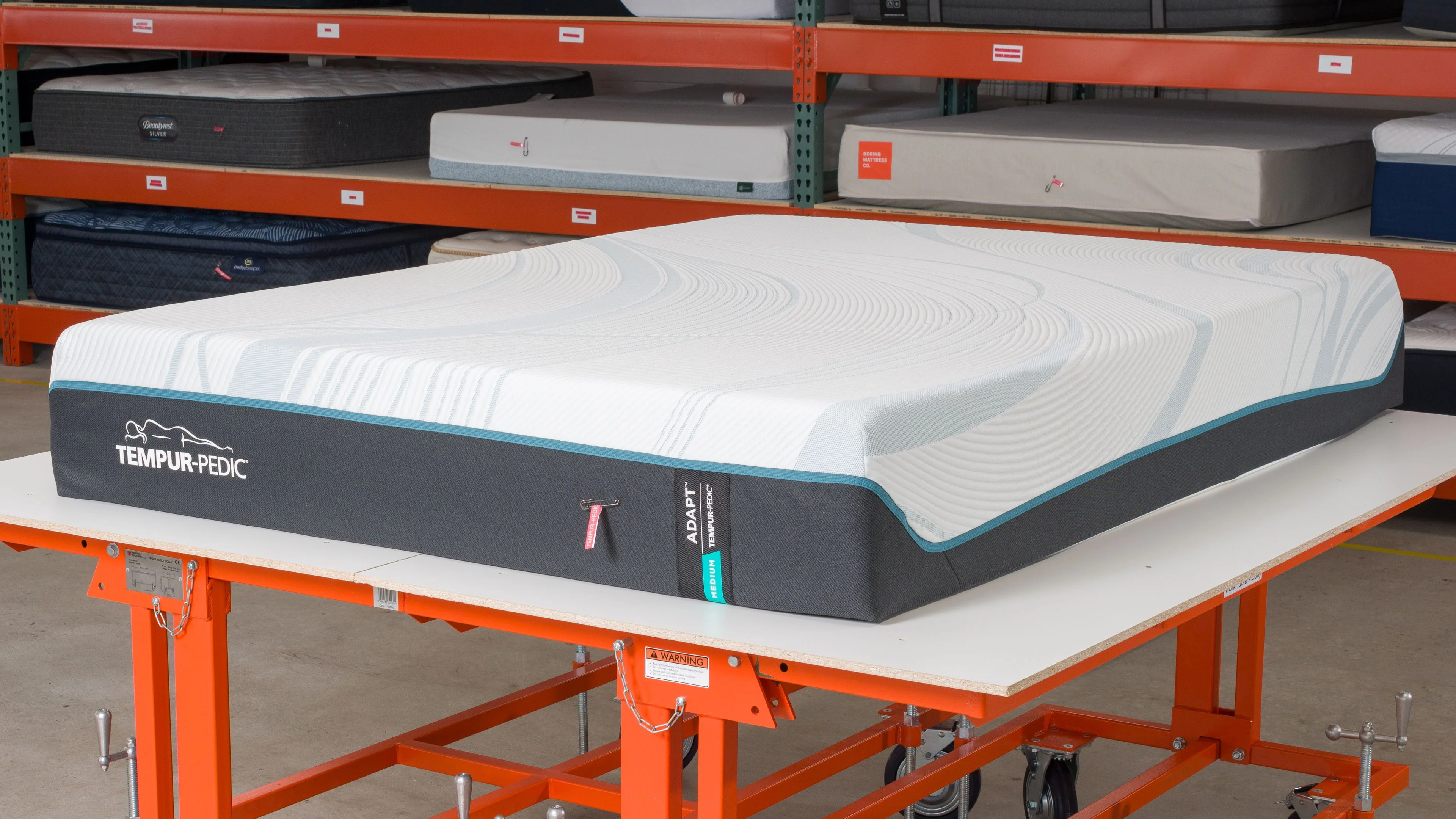
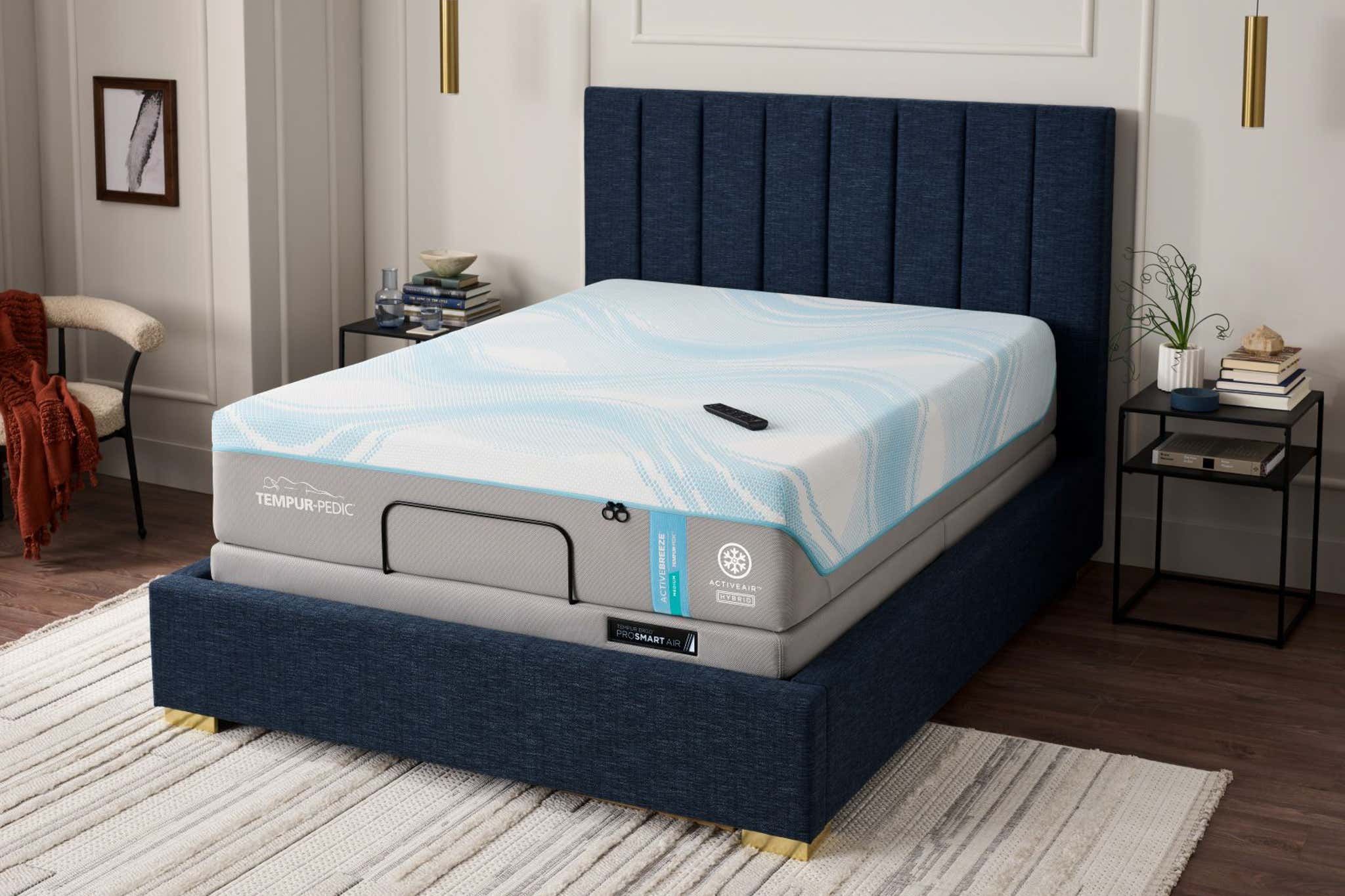
Are Tempur-Pedic mattresses toxic? The short answer: every Tempur-Pedic foam carries CertiPUR-US certification, meaning it has been independently tested for heavy metals, formaldehyde, phthalates, ozone depleters, and "Tris" flame retardants. By that regulatory yardstick, the mattresses are not toxic. The longer answer matters more if you have asthma, chemical sensitivities, an infant in the room, or you simply want to understand what the lawsuits, the VOC complaints, and the 2024-2026 lab data actually say.
This guide pulls together CertiPUR-US scope, off-gassing duration from controlled testing, the formaldehyde lawsuit history, heavy-metal lab results, fiberglass fire-barrier exposure, and who should be most cautious - so you can decide with the same information our review team uses.
What CertiPUR-US Actually Certifies (And What It Doesn't)
CertiPUR-US is a voluntary program for flexible polyurethane foam. A certified foam - including every TEMPUR-Material formulation - is tested to be free of:
- Mercury, lead, and other heavy metals
- Formaldehyde
- Phthalates regulated by the U.S. Consumer Product Safety Commission
- Ozone depleters (CFCs)
- PBDE, TDCPP, and TCEP "Tris" flame retardants
- Low VOC emissions (less than 0.5 parts per million)
That is real and meaningful - it rules out the worst legacy chemicals. What CertiPUR-US does not cover: the mattress cover, adhesives, fiberglass fire-barrier socks, or post-2024 emerging compounds like certain organophosphate replacements. So a CertiPUR-US foam can sit inside a finished mattress that still has separate exposure pathways (cover chemistry, fiberglass shedding if the inner sock is removed). Tempur-Pedic publishes its CertiPUR-US documentation for every TEMPUR-Material variant.
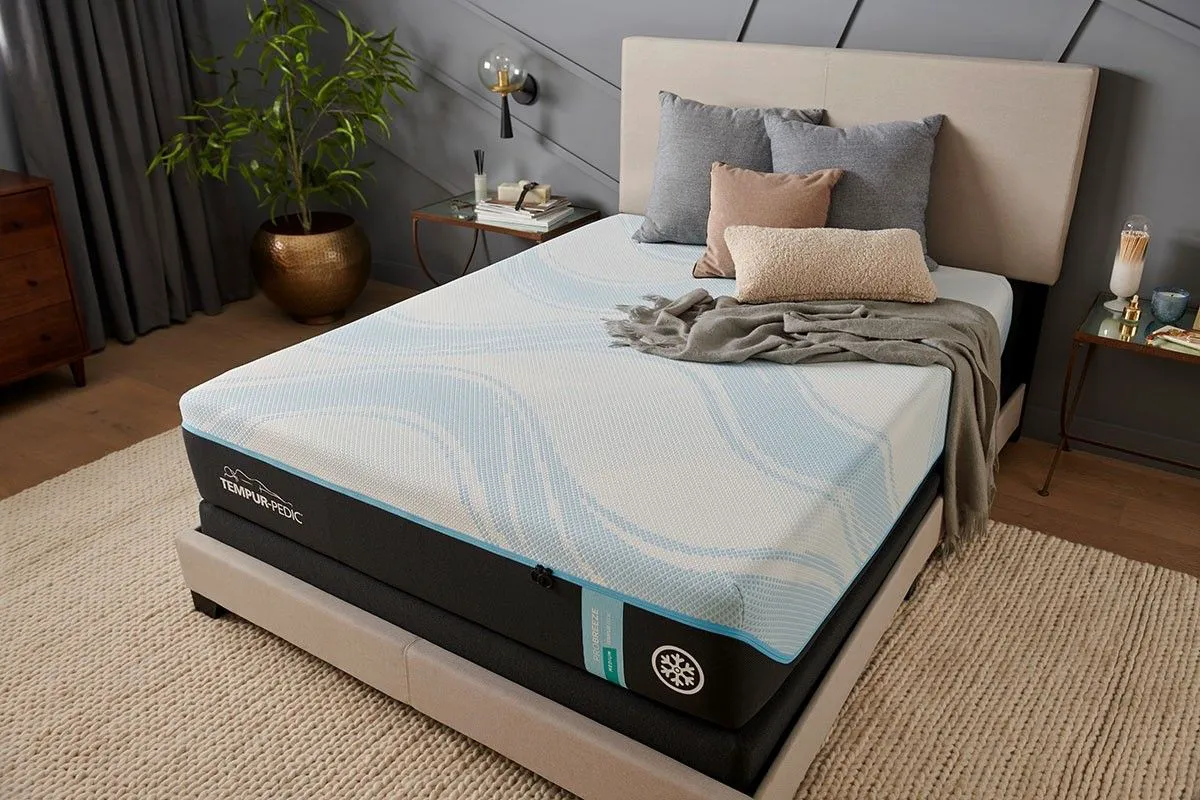
Certification is not a one-time event. CertiPUR-US requires participating foam producers - including Tempur-Pedic - to re-certify every six months during the first year and annually thereafter, so the seal on a 2026 build reflects a fresh round of analytical testing rather than a decade-old approval.
Off-Gassing: How Long, And What's Actually In The Smell
Off-gassing is the temporary release of volatile organic compounds (VOCs) trapped during foam manufacturing. CertiPUR-US caps emissions at 0.5 ppm, but "low" is not "none" - and Tempur-Pedic's foam is denser than most competitors, so trapped VOCs take longer to dissipate.
In NapLab's controlled smell tests across four Tempur-Pedic models, the mattresses took an average of 19 days to fully off-gas - versus a 7.13-day average across 400+ mattresses tested. Most of the odor is harmless: residual amine catalysts, isocyanate by-products, and trace solvents. The smell itself is not a reliable proxy for toxicity, but it is a reliable proxy for ventilation needs.
The 0.5-ppm VOC threshold is not a marketing number. CertiPUR-US runs a roughly 60-day certification process per foam formulation, including 21 to 30 days of analytical lab testing for emissions, content, and durability - meaning the foams Tempur-Pedic ships have cleared a multi-week chamber test before the seal goes on the spec sheet.
To minimize exposure during off-gassing:
- Unbox in a well-ventilated room, ideally with an open window for the first 72 hours
- Wait 24-48 hours before sleeping on a brand-new Tempur-Pedic
- Run an air purifier with an activated-carbon filter for the first two weeks
- If you have asthma or chemical sensitivity, plan to sleep elsewhere for the first week
The Formaldehyde And VOC Lawsuit History
Tempur-Pedic has been the subject of consumer litigation alleging downplayed VOC exposure. The Allen Stewart firm previously pursued claims citing laboratory-detected formaldehyde in Tempur-Pedic mattresses and pillows - formaldehyde being a known human carcinogen (IARC Group 1) linked to nasopharyngeal and sinonasal cancers and myeloid leukemia. In 2025, a judge denied class certification for a separate Tempur-Pedic VOC suit. That ruling addressed class procedure, not the underlying chemistry - and Tempur-Pedic continues to publish CertiPUR-US compliance for current production runs.
What this means in practice: Tempur-Pedic's current foams test below CertiPUR-US thresholds, but legacy units (pre-2018, replaced foam formulations) and older inventory in some retail channels may not match today's emissions profile. If you are buying secondhand, factory-reconditioned, or floor-model Tempur-Pedic, the certification on a 2026 spec sheet does not necessarily describe the unit you receive.
Heavy Metals: What Independent Testing Has Found
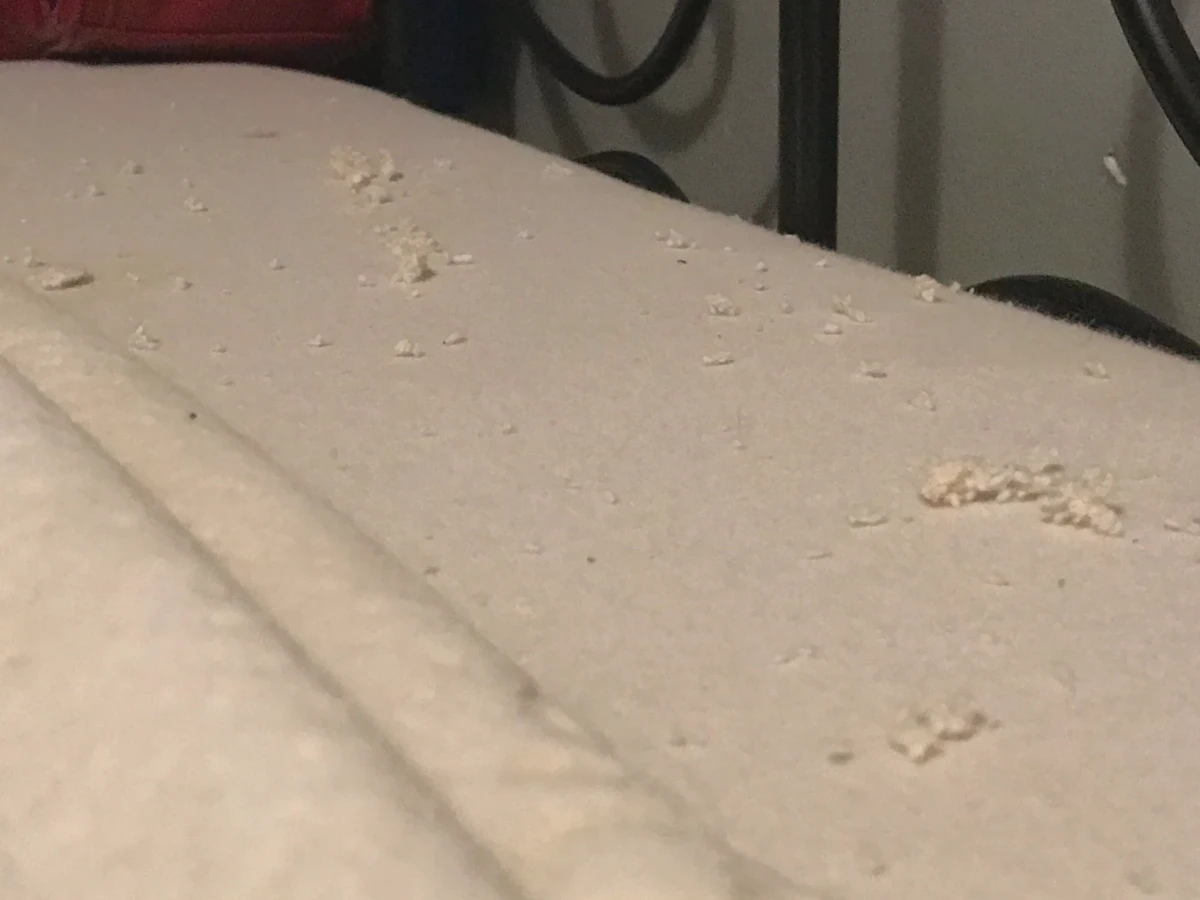
Lead-Safe Mama (Tamara Rubin) XRF-tested a 2006 Tempur-Pedic king mattress and found arsenic at 94 ppm, antimony at 98 ppm, and lead at 9 ppm in components - levels she notes are "considered safe" by current regulatory standards but high enough that she recommends caution for infant or toddler use. Modern (2022+) Tempur-Pedic production has reformulated covers and fire barriers, and CertiPUR-US foam testing rules out detectable lead in the foam itself. The takeaway: foam chemistry has improved; cover and barrier components are the remaining uncertainty.
Fiberglass Fire Barriers: Real, But Contained
Some Tempur-Pedic models - including older Tempur-Cloud, Tempur-Adapt, Tempur-ProAdapt, Tempur-Breeze, and Tempur-Supreme builds - use encapsulated fiberglass as the federally-required fire barrier. As long as the inner cover stays on, fiberglass exposure is functionally zero. The risk shows up only when owners unzip and remove the inner sock to wash it - at which point loose fibers can shed and contaminate a home for months.
If you own a Tempur-Pedic, the rule is simple: never remove the inner cover. We cover this in detail - including which models use fiberglass, what to do if your inner cover has been damaged, and safer fire-barrier alternatives - in our companion guide on Tempur-Pedic fiberglass.
Who Should Be Most Cautious
The certification covers the average healthy adult sleeping on a properly ventilated new mattress. These groups have a meaningfully different risk profile:
- Infants and toddlers - lower body weight per unit of VOC exposure, longer relative time on the sleep surface, and developing respiratory systems. The American Academy of Pediatrics recommends a firm crib mattress, not a memory foam adult bed, for under-12-month sleep.
- Asthmatics and people with multiple chemical sensitivity (MCS) - even sub-CertiPUR-US-threshold VOCs can trigger symptoms. Try to test the mattress in-store first; a 90-night home trial is essential.
- Pregnant individuals - limited human data, but the precautionary case is to maximize ventilation during the 1-3 week off-gassing window.
- People with formaldehyde-sensitivity diagnoses - natural latex (Dunlop or Talalay) or organic cotton/wool builds avoid the polyurethane chemistry entirely.
Tempur-Pedic Foam Layers At A Glance
Tempur-Pedic's "TEMPUR-Material" is a family of viscoelastic polyurethane foams - all CertiPUR-US-certified - tuned for different feel and cooling characteristics:
- Original TEMPUR comfort foam - the body-conforming memory foam that built the brand
- Original TEMPUR support foam - pressure-relieving high-density base layer
- TEMPUR-ES comfort foam - softer comfort variant for plush feels
- TEMPUR-CM+ comfort foam - phase-change material infusion for cooling
- TEMPUR-APR support foam - 20% more pressure relief than original
- TEMPUR-APR+ support foam - 40% additional pressure relief, for the highest-end Breeze and LuxeBreeze tiers
- Ventilated TEMPUR-APR support foam - drilled airflow channels in cooling-focused builds
All variants share the same certification status. Differences are mechanical (feel, cooling) - not toxicological.
Safer Alternatives If You Decide Against Memory Foam
If the off-gassing window or the lawsuit history rules out a Tempur-Pedic for you, two material categories sidestep polyurethane entirely:
- Natural latex (Dunlop or Talalay) with GOTS-certified organic cotton covers and wool fire barriers - no synthetic foam chemistry, no fiberglass.
- Innerspring with natural-fiber comfort layers - coils, cotton, wool. Lower price floor, less pressure relief than memory foam.
GOTS, GOLS, MADE SAFE, and Greenguard Gold are stricter certifications than CertiPUR-US and worth filtering for if chemical exposure is your primary concern.
Bottom Line
By every available CertiPUR-US measurement, current-production Tempur-Pedic mattresses are not toxic. The honest caveats: a 19-day average off-gassing window is meaningfully longer than most competitors, fiberglass fire barriers exist (don't remove the inner cover), and people with asthma, chemical sensitivity, or infants in the room have a reasonable case to choose a natural-latex or organic-fiber alternative. For the average adult sleeping on a well-ventilated new Tempur-Pedic in a 2026 build, the toxicity question reads "no" - with footnotes worth respecting.
Tempur-Pedic Toxicity FAQ
Do Tempur-Pedic mattresses have harmful chemicals?
Not by the CertiPUR-US chemical-of-concern list. Every TEMPUR-Material foam is independently tested to be free of heavy metals (mercury, lead), formaldehyde, phthalates regulated by the CPSC, ozone depleters, and PBDE/TDCPP/TCEP "Tris" flame retardants, with VOC emissions held under 0.5 parts per million. The remaining open question is what is in the cover, adhesives, and fire barrier - those components sit outside the foam-only scope of the seal, which is why ventilation during off-gassing and avoiding the inner fiberglass sock both still matter.
Are Tempur-Pedic mattresses really CertiPUR-US certified?
Yes. Every TEMPUR-Material foam variant carries CertiPUR-US certification, meaning it has been independently tested for heavy metals, formaldehyde, phthalates, ozone depleters, PBDE/Tris flame retardants, and low VOC emissions (under 0.5 ppm). The certification covers the foam, not the cover or fire-barrier components.
How long does a Tempur-Pedic take to fully off-gas?
NapLab's controlled testing across four Tempur-Pedic models found an average of 19 days to fully off-gas, compared with a 7.13-day average across 400+ mattresses tested. The dense TEMPUR-Material traps VOCs longer than thinner competitor foams. Ventilate the room, run an air purifier with carbon filter, and ideally wait 24-48 hours before sleeping on a brand-new unit.
Do Tempur-Pedic mattresses contain fiberglass?
Some Tempur-Pedic models - including older Tempur-Cloud, Tempur-Adapt, Tempur-ProAdapt, Tempur-Breeze, and Tempur-Supreme builds - use encapsulated fiberglass as the federally-required fire barrier. As long as the inner cover stays on, exposure is essentially zero. Never remove the inner cover. See our dedicated Tempur-Pedic fiberglass guide for model-by-model details.
Should infants or toddlers sleep on a Tempur-Pedic?
No. The American Academy of Pediatrics recommends a firm crib mattress for under-12-month sleep, not an adult memory foam bed. Even with CertiPUR-US certification, infants have a higher VOC exposure per unit of body weight and developing respiratory systems. Save the Tempur-Pedic for school-age and older sleepers.
What about the formaldehyde lawsuits against Tempur-Pedic?
Earlier consumer suits cited laboratory-detected formaldehyde, and a 2025 ruling denied class certification on a separate VOC suit - addressing class procedure, not the chemistry. Current production foams test below CertiPUR-US thresholds. Caution applies mainly to legacy units, secondhand purchases, and very old floor models, where the certification on a 2026 spec sheet may not describe what you receive.