The short answer
Casper mattresses are designed and assembled in the United States, with two main manufacturing facilities in Georgia and Pennsylvania. Foam pouring and component production are split among American manufacturing partners - primarily Jeffco (North Carolina) and Sinomax USA (Tennessee/Texas). Materials such as covers, fabrics, and certain foams are sourced globally from Mexico, Canada, China, Vietnam, India, Portugal, and France.
In 2024, Casper was acquired by Carpenter Co., one of the largest polyurethane foam manufacturers in the world, which now handles much of the brand's foam production (Wikipedia). For the Canadian market, Casper is owned and operated by Sleep Country Canada and most units sold there are manufactured in Canada - with select models still imported from the US or Vietnam.
So the honest answer is: Casper is assembled in the USA, but it's not a 100% Made-in-USA product.
Where Casper mattresses are manufactured
US assembly: Georgia + Pennsylvania
Casper operates two primary manufacturing facilities in the United States - one in Georgia and one in Pennsylvania. These are the facilities where finished mattresses are assembled, encased, and shipped to US customers (Sleep Junkie).
Additional US assembly happens through outsourced manufacturing partners in cities including Nashville, Chicago, Fort Smith (Arkansas), and Dallas, depending on the model line (AllAmerican.org).
Carpenter Co. ownership (2024 onward)
In 2024, Casper was acquired by Carpenter Co., a Richmond, Virginia-based foam manufacturer founded in 1948. Carpenter is one of the largest producers of polyurethane foam in the world and now produces the majority of the foam used in Casper mattresses - keeping more of the supply chain inside the United States than at any prior point in Casper's history (Casper.com).
Canadian production
Following Sleep Country Canada's 2023 acquisition of Casper Canada, mattresses sold in Canada are now manufactured domestically in Canada, with select hybrid models still imported from the US or Vietnam.
US assembly is one reason Casper sits where it does on price - here is the full breakdown of why are casper mattresses so expensive.
Manufacturing partners
Casper does not own every step of its supply chain. Instead, it works with established US foam and component manufacturers:
- Jeffco Fibres (North Carolina) - fiber components and select foam layers. A family-owned business that states "many of our products are manufactured and assembled in the USA."
- Sinomax USA (Houston, TX / Tennessee) - major memory foam supplier; sources foam from US partners and also supplies Serta Simmons, Costco, Wayfair, and Amazon.
- Future Foam - polyurethane base layers. Operates several US locations plus facilities in Germany and China.
- FXI - Airscape and zoned support foams. Mostly US locations with one Mexican facility.
- Carpenter Co. (parent, since 2024) - vertically integrated foam production.
Where the materials come from
Even though assembly is American, Casper sources individual components globally. Per Healthline's mattress review and Casper's own disclosures, materials are sourced from:
- United States - most foam, springs, and final assembly
- Mexico - some FXI foam runs
- Canada - select foam and textile components
- China - accessories (pillows, toppers), some imported foams
- Vietnam - select hybrid components, particularly for the Canadian market
- India - textile and cover materials
- Portugal / France - premium cover textiles
This is industry-standard for the bed-in-a-box category - Purple, Helix, and Tuft & Needle all follow a similar "assembled in USA, components sourced globally" model.
Why "where it's made" matters
Safety certifications
Because Casper mattresses are assembled in the US, every model must comply with US flammability law (16 CFR Part 1633) and Casper's foams carry CertiPUR-US certification - verified low VOCs, no formaldehyde, no ozone-depleting chemicals, and no heavy metals (Casper.com). Covers used in current US production are CertiPUR-US and OEKO-TEX where applicable.
Labor and supply chain
US assembly means workers are protected under American labor law and OSHA workplace standards. For shoppers concerned with ethical sourcing, that's meaningfully different from mattresses that are fully manufactured overseas.
Shipping footprint
Assembly in the continental US shortens the shipping leg for North American customers - a meaningful sustainability win compared to mattresses shipped fully assembled from Asia.
Casper model-by-model breakdown
Every current-production Casper sold in the US is assembled in Georgia or Pennsylvania with foam supplied by Carpenter Co. and partner mills:
- Casper One - assembled in Georgia / Pennsylvania; foam from Carpenter Co. and Jeffco.
- Casper Original Hybrid - assembled in Georgia / Pennsylvania; foam from Carpenter Co. and Sinomax USA, US-made pocketed coils.
- Casper Snow Hybrid - assembled in Georgia / Pennsylvania; cooling layers and HeatDelete bands sourced from Carpenter Co., US coils.
- Casper Snow Max Hybrid - assembled in Georgia / Pennsylvania; the most US-content model in the current lineup.
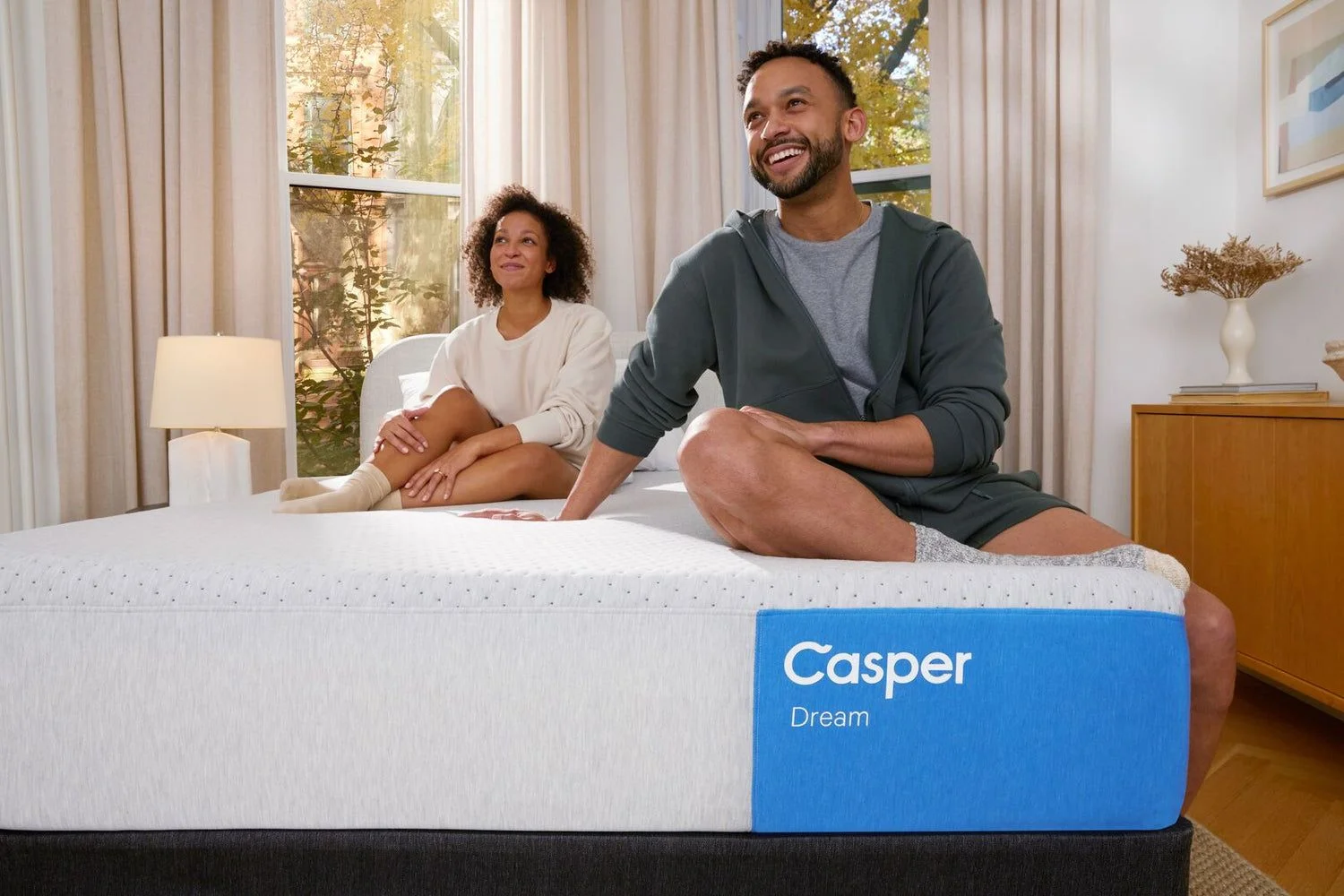
- Casper Dream Hybrid - assembled in Georgia / Pennsylvania; foam from Carpenter Co. and Sinomax USA.
All current-production US Casper mattresses are fiberglass-free, using a rayon-fiber-based fire barrier introduced in 2024.
Casper vs other "American-made" mattresses
A quick reference for how Casper compares to other major direct-to-consumer brands shoppers ask about:
- Purple - designed, manufactured, and assembled in the USA (Alpine, Utah). Their FlexGrid is poured in-house.
- Helix - hand-built in US factories (Arizona, North Carolina, Pennsylvania).
- Tuft & Needle - assembled in the US (owned by Serta Simmons since 2018).
- Saatva - assembled in 19 US facilities; most components sourced domestically.
- Emma - designed in Germany; sold globally with regional production.
- Simba - manufactured in Europe (primarily UK).
What this means for buyers
If "Made in the USA" is a hard requirement for you, Casper qualifies as US-assembled, but not 100% US-sourced. Brands like Purple and Saatva take that label further. If your priority is CertiPUR-US certified foam, fiberglass-free construction, and US assembly with strong labor and safety standards, Casper meets the bar - and the 2024 Carpenter Co. acquisition has brought even more of the foam supply chain in-house and in the US.
Where Casper mattresses are made - FAQ
Are Casper mattresses made in the USA?
Yes. Casper mattresses sold in the United States are designed and assembled at facilities in Georgia and Pennsylvania, using foam supplied primarily by Carpenter Co. (Casper's 2024 parent company), Jeffco Fibres, and Sinomax USA. Some component materials - covers, certain foams - are sourced internationally.
Who owns Casper now?
Casper was acquired by Carpenter Co. in 2024. Carpenter is a Richmond, Virginia-based foam manufacturer and one of the largest polyurethane foam producers globally. The Casper Canada business is separately owned by Sleep Country Canada (acquired in 2023).
Are Casper mattresses 100% Made in USA?
No. Casper mattresses are assembled in the USA, but not every component is US-sourced. Foam pouring is primarily domestic, but cover textiles and certain accessories are imported from Canada, Mexico, China, Vietnam, India, Portugal, or France depending on the model.
Where are Casper mattresses made in Canada?
Since Sleep Country Canada's 2023 acquisition, most Casper mattresses sold in Canada are manufactured domestically in Canada. A few hybrid models for the Canadian market are still imported from the US or Vietnam.
Do Casper mattresses contain fiberglass?
No - not in current production. Casper transitioned off filament fiberglass in 2024 and now uses a rayon-fiber-based fire barrier across the entire lineup. Pre-2024 units (Original, Original Hybrid, Nova Hybrid, Wave Hybrid) may still contain fiberglass.
Are Casper foams CertiPUR-US certified?
Yes. Every Casper foam layer is CertiPUR-US certified - verified for low VOC emissions, no formaldehyde, no heavy metals, no ozone depleters, and no PBDE flame retardants. Casper covers also carry OEKO-TEX certification where applicable.
Shop US-assembled mattresses at Banner Mattress
Browse our hand-picked selection of fiberglass-free, CertiPUR-US certified mattresses - including current-generation Casper and other US-assembled brands.