An air mattress that goes flat by morning almost always has a small puncture - and the puncture is almost always somewhere you can find in 10 minutes with stuff already in your kitchen. Below are the six detection methods sleep labs and camping gear shops actually use, ranked from fastest to most thorough, plus a step-by-step patch that holds.
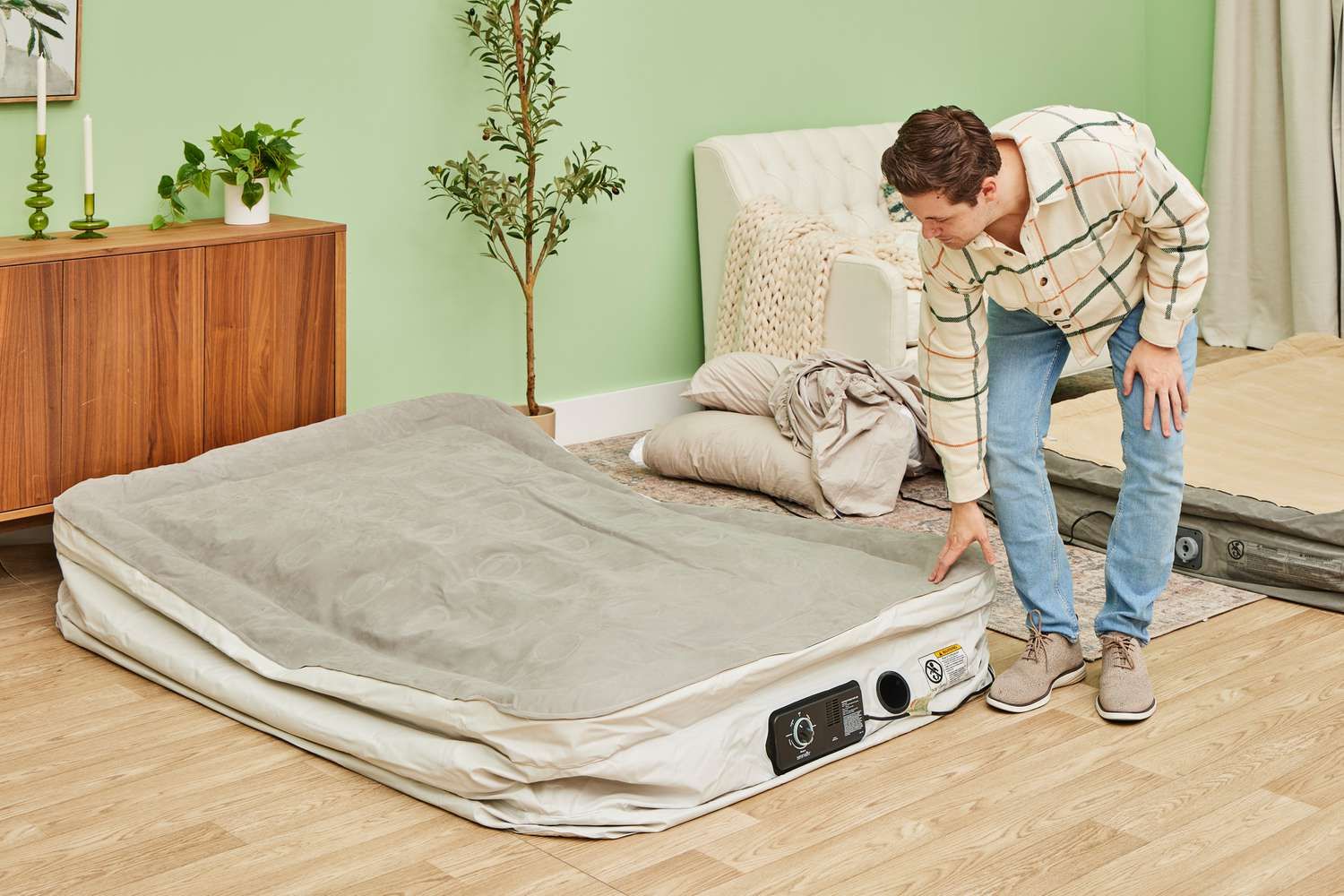
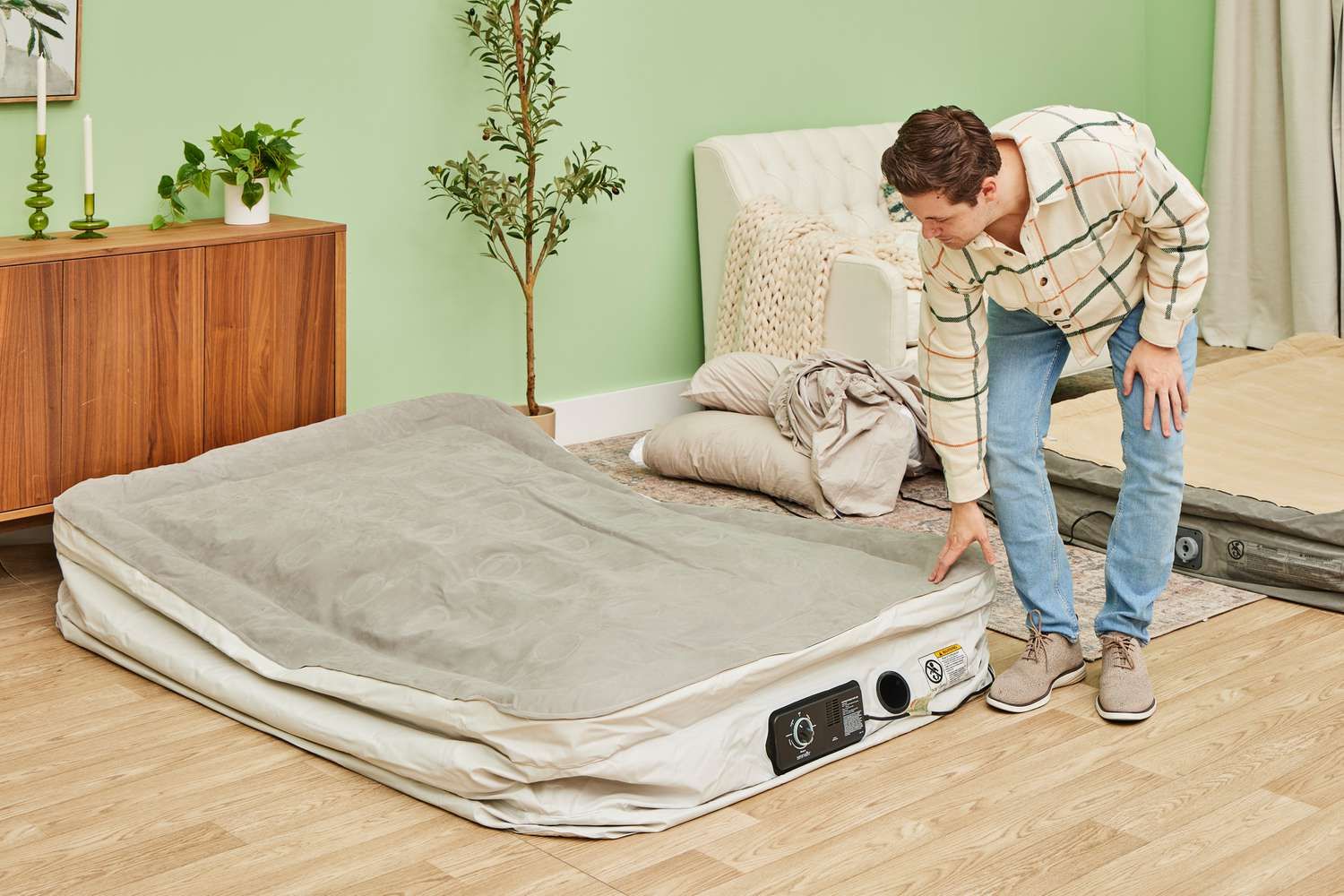
Before you start: fully inflate the mattress and let it sit for 5 minutes so the vinyl is taut. A soft mattress hides leaks. Move it onto a hard, clear floor where you can walk around it.
First, rule out the things that look like a hole but aren't
Roughly a third of "my air mattress is leaking" cases turn out to be one of these instead. Check them first - they take 30 seconds.
- Cold-room deflation: Air contracts as it cools. A mattress that lost 10-20% of its firmness overnight in a cold room (camping, basement, AC running hard) probably has no hole at all. Top it off in the morning and see if it holds during the day.
- Loose valve: Press the valve cap fully closed and put a wet palm over it. If you feel air against your hand, the valve seal - not a puncture - is your problem. Twist the inner stopper hard, replace the cap, and re-test.
- First-week stretch: Brand-new vinyl mattresses stretch for the first 2-3 inflations and feel softer the next morning. That's not a leak - top up and the loss disappears after a few uses.
The 6 best ways to find a hole in an air mattress
1. Soapy-water spray (the gold standard)
This is the method every camping shop and gear company recommends - Coleman, Bestway, Intex, REI all point to it first. Mix 1 tablespoon of dish soap with 2 cups of warm water in a spray bottle. Inflate the mattress fully, then spray a section, wait 10 seconds, and watch. A leak makes a steady stream of small bubbles right at the puncture.
Work in a grid: top surface, both long sides, both short sides, then bottom. Don't skip the seams - that's where most leaks hide.
2. Dunk test (for stubborn leaks)
If the soap method doesn't reveal the leak, partially deflate the mattress so it folds, then submerge sections one at a time in a bathtub. Press down. A puncture sends up a steady column of bubbles. This is the surest method for tiny pinholes the soap can't catch, and the only reliable way to test the bottom seam without flipping a queen-sized mattress.
Caveat: dry the mattress completely before patching - water trapped under a patch will pop it loose within days.
3. Listen and feel
In a quiet room, press your weight on different sections and listen close. A pinhole hisses faintly. Run a damp palm slowly over the surface - escaping air feels cold and obvious against wet skin. Do this with the mattress on the floor so you can hear without ambient noise.
4. Baby-powder method
Sprinkle a thin layer of baby powder, cornstarch, or flour over the inflated mattress. Press down. Escaping air at the leak blows the powder into a visible "crater" or fan-shaped clearing. Best for top-surface punctures and large enough to handle without water.
5. Plastic-wrap test (for seams)
Press a strip of plastic cling wrap firmly against a suspected seam. The wrap will visibly bubble up at any leak as escaping air gets trapped underneath. This is the easiest way to check seams without water - useful when you can't move the mattress to the bathroom.
6. Inspect the high-probability zones first
Don't search the whole mattress randomly. Order of likelihood, from highest to lowest:
- Seams along the edges (where two welds meet) - the #1 location
- The bottom surface, especially if the mattress sat on carpet, gravel, or tile
- Around the valve
- The top surface near corners (most stressed by body weight)
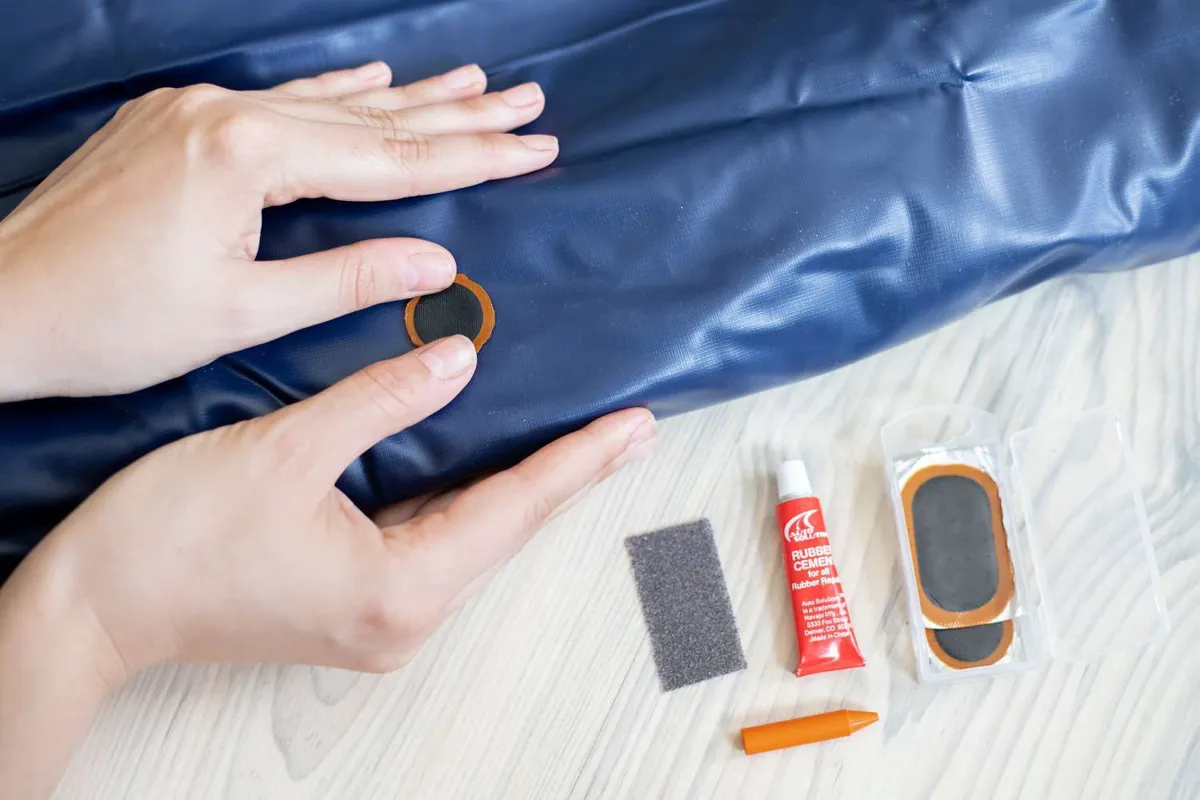
How to patch the hole so it actually stays sealed
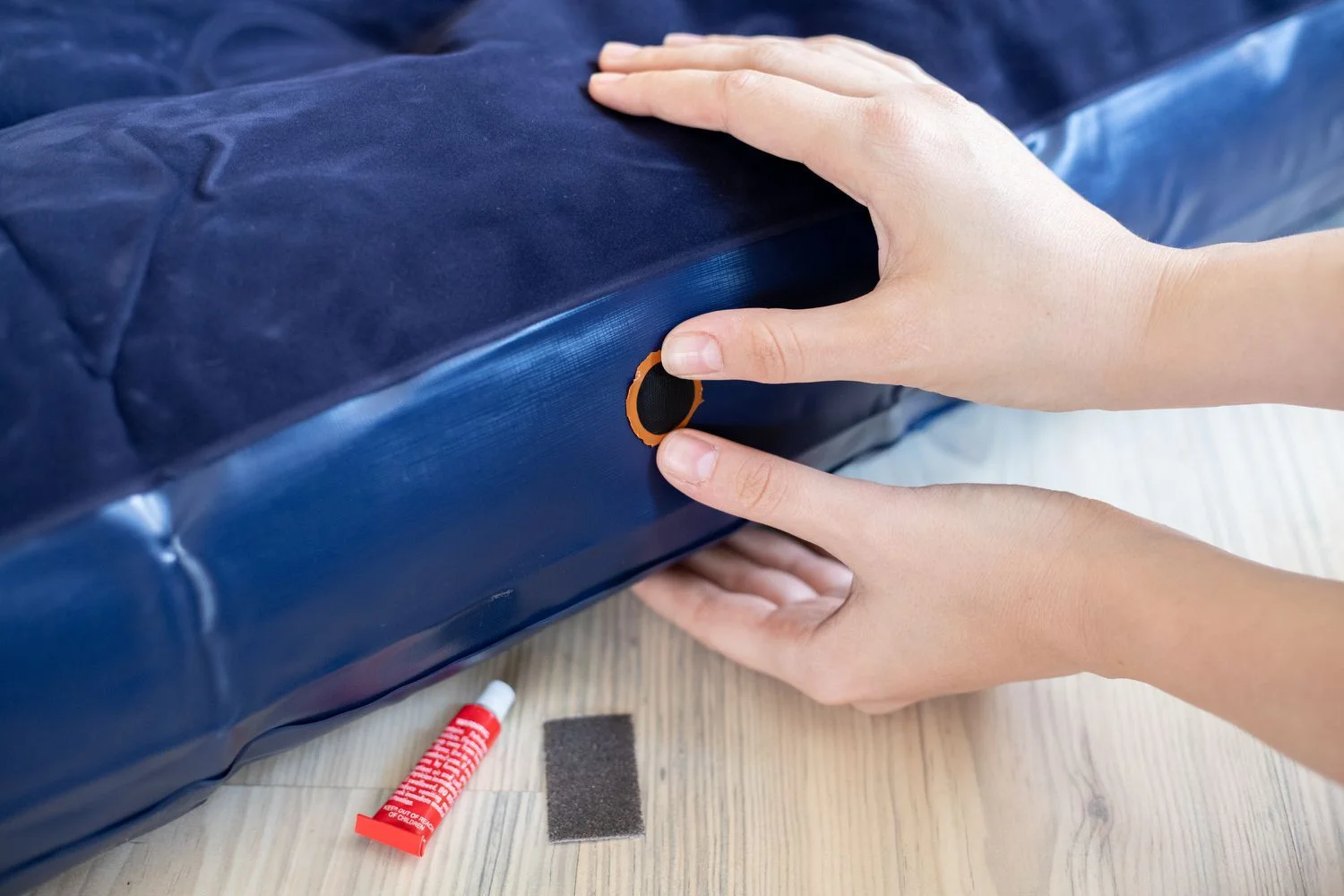
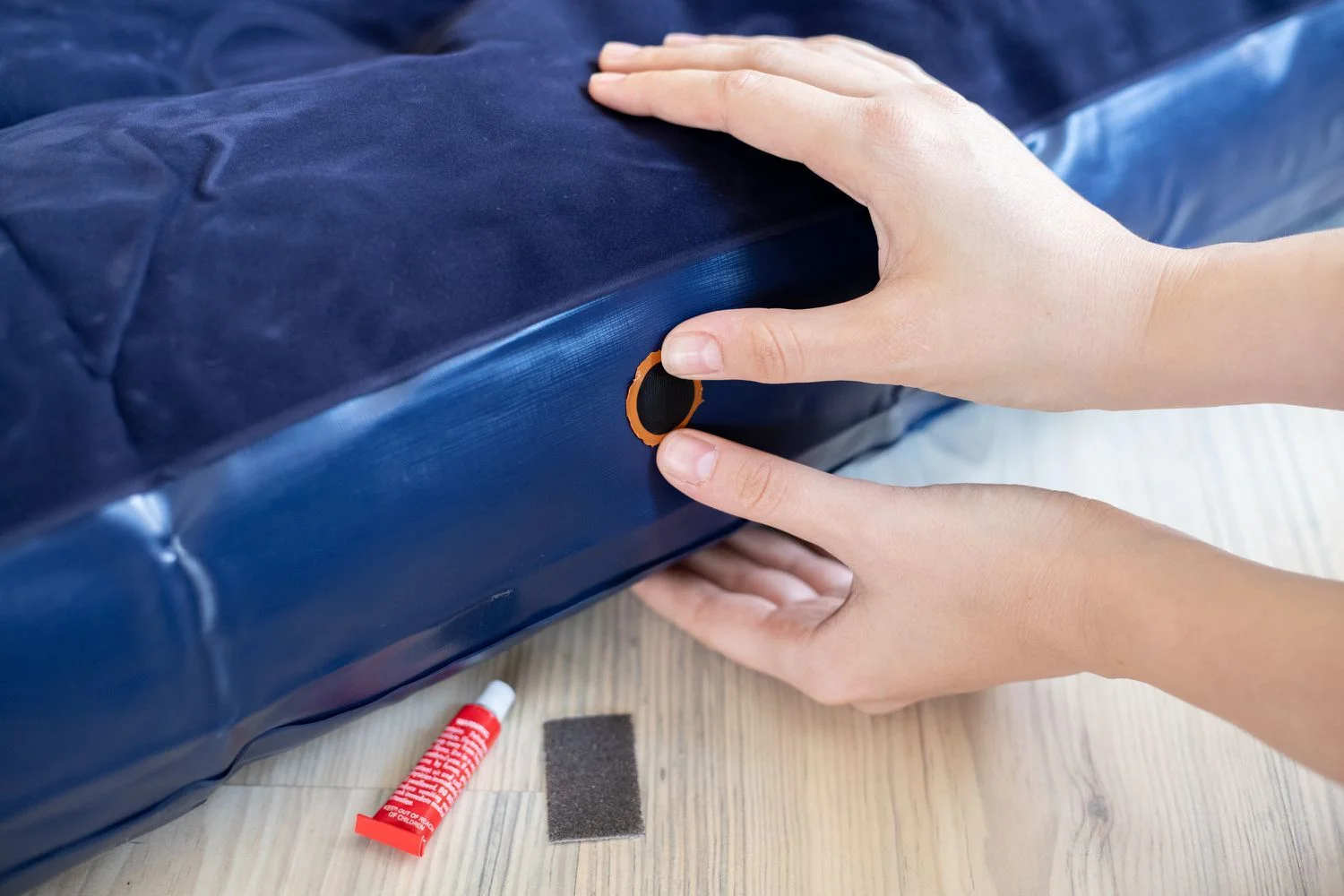
Once you've found the leak, mark it immediately with a marker or piece of masking tape - small holes are surprisingly easy to lose track of. Then follow these steps. The whole repair takes about 15 minutes of active work plus drying time.
- Deflate slowly. Open the valve and let the mattress go limp. Pushing or kneeling on it during deflation can stretch the hole bigger.
- Clean the area. Wipe a 4-inch radius around the hole with rubbing alcohol on a cotton ball. Skip household cleaners - most leave a film that prevents adhesion. Let it dry fully (3-5 minutes).
- Sand if the surface is flocked. If the top is fuzzy (most modern airbeds), lightly sand a patch-sized area down to smooth vinyl with fine sandpaper. The fuzz prevents the patch from bonding.
- Apply the patch. Use the patch from the manufacturer's repair kit if you have it - Intex, Coleman, and Bestway all include one. If not, a generic vinyl/PVC repair kit (about $8 at any hardware store) works on any standard airbed. Cut the patch at least 1 inch larger than the hole on every side, with rounded corners (square corners peel).
- Press and weight it. Smooth out air bubbles, then place a heavy book on top for the curing time printed on your kit (usually 6-24 hours). Self-adhesive patches need 30 minutes; rubber-cement-style patches need a full overnight.
- Test before sleeping on it. Re-inflate, let it sit for 30 minutes, and re-spray the patched area with soapy water. No bubbles = good repair. If you see bubbles, the patch didn't seat - peel it off, reclean, and retry with a fresh patch.
If you want the full step-by-step with material choices, see our guide on how to patch a hole in air mattress.
What to do if you can't find the hole at all
After running every method above, if you still can't pin down the leak, here's the order of escalation:
- Re-inflate and time it. If the mattress holds firm for 4+ hours unweighted but goes flat under your body, the leak only opens under pressure. Lie on it for 20 minutes, then immediately spray with soapy water - this catches stress-only leaks.
- Check the underside of the valve. Some valves leak through a worn internal gasket, not the outer cap. Pull the valve out (twist counter-clockwise on most models) and inspect the rubber O-ring.
- Decide if it's worth fixing. If the mattress is more than 3 years old and the vinyl feels brittle, the structure is probably failing in multiple invisible spots. A new $40-80 airbed is usually the right call over chasing leaks every weekend.
How to keep new holes from happening
- Always use a fitted sheet or mattress pad - direct contact with skin oils and zippers is the #1 cause of pinholes.
- Put a tarp or cheap moving blanket between the mattress and the floor when camping. Tile, wood, and gravel all puncture vinyl over hours of use.
- Don't over-inflate. The mattress should give visibly under hand pressure. A drum-tight bed stresses seams.
- Deflate fully before storage. Folding an inflated mattress around furniture corners is the most common puncture moment.
- Store in the original bag or a soft tote - never with sharp tools or stakes nearby.
Frequently asked questions
Why does my air mattress deflate but I can't find a hole?
The most common reasons are a cold-room temperature drop (air contracts overnight), a slightly loose valve, or first-week vinyl stretch on a new mattress - none of which are actual punctures. If the mattress holds firm for several hours unweighted but goes flat under your body, the leak only opens under pressure: lie on it for 20 minutes, then immediately spray with soapy water to catch a stress-only leak.
What is the easiest way to find a leak in an air mattress?
Soapy water in a spray bottle. Mix one tablespoon of dish soap with two cups of warm water, fully inflate the mattress, and spray a grid section by section. A leak shows as a steady stream of small bubbles. This is the method recommended by Coleman, Bestway, Intex, and REI.
Where do air mattresses usually leak?
Seams along the edges are the #1 location, followed by the bottom surface (where contact with floor materials wears the vinyl), then the area around the valve, then the top surface near corners. Always check seams first - they account for roughly half of all leaks.
Can I use duct tape to patch an air mattress?
Only as a temporary 1-2 night fix. Duct tape adhesive doesn't bond well to vinyl long-term and starts peeling within a week. For a real repair, use a vinyl/PVC patch kit (about $8 at any hardware store) - those use solvent-based adhesives that fuse the patch into the vinyl.
How long does an air mattress patch take to dry?
Self-adhesive patches need about 30 minutes before re-inflation. Rubber-cement-style patches (the kind in most repair kits) need 6-24 hours of curing under a weighted book. Always re-test the patch with soapy water before sleeping on the mattress.
Should I replace an air mattress instead of patching it?
Replace it if it's more than 3 years old and the vinyl feels brittle, if you've patched it more than twice already, or if the leak is at a seam more than a few inches long. A new airbed is $40-80; chasing repeat leaks across an aging mattress wastes more time than it saves.
Should I replace an air mattress instead of patching it?
Replace it if it's more than 3 years old and the vinyl feels brittle, if you've patched it more than twice already, or if the leak is at a seam more than a few inches long. A new airbed is $40-80; chasing repeat leaks across an aging mattress wastes more time than it saves.