Waking up on the floor at 3 a.m. is the universal sign that your air mattress has a leak. The good news: most punctures, pinholes, and seam tears can be sealed at home in under an hour, and the patch will hold for years if you prep the surface correctly. The bad news: duct tape almost never works long-term, and skipping the cure time is the most common reason home repairs fail.
This guide walks through the full repair - locating the leak with soapy water, prepping smooth and flocked (fuzzy) surfaces, applying a proper vinyl patch, and giving the adhesive enough cure time to actually bond. We'll also cover what to do when there's no obvious hole and how to know when the mattress is past saving.
What you'll need
- A vinyl patch kit (Gear Aid Tenacious Tape, Bestway, Coleman, or the kit that came with your mattress)
- Dish soap and a spray bottle of water - for finding the leak
- Rubbing alcohol and a clean cloth - to degrease the area
- Fine-grit sandpaper (only if the leak is on a flocked/fuzzy side)
- Permanent marker, scissors, and something heavy (a stack of books) to weight the patch while it cures
If you don't have a kit on hand, vinyl pool-liner cement (HH-66) plus a scrap of vinyl works. Hot glue, super glue, and duct tape are emergency-only fixes - they buy you a night, not a year.
Step 1: Find the leak
Inflate the mattress fully and listen - large punctures hiss audibly. For pinholes, mix a few drops of dish soap into a spray bottle of water and mist the surface in sections, paying close attention to seams and the head and foot of the mattress (where most leaks form). Bubbles tell you exactly where the hole is. Mark each leak with a permanent marker before the soap dries.
Don't skip the soapy-water test. Most patch failures aren't bad adhesive - they're a missed second hole that nobody looked for.
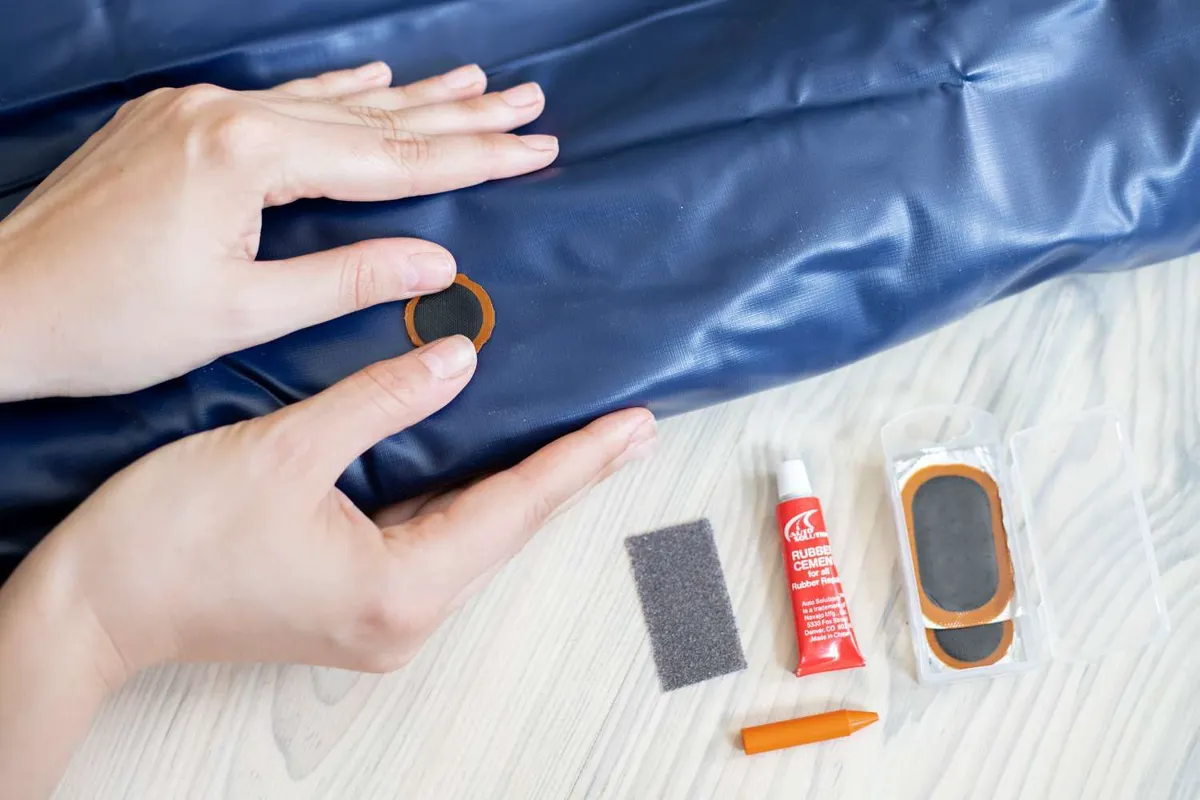
Step 2: Deflate and clean the surface
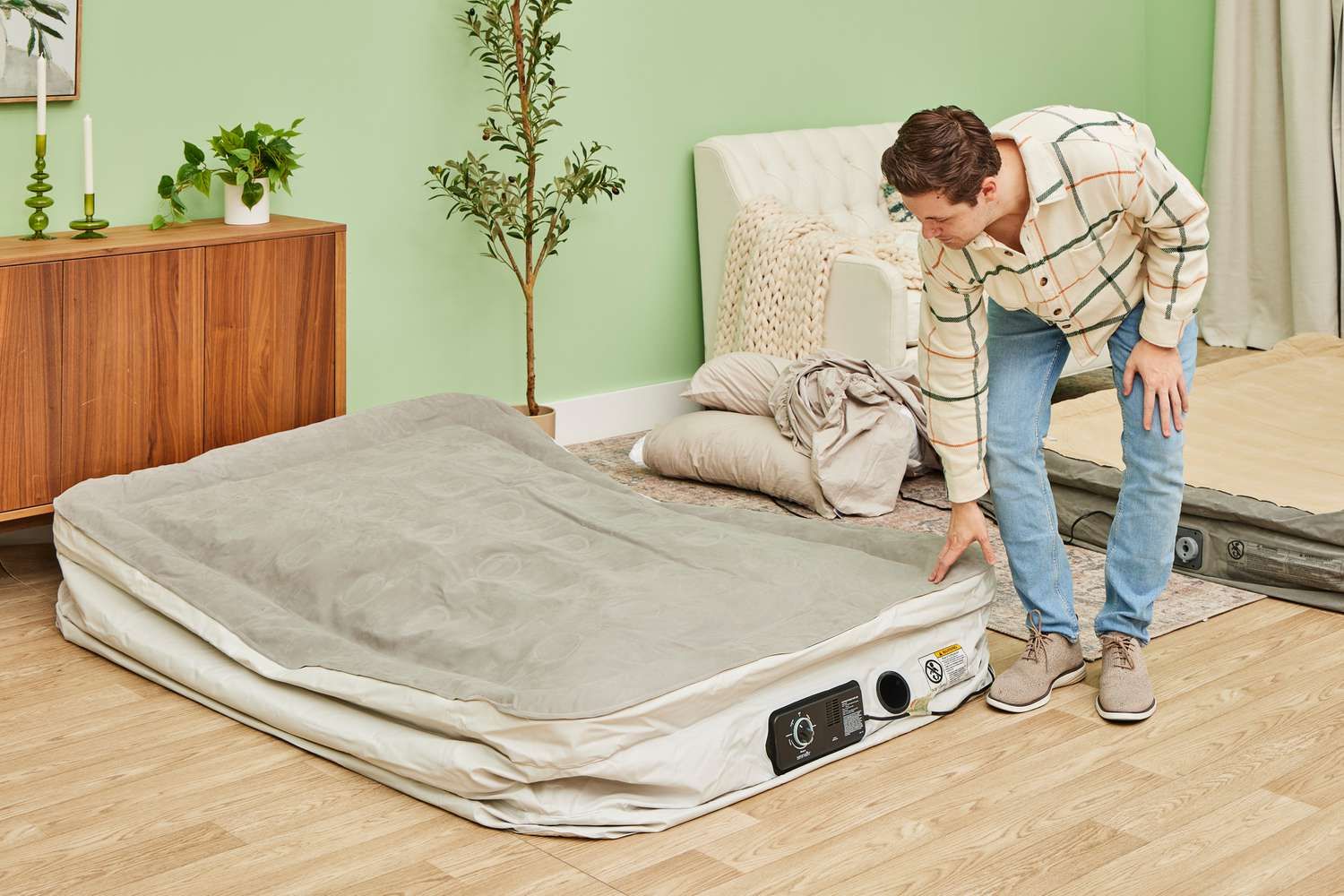
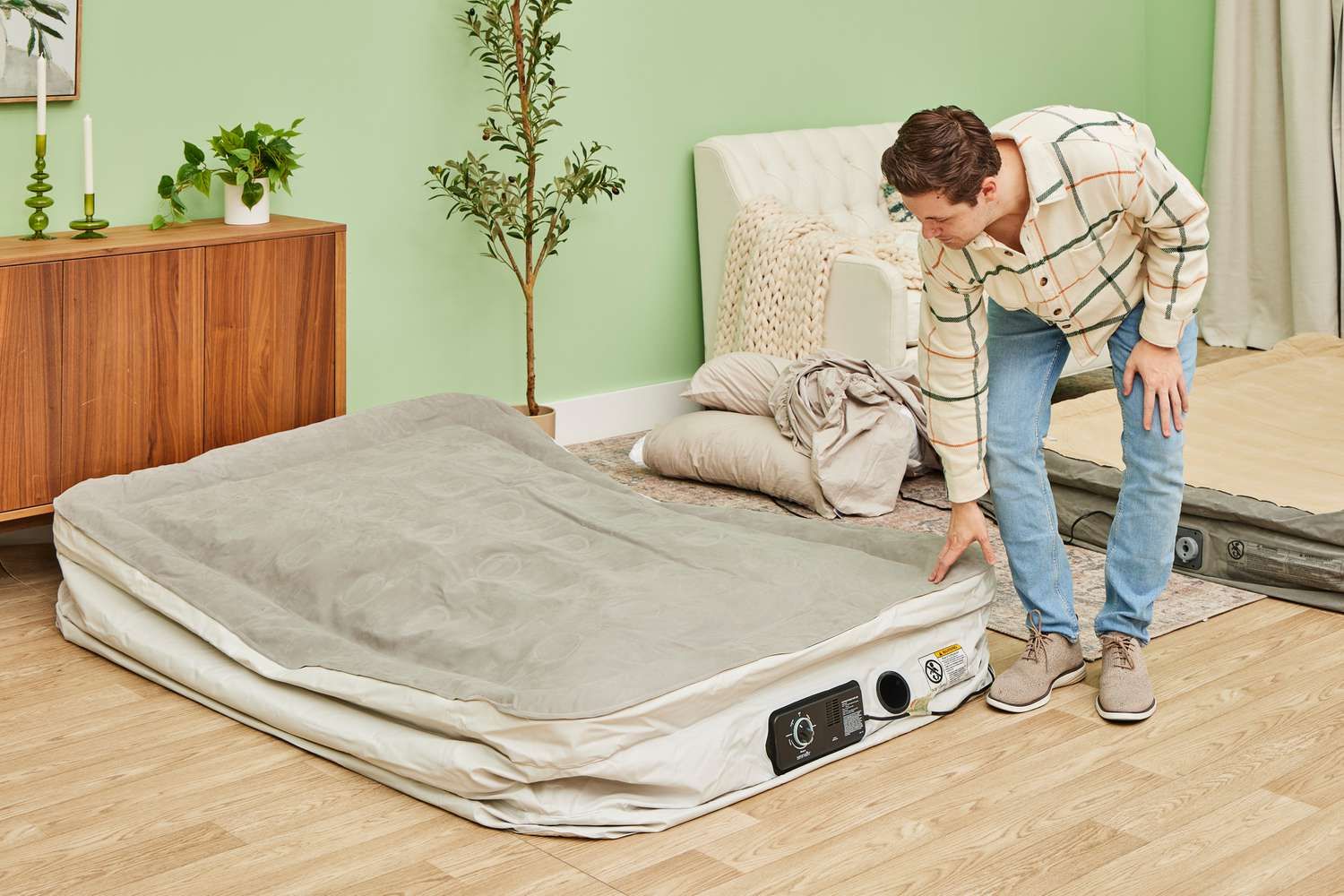
Open the valve and let the mattress fully deflate. Lay it on a hard, flat surface - a wood floor or a sheet of plywood works better than carpet, which lets the vinyl flex while the patch cures.
Wipe the leak area dry, then clean a 2-inch radius around the hole with rubbing alcohol on a clean cloth. Body oils, dust, and residual soap will all prevent the adhesive from bonding to the vinyl. Let it air-dry completely - usually 5 to 10 minutes.
If the leak is on the flocked (fuzzy) top
Patches will not stick to flocking. Use fine-grit sandpaper to gently abrade the fuzzy coating off a 2-inch circle around the hole until you can see the smooth PVC underneath. Wipe away the dust, then clean again with alcohol. This single step is what separates a patch that holds for years from one that lifts in a week.
Long-term sanitation matters too - here is how to clean mold off an air mattress.
Step 3: Cut and apply the patch
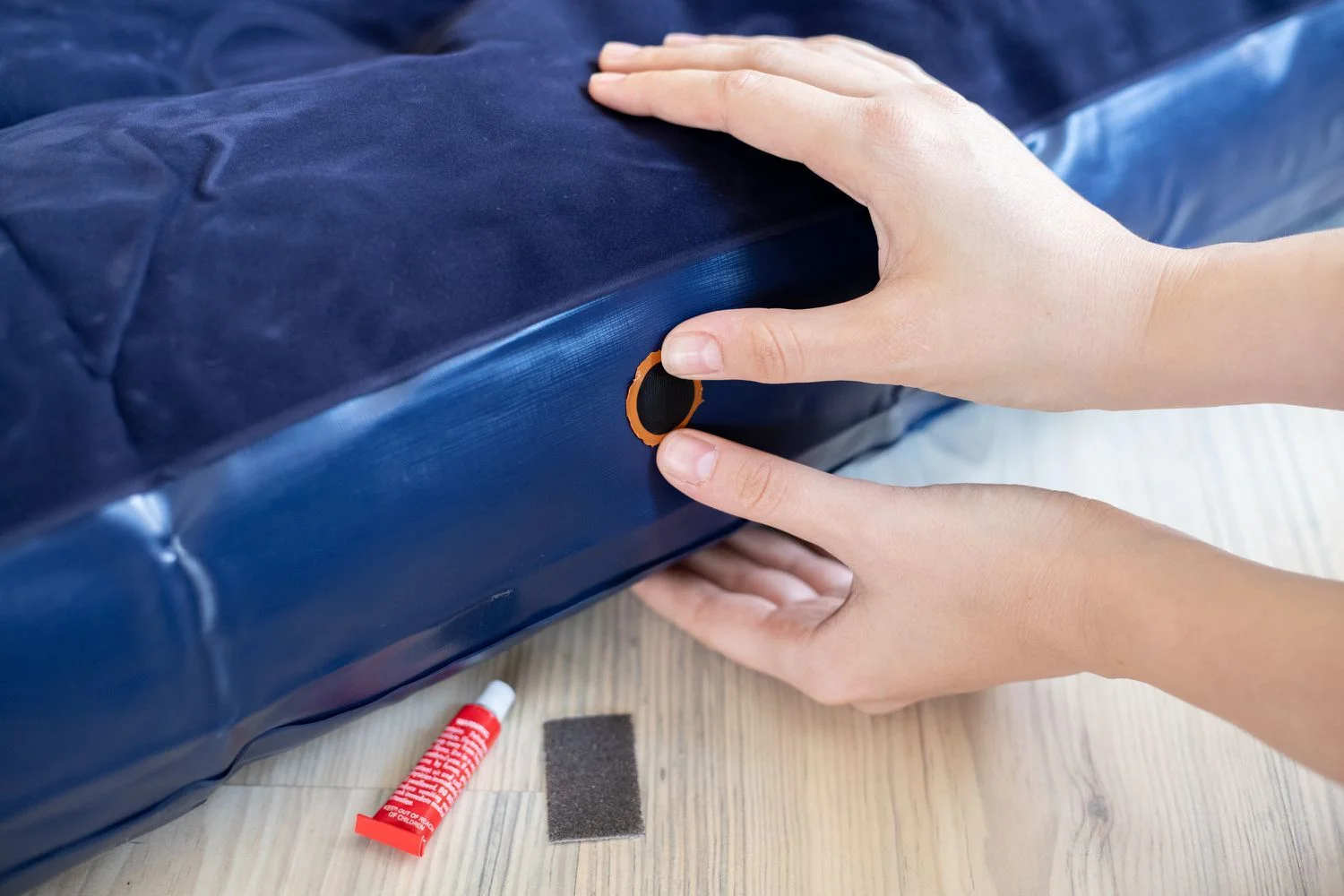
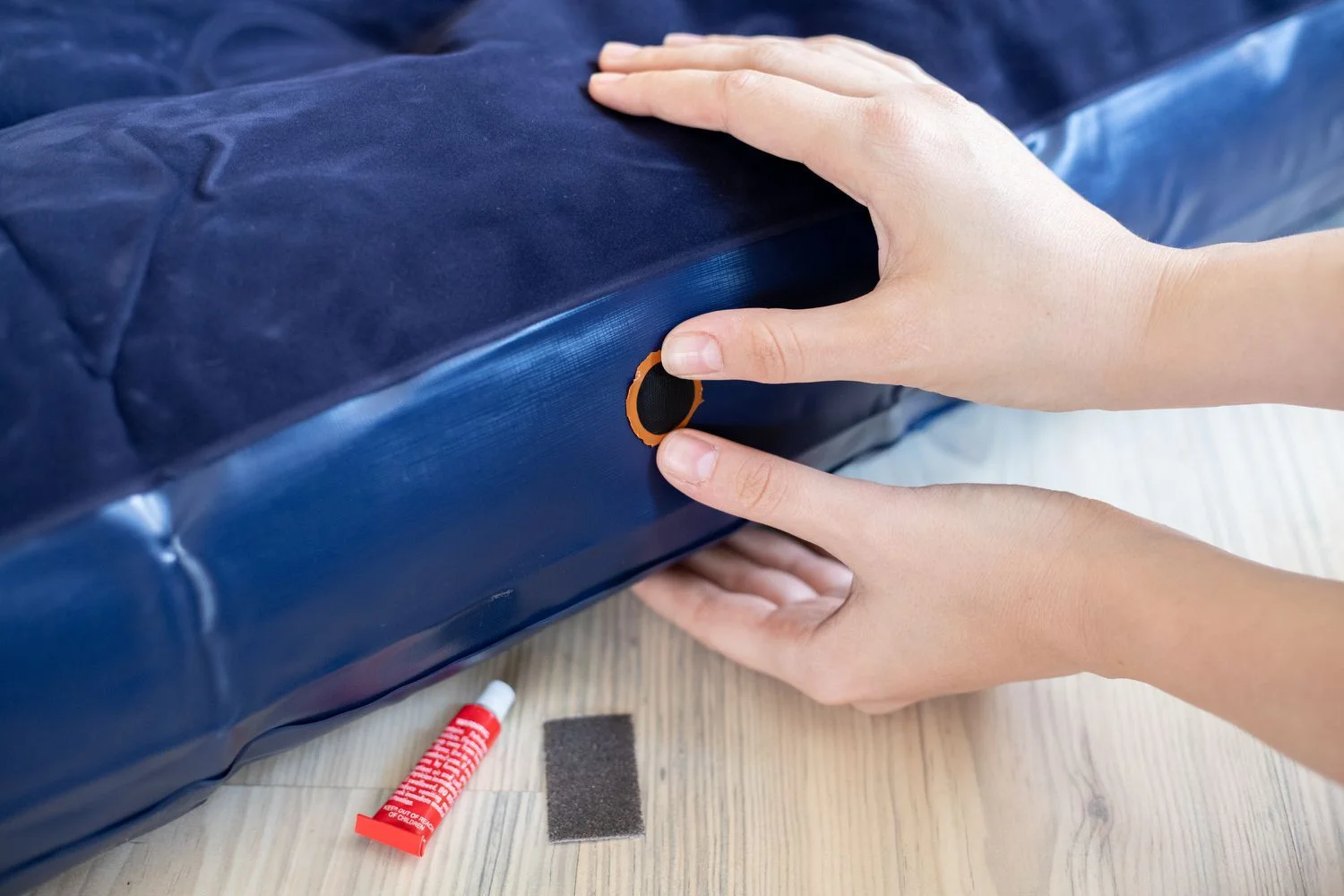
Cut a patch that extends at least half an inch past the hole on every side. Round the corners with scissors - square corners catch and peel up over time, which is the single most common cause of patch failure.
If you're using a self-adhesive patch (like Tenacious Tape), peel the backing and press the patch firmly over the hole, working from the center outward to push out air bubbles. If you're using a glue-on patch with vinyl cement, brush a thin, even layer of cement on both the patch and the mattress, wait 1-2 minutes for the adhesive to get tacky, then press the patch down and smooth it flat.
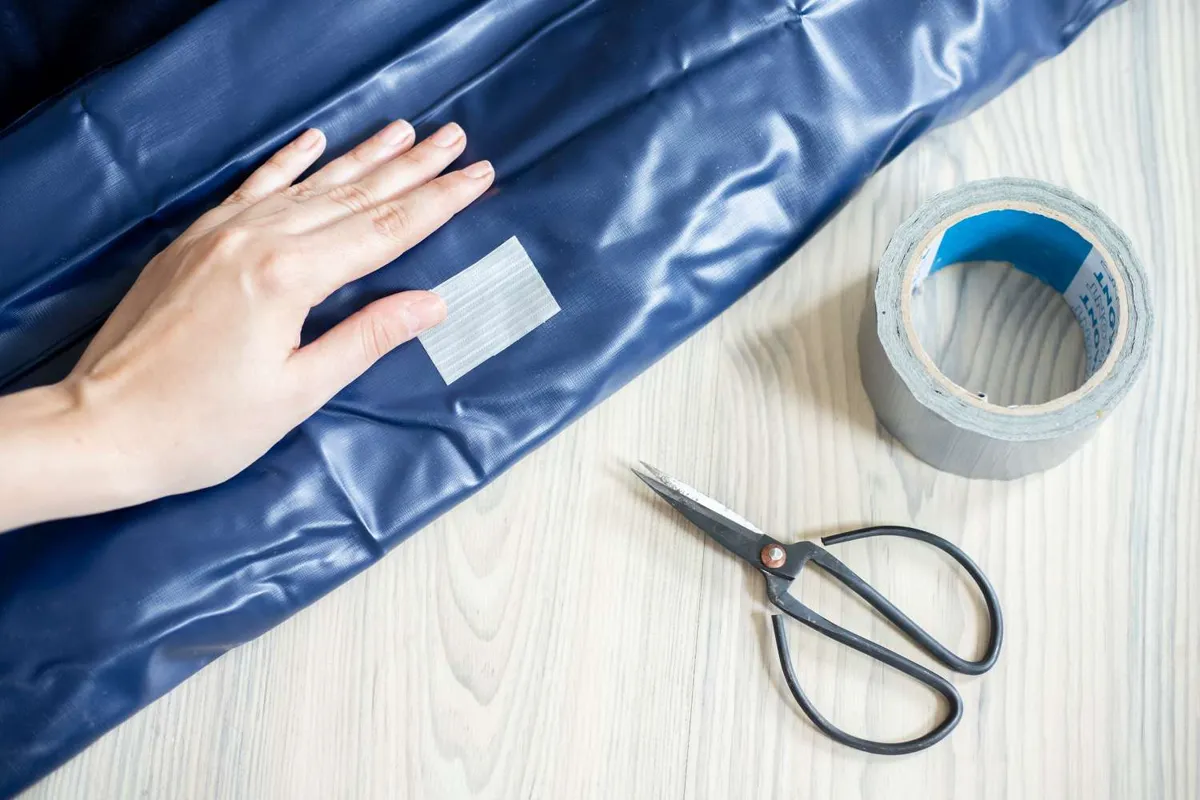
Step 4: Weight the patch and let it cure
Lay a flat, heavy object - a couple of hardcover books, a cutting board with cans on top - over the patch. Pressure during cure is what creates a long-lasting bond.
Cure times vary by adhesive:
- Self-adhesive vinyl patches: 2-4 hours minimum
- Vinyl cement (HH-66, Seam Grip): 12 hours, ideally overnight
- Hot glue or super glue (emergency only): 30-60 minutes, expect to redo it within a week
Don't inflate the mattress before the cure is up. The pressure will lift the edges of the patch before the adhesive has fully set, and you'll be back to square one.
Step 5: Re-test for leaks
Once cured, inflate the mattress and run the soapy-water test again over the patched area and the rest of the surface. If the patch holds and no new bubbles appear elsewhere, you're done. If a small leak persists at the patch edge, add a thin bead of vinyl cement around the perimeter and let it cure another 12 hours.
What if there's no visible hole?
Air mattresses can lose pressure overnight without any actual puncture. A few common, fixable causes:
- New mattress stretch. Brand-new vinyl stretches during the first few uses, so the bed feels softer by morning. Top it off and it'll stabilize within a week.
- Cold air contracting. Air shrinks as it cools. A 15°F drop overnight can lose 5-10% of volume with no leak at all.
- A loose valve cap. Re-seat the valve and check the gasket for debris. This is the single most overlooked cause of "phantom" leaks.
- Overloading. Exceeding the weight limit forces air past the valve seal even when nothing is torn.
When to stop patching and replace
Patches are great for clean punctures and small seam splits. They're not a fix for:
- Tears longer than 3 inches, or any tear running along a glued seam
- A leaking valve assembly (the plastic body itself, not the cap)
- Internal coil or baffle failure - the bed inflates but immediately bulges or sags
- Mattresses more than 4-5 years old that have already been patched in 3+ spots
At that point, the vinyl is fatigued and new leaks will keep appearing. Replacement is cheaper than your sleep.
Air mattress patching FAQ
Can I patch an air mattress with duct tape?
Only as an emergency fix. Duct tape adhesive doesn't bond well to PVC and starts lifting within days, especially as the mattress flexes under body weight. Use it to get through one night, then apply a real vinyl patch the next day.
What's the best adhesive if I don't have a patch kit?
Vinyl pool-liner cement like HH-66 is the strongest household-available option. Super glue (cyanoacrylate) works for tiny pinholes but stays brittle. Avoid hot glue - it bonds poorly to flexible PVC and cracks within a week.
Can I use Gorilla Tape on an air mattress?
Gorilla Tape holds longer than standard duct tape because it has a thicker, more aggressive adhesive - but it's still a temporary fix. The tape itself is too rigid to flex with the mattress, so the edges peel up over time. Use a vinyl patch for anything you want to last more than a month.
How do I patch a hole on the fuzzy/flocked side?
Sand the flocking off a 2-inch circle around the hole with fine-grit sandpaper until you reach the smooth PVC underneath. Wipe away the dust, clean with rubbing alcohol, then apply your patch as normal. Patches will not stick to flocking - sanding is non-negotiable.
How long should I let the patch cure before sleeping on it?
At least 4 hours for self-adhesive patches and 12 hours (overnight) for vinyl cement. Sleeping on a patch before it's fully cured is the #1 reason home repairs fail - the body weight lifts the edges before the bond sets.