An air mattress collects sweat, body oils, dust, and skin cells just like a regular bed - but its smooth PVC or flocked surface needs a different cleaning routine. Done right, a thorough clean takes 30 minutes of active work plus drying time, and it can add years to the life of the bed.
This guide walks through the full routine: vacuum, spot-clean, disinfect, deodorize, and dry. We also cover the three problems people search for most - mold inside the seams, set-in stains, and pet accidents - plus the storage habits that prevent them in the first place.
What you'll need
- Mild dish soap or gentle laundry detergent
- White vinegar (5% acidity) or 70% isopropyl alcohol
- Baking soda
- Two clean microfiber cloths and a soft sponge
- Vacuum with an upholstery or soft-brush attachment
- An empty spray bottle
Skip bleach, ammonia, and abrasive scrubbers - they break down PVC and degrade flocked surfaces. Never run an air mattress through a washing machine. The agitation tears seams and the trapped water is almost impossible to dry out, which is exactly how mold takes hold.
Step 1: Unplug and prep the surface
If your mattress has an electric pump - built-in or detachable - disconnect it from the wall and from any battery pack before any liquid comes near the bed. For built-in pumps, cover the pump housing with a dry cloth so splashes don't reach the motor.
Strip off sheets, blankets, and the mattress protector and launder them on the hottest setting the fabric allows. Inflate the mattress fully and move it to a flat, well-lit surface - a tile floor, deck, or driveway works. A fully inflated bed lets you reach into the seams and folds where dust and mites hide.
Step 2: Vacuum thoroughly
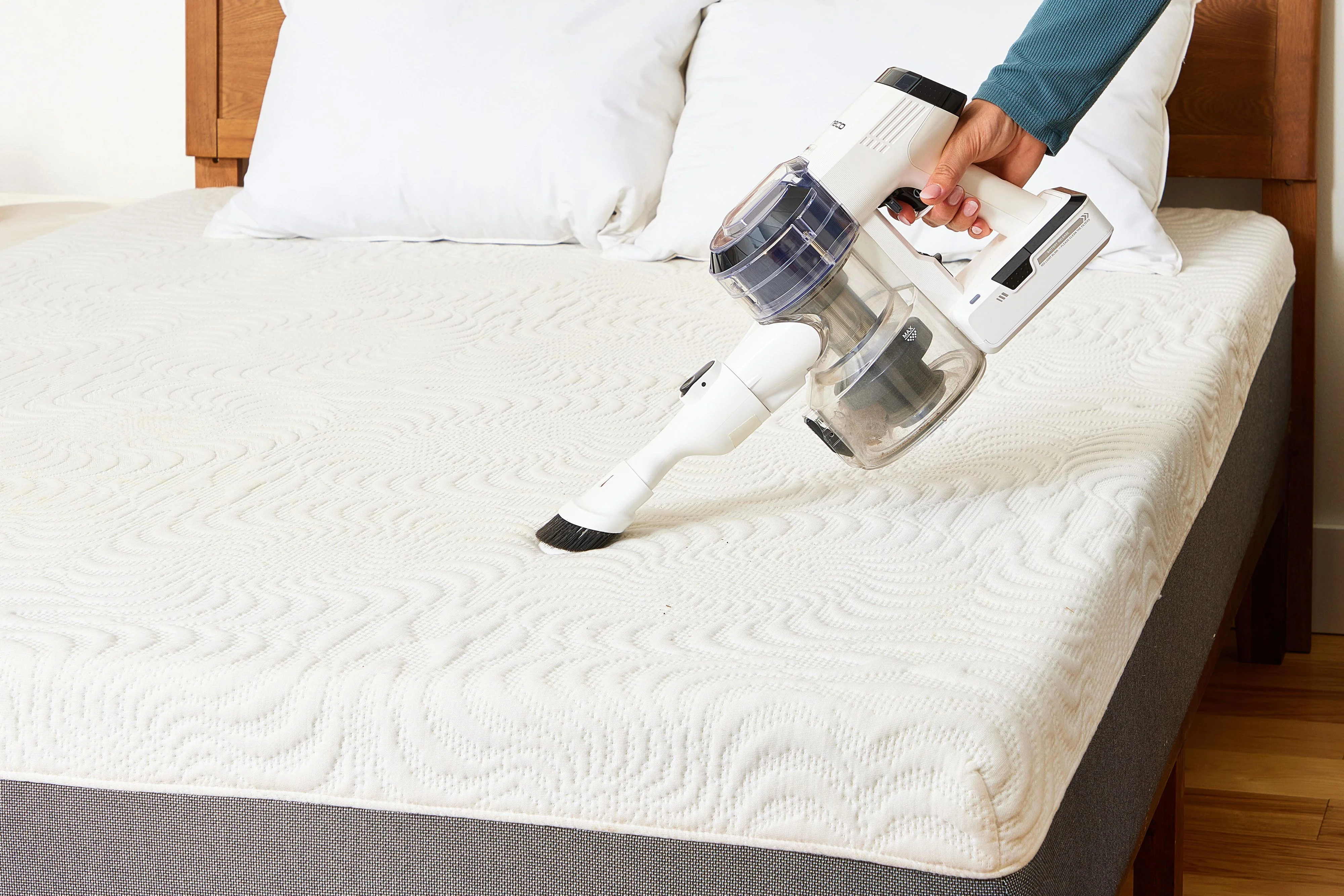
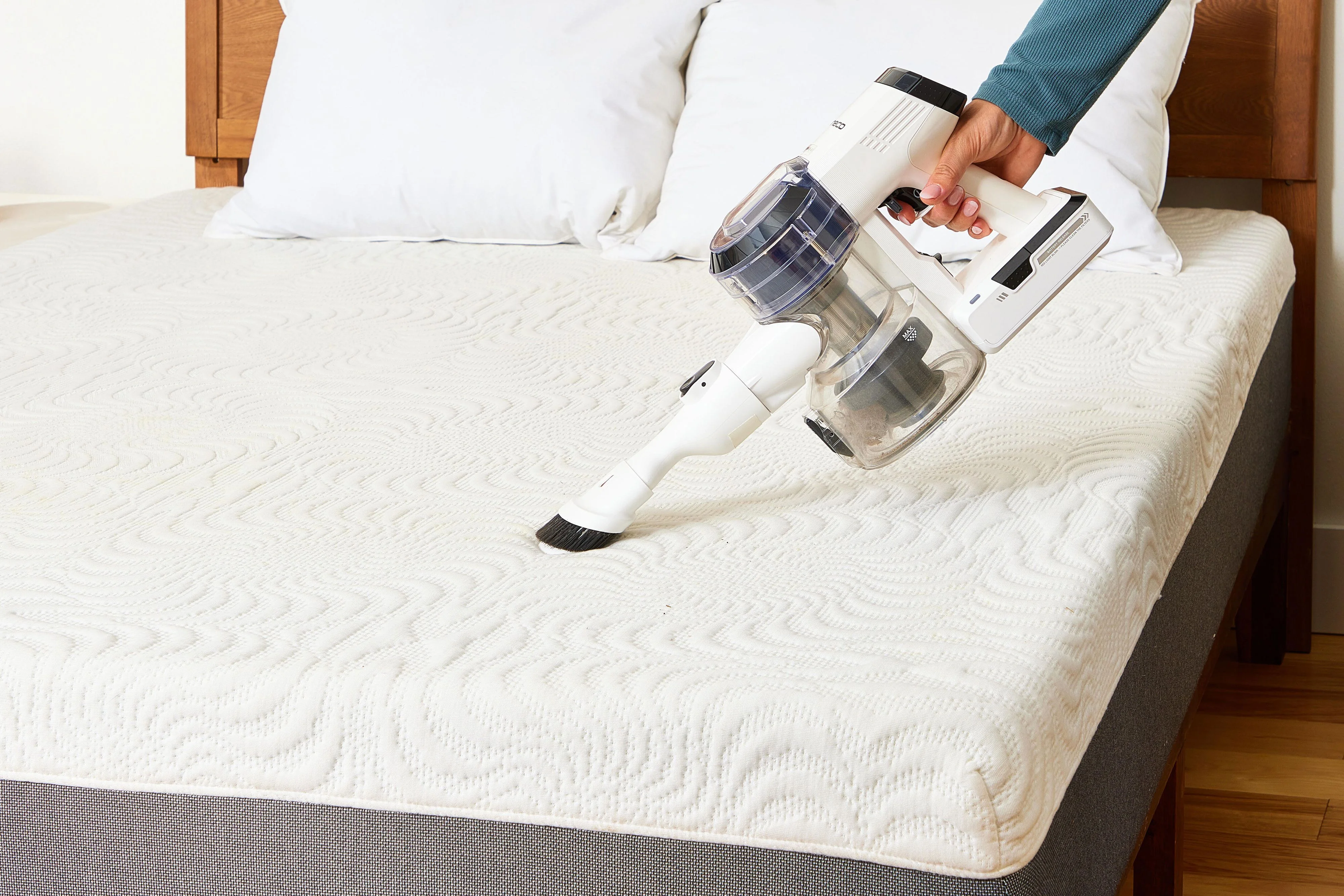
Switch to your vacuum's upholstery or soft-brush attachment so you don't catch and tear the seam tape. Run it slowly across the top in overlapping passes, then work the side walls and the seams around the pump opening, valve, and edge piping.
Flip the mattress and repeat on the underside - the bottom surface picks up grit from the floor that scratches the PVC over time. Vacuuming first matters because it removes the abrasive particles that would otherwise smear into mud once you wet the surface.
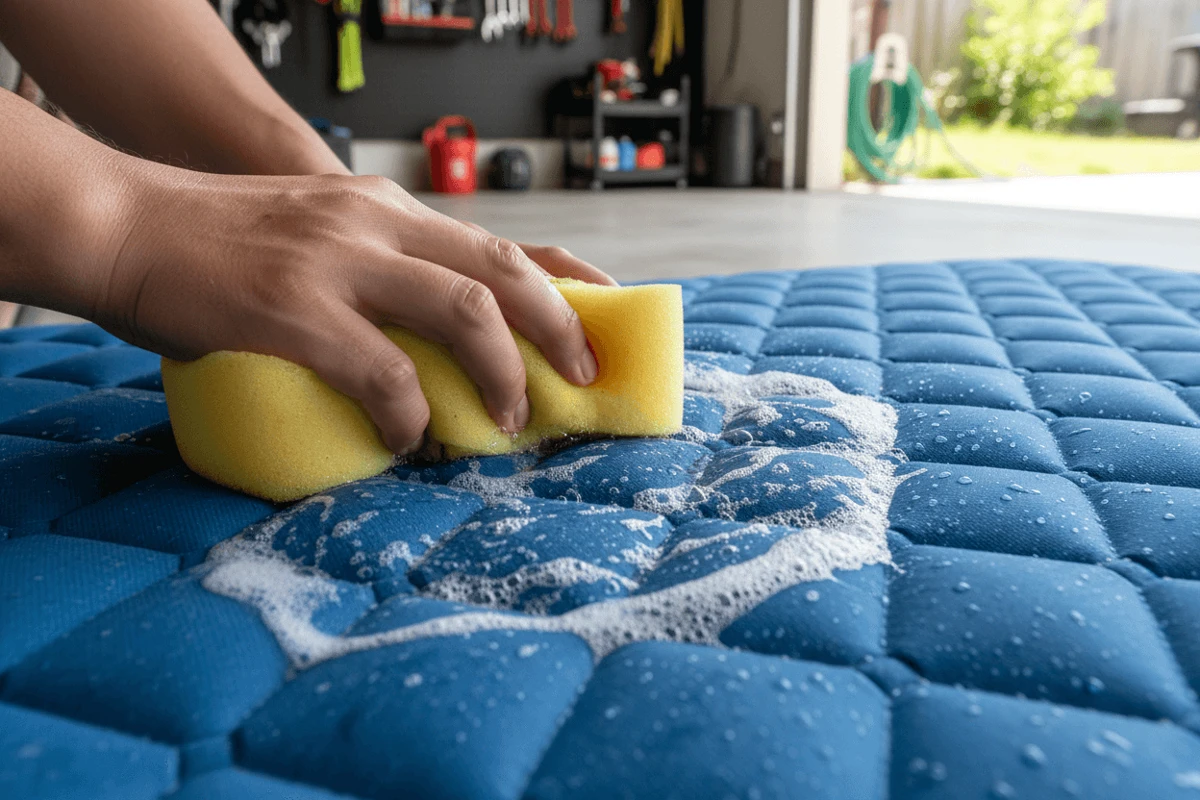
Step 3: Spot-clean with mild soap
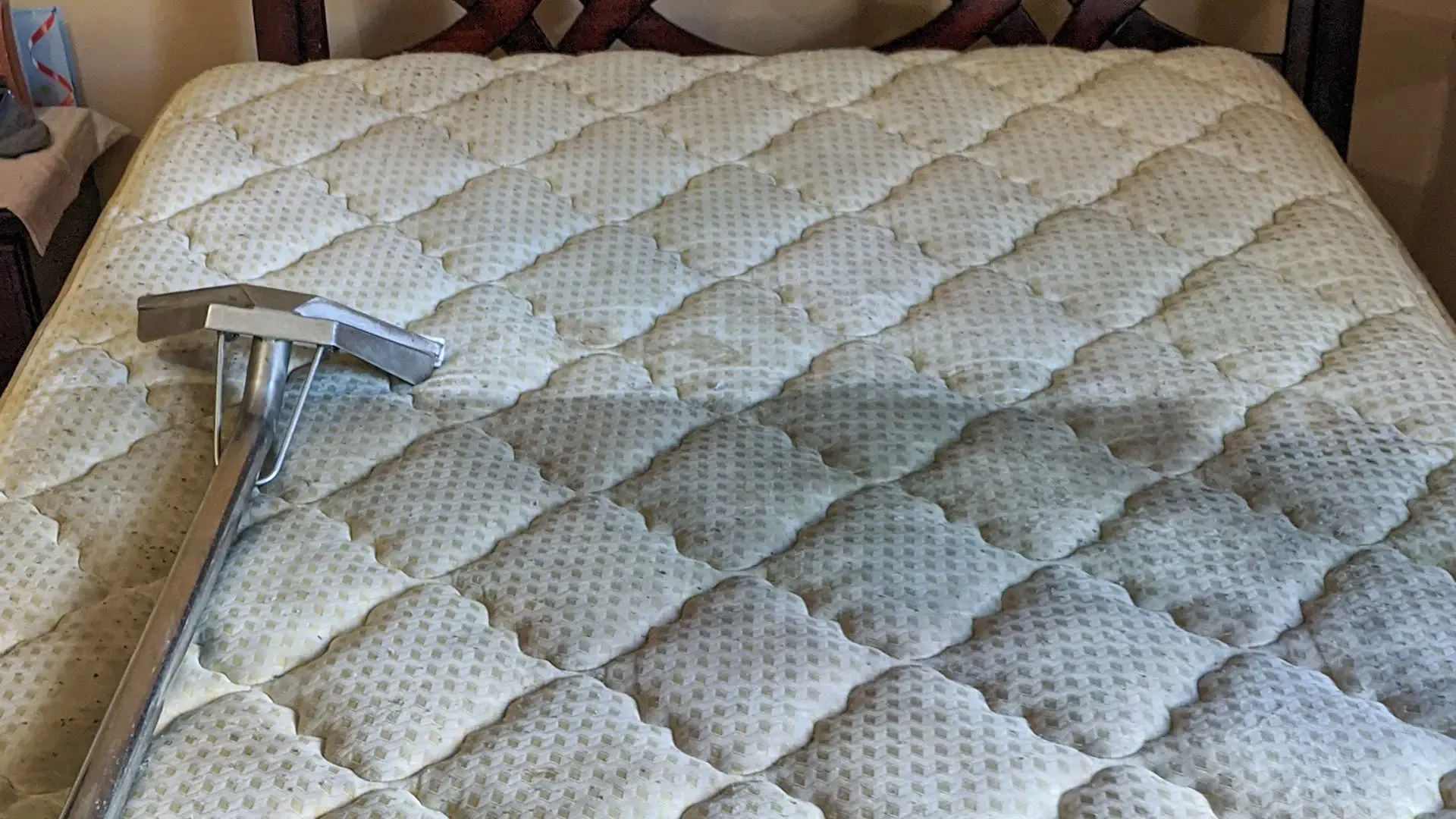
Mix a teaspoon of dish soap into about two cups of lukewarm water. Dip a microfiber cloth, wring it until it is barely damp, and wipe the entire top surface in sections. Press a little harder on visibly dirty areas but do not soak the bed - water that pools in seams is the leading cause of interior mold.
Follow with a second cloth dampened in plain water to lift any soap residue. Soap left behind attracts dust and feels tacky once dry.
Step 4: Disinfect with vinegar or alcohol
Mix equal parts white vinegar and water - or equal parts 70% isopropyl alcohol and water - in a spray bottle. Mist lightly across the surface and wipe with a clean cloth. Vinegar handles odors and most household bacteria; alcohol dries faster and is the better pick if you suspect mildew. Use one or the other, not both at the same time.
For a flocked (velvet-textured) top, mist the cloth instead of the bed itself so the fibers don't mat down.
Step 5: Deodorize and dry
Sprinkle a thin, even layer of baking soda across the top, leave it for 15 to 30 minutes (longer for a musty bed that has been in storage), then vacuum it up with the upholstery attachment. Baking soda neutralizes the acidic compounds responsible for sweat and pet smells without leaving a perfume.
Drying is the single most important step. Leave the mattress fully inflated in a sunny, breezy spot for at least two to four hours, or set up a fan if you're cleaning indoors. Touch every seam and the underside before you call it done - any cool, damp patch will turn into mold within days.
Special cases
Pet urine or other accidents
Blot the wet area with paper towels - do not rub, which forces liquid into the seams. Spray with an enzyme-based pet cleaner (Nature's Miracle, Rocco & Roxie), let it sit 10 to 15 minutes per the bottle, then blot again with a damp cloth. Enzymes break down the proteins that vinegar and soap leave behind. Finish with the baking-soda step above.
Set-in stains
Make a paste of three parts baking soda to one part water, dab it onto the stain, and let it dry completely (an hour or more). Vacuum or wipe off, then spot-clean with the soap solution. For yellow sweat stains, switch to a 50/50 hydrogen peroxide and water mix on a cloth - test a hidden spot first because peroxide can lighten dyed flocking.
Mold inside the mattress
Surface mold on the outside wipes off with the alcohol mix. Mold trapped inside the air chamber - black flecks visible through the valve, a musty smell on inflate - usually means water got in and the mattress is at end-of-life. You can try inflating, draining a cup of equal-parts alcohol and water through the valve, agitating, and pumping it dry, but most inflatables don't recover and become a respiratory risk to keep using.
Do
- Vacuum first to remove abrasive grit before any liquid touches the bed
- Use mild dish soap, white vinegar, or 70% isopropyl alcohol - diluted
- Keep the mattress fully inflated while you clean so seams stay open
- Air-dry completely (2-4+ hours) before deflating or storing
- Use a fitted protector and wash it weekly to cut cleaning frequency
Don't
- Don't put an air mattress in a washing machine - it tears seams and traps water
- Don't use bleach, ammonia, or abrasive pads on PVC or flocking
- Don't let water pool in the seams or around the valve
- Don't store the bed deflated and damp - that's how interior mold starts
- Don't ignore a musty smell on inflate; it usually means trapped moisture
Storage that prevents the next clean
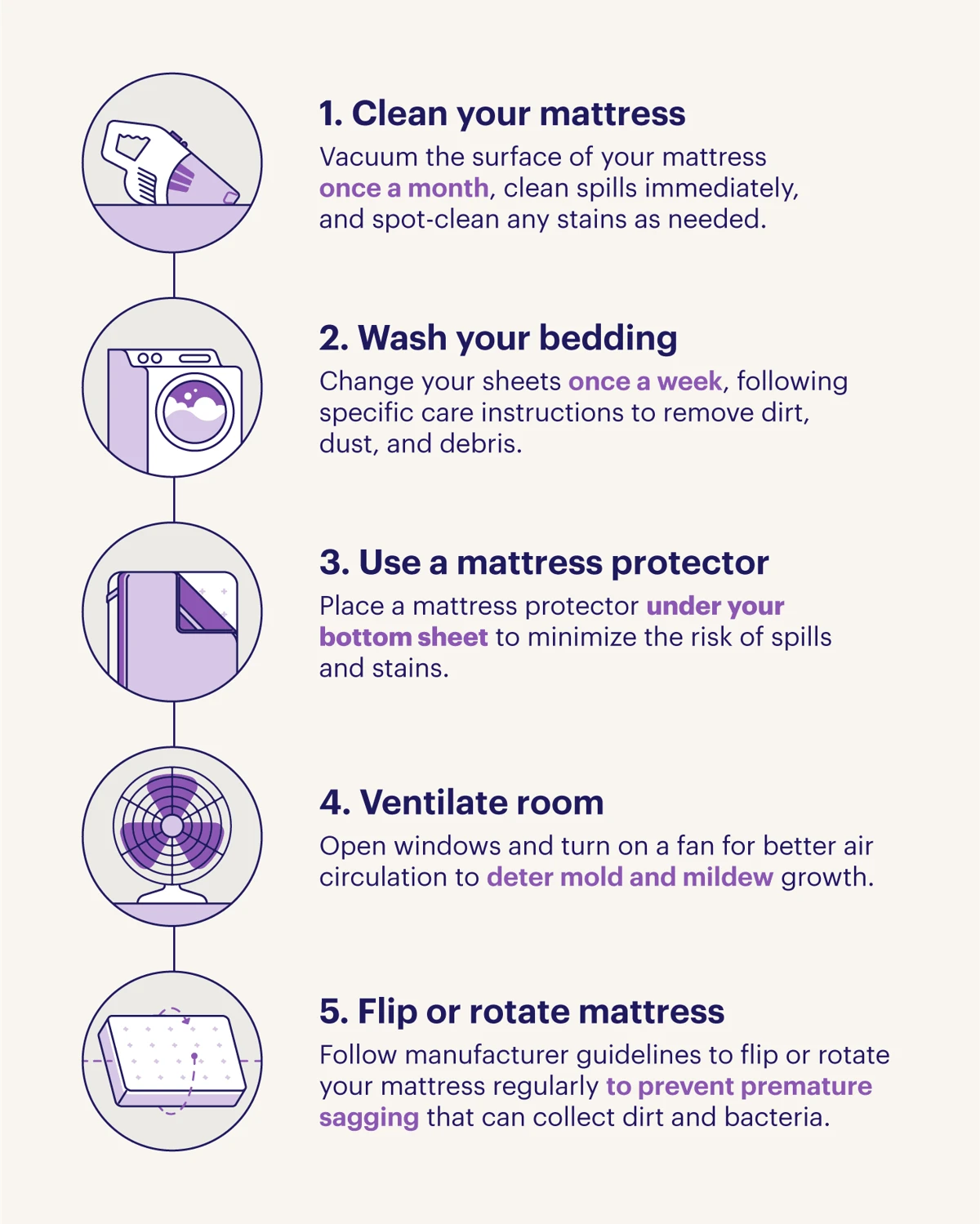
Most cleaning emergencies start at storage. Once the mattress is bone-dry, fold it loosely along the original creases - sharp folds in the same spot crack the PVC. Place it in its storage bag with a small open box of baking soda or a silica gel pack to absorb residual moisture, and keep the bag in a climate-controlled closet, not a garage or basement where humidity swings.
Wash the storage bag itself once a season; an dirty bag re-contaminates a clean mattress on the way back in. A simple fabric protector or fitted sheet during use will cut your deep-clean frequency from monthly to once or twice a year.
Air mattress cleaning FAQ
Can I put an air mattress in the washing machine?
No. The agitator and spin cycle tear seams, and water that gets trapped between the layers is almost impossible to dry out - which is the leading cause of interior mold. Spot-clean by hand with a damp cloth instead.
How do I clean pee off an air mattress?
Blot up everything you can with paper towels (don't rub), spray an enzyme-based pet cleaner like Nature's Miracle, wait 10-15 minutes, then blot with a damp cloth. Finish by sprinkling baking soda, leaving it 30 minutes, and vacuuming. Air-dry fully before using again.
What kills mold on an air mattress?
For surface mold, a 50/50 mix of 70% isopropyl alcohol and water wiped across the affected area kills mold spores and dries quickly. White vinegar at 5% acidity also works. Mold that's clearly inside the air chamber usually means the mattress should be retired - drying the interior fully is rarely possible.
How often should I deep-clean an air mattress?
If you use it nightly, deep-clean every 4 to 6 weeks. For a guest bed pulled out occasionally, clean before and after each use. Camping mattresses get a vacuum and surface wipe-down after every trip and a full clean at the end of the season.
Will vinegar damage my air mattress?
Diluted 1:1 with water, white vinegar is safe on PVC and most flocked tops. Don't use undiluted vinegar, and don't soak the surface. On flocking, mist the cloth instead of the bed so the fibers don't mat down.
How do I get the musty smell out of a stored air mattress?
Inflate the mattress in a well-ventilated space, wipe the surface with a 1:1 vinegar-and-water mix, then sprinkle baking soda across the top and leave it 30-60 minutes before vacuuming. Air-dry in sunlight for several hours. If the smell returns on the next inflate, moisture is trapped inside the chamber and the bed is likely past saving.