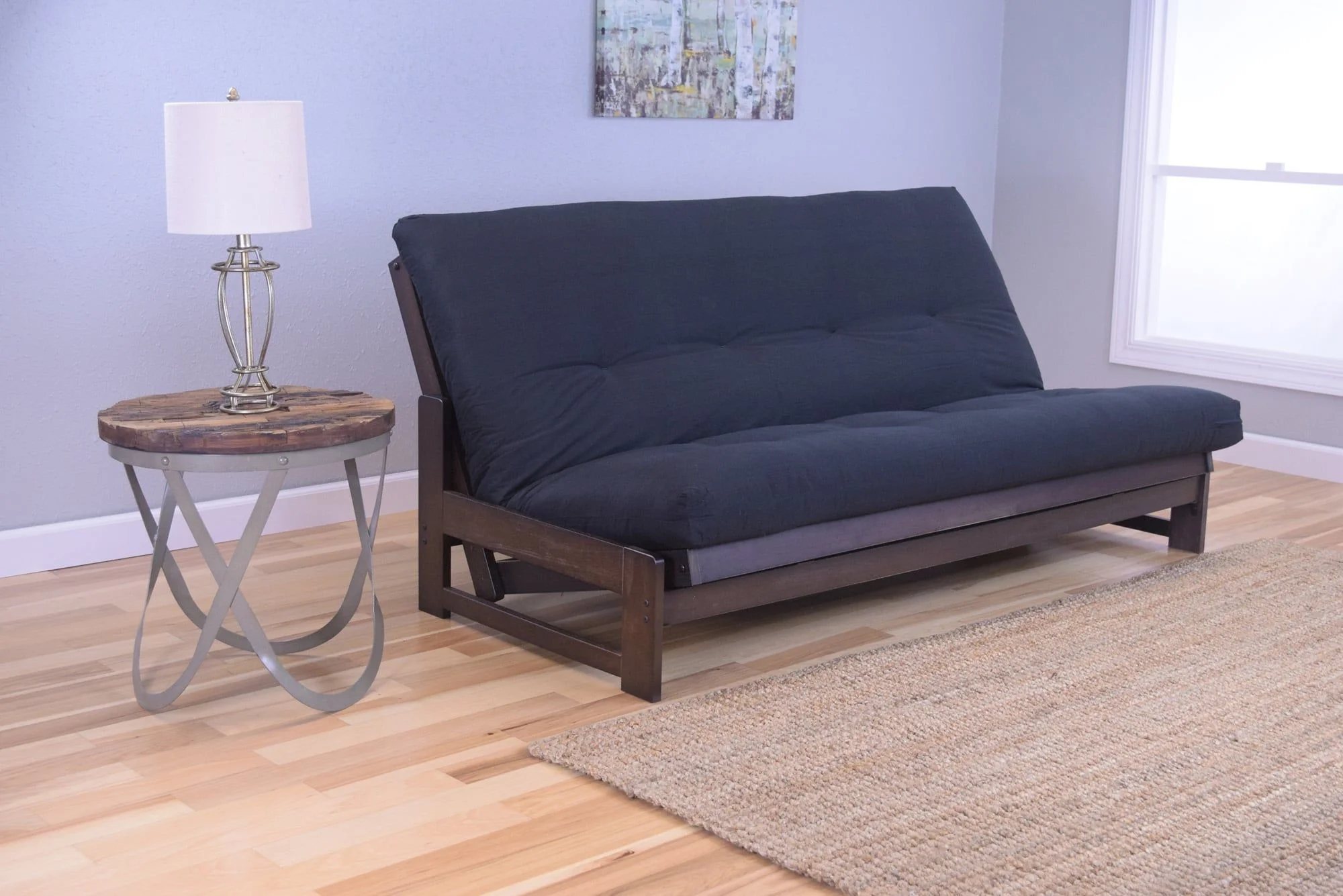

Futon mattresses absorb more than you think. Because they sit closer to the floor, double as a sofa, and rarely get rotated, dust, sweat, skin cells, and the occasional spill build up faster than on a standard bed. The good news: with a vacuum, baking soda, and a couple of household solvents you can deep-clean a futon in about an hour and air-dry it the same day.
This guide walks through the full routine - surface cleaning, stain removal, urine and mildew, frame care, and ongoing maintenance - with the why behind each step so you don't accidentally damage the cotton or foam fill.
What you'll need
- Vacuum with a soft-brush upholstery attachment
- Baking soda (a full cup for a queen)
- White vinegar and a clean spray bottle
- 3% hydrogen peroxide and rubbing alcohol
- Mild dish soap, microfiber cloths, and a soft scrub brush
- A box fan or a sunny, breezy spot for drying
Step 1: Strip and vacuum thoroughly
Remove the cover, sheets, and any pillows. Wash the cover according to its tag - most cotton or polyester futon covers go in cold water on a gentle cycle and air dry to avoid shrinkage.
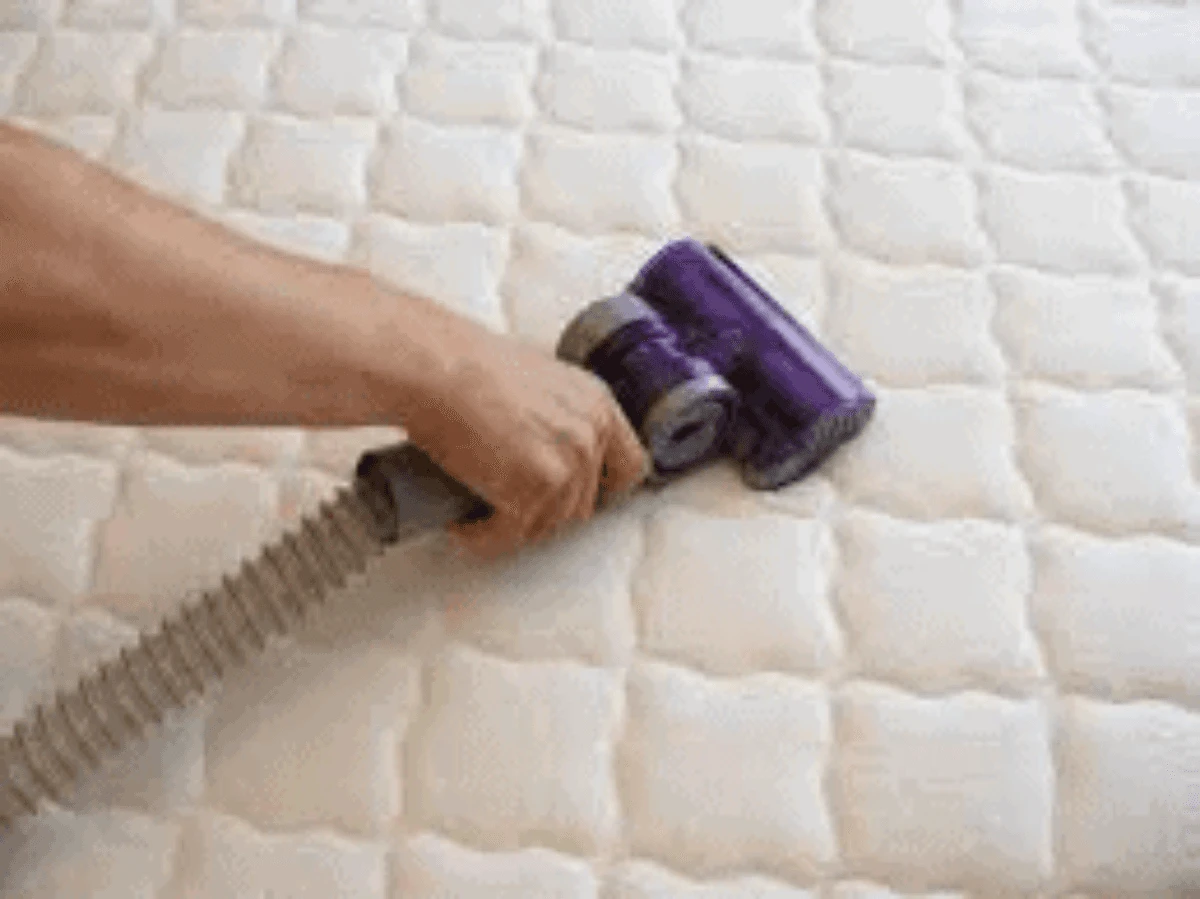
Vacuum both sides of the mattress with the upholstery attachment. Work slowly along the seams and tufting where dust mites and crumbs hide. Don't skip the sides - they collect a surprising amount of debris where the futon meets the frame.

Step 2: Deodorize with baking soda
Sprinkle a generous, even layer of baking soda across the entire surface - about a cup for a queen-size futon. Let it sit for at least 30 minutes; for stubborn odors (pets, smoke, sweat) leave it for several hours or overnight. Baking soda neutralizes acidic odor compounds rather than masking them, so longer dwell time genuinely works better.
Vacuum the baking soda back up completely. Flip the mattress and repeat on the other side.
Step 3: Spot-treat stains
Match the solvent to the stain - and always blot, never rub, to avoid pushing the stain deeper into the fill.
- Food, drink, and grease: a few drops of mild dish soap in a cup of warm water. Dab with a microfiber cloth, then blot dry.
- Mildew and mold: equal parts white vinegar and water in a spray bottle. Mist lightly, let it sit 10 minutes, then blot.
- Dried food and protein stains: 3% hydrogen peroxide applied directly. Test on a hidden corner first - peroxide can lighten dark covers.
- Ink: a cotton pad with rubbing alcohol, blotted from the outside of the stain inward.
Skip bleach unless the cover is white and the manufacturer explicitly allows it. Bleach degrades cotton fibers and can leave a permanent yellow halo on natural fills.
Step 4: How to clean urine from a futon
For a fresh accident, blot up as much liquid as possible with paper towels - press, don't wipe. Spray the area with a 50/50 mix of white vinegar and cool water, then sprinkle a thick layer of baking soda over the wet patch. Let it dry for 6-8 hours; the paste will absorb the urine and the smell. Vacuum once it's bone dry.
For dried urine stains and lingering smell, mix 8 oz of 3% hydrogen peroxide, 3 tablespoons of baking soda, and a drop of dish soap. Spray lightly, let it dry naturally, then vacuum. An enzyme cleaner (the kind sold for pet accidents) is the most reliable next step if the smell persists - enzymes break down uric acid crystals that vinegar alone can't dissolve.
Step 5: Dry it completely
A futon that goes back on the frame even slightly damp is a mildew problem waiting to happen. After spot-cleaning, set the mattress upright in a sunny, well-ventilated spot - Japanese cotton futons are traditionally aired in direct sun for two hours per side, which also kills dust mites. If sun isn't an option, point a box fan at it for 4-6 hours and flip halfway through.
A hairdryer on cool can speed up small wet patches, but never use high heat directly on foam - it can degrade the cell structure and leave permanent dents.
Step 6: Don't forget the frame
While the mattress dries, wipe the frame down. Wood frames take a damp cloth with a little dish soap; dry immediately to avoid water rings. Metal frames clean up with the same vinegar-water spray and respond well to a quick check of bolts and brackets - dust loosens hardware over time. Inspect for splinters, rust, or cracked welds before you put the mattress back.
Do
- Vacuum both sides every time you change the cover
- Use baking soda monthly to control odor and moisture
- Rotate and flip the mattress every 4 weeks
- Air-dry in sun or with a fan after any wet cleaning
- Use a waterproof, breathable futon protector
Don't
- Don't soak the mattress - futon fills hate saturation
- Don't put a foam or cotton futon in a washing machine
- Don't use bleach on colored or natural-fiber covers
- Don't apply heat directly to foam fills
- Don't store a damp futon folded - mildew within 24 hours
Ongoing maintenance
- Rotate head-to-foot every 2 weeks for the first month, then monthly.
- Open the futon flat each morning instead of leaving it folded - folded futons trap body moisture against the fill.
- Wash the cover and any pillow shams every 2-4 weeks.
- Run a HEPA vacuum across the surface every couple of weeks if anyone in the home has dust-mite allergies.
If your futon has lost loft, smells musty even after deep cleaning, or has visible mold spots, it's time to replace the fill - most cotton futons have a 5-10 year functional life. A solid mattress protector and a regular cleaning rhythm push that lifespan toward the upper end.
Futon cleaning FAQ
Can you put a futon mattress in the washing machine?
No. Cotton, foam, and innerspring futon fills are too dense and heavy to handle saturation - they'll mildew before they dry, and a soaked futon can wreck a home washer. Wash only the cover, and spot-clean the mattress itself.
Can you steam clean a futon mattress?
Light steam cleaning can work on the surface - handheld garment steamers are safer than full-flow upholstery steamers. The risk is the same as with any wet method: moisture trapped deep in the fill. If you steam, follow with several hours of fan-drying or sunlight before the futon goes back on the frame.
How often should you deep clean a futon?
Vacuum and rotate monthly, deodorize with baking soda every 1-2 months, and do the full routine (spot clean, deodorize, air dry) twice a year. Households with pets, kids, or allergy sufferers should bump deep cleans to quarterly.
How do you clean a Japanese (shikibuton) futon?
Skip liquid solvents. Air it in direct sun for 2 hours per side, beat it gently with a futon paddle to release dust, then vacuum. For odors, sprinkle baking soda, leave overnight, and vacuum thoroughly. Spot-treat any stains with a barely-damp cloth and dish soap, never a soaked one.
What kills dust mites on a futon?
Direct sunlight (UV) for 2+ hours, a hot cover wash at 130°F or higher, and regular HEPA vacuuming together knock dust-mite populations down. A zippered allergen-barrier protector keeps them from coming back.
How do you get a smell out of an old futon?
Heavy baking-soda treatment is step one - a full cup, left overnight, then vacuumed. If the smell persists, mist with a 1:1 vinegar-water solution, repeat the baking soda, and air-dry in sun. Lingering smells after that usually mean the fill itself is breaking down and needs replacing.
Ready for an upgrade beyond the futon?
Browse Banner Mattress's expert-tested mattress guides for full-size beds that fit any room and budget.