Buying or inheriting a used mattress can save hundreds of dollars - but only if you sanitize it properly before the first night's sleep. A pre-owned mattress can carry dust mites, allergens, sweat residue, and in worst cases bed bugs or mold. The good news: most of that comes off with a careful, foam-safe routine using tools you already own. This guide walks through the full process Banner's editorial team uses on secondhand beds, plus the situations where the smartest move is to replace rather than clean.
Before you bring it home: a 5-minute inspection
Do this in good light, ideally outdoors or in a garage, before the mattress crosses your threshold. Bed bugs are the single biggest reason a used mattress should be refused, and once they enter a home they are expensive to eradicate.
- Strip any cover and shine a flashlight along every seam and piping. Look for live bugs (apple-seed sized, reddish-brown), shed skins, or rust-colored fecal spots.
- Check the corners, label tag, and the underside - bed bugs hide in seams, not on flat surfaces.
- Smell test: a sour, musty odor can indicate hidden mold inside the foam. Mold inside a mattress is not cleanable - decline it.
- Press the surface in several spots. Permanent body impressions deeper than 1.5 inches mean the support core is shot, regardless of how clean you get it.
- Check the law tag for the manufacture date. A mattress more than 8 years old is at the end of its useful life.
If any of those red flags appear, stop here - no cleaning routine is worth the risk.
What you'll need
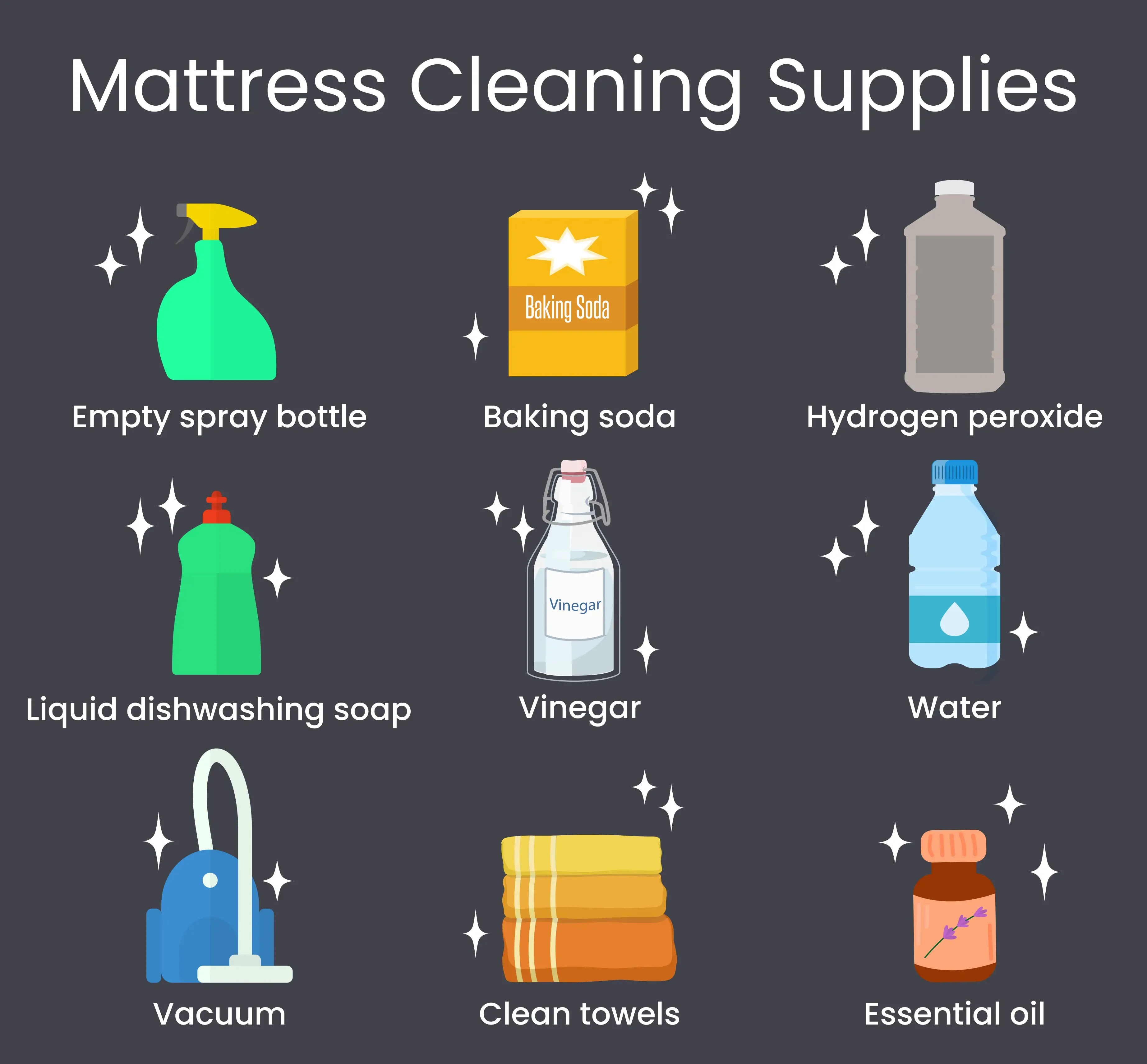
- Vacuum with an upholstery attachment (HEPA filter strongly preferred)
- 1-2 boxes of baking soda
- Enzyme cleaner (for protein stains: blood, urine, sweat)
- White vinegar and a spray bottle
- 3% hydrogen peroxide and dish soap (for set-in yellow stains)
- Several clean white microfiber cloths
- Optional: handheld garment steamer (skip on memory foam) or fan to speed drying
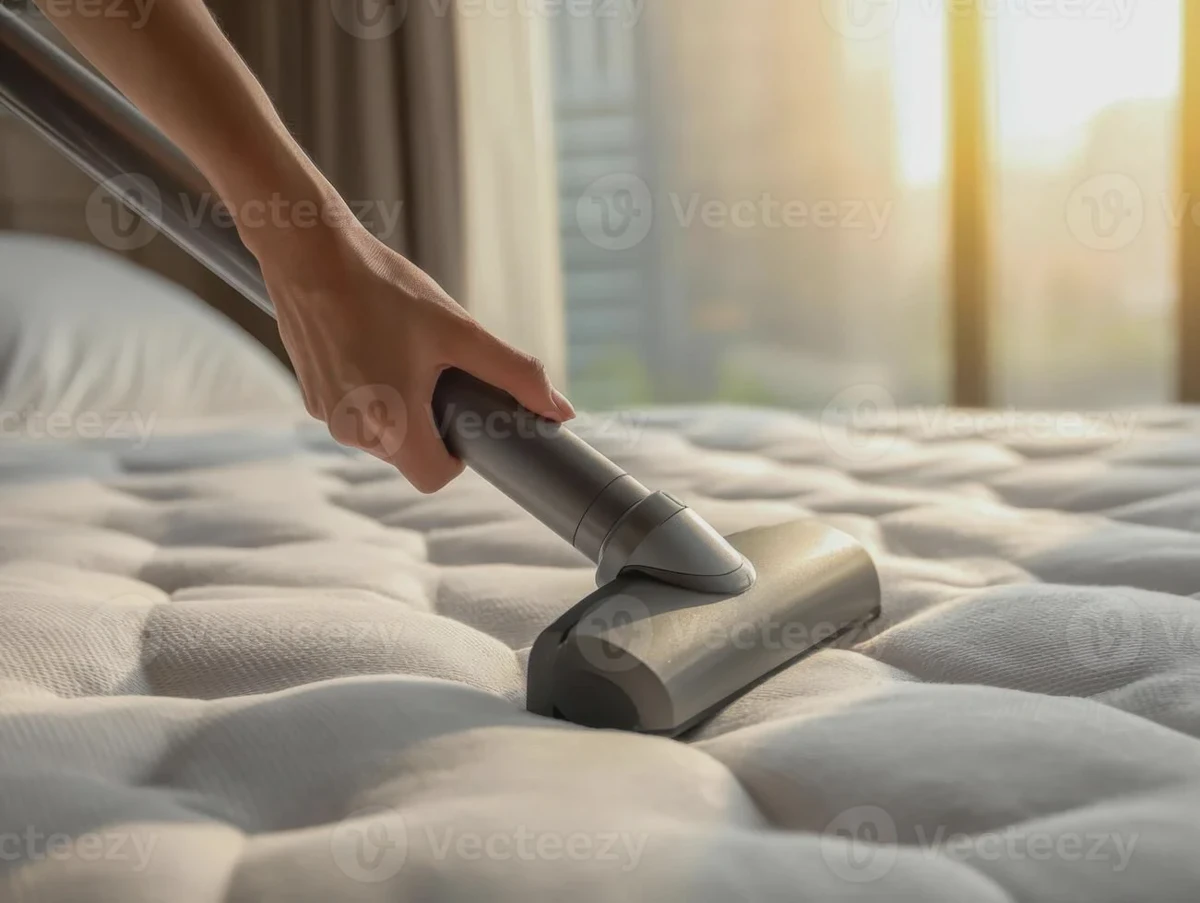
Step 1: Strip and vacuum thoroughly
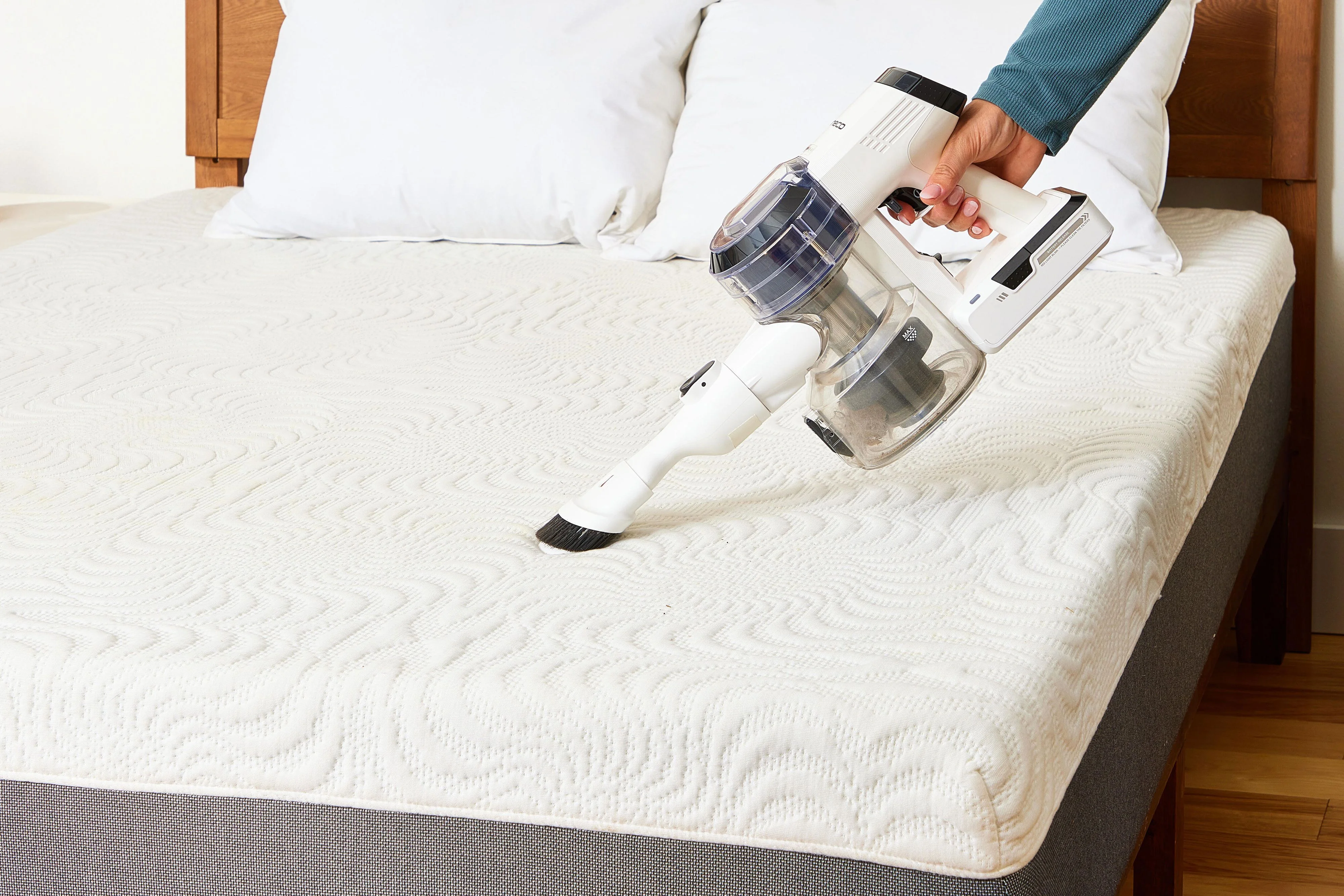
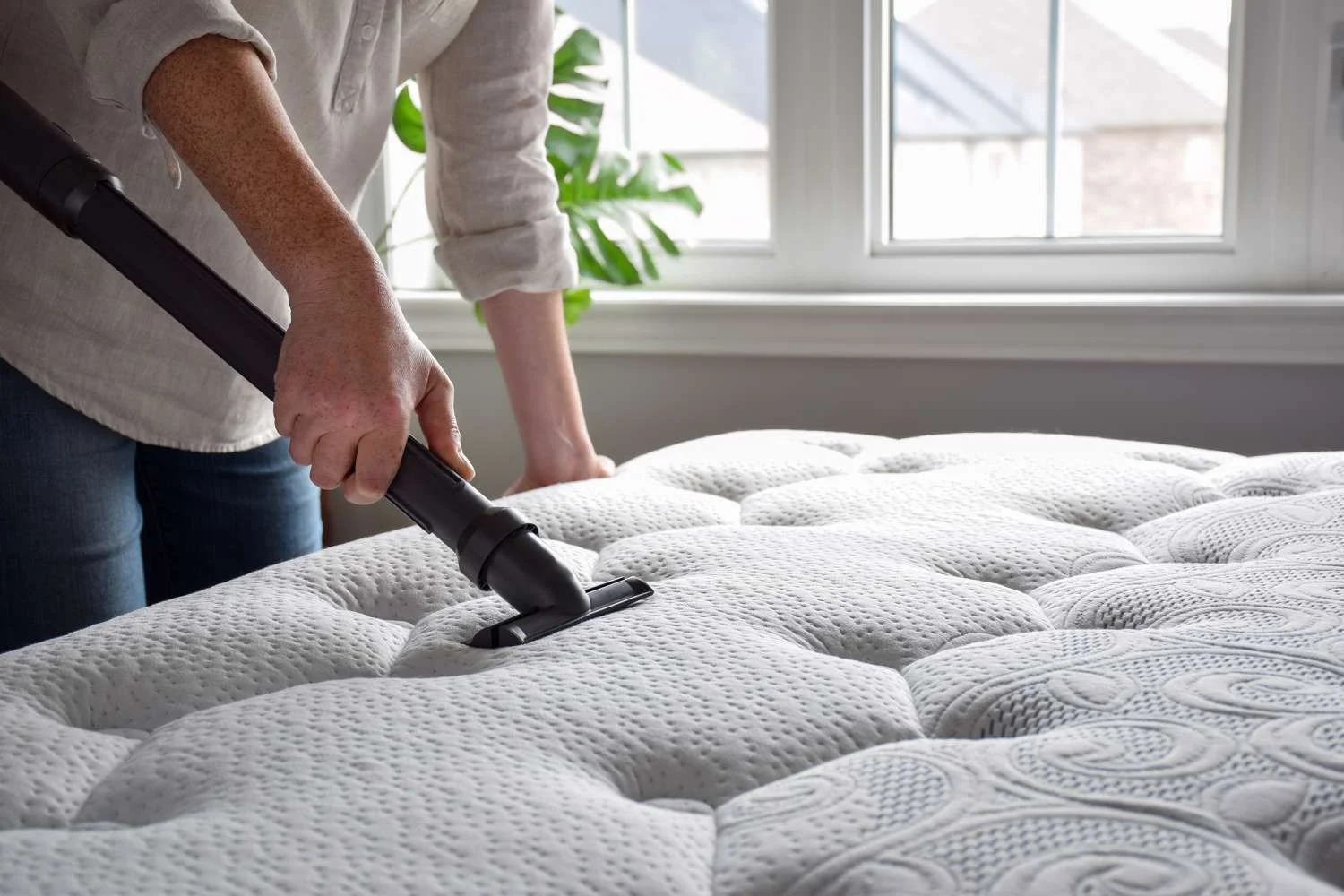
Wash all bedding (including the mattress protector if any) in hot water, at minimum 130°F / 54°C, which kills dust mites and most pathogens. While the bedding runs, vacuum the bare mattress slowly - top, both sides, and bottom - using the upholstery attachment. Pay extra attention to seams, tufts, and corners where dander, dust mites, and dead skin collect. A HEPA-filtered vacuum captures the fine particles that trigger respiratory symptoms; a standard vacuum just blows them around.
For infant gear, the protocol differs slightly - see our guide to how to deep clean a pack n play mattress.
Step 2: Spot-treat stains by type
There is no single "mattress cleaner." Different stains need different chemistry, and using the wrong one can set the stain permanently. Treat the worst stains first, blot - never scrub - and never soak the mattress.
Foam-safe practices
- Cold water for blood stains - hot water sets protein.
- Enzyme cleaner for urine, sweat, and other organic stains.
- Damp (not wet) microfiber cloth, applied with light pressure.
- Air drying with windows open or a fan running on the surface.
- Test any solution on a hidden corner first.
Avoid on any mattress
- Pouring liquid directly onto the mattress - moisture inside foam breeds mold.
- Bleach or ammonia - strips fabric and yellows polyfoam.
- Steam cleaning memory foam or latex - heat and moisture damage cell structure.
- Washing-machine detergent at full strength - residues attract dirt.
- Using the mattress before it is fully, board-dry.
Urine stains (and the smell)
Urine is the hardest stain to remove because uric acid crystals bond into the fibers. Apply an enzyme cleaner generously enough to penetrate the stain, but not so much that it pools. Let it dwell for at least 15 minutes - enzymes need time to digest the proteins. Blot with a dry cloth, then sprinkle baking soda on top to draw out residual moisture and odor. Repeat if the stain is old.
Blood stains
Use only cold water - hot water cooks the protein and locks the stain in. For fresh stains, blot with a cold-water-dampened cloth. For dried stains, mix 1 tablespoon hydrogen peroxide with 1 tablespoon dish soap, dab on, let sit 30 seconds, then blot with cold water. Repeat in light layers rather than soaking once.
Sweat and yellow body-oil stains
Mix 1 cup 3% hydrogen peroxide, 3 tablespoons baking soda, and a drop of dish soap in a spray bottle. Mist (do not soak) the yellowed area, let it sit 5-10 minutes until it stops bubbling, then blot dry. This is the same chemistry detergent brands sell as "oxygen brightener," minus the optical brighteners that can damage fabric.
General odor and freshening
A 1:1 mix of white vinegar and water in a spray bottle, lightly misted across the surface, neutralizes most ambient odors. The vinegar smell dissipates as the mattress dries.
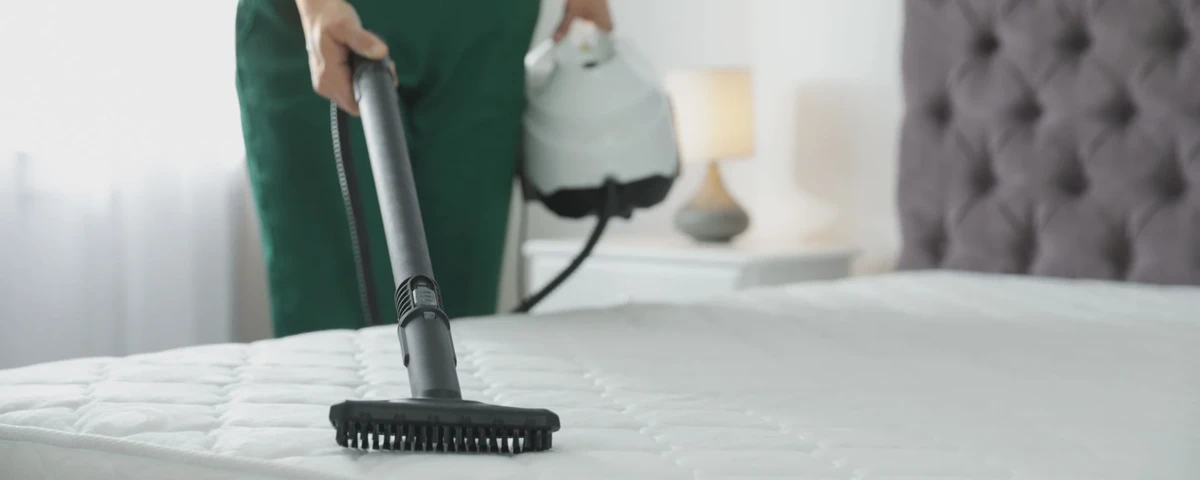
Step 3: Deodorize with baking soda
Once spot-treated areas are nearly dry, sprinkle a generous, even layer of baking soda across the entire top surface. Leave it for at least 8 hours - overnight is ideal - so it can absorb residual moisture and odor compounds. Direct sunlight through a nearby window helps, since UV light is a mild natural disinfectant. Vacuum the baking soda off thoroughly when finished. Flip the mattress (if it's two-sided) and repeat on the other side.
Step 4: Sanitize without soaking
Innerspring and hybrid mattresses with a fabric cover tolerate a brief pass with a handheld garment steamer at 6-8 inches above the surface; the heat penetrates seams where dust mites live without saturating the foam. Skip the steamer on memory foam, latex, and any all-foam mattress - heat and moisture inside the foam matrix break down the cell structure and create the conditions for mold. For all-foam, rely on the baking soda and sun-and-airflow phase instead.
Step 5: Dry completely before sleeping on it
This is the step most guides skip past, and it is where mattresses go wrong. Internal moisture is the cause of nearly every mattress mold complaint. Run a fan across the surface for at least 6-8 hours, with windows open and the mattress propped on its side if possible. Press a clean white cloth firmly into the surface afterward - if it picks up any dampness at all, keep drying. Only then should you put on a clean mattress protector and fresh bedding.
Protect what you just cleaned
A waterproof, breathable mattress protector is the single highest-leverage purchase after cleaning. It blocks sweat, spills, dander, and dust mites from re-entering the foam, which is what made the previous owner's mattress need this much work in the first place. Add this 30-second routine to keep the mattress in shape:
- Wash sheets weekly in hot water.
- Vacuum the mattress every 1-2 months when you change the sheets.
- Rotate (or flip, if two-sided) every 3 months for the first year, then every 6 months.
- Air the mattress for 30 minutes - bare, with a window open - any time you change the sheets.
When a used mattress isn't worth cleaning
Be honest with the assessment. Decline or replace the mattress if any of these are true: visible bed-bug evidence, internal mold odor, body impressions deeper than 1.5 inches, broken springs you can feel, manufacture date older than 8 years, or stains that bleed through to the underside (meaning the contamination has reached the core). At that point, even the most thorough cleaning is treating the symptom, not the problem - and a new mid-tier mattress will outsleep a salvaged one for years.
Ready to upgrade instead of clean?
Frequently asked questions
Is it safe to sleep on a used mattress?
Yes - if it passes a careful inspection (no bed bugs, no internal mold, no major sagging) and you complete a full clean-and-dry cycle before use. Add a quality waterproof mattress protector before the first night.
Can I steam-clean a memory-foam mattress?
No. Heat and moisture from a steamer break down memory foam and trap water in the foam cells, which is the leading cause of mattress mold. Use baking soda, spot-treat with light enzyme cleaning, and rely on airflow and sun instead.
How long should I let a mattress dry before sleeping on it?
At least 6-8 hours of active drying with a fan and open windows after the final cleaning step. Verify with a clean cloth pressed firmly into the surface - if it picks up any moisture, keep drying. Foam mattresses can take longer than innerspring.
Does sunlight actually disinfect a mattress?
Direct UV light kills surface bacteria and dust mites and helps evaporate residual moisture, but only on the side it touches. It is a useful supplement to vacuuming and baking soda, not a replacement for them.
How often should I deep-clean a mattress after the first time?
Every 6 months for a routine deep clean (vacuum, baking soda, air out), or any time after a spill, illness, or pet accident. With a mattress protector in place, deep cleans get faster every time.